Ex PHYS Exam #2
0.0(0)
 Studied by 1 person
 Call Kai
 Learn
Learn Practice Test
 Spaced Repetition
 Match
Match Flashcards
 Knowt Play
Card Sorting
1/245

Earn XP
Description and Tags
Last updated 8:45 PM on 3/4/23
Name | Mastery | Learn | Test | Matching | Spaced | Call with Kai |
|---|
No analytics yet
Send a link to your students to track their progress
246 Terms
1
New cards
ATP
40% of substrate energy (substrate metabolism efficiency)
2
New cards
heat
60% of substrate energy (substrate metabolism efficiency)
3
New cards
increases ↑
Heat production _____ with energy production
4
New cards
Heat production ↑ with energy production
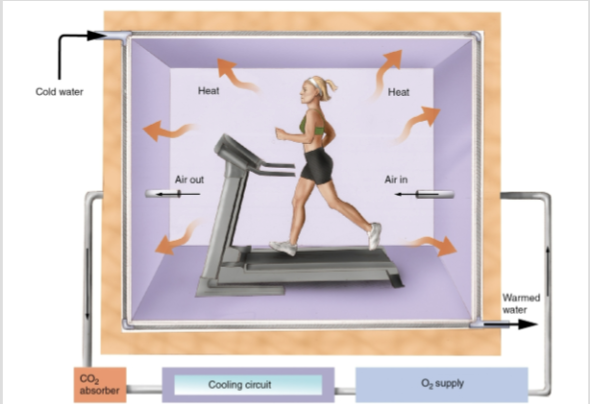
* Measurement of energy expenditure
* The “calorie” is the basic unit of heat
* Direct calorimetry – measurement of heat
* Body produces heat during exercise
* The “calorie” is the basic unit of heat
* Direct calorimetry – measurement of heat
* Body produces heat during exercise
5
New cards
direct calorimetry
\
6
New cards
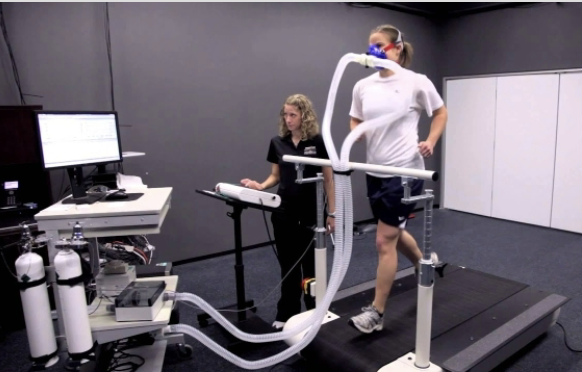
indirect calorimetry
7
New cards
direct calorimetry
* Body temperature increases chamber water temperature
* Expensive and slow
* Great for rest, but not practical/accurate for exercise
* Expensive and slow
* Great for rest, but not practical/accurate for exercise
8
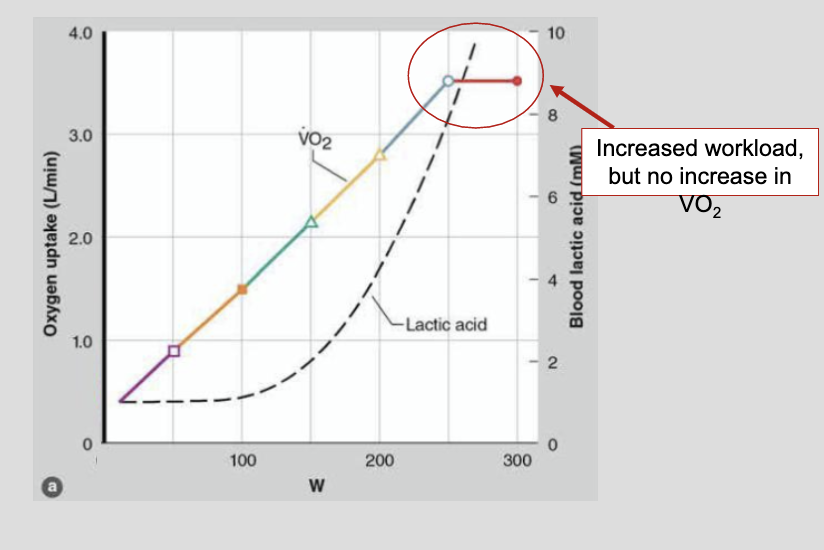
New cards
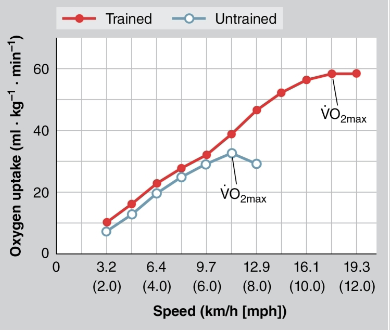
indirect calorimetry
* Rate of oxygen consumption (VO2) is proportional to rate of energy expenditure
* Therefore, VO2 is an “indirect” measure of EE
* Roughly 5 kcal/L O2 consumed (substrate dependent)
* Accurate only for steady-state physiology
* Therefore, VO2 is an “indirect” measure of EE
* Roughly 5 kcal/L O2 consumed (substrate dependent)
* Accurate only for steady-state physiology
9
New cards
steady state
refers to functions that remain unchanged over time
10
New cards
Steady state work rate
stable work rate over time
11
New cards
Steady physiologic state
stable physiological function over time (e.g., heart rate)
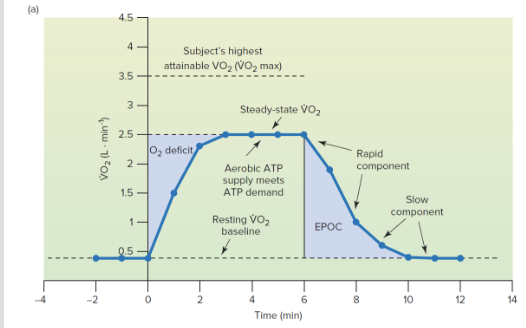
12
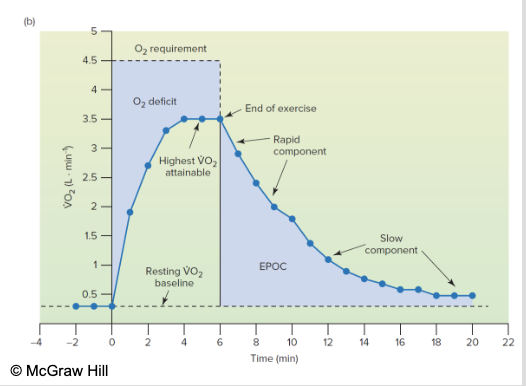
New cards
Steady state work rate
required for and precedes the attainment of steady state physiology
13
New cards
Steady state physiologic functions
only possible during activities (or rest) that are predominantly fueled by aerobic metabolism
14
New cards
open circuit (indirect calorimetry)
subject breaths air from the surrounding atmosphere and expires air back into the atmosphere
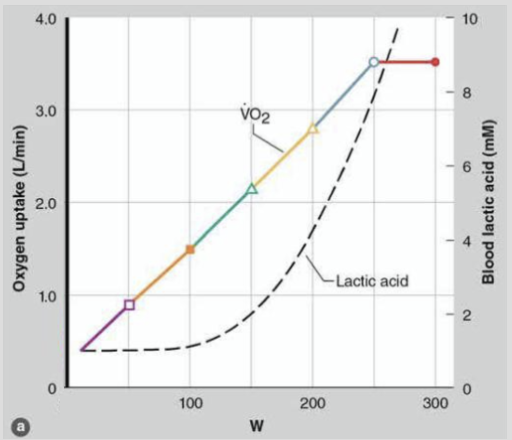
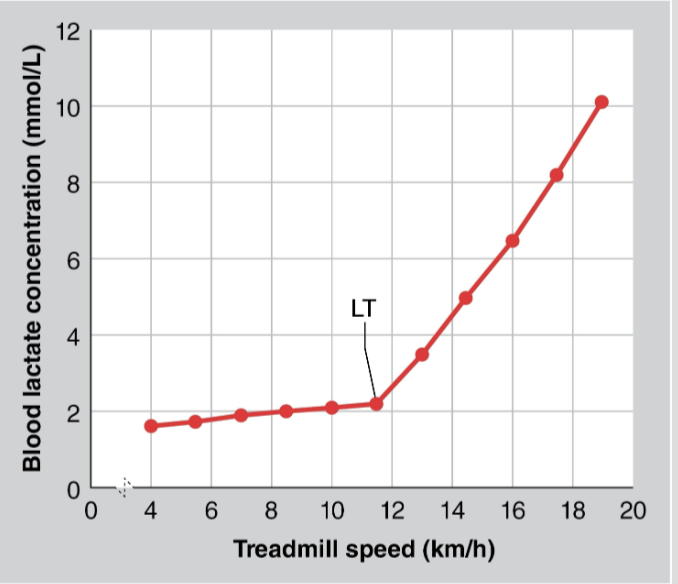
15
New cards
closed circuit (indirect calorimetry)
subject breathes to and from a container of air that is not open to the atmosphere - Not typically used in practice
16
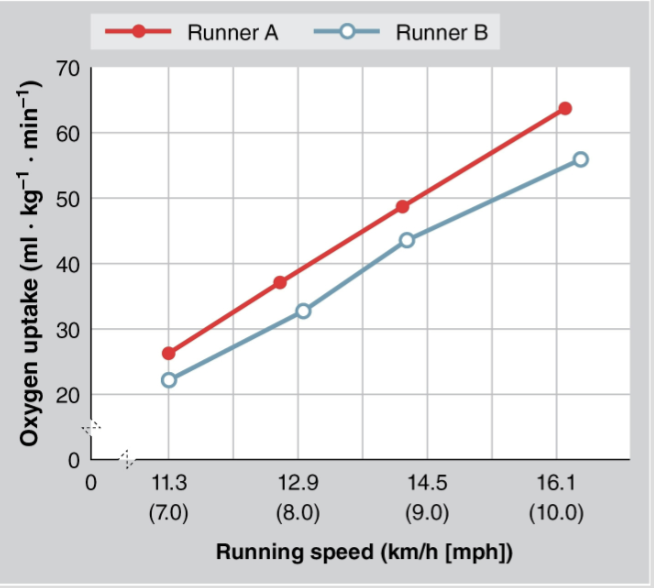
New cards
Volume of air inspired (VI)
Measured or calculated from VE (Haldane transformation)
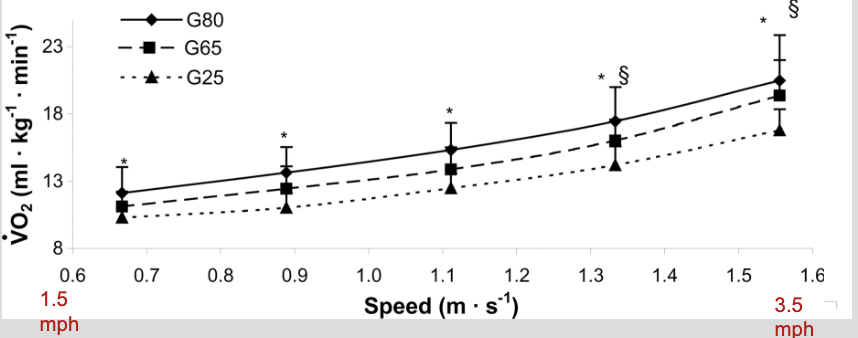
17
New cards
Volume of air expired (VE)
Measured or calculated from VI (Haldane transformation)
18
New cards
Assumed to be 0.2093 (20.93%)
Fraction of O2 in the inspired air (FIO2)
19
New cards
Assumed to be 0.0003 (0.03%)
Fraction of CO2 in the inspired air (FICO2)
20
New cards
Measured with gas analyzer
Fraction of O2 in the expired air (FEO2)
21
New cards
Measured with gas analyzer
Fraction of CO2 in the expired air (FECO2)
22
New cards
Measuring EE: Haldane Transformation
* VI may not equal VE bc VO2 & VCO2 are rarely equal
* However, V of inspired N2 = V of expired N2
* N2 = nitrogen; 79.03% of VI
* However, V of inspired N2 = V of expired N2
* N2 = nitrogen; 79.03% of VI
23
New cards
Haldane transformation
* Used to calculate VI from VE or VE from VI
* Is based on constancy of N2 volumes
* Is based on constancy of N2 volumes
24
New cards
Haldane transformation
V I = (V E x FEN2)/FIN2
25
New cards
VO2
* volume of O2 consumed per minute
* Rate of O2 consumption
* Volume of inspired O2 − volume of expired O2
* Rate of O2 consumption
* Volume of inspired O2 − volume of expired O2
26
New cards
VCO2
* volume of CO2 produced per minute
* Rate of CO2 production
* Volume of expired CO2 − volume of inspired CO2
* Rate of CO2 production
* Volume of expired CO2 − volume of inspired CO2
27
New cards
volume air inspired \* fraction of the air that is composed of O2 (VI × FIO2)
Volume of O2 inspired =
28
New cards
volume of air expired \* fraction of the air that is composed of O2 (VE × FEO2)
Volume of O2 expired =
29
New cards
Determination of VO2 and VCO2
VO2 = (VI x FIO2) – (VE x FEO2)
30
New cards
Determination of VO2 and VCO2
VCO2 = (VE x FECO2) – (VI x FICO2)
31
New cards
type of fuel being oxidized
(Respiratory Exchange Ratio) O2 usage during metabolism depends on the ___________
32
New cards
Respiratory Exchange Ratio
* More carbon atoms in molecule = more O2 needed
* Glucose (C6H12O6) < Palmitic Acid (C16H32O2)
* Glucose (C6H12O6) < Palmitic Acid (C16H32O2)
33
New cards
Respiratory Exchange Ratio (RER)
* Ratio between rates of CO2 production and O2 usage
* _____ = VCO2/VO
* _____ = VCO2/VO
34
New cards
0\.71
RER = ____ when Kcal from fats is 100%
35
New cards
1\.0
RER = ____ when Kcal from carbs is 100%
36
New cards
1\.0
RER for 1 molecule glucose =
37
New cards
0\.70
RER for 1 molecule palmitic acid =
38
New cards
energy at rest
* Metabolic rate is the rate of energy use by the body.
* Almost 100% of ATP is produced by aerobic metabolism
* Blood lactate levels are low (
* Almost 100% of ATP is produced by aerobic metabolism
* Blood lactate levels are low (
39
New cards
0\.25 L/min
absolute resting O2 consumption
40
New cards
3\.5 mL/kg/min
relative resting O2 consumption
41
New cards
Basal metabolic rate (BMR)
rate of energy expenditure at rest
42
New cards
Basal metabolic rate (BMR)
* In supine position
* Thermoneutral environment
* After 8h of sleep and 12h fasting
* Minimum energy requirement for living
* Thermoneutral environment
* After 8h of sleep and 12h fasting
* Minimum energy requirement for living
43
New cards
Resting metabolic rate (RMR)
* Like BMR, but less stringent
* Typically, within 5-10% of BMR
* Typically, within 5-10% of BMR
44
New cards
Factors that Affect BMR
* Age – BMR with age
* Body temperature – BMR ↑ with ↑ temp
* Psychological stress – stress ↑ SNA ↑ BMR
* Hormones – some hormones ↑ BMR (e.g., epi)
* Body temperature – BMR ↑ with ↑ temp
* Psychological stress – stress ↑ SNA ↑ BMR
* Hormones – some hormones ↑ BMR (e.g., epi)
45
New cards
combination of fats and carbs
substrate use during rest
46
New cards
0\.78 – 0.80
values RER at rest
47
New cards
body is using more carbs; increases intensity and increases RER
What happens to RER as physical activity or exercise intensity increases
48
New cards
Total Daily Energy Expenditure (TDEE)
* Includes normal daily activities
* Normal range: 1,800 – 3,000 kcal/day
* Value may be > if you’re regularly exercising
* Competitive athletes: up to 10,000 kcal/day!
* Normal range: 1,800 – 3,000 kcal/day
* Value may be > if you’re regularly exercising
* Competitive athletes: up to 10,000 kcal/day!
49
New cards
Activity Thermogenesis
Greatest source of variability in energy expenditure (within and between individuals)
50
New cards
Activity Thermogenesis
Can account for 15% (sedentary) to 50% (highly active) of total daily energy expenditure
51
New cards
Activity Thermogenesis
* Vigorous exercise can increase energy expenditure 10x (or more) above resting values
* But, non-exercise activity thermogenesis (NEAT) is the predominate component
* But, non-exercise activity thermogenesis (NEAT) is the predominate component
52
New cards
Metabolic Equivalents (MET)
Classification of physical activity by energy expenditure
53
New cards
Metabolic Equivalents (MET)
* Multiples of resting metabolic rate (RMR)
* 2 METs = 2x RMR, 3 METs = 3x RMR, etc.
* MET approximately = 3.5 ml/kg/min
* 2 METs = 2x RMR, 3 METs = 3x RMR, etc.
* MET approximately = 3.5 ml/kg/min
54
New cards
Energy Expenditure During Submaximal Aerobic Exercise
Exercise increases the energy required in excess of RMR
55
New cards
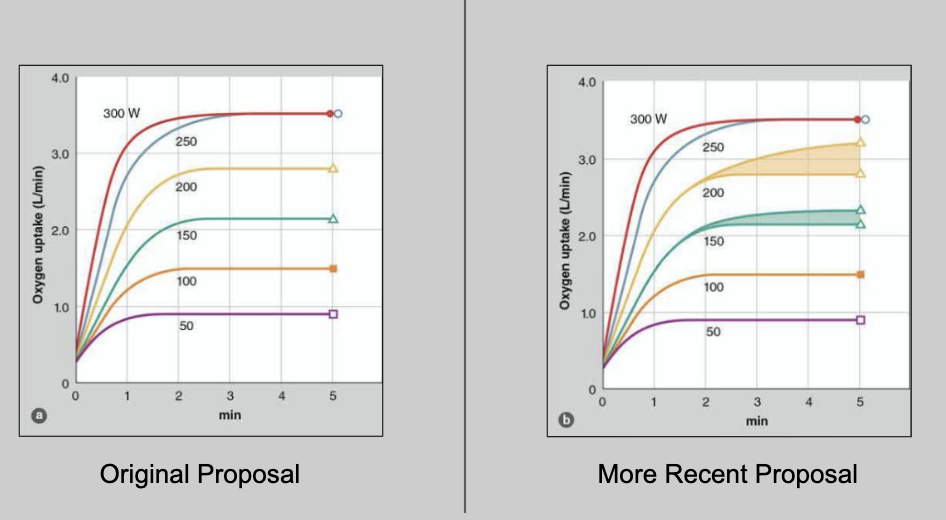
Slow component of O2 uptake kinetics (submaximal aerobic exercise)
* At high power outputs, V O2 continues to increase beyond typical 1-2 min required for steady state
* More type II (less efficient) fiber recruitment occurs.
* More type II (less efficient) fiber recruitment occurs.
56
New cards
VO2 drift (submaximal aerobic exercise)
* Upward drift observed during prolonged, submaximal constant power output exercise
* Possibly due to increased ventilation or hormones?
* Possibly due to increased ventilation or hormones?
57
New cards
intensity Metabolism ↑ in direct proportion to ↑ in exercise intensity
58
New cards
submaximal aerobic exercise
At higher work rates, the oxygen consumption (VO2) continues to increase
59
New cards
VO2max (maximal O2 uptake) (Energy Expenditure During Maximal Aerobic Exercise)
* Point at which O2 consumption doesn’t increase with further increases in intensity
* Best single measurement of aerobic fitness
* Best single measurement of aerobic fitness
60
New cards
Improvement plateaus after 8 to 12 weeks of training (Energy Expenditure During Maximal Aerobic Exercise)
* Performance continues to improve
* More training allows athlete to compete at higher percentage of VO2max
* More training allows athlete to compete at higher percentage of VO2max
61
New cards
Energy Expenditure During Maximal Aerobic Exercise
Measured during “incremental exercise to exhaustion” with an exercise mode that uses a lot of muscle mass (typically running)
62
New cards
Energy Expenditure During Maximal Aerobic Exercise
* As maximal effort approaches, VO2 may “plateau” (fail to increase) despite continued increases in work rate
* The extra energy needed to perform the higher work rate is provided by anaerobic metabolism
* The extra energy needed to perform the higher work rate is provided by anaerobic metabolism
63
New cards
Energy Expenditure During Maximal Aerobic Exercise
VO2max expressed in L/min
VO2max normalized for body weight
* ml O2 / kg / min
* More accurate comparison for different body sizes
* Untrained young men 44-50 versus untrained young women 38-42
* Difference due to women’s lower FFM and hemoglobin
VO2max normalized for body weight
* ml O2 / kg / min
* More accurate comparison for different body sizes
* Untrained young men 44-50 versus untrained young women 38-42
* Difference due to women’s lower FFM and hemoglobin
64
New cards
RER > 1.0
Occurs during high-intensity exercise (non-steady state)
65
New cards
RER > 1.0
Violates the rule of 0.70-1.0 for RER (from table)
66
New cards
RER > 1.0
CO2 production may not = CO2 exhalation
67
New cards
RER > 1.0
As lactate buildup ↑ CO2 exhalation ↑
68
New cards
RER > 1.0
* Caused by “non-metabolic” CO2 production from sources other than macronutrient oxidation
* CO2 from bicarbonate (HCO3-) buffering of acid occurs at a high rate during intense exercise:
* H+ + HCO3- ↔ H2CO3 ↔ H2O + CO2
* CO2 from bicarbonate (HCO3-) buffering of acid occurs at a high rate during intense exercise:
* H+ + HCO3- ↔ H2CO3 ↔ H2O + CO2
69
New cards
0\.78-.80
normal range for RER
70
New cards
fat
what substrate is primarily used for RER?
71
New cards
1\.0
RER for 100% CHO
72
New cards
0\.71
RER for 100% fat
73
New cards
0\.2093
assumed FIO2
74
New cards
0\.0003 or 0.03%
assumed FICO2
75
New cards
cardiorespiratory fitness
VO2max often used as a measure of
76
New cards
central factors of cardiorespiratory fitness (determinants of VO2)
* Lungs/airways to move O2 from ambient air to blood
* Heart/blood/circulation to provide oxygenated blood from lungs to tissues
* Heart/blood/circulation to provide oxygenated blood from lungs to tissues
77
New cards
peripheral factors of cardiorespiratory fitness (determinants of VO2)
Tissues (mainly skeletal muscle) to take up and use oxygen to produce ATP
78
New cards
Energy Expenditure During Maximal Aerobic Exercise
* Remember that no activity is 100% aerobic or anaerobic (mixture of metabolic systems with considerable overlap)
* Estimates of anaerobic effort involve
* Excess postexercise O2 consumption (EPOC)
* Lactate threshold (LT)
* Estimates of anaerobic effort involve
* Excess postexercise O2 consumption (EPOC)
* Lactate threshold (LT)
79
New cards
greater >
* At onset of exercise: O2 demand _____ O2 consumed
* Aerobic metabolism is “slow to get going” (1-2 min)
* Anaerobic metabolism makes up the difference
* Aerobic metabolism is “slow to get going” (1-2 min)
* Anaerobic metabolism makes up the difference
80
New cards
O2 deficit
* The difference between the O2 required for a given exercise intensity (steady state) and the actual oxygen consumption
* Creates an “O2 debt” that must be consumed after exercise ends, to rectify what was disrupted by anaerobic metabolism (now called EPOC)
* Creates an “O2 debt” that must be consumed after exercise ends, to rectify what was disrupted by anaerobic metabolism (now called EPOC)
81
New cards
Excess Post-Exercise Consumption
After exercise cessation, oxygen consumption exceeds oxygen demand (your body is consuming more O2 per minute than is needs to perform the function since exercise has stopped)
82
New cards
Excess Post-Exercise Consumption
* O2 needs drop rapidly because ATP hydrolysis & production drop rapidly when muscle contraction stops
* VO2 decreases slowly
* VO2 decreases slowly
83
New cards
excess post-exercise O2 consumption
Extra O2 consumed is called
84
New cards
EPOC
used to repay the O2 deficit incurred
85
New cards
EPOC
* O2 is needed for metabolism to:
* Replenish ATP/PCr stores
* Convert lactate to glycogen (gluconeogenesis)
* Replenish hemoglobin and myoglobin with O2
* Clear CO2 from blood (work of ventilation)
* Replenish ATP/PCr stores
* Convert lactate to glycogen (gluconeogenesis)
* Replenish hemoglobin and myoglobin with O2
* Clear CO2 from blood (work of ventilation)
86
New cards
EPOC
Magnitude of _____ after high-intensity exercise is a crude index of how much anaerobic metabolism was used for ATP production during exercise
87
New cards
Submaximal (steady state)Exercise
Magnitude and duration of EPOC are influenced by intensity of exercise
88
New cards
Maximal (non-steady state) Exercise
* Magnitude and duration of EPOC are influenced by intensity of exercise
* more deficit= more dependent on anaerobic exercise so EPOC is greater
* more deficit= more dependent on anaerobic exercise so EPOC is greater
89
New cards
O2 deficit since O2 demand is greater than O2 consumed in early exercise
Occurs when anaerobic pathways are used for ATP production
90
New cards
EPOC
O2 consumed > O2 demand in early recovery
91
New cards
Lactate threshold (LT)
point at which blood lactate accumulation increases markedly
92
New cards
Lactate threshold (LT)
* Lactate production rate > lactate clearance rate
* Interaction of aerobic and anaerobic systems
* Not the point at which anaerobic metabolism begins (common misconception)
* Good indicator of potential for endurance exercise
* Interaction of aerobic and anaerobic systems
* Not the point at which anaerobic metabolism begins (common misconception)
* Good indicator of potential for endurance exercise
93
New cards
Lactate Threshold
Usually expressed as percentage of V O2max
94
New cards
higher lactate threshold
= better endurance performance
* Typically occurs at 50-60% VO2max in untrained individuals
* Elite endurance athletes may not reach until closer to 70-80% of VO2max
* Typically occurs at 50-60% VO2max in untrained individuals
* Elite endurance athletes may not reach until closer to 70-80% of VO2max
95
New cards
lactate threshold
For two athletes with same V O2max, higher ________________ generally predicts better performance
96
New cards
economy of exercise
As athletes become more skilled, they use less energy for a given pace
97
New cards
Energy of Exercise
* Is truly independent of V O2max
* Body learns energy economy with practice
* Lower VO2 for a given activity implies > economy
* Body learns energy economy with practice
* Lower VO2 for a given activity implies > economy
98
New cards
Multifactorial phenomenon of economy of exercise
* Compared with shorter distance runners, marathon runners are shown to be more economical
* Practice lends better economy of movement (form)
* Varies with type of exercise (running vs. swimming)
* Practice lends better economy of movement (form)
* Varies with type of exercise (running vs. swimming)
99
New cards
Economy of Exercise – Walking
* Among healthy adults, walking economy varies minimally because walking is a skill that most people have mastered
* Economy is low in some conditions
* Movement disorders (e.g. cerebral palsy)
* Older age
* Economy is low in some conditions
* Movement disorders (e.g. cerebral palsy)
* Older age
100
New cards
1. High V O2max
2. High lactate threshold (as % V O2max)
3. High economy of effort
4. High percentage of type I muscle fibers
Physiological Predictors of Endurance Performance
 Note
Note  Flashcards (100)