CSCI 70 Exam Polymorphism, Functional Programming
 Studied by 0 people
 Call Kai
 Learn
Learn Practice Test
 Spaced Repetition
 Match
Match Flashcards
 Knowt Play
1/165

There's no tags or description
Looks like no tags are added yet.
Name | Mastery | Learn | Test | Matching | Spaced | Call with Kai |
|---|
No analytics yet
Send a link to your students to track their progress
166 Terms
Polymorphism
“Many forms”
Allow several definitions under a single function/method name
Ex. “move” means something for a person object but means something else for a car object
2 Types of Binding
Static binding
Dynamic binding
Overloading
type of polymorphism
enables subroutines to share the same name
Subtype polymorphism
Occurs in object-oriented contexts
Method resolution within the class inheritance hierarchy introduces interesting features and complications
Static VS. dynamic method binding
Parametric polymorphism
abstracts a subroutine over its parameters by allowing type parameters in its definitions (generics)
Operators
In C++, operators like =, +, *, ==, etc. can be defined, just like methods
Method overloading
ability to define multiple methods with the same name but different parameters within a class
class Matrix {
   Matrix operator+(Matrix m) { … }
}

c = a + b; // equiv to c = a.operator+(b);What impacts how OO languages’ implement subtype polymorphism?
Inheritance and Dynamic Binding
Same method across inheritance hierarchy (classes & subclasses)
Method designed to work for a given type (class) but are applicable to its subtypes (subclasses)
Method (same signature) applies to subtypes but can be overridden
Inheritance/Type Extension
Let D be a subclass of C (C is a superclass or a base class; D is a subclass or a derived class)
Data and methods in C are accessible in D unless otherwise specified
Inheritance/Type Extension: Subtype polymorphism
Ability to use D in a context that expects C
D objects can be viewed as C objects
Which option best describes inheritance/type extension?
A mechanism in OOP where a new class reuses, extends, or modifies the behavior of an existing class. The subclass gains access to the data and methods of the superclass unless restrictions are declared. This enables code reuse, hierarchical classification, and the possibility for a superclass reference to point to subclass objects, though method overriding introduces complexity regarding which implementation is ultimately executed.
Which best defines subtype polymorphism?
The principle that a value of a subclass type may be used wherever a value of the superclass type is expected. A reference of the superclass may point to an object of the subclass, and overridden methods are resolved based on the actual object’s type during runtime, introducing dynamic dispatch.
True or False: If D is a subclass of C, then all methods in C are automatically copied into D and become independent versions, so overriding in D does not affect how those methods behave when called through a C reference.
False (Methods are not copied — they're inherited, and overriding affects dynamic dispatch.)
True or False: A subclass always has unrestricted access to all data fields of the superclass.
False (Access depends on visibility modifiers.)
Which option correctly describes how overridden methods behave when a superclass variable refers to a subclass object?
The version of the method in the subclass runs, because method dispatch is determined by the actual object type at runtime, not by variable type, which is the essence of subtype polymorphism and dynamic binding.
Which situation demonstrates subtype polymorphism correctly?
You use a subclass instance anywhere a superclass type is expected, and overridden methods behave according to the subclass version, not the superclass version.
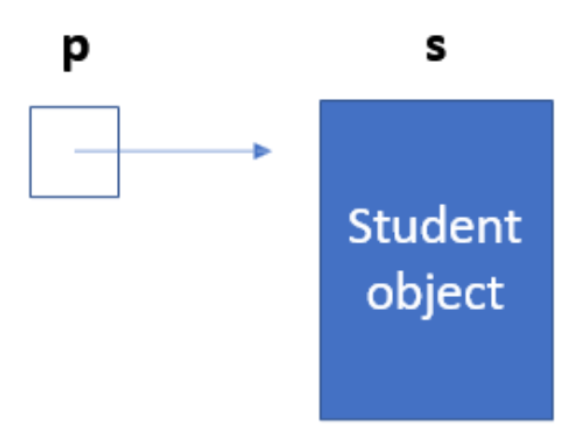
Superclass Variables and Subclass Objects in C++
Create Student object named s
Take the address of that object and store it in a pointer of type person* (the superclass pointer).
This is allowed because a Student is a Person. There’s no automatic binding to the subclass methods, but you can call virtual methods (if Person has virtual functions) and get dynamic dispatch
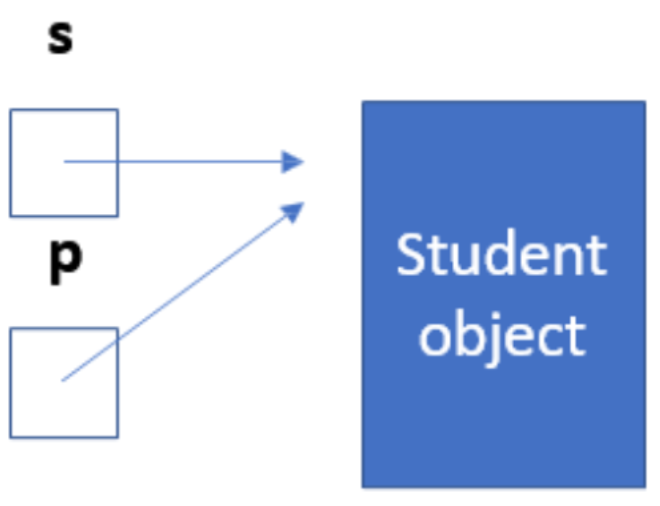
Superclass Variables and Subclass Objects in Java
Create a Student object and assign it to a variable of type Person.
Since Java variables are references, both s and p refer to the same underlying Student object.
The type of the reference (Person) is the static type, but the actual object is a Student (dynamic type)
Superclass Variables and Subclass Objects in C++ vs Java Code
C++
student s;
person *p = &s;
Java
Student s = new Student();
Person p = s;Static Method Binding
Use the type of the variable (reference)
Determined at compile-time
Method is applicable to all of its subtypes anyway
Default
Dynamic Method Binding
use the type of the actual object
Determined at run-time (comes with overhead)
More appropriate response if method is overridden
Think of an array of superclass references referring to objects of its different
Subclasses
What kind of binding does C++ use by default?
Static Binding
Else, need to mention that methods are virtual meaning programmer expects the method to be overridden by derived classes
If method is virtual…
C++ calls the method from the actual object decided at run time
“I will call the method that belongs to the actual object, not just the pointer type.”
Dynamic binding
If method is not virtual…
C++ calls the method from the pointer type decided at compile time
“I will call the version of the method that matches the pointer type, not the actual object.”
Static binding
Java is _____ binding by default
Dynamic Binding
Java automatically chooses the method based on the actual object, not the variable type
No need to write virtual like C++
Java assumes “everything can be overridden,” unless you mark it otherwise
If you have:
a Person class
a Student class that extends Person
and you store a Student inside a Person variable
Person p = new Student();
p.speak();
What version will java call for p.speak(); ?
Java will call the Student version of speak()
Because Java always asks:
“What object are you REALLY? Oh, you're a Student? Then I'll call the Student method.”
If the subclass overrides the method, what does Java do?
Java uses the subclass method.
If it doesn’t override it → Java moves up the class tree until it finds a version.
This is called method overriding.
What method to use if the Student does override the method but still wants to use the parent’s version? (Java)
super.speak();
This means: “Run the Person version of this method.”
How is dynamic binding implemented in Java?
Through virtual method tables (“vtables”):
List inside Java that maps addresses of virtual methods for each class
Every class has its own vtable
Java (since its methods are virtual; except static and final methods) and C++ (for its virtual methods) employ vtables
Virtual Methods
Methods that the programmer anticipates to be defined in derived classes (subclass) of the base class (superclass)
Base class may or may not define the method
If not defined, C++ calls the method a pure virtual method (=0).
In Java, undefined methods are labelled abstract
Abstract Class
A class that cannot be created directly (you can’t make an object from it)
At least one method is abstract
Template or blueprint for other classes
“Here are the rules and structure. The subclasses must finish the details.”
Interface (Java keyword)
If all methods in a class are abstract/not defined
Analogy:
Abstract class = a partially built house:
Some parts already built, some parts must be completed by subclasses.
Interface = a checklist:
“If you call yourself this kind of thing, you MUST have all these functions.”
No construction, no real code—just requirements.
Concrete Classes
Provides actual definitions for methods specified in the abstract class or interface that it extends (or implements)
Abstract classes, Interfaces, and Concrete Classes
Abstract classes are “incomplete” concepts (e.g., shape)
Interfaces focus on what things do (names), not how they are done
Concrete classes flesh out the details
How are abstract classes/interfaces used meaningfully?
Can’t create objects from an abstract class or an interface, BUT can use them as variable types
Because they describe what the object can do, so you can refer to any object that follows those rules.
They’re used to define shared rules or behaviors that different classes must follow
Help enforce consistency and make programs easier to organize and extend
Static Methods and Polymorphism
Methods applicable to a class, not its objects
Works on static/class-level data
Can have the same method name across classes but these have no “inheritance” relationships
Overloading, not parametric or subtype polymorphism
Resolved at compile time
Think of public static void main(…) methods in Java
Generics and Parametric Polymorphism
parametric polymorphism → “polymorphism by parameters (types)”
Same code applicable in different instances (for different parameter types)
Template code defined once and then instantiated for types as needed
Multiple copies of the code could be produced
Parametric Polymorphism vs Function Overloading
Overloading = you write separate versions of the function for each type.
Generics = you write ONE general version, and the compiler adapts it.
Why does Generics and Parametric Polymorphism exist?
Saves time
Less duplicated code
Less chance for mistakes
Works for ANY type that fits the rules
When can instantiation be done in Generics and Parametric Polymorphism?
Compile time
Containers
Classes that hold collections of any type of object
Types of contained objects are not important
But the methods of the container behave in a standard way
Why are generics commonly used with containers?
They allow containers to store any type while still being type-safe.
You write one container class but can use it for any type: List<Integer>, List<Student>, etc.
What happens if a language does not support generics?
Containers must store everything as
Object(the most general type).This removes type safety and forces you to cast items manually.
What is the problem with storing everything as Object in Java?
Every element must be treated as the most general type, so the compiler can’t detect wrong types, forcing you to cast manually and risking runtime type errors.
What does “parameterizing a class” mean in the context of generics?
Class takes a type parameter, letting you use it with different data types without rewriting it.
Multiple Inheritance
When a class has more than one parent
Derived class inherits functionality of base classes
Why is Multiple Inheritance risky or difficult?
Because if the two parent classes have:
the same method name,
or the same variable,
or conflicting behavior,
the child class might not know which version to use.
What do languages do to avoid the problems of Multiple Inheritance?
Java:
“Mix-in inheritance”
A class can only extend one superclass,
But can implement multiple interfaces
Function
A mapping that takes an input from a domain (set of allowed inputs) and produces an output in a range (set of possible outputs)
Function definition has 2 parts: signature and mapping rule
Different Ways to define functions in programming languages
Lisp (CLISP): (defun square (x) (* x x))
Python: def square(x):
return x*x
Function Signature
Header
name, domain, range
square: integer → integer
Meaning: square takes an integer and returns an integer.
Function Mapping Rule
Body
Describes how the input is turned into the output
Specifies range value for each domain value
square(n) = n × n
This tells you: Take the input n, multiply it by itself, and that’s the output.
Function Application (How it works)
Definition: Using a function by giving it an input
Element from the domain is chosen
Element replaces the parameter in the definition
Other function applications are carried out
Yields an associated element (output) in the range
Function Application of square(n)
Function: square(n) = n × n
Application: square(2)
→ replace n with 2
→ compute 2 × 2
→ result is 4.
Variables in Functional Programs
In a function definition, a variable stands for any member of the domain set
During function application, a variable is bound to one specific value (and it never changes thereafter)
Sometimes better to refer to variables as names
True or False: Concept of a variable in functional programs is different from a programming variable
True – because functional variables represent fixed values and do not change once defined
Values
Traditionally, functional languages would support values for
primitive types (e.g., numbers and strings)
and a single high-level data structure type like a list
Values are bound to variables or names
Lisp example: 2 x * square
True or False: Functions themselves are values
True – because functions can be treated like any other data: stored, passed, and returned
Components of a Functional Programming Language
A set of data objects
Numbers, lists, etc.
A set of built-in functions
For manipulating data objects
A set of functional forms
Higher-order functions
For building new functions (e.g. defun in Lisp)
Lambda Calculus
A model of computation using functions
Underlying theoretical model for functional languages
Expressions of lambda calculus:
Identifiers (names) or constants ( e.g., y or 2 )
Function definition ( e.g., x.x*x )
Function application ( e.g. (x.x*x 3) )
Expression Evaluation
Outermost evaluation
Replace arguments before evaluating them
Innermost evaluation
Evaluate arguments first before substituting
Decision in Functional Programming
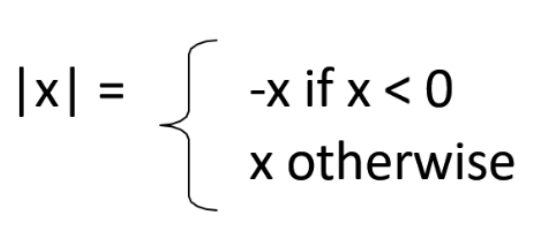
Can view “if” as a function with 3 arguments
Condition
Then-result
Else-result
Example: abs(x) = if(x<0, -x, x)
“Iteration” in Functional Programming
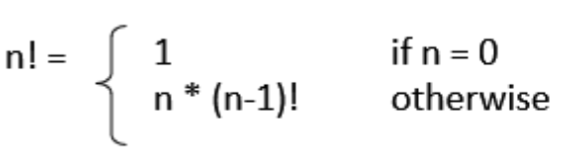
Use recursion to carry out the equivalent of an iterative process
Recurrence relations are common in math function specification
Example: fac(n) = if(n=0,1,n*fac(n-1))
Functional Programming Environments
Environments are often interpreters that are interactive
Commands from user are expressions that are repeatedly evaluated
Set of bindings (variable to value) is maintained and updated on each command
Sample Languages
LISP: list processing
APL: assignment-oriented (not pure) but applicative
ML: strongly-typed functional programming
Haskell: outermost evaluation
LISP
Lisp: List Processor
Designed in 1958 by McCarthy (2nd oldest programming language)
Functional programming language, interpreted
Based on symbolic expressions, lists, functions, recursion
LISP Symbol
String of characters (letters, digits, and hyphens)
Examples: x Move a1 turn-right SQR
NOT case sensitive
LISP Number
Examples: 123 -1.234 8e99 -7.8E-23
Just like int or double constants in C/Java
LISP Lists
Sequence of symbols, numbers, or lists
Examples:
(a b c d e 1 2 3)
(This list (contains (4 elements)) (really))
Expressions that aren’t lists are atoms
Examples: A 1 really
Note: there are other atoms outside of number and symbols
LISP Empty List
Empty list is nil
nil is a special symbol
both a list and an atom
LISP Expressions and the LISP Interpreter
Interpreter repeatedly:
Prompts for a well-formed expression
Evaluates the expression
Returns a response
>(expt 5 2)
25
>(first ’((a b) c (1 2) 3))
(a b)Functions
(a b c) when evaluated means a is evaluated with args b and c
Ex: (expt 5 2) evaluates to 25
Syntax: (func arg1 arg2 arg3 …)
Some functions allow a variable number of arguments
Ex: (+ 1 2 3 9 8 7) evaluates to 30
LISP Built-in Functions
Numeric functions
Quote function
List access functions
List construction functions
Predicates
setq
defun
Conditions: if and cond
Numeric Functions: Arithmetic operators
+ - * /
e.g., (+ 5 8) evaluates to 13
Multiple arguments applicable, e.g. (+ 5 8 3 2) evaluates to 18
Numeric Functions: sqrt
one argument, computes square root
Numeric Functions: expt
2 arguments, raises first argument by the second argumente
e.g., (expt 6 2) evaluates to 36
Numeric Functions: min, max
may have one or more arguments
Numeric Functions: mod
2 arguments, computes a remainder
Numeric Functions: abs
absolute value
Numeric Functions: sin, cos, tan
trigonometric functions
Quote Function
quote or ’ prevents an expression from being evaluated
(quote exp) same as ’exp
>(expt 3 2)
9
>’(expt 3 2)
(expt 3 2)
a
Error since a can’t be evaluated
>’a
aList Access Functions: first or CAR
returns the first element of its argument list
List Access Functions: rest or CDR
returns a list containing all but the first element of a list
List Access Functions: last
returns the last element (as a list) of a list
List Access Functions: length
returns the number of elements in a list
What does this output?
(first ‘(a 1 b 2 z))a
What does this output?
(rest ‘(a 1 b 2 z))(1 b 2 z)
What does this output?
(last ‘(a 1 b 2 z))(z) sends as a list
What does this output?
(length ‘(a 1 b 2 z))5
What does this output?
(first ‘((a 1) b (2) z))(a 1)
What does this output?
(rest ‘((a 1) b (2) z))(b (2) z)
What does this output?
(length ‘((a 1) b (2) z))4
What does this output?
(rest ‘(x))NIL
List Construction Functions: cons
takes two arguments; returns the result of inserting the first argument in front of the second argument (opposite of first/car)
(cons ‘a ‘(b c d)) => (a b c d)
List Construction Functions: append
takes two list arguments; returns a concatenation of the two lists
(append ‘(1 a 2) ‘(x y)) => (1 a 2 x y)
List Construction Functions: list
returns a list of all its arguments
(list ‘a ‘b ‘x ‘y ‘z) => (a b x y z)
What does this output?
(cons ‘(a b) ‘(1 2 3))((a b) 1 2 3)
What does this output?
(append ‘(a b) ‘(1 2 3))(a b 1 2 3)
What does this output?
(list ‘(a b) ‘(1 2 3))((a b) (1 2 3))
Predicates
listp
numberp
integerp
symbolp
atom
and (allows variable args)
or (allows variable args)
not
 Note
Note  Flashcards (36)