History of Art Design final Part 2
 Call Kai
 Learn
Learn Practice Test
 Spaced Repetition
 Match
Match Flashcards
 Knowt Play
1/30

There's no tags or description
Looks like no tags are added yet.
Name | Mastery | Learn | Test | Matching | Spaced | Call with Kai |
|---|
No analytics yet
Send a link to your students to track their progress
31 Terms
Good Design
This kind of design was made after the war. Includes everyday items, buildings, kitchen supplies, household objects, garden supplies.
Movement that originated in 1930's but took form after WWII as postwar design. Includes buildings, furniture and everyday objects. Also known as International Style/Modernism.
Universal set of standards that raised general cultural awareness or instilled democratic values.
international style
The international prevalence of design initiatives amid a cultural environment of reconstruction and strong economic recovery following the end of WWII.
This is an architectural style that came to pass in the 1920's and 1930's. Glass, steel, and concrete
Architectural style. Emphasis on style, form and aesthetics rather than social aspects of modern movement. Rectilinear forms, light, taut plane surface completely stripped of applied decor, open interior spaces, visually weightless quality. Glass, steel and concrete.
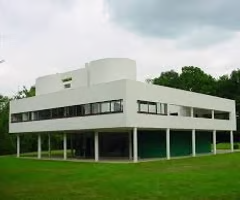
modularity
A design system that subdivides a system into smaller parts that can be independently created and then used in different systems.
is a design approach that subdivides a system into smaller parts called modules or skids, that can be independently created and then used in different systems
Theme. School of Modular Constructivism. Sculpture and architectural features out of repetitive units cast in concrete.
Fitness to purpose
Assess a product against its stated purpose by manufacturers, marketing departments or customer's needs.
Process that equates quality with the fulfillment of a stated outcome or purpose.
corporate identity
The overall image of a corporation, firm or business in the minds of the public. In the 1950's logos, marketing, and advertising techniques helped shape businesses corporate identities.
the manner which a corporation, firm or business presents themselves to the public, such as customers and investors as well as employees.
Visual system based on repeated use of fixed graphic elements to create a unified image. Example is Paul Rand for IBM and ABC in the 50's and 60's.

consumer culture
A social and economic order and ideology that encourages the acquisition of goods and services in ever-greater amounts. Fueled by planned obsolesces and advertising.
theory is the study of consumption choices and behaviors from a social and cultural point of view, as opposed to an economic or psychological one.
1950's. Wartime tech. applied to consumer products. Number of consumers increased dramatically. Indifference to "Good Design". Planned obsolescence. Generally refers to patterns of human activity and the symbolic structures that give such activity significance.
Tailfin
an upswept projection on each rear corner of an automobile, popular in the 1950s.
Automobile styling encompassed in the 50's and 60's. Found on fenders. Got criticism in the 1950's because it was seen as superfluous.
Suburbia
the suburbs or their inhabitants viewed collectively.
Separate residential community within commuting distance of a city. Levittown. Young families, returning veterans, child-oriented. More disposable income than middle class has ever seen. Promised bright future, growth in consumer culture.
A residential area that is usually directly outside of the city. Arose with the increase in affluence and leisure after WWII.
Levittown
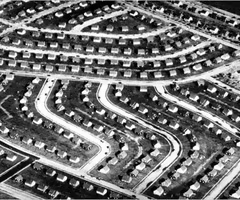
Suburban developments created after WWII. Production was modeled in an assembly line manner and thousands of similar or identical homes were produced easily and quickly, allowing rapid recovery of costs.
is the name of four large suburban developments created in the United States of America by William Levitt and his company Levitt & Sons. Built after World War II for returning veterans and their new families, the communities offered attractive alternatives to cramped central city locations and apartments.
1950's. Suburbia. After WWII William Levitt mass produced suburban houses. Very uniform. Enforced restriction of gender relations and was a segregated environment.
How does International Modernism differ from the Modern Movement?
International Style incorporated standards reminiscent of reform. Had more emphasis on architectural style, form and aesthetics than the social aspects of the modern movement.
How did design production change after World War II?
Technical and mechanical advancements. Lots of resources. Mass culture.
Plastics
First discovered in mid-19th century. Used and inexpensive substitutes for precious materials. Became widely used after WWII with rapid tech. development. Had a unique combo. of properties (lightness, color, malleability, cheapness, impervious to water). Used in the 60's for versatility of material.
Harnessed for consumers after WWII. Revolutionized product design by opening up new possibilities.
a synthetic material made from a wide range of organic polymers such as polyethylene, PVC, nylon, etc., that can be molded into shape while soft and then set into a rigid or slightly elastic form.
Bakelite
is an early plastic. It is a thermosetting phenol formaldehyde resin, formed from a condensation reaction of phenol with formaldehyde
One of the first plastics made from synthetic components. Discovered by Leo Baekland. Used for its electrical nonconductivity and heat-resistance properties in radios, telephones, kitchenware, etc.

injection molding
New process of molding plastics created in the 1960's.
the shaping of rubber or plastic articles by injecting heated material into a mold.
1960's. Manufacturing process for producing parts by injecting material into a mold. Most commonly used with thermoplastic polymers. Expanded rapidly because WWII created a huge demand for inexpensive, mass produced products.
Product housing
Mass produced housing. Allowed for reasonable pricing, fast building and houses fit amongst the grid.'
Generally refer to the shells enclosing mechanical products. During the 1960's the bulbous sculptural forms of many appliances and office machines in metal housing were generally replaced with more compact shapes
information graphics
Simplifying the complex nature of modern information through the use of accessible and reductive symbols. Part of international modernism.
visual representations of information, data or knowledge created with the intention of presenting complex information quickly
Communicating information without assuming any previous knowledge of the topic. Symbols based upon abstract shapes to convey universal messages. Pictograms.
What happened to the ideals of Good Design in the 1960's?
Plastics were introduced, new technologies like injection molding.
formica
A hard formed form of hard plastic laminate attached to plywood backing for tables and countertops.
a hard durable plastic laminate used for countertops, cupboard doors, and other surfaces.
Form of hard plastic laminate attached to plywood for tables and countertops. Variety of colors and patterns. Prefabricated DIY.
Do-It-Yourself
DIY, "Do-it-yourself" mentality. Home improvement. Self-fulfillment.
(of work, especially building, painting, or decorating) done or to be done by an amateur at home. DIY, "Do-it-yourself" mentality. Home improvement. Self-fulfillment.
Movement that encouraged consumers to become designers for themselves.
Youth Culture
Culture that tested the boundaries of inherited values and norms of "proper" behavior, enacted through dress and leisure activities.
is the way adolescents live, and the norms, values, and practices they share. Culture is the shared symbolic systems, and processes of maintaining and transforming those systems. Youth culture differs from the culture of older generations.
The idea that adolescents as a group have customs, values and beliefs separate from the culture of adults.
Counterculture
Lifestyles and values opposed to those of the established culture.
a way of life and set of attitudes opposed to or at variance with the prevailing social norm.
Characterized by permissiveness and self expression among youth and those older groups wishing to identify with a more open lifestyle, to non-conformism or rebelliousness.
Postmodernism
Design enterprise in which there is increased efficiency, target marketing, and reduced material costs due to the shift from mechanical to digital components
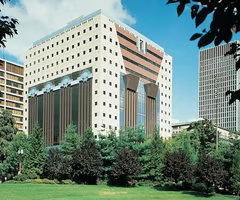
Against International Modernism. Plurality, eclecticism, decorativeness. "Less is a bore". Acceptance of diversity and breaking down of social boundaries. Many postmodern designers were reaching a wider audience. Example is the Michael Graves Portland Office Building.
Punk
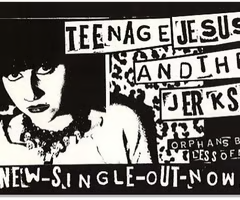
Late 70's/Early 80's. Aggressive, destructive and uninhibited. Expressed in music, poetry, visual arts, publishing. Sex Pistols. First ever subculture in the history of youth culture. Sought to separate themselves from mainstream.
Movement characterized by aggressive, destructive, and uninhibited music, poetry, and visual arts that attacked mainstream culture. Tattooing, hair dyeing, and graffiti.

What did Postmodernism mean in design in the 1980's?
Visually thrilling multifaceted style. Brought radical freedom to art and design and a new self-awareness about style. Vivid color, theatricality and exaggeration. Combination of subversive statements with commercial appeal. Connecting with consumer culture. "User-oriented approach to design". The punk movement, New wave of American graphic design, commercialism.

How does Postmodernist design differ from Modernist design?
Modernism felt traditional forms were becoming outdated and strived for something new. Postmodernism takes issue with the reason, objectivity, science and constructs of modernity. Reaction and skepticism against Modernism. Less connected to reform and more connected to consumer culture.
What did the Punk movement contribute to contemporary design practices?
Highly theatrical use of cosmetics and hairstyles, clothing adapted or mutilated. Changed graphic design. Neville Brody's typography. New wave American graphic design. Vivienne Westwood. Appropriation. Break from the grind, edgy, value of form over function
How do people engage with design in the course of their daily lives, apart from their roles as consumers?
Antique and design market, collecting.
What are some of the central issues in contemporary design?
International brands and Multinational corporations, Fast vs slow, global and social responsibility (outsourcing of production), Tech. intertwined with design.
Antiques Roadshow
PBS program in which expert appraisers uncover the stories and reveal the true value of objects brought in by amateur collectors.
Green Design
Design that promotes the reduction in consumption and materialism, as well as environmentally conscious approaches to design.
Universal Designs
The design of products and environments to be usable by all people, to the greatest extent possible without the need for adaptation or specialized design.
Explore top notes

