HEAT TRANSFER
 Call Kai
 Learn
Learn Practice Test
 Spaced Repetition
 Match
Match Flashcards
 Knowt Play
1/35

There's no tags or description
Looks like no tags are added yet.
Name | Mastery | Learn | Test | Matching | Spaced | Call with Kai |
|---|
No analytics yet
Send a link to your students to track their progress
36 Terms
steam point
temperature where water boils at 1 atm pressure
ice and steam point in celsius
0, 100
ice and steam point in fahrenheit
32f, 212f
1c equivalent to how much in fahrenheit
9/5f
kelvin formula
Tk = Tc + 273.15
ice point in kelvin
273.15
lowest possible temperature in kelvin
absolute 0k, below this objects can no longer be cooled
unit for coefficient of linear expansion
1/C
heat
energy flowing from high to low temperatures due to temp differences (J)
where does heat flow (hot to cold) originate
internal energy of hot object
specific heat capacity tells you + formula
amt heat energy supplied/removed to change temperature of substance (mcdelta T)
unit of SHC
J/(kg·°C)
shc of gases
depends if pressure/volume constant
1 cal to joules
4.186 j
1 kcal to joules and cals
4186 j, 1000 cal
thermal equilibrium for heat formula
|Q gained| = |Q lost| (Q = mcdelta T)
latent heat formula
Q = mL
latent heat definition
HEAT SUPPLIED OR REMOVED WHEN CHANGING THE PHASE OF A SUBSTANCE
latent heat of fusion
solid to liquid
latent heat of vaporization
liquid to gas
latent heat of sublimation
solid to gas
convection
heat carried (from 1 place to another) via bulk movement of fluid
conduction
heat transferred directly thru material
mechanism of conduction
atoms in hotter object vibrate more energetically than in cooler object. molecules in both systems undergo collision, high molecules transfer energy to less
thermal conductor
conducts heat well (heat passes easily) e.g. metals
thermal insulator
conducts heat poorly e.g. air, wood
units of conductivity
J/smC
what makes a good thermal insulator
dead air space
radiation
energy transferred via electromagnetic waves. good absorbers = good emitter
perfect blackbody
absorbs electromagnetic wave completely
factors of conduction
time of conduction
temperature in both objects
cross sectional area
length of bar
volume thermal expansion formula
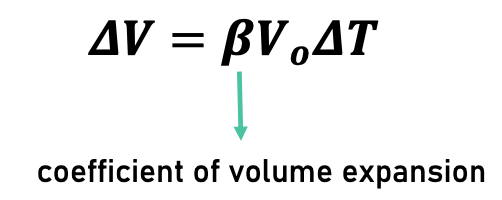
linear expansion formula
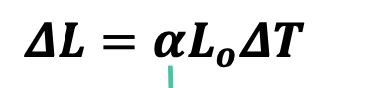
fahrenheit to celsius and vice versa formulas
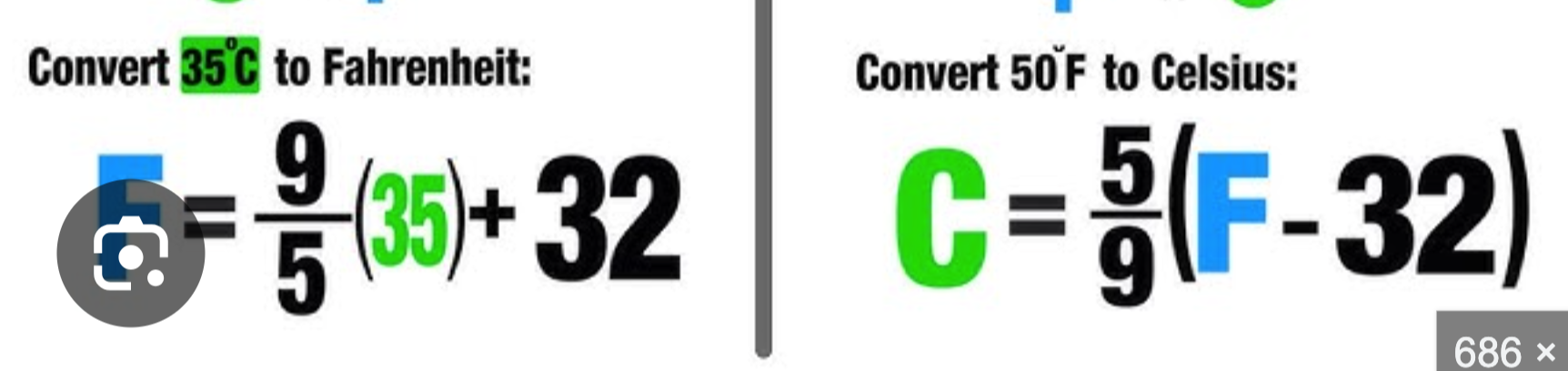
thermal conductivity formula
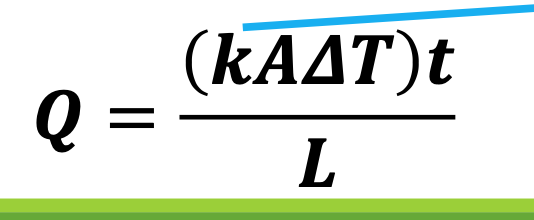
k = thermal conductivity
A = area
L = length of bar

