ANTH250 Midterm
 Studied by 1 person
 Call Kai
 Learn
Learn Practice Test
 Spaced Repetition
 Match
Match Flashcards
 Knowt Play
1/116

There's no tags or description
Looks like no tags are added yet.
Name | Mastery | Learn | Test | Matching | Spaced | Call with Kai |
|---|
No analytics yet
Send a link to your students to track their progress
117 Terms
what was the scientific revolution and what started it
for contemporary evolutionary theory to develop, huge shifts were needed:
time
geological process
diversity and complexity
place of humans in the natural world
Nicolaus Copernicus’ hypothesis of heliocentrism was the main factor leading to the scientific revolution
uniformitarianism
time aspect of the scientific revolution
geological forces that produce gradual changes on the earth today, also did in the past
concept developed by James Hutton
further associated with Charles Lyell who is accredited with the spread of, and wider use of uniformitarianism as a concept through his treatise Principles of Geology
required that earth was ancient
mutability
accepting the possibility of biological change
microevolution
associated with the ‘mutability’ aspect of scientific revolution
small-scale evolutionary events occuring within a population over the span of a few generations, affecting the frequency of specific characteristics not involving species formation
associated with Le Comte de Buffon
organisms are capable of being transformed as their environmental circumstances change (species not mutable though)
Species Evolution
Associated with ‘mutability’ aspect of scientific revolution
associated with Jean-Baptiste Lamarck
organisms and their environments interact dynamically to produce ever-increasing complexity of perfection
George Cuvier
associated with ‘time’ aspect of scientific revolutionary development
contributed to development of the comparative method
understanding relationships between organisms by comparing their similarities and differences
Principles of correlation of parts
established the fact of EXTINCTION
systematic study of fossils
Principle of correlation of parts
organisms are functionally integrated wholes
barrier to accepting the possibility of evolutionary development
law of superposition
layers (“strata” ; singular “stratum”) within a sedimentary geological deposit are laid down from oldest to most recent, permitting assignment of relative dates to items contains in the deposit
scientific method
Theory: explanatory statement or arguments to a particular set of phenomena supported by observation
hypothesis: a testable prediction about a phenomena or even, based on current knowledge
Jean Baptiste Lamarck
gave first modern theory of species evolution
became prof of zoology at Royal Botanical Garden in Paris
coined term invertebrate
published monograph Philosophie zoologique → 1809
Lamarck’s two laws
Law of Use and Disuse
Law of Inheritance of Acquired Characteristics
Law of Inheritance of Acquired Characteristics
adjustment of organisms to environments of culmination
as environments change, the needs of animals change to maintain harmony with new circumstances
new needs are stratified by changes in an organism’s behaviour and habits (called efforts by Lamarck)
these behavioural changes physiologically alter-develop, enlarge, or reduce as necessary - some aspect of the organisms structure
changes resulting from use and disuse will, if occurring in both parents, be transmitted to offspring
Law of Use and Disuse
organisms do not proceed uniformly toward a state of perfection but must constantly adjust to changes in their circumstances
use or disuse of parts, reflecting an organism’s needs and circumstances will cause that part to develop or reduce
darwins ideas
evolution will occur when the following conditions are met
Variation
naturally occurring
Reproduction > Resources
potential to reproduce > rate that resources increase
Competition for Resources
struggle for limited resources → mortality
Differential Fitness
traits better suited for survival are passed on
Darwins Four Elements of Natural Selection
all populations vary, individualy by individual; often noticeably in terms of size and shape, but also in smaller and more subtle, yet not less important, ways. such as shades of colour or expression of behaviour
all populations have the potential to reproduce at a rate in excess of the rate at which necessary resources (food, space, mates, etc) increase
competition for limited resources occurs not jut between members of different species, but, more importantly, among, individuals within a species
at any given moment and in any given circumstance, heritable characteristics possessed by individ
DNA
Function: Protein Synthesis
deoxyribonucleic acid
double helix structure
macromolecule
consisting of smaller molecules called nucleotides which are composed of a sugar, phosphate, and 1 or 4 nucleic bases
Adenine (A)
Guanine (G)
Cytosine (C)
Thymine (T)
Nucleotide
The basic structural unites of DNA or RNA molecules, consisting of a phosphate, sugar, and base
Codon
a unit of three bases/nucleotides that code for a specific protein
transcription
transfer of genetic information carried by DNA (cant leave the nucleus) to mRNA (can leave the nucleus)
first stage of protein synthesis
Process:
two strands of DNA molecule partially separate
free nucleotides arrive and join together with corresponding bases on the separated strands to form messenger RNA (mRNA)
mRNA leaves nucleus as single stranded molecule
translation
Synthesis of a chain of amino acids based on a message carried in RNA
second process in first stage in protein synthesis
process:
once mRNA leaves the nucleus as a single stranded molecule, it travels into the cytoplasm
its message is then translated with the assistance of the ribosome, to which the messenger RNA attaches.
Codons on the mRNA facilitate this process that specify particular amino acids.
gene
a section of DNA made up of the specific section of bases that codes for a specific protein
each gene occupies a specific place on a specific chromosome = its locus
if a gene is a word in a recipe, there can be synonyms for that word
eg. gene for blood type = A, B, O
different versions of a particular gene are called alleles
still contain the instrcutions to make that protein, but with slight variations (eg. which antigen is going to be expressed in your red blood cells
alleles
alternative forms of a gene
blood type
gene’s locus is on Chromosome 9, spot will have 1 of 3 possible alleles (A, B, O)
blood type depends on which 2 alleles of this gene you ultimately get (1 from mum 1 from dad)
Sometimes only one of these alleles are expressed
an alleles is either dominant or recessive
a recessive allele will not be expressed if paired with dominant allele
A and B alleles are dominant
O allele is recessive
Homozygous = 2 of the same alleles
Heterozygous = 2 different alleles
Why does varation matter?
Natural selection acts on variation in traits
variation in traits that can be inherited
more offspring produced than resources can support
differential survival and reproduction
change in allele frequencies over time (evolution)
Gregor Mendel
trained in physics
spent 8 years practicing botany where he spent his time conducting hybridization experiements on plants
chose garden pea plant (pisum sativum)
noted that it exhibited traits that were either present or absent - referred to today as discrete or mendelian traits (traits that are controlled by genes at a single locus)
self-pollinating plants gave Mendel control over which plants could become parents of the next generation (self-fertilized versus cross-fertilized)carries out breeding cycles to create pure-breeding plants (ones that produce offspring with the same physical characteristics each successive generation)
observed the phenotypes (Tall and yellow factors were consistenly observed while short and green factors were hidden)
concluded that every plant carries two factors for each trait (one from each parent)
reffered to as alleles
allele expressed is dominant while one that is hidden is recessive
Mendelian Inheritance
traits are transmitted by genes that occur in pairs (alleles)
alleles are randomly separated during the production of sex cells, so that each sex cell has only one allele from each parent
Principle of Independent Assortment
the distribution of one pair of alleles into the sex cells does not influence the distribution of another pair of alleles
one of two principles put forth by Mendel as a result of his pea plant experiments
Principle of Segregation
the separation of alleles during the productions of sex cells so that each sex cell contains only one allele from each parent
one of two principles put forth by Mendel as a result of his pea plant experiments
taxonomy
associated with ‘diversity’ aspect of scientific revolution
the method by which organisms are classified and assigned to a group (taxon/taxa) based on shared biological, ecological, and behavioural relationships
associated with Carolus Linnaeus’ publication of Systema Naturae
binomial nomenclature → organisms labels according to genus and species (eg. H. sapien
mitosis
division of somatic cells
process:
replication of the 46 chromosomes found in each cell - resulting in 46 double-stranded chromosomes
duplicate pairs line up at the centre of the cell and then diverge so that the strands are separated
the individual strands move towards opposite ends of the cell, the cell membrane constricts in the middle, and two new cells are formed, each containing 46 single-stranded chromosomes
result is two identical diploid cells
meiosis
cell division resulting in the formation of sex cells (gametes)
involves two cell divisions and production of 4 haploid daughter cells, each containing only 23 chromosomes
process:
first stage occurs within ovarian cells (oogonia) and testicular cells (spermatogonia) → 46 single-stranded chromosomes replicate to produce 46 double-stranded chromosomes. these cells arrange themselves and line up at the centre of the cell. the pairs separate, members of each pair move to opposite ends of the cell, and the cell divides to produce two diploid daughter cells, each containing 23 double-stranded chromosomes
each of the daughter cells divides and the paired chromosomes separate, resulting in 4 haploid cells
Increases genetic variation through recombination
How does meiosis differ from mitosis
The first two stages are the same however, there are some important differences in the female side of things
initial division in female ovary produces two primary oocytes but, unlike male spermatocytes, they are not created equal
one oocyte sequesters most of the cytoplasm
does not divide equally; through process of unequal cytoplasmic cleavage, one of the haploid cells (ovum) receives the majority of the cytoplasm
while all 4 of the resulting sperm cells are viable, only the ovum is in females
the other female daughter cells, (polar bodies) are reabsorbed
recombination
crossing over
the exchange of genes between homologous chromosomes during meiosis
meiosis increases variation through process of recombination
occurs when genetic material is exchanged between homologous chromosomes during cell division
result of this nondisjunction is fewer or more chromosomes than normal
cell revieving extra chromosome referred to as trisomic
Best known example of trisomy is Down Syndrome
results from nondisjunction of the ovarian 21st chromosome
at fertilization, child was three rather than 2 normal copies of chromosome 21
nondisjunction
the failure of chromosome pairs to separate properly during meiosis
mechanisms of variation
evolutionary forces that work on changing the frequencies of alleles in a population
natural selection → adaptive mechanism
neutral → important forces (most frequency changes seen are neutral)
environment during development
generation of variation
mutations → only source of NEW alleles
redistribution of variation
increasing or decreasing the relative frequencies of alleles in a population
types of mutations
point mutations
changes in base pairs of gene sequences
deletions
mutations characterized by the loss of DNA
insertions
mutations characterized by the addition of DNA into a length of chromosome
inversions
mutations in which a section of DNA is reversed
single nucleotide polymorphisms
genetic variations that are produced by the substitution of a single nucleotide in a squence. SNPs are point mutations that occur in at least 1% of the population
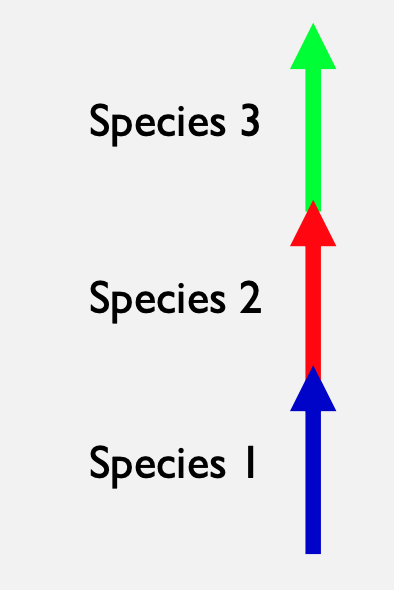
anagenesis
a pattern of slow, linear evolutionary change, also know as Darwinian gradualism
species 1 goes extinct when it becomes species 2 etc.
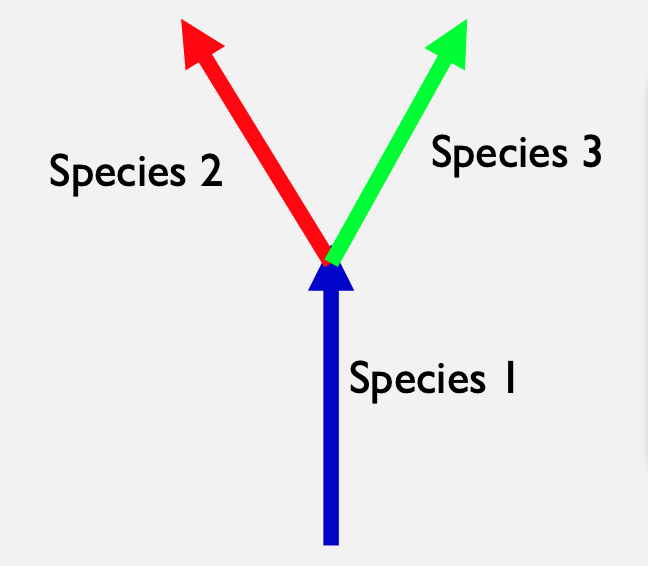
cladogenesis
a pattern of evolution characterized by branching, in which a single species may give rise to one (or more) “daughter” species that subsequently diverge; also known as horizontal speciation
species 1 branches off into 2 or more separate species
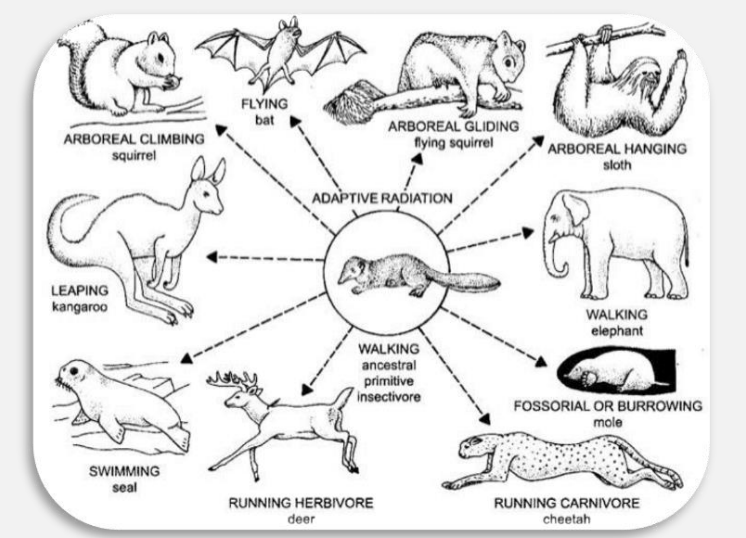
adaptive radiation
the opportunistic and relatively rapid diversification of new forms into new ecological zone through a series of speciation events
one species diverges rapidly into multiple empty niches
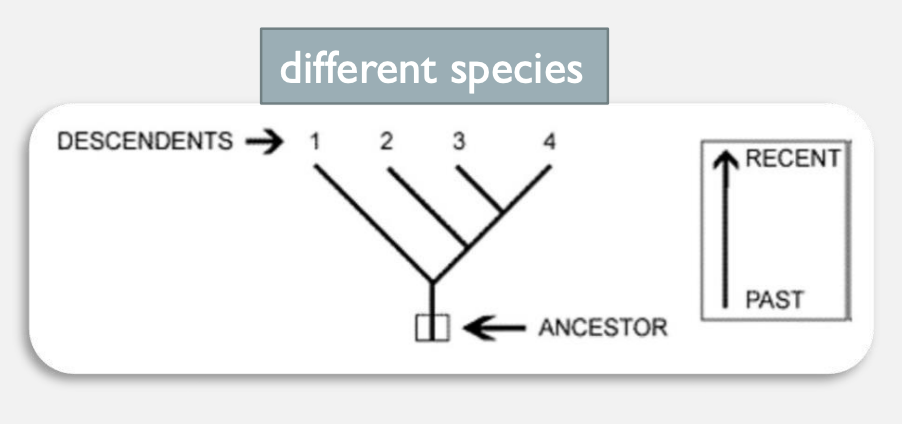
cladogram
diagram showing evolutionary relationships determined by shared traits, inherited from a common ancestor
fewer differences between species 3 and 4 than between species 2 and 4
homologous traits
referring to homology, which is similarity among characters as a result of inheritance from a common ancestor
homoplasies
analogous characters in different taxa that appear as a result of independent evolution; such a character (singular form is “homoplasy”) is not present in the last common ancestor of the taxa in question
individuals evolved similar traits completely independently of each other, because they are the best solution to a shared problem
convergent evolution
a path towards development of homoplasy; evolution acts on different ancestral structures to converge upon a similar outcome in response to similar adaptive pressures
form of directional selection as adaptive response
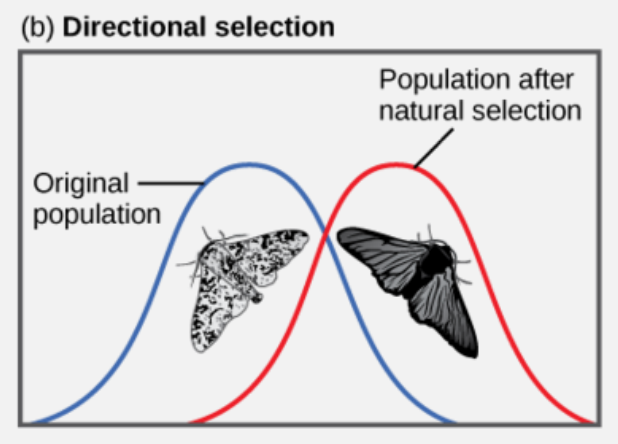
directional selection
a form of positive of negative selection resulting in a shift toward one end of the distribution, typically occurring in dynamic and changing environments
eg. light-coloured peppered moths are better camouflaged against a pristine environment; dark-coloured peppered moths are better camouflaged against a sooty environment → industrial revolution caused moth population to shift from a light to dark colour
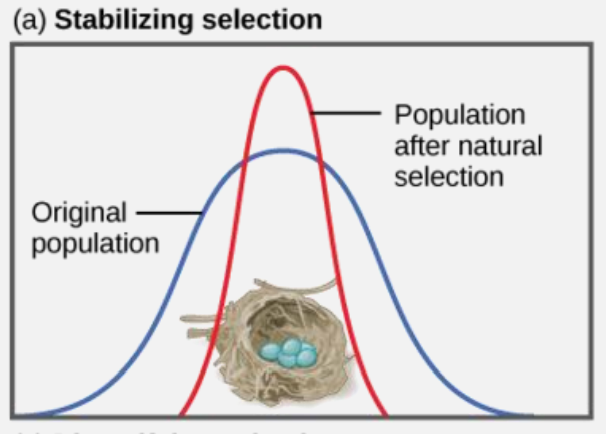
stabilizing selection
A form of selection favouring the most common phenotype at the expense of extreme expressions of a character
eg. robins typically lay 4 eggs, and example of stabilizing selection → larger clutches may result in malnourished chicks, while smaller clutches may result in no viable offspring
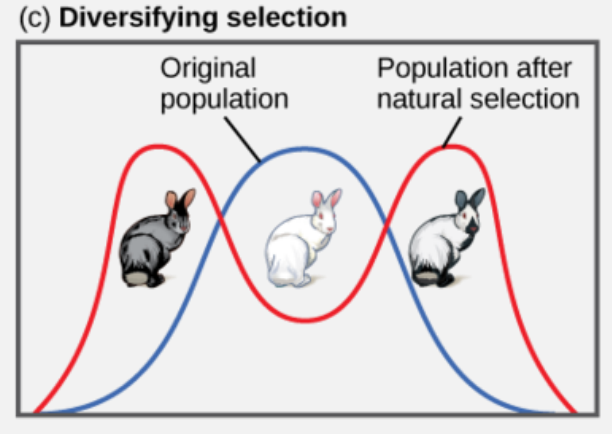
diversifying selection
a form of positive selection favouring the extremes of distribution of phenotypes and/or negative selection against the most common expression; may result in sympatric speciation
eg. in a hypothetical population, grey and Himalayan (grey and white) rabbits are better able to blend in with a rocky environment than white rabbits, resulting in diversifying selection
natural selection
the non-random preservation or elimination of variants through competition within and between species, promoting differential reproductive fitness
reproductive fitness
organism best adapted to current circumstances will most likely survive and reproduce successfully, passing on successful trails
phenotype
observable physical characteristics
genotype
the genetic makeup of an organism
plasticity
one genotype can produce different phenotypes depending on environmental conditions
epigenome (epigenetics)
a particular set of chemical modifications to our DNA that affect whether a or not a gene can be expressed
gene cannot be expressed if the DNA instructions are not readable (it is ‘turned off’)
what factors can affect whether or not a gene is ‘on’ or ‘off’
daylight
infection
toxins
temperature
diet
stress
the behaviour and diet of your mother
gene flow
the movement of genes with our without the movement of individuals over geographic space
add new alleles to populations or changes the frequencies of alleles already there
important in maintaining similarities and generating differences
increases genetic variation WIITHIN the new population
decreases genetic variation BETWEEN the two populations
genetic drift
random changes in allele frequencies in small populations, independent of selection
no specific environmental cause
may be beneficial, neutral, or detrimental
longterm consequence of genetic drift
reduced genetic variation WITHIN populations but increased variation BETWEEN populations
a NEUTRAL mechanism
can lead to diversity and change without any selection having occurred
bottleneck effect
sudden constriction in the transfer of genetic diversity from one generation to the next
bottlenecking events:
natural disasters
disease outbreaks
humans!
Cheetah bottleneck
~8000 cheetahs left in the world genetically differ by only 0.1-4% (essentially identical twins?)
causes- last ice age (10,000ya)
current poaching and habitat loss
consequences - lack of genetic variation and inbreeding
low fertility
problems with sperm cells
high cub mortality
high sensitivity to disease
It takes time to accumulate mutations *new alleles
founders effect
loss of genetic variation occurring when a new population is established by a small number of individuals from a larger population
What do we (humans and other primates) have in common
most have adaptations to arboreal lifestyle
broad dietary plasticity
parental investment
Primate Locomotion
flexible locomotion - generalized skeletal structure means flexibility in movement
variability in how species move around
vertical clinging and leaping
brachiation
terrestrial and arboreal quadruped
biped
all non-human primates are quadrupedal
very flexible shoulders and collarbones
grasping hands w/ opposable thumbs (usually grasping feet too)
fingernails and grippy finger pads (good sense of touch)
some monkeys have prehensile tail
Primate Sensory
reliance on vision
in complex 3D world vision is imperative → particularly DEPTH PERCEPTION
large brains with large visual processing areas to process lots of information
forward facing eyes → overlapping fields of view → stereoscopic vision
eyes partly or completely enclosed by protective bony orbit → postorbital bar in prosimians and postorbital plate in monkeys, apes, humans
decreased reliance on smell - reduction of the snout and olfactory areas of brain
larger neocortex
Primate Dietary Flexibility and Generalized dentition
primates generally omnivores (fruits, leaves, insects, small mammals)
two types of primate dentition → heterodont and diphyodont
dental formula → number of each type of tooth in each quadrant of the jaw
eg. 2.1.2.3 (like humans) means that in each quadrant of the jaw there are 2 incisors, 1 canine, 2 premolars, and 3 molars (total 32)
diphyodant
four kinds of teeth
heterodont
two SETS of teeth
deciduous (baby) and adult
Primate Life History and Reproduction
have fewer offspring than other mammals
longer gestation periods
lower reproductive rate
k-selection strategy
have fewer offspring but invest more parental care
invest heavily in each one
high parental care and long period of infant dependency, increasing the likelihood of survival
longer period of infant dependency
long growth period and long lifespans
lots of time to learn essential survival and social skills
primate classifications
typically divided into 2 suborders
Stresirhini → lemurs, lorises
Haplorhini → tarsier, monkeys, apes, humans
Chimps and Humans classified within subfamily Homininae
strepsirrhine
wet nose (naked moist rhinarium)
small
often nocturnal
well developed sense of smell
tooth comb
grooming claw
infraorder Lemuriformes (suborder Strepsirrhini)
encompasses 5 families
possibly as many as 100 species of lemurs as well as indris, sifakas and aye-ayes
all species located ONLY in Madagascar
very diverse group
some are nocturnal, some are diurnal
quadrupedal or vertical clinging and leaping
primarily arboreal, some are more terrestrial
live in social structures ranging from solitary to large groups
infraorder Lorisiformes (suborder Strepsirrhines)
comprises 2 families
includes 11 species of lorises and 20 species of galagos or bushbabies
Found in Africa and SE Asia
nocturnal and solitary
diet of insects, fruit, eggs, snails, lizards
quadrupedal, but bushbabies are amazing leapers
haplorrhine
dry nose
large
diurnal
large brains
vision
fingernails
infraorder Platyrrhine (suborder Haplorhini)
comprise over 70 species
divided into 5 families
Cebidae, Atelidae, Callitrichidae, Pitheciidae, Aotidae
found only in Central and South America
‘New World’ monkeys (platyrrhines preferred)
broad flat noses with outward-facing nostrils
tropical and sub-tropical forests
all diurnal (except for owl monkey)
small body size and prehensile tail
mainly arboreal
infraorder Tarsiformes (suborder Haplorhini)
found only in SE Asia
nocturnal and solitary
grooming claw but no tooth comb
vertical cling and leaping (4m vertical!)
reliance on vision (no rhinarium) - large, unmoving eyes → can rotate head 180 degrees
eats insects, frogs, lizards
infraorder Catarrhine (suborder Haplorhini)
most widely distributed of all primates
narrow noses with downward-facing nostrils
variable sizes with a range of sexual dimorphism
Cercopithecoids: ‘Old World’ (true monkeys preferred)
macaques, baboons, mandrils
colobus and proboscis monkeys
langurs
Hominoids: apes and humans
gibbons and siamangs
orangutang, chimpanzees, gorillas
humans
superfamily Cercopithecoidea (infraorder Catarrhini)
Catarrhine (true) monkeys
found only in tropical and subtropical forests of Africa and Asia, as well as savannah and grasslands of Africa
ischial callosities (patches of hardened skin on read end that facilitate sitting)
more variable size and sexual dimorphisms than platyrrhines
species include
sulawesi macaque
proboscis monkey
gelada baboon
Gee’s golden langur
superfamily Hominoidea (infraorder Catarrhini)
Hominoids are
diurnal
no tails
more complex behaviour, larger brains and advanced cognitive abilities
longest periods of infant development and dependency
Hominoidea- Gibbons and Siamangs
Gibbons and Siamangs
only found in the tropical rainforests of SE Asia
brachiators (4 genera, 18 sp)
Hominoidea- Great Apes
Great Apes
Orangutan
arboreal, solitary dispersed, frugivorous
Gorillas
mainly terrestrial, highly frolivorous, social
Chimpanzees & Bonobos
arboreal and terrestrial, omnivorous, very social
Hominoidea- Humans
unique amongst primates → obligate bipeds
unique skeletal adaptations to enable this efficiency
very long gestation
prolongued period of infant dependence
very long lifespan
reprodcutive adaptations enable learning and flexibility
primate social lives
primates are social animals
vary substantially in group size, structure, and organization
Primate group size, social structure and organization, and individual behaviour are shaped by the ecological conditions
benefits of primate social group life
maximal food exploitation
access to mating partners → increases reproductive fitness
protection from predators
help with offspring care
opportunities for learning
downfalls of primate social group life
competition over food
competition over mates
increased stress
spread of disease
primate social organization
size and type of group influenced by various factors
predation pressure
availability and distrib. of food
arrangement of individuals in a social group can vary → # of males relative to females
multi-male / multi-female (many : many)
typically found where predation pressure is high → large group #’s
promiscuous mating activity
marked sexual dimorphism
Polygamy (one : many)
Polygyny
1 male : many females
Polyandry
1 female : many males
monogamy (one : one)
dominance hierarchies
social structures in which males or females hold positions of rank determined either through competition or inheritance
more pronounced in single-male/multi-female and multi-male/multi-female groups
males must compete with each other for females
grounded in sexual selection
provide social stability and reduce conflict
top ranked individuals → alpha
how do food availability and food abundance impact primate group size
Food abundance
more abundant resources can support larger groups of animals
eg. leaves/grass vs insects
Food distribution
abundant but clustered; most efficiently exploited by small groups (or subunits of larger groups)
Food seasonality
if groups need to move around a territory throughout the year, it is easier for smaller groups to do so
predation pressure
larger group sizes are an advantage if predation pressure is high
eg. you live on the African savannah
optimum group size for Kenyan yellow baboons: 50-70
agonistic behaviours in primates
disrupt group cohesion
occur between members of the same sex or opposite sex, related or unrelated, between different ranks
examples:
aggression
threats (facial expressions + gesture like teeth baring)
displays
common in many primate communities
males competing for access to females (eg. polygyny)
frequency of agonistic acts depends on # of factors:
availability of food resources
mating partners
space
male conflicts → tend to be brief
female conflicts → tend to be prolonged
affiliative behaviours in primates
promote group cohesion
grooming
one of the most common affiliative behaviour (altruistic behvaiour)
reduces stress, builds social bonds, removes ectoparasites, etc…
larger groups tend to spend more time grooming
social alliances / cooporation
evolved through kin selection
tendency of primates to direct beneficial behaviours to relatives
often formed to get access to food resources and mating partners
reconciliation
approaching victim of aggression
touching, kissing, embracing, grooming one’s opponent → vocalizations
primate sexual dimorphism
differences in physical characteristics between males and females of the same species
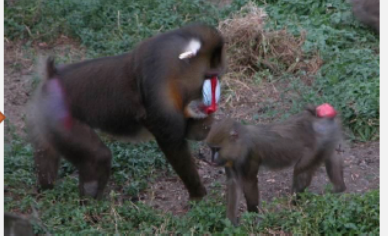
primate sexual behaviour (how do females signal that they’re ready to mate?)
most primates only sexually receptive around ovulation
behvaiours that signal receptivity → proceptive behvaiours
presenting hindquarters to males
sexual swelling (swelling and pink colouration of genitals)
olfactory cues → secretion of aliphatic acids (essentially pheromones)
changes in facial skin colour
specific vocal cues
reproductive cycle variability in primates
considerable variation
in length and constituent phases
ex.
~15 days in common marmoset
~ 30 days in humans
50+ days in mouse lemurs
Primate sexual strategies - Female
incite males to compete through agonistic encounter
may choose male that demonstrates affiliative behaviours (rearing assistance?)
may mate with multiple males → more help from males that think offspring in theirs
compete w/ other females for food resources
synchronize ovulation w/ other females
females of some primate species do not advertise ovulation
conceal fertility from males
confuse paternity to reduce risk of infanticide
prevent dominant male monopolization of mating
Primate Sexual Strategies - Male
limiting factor of success → access to receptive females
aggressive competition
sperm competition
infanticide
Inter-birth interval and male primate behaviour
virtually no male assitance with child-rearing
8 years → orangutans
lots of male assitance with child rearing:
4.5 years → gorilla
Cooporative breeders
3.7 years → humans (and marmosets!)
primate tool use
earliest documentation of tool use among primates in Western scientific discourse:
1960s, Jane Goodall - termite dipping in chimps
tool use has been documented in wild orangutans, bonobos, and to come degree gorillas as well
other examples:
chimps using composite tools (hammer stones and anvils) to open nuts
sticks to dig for tubers, roots, and bulbs
spear use (made of twigs) t capture prosimians (bushbabies)
sponges (made of leaves) used to soak up water
primate culture
transmission of tool use and other novel behaviours among chimps → from one community to another
spread of ant-fishing
transmission of cultural behaviours appears to occur primarily through females, who leave their group after reaching se
what are fossils?
any remains of life preserved in rock
bones, teeth, impressions, footprints, natural molds, termite nests, worm burrows, etc
very rare
of all life that has ever existed, only an extremely small % of it is in the fossil record
due to their rarity, there are many gaps in our record of life in the past
how are fossils formed
when animals, plants, and other organisms die, they typically decay completely
process of fossilization
groundwater carrying minerals such as iron and calcium carbonate from the surrounding sediments infiltrates the microscopic cavities in bones and deposits the minerals into them, turning the bones into stone
what has to happen in order to find fossils?
right conditions for preservation
slow decomposition: limit access of bacteria/fungi
right conditions to be found
exposed at surface somehow
organism might get buried very quickly
eg. seabed, or stuck in sap
a body can get buried in an environment inhospitable to bateria/fungi
eg. tar pit
good fossil sites
places where geological activity has exposed buried fossils
cave sites can accumulate high fossil concentrations
bad fossil sites
moist, high rate of decomp., many bateria/fungi/insects, very difficult to excavate
eg. tropical forest
 Note
Note  Flashcards (64)