Biology-Binomial system
 Studied by 0 people
 Call Kai
 Learn
Learn Practice Test
 Spaced Repetition
 Match
Match Flashcards
 Knowt Play
1/5

There's no tags or description
Looks like no tags are added yet.
Name | Mastery | Learn | Test | Matching | Spaced | Call with Kai |
|---|
No analytics yet
Send a link to your students to track their progress
6 Terms
outline the use of a hierarchical classification system for living organisms
• to make it easier to study organisms.
• classification enables us to keep track of organisms.
• it helps scientists sort organisms in order.
• it makes it easier to name living organisms.
• to communicate globally and internationally about organisms.
• to identify unknown organisms.
• to indicate and reflect evolutionary relationship of organism
hierarchical classification
is the classification of organisms into groups where larger groups are progressively divided into smaller groups which they never overlap.
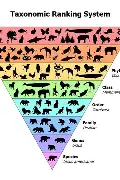
state that organisms can be classified into groups by features they share
-organisms are classified into groups by features they share their similar characteristics and common characteristics.
-organisms that share similar features are placed in 1 group. These groups are arranged from the from the largest group of organisms to the smallest group of organisms which never overlap-hierarchical classification.
-the groups (taxa) from the largest to the smallest are arranged as follows kingdom, phylum (plural- phyla , genus (plural- genera) & species.
-Kingdom is the largest group and species is the smallest group.
taxa (singular taxon)
are the general names of groups within a classification system
taxonomy
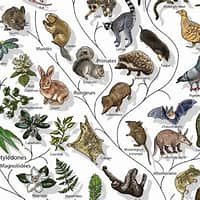
branch of biology that deals with the identification, naming & classification of organisms into groups called taxa
binomial system
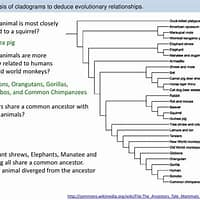
giving organisms 2 names in Latin name [Genus & Species] to identify a specific type of organism.
Genus’s name is capitalized first.
Species name comes 2nd and is not capitalized.
![<p>giving organisms 2 names in Latin name [Genus & Species] to identify a specific type of organism.</p><p>Genus’s name is capitalized first.</p><p>Species name comes 2nd and is not capitalized.</p>](https://knowt-user-attachments.s3.amazonaws.com/e3625936-5f28-4f65-8632-dd2ed9abf327.png)
 Note
Note  Flashcards (114)