pathogenesis of metabolic disturbances
 Call Kai
 Learn
Learn Practice Test
 Spaced Repetition
 Match
Match Flashcards
 Knowt Play
1/14

There's no tags or description
Looks like no tags are added yet.
Name | Mastery | Learn | Test | Matching | Spaced | Call with Kai |
|---|
No analytics yet
Send a link to your students to track their progress
15 Terms
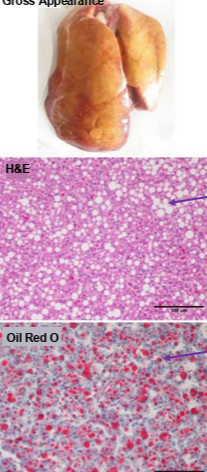
fatty liver
chicken
liver gene xoression
lipid droplets visibke
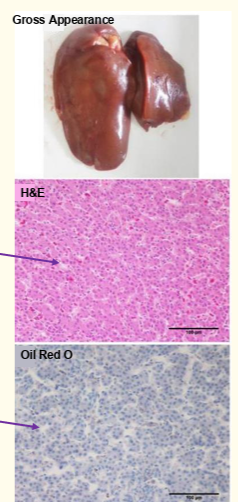
normal chicken liver with normal sized hepatocytes
causes of liver steatosis
overeating
normally liver processes dietary fats (chylomicron remnants) and temporary stores some that is later packaged into VLDL and transported to adipose for long term storage
in persistent overeating the liver pathways for dealing with dietary fat are overwhelmed and liver accumulates excessive amounts of fat
increase in dietary intake and de novo lipogenesis
starvation
increase in mobilisation of fat from adipose tissue in response to body energy needs
if mobilisation exceeds beta oxidation the liver will store the mobilised fatty acids as triglycerides—>fatty change
diabetes
abnormal carb metabolism results in alternative pathways being utlised for energy production increasing fatty acids and triglycerides increasing fatty change
increase beta oxidation→increase acetyl coa→ketone body production→ketoacidosis
ruminant production diseases
demand for glucose and negative energy balance accelerate gluconeogenesis and increase fat mobilisation→increase fatty acid, increase triglyceride, increase glucose
increase beta oxidation→increase acetyl coa→increase ketone body production→increase ketoacidosis
glycogen storage diseases
inability to synthesise or degrade glycogen
result in glycogen accumulation in various tissues depending on the enzyme affected
most often autosomal recessive although PSSM in horses is autosomal dominant
all identifiable by genetic testing
for autosomal recessive GSDs reputable breeders can identify and avoid breeding 2 carriers therefore peventing birth of affected puppies and kittens
branching enzyme deficiency- GSD IV in norwegian forest cats
what is it caused by
what does it result in
signs
caused by autosomal recessive mutation in gene encoding glycogen branching enzyme inhibiting its activity
results in synthesis of abnormal glycogen that contain longer chain lengths and fewer branch points
initial signs develop by 5 months of age- muscle tremors, weakness, atrophy
difficulty chewing dry food and swallowing solid food
cardiac disease
causes death in early adulthood
glycogen synthase- polysaccharide storage myopathy in horses
what is it caused by
what does it lead to
what is synthesised
signs
is it manageable or not
caused by autosomal dominant mutation in gene encoding glycogen synthase
mutation causes an upregulation of glycogen synthase
high levels of glycogen synthase activity direupts the balance of glycogen synthase to glycogen branching enzyme
results in synthesis of abnormal glycogen that contain longer chain lengths and fewer branch bpoints
reluctance to move, muscle stiffness, cramping, tremors, tying up due to muscle breakdown during/after exercise
manageable thorugh careful dietary and exercise adjustment
glycogen debranching enzyme deficiency- GSD III in german shepards
what is it caused by
what does this result in
what organs does each type affect
sings
is it manageable
caused by autosomal recessive mutation in gene encoding debranching enzyme
results in accumulation of glycogen in liver and muscle
type iia affects liver and muscle, type iiib primarily affects liver
hepatomegaly and abdominal distention from excessive glycogen accumulation in liver
musce weakness and trembling
exercise intolerance
hypoglycaemia
manageable through dietary adjustments to prevent hypoglycaemia
glycogenosis
body cannot make, store or breakdown glycogen due to an enzyme deficiency so abnormal glycogen buildup
examples of enzymes which can be mutated to result in glycogen storage diseases
glycogen synthase
branching enzyme
debranching enzyme
glucose-6-phosphatase
phosphofructokinase
role of AGL in glycogenolysis
codes for debranching enzyme
⍺-1,4 transglycosylase activity
⍺-1,6 glucosidase activity
glucose-6-phosphatase deficiency- GSDIa
maltese and other small breeds
severe hypoglycemia
hepatomegaly (glycogen cannot be broken down)
frequent small feedings to maintain blood glucose levels, cornstarch can also manage
phosphofructokinase deficiency-GSD VII
springer spaniels
muscle cramps and muscle weakness
exercise intolerane and rhabdomyolysis
haemolysis and anaemia
avoid high intensity strenuous exercise
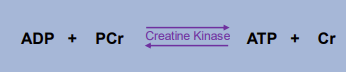
phosphocreatine system
rapidly generates ATP from stored PCr in muscles
only lasts 10 seconds and needs 2-3 mins of rest to fully replenish
occurs in cytoplasm of muscle cells
primarily used for short maximal efforts
can give a boost for surges during endurance efforts
myokinase reaction (adenylate kinase)
rapidly regenerates ATP from ADP during high energy demands in intensely contracting muscles
helps provide immediate small amount of ATP to sustain muscle function
produces AMP as well as ATP
AMP is an allosteric activator of glycolysis and glycogenolysis
