Portage Nutrition Exam 2 (Units 2.1 & 2.2)
 Studied by 0 people
 Call Kai
 Learn
Learn Practice Test
 Spaced Repetition
 Match
Match Flashcards
 Knowt Play
1/64

There's no tags or description
Looks like no tags are added yet.
Name | Mastery | Learn | Test | Matching | Spaced | Call with Kai |
|---|
No study sessions yet.
65 Terms
Define digestion
The process of transforming food into basic nutrients that can be absorbed and used by the body
What do nutrients do in the body?
Fuel cellular growth, fight infections, and provide energy to our muscles and brain.
True or false: Digestion is only a chemical process
FALSE: BOTH chemical and mechanical
Name the 5 events involving the nervous system and hormones before food enters the mouth
Cognition
Sound
Odor
Appearance
Taste
Peristalsis
Involuntary muscle contractions used to move food mixtures along the tract
What are the mechanical aspects of digestion?
chewing and peristalsis
What are the chemical aspects of digestion?
Enzymes, acid, bile, and mucus
Define Enzyme, and what is their role in digestion?
Proteins that catalyze chemical reactions.
Enzymes catalyze chemical reactions in digestion to break down food particles into smaller parts to prepare for absorption.
Define GI Tract
A long hollow tube consisting of several layers of tissue that begins with the mouth and ends at the an(us)
Define mucosa
The inner-most layer that is made of absorptive cells and glands
What cells comprise the outer layers of the GI tract?
Circular and longitudinal muscles
What is the function of circular and longitudinal muscles?
To mix and move food along, and to serve as valves to control the flow of the food particles
What are the three processes the body can use to move nutrients from the GI tract to the blood/lymph system?
1) Passive diffusion
2) Facilitated diffusion
3) Active transport
Define passive diffusion. What happens to the nutrients in this?
Substances move easily in and out of cells without the use of energy.
Nutrients move from high to low concentrations.
Define facilitated diffusion. What happens to the nutrients in this?
No energy is required, but a special protein carrier is required to help substances cross in or out of the cell.
Nutrients move from high to low concentrations.
Define active transport. What happens to the nutrients in this?
Energy is required to move substances in or out of the cell.
Nutrients move from low to high concentrations.
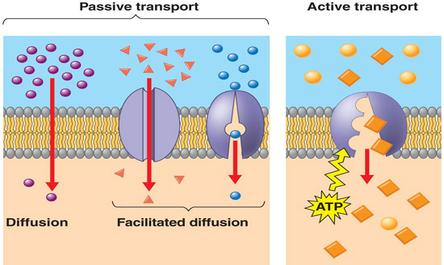
Describe these diagrams. What is the energy doing? Where are the nutrients going?
On the left, two passive (no energy required) forms of transport are shown. On the right, active transport is shown where energy, in the form of ATP, is required for transport.
(Passive) Substances move easily in and out of cells without the use of energy. Nutrients move from high to low concentrations.
(Facilitated) No energy is required, but a special protein carrier is required to help substances cross in or out of the cell. Nutrients move from high to low concentrations.
(Active) Energy is required to move substances in or out of the cell. Nutrients move from low to high concentrations.
Compare and contrast Passive and Active transports
Passive has NO energy/ATP needed, while active REQUIRES energy/ATP
Passive goes down a concentration gradient from HIGH to LOW concentration, while active goes against a concentration gradient from LOW to HIGH
Facilitated diffusion requires the use of a protein carrier/transport molecules, while some types of active transport requires the use of protein carrier/transport molecules
Passive transport includes osmosis and simple diffusion which do not require carrier/transport molecules, but active transport includes endocytosis — movement of large molecules into a cell.
6 main parts of GI System
1 - mouth
2 - esophagus
3 - stomach
4 - small intestine
5 - large intestine
6 - rectum
4 Additional organs in digestion that are NOT in the GI tract
1 - salivary glands
2 - liver
3 - gallbladder
4 - pancreas
What is the role of the esophagus? What are two important structures in the esophagus and what are their roles?
The esophagus transports food to the stomach.
The epiglottis folds down over the trachea during swallowing to prevent the food from entering the trachea.
The sphincter is a circular muscle located at the end of the esophagus, which constricts to prevent backflow.
What is the role of the stomach?
To store, mix, dissolve, and continue the digestion of food
Which two enzymes are activated in the gastric juice of the stomach and what are their roles?
Pepsin is an enzyme that breaks down proteins.
Gastric lipase is an enzyme that begins fat digestion.
Define chyme, and when does it take place in the digestive process?
The resulting watery substance when food particles are mixed with stomach acids and enzymes.
It empties from the stomach into the small intestine
What is the role of gastrin?
The hormone responsible for controlling the concentration of acid in the stomach
What substance counteracts gastrin in the stomach acid in order to prevent the destruction of the stomach wall?
Mucus lining and protecting the stomach from high level of acidity
Define Intrinsic Factor
A vital glycoprotein, produced in the stomach, that must be present in order for Vitamin B-12 to be absorbed
Where is the pyloric sphincter located? What is its role?
It connects the stomach to the small intestines. Its major role is to control the release of chyme into the small intestine
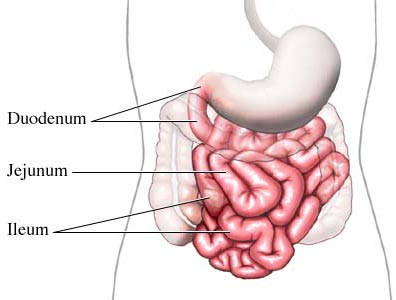
What are the three sections of the small intestines (in order)?
Duodenum
Jejunum
Ileum
Describe the lining of the small intestine
Lined w/ mucosa
Folded over many times (circular folds)
Villi in the folds
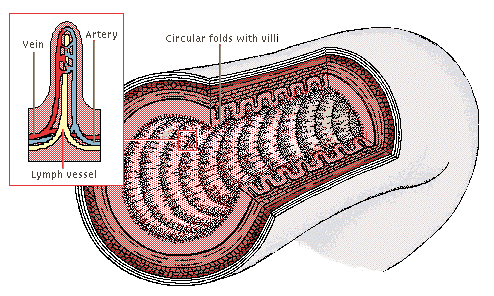
Explain what happens in the small intestines
The folds, villi, as well as absorptive cells that line the villi expand the absorptive surface area of the small intestine. Importantly, the vast majority of all nutrients are absorbed here.
What do villi look like? Where are they located? What is their role?
Villi are finger-like projections in the circular folds in the small intestine that help trap food for digestion and absorption
True or False: Fat-soluble nutrients are absorbed into the blood stream
FALSE: Fat-soluble nutrients are absorbed in the LYMPH system and the OTHER nutrients are absorbed into the blood
Which 3 organs are also associated w/ small intestines?
Liver
Gallbladder
Pancreas
Ileocecal sphincter
What does the liver do in regards to digestion in the small intestine?
Secretes bile (stored in gallbladder)
What does the gallbladder do during digestion? Where does the bile go? Which nutrient is involved in this breakdown?
(Answer this Q in 3 steps)
1) Stores the bile until it receives a hormonal signal that the fat has entered the small intestine.
2) Then, bile is released into the duodenum through the common bile duct.
3) The bile emulsifies the fat into smaller pieces to mix w/ water
What are the 3 components of pancreatic juice? What does it do?
Water, bicarbonate, and enzymes
This breaks down carbohydrates, protein, and fats
What is the purpose of bicarbonate in pancreatic juice?
It neutralizes the acidity of the chyme to protect the wall.
Avoid ulcers!
What are the 4 sections of the Large Intestine?
1) Ascending Colon
2) Transverse Colon
3) Descending Colon
4) Sigmoid Colon
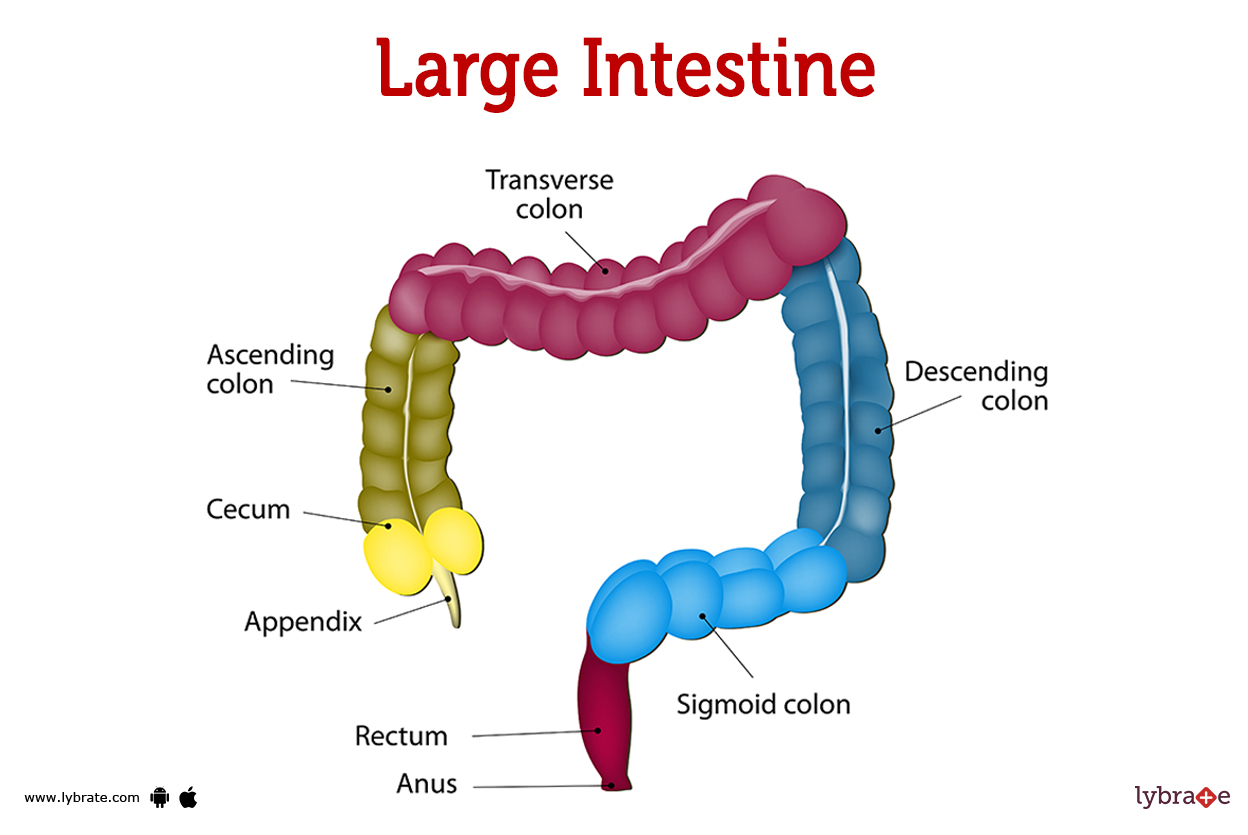
How long is the large intestine?
5 feet long!!!
True or False: The large intestine plays a bigger role in digestion than the small intestine
FALSE: Relative to the small intestine, the large intestine does not play a major role in the digestion and absorption of nutrients.
What is the role of the large intestines in digestion?
The remaining water and minerals (often Na, K, and Cl) can be absorbed in the large intestine
Where is feces produced?
In the large intestines
Describe the expulsion of feces from the body
As the food waste passes through the large intestine, feces is produced and remains at the rectum until muscular contractions push it into the anus to be expelled, controlled by two anal sphincters
Two functions of mucus in the colon?
1) Mucus holds feces together
2) Secreted mucus protects the intestine from bacteria
Functions of bacteria in the colon
Breaking down the remaining food products that entered from the small intestine ads well as breaking down some forms of fiber.
Define probiotics and give two examples
Foods that contain bacteria that help protect the body from disease-causing bacteria
Milk and yogurt
Define prebiotics
Substances that stimulate bacterial growth in teh large intestine
Define Heartburn. What are the symptoms?
When stomach acid comes up the esophagus due to the esophageal sphincter being weak and relaxed, and results in a painful burning sensation that can cause:
Nausea, gagging, coughing, or hoarseness
True or false: The stomach is lined with mucus to protect it from acids but the esophagus is not
True
What changes heartburn into GERD?
When a person has heartburn SEVERAL times a week
Name the dietary treatments for GERD
Eat smaller meals low in fat
Chewing food well
Avoid overeating
Limit coffee, tea, alcohol, and certain spices
Wait 2 hours after a meal before lying down and sleeping with the head of the bed elevated
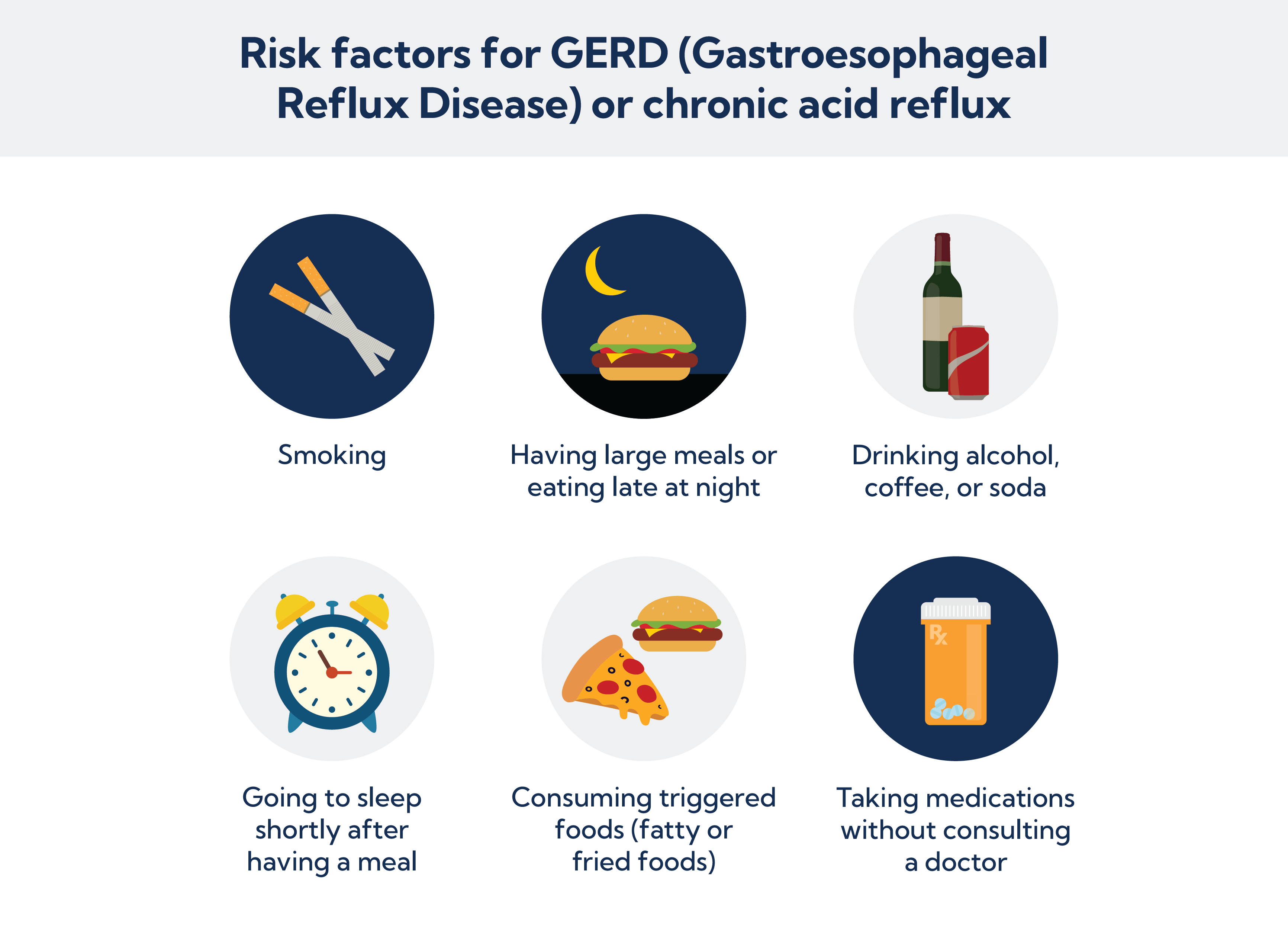
Name the risk factors for GERD
What is the result of slow movement of hard, dry feces through the large intestine?
Constipation
What medication changes can alleviate constipation?
Eliminate calcium and iron
What dietary changes can alleviate constipation?
Add high fiber foods (i.e. whole grains, fruits, vegetables, nuts)
Also increase liquid to avoid flatulence
What are some causes of diarrhea?
Infection, disease, or antibiotics
Why do antibiotics cause diarrhea?
They destroy healthy bacteria in the colon
What are some treatments of diarrhea?
Increase fluid consumption
Broth, tea, toast, low fiber
What does severe diarrhea result in? What treatment is recommended?
Dehydration, excess loss of sodium and potassium.
A fluid product containing, these minerals, and sugar may be recommended by the individual’s physician as a treatment.
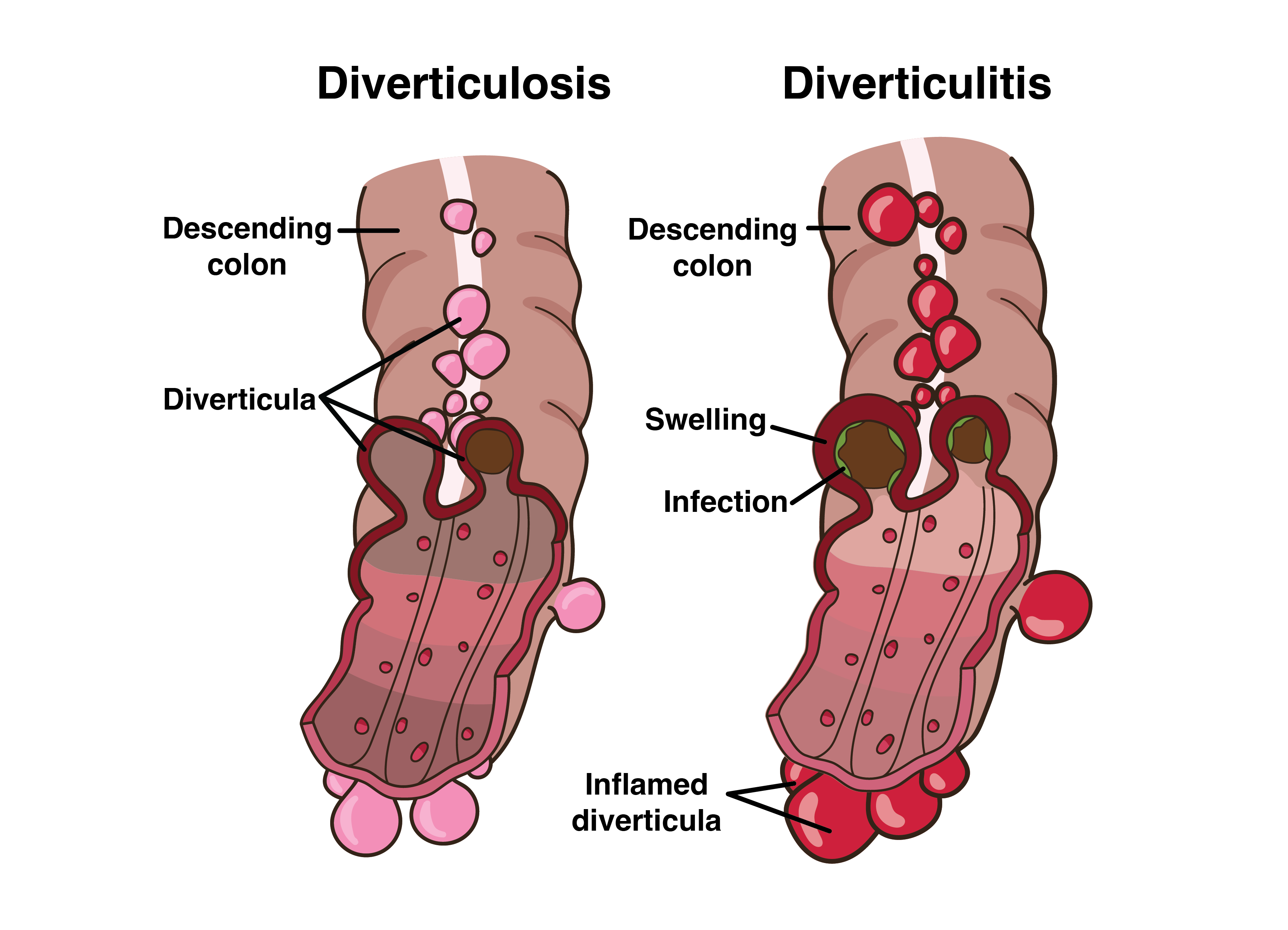
Explain the two conditions
Diverticulosis is a condition that develops as we age. Small pouches push out through weak spots in the colon, but it causes no problems in the majority of people. At times, food particles will get stuck in these pouches, resulting in an inflammation or infection called diverticulitis. The major cause of diverticulosis is a low fiber diet and constipation, which causes straining when passing stools. Inactivity and excess body weight may also be risk factors. Increasing your fiber intake, and activity level, may reduce the symptoms and prevent diverticulitis from developing.
List IBS symptoms and therapy
Symptoms include bloating, abdominal pain, cramps, diarrhea, and/or constipation. Certain foods aggravate the symptoms, including gas producing foods (such as beans), milk products, alcohol, caffeine, and fat. Therapy includes frequent small meals, low fat meals, high fiber intake, probiotics, and avoiding foods that trigger symptoms.
What is an ulcer?
sores that can occur in the stomach, lower esophagus, or small intestine. Ulcers can be caused by certain bacteria (i.e. H. Pylori), or even from medications such as nonsteroidal anti-inflammatory drugs (NSAID), which erode the protective mucus lining.
What causes ulcers? What are some symptoms?
Stress, smoking, and genetics also play a role in the development of an ulcer. Symptoms include a burning sensation in the stomach following a meal or at night, weight loss, nausea, vomiting, and loss of appetite.
Treatment of ulcers?
Treatment is largely based on lifestyle changes and medical treatment.
 Note
Note  Flashcards (120)