(27.1) Common Features of the Female & Male Reproductive System
 Studied by 0 people
 Call Kai
 Learn
Learn Practice Test
 Spaced Repetition
 Match
Match Flashcards
 Knowt Play
1/38

There's no tags or description
Looks like no tags are added yet.
Name | Mastery | Learn | Test | Matching | Spaced |
|---|
No study sessions yet.
39 Terms
T/F: Reproductive system functions continuously
→ FALSE
Reproductive system DOES NOT function continuously like organ system
Does nor become active until puberty
T/F: Many male and female structures are homologous structures, and share common origin
→ TRUE
Name the Primary Sex Organs in Males and Females
Primary sex organs are the gonads
Male → Testes
Female → Ovaries
Role of Gonads
Produce two products: gametes (sperm and eggs) and sex hormones
List Accessory Reproductive organs
Ducts
Glands
External genitalia
List Four Tasks shared by the Female and Male Reproductive Organs
Form specialized cells for sexual reproduction call gametes
Bring gametes from male and female together through sexual intercourse (copulation)
Combine genetic information contained within gametes through fertilization
Support development of fetus (gestation) and birth of baby (parturition)
Name Gametes in Females and Males
Ova (eggs)
Gametes in females
Sperm
Gametes in males
Define Zygote
Is formed when sperm and egg fuse
T/F: Zygote is first cell of new individual and all body cells arise from it
→ TRUE
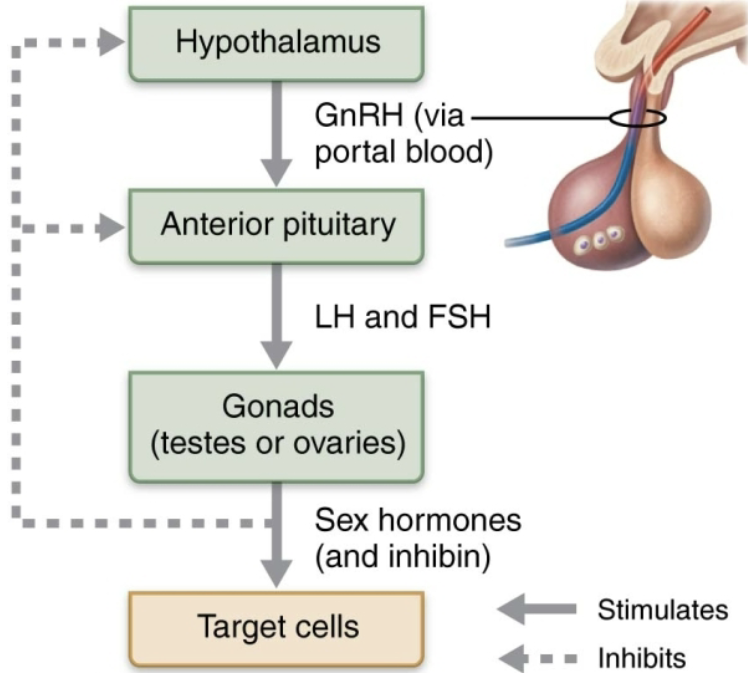
Describe the HPG axis
Production of gametes and sex hormones is regulated by sequence of hormonal events involving hypothalamus, anterior pituitary gland, and testes or ovaries
Involves interacting hormones:
GnRH
FSH
LH
Testosterone
Inhibin
Describe the Secretion of GnRH, FSH, LH, Testosterone, and Inhibin
Gonadotropin-Releasing Hormone
Released from hypothalamus reaches anterior pituitary cells via hypophyseal portal system
Stimulates testes and ovaries through affecting the release of FSH and LH
Follicle-Stimulating Hormone (FSH)
Gonadotropins released from anterior pituitary
Luteinizing Hormone (LH)
Gonadotropins released from anterior pituitary
Sex Hormones
Testosterone (males) & Estrogen and Progesterone (female) → act at target tissues in body
Exert negative feedback on hypothalamus and anterior pituitary
Inhibin
Released from the gonads of both male and female
Exert negative feedback on FSH release from anterior pituitary
Define Puberty
Period of life when reproductive organs grow to adult size and become functional
Earliest time that reproduction is possible
Describe the Activation of the HPG Axis at puberty
Before puberty → low levels of circulating levels of steroidal sex hormones are enough to suppress secretion of GnRH by hypothalamus
As puberty approaches → hypothalamus becomes less sensitive to inhibition by sex hormones
Hypothalamus releases GnRH in pulse like manner
Anterior pituitary releases FSH and LH in response to increased GnRH levels
FSH and LH stimulate gonads to release more sex hormones from gonads
Sex hormones are released until adult pattern of hormone interaction is achieved
Define Meiosis
Unique kind of nuclear division that occurs ONLY in gonads
T/F: Meiosis is same process for males and females
→ TRUE
Role of Meiosis in Reproduction
Sexual reproduction CANNOT be take place without meiosis → Reduces number of chromosomes in gametes by half so zygote does nor end up with 2x as many chromosomes
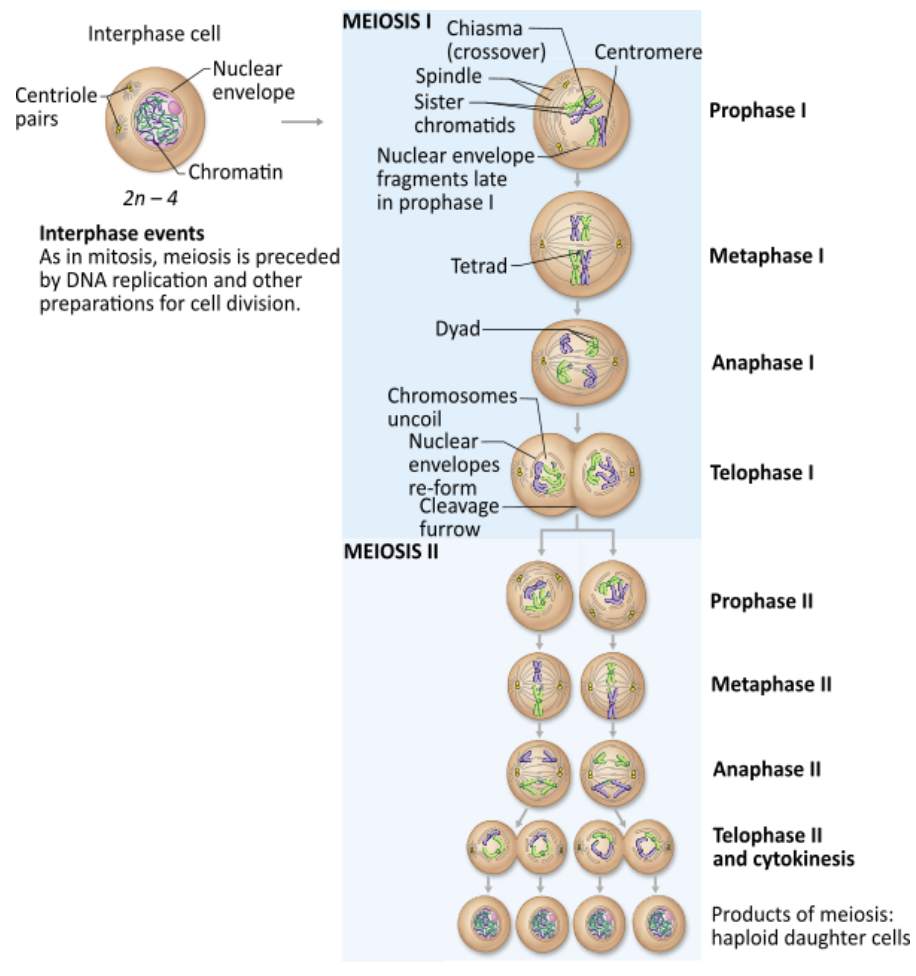
Explain Sequence of Events in Meiosis
Meiosis consists of 2 consecutive nuclear divisions referred to as meiosis I and meiosis II
DNA replication only occurs once
Name the Four Steps of Meiosis
Prophase
Metaphase
Anaphase
Telophase
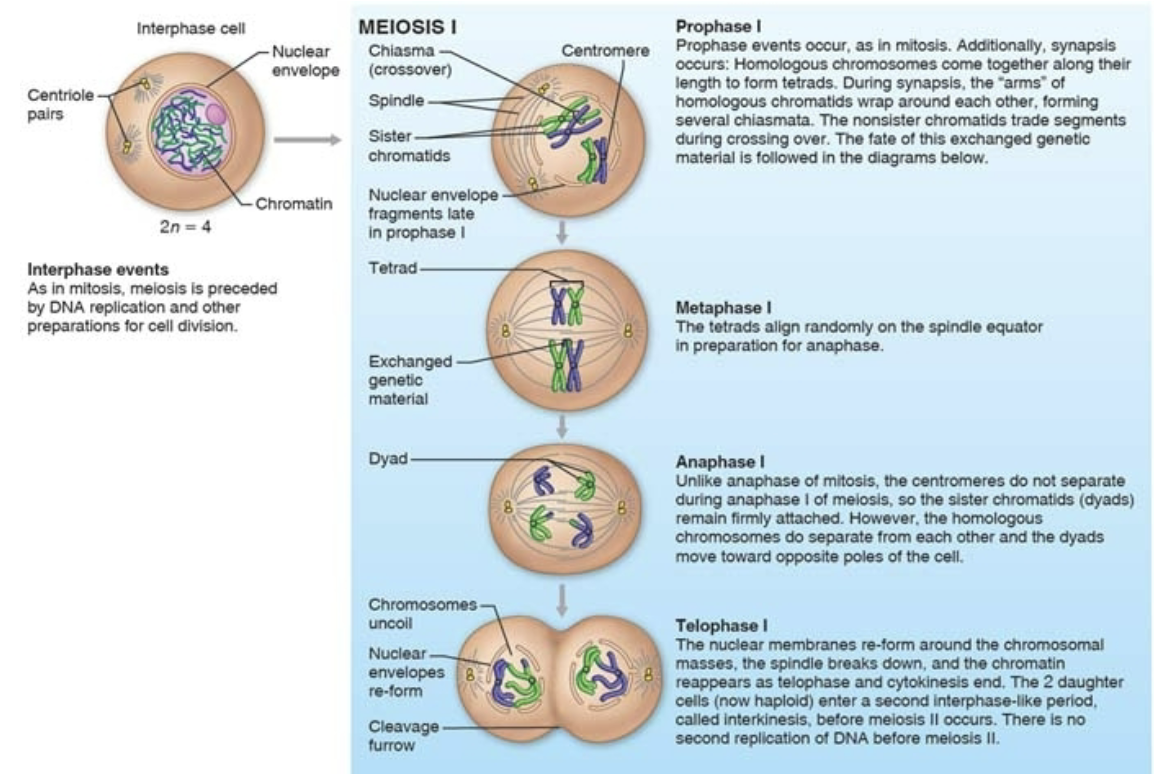
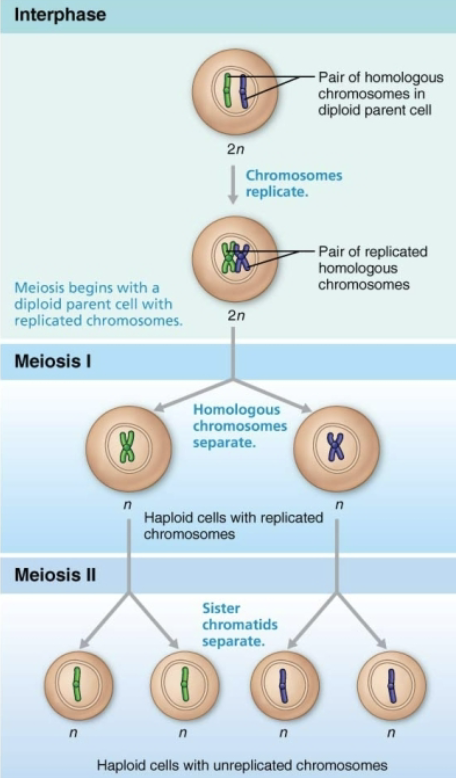
SUMMARY of Sequence of Events in Meiosis
Interphase
Preceding meiosis, all chromosomes are replicated
Meiosis I
Homologous pairs separate from each other, reducing number of chromosomes from 2n to n
Reduction division of meiosis
Meiosis II
Sister chromatids separate and each daughter cell gets equal share of chromosomes
Equational division of meiosis
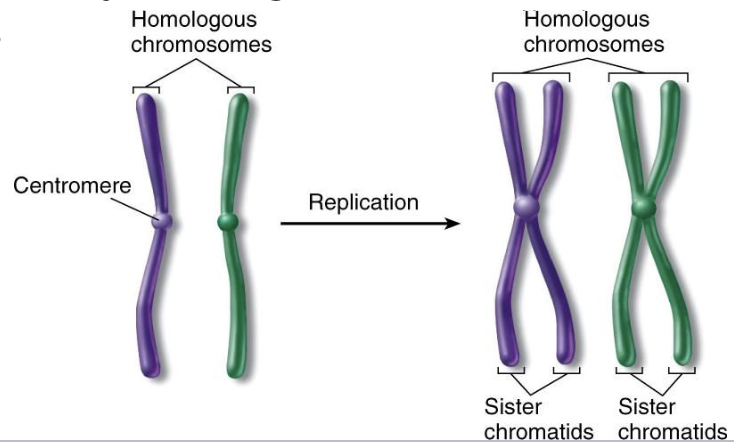
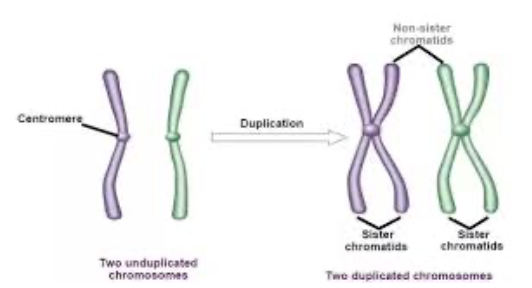
Sister Chromatids vs Homologous Pairs of Chromosomes
Sister Chromatids
Cell’s DNA is replicated during interphase
Each chromosome has two sister chromatids that are identical and jointed together by centromere
Homologous Pairs of Chromosomes
One member of each pair is from father (paternal chromosome) and other is from mother (maternal chromosome)
Look alike and carry same genes that code for same traits
Define Nonsister Chromatids
Within homologous pairs, chromatids of one chromosome are non-sister chromatids to other chromosome in pair
Non-sister chromatids exchange DNA with each other in process called crossing over
Process INCREASES genetic variability
Define Diploid vs Haploid
Diploid
Diploid chromosomal number is normal number of chromosomes in most body cells
Consists of two sets of chromosomes (one from each parent) and is symbolized as 2n
Haploid
Haploid chromosomal number, n, is the number of chromosomes in a gamete
Gametes contain only one member of each homologous pair, either maternal and paternal
What is human diploid number?
Humans diploid # is 46
Diploid cells contain 23 pairs of homologous chromosomes
What is human haploid number?
Humans haploid chromosomal # is 23
When sperm and egg fuse, they form a diploid, 2n, zygote
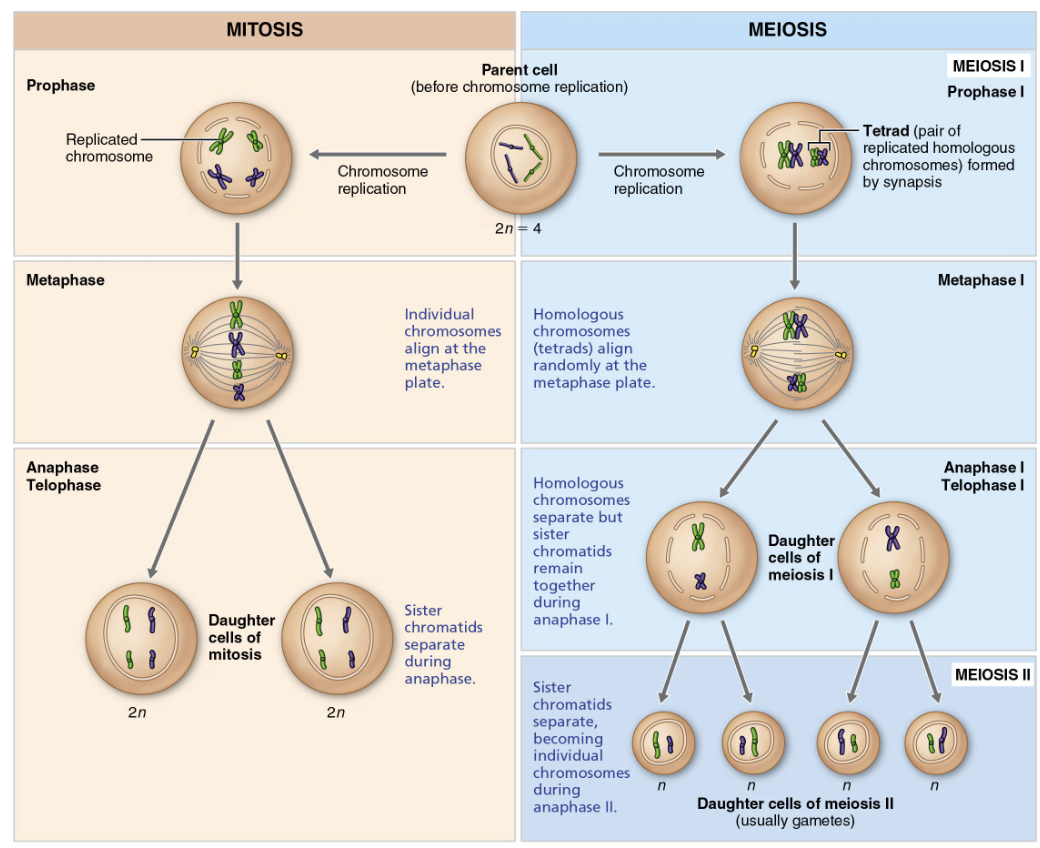
Compare and contrast Meiosis to Mitosis
Meiosis
DNA replication
Occurs during interphase, before meiosis I but nor meiosis II
# of divisions
Two, each consisting of prophase, metaphase, anaphase, and telophase
Synapsis of homologous chromosomes
Occurs during prophase I
# of daughter cells
Four
Each haploid (n) cell contains half as many chromosomes as the parent cell and is genetically different from the parent cell
Roles in the body
Produces cells for reproduction (gametes)
Introduces genetic variability in gametes
Reduces chromosomal number by half so that fertilization can restore the normal diploid chromosome number (2n = 46)
Mitosis
DNA replication
Occurs during interphase, before mitosis begins
# of divisions
One, consisting of prophase, metaphase, anaphase, and telophase
Synapsis of homologous chromosomes
Does not occur
# of daughter cells
Two
Each diploid (2n) cell is identical to the parent cell
Roles in the body
Development of multicellular adult from zygote
Tissue repair and renewal
Ensures constant genetic makeup of all body cells
During cellular division, the replication of DNA occurs __________.
→ before mitosis and meiosis I
T/F: After DNA replication, each individual chromosome becomes a homologous pair.
→ FALSE
After DNA replication, each chromosome is composed of two sister chromatids.
During prophase I of meiosis,
→ Homologous chromosomes stick together in pairs
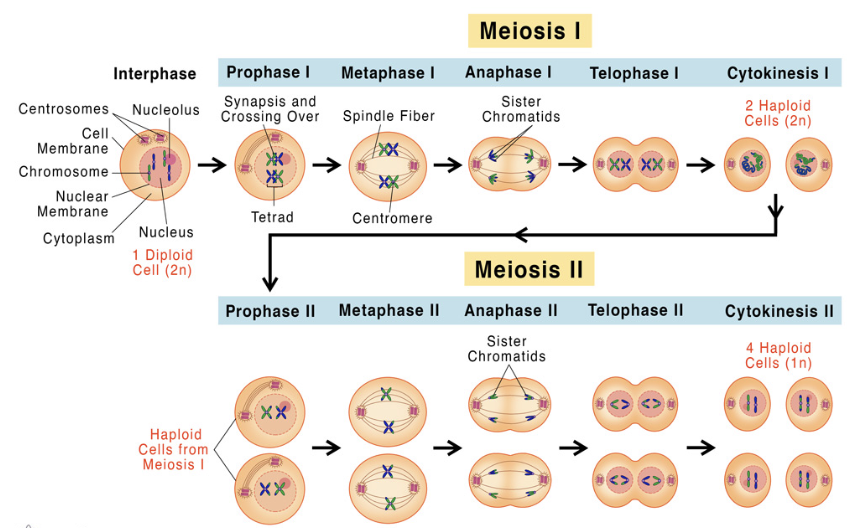
During meiosis, segments of nonsister chromatids can trade places. This recombination of maternal and paternal genetic material is a key feature of meiosis. During what phase of meiosis does recombination occur?
→ Prophase I
Segments of nonsister chromatids trade places during prophase I, resulting in recombination.
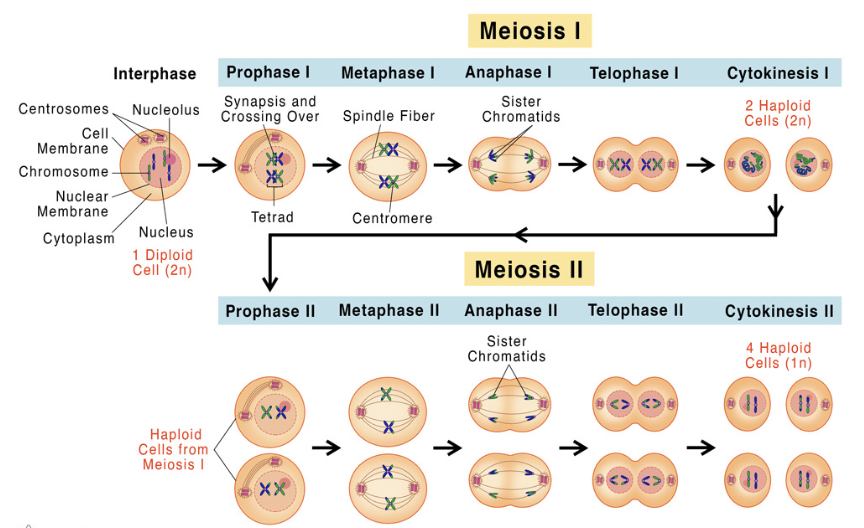
During what stage of meiosis do chromosomes align on the spindle equator in homologous pairs?
→ Metaphase I
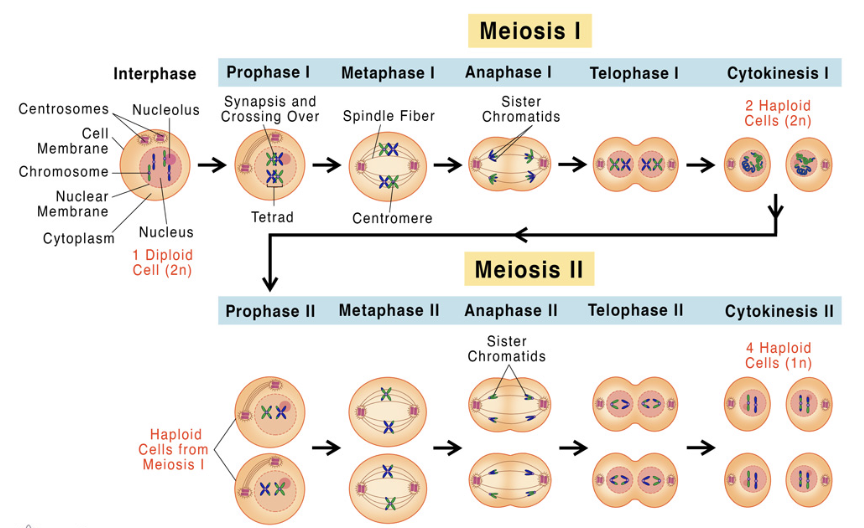
Why do chiasmata form during meiosis?
→ To form gametes that are genetically unique
Unlike mitosis, meiosis has the purpose of producing haploid cells that are all genetically unique. Chiasmata form and genetic material is exchanged between chromatids of homologous chromosomes to provide genetic variation in each daughter cell.
Chromosomes can exchange genetic information during a process called "crossing over." This occurs when homologous chromosomes are lined up in pairs. When does this happen?
→ Prophase I
During prophase I, homologous chromosomes align with each other and undergo crossing over
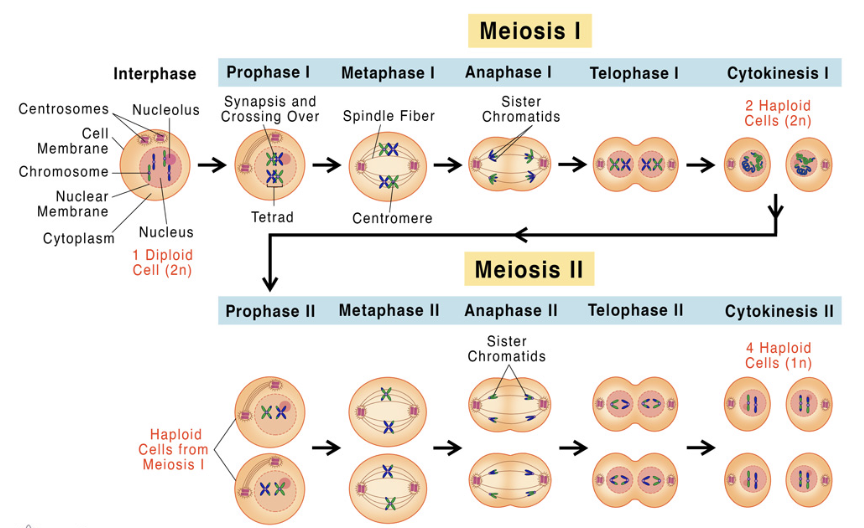
When does the total number of chromosomes get reduced from 46 pairs to 23 individual chromosomes?
→ during meiosis I
Which of the following is a likely result of meiosis?
→ 1 eggs, each with 23 chromosomes
→ 4 sperm, each with 23 chromosomes
What is the function of meiosis?
→ to produce cells with half the chromosome number of the original spermatogonium or oogonium
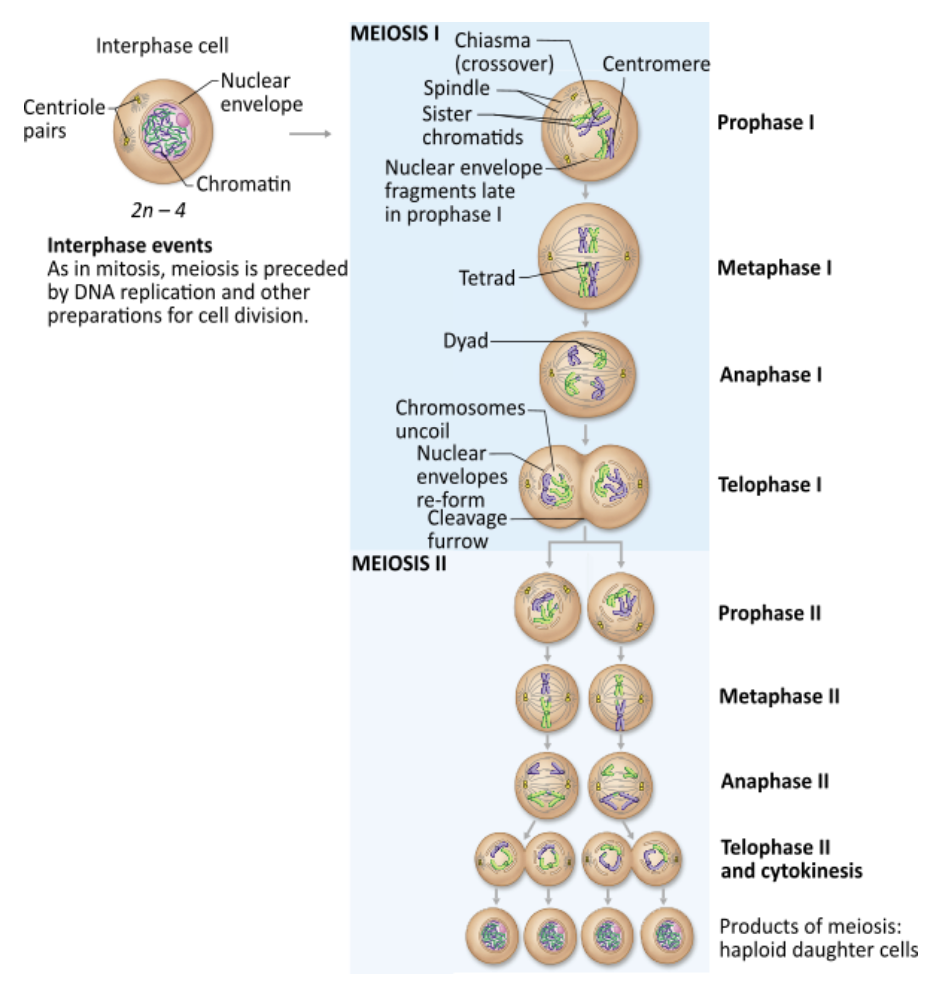
At what point during meiosis do homologous chromosomes pair up?
→ Prophase I
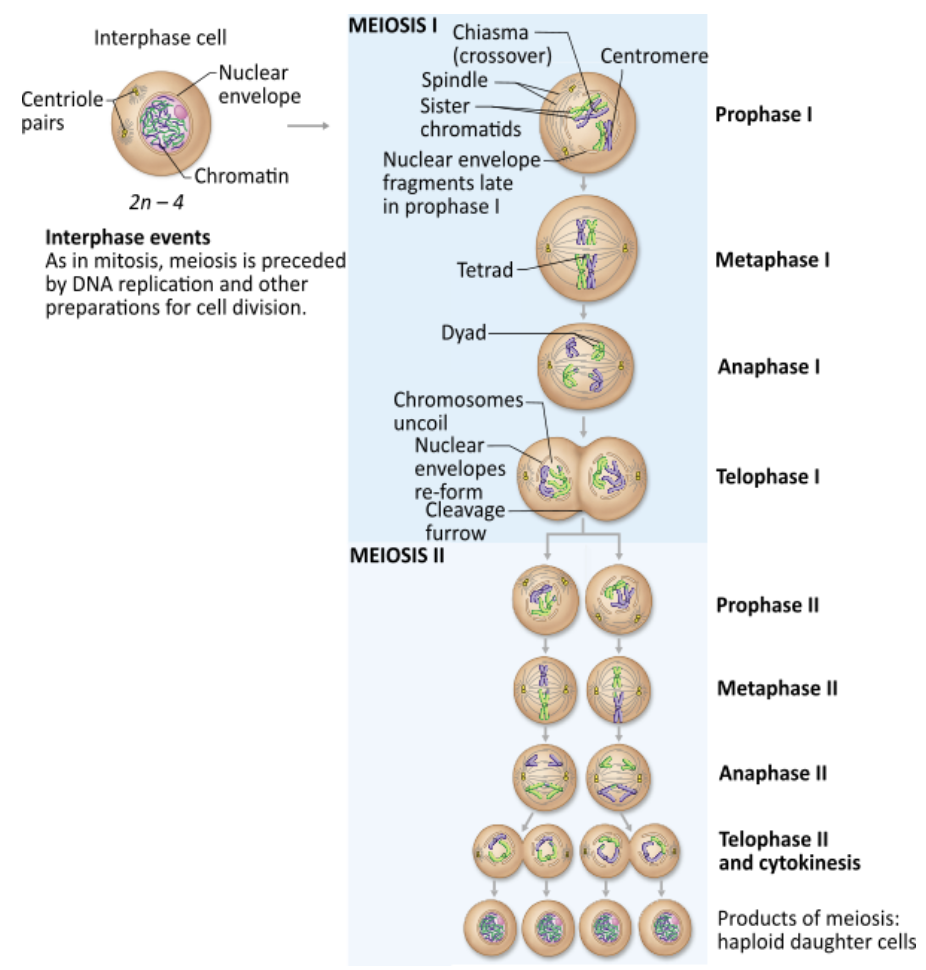
Which of these meiosis stages is functionally the most similar to mitosis?
→ Meiosis II
Meiosis II is fundamentally identical to mitosis. Prophase II, anaphase II, metaphase II, and telophase II have the same events as their corresponding stages in mitosis.
T/F: Crossing over is a source of genetic variability seen in meiosis while independent assortment is a source of genetic variability seen in mitosis.
→ FALSE
T/F: A human egg or sperm contains 23 pairs of chromosomes.
→ FALSE
 Note
Note  Flashcards (30)