Youngless: Types of Natural Selection
 Call Kai
 Learn
Learn Practice Test
 Spaced Repetition
 Match
Match Flashcards
1/10

There's no tags or description
Looks like no tags are added yet.
Name | Mastery | Learn | Test | Matching | Spaced | Call with Kai |
|---|
No analytics yet
Send a link to your students to track their progress
11 Terms
Evolution
The process by which species adapt over time in response to their changing environment.
Natural Selection
A process in which individuals that have certain inherited traits tend to survive and reproduce at higher rates than other individuals because of those traits.
Directional Selection (example)
Most of the moths had light-colored wings, but dark moths started to appear. Because moths live against tree barks, years later, most of the moths were dark. Thus, more dark moths survived, adding more genes for dark color to the population.
What type of selection is this?
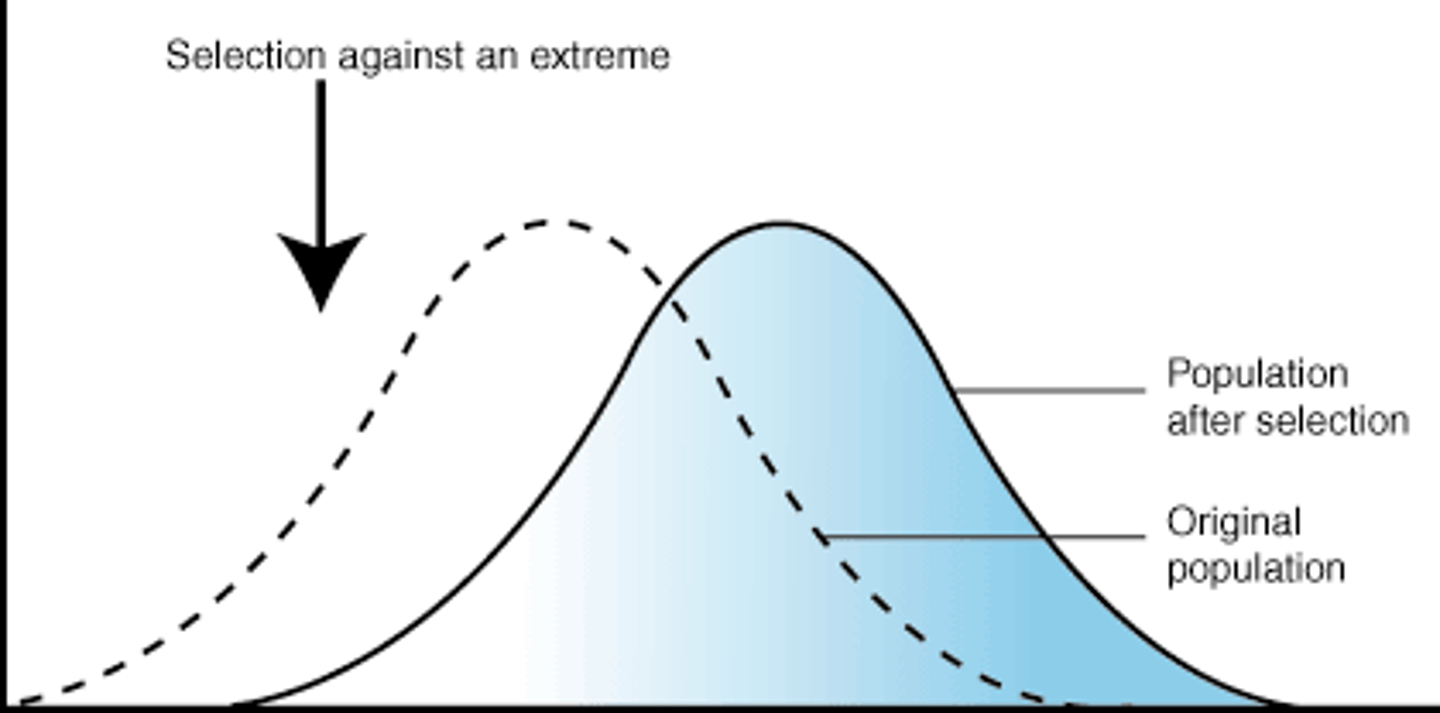
Directional Selection (graph)
What type of Natural Selection is this?
Disruptive Selection (example)
Snakes that live on rocks and are grey will survive. Snakes that live on grass and are green will survive. Snakes that have an intermediate coloring would be disadvantaged because it would be more visible to predators.
What type of selection is this?
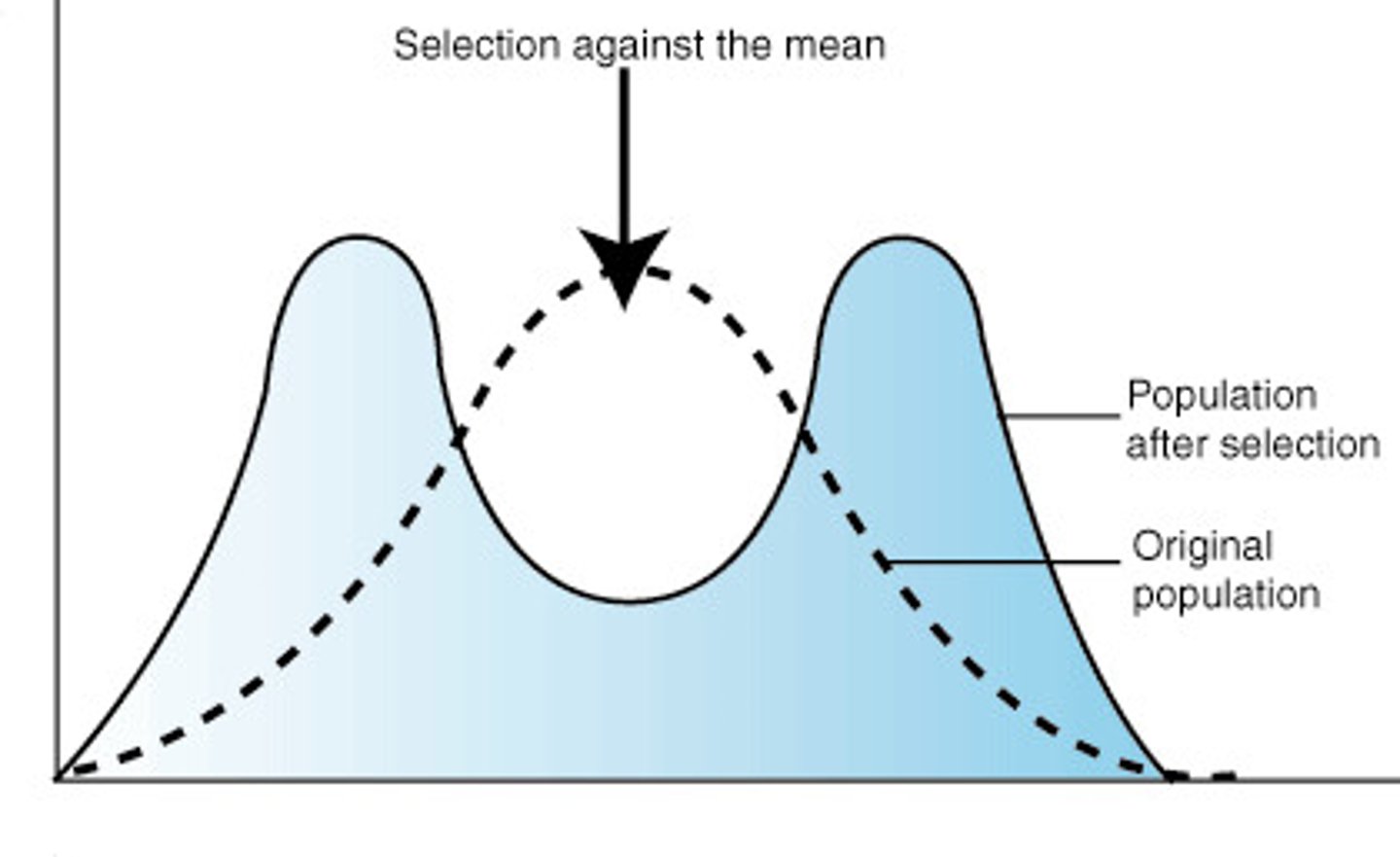
Disruptive Selection (graph)
What type of natural selection is this?
Stabilizing Selection (example)
Human babies born with below-normal and above-normal birth weights have lower chances of survival than babies born with average weights. Therefore, birth weight varies little in human populations
Stabilizing Selection (graph)
What type of Natural Selection is this?
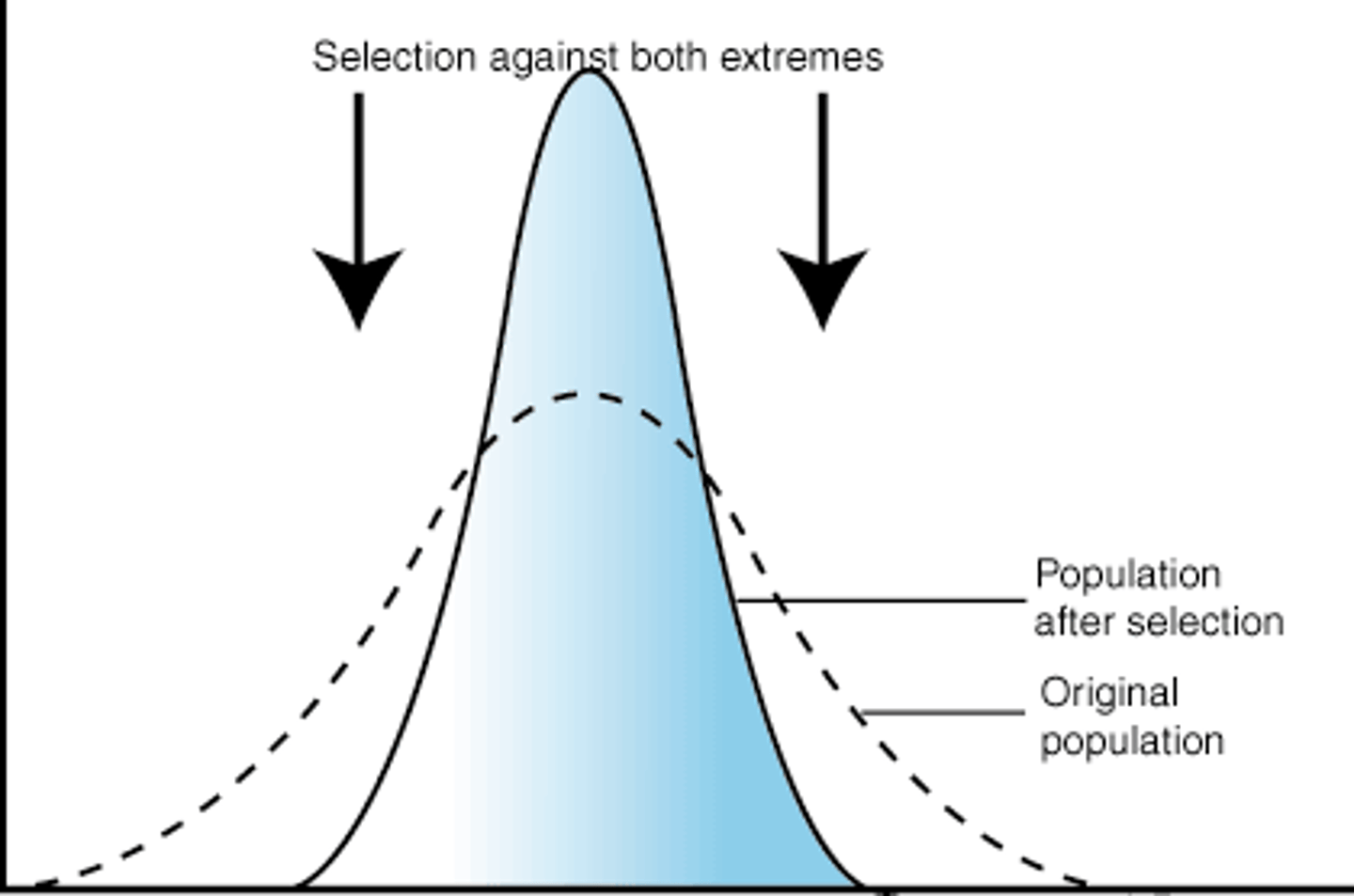
Stabilizing Selection (definition)
Natural selection that favors intermediate variants (favors the middle) by acting against extreme traits
Directional Selection (definition)
Occurs when natural selection favors one of the extreme variations of a trait (shifts right or left)
Disruptive Selection (definition)
form of natural selection in which a single curve splits into two; occurs when individuals at the upper and lower ends of a distribution curve have higher fitness than individuals near the middle

