Biology Exam 3
 Call Kai
 Learn
Learn Practice Test
 Spaced Repetition
 Match
Match Flashcards
 Knowt Play
1/95

There's no tags or description
Looks like no tags are added yet.
Name | Mastery | Learn | Test | Matching | Spaced | Call with Kai |
|---|
No analytics yet
Send a link to your students to track their progress
96 Terms
What is the overall chemical equation for photosynthesis?
6 CO₂ + 6 H₂O → C₆H₁₂O₆ + 6 O₂
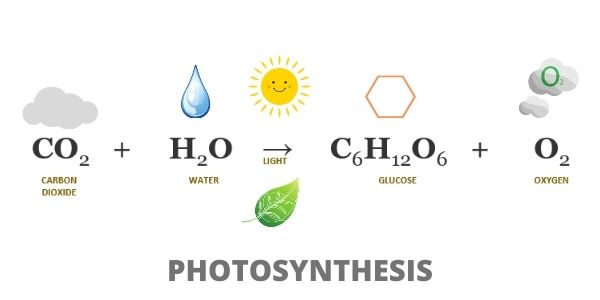
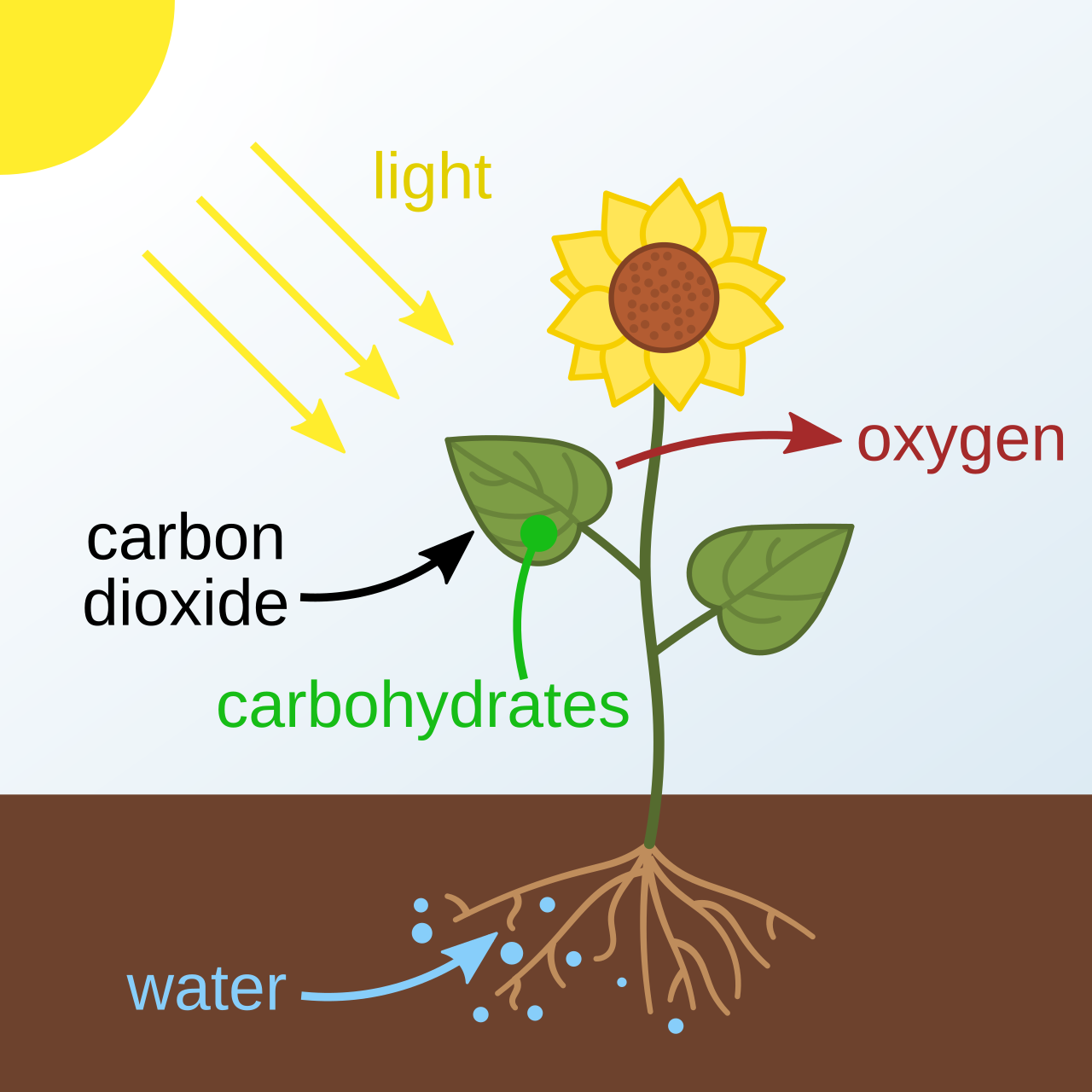
Which molecules are the inputs and outputs of photosynthesis?
Inputs:
CO₂ : enters the Calvin cycle (in the stroma) to build sugar
H₂O : used in the light reactions (in thylakoids), split to release electrons
Light : absorbed in the light reactions to power everything
Outputs:
O₂ : released from the light reactions (from splitting water)
Glucose : made in the Calvin cycle
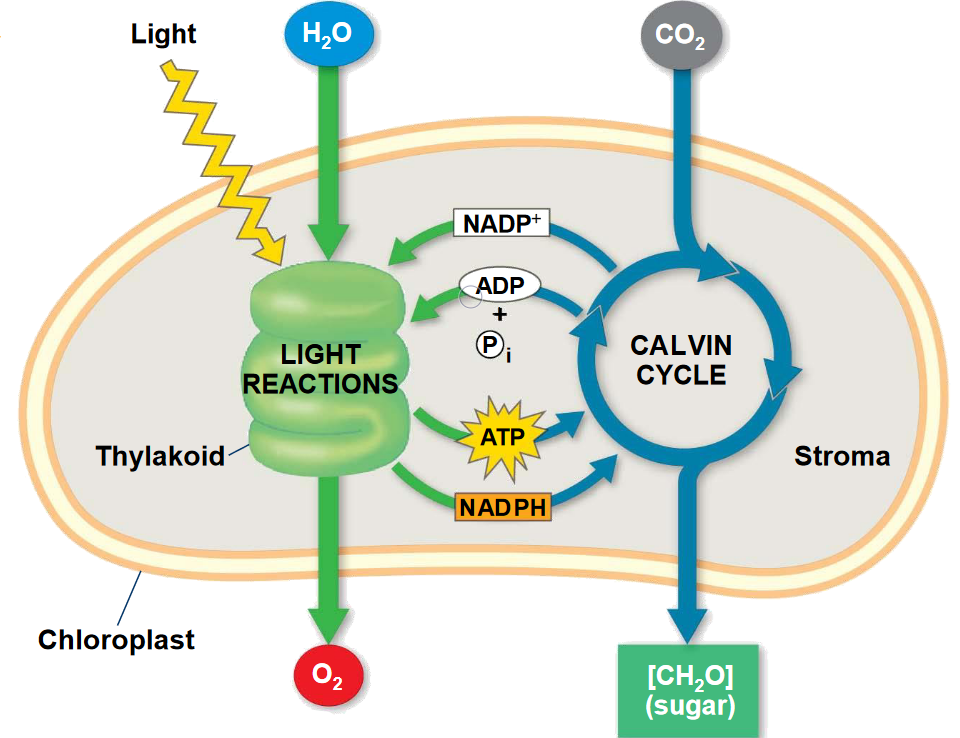
What happens in the light reactions of photosynthesis?
Use light to split 2 H2O water → release O₂ → make energy (3 ATP + 2 NADPH)
(Happens in the thylakoids, powered by light)
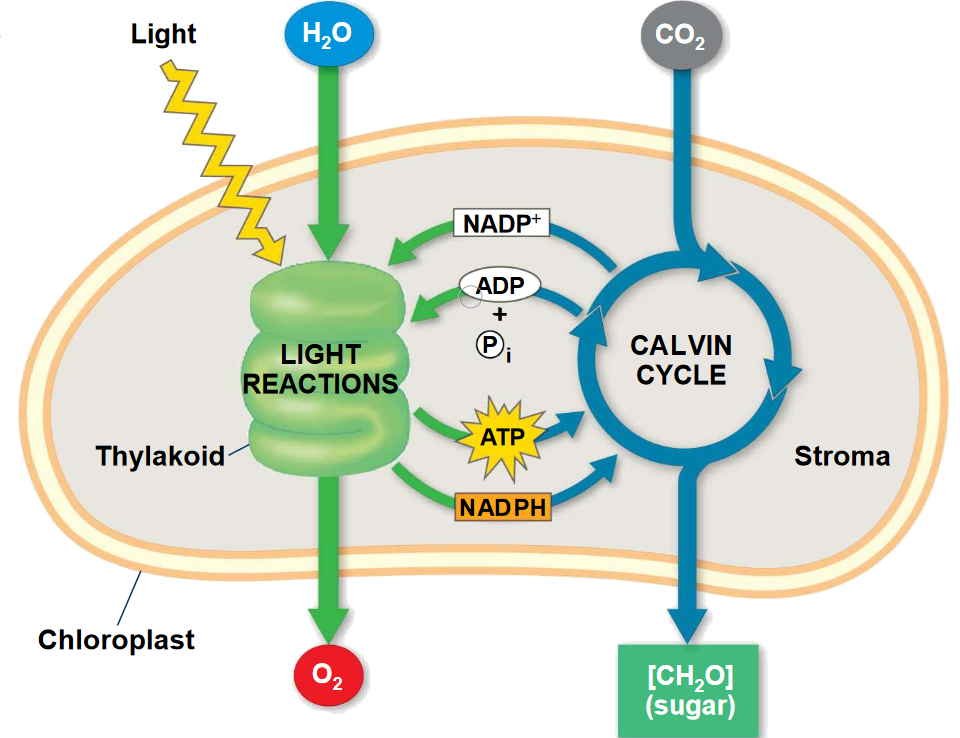
What happens in the Calvin cycle?
Uses 3 CO₂ → builds 1 G3P (½ glucose) → consumes 9 ATP + 6 NADPH
(Happens in the stroma, uses ATP + NADPH from light reactions)
(1 Calvin cycle = ½ glucose molecule, 2 Calvin cycles = 1 whole glucose molecule)
What is the correct order of photosynthesis steps?
Light hits chlorophyll (thylakoids)
Water is split → O₂ released
ATP + NADPH are made
Calvin cycle uses CO₂ + ATP + NADPH
Glucose is produced
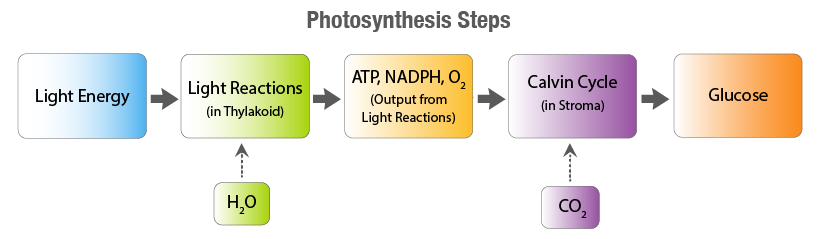
Why are the light reactions necessary?
They make ~3 ATP + 2 NADPH per 2 H₂O split → provide energy + electrons for the Calvin cycle to build glucose
(Happens in the thylakoids, powered by light)
Why is water needed in photosynthesis?
Water is split in the light reactions to provide electrons + H⁺ and releases O₂
Why is CO₂ needed in photosynthesis?
It provides the carbon atoms used to build glucose
What is electronegativity?
An atom’s ability to attract electrons
Why is electronegativity important in photosynthesis?
Oxygen in water is highly electronegative → pulls electrons when H₂O is split
How do electrons from water flow in photosynthesis?
Electrons move through the electron transport chain → their energy pumps H⁺ into thylakoid lumen
What is the purpose of electrons moving through the Electron Transport Chain?
Pumped H⁺ create a gradient → drives ATP synthesis → ATP + NADPH fuel the Calvin cycle
Which molecule is oxidized in photosynthesis?
H₂O is oxidized in the light reactions → electrons leave water → O₂ released
What does reduction mean in photosynthesis?
NADP⁺ is reduced in the light reactions → electrons added → NADPH formed
What happens to CO₂ in the Calvin cycle?
CO₂ is reduced → electrons added → forms G3P (1/2 glucose molecule)
Where does the electron in photosynthesis start?
H₂O is split in the light reactions at photosystem II → electrons leave water → O₂ gas is released → H⁺ ions stay in the thylakoid lumen
What happens at the reaction center of photosystem II?
Light hits chlorophyll in the reaction center → excites electrons → electrons leave photosystem ll and enter the electron transport chain
What do the electron carriers of the electron transport chain do?
They carry electrons from photosystem ll to photosystem l → the energy from moving electrons pumps hydrogen ions into the thylakoid lumen → creates a proton gradient to make ATP
What happens at the reaction center of photosystem l?
Light hits chlorophyll in the reaction center → excites electrons again → electrons are transferred to NADP+ → forms NADPH
What happens to NADP+ at the end of the light reactions?
NADP+ gains electrons and becomes NADPH → carries electrons to the Calvin cycle in the stroma
Where does carbon dioxide go in photosynthesis?
Carbon dioxide enters the Calvin cycle in the stroma → combines with electrons from NADPH and energy from ATP to build sugar (G3P)
Where does oxygen come from in photosynthesis?
Oxygen is released when water is split at photosystem ll during the light reactions
How do electrons move during the light reactions?
Electrons leave water at photosystem ll → move through the electron transport chain → get re-excited at photosystem l → reduce NADP plus to NADPH → NADPH carries electrons to the Calvin cycle
Which has higher energy, NADP+ or NADPH?
NADPH has higher energy because it carries electrons and energy; NADP+ is empty and low energy
Which has higher energy, ADP or ATP?
ATP has higher energy because it stores energy in its phosphate bonds; ADP has less energy
Which has higher energy, the chemical product of photosynthesis or the reactants?
The chemical product (glucose) has higher energy than the reactants (carbon dioxide and water) because energy from light is stored in chemical bonds
What is the function of the electron transport chain in photosynthesis?
The electron transport chain carries electrons from photosystem II to photosystem I and uses the energy from these electrons to pump hydrogen ions into the thylakoid lumen
Where does the original electron come from to start the electron transport chain?
The original electron comes from water split at photosystem II → electrons leave water → oxygen is released
How does pumping hydrogen ions into the thylakoid lumen help make ATP?
Pumped hydrogen ions build up a concentration gradient → they flow back into the stroma through ATP synthase → the flow of H+ drives ATP production
What is chemiosmosis?
The movement of hydrogen ions down their concentration gradient through ATP synthase → this energy is used to make ATP
What is energy coupling in photosynthesis?
When the energy from electrons moving through the electron transport chain is used to pump hydrogen ions → the hydrogen ion gradient then powers ATP synthesis
Where do the light reactions occur?
In the thylakoid membranes of the chloroplast → where water is split, electrons flow through the electron transport chain, and ATP and NADPH are made
Where does the Calvin cycle occur?
In the stroma of the chloroplast → where carbon dioxide is fixed into sugar using ATP and NADPH
Where is water split in photosynthesis?
At photosystem II in the thylakoid membrane → electrons go to the electron transport chain → oxygen is released → hydrogen ions build up in thylakoid lumen
Where is ATP made in photosynthesis?
In the stroma side of the thylakoid membrane → hydrogen ions flow through ATP synthase during chemiosmosis
Where is NADPH made?
At photosystem I in the thylakoid membrane → electrons reduce NADP+ → NADPH carries electrons to the Calvin cycle in the stroma
What is the stroma in a chloroplast?
The fluid-filled space inside the chloroplast → where the Calvin cycle occurs and enzymes, ATP, NADPH, and carbon dioxide mix
What are grana (a granum) in a chloroplast?
Stacks of thylakoids → increase surface area for light reactions
What is the thylakoid in a chloroplast?
A flat sac inside the chloroplast → contains chlorophyll → site of light absorption and electron transport
What is the thylakoid membrane?
Membrane that surrounds the thylakoid → contains photosystem I, photosystem II, and electron transport chain → where ATP and NADPH are made
What is the thylakoid space (lumen)?
The inside of the thylakoid → where hydrogen ions accumulate during light reactions → drives ATP synthesis through chemiosmosis
What happens in the light reactions of photosynthesis?
Light reactions split water → release oxygen → excite electrons → make ATP and NADPH
What does the light reaction require?
Light, water, ADP, and NADP
Where do the light reactions occur?
In the thylakoid membranes of the chloroplast
Where does the Calvin cycle occur?
In the stroma of the chloroplast
What are pigments in photosynthesis?
Molecules that absorb light energy → used to excite electrons for the light reactions
How does wavelength relate to pigments?
Different pigments absorb different wavelengths of light → the absorbed energy excites electrons
Which colors of light are absorbed by pigments?
Pigments absorb mostly red and blue light → green light is mostly reflected, which is why plants look green
Which part of the pigment absorbs energy?
Chlorophyll molecules in the thylakoid membrane absorb light → transfer energy to electrons at the reaction center
What happens at photosystem II?
Absorbs light → excites electrons → splits water → releases oxygen → electrons enter the electron transport chain → H⁺ ions pumped into thylakoid lumen
What happens at photosystem I?
Absorbs light → re-excites electrons → electrons reduce NADP⁺ → forms NADPH → carries electrons to the Calvin cycle
Where are photosystem II and photosystem l located?
In the thylakoid membrane
What is the role of light in photosynthesis?
Excites electrons in the reaction center → gives them energy to move through the electron transport chain → powers ATP and NADPH production
What is the role of water in photosynthesis?
It is split at photosystem II → provides electrons to replace those lost by chlorophyll → releases oxygen → H⁺ ions help make ATP
What is the reaction center?
The part of the photosystem where light energy excites electrons → electrons leave the photosystem and enter the electron transport chain
What is an electron acceptor?
Receives excited electrons from the reaction center → in photosystem II, electrons go to the electron transport chain; in photosystem I, electrons go to NADP⁺ to form NADPH
What happens in the Calvin cycle?
Carbon dioxide is reduced into carbohydrate (sugar) using energy from ATP and electrons from NADPH
What molecules provide energy and electrons for the Calvin cycle?
ATP provides energy, NADPH provides electrons → both come from the light reactions
What is an autotroph?
An organism that makes its own food from light or chemical energy (like plants and algae)
What is a heterotroph?
An organism that cannot make its own food → must eat other organisms for energy
What is a food chain?
A single path of energy flow from one organism to another (producer → consumer → predator)
What is a food web?
Many interconnected food chains showing how energy moves through an ecosystem
What is biomass?
The total mass of living organisms in a given area → shows how much energy or material is available at each trophic level
How does energy flow through a community?
From producers (autotrophs) → primary consumers → secondary consumers → tertiary consumers → most energy is lost as heat at each step
How does carbon cycle through the biosphere?
Between the atmosphere, living organisms, oceans, and soil through photosynthesis, respiration, decomposition, and combustion
What are carbon fluxes?
The movements of carbon between reservoirs → for example, CO₂ taken from the atmosphere by photosynthesis or released by respiration
What are carbon reservoirs?
Places where carbon is stored → atmosphere, oceans, fossil fuels, soil, and living organisms
What is the short-term carbon cycle?
Moves carbon quickly between the atmosphere, plants, animals, and oceans → happens over days to years through photosynthesis and respiration
What is the long-term carbon cycle?
Moves carbon slowly between the atmosphere, oceans, soil, and rocks → happens over thousands to millions of yearsthrough fossil fuel formation, weathering, and sedimentation
How do humans influence the carbon cycle?
Humans burn fossil fuels and cut down forests → increase CO₂ in the atmosphere → strengthens the greenhouse effect → global warming
Why do cells divide by mitosis in multicellular organisms?
To grow, repair tissues, replace old or damaged cells, and maintain the same number of chromosomes in daughter cells
What is interphase in the cell cycle?
Interphase is the phase where the cell grows, copies DNA, and prepares for division → includes G1, S, and G2 phases
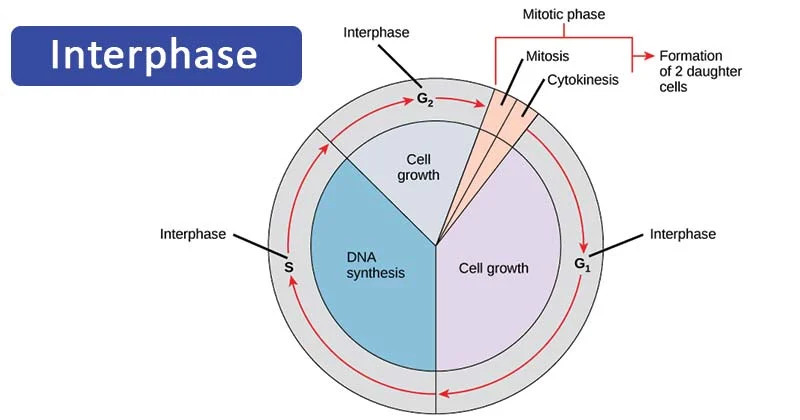
What happens in G1 phase
G1 phase is when the cell grows, makes proteins, and carries out normal functions
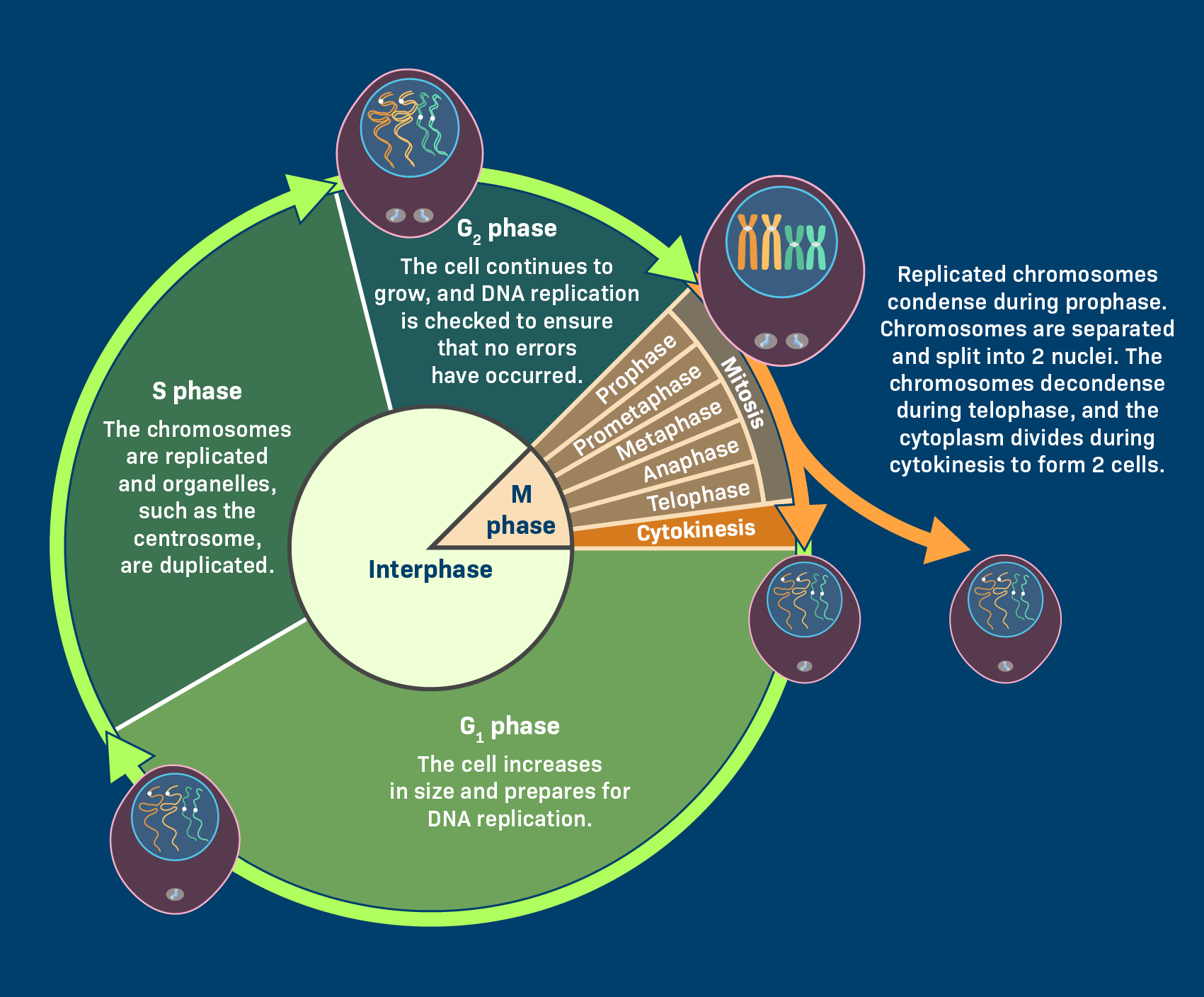
What happens in S phase?
S phase is when the cell replicates its DNA → each chromosome becomes two sister chromatids
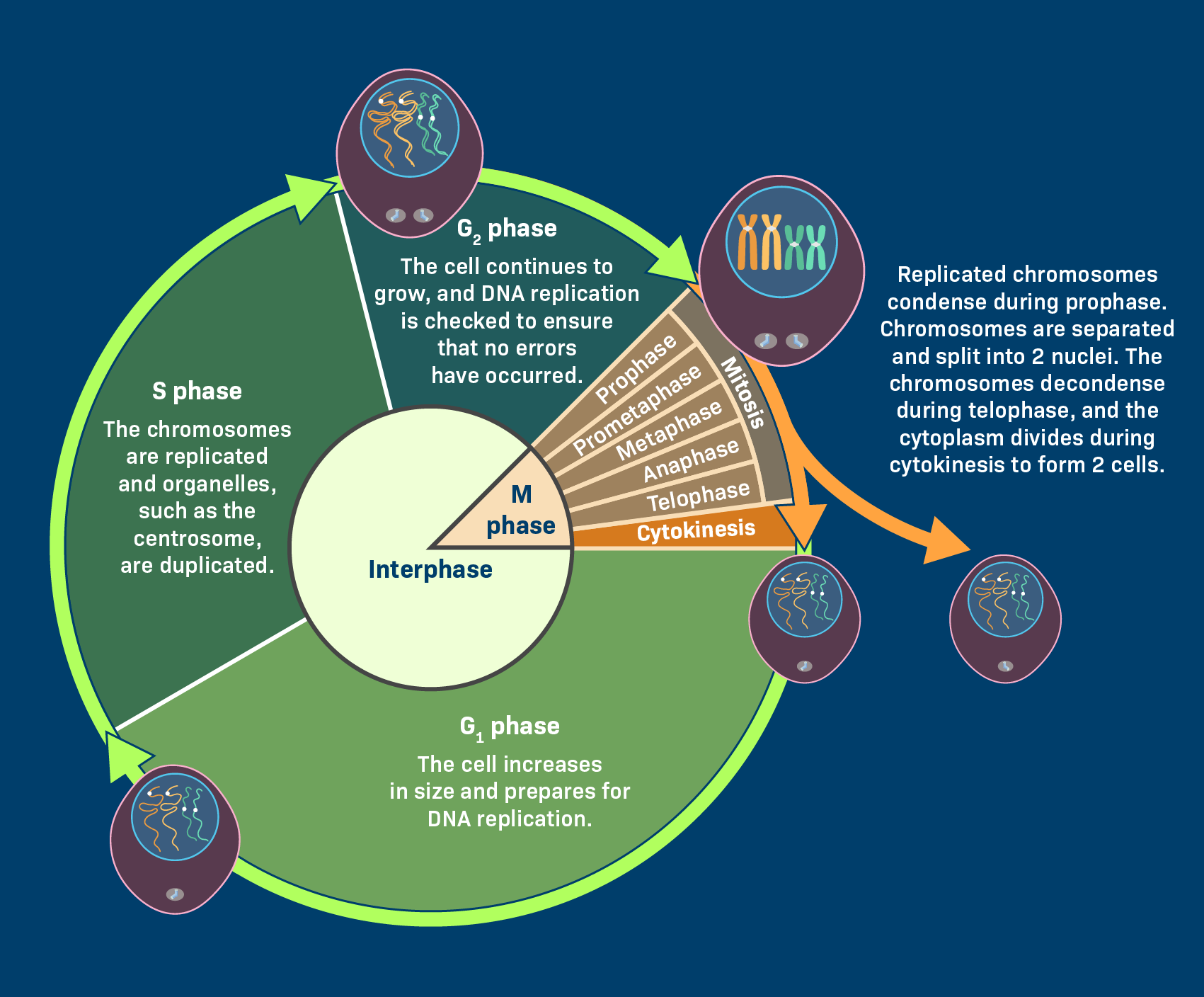
What happens in G2 phase?
G2 phase is when the cell finishes growing, checks DNA for errors, and prepares for mitosis
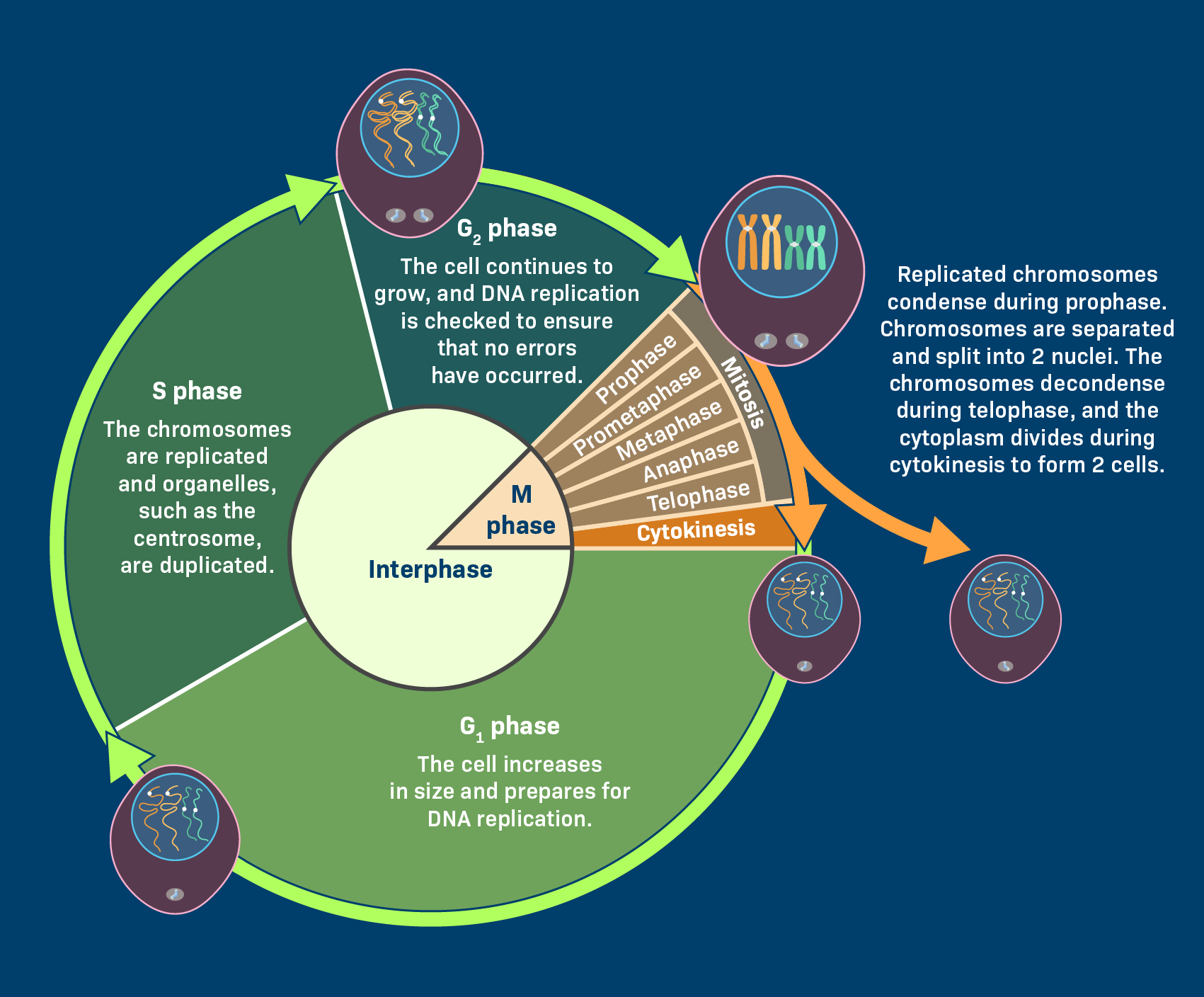
What is G0 phase?
G0 is a resting or non-dividing phase → cells carry out normal functions but do not divide
What is mitosis?
Mitosis is the division of the nucleus → produces two genetically identical daughter cells
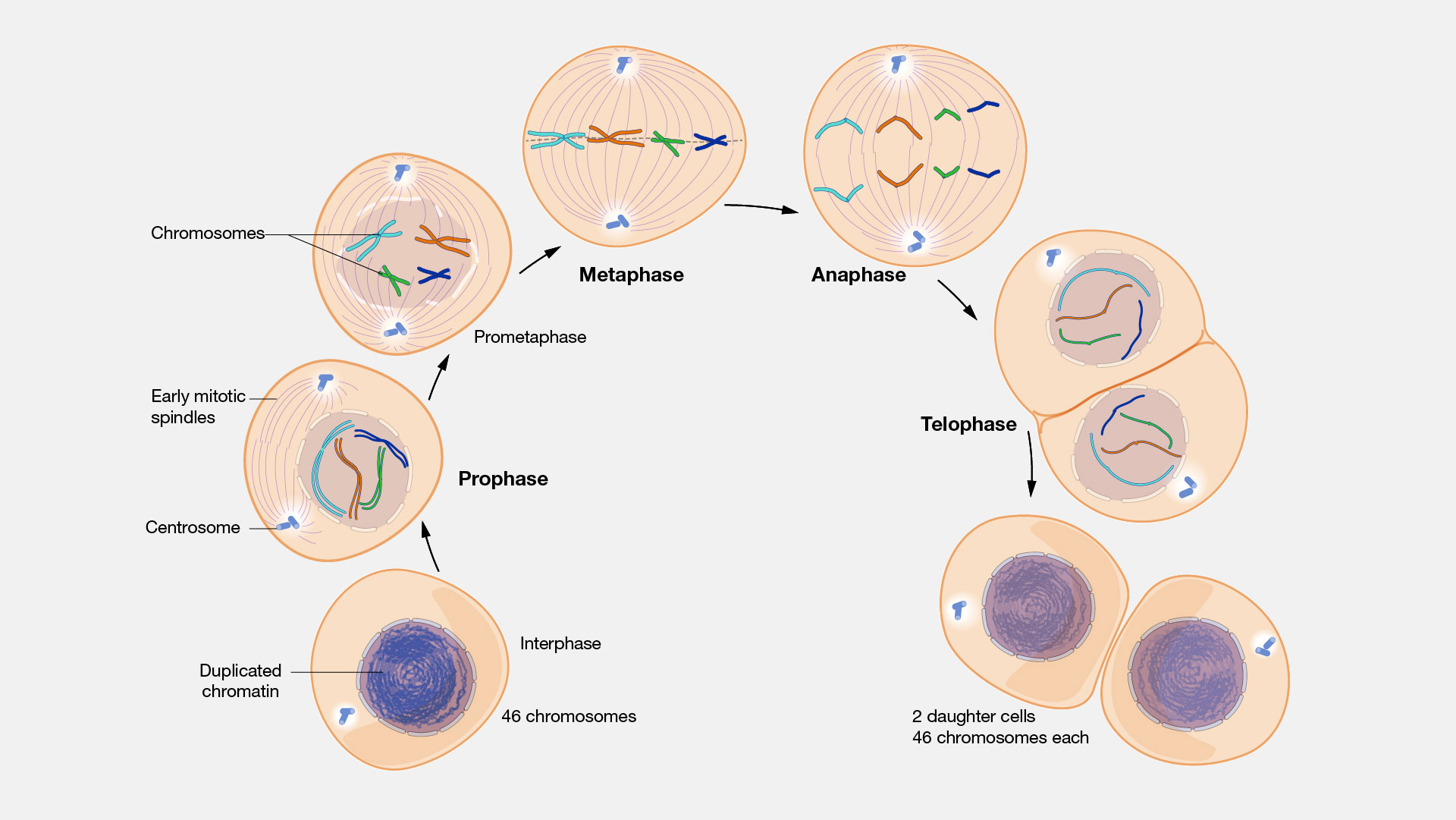
What are the main stages of mitosis?
Prophase, Metaphase, Anaphase, Telophase → chromosomes condense, align, separate, and nuclei reform
When is new DNA made in the cell cycle?
DNA is made during S phase of interphase → each chromosome is copied into two sister chromatids
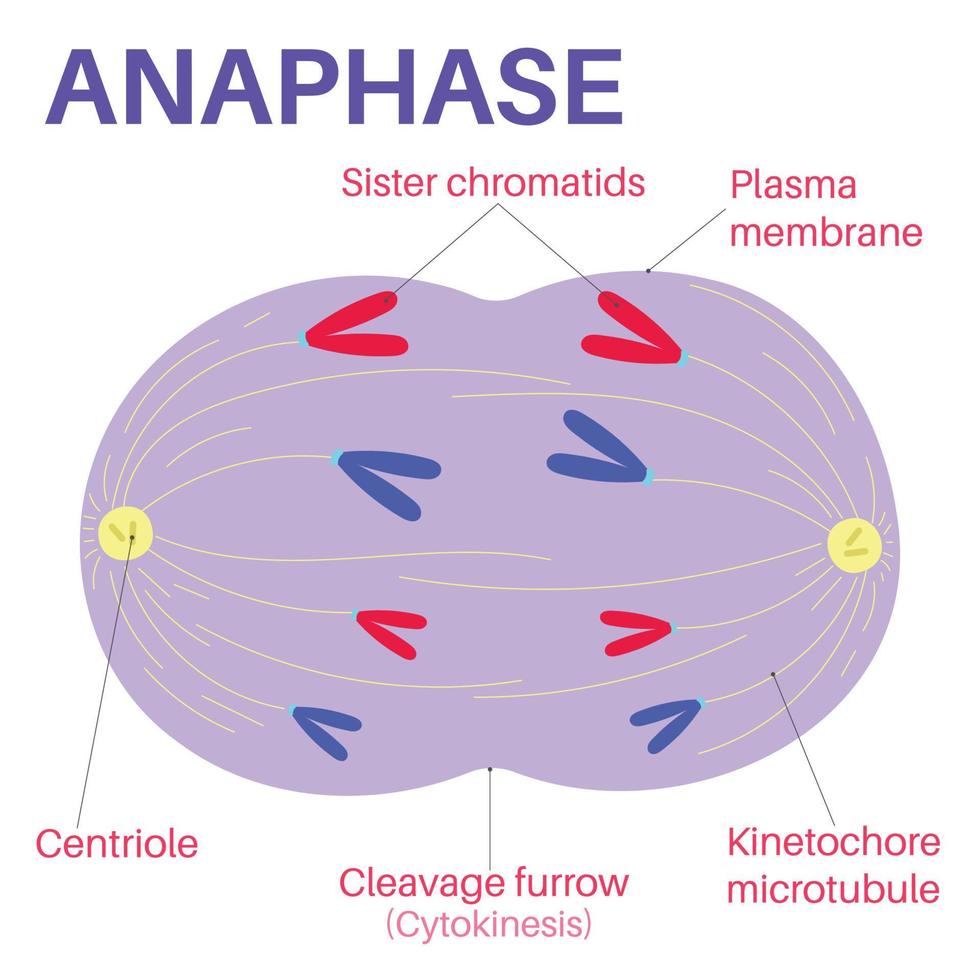
When is DNA split between cells?
DNA is split during anaphase of mitosis → sister chromatids are pulled to opposite ends of the cell
What are cell cycle checkpoints?
Checkpoints are control points where the cell checks for errors → decide whether to continue dividing, pause, or trigger apoptosis
What is the G1 checkpoint?
The G1 checkpoint checks cell size, nutrients, growth signals, and DNA damage → decides if the cell enters S phase or goes into G0
What is apoptosis?
Apoptosis is programmed cell death → removes damaged, old, or unneeded cells
What causes apoptosis and why is it useful?
Apoptosis is caused by DNA damage, severe stress, or developmental signals → prevents damaged cells from dividing and helps shape tissues during development
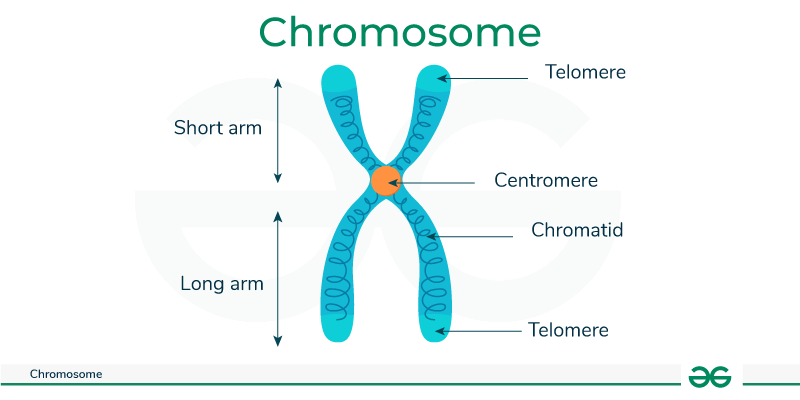
What is a chromosome?
A chromosome is a thread-like structure of DNA and proteins that carries genetic information
What is chromatin?
Chromatin is the uncondensed form of DNA in the nucleus → found during interphase
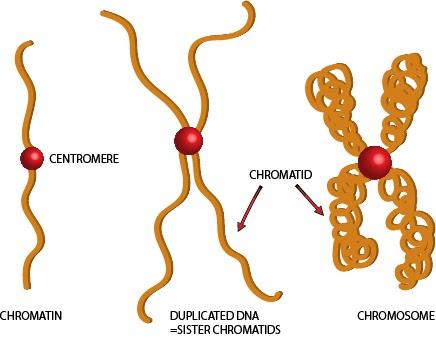
What is a condensed chromosome?
A condensed chromosome is tightly packed DNA → visible during mitosis
What are somatic cells?
Somatic cells are all body cells (not sperm or egg) → they are diploid
What are gametes?
Gametes are sperm and egg cells → they are haploid
What does diploid (2n) mean?
Diploid (2n) means the cell has two sets of chromosomes → one from each parent
What does haploid (1n) mean?
Haploid (1n) means the cell has one set of chromosomes → gametes
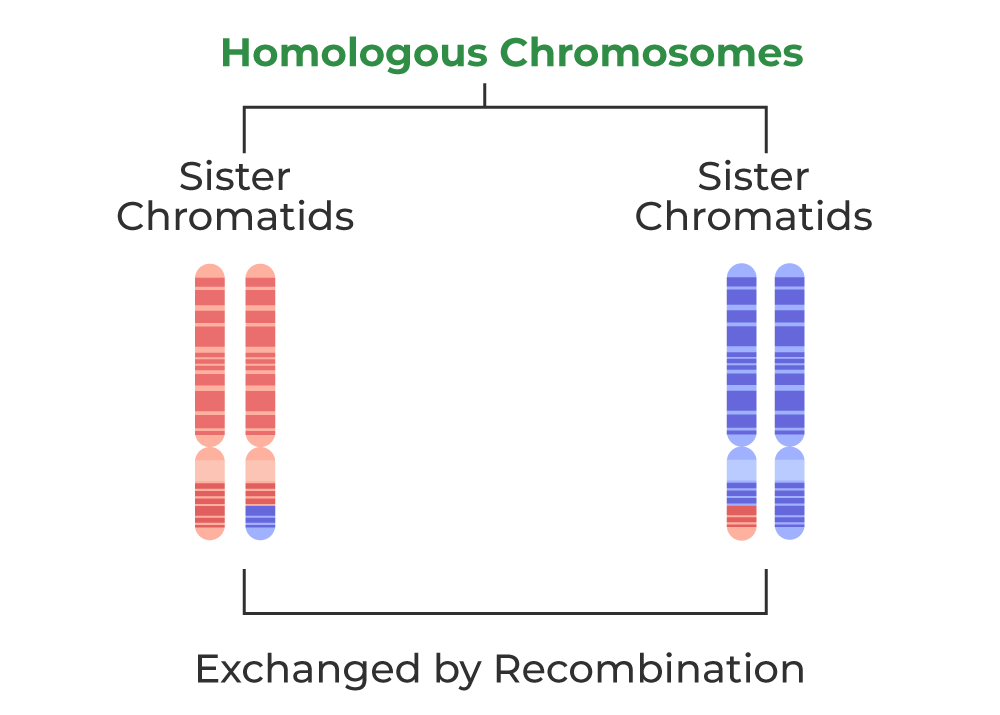
What are homologous chromosomes?
Homologous chromosomes are matching pairs of chromosomes → same genes in the same order, one from each parent
What are sex chromosomes?
Sex chromosomes (X and Y) determine an organism’s sex → females XX, males XY
What are sister chromatids?
Sister chromatids are identical copies of a chromosome made during DNA replication → connected by a centromere
What is a centromere?
The centromere is the region where sister chromatids are attached → spindle fibers pull them apart during mitosis
What is the difference between replicated and unreplicated chromosomes?

