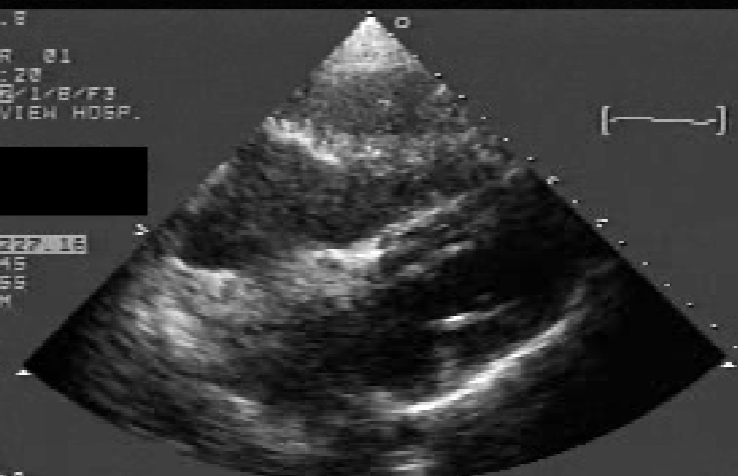
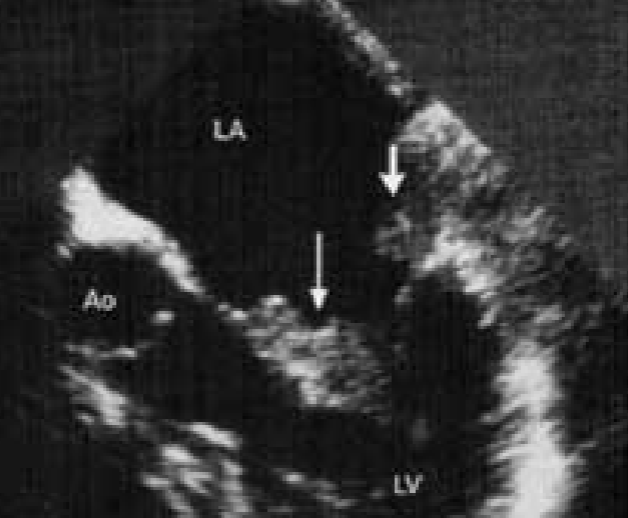
Cardiac Tumors & Masses

0.0(0)
Studied by 0 people
call kaiCall Kai
learnLearn
examPractice Test
spaced repetitionSpaced Repetition
heart puzzleMatch
flashcardsFlashcards
GameKnowt Play
Card Sorting

1/52

encourage image

There's no tags or description

Looks like no tags are added yet.

Last updated 10:46 PM on 3/25/26
Name
Mastery
Learn
Test
Matching
Spaced
Call with Kai

No analytics yet

Send a link to your students to track their progress

53 Terms

1
New cards

Moderator Band AKA:

Septomarginal Trabecula

2
New cards

Moderator Band (Septomarginal Trabecula)

  • thick bundle of muscle traversing the RV

  • variable size

  • often verifies RV in fetal scanning

    • seen in lower 1/3

      • more toward apex

  • not always visualized

  • may act as a protective mechanism to resist RV overdistension
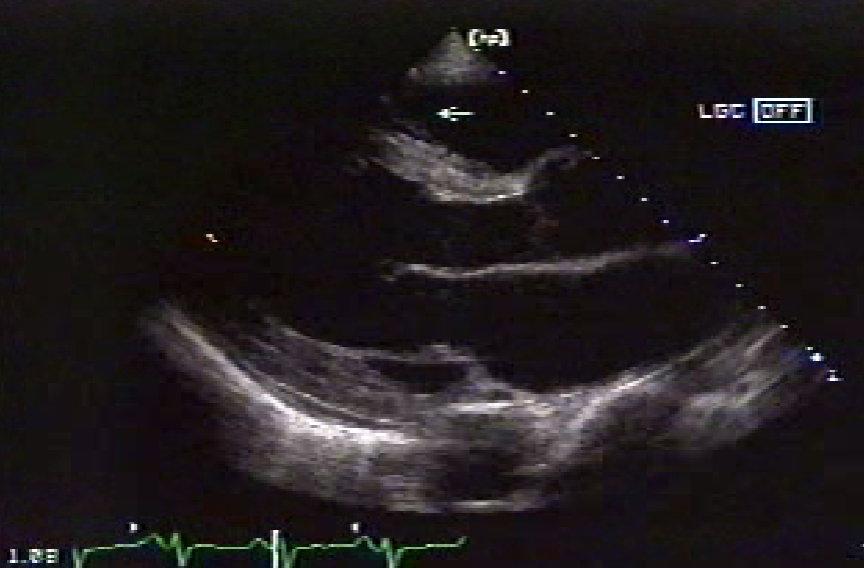
<ul><li><p>thick bundle of muscle traversing the <span style="color: rgb(0, 124, 255);">RV</span></p></li><li><p>variable size</p></li><li><p>often <u>verifies RV in fetal scanning</u></p><ul><li><p>seen in <strong>lower 1/3</strong></p><ul><li><p><u>more toward</u> <span style="color: rgb(0, 139, 255);">apex</span></p></li></ul></li></ul></li><li><p>not always visualized</p></li><li><p>may act as a protective mechanism to resist RV overdistension</p></li></ul><p></p>
3
New cards

Normal Variants:

  • Prominent RV Trabeculations

    • enhanced by RVH

  • atrial appendage lined w/ pectinate m

  • Ridge of Marshall

4
New cards

Ridge of Marshall AKA:

  • Coumadin Ridge

  • Warfarin Ridge

5
New cards

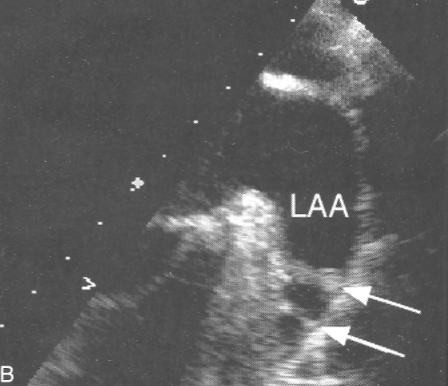
Ridge of Marshall

  • tissue separating LAA and LUPV

  • may be confused w/ clot

<ul><li><p>tissue separating <span style="color: rgb(0, 124, 255);">LAA</span> and <span style="color: rgb(0, 124, 255);">LUPV</span></p></li><li><p>may be confused w/ clot</p></li></ul><p></p>
6
New cards

Fat

  • can be found anywhere in heart

    • appears echogenic

7
New cards

Epicardial Fat Pad

  • often located anteriorly

  • sandwiched between epicardium and myocardium

    • seen PLAX if anterior

  • appears anechoic in this location

    • can mimic loculated pericardial effusion
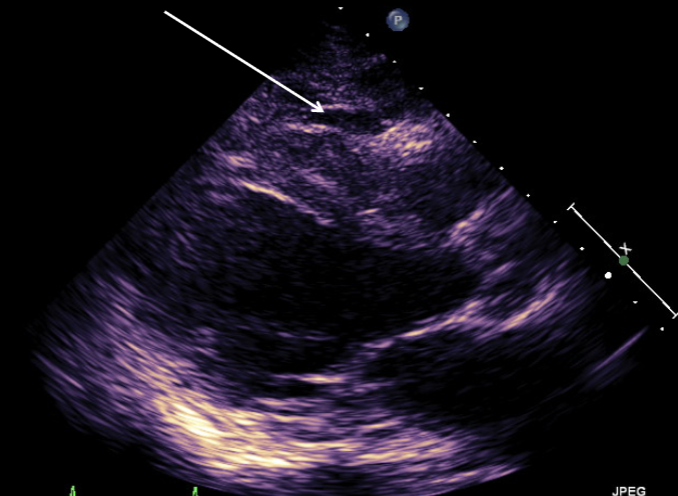
<ul><li><p>often located <u>anteriorly</u></p></li><li><p>sandwiched between <span style="color: rgb(0, 132, 255);">epicardium</span> and <span style="color: rgb(0, 139, 255);">myocardium</span></p><ul><li><p>seen <span style="color: rgb(255, 0, 246);">PLAX</span> if <strong>anterior</strong></p></li></ul></li><li><p>appears <u>anechoic</u> in this location</p><ul><li><p>can mimic loculated pericardial effusion</p></li></ul></li></ul><p></p>
8
New cards

Eustachian Valve

  • a membranous, endocardial tissue flap

  • located at opening of the IVC into RA

    • may produce flow obstruction

      • IVC may become dilated

  • needs to be determined from pathological mass / tumor
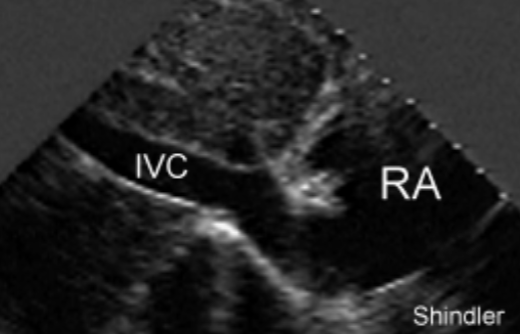
<ul><li><p>a membranous, endocardial tissue flap</p></li><li><p>located at <span style="color: rgb(0, 139, 255);">opening of the IVC</span> into <span style="color: rgb(0, 154, 255);">RA</span></p><ul><li><p>may produce flow obstruction</p><ul><li><p><u>IVC</u> may become <strong>dilated</strong></p></li></ul></li></ul></li><li><p>needs to be determined from pathological mass / tumor</p></li></ul><p></p>
9
New cards

Eustachian Valve during fetal circulation:

  • directs blood from RA to PFO (patent foramen ovale)

  • serves no significant purpose in adult

10
New cards

Thebesian Valve

  • a flap of endocardial tissue that guards the Coronary Sinus opening into the RA

  • often continuous w/ the Eustachian valve

  • not typically referenced in clinical practice
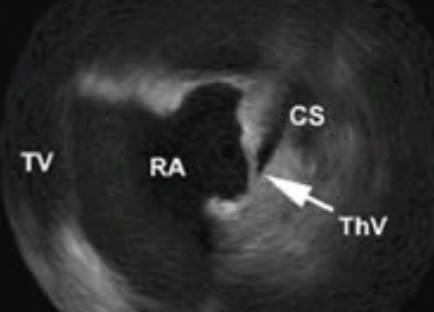
<ul><li><p>a flap of <strong>endocardial tissue</strong> that <u>guards</u> the <span style="color: rgb(0, 139, 255);">Coronary Sinus opening</span> <strong>into </strong>the <span style="color: rgb(0, 109, 255);">RA</span></p></li><li><p>often <u>continuous w/</u> the <span style="color: rgb(0, 109, 255);">Eustachian valve</span></p></li><li><p>not typically referenced in clinical practice</p></li></ul><p></p>
11
New cards

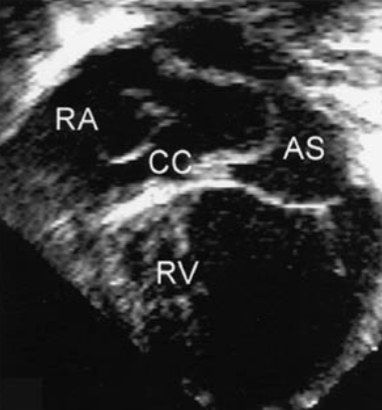
Chiari Network

  • a freely mobile, lace/mesh-like membrane

    • located in RA near orifice of coronary sinus

  • embryonic remnant

    • similar to Eustachian

  • seen in 2-3% of the pop

  • needs to be DDX’d from mass or tumor

<ul><li><p>a freely mobile, lace/mesh-like membrane</p><ul><li><p>located in <span style="color: rgb(0, 116, 253);">RA </span>near <span style="color: rgb(0, 139, 255);">orifice of coronary sinus</span></p></li></ul></li><li><p><strong>embryonic remnant</strong></p><ul><li><p>similar to Eustachian</p></li></ul></li><li><p>seen in 2-3% of the pop</p></li><li><p>needs to be DDX’d from mass or tumor</p></li></ul><p></p>
12
New cards

LV Bands or False Tendons

  • traverse the LV cavity

    • may be multiple

  • seen in any view of the LV

  • if prominent can produce confusing echos

  • clinical significance is unknown

  • rarely produce symptoms

13
New cards

What are other DDx’s for cardiac tumors / masses?

  • MAC

  • calcified papillary muscles

  • artifacts:

    • near field gain

    • main bang

    • side lobes

14
New cards

Cardiac Tumor Categories:

  • Primary

  • Metastatic / Secondary

15
New cards

Primary Cardiac Tumors

  • originate w/in the heart

  • classified as:

    • benign (75%)

    • malignant (25%)

16
New cards

Metastatic / Secondary Cardiac Tumors

  • originate from a primary malignancy located somewhere else in the body

  • more common than primary tumors

17
New cards

Types of Primary Benign Cardiac Tumors:

  • Myxoma

    • 50% of primary benign tumors

  • Papilloma / Papillary Fibroelastoma

    • 10%

  • Lipoma

    • 10%

  • Fibroma

    • 4% of primary benign tumors

  • Rhabdomyoma

18
New cards

What is the most common benign tumor of the adult population?

Myxoma

19
New cards

What is the most common benign tumor found in children?

Rhabdomyoma

20
New cards

Myxoma

  • neoplasm that arises from endocardial tissue

    • 80% located in LA

    • RA 2nd most common

  • usually attached by a stalk to the IAS

    • “pedunculated”

    • often arises from IAS

      • near region of fossa ovalis

<ul><li><p><u>neoplasm</u> that arises from <span style="color: rgb(255, 119, 0);">endocardial tissue</span></p><ul><li><p><u>80% located</u> in <span style="color: rgb(0, 117, 255);"><strong>LA</strong></span></p></li><li><p><span style="color: rgb(0, 117, 255);">RA</span> <u>2nd</u> most common</p></li></ul></li><li><p>usually attached by a <u>stalk</u> to the <span style="color: rgb(0, 139, 255);">IAS</span></p><ul><li><p><span style="color: rgb(255, 0, 0);">“pedunculated”</span></p></li><li><p>often arises from <span style="color: rgb(0, 124, 255);">IAS</span></p><ul><li><p>near region of <span style="color: rgb(0, 117, 255);"><strong>fossa ovalis</strong></span></p></li></ul></li></ul></li></ul><p></p>
21
New cards

Where might a Myxoma originate at?

  • atrial appendage

  • origin of a pulmonary vein

22
New cards

Myxoma characteristics:

  • polypoid mass of gelatinous tissue

  • tumor is usually mobile + moves w/ blood flow

23
New cards

Classic LA Myxoma

  • echogenic mass located in the body of the LA in systole and prolapses through the mitral orifice in diastole

    • causes stenosis if large enough

      • narrowing of orifice

      • mimics MS

24
New cards

Potential risks of a Myxoma include:

  • pt’s are at high risk for embolization

    • systemic or pulmonary

  • death

    • d/t obstruction of flow, arrhythmia, emboli

  • tumor may re-occur

    • can grow back after surgical removal

      • if seed still remains

25
New cards

Myxoma symptoms:

  • asymptomatic → small

  • Systemic embolization

    • from possible tumor fragments

  • MV / TV obstruction

    • from tumor’s prolapsing motion into valve during diastole

  • CP

  • Dyspnea / DOE

  • Hemoptysis

  • Pulm edema

  • syncope

  • weakness / fatigue

  • cachexia

    • weight loss

26
New cards

Myxoma Auscultastion

New / acquired / “changing” cardiac murmur → tumor “plop”

27
New cards

Myxoma EKG findings:

  • conduction disturbances

    • arrhythmias

    • a-fib

    • atrial flutter

    • bundle branch blocks

28
New cards

Myxoma m-mode findings:

  • blunted E-point of MV

  • reduced E-F slope

    • can mimic MS

  • heavy band of echoes behind AMVL in diastole
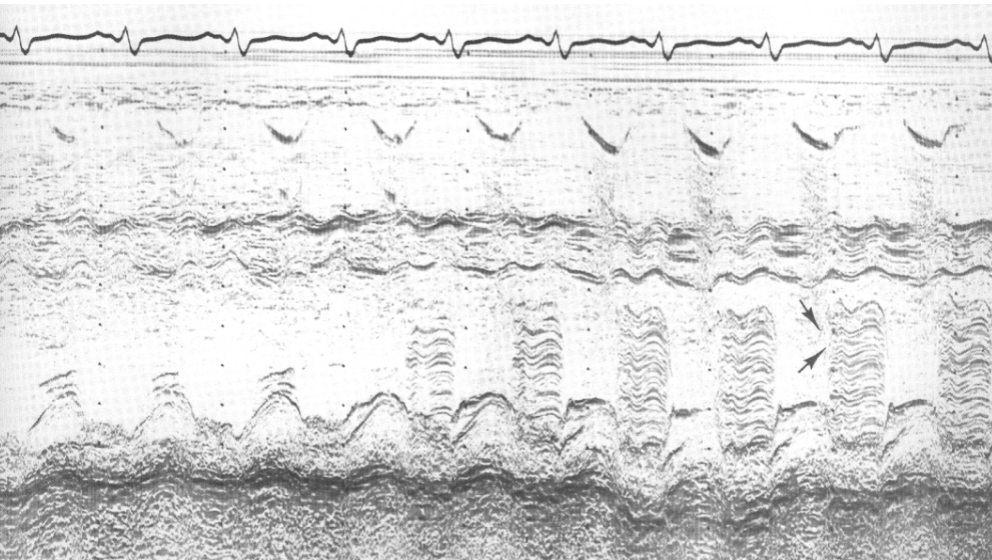
<ul><li><p>blunted E-point of MV</p></li><li><p>reduced E-F slope</p><ul><li><p>can mimic MS</p></li></ul></li><li><p>heavy band of echoes behind AMVL in diastole</p></li></ul><p></p>
29
New cards

What does a Myxoma most closely mimic?

MS

30
New cards

Myxoma 2D findings:

  • visualization of myxoma

    • allows detection, location, + sizing

  • exaggerated motion of myxoma

    • d/t prolapsing from LA into the LV

31
New cards

Myxoma Doppler findings:

  • mimics valvular MS findings

  • MR may be noted

32
New cards

What is a new method of Myxoma diagnosis?

  • Myocardial Contrast Echocardiography

    • contrast agent injection directly into the CA’s

      • shows normal myocardial perfusion

    • a myxoma will light up d/t contrast perfusion

    • thrombus will not absorb contrast

33
New cards

Other methods of Myxoma diagnosis:

  • coronary angiography

34
New cards

Myxoma Treatment:

  • prompt surgical excision

  • serial echocardiography to R/O reoccurrence after surgical removal

    • LA myxoma can reoccur if ‘seed’ is not removed

      • similar to a wart

  • some pt’s given anti-coag’s + rescanned within 1 month

    • to differentiate from a thrombus

35
New cards

Papilloma / Papillary Fibroelastoma

  • most common tumor of cardiac valves + valve apparatus

    • can arise from any endocardial surface

    • most common: AoV, MV, TV in children

  • small, pedunculated benign tumor

    • attached by a single stalk

    • very mobile

  • clinical significance is unclear

    • noted to be an emboli source d/t attracting platelets / fibrin

  • DDx: Endocarditis & Lambl’s excrescence
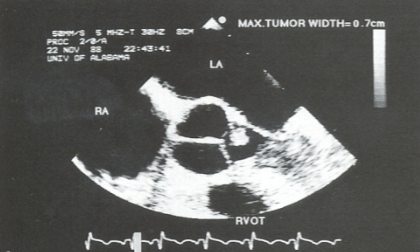
<ul><li><p><span style="color: red;">most common tumor of cardiac valves + valve apparatus</span></p><ul><li><p>can arise from any endocardial surface</p></li><li><p><strong>most common</strong>: <span style="color: rgb(0, 154, 255);">AoV</span>, MV, TV in children</p></li></ul></li><li><p>small, pedunculated benign tumor</p><ul><li><p>attached by a single stalk</p></li><li><p>very mobile</p></li></ul></li><li><p>clinical significance is unclear</p><ul><li><p>noted to be an emboli source d/t attracting platelets / fibrin</p></li></ul></li><li><p>DDx: Endocarditis &amp; Lambl’s excrescence</p></li></ul><p></p>
36
New cards

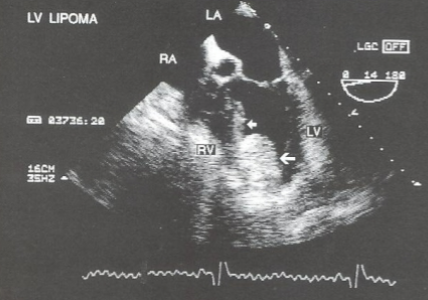
Lipoma

  • neoplasm of mature fat cells

  • well-defined, homogenous, dense mass

  • can invade all 3 heart layers

<ul><li><p>neoplasm of mature fat cells</p></li><li><p>well-defined, homogenous, dense mass</p></li><li><p>can invade all 3 heart layers</p></li></ul><p></p>
37
New cards

Types of Lipomas:

  • Fibrolipomas

    • contain fibrous connective tissue component along w/ fat

  • Myolipomas

    • contain muscular tissue along w/ fat

38
New cards

Where are Lipomas usually located?

  • LV

  • RA

  • IAS

    • termed: Lipomatous Hypertrophy of IAS

39
New cards

Lipomatous Hypertrophy of IAS

  • most common Lipoma location is IAS

  • “Dumbell” shaped IAS

    • d/t IAS thickening w/ sparing of fossa ovalis

  • may cause A-fib

  • associated w/ steroid use

<ul><li><p><u>most common Lipoma location</u> is <span style="color: rgb(0, 132, 255);"><strong>IAS</strong></span></p></li><li><p><span style="color: red;">“Dumbell” shaped IAS</span></p><ul><li><p>d/t IAS thickening w/ sparing of fossa ovalis</p></li></ul></li><li><p>may cause A-fib</p></li><li><p>associated w/ <span style="color: rgb(144, 0, 255);">steroid use</span></p></li></ul><p></p>
40
New cards

Fibroma

  • most commonly arise from LV free wall or IVS

    • intramural

      • embedded in myocardium

    • can extend into chambers as they enlarge

    • does not invade the pericardium

      • malignant counterpart will → fibrosarcoma

41
New cards

Fibromas may cause:

  • obstruction to LV inflow or outflow

    • associated w/ sudden death

  • CHF

  • arrhythmias

42
New cards

Characteristics of Fibromas include:

  • isolated

  • slow growing

  • un-capsulated

  • well-circumscribed

  • highly echogenic

43
New cards

Rhabdomyoma

  • found at birth and <1 yr

  • 70-90% have multiple tumors

  • associated w/ tuberous sclerosis

  • found in ventricular walls

    • more common in RV

    • solid, echo-dense mass protruding into ventricular cavity

  • mortality d/t blood flow obstruction

  • have been reported to recede over time
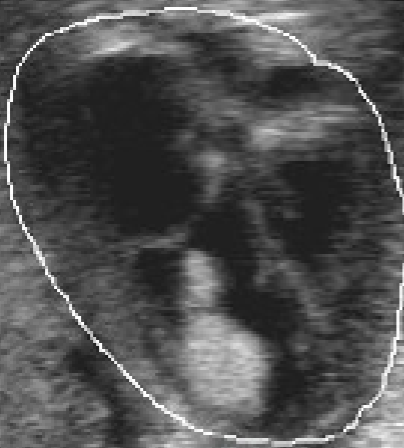
<ul><li><p>found <span style="color: rgb(167, 0, 255);">at birth</span> and <span style="color: rgb(159, 0, 255);">&lt;1 yr</span></p></li><li><p>70-90% have <span style="color: rgb(167, 0, 255);">multiple tumors</span></p></li><li><p>associated w/ <span style="color: red;">tuberous sclerosis</span></p></li><li><p>found in <span style="color: rgb(0, 124, 255);">ventricular walls</span></p><ul><li><p><strong>more common</strong> in <span style="color: rgb(0, 109, 255);">RV</span></p></li><li><p><u>solid, echo-dense mass</u> <strong>protruding</strong> into <span style="color: rgb(0, 109, 255);">ventricular cavity</span></p></li></ul></li><li><p>mortality d/t blood flow obstruction</p></li><li><p>have been reported to <u>recede over time</u></p></li></ul><p></p>
44
New cards

What is the most common tumor found in children?

Rhabdomyoma

45
New cards

Other primary benign heart tumors include:

  • hemangioma

  • teratoma

46
New cards

Hemangioma

  • vascular tumor

  • located in any chamber

    • right heart > lt

47
New cards

Teratoma

  • composed of skeletal, nerve, connective tissues

    • teeth, hair, skeletal components may be found

  • located in RA, RV, + septum

48
New cards

Angiosarcoma

  • RA location 80%

  • most common primary malignant tumor of the heart

  • may cause inflow obstruction

  • associated w/ pericardial effusion

<ul><li><p><span style="color: rgb(0, 147, 255);">RA</span> l<strong>ocation 80%</strong></p></li><li><p><span style="color: red;">most common primary malignant tumor of the heart</span></p></li><li><p>may cause <u>inflow obstruction</u></p></li><li><p>associated w/ pericardial effusion</p></li></ul><p></p>
49
New cards

Angiosarcoma note:

  • applies to a wide range of malignant endothelial vascular neoplasms that affect a variety of sites

    • skin, liver, bone, breast, spleen, heart

50
New cards

Other Primary Malignant Intracardiac Tumors in order of MOST to least common:

  1. Rhabdomyosarcoma

  2. Mesothelioma

  3. Fibrosarcoma

  4. Osteosarcoma

51
New cards

Mesothelioma

  • malignant intracardiac tumor d/t asbestos exposure

  • occur in pericardium of heart, but most commonly found in pleural lining (lungs)

52
New cards

Metastatic / Secondary Intracardiac Tumors

  • pericardial > myocardial involvement

    • pericardial effusion

      • often the 1st indication

    • heart invaded by:

      • malignancy of breast or lung

      • sarcoma

      • melanoma

      • lymphoma (can also invade myocardium)

      • Renal, Liver, Wilm’s tumors

    • extend from IVC to RA (1st) and RV (2nd)

      • rarely affects LV function

53
New cards

What extracardiac tumors may compress cardiac structures?

  • mediastinal tumors/cysts

    • thymus

    • lymphoma

  • pericardial tumors/cysts

  • pleural tumor

  • hematoma

  • teratoma

  • pancreatic cyst

  • diaphragmatic hernia

Explore top notes

Explore top flashcards

flashcards
bio 3
25
Updated 1165d ago
0.0(0)
flashcards
AP US History Chapter 1 Test
108
Updated 904d ago
0.0(0)
flashcards
scythe vocab test 2
50
Updated 1078d ago
0.0(0)
flashcards
Business AS level
266
Updated 1084d ago
0.0(0)
flashcards
Protein Synthesis
48
Updated 1148d ago
0.0(0)
flashcards
bio 3
25
Updated 1165d ago
0.0(0)
flashcards
AP US History Chapter 1 Test
108
Updated 904d ago
0.0(0)
flashcards
scythe vocab test 2
50
Updated 1078d ago
0.0(0)
flashcards
Business AS level
266
Updated 1084d ago
0.0(0)
flashcards
Protein Synthesis
48
Updated 1148d ago
0.0(0)