sat math formulas/tips
 Studied by 8 people
 Call with Kai
 Learn
Learn Practice Test
 Spaced Repetition
 Match
Match Flashcards
 Knowt Play
1/94

There's no tags or description
Looks like no tags are added yet.
Name | Mastery | Learn | Test | Matching | Spaced | Call with Kai |
|---|
No analytics yet
Send a link to your students to track their progress
95 Terms
“than” and “of” means that is the denominator in the %
(A is what % of B = (a/b)*100) (A is what % more than B (a-b/b)*100)
“B must increase” or “A must decrease”
whatever is changing is in the denominator ((a-b/b)*100) or ((a-b/a)*100)
% change formula
((FV-IV)/IV) * 100
directly proportional
ratios stay the same (x1/y1=x2/y2)
inversely proportional
product stays the same (x1*y1=x2*y2)
distance
speed*time
work
rate*time
total cost
unit cost*quantity
net rate
rate1+rate2+rate3…
when plugging in from options
always start w middle options bcz youll see if it has to be less or more
median (odd) (n=total number of terms)
((n+1)/2)th term
median (even) (n=total number of terms)
((n/2)th term+(next term))/2
mode
max repeated value/highest frequency
frequency
# times repeated
total # terms
add all frequencys
SD
deviation from data to the mean value
small SD
data is closer to the mean, small variation in the data, higher concentration in data
large SD
data is far from mean, more variation in the data, low concentration in data
concentration
how close together data is
if u are given a data set with a lot of values
make ur own data set with less values (3-4) and solve the question w ur new set
can always be found on box whiskers plot
min n max value, lower n upper quartile, median
range
max-min value
interquartile range
upper quartile-lower quartile
(box whiskers) 1
min value
(box whiskers) 2
lower quartile
(box whiskers) 3
median
(box whiskers) 4
upper quartile
(box whiskers) 5
max value
(box whiskers) median can be
anywhere on the box
(box whiskers) always 25%
min-low qrt , low qrt - med , med-up qrt , up qrt-max
if its not marked on box whiskers graph then
you dont know it
if a side/extention of a triangle is produced, the exterior angle formed is equal to
the sum of the two interior opposite angles to it
45, 45, 90
x,x,x(sqrt(2))
30, 60, 90
x, x(sqrt(3)), 2x
similar triangles
same shape diff size, cooresponding angles are equal, cooresponding sides in same ratios
for any closed shape
(area of triangle 1/ area of triangle 2 ) = (ratio of sides) = (perimiter of triangle 1/ perimeter of triangle 2)
area of regular hexagon
(3(sqrt(3))/2) * x²
area of equalitaral triangle
(sqrt(3)/4)*x²
circumference circle
2*pi*r
area circle
pi*r²
arc length
(x/360)*(2pi*r)
chord
line that joins any two points in the circumference of circle
segment
default means minor segment
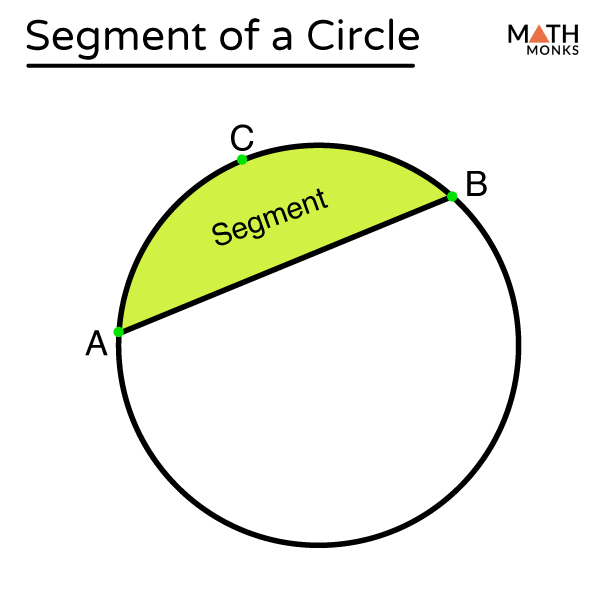
minor segment
part under a chord (smaller part)
diameter
longest chord of the circle
sector
area between 2 radii and arc (default means minor sector) (there is minor n major sector)
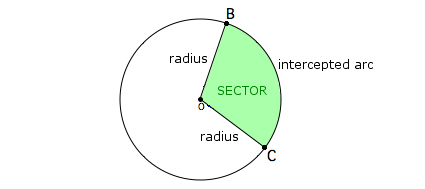
area of sector
(x/360)*(pi*r²)
angle between a tangent and radius
90
angle in a semi circle
always 90
angles drawn in same segment
are equal to eachother
angle at center of cirlce is
twice the angle at the circumference
length of arc in radians
(x/2pi)*(2pi*r)
2pi radians is the same as
360 deg
area of sector in radians
(x/2pi)*(pi*r²)
tangents drawn from an external point to a circle are
equal in length
pythagoream theorem for 3d shapes
sqrt(l²+b²+h²)
if u have pi while solving smthn
never multiply it in
trig ratios
only apply to right triangles
csc
sin^-1
sec
cos^-1
cot
tan^-1
when u have a side of a triangle in decimal
make it into decimal/1 so its a fraction
cos(x)
sin(90-x)
sin(x)
cos(90-x)
in a right triangle ur angles are
90, x, 90-x
pi radians
180 deg
deg to radians
x* (pi/180)
radians to deg
x* (180/pi)
random sample
unbiased result , can b generalized
selected sample
biased result, cant b generalized
if cos(x)=sin(y)
x+y are complementary angles
complementary angles
add up to 90
(sinx)²+(cosx)²=
1
large sample size
less margin of error
small sample size
more margin of error
solution in system of eqs
pt of intersection
eq w one solution
x-int
for complex eqs
use desmos
if data is symmetrically distributed from middle
the middle is the median
data is concentrated
small SD
data is not v concentrated
high SD
surface area
all faces added
surface area of cube (l=length)
6*l²
volume of cube
l³
(discriminant)>0
2 solutions
(discriminant)=0
1 solution
(discriminant)<0
no solutions
always start math sections
w easy questions
after doing ez questions
do medium questions (1-1min 30s)
mid pt formula
(x1+x1)/2
sum of roots
-b/a
product of roots
c/a
x coordinate of vertex
-b/(2a)
slant height eq
s = √(r2 + h2)
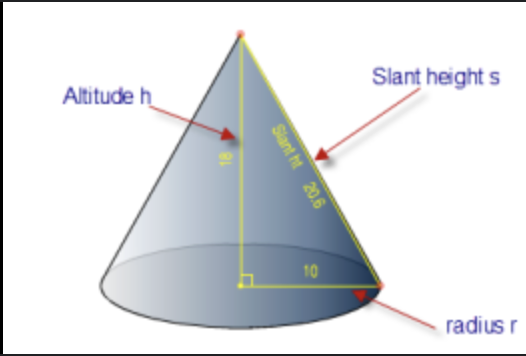
slant height
NOT same as normal height (vertical) it is like the hypotenous
 Note
Note  Flashcards (20)