Overview of Metabolism
Introduction to Metabolism
- - the way the body stores & utilizes energy
- influenced by 4 things
- eating patterns
- growth
- stress
- metabolic rate
- endocrine signals control whether the body stores or uses energy
- hormones have coordinated regulation of metabolic pathways to maintain adequate energy supplies for all body cells
## Two Critical Concepts Driving the Control of Energy Metabolism
- The body has to store nutrients during intake periods & break down these stores between intake periods because food intake is intermittent
- Blood glucose levels need to be maintained at all times because the brain depends on glucose as its main energy source
Energy Balance
- Energy input- sourced from carbs, fat, protein
- energy output in six forms:
- mechanical work
- muscle contraction
- movement of cells, organelles, & appendages
- synthetic reactions
- fuel storage
- tissue building
- creation of essential functional molecules
- membrane transport
- minerals
- organic anions/cations
- amino acids
- signal generation/conduction
- electrical
- chemical
- mechanical
- heat production
- temperature regulation
- inefficient chemical reactions
- detoxification & degradation
- urea formation
- conjugation
- oxidation
- reduction
- Main formulas
- input + production = utilization + output
- energy input = energy utilization + energy output
- energy input = work performed + heat released (energy output)
- endocrine system is responsible for making sure that a steady supply of small nutrients is always available to cells for their energy demands
- replenishes the supply in 2 main ways
- absorption of more nutrients into the bloodstream
- mobilization of energy stores
Body Composition of an Average Human
- by body weight
- 65% water & minerals
- 20% fat
- 14% protein
- half is fixed- can’t be used for energy because it’s used a structure for organs/tissues
- half is mobilizable- can be used for energy
- 0.6% carbohydrates
- in caloric stores
- 76% fat
- 23% protein
- 1% carbohydrates
Fuel Metabolism
- important organ/tissue contributors
- liver
- adipose tissue
- muscle
- blood glucose level- should be between 90-120 mg/dL
- important to maintain for brain, nervous tissue, & RBCs
- metabolic processes
- - formation of glycogen from glucose
- - breakdown of glycogen to make glucose
- - formation of glucose from other compounds like fatty acids or proteins
- - formation of lipids from FFAs (free fatty acids)
- - breakdown of lipids to FFAs
- - synthesis of proteins from amino acids
- - breakdown of protein to amino acids
Metabolic States
- period immediately after eating when nutrients absorbed through intestinal wall into the circulatory & lymphatic systems (about 4 hours after each meal)
- focused on energy storage
- glycogenesis occurs
- increased lipogenesis, & protein synthesis
- decreased gluconeogenesis & lipolysis
- insulin high
- period after the absorptive state has finished where blood glucose levels are maintained by converting other molecules to glucose
- usually in late morning, afternoon, and night if person is eating on a regular 3-meal schedule
- lower blood glucose and glucose production
- insulin low
- hepatic glycogenolysis & gluconeogenesis
- muscle glycogenolysis
- blood glucose maintained by liver
- important for uptake/utilization in non-insulin sensitive tissues (brain & central nervous system)
Regulation of Absorptive and Post-Absorptive Metabolism
- metabolic changes in the transition between absorptive & postabsorptive states triggered by endocrine signals
- 4 important hormones
- insulin
- made by beta cells in pancreas
- associated with energy storage
- glucagon
- made by alpha cells in pancreas
- associated with maintaining blood glucose levels
- epinephrine
- made in adrenal medulla
- associated with maintaining blood glucose levels
- cortisol
- made in adrenal cortex
- associated with maintaining blood glucose levels
- mechanism of hormone action
- hormones bind to receptors that trigger a cascade that brings about the final response
- receptors are large proteins specific to hormones
- protein hormones receptors in PM
- steroid hormone receptors in cytoplasm
- thyroid hormone receptors in nucleus
- receptor number at target tissue determines the response of the target cell to a hormone
Anatomy of Pancreas
- only 1-2 % of pancreas is actually used for endocrine functions
- rest is used for producing digestive enzymes

Actions of Insulin
- insulin lowers blood glucose
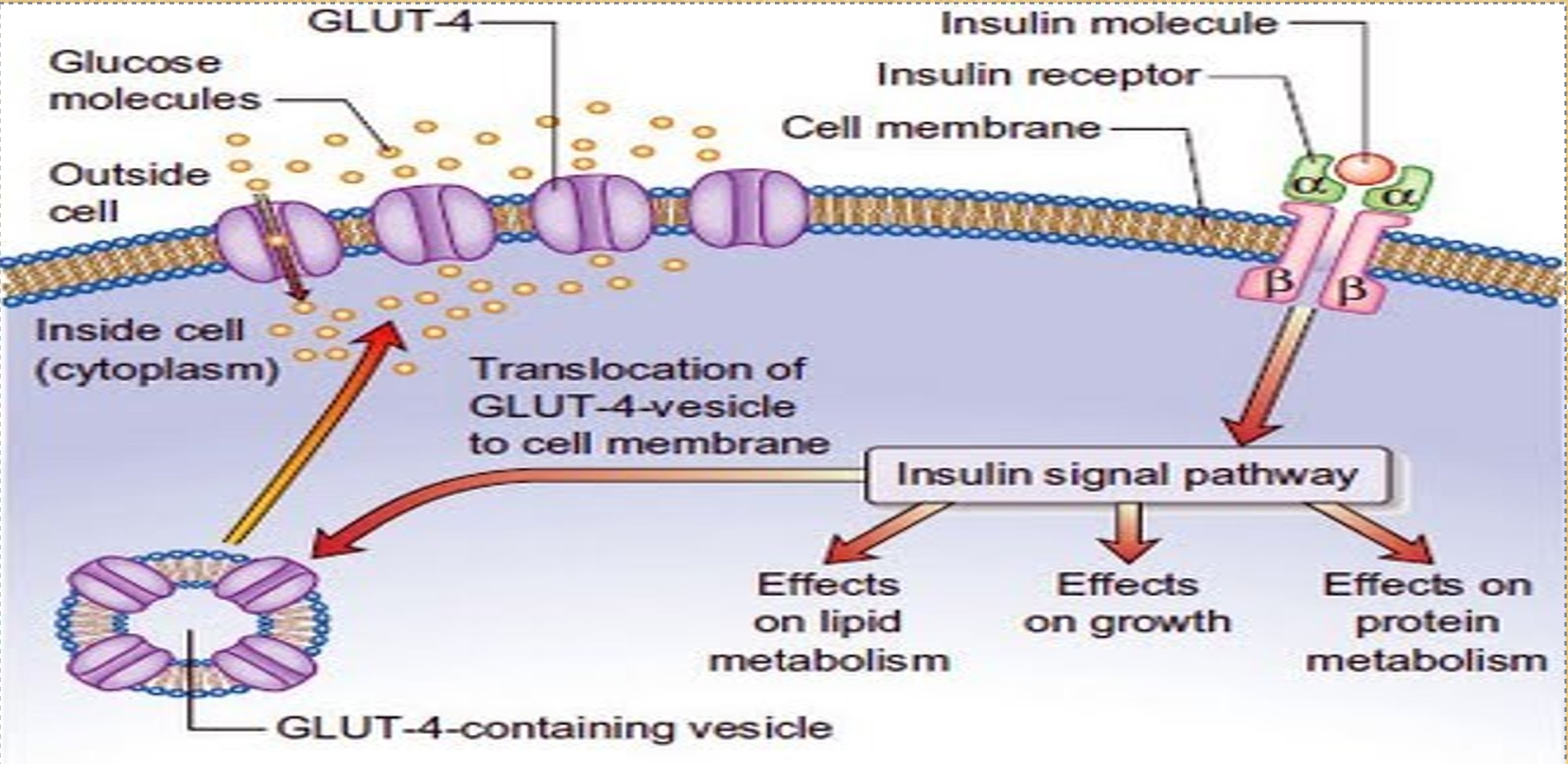
- increases glucose uptake by activating the GLUT4 Transporter
- increases glycogenesis
- decreases glycogenolysis
- lowers blood amino acids
- increased amino acid uptake
- increased protein synthesis
- lowers blood free fatty acids
- increased FFA uptake & lipogenesis
- inhibit lipase activity
- mechanism of action for insulin
- insulin molecule binds to receptor in the cell membrane
- activates insulin signal pathway
- a vesicle containing the GLUT4 transporter is sent to the PM
- once the vesicle is fused with the PM, glucose is transported inside the cell
- insulin secretion increases as blood glucose increases & vice versa
Glucagon
- secreted by alpha cells of pancreas
- major actions- increase glycogenolysis, gluconeogenesis, lipolysis
- primary regulation of release- decreased blood glucose
Adrenal Gland
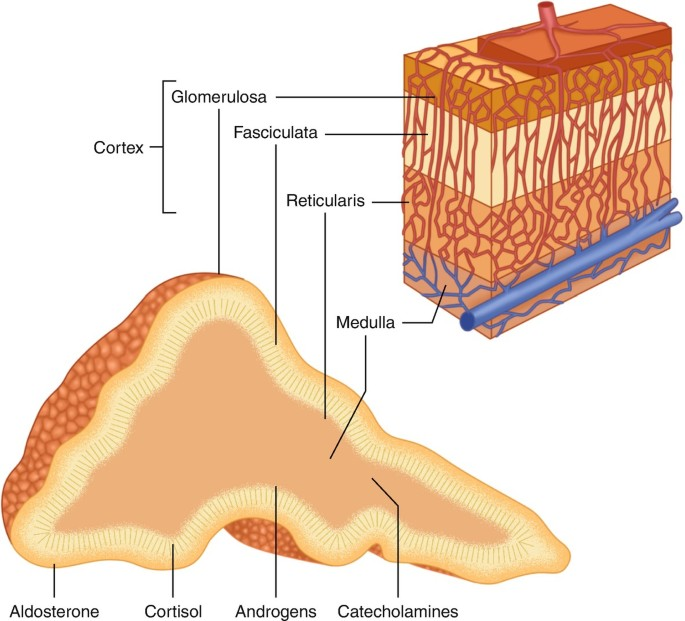
- cortex is 80-90%
- androgens (50% of androgens in women) made in reticularis
- cortisol made in fasiculata
- aldosterone made in glomerulosa
- medulla is 10-20%
- catecholamines (norepinephrine & epinephrine) are made here
Cortisol
Regulation of Cortisol Secretion
- stress, hypoglycemia, or morning time positively regulates the release of from the hypothalamus
- nighttime negatively regulates the release of corticotropin
- CRH from the hypothalamus causes the pituitary gland to release (ACTH)
- ACTH stimulates the adrenal glands to produce cortisol

Actions of Cortisol
- primary effects all meant to maintain blood glucose levels
- primary effects are
- mobilizing amino acids from protein in muscle
- stimulating hepatic gluconeogenesis
- facilitate lipolysis by epinephrine
- anti-insulin effect on muscle & adipose tissue
- opposes glucose uptake