The Digestive System
 Call Kai
 Learn
Learn Practice Test
 Spaced Repetition
 Match
Match Flashcards
1/35

Earn XP
Description and Tags
These flashcards cover key terms and concepts related to the digestive system.
Name | Mastery | Learn | Test | Matching | Spaced | Call with Kai |
|---|
No analytics yet
Send a link to your students to track their progress
36 Terms
Alimentary Canal
A long muscular tube from mouth to anus; also called the Gastrointestinal Tract (GI Tract).
Ingestion
The process of taking food into the digestive tract, usually through the mouth.
Peristalsis
Involuntary waves of muscle contraction in the organ walls that help move food through the digestive tract.
Mechanical Digestion
The physical process of breaking down food into smaller pieces.
Chemical Digestion
The process of breaking down complex food molecules into smaller parts with the help of enzymes.
Defecation
The elimination of indigestible food substances via the anus.
Salivary Glands
Glands that produce saliva, aiding in the breakdown of food.
Hepatocytes
Liver cells that remove bacteria, detoxify blood, and store glycogen and fats.
Bile
A digestive fluid secreted by the liver that helps break down fats.
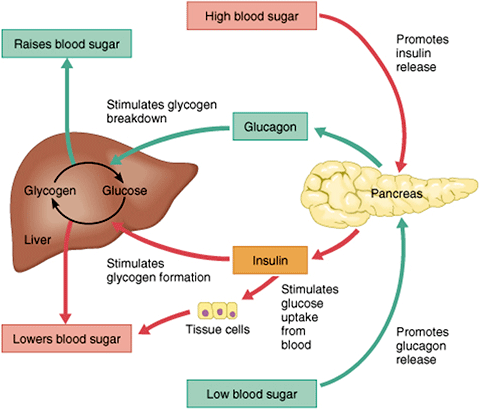
Insulin
A hormone secreted by the pancreas that regulates blood sugar levels.
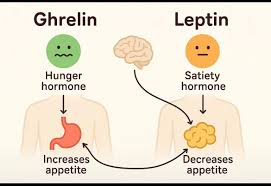
Ghrelin
A hormone produced by the gastrointestinal tract that increases appetite.
Leptin
A hormone made by adipose cells that decreases appetite.
Microvilli
Tiny projections in the small intestine that increase surface area for nutrient absorption.
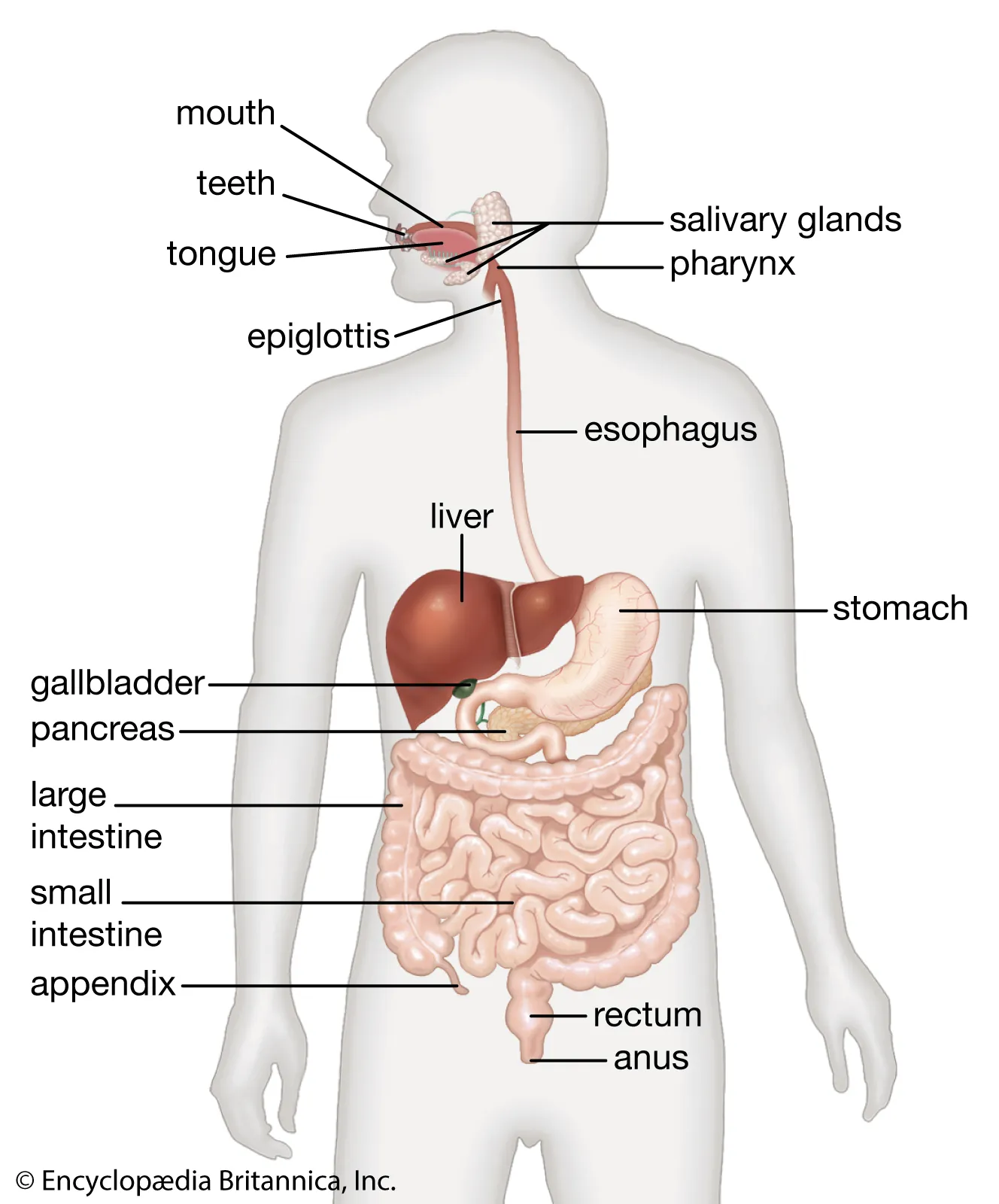
Mouth
The first part of the digestive system, responsible for the mechanical breakdown of food and mixing it with saliva.
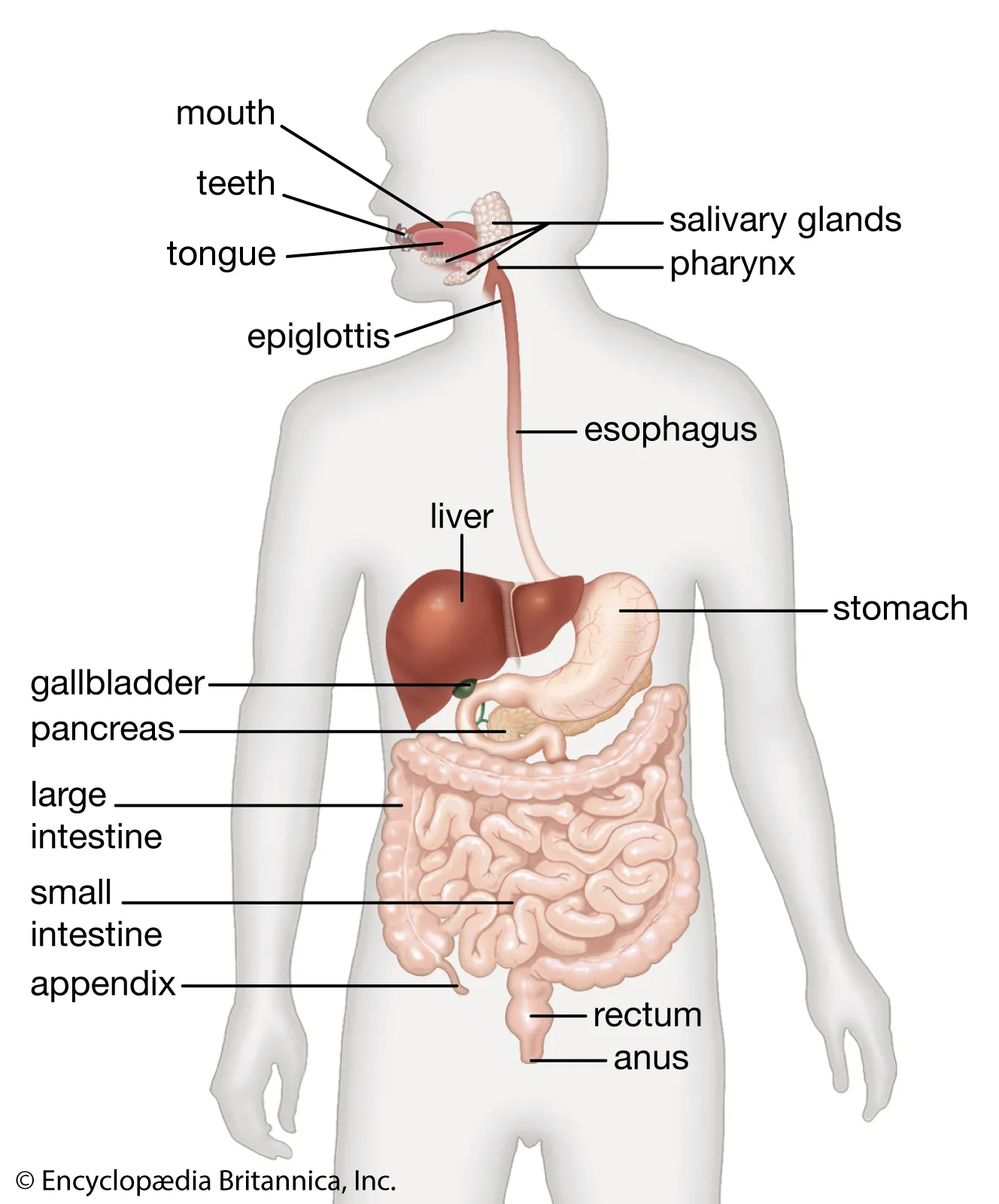
Epiglottis
A flap of tissue that covers the trachea during swallowing, preventing food from entering the airway.
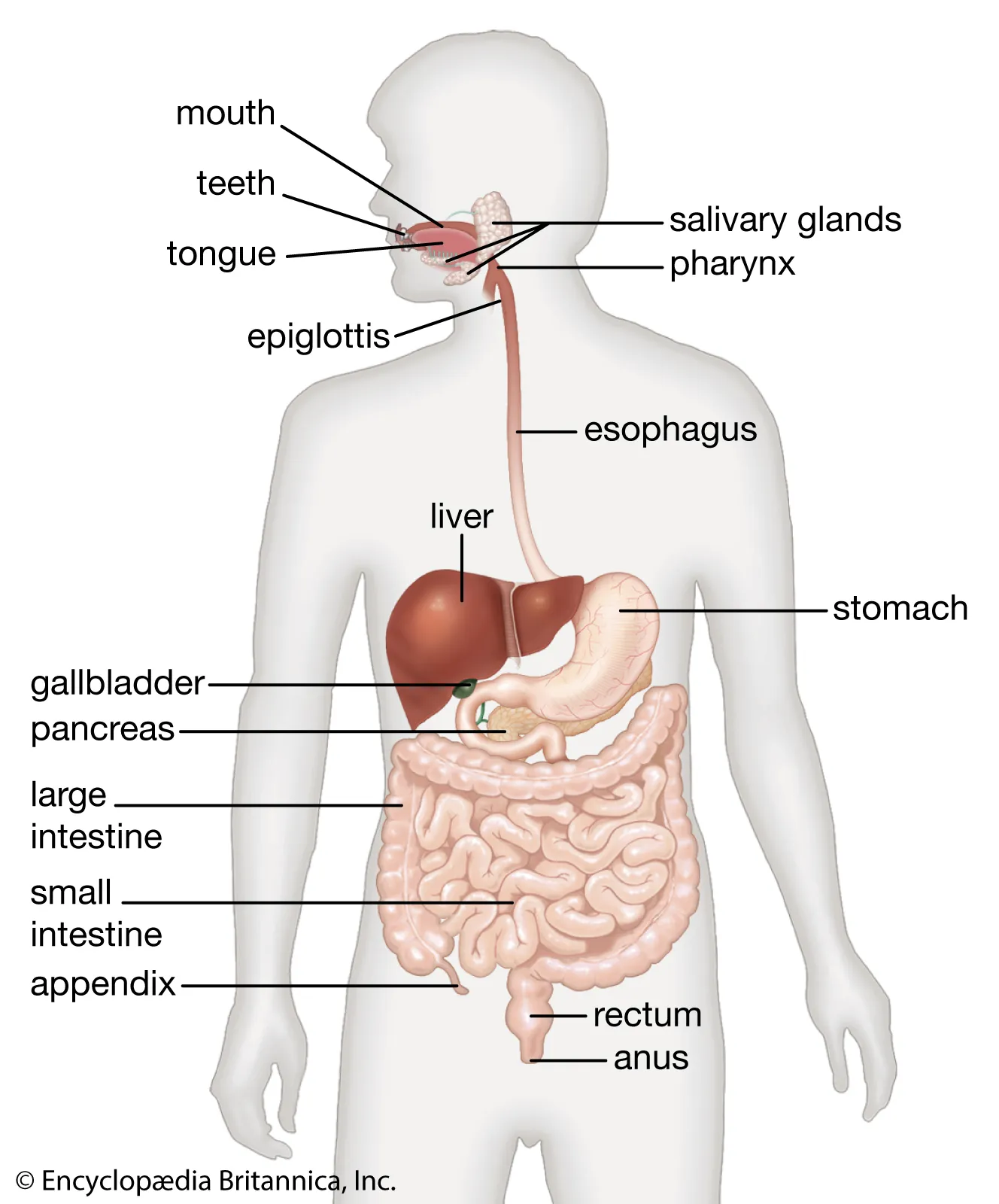
Pharynx
The muscular tube that connects the mouth and nasal passages to the esophagus, playing a crucial role in swallowing and the respiratory system.
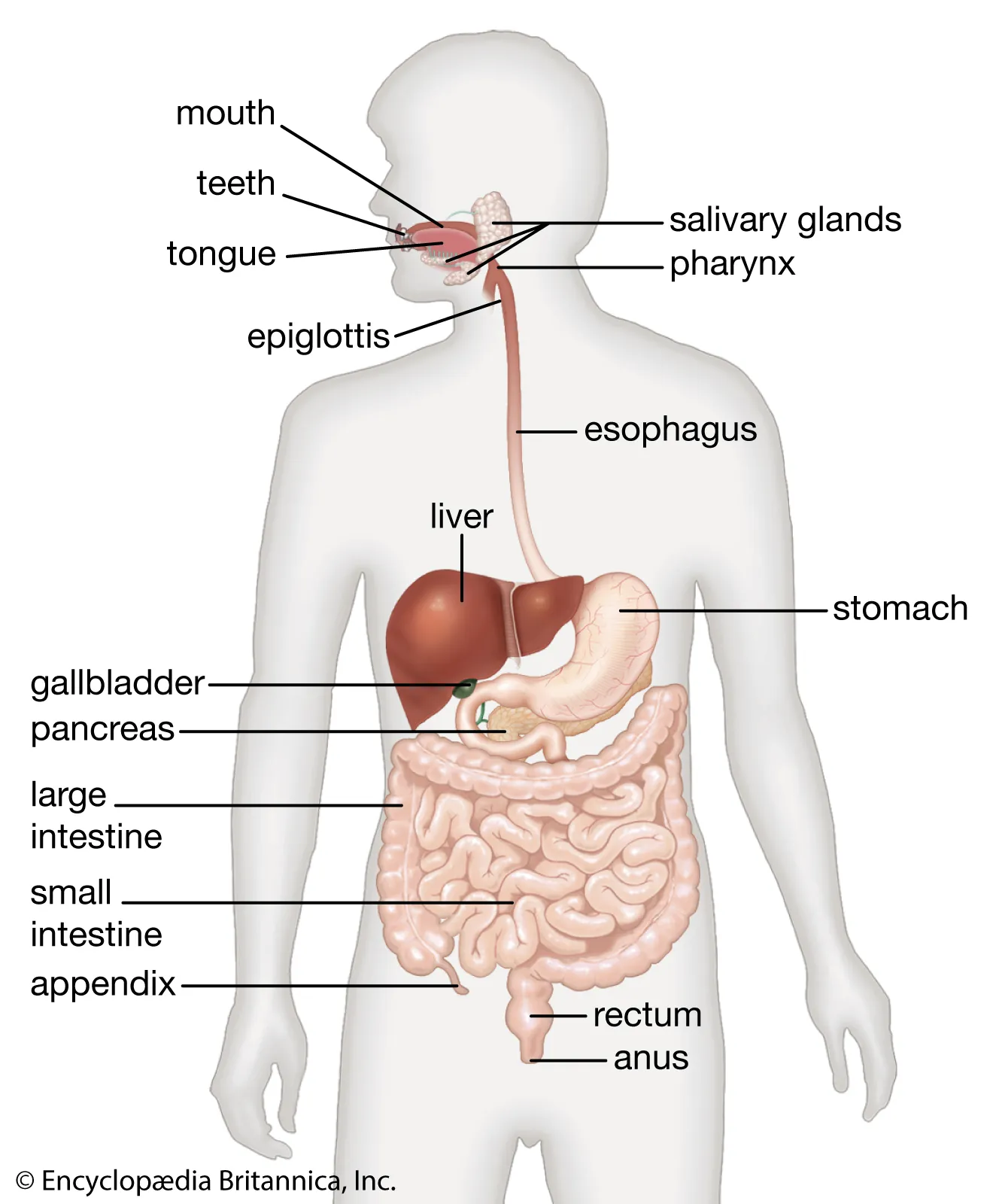
Esophagus
The muscular tube that connects the throat (pharynx) to the stomach, facilitating the passage of food and liquids through peristaltic movements.
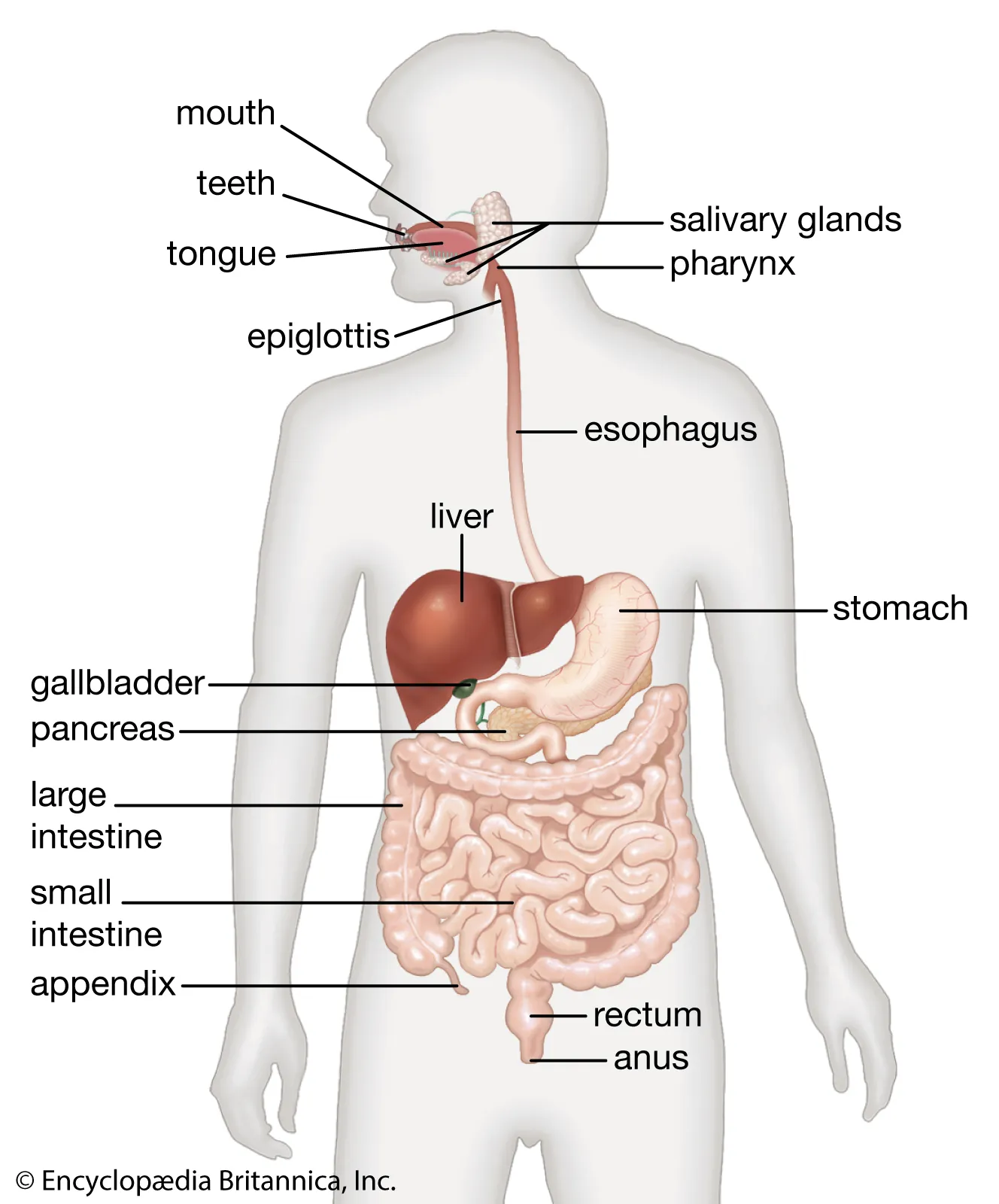
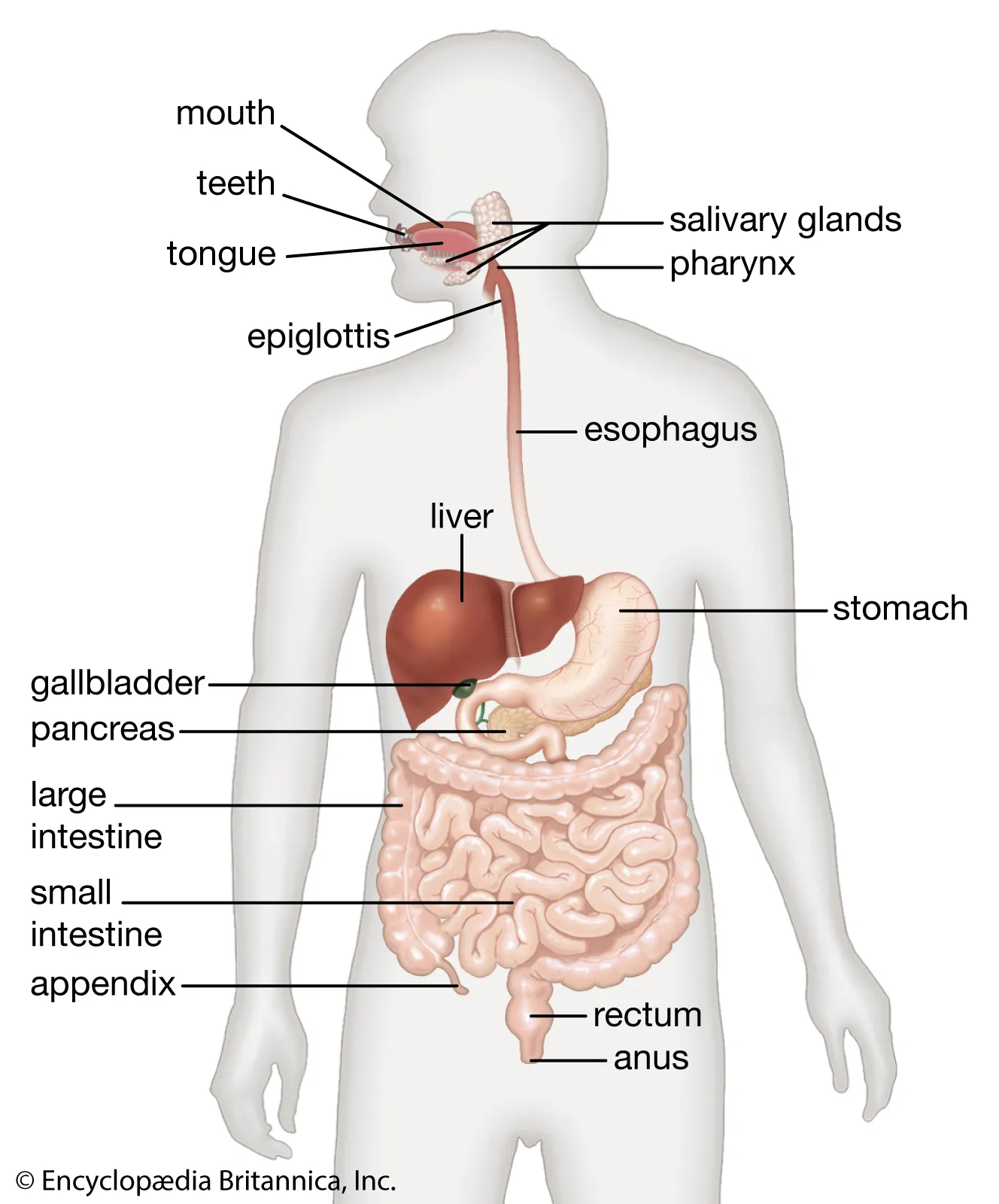
Liver
Organ that produces bile, which aids in the digestion and absorption of fats. It also plays a key role in metabolizing nutrients and detoxifying harmful substances.
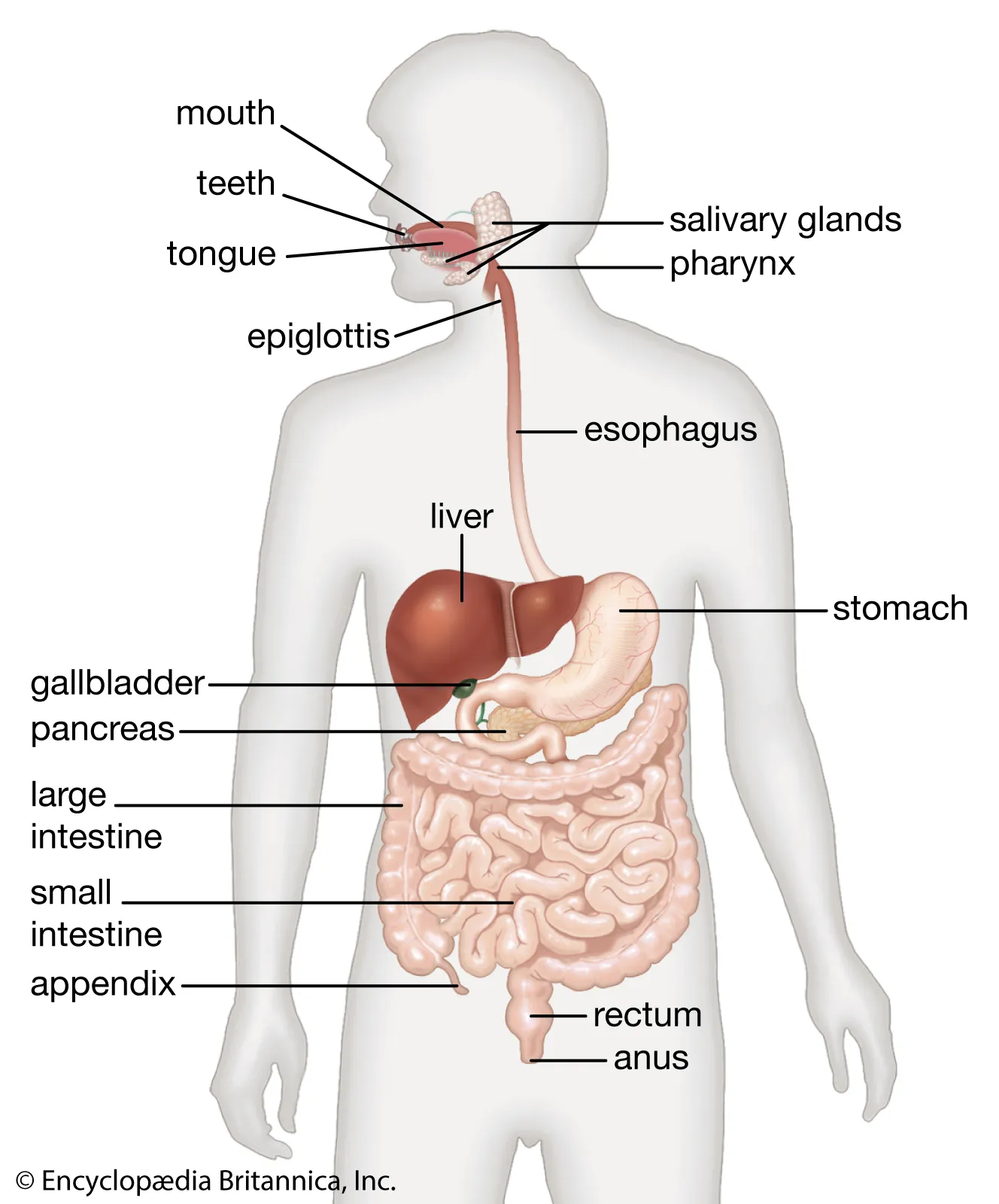
Gallbladder
A small organ that stores bile produced by the liver, releasing it into the small intestine to aid in the digestion of fats.
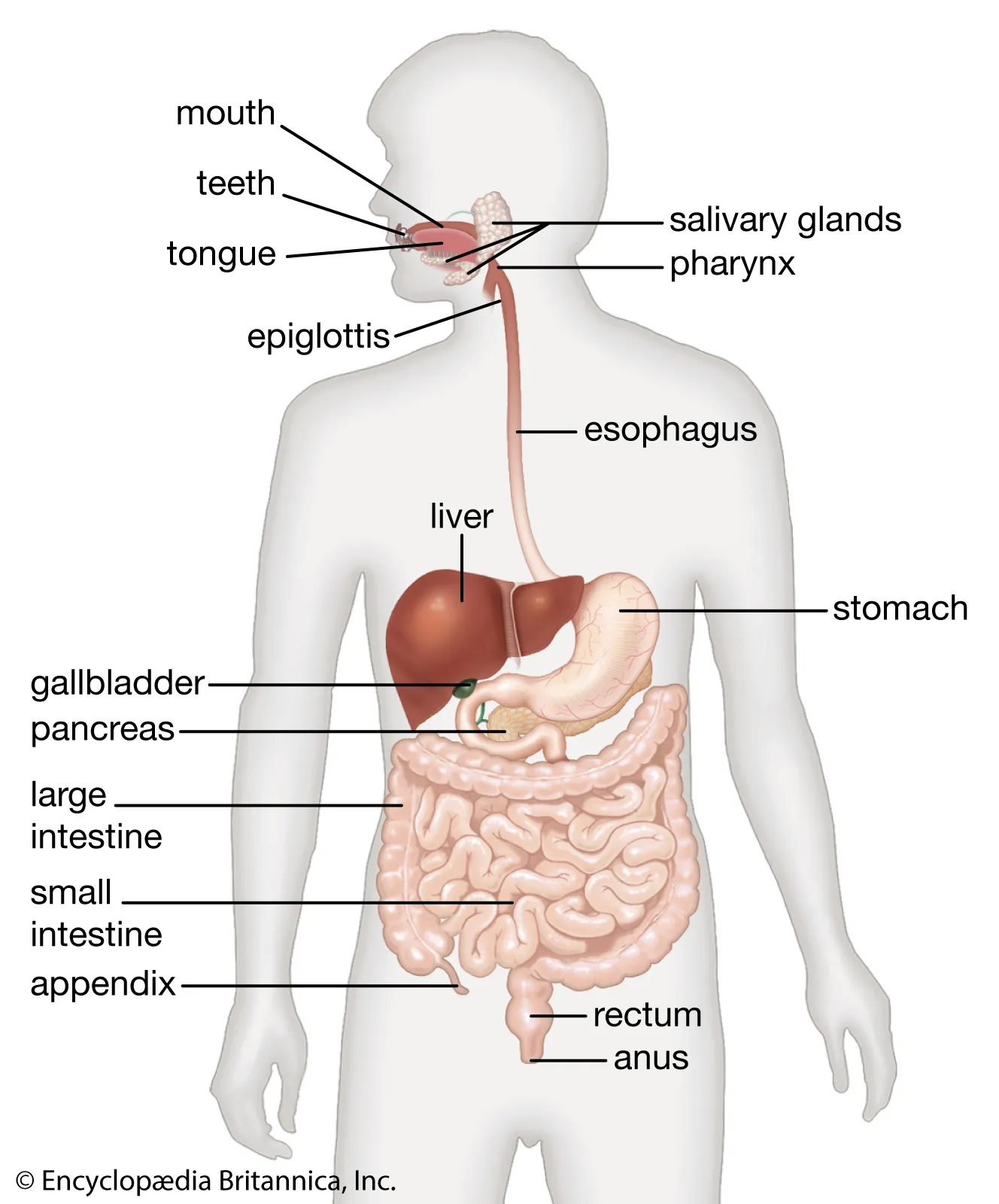
Stomach
The hollow organ that holds food while it is being mixed with stomach enzymes and acids. It serves as the site for the early stages of digestion before the food moves into the small intestine.
Duodenum
The first section of the small intestine, connecting the stomach and jejunum. It is responsible for the digestion of food using bile from the gallbladder and digestive enzymes from the pancreas.
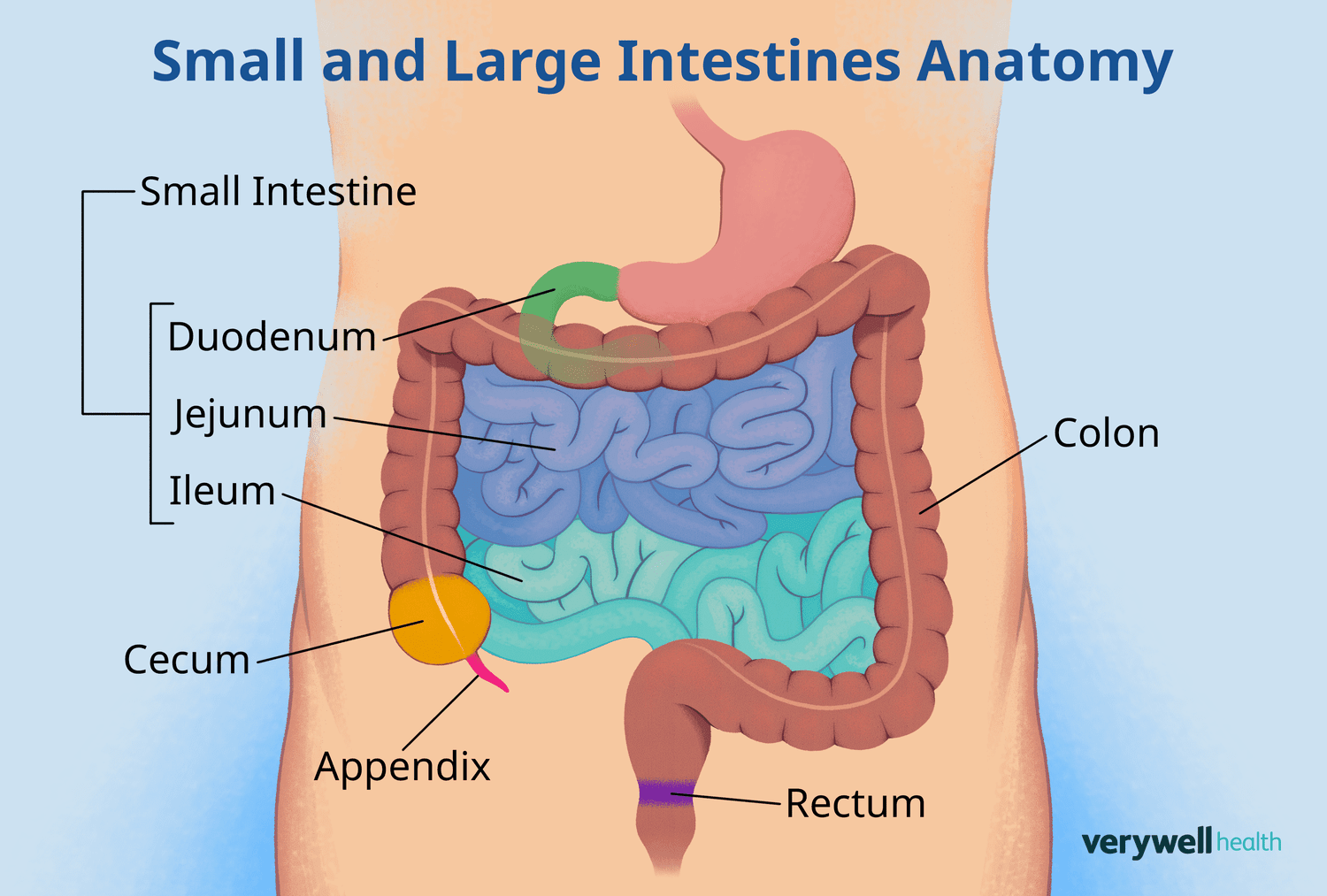
Jejunum
The middle section of the small intestine, following the duodenum and preceding the ileum. It plays a crucial role in the absorption of nutrients and minerals from digested food.
Ileum
The final section of the small intestine, following the jejunum and leading to the cecum. Its primary function is to absorb vitamin B12, bile salts, and the remaining nutrients.
Cecum
The pouch-like beginning of the large intestine, located at the junction of the ileum and the colon. It plays a role in absorbing fluids and salts that remain after intestinal digestion and is connected to the appendix.
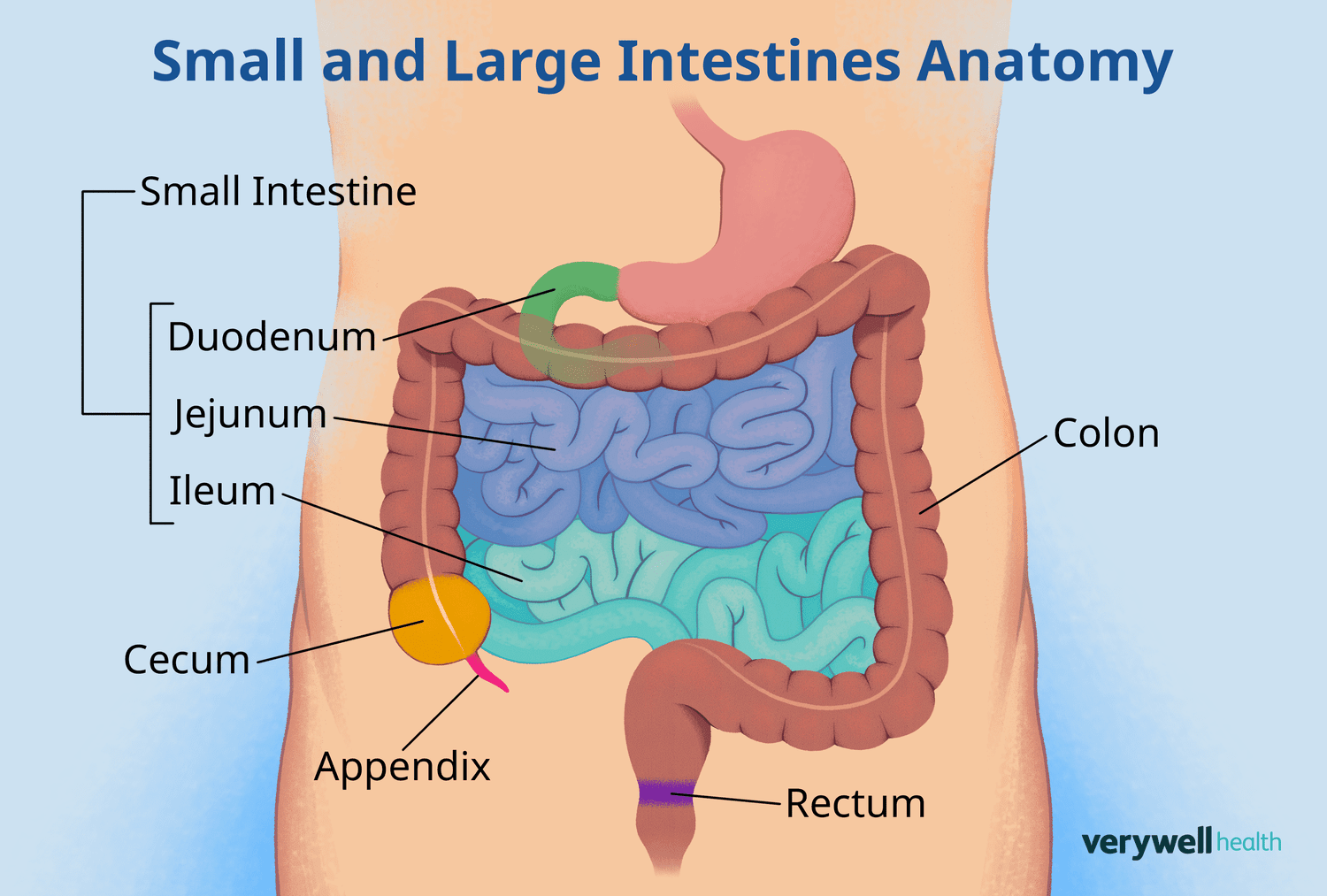
Ascending Colon
The first part of the large intestine that ascends on the right side of the abdominal cavity. It functions to absorb remaining fluids and nutrients from digested food and continues to the transverse colon.
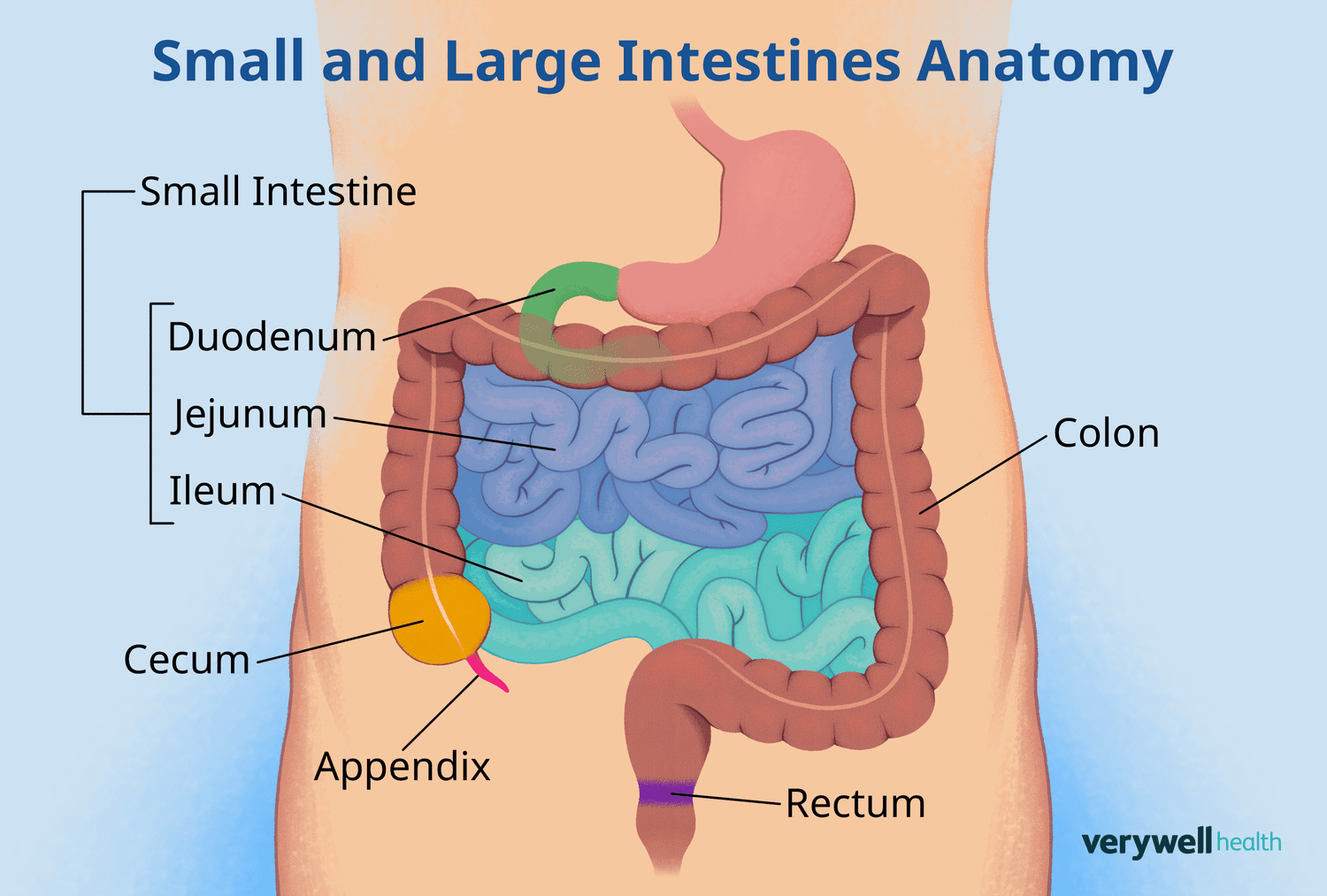
Transverse Colon
The part of the large intestine that crosses the abdominal cavity from right to left, connecting the ascending colon and descending colon. It aids in the absorption of water and nutrients and helps form feces.
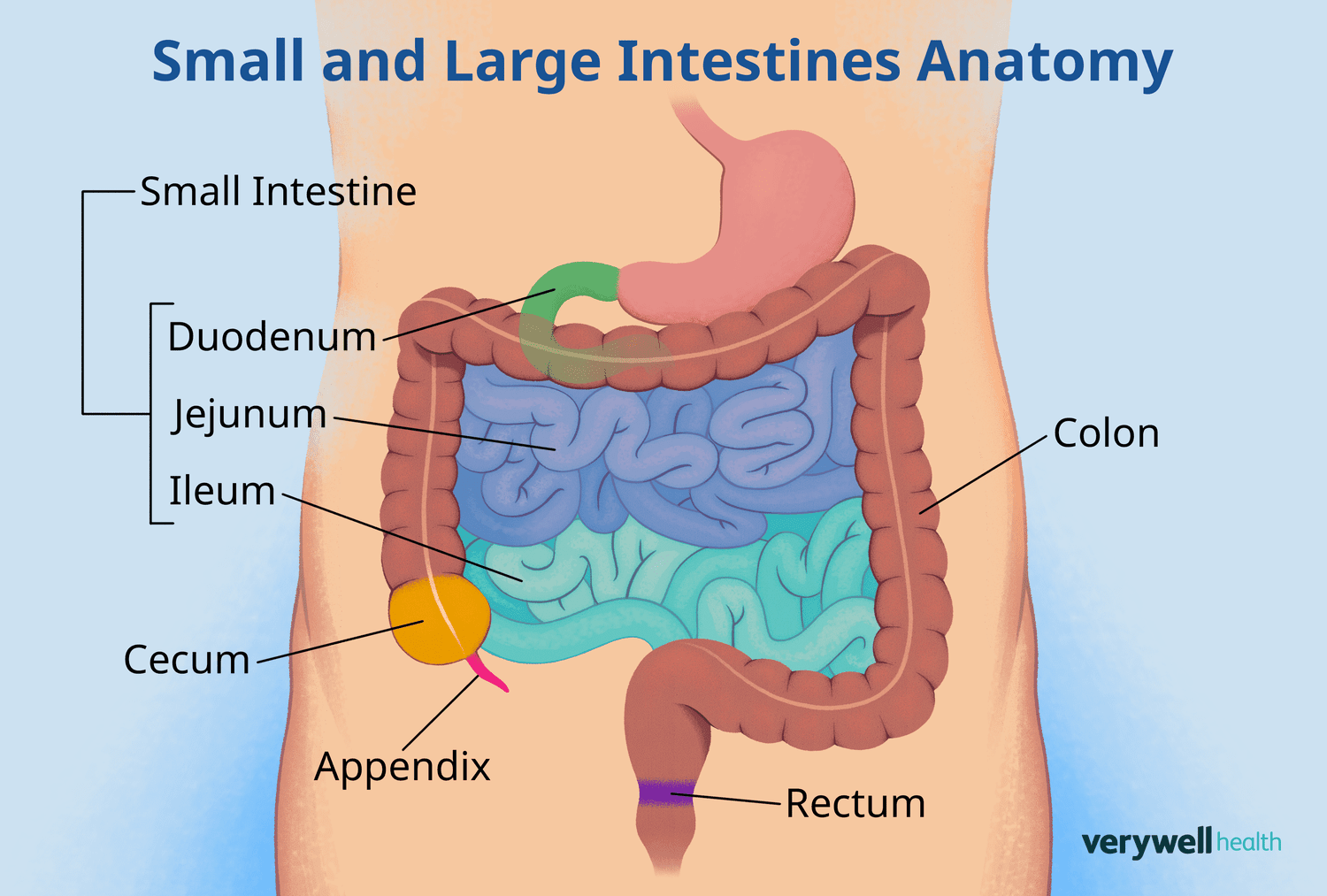
Descending Colon
The section of the large intestine that descends on the left side of the abdominal cavity, connecting the transverse colon to the sigmoid colon. Its primary function is to absorb water and electrolytes, further concentrating waste into feces.
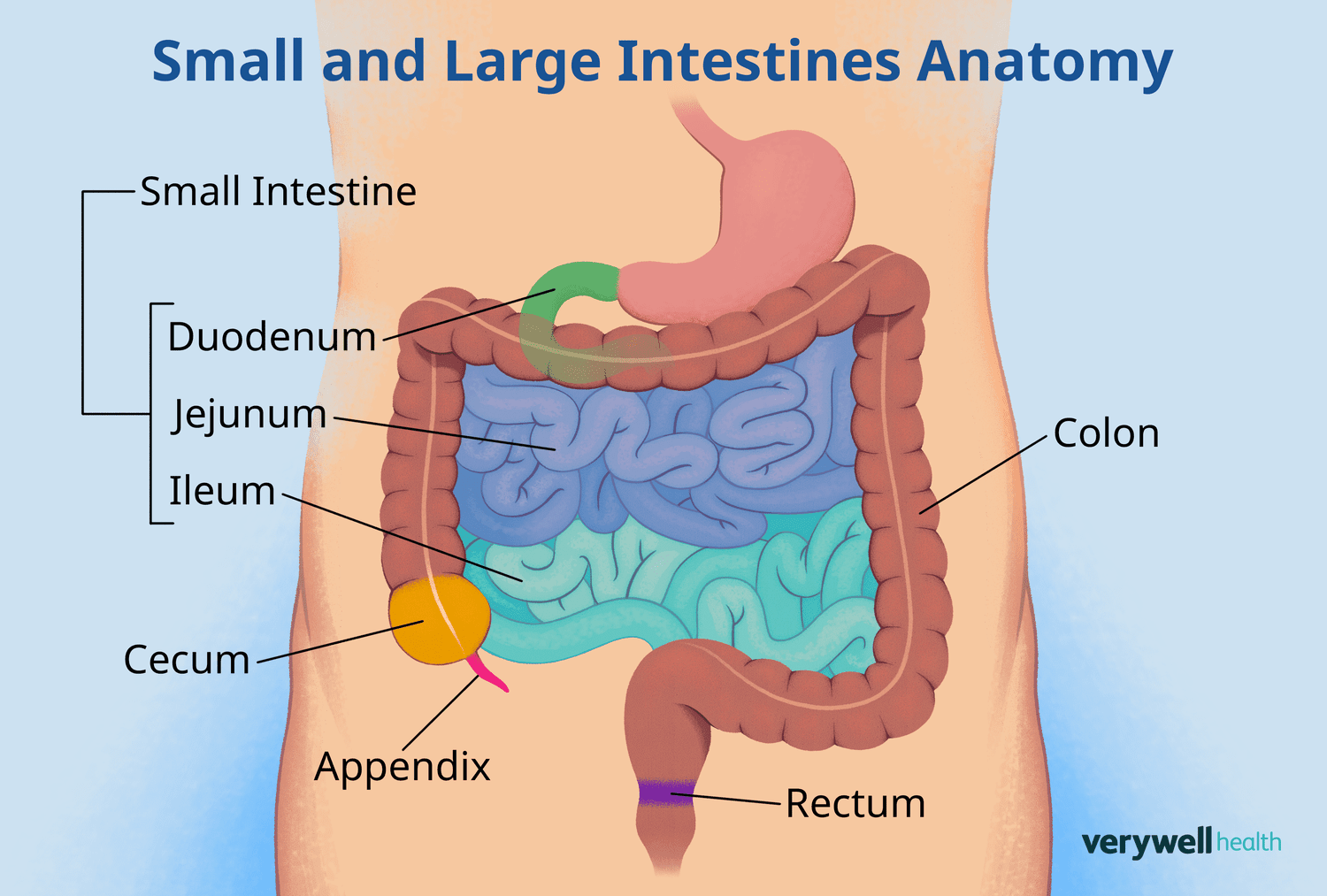
Rectum
The terminal part of the large intestine where feces are stored before being excreted through the anus.
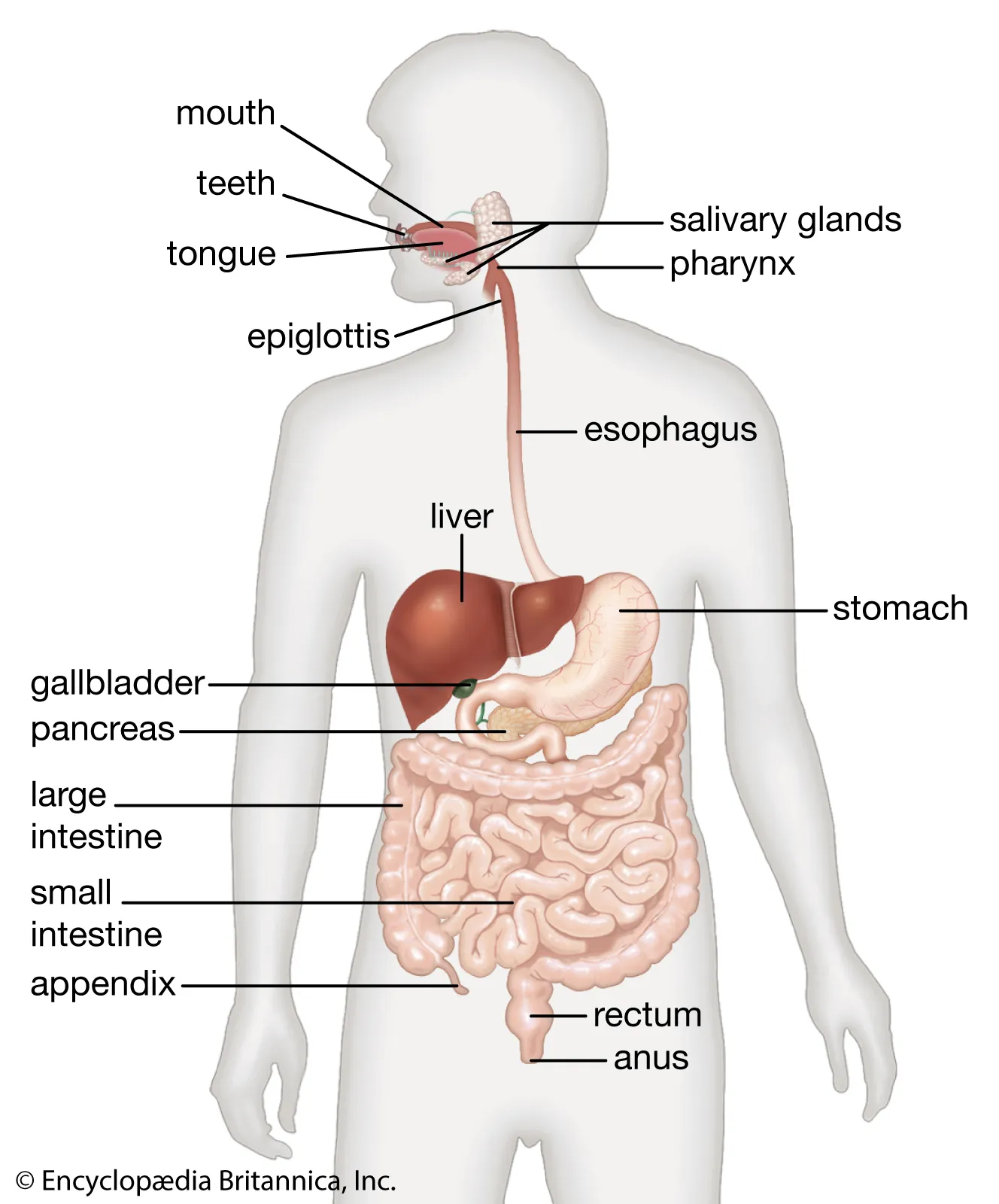
Anus
The opening at the end of the digestive tract through which feces exit the body. It plays a critical role in the elimination of waste.
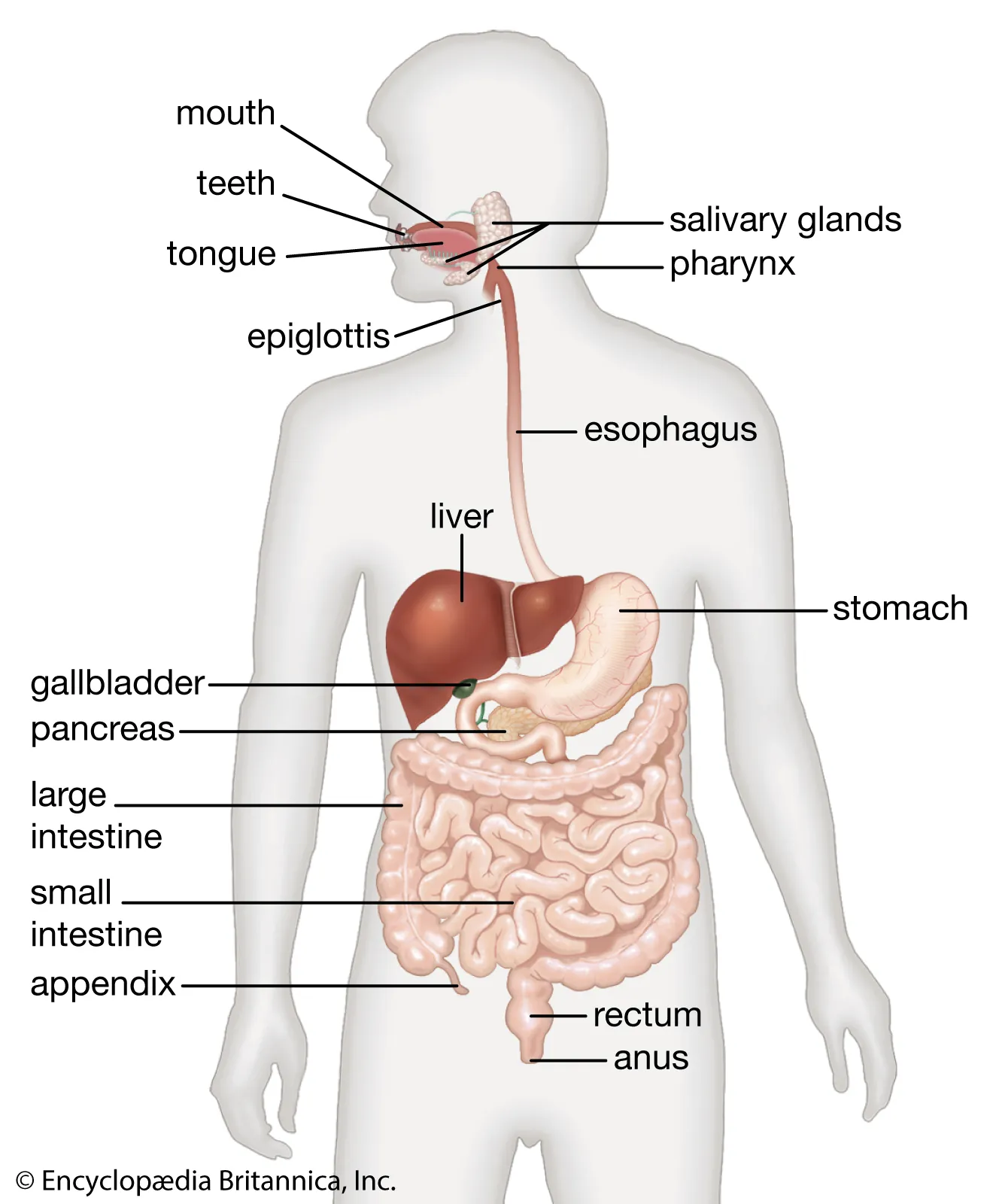
Pancreas
A gland located behind the stomach that plays a crucial role in digestion by producing digestive enzymes and hormones such as insulin and glucagon.
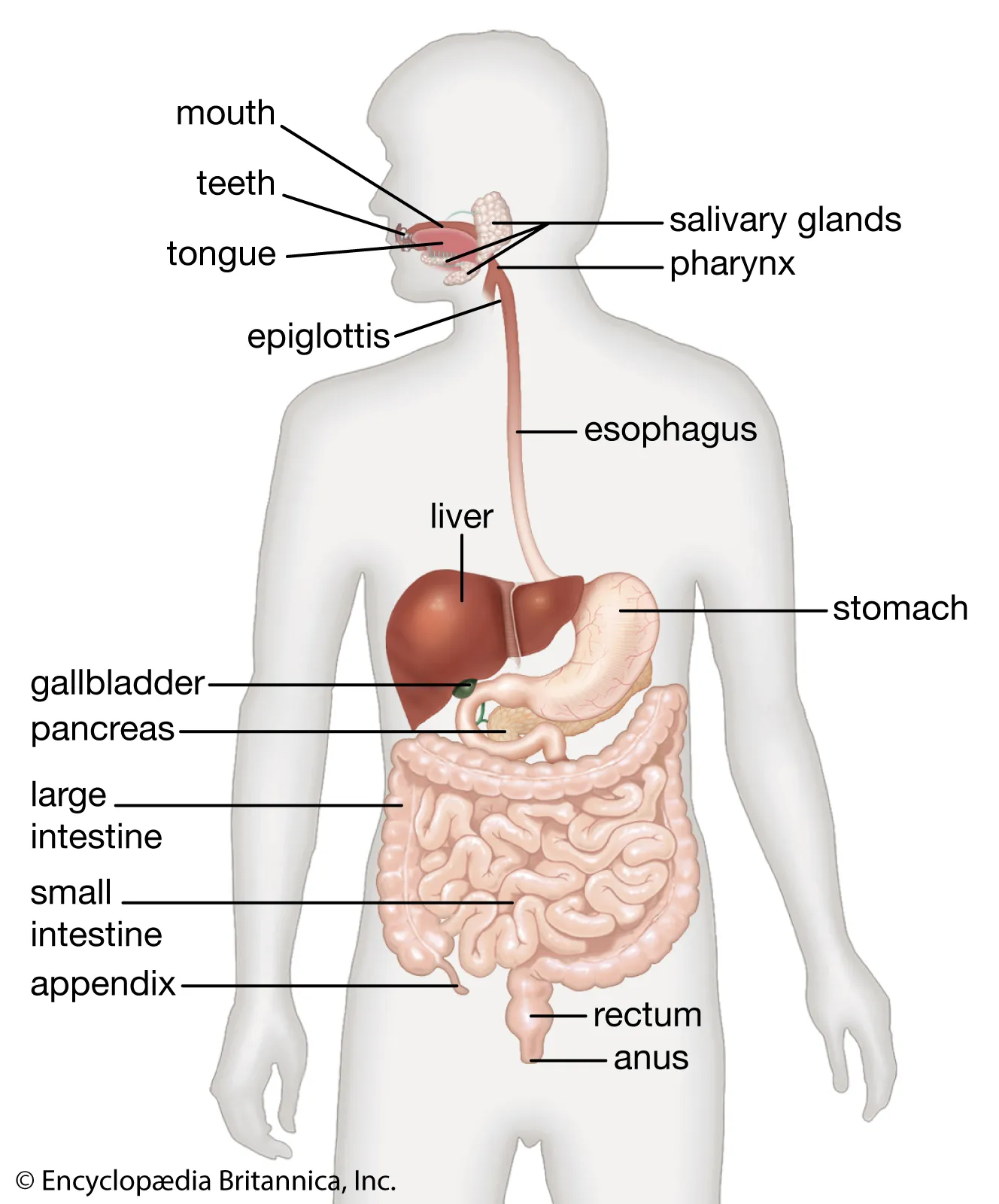
Mucosa
The innermost layer of the gastrointestinal tract that secretes mucus and is involved in absorption and secretion.
Submucosa
A layer of connective tissue in the gastrointestinal tract located between the mucosa and muscularis externa, containing blood vessels, nerves, and glands that support the mucosa.
Muscularis
A layer of muscle in the gastrointestinal tract responsible for peristalsis and mixing food, situated between the submucosa and serosa.
Serosa
The outermost layer of the gastrointestinal tract that provides a protective covering and secretes a lubricating fluid to reduce friction between organs.
Describe both sides of the Insulin/Glucagon feedback loop
Describe the Leptin/Ghrelin Feedback Loop