Drama Key Words
0.0(0)
 Studied by 0 people
 Call Kai
 Learn
Learn Practice Test
 Spaced Repetition
 Match
Match Flashcards
 Knowt Play
Card Sorting
1/127

Earn XP
Description and Tags
Last updated 8:23 PM on 10/3/24
Name | Mastery | Learn | Test | Matching | Spaced | Call with Kai |
|---|
No analytics yet
Send a link to your students to track their progress
128 Terms
1
New cards
Act
A section of a play
2
New cards
Antagonist
The opposite of a protagonist
3
New cards
Anti-Climax
A disappointing end to a sequence of exciting events
4
New cards
Artistic Intention/Vision
What message you want to send or effect you want to have on the audience
5
New cards
Atmosphere
The mood of a scene
6
New cards
Auditorium
The part of the theatre where the audience sits, sometimes known as the 'house'
7
New cards
Backstage
The part of the stage which is out of sight of the audience, behind, beneath and around the stage
8
New cards
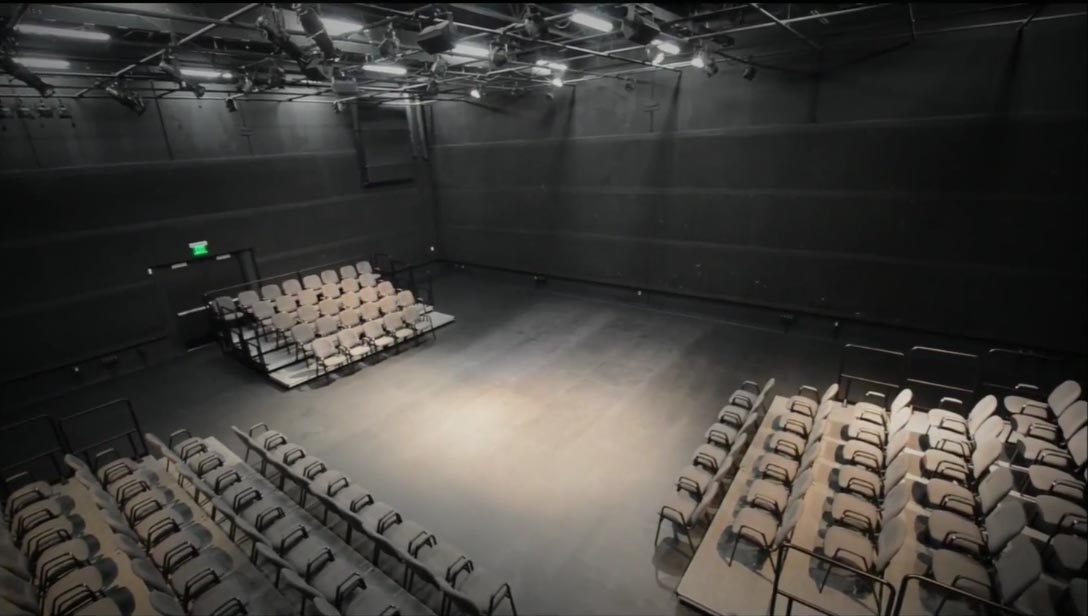
Black Box Theatre
A small theatre, often painted black, the seating is flexible and can be rearranged into any shape or totally removed
9
New cards
Blackout
Turning off/Fading out the stage lighting
10
New cards
Blocking
The process of arranging moves to be made by the actors during the play, recorded by stage management in the prompt script
11
New cards
Body Language
The way posture can communicate feelings without words
12
New cards
Character Arc
The way a character changes over the course of a narrative
13
New cards
Characterisation
Creating a character, can be helped by the description, in the use of stage directions of advice from the director
14
New cards
Choral Speaking
When two or more actors speak the same words at the same time
15
New cards
Climax/Rising Action
A significant moment in the plot of the play when things change or reach a very emotional moment, where everything comes together and reaches a conclusion
16
New cards
Comedy
A performance where there is a happy ending, the performance's purpose is to entertain the audience
17
New cards
Composite Set
A set which covers multiple locations at the same time, eg: stage left is 1950, and stage right is 2020
18
New cards
Context
The circumstances of a piece of drama such as location, period of time and attitudes of characters
19
New cards
Cross-Cutting
Changing between scenes, each scene has a cutting point in which one scene freezes and another scene continues
20
New cards
Cross Fade
Replacing one lighting state with another, also applicable to music, can be shortened to XF
21
New cards
Cue
A command given to lighting/sound operators to carry out an action/A line of dialogue or action that indicates something should happen on stage
22
New cards
Cyclical Structure
A plot which starts and ends at the same point in the narrative
23
New cards
Dialogue
The spoken text of the play, conversations between characters
24
New cards
Diction
The quality or style of speaking of a character within a play, consisting of components such as accent, inflection, intonation and enunciation
25
New cards
Director
The role involves being responsible for the overall artistic intention of a production, they will often have the initial creative concept and will work with actors and designers to realise this idea into a performance
26
New cards
Documentary Theatre
A genre which tells real life stories using factual resources
27
New cards
Dramatic Irony
When the audience knows more about a situation than the characters on the stage
28
New cards
Dramatic Tension
Moments in the drama where the audience feel a sense of expectation of what is going to happen next
29
New cards
Episodic
A play with a series of scenes (or episodes) that can stand alone and can be set in a large number of places over a large period of time, unlike a normal play which is often set over a few hours or days, and in only one or two locations
30
New cards
Fade
A change in lighting or sound level
31
New cards
Flashback/forward
A moment in the play when the past/future is presented
32
New cards
Flat
A wooden frame covered with canvas which is painted and used as scenery
33
New cards
Floodlight
A lantern which lights up a large part of the stage
34
New cards
Form
The type of drama eg: play, musical, within drama. Aristotle said there are 4 forms, comedy, tragedy, melodrama and drama
35
New cards
Foreshadowing
A warning or hint that something will happen later
36
New cards
Fourth Wall
The imaginary barrier between the stage and the audience
37
New cards
General Cover/Wash
Lanterns that fill the stage with light
38
New cards
Genre
A way of grouping different types of drama, a play may be grouped into multiple genres, eg: tragedy, comedy, history
39
New cards
Gesture
The use of hands to communicate emotions or a message
40
New cards
Historical Context
The time the play was set in, or the period the playwright was writing in
41
New cards
Inflection
Speaking a word to stress emotion
42
New cards
Intonation
The rise and fall of a person's voice
43
New cards
Lantern
The term used for a unit of lighting
44
New cards
Lights Up
An announcement that a section of a performance has begun or an increase in light level
45
New cards
Make Up
Products applied to the face or body of an actor to change or improve their apppearance
46
New cards
Mannerism
A repeated physical or vocal habit that helps communicate character
47
New cards
Mask
A genre of theatre where an actor's face is covered with a mask
48
New cards
Melodrama
A performance that exaggerates the plot or characters in order to appeal to emotions
49
New cards
Monologue
A speech which is delivered by an actor alone on stage
50
New cards
Narration
Dialogue that tells the story or gives new information
51
New cards
Naturalism
A style of performance that is like real life
52
New cards
Pace
The speed the dialogue is delivered to the audience
53
New cards
Physical Theatre
Performances which focus on the movement of the piece
54
New cards
Pitch
How high or low the tone of an actor's voice is, generally male voices are lower pitched and female voices are higher pitched
55
New cards
Playwright
The author of a play
56
New cards
Plot
The storyline of the play
57
New cards
Projection
Using voice loudly and clearly
58
New cards
Promenade Theatre
A type of theatre in which the audience stand and walk around with the actors to different performance spaces
59
New cards
Prop
Small items that actors can carry as part of the action
60
New cards
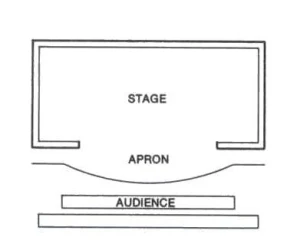
Proscenium Arch
A type of theatre where all the seats point to the end of the room where the stage is, eg: Lyceum
61
New cards
Protagonist
The leading character or hero in a play who has to fight/oppose the antagonist
62
New cards
Proxemics
The distance between the actors/characters on stage, this can represent their feelings towards each other
63
New cards
Rapport
The feeling created by a cast working together
64
New cards
Realism
Presenting the audience with an accurate display of the real world
65
New cards
Rostrum
A raised platform, to allow for different levels on stage
66
New cards
Scene
A section of an act
67
New cards
Semiotics
How meaning is created by non verbal means, eg: costume, coloured lights and sound effects
68
New cards
Setting
The place where the scene or play is set
69
New cards
Sightline
The view of the stage from the audience
70
New cards
Social Context
The society and values of that society which form a background to the play
71
New cards
Split Stage
When different parts of the stage are used to represent different times or places
72
New cards
Spotlight
A lighting state that follows an actor on stage
73
New cards
Stage Directions
Instructions given by the authors about how a play should be staged, when actors should make their entrances and exits and how lines should be delivered
74
New cards
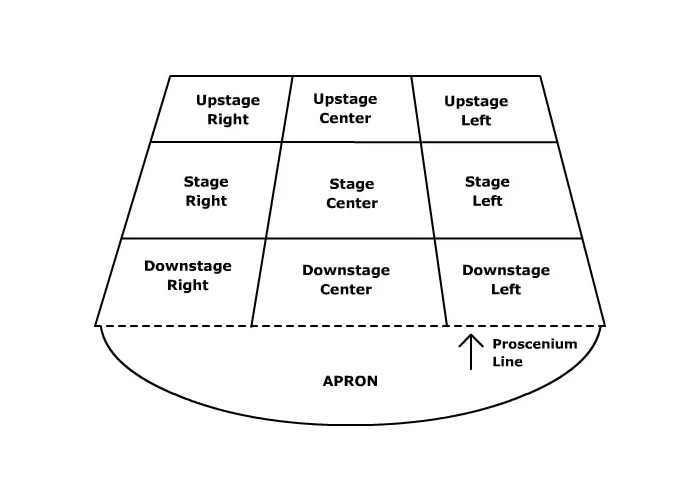
Stage Left/Right
Left/Right is from the actor's point of view
75
New cards
Stillness
Using a quiet voice and subtle body language to create a calm atmosphere on stage
76
New cards
Stock Character/Stereotype
A role that is easily recognisable, for example an old man with a limp
77
New cards
Structure
The way a piece of drama is put together
78
New cards
Style
The way actors perform, the visual features of the setting and costumes and the choice of conventions
79
New cards
Stylised
Highlighting and often exaggerating features of design or characteristics or a role
80
New cards
Subplot
A second plotline within the performance
81
New cards
Subtext
Meanings that are below the surface of whats being said or done, underlying theme
82
New cards
SX (Sound Effects)
Shorthand for sound effects
83
New cards
Symbolism
Using symbols to suggest meaning to the audience
84
New cards
Tableau
A still but dramatic grouping of characters
85
New cards
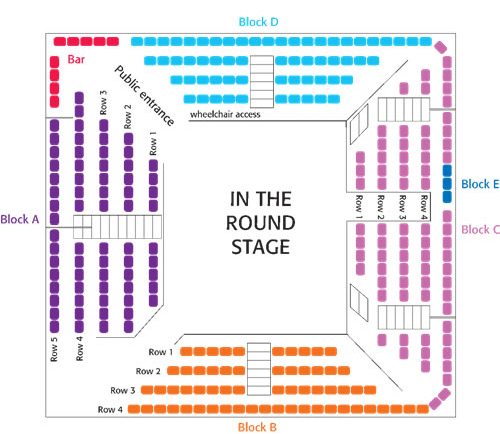
Theatre in the Round
The stage area is in the centre and the seats surround it (normally in a circular or square shape)
86
New cards
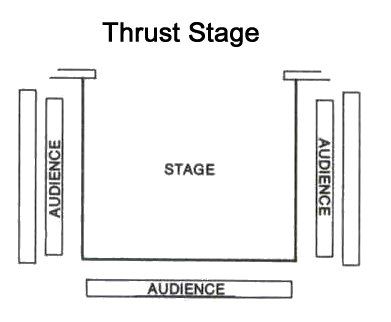
Thrust
A stage that extends into the audience, so the seating goes around it in a U shape, eg: Crucible
87
New cards
Tone
The way words are spoken to demonstrate the emotion behind their meaning
88
New cards
Trap
An opening in the stage floor to allow actors to come up from below/descend under the stage
89
New cards
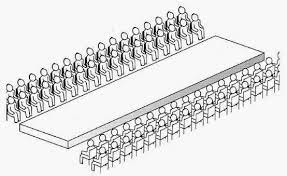
Traverse Stage
A long narrow stage with seating on two sides of it (like a corridor)
90
New cards
Treads
General name for any stage staircase or set of steps
91
New cards
Uplighting
Lights coming from below to create large shadows behind the actors
92
New cards
Understudy
An actor who learns multiple roles and performs when another actor is unable
93
New cards
Wings
The space at the side of the stage where actors wait, unseen by the audience, before coming on
94
New cards
The Performance Space
95
New cards
Cultural Context
The culture in society at the time
96
New cards
Conventions of a Text
Common features found in a text
97
New cards
Theatrical Setting
The scenery, properties, or background, used to create the location for a play
98
New cards
Performer/Audience Relationship
The connection between performer and spectator during a live performance
99
New cards
Apron
Any part of the stage that extends past the proscenium arch and into the audience or seating area
100
New cards
Site Specific
Performed at a unique, specially adapted location other than a standard theatre
 Note
Note  Flashcards (46)