APES Unit 5
 Call Kai
 Learn
Learn Practice Test
 Spaced Repetition
 Match
Match Flashcards
 Knowt Play
1/19

There's no tags or description
Looks like no tags are added yet.
Name | Mastery | Learn | Test | Matching | Spaced | Call with Kai |
|---|
No analytics yet
Send a link to your students to track their progress
20 Terms
Tragedy of the Commons
Individuals will use shared resources for their own interest rather than keeping it for the common good = depleting resources.
Externalities
Negative costs associated with human actions that aren’t accounted for in price. Example: Pollution.
Clearcutting
A method of harvesting trees = removing all or almost all the tress in an area. Economically beneficial but leads to soil erosion, increased soil and water temp, and flooding.
Forests
Area of land that contains trees that absorb pollutants and store carbon dioxide.
Slash and Burn
A farming method that involves cutting and burning trees to clear land = ash-enriched soil for crops. Effect: releases carbon dioxide and contributes to climate change.
Green Revolution
Shift from small farms to industrial farms using mechanization, fertilizers, GMOs, pesticides, and irrigation = increased food production.
Mechanization
Increased use of machines like tractors and tilling fields = increase profit and efficiency of farms. Negative effects: Causes heavy reliance on fossil fuels, compacts soil = more prone to erosion, and decreases water holding capacity.
Genetically Modified Organisms (GMOs)
Organisms genes have been altered using genetic engineering to improve traits like pest resistance. Negative effect: Genetically identical crops = decrease in genetic diversity = vulnerable to things like disease.
Tilling
Mixing and breaking up soil = makes planting easier. Negative effects: Increases erosion, loss of top nutrients over time, and can increase nearby waters turbidity.
Irrigation
The largest use of freshwater is for this (70%). This is the artificial application of water to assist in crop production = plants still receive moisture on days.
Fertilizer
Increases yield and profits from farming = helps plants grow better. Negative effects: Can run off into streams and rivers. Also contaminates ground water.
Pesticides
Chemicals sprayed pm crops tjat kills weeds. insects, and other pests. Increases farm yield. Negatives: Can runoff into other places and kill non-target species.
Waterlogging
Too much water is left in soil = raises water table of groundwater + inhibits plant’s ability to absorb oxygen through roots.
Spray irrigation
The pumping of groundwater into spray nozzles across an agricultural field (using sprinklers to spary water on land). More effiecient than flood and furrow irrigation, but expensive + ¼ of water is lost to evaporation and runoff. Requires energy to run
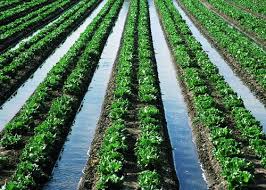
Furrow Irrigation
Cutting furrows between crop rows and filling them with water. Inexpensive, but 1/3 of water is lost to evaporation and runoff.
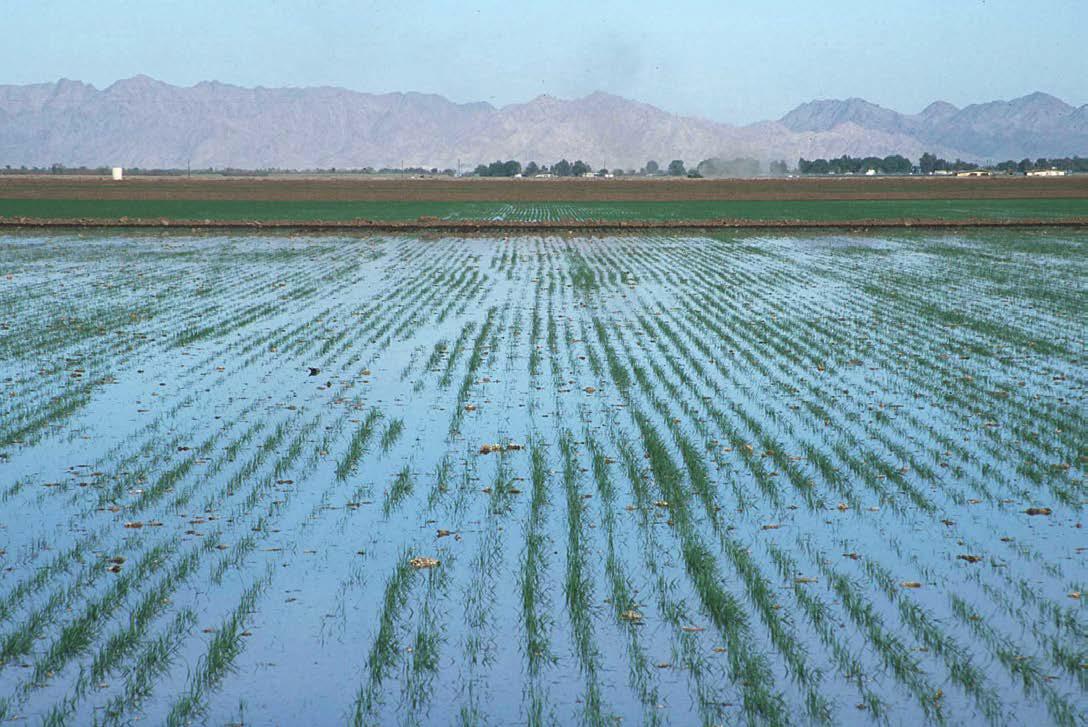
Flood Irrigation
Flooding an agricultural field with water. 20% lost to runoff and evaporation. Can also lead to waterlogging of the soil.
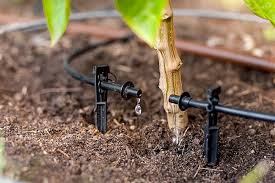
Drip irrigation
Uses preforated hoses to release small amounts of water to plant roots. Most efficient method of irrigation. 5% lost to evaporation and irrigation. Very expensive = rarely used. Also a solution to waterlogging b/c poke holes in soil = allow air and water to drain through.
Aquifers
Underground layer of water where groundwater can be extracted (water storage where water is stored in pores). Found in permeable soils. Can be severly depleted if overused for agricultural irrigation.
Pest Control
Any method used to manage or eliminate pests. Ex: pesticides, herbicides, fungicides, rodenticides, and insectides. Can cause organisms to become resistant to them through artificial selection. Also decreases damage done by pests to crops and increases crop yields.
Genetically Engineered Crops
Crops like these experience an increase in their resistance to pests and diseases. Effect: can lead to a loss of genetic diversity = vulnerable to disease.

