Lights, signs, and lanes
 Studied by 0 people
 Call with Kai
 Learn
Learn Practice Test
 Spaced Repetition
 Match
Match Flashcards
 Knowt Play
1/59

There's no tags or description
Looks like no tags are added yet.
Name | Mastery | Learn | Test | Matching | Spaced | Call with Kai |
|---|
No study sessions yet.
60 Terms
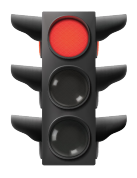
Solid red
Stop and wait for light to turn green, make sure there are no obstructions to pass.
You can turn if there is no “no turn on red” sign onto the left/right lane.
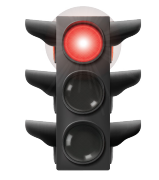
Flashing red
Like a stop sign; full stop, then go when it’s your turn.
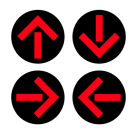
Red arrow
Cannot go in the direction of the arrow.
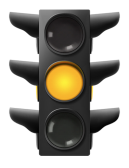
Solid yellow
Slow down and prepare to stop. Not allowed to accelerate beyond the posted speed limit.
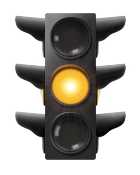
Flashing yellow
Same as a yield sign.
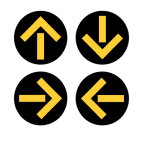
Yellow arrow
Slow down and prepare to stop. Give traffic the right-of-way.
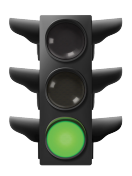
Solid green
Wait for intersection to clear and yield to pedestrians. Yield to oncoming traffic.
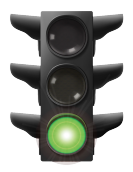
Flashing green
Mostly in British Columbia, Canada. Warning that pedestrians are waiting to cross.

Green arrow
Allows you right-of-way of the direction. Should not be any oncoming traffic or pedestrians while green.
Red sign
Prohibitive or restricted action.
Orange sign
Construction and maintenance warning.
Yellow sign
General and unexpected road condition warning.
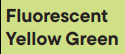
Fluorescent yellow-green sign
Warning of school, pedestrian, and bicycling activity.
White sign
Regulatory.
Green sign
Guide or directional information.
Blue sign
Motorist services guidance
Brown sign
Public recreation, cultural and historical area identification.

Stop sign
Stop at the line, crosswalk, or corner. Look for other vehicles and pedestrians — they have the right-of-way.

Yield
Must slow down and allow traffic that has the right-of-way to cross first.
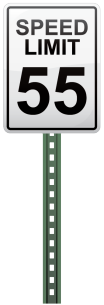
Speed Limit
The max safe speed allowed or the min safe speed.
Reduce speed limit when road condition require (road obstructions, weather, etc)

Keep right
Stay on right lane unless passing another vehicle.
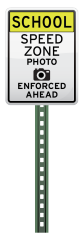
Traffic safety cameras
Record automatically if you:
Fail to stop at a steady red light
Fail to stop at a railroad crossing signal
Exceed the speed limit in a school zone
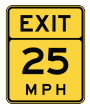
Speed warning
Speed change recommended for a potential hazard or road condition. Adjust your speed limit accordingly.

Variable speed limit and advanced notification
Follow traffic and are subject to change. May quickly close entire lanes and give drivers warnings before reaching slower traffic.
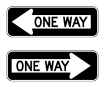
One way
Identify where traffic flows; shows where not to drive. Never drive the wrong way on a one-way street.
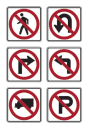
Not allowed
Actions that are not allowed (like U-turns).

Do Not Enter
Cannot enter the street from that direction.

Wrong Way
Driving in the wrong direction; is there to prevent collisions. Stop and turn around immediately.
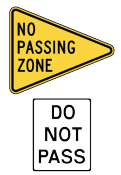
No passing and passing safely`
Around potentional hazards such as:
Hills
Curves
Intersections
Signs and markings tell where it is safe to pass.
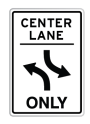
Shared center lane left turn only
Indicated where a lane is meant only for turning either left or right. Lane is not meant for traffic (passing).
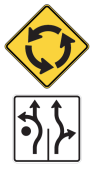
Roundabout
Mark the entrance to a roundabout.
May also contain yield, pedestrian warning, and directional arrow signs.
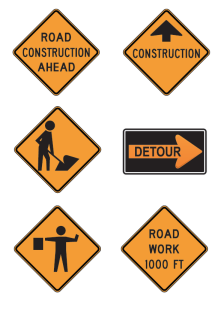
Work zone signs
Warn for construction. Fines double for offenses committed while driving in construction when workers are present.

Service signs
Show directions or places of service like:
Hospitals
Electric vehicle charging stations
Rest areas
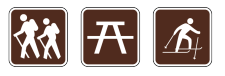
Recreation signs
Show local attractions such as:
Hiking trails
Picnic spaces
Skiing areas
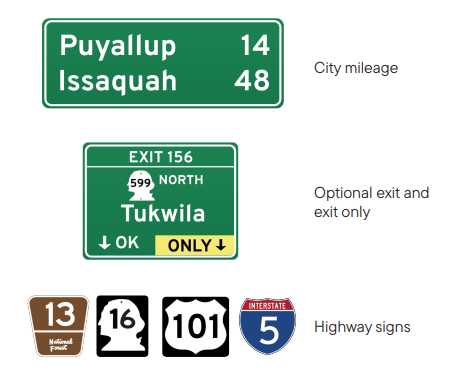
Destination signs
Give directions to places like cities, airports, state lines or special areas, national parks, historical areas, museums.

Cross road

Curve

Deer crossing

Hill

Low clearance

Merge

Merging traffic

Pedestrian crossing
ped xing

Reversing curves

School crossing

Side road

Added lane (from right, no merging required)

Advance warning bicyclist

Narrow road or bridge ahead

Circular intersection

Curve left 35 mph recommended

Divided highway (road) begin

Winding road

Advisory speed
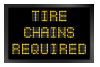
Tire chains require

Sharp curve ahead

Railroad crossing

Tsunami hazard zone

Traffic direction

Volcano evacuation route
 Note
Note  Flashcards (124)