CCP Wld. Civ. - Q1 Obj Exam Terms
 Call Kai
 Learn
Learn Practice Test
 Spaced Repetition
 Match
Match Flashcards
 Knowt Play
 Podcast
1/100

There's no tags or description
Looks like no tags are added yet.
Name | Mastery | Learn | Test | Matching | Spaced | Call with Kai | Chat |
|---|
No analytics yet
Send a link to your students to track their progress
101 Terms
Mesopotamia
A historical region located between the Tigris and Euphrates rivers, known as the cradle of civilization. (Fertile Crescent)
Tigris & Euphrates Rivers
River valleys in Mesopotamia; cradle of civilization.
Cuneiform
Ancient Mesopotamian writing system using wedge-shaped marks.
Sumer & Sumerians
Sumerians emerged as the first civilization we know of.
Ur
An important Sumerian city-state in ancient Mesopotamia, known for its advanced urban development.
Sexagesimal
A base-60 numeral system used by the ancient Sumerians.
Theocracy
A system of government in which priests rule in the name of a god or gods, often intertwining religion and politics.
Protoliterate
Refers to the time period where writing began, thus leading to an explosion of technology (Science and medicine) and knowledge.
Akkad & Akkadians
Founded by Sargon the Great, the Akkadian Empire was one of the world's first empires.
Ziggurat
Sumerian, Structure composed of step-like terraces with a flat top, Used for everything and was the center of culture
Ishtar
Goddess of war in Mesopotamian culture
Lugal
“Important Man” —Later—> “Monarch”
Ensi
High Priest and Governor of the Sumerians
Lugal-Zagesi
Last king of Sumerians
Sargon
Founded Akkadian Empire, created the first empire known to history. Invaded and captured Sumer conquering the last Sumerian king Lugal-zagesi.
Hammurabi
King of Babylon, developed Hammurabi’s Code, the first written code of law.
Gilgamesh
A legendary king of Uruk in ancient Mesopotamia, known for his epic adventures and quest for immortality, which are detailed in the Epic of Gilgamesh.
Hittites & Hittisilus
Indo-European speaking, Based in Anatolia, Hittites are the first people to use iron and forge iron weapons (HID IRON INVENTION). Hittites are MASTERS at scythe chariot warfare. Hattusilus I is the first Hittite ruler.
Kassites
Indo-European speaking, Zagros Mountains, Kurigalzu I builds Dur-Kurigalzu the capital of the Kassite Empire, contributions to Babylonian culture. Created the Kudurru
Kurigalzu I
Kurigalzu I builds Dur-Kurigalzu the capital of the Kassite Empire.
Kudurru
A Kassite stone marker that defined land boundaries and recorded transactions.
Mitannians
The first hegemonic (dominant politically) empire.
Hieroglyphics
Ancient Egyptian writing, used for formal and important writing, was commonly carved on stone
Hieratic
Short, informal handwritten form of Egyptian writing, commonly on paper, not stone
Osiris
God of the underworld and vegetation; portrayed as green
Isis
Chief goddess in Egyptian religion
Ka
Egyptian spiritual essence or life force that exists as a separate entity from the body, often associated with the afterlife. (soul)
Maat
Justice, order, truth. What the ka was measured against to determine if you went on to the afterlife or not
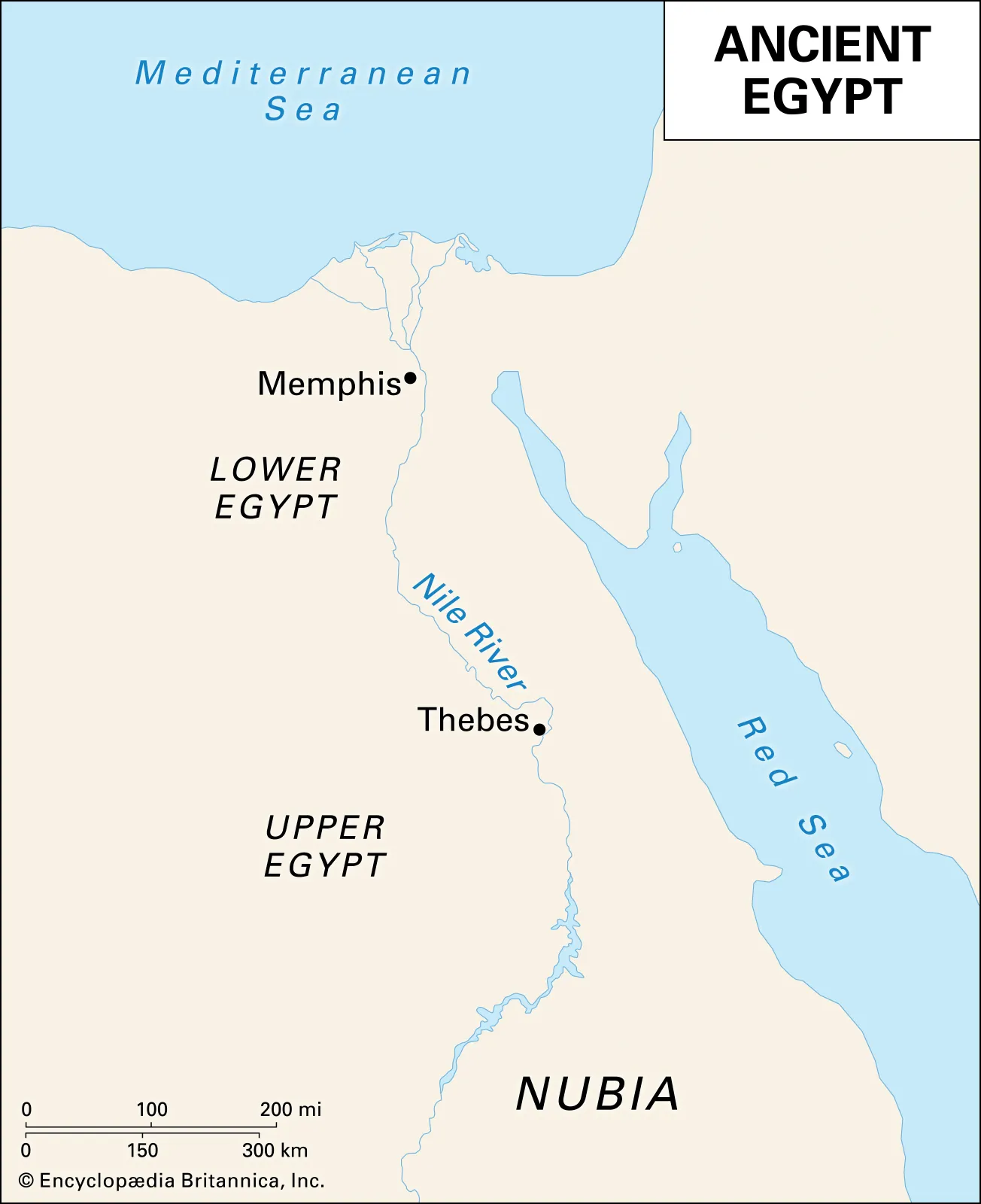
Upper Egypt
Lower on the map geographically
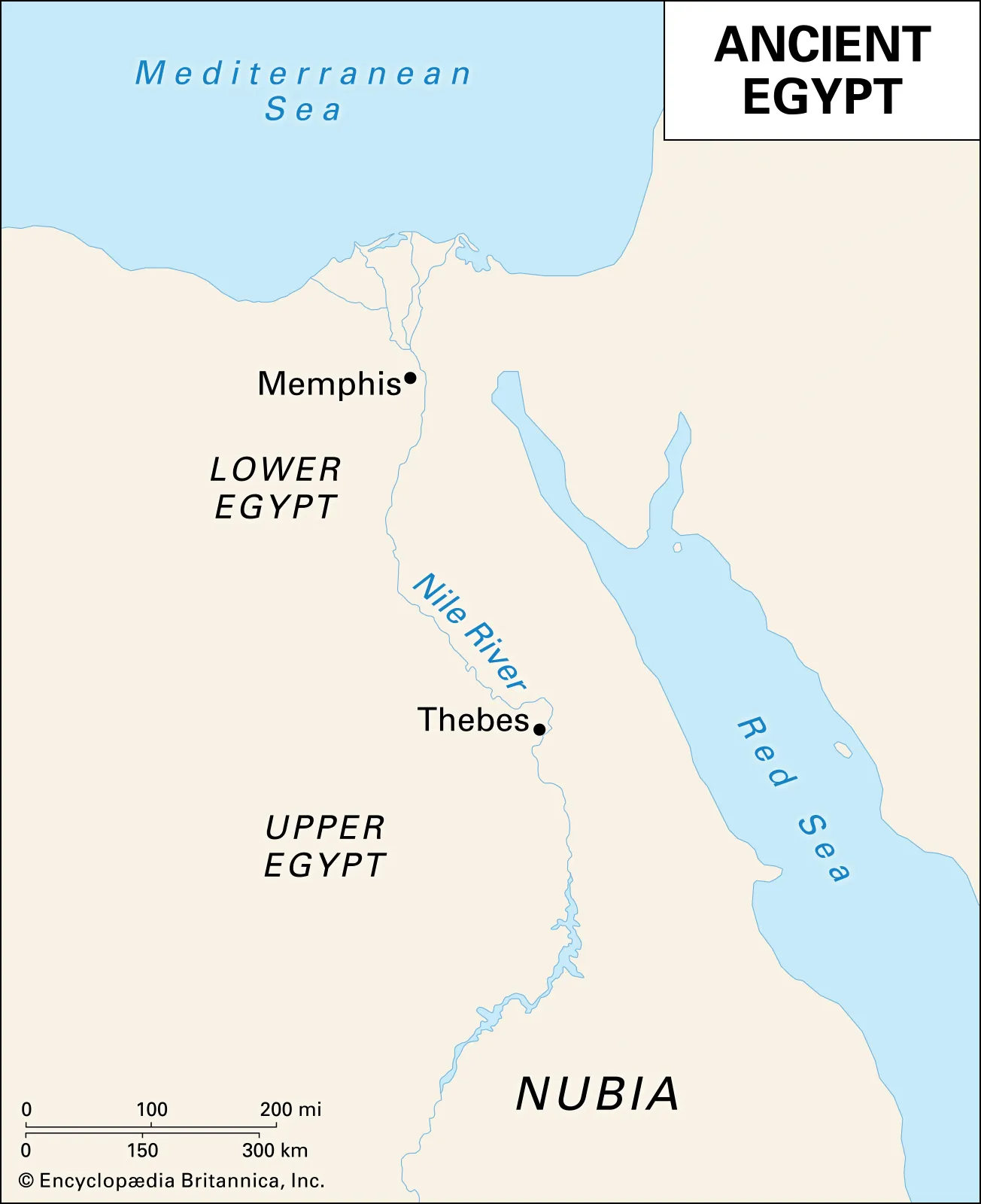
Lower Egypt
Higher on the map geographically
Nile River
The river that makes up and supplies the Egyptian civilization
Menes/Narmar
The unifier of upper and lower Egypt, using the Nile as a linking highway, established Memphis as the capital
Djoser
The pharaoh known for commissioning the Step Pyramid at Saqqara,
Imhotep
Architect of the first step pyramid
Red Pyramid
First smooth-sided pyramid; developed by Snefuru
Step Pyramid
First pyramid designed by Imhotep, under the reign of Djoser
Snefuru
The pharaoh who commissioned the building of the Red Pyramid, which was smooth, not stepped
Khufu
The pharaoh known for building the Great Pyramid of Giza
First Intermediate Period
The Nile floods ceased, famine caused by droughts, civil wars against a weakened throne, and outside invaders caused a period of chaos. Outside invasions follow instability
Lack of money →All spent on building pyramids
Middle Kingdom
Period of large-scale drainage and irrigation projects used to create new farmland i.e., more FOOD
Second Intermediate Period
Marked by the invasion of the Semitic-speaking Hyksos; long haired people from the east, through chariot warfare. Hyksos worship Seth instead of Osiris.
Hyksos
Hyksos; long haired people from the east, through chariot warfare. Hyksos worship Seth instead of Osiris.
New Kingdom
Characterized by vast expansion, conquest, and imperialism,
Pepi II
Longest ruling monarch in world history
Ahmose I
The pharaoh who drives the Hyksos out of Egypt
Hatshepsut
Longest reigning female in Egyptian history. Portrayed herself as a man, wearing a beard and men's clothes. Got away with being pharaoh because everything was peaceful, no wars, droughts, famine, plague
Thutmose III
"Napoleon of Egypt” had 19 military campaigns in 17 years
Akhenaten
A pharaoh known for being the first ruler to introduce monotheistic worship; of the sun god Aten. Moved the capital from Thebes to Amarna
Aten
City built by Akhenaten to worship the sun god Aten
Tutankhamun
Tut is famous for his untouched tomb
Ramses II
Responsible for the world's first peace treaty with the Hittites, referred to in history as Ramses the Great! He is the most prolific builder of Ancient Egypt
Merneptah
Known for the first historical mention of "Israel" in his inscriptions. Considered the first pharaoh of the decline of the strong Egyptian monarchy
Ramses III
The last great pharaoh of the New Kingdom, known for defending Egypt against the Sea Peoples
Third Intermediate Period
Time of political chaos. Egypt splits into Upper and Lower Egypt. The power of the great pharaoh has declined. The capital was moved to Tanis. Long-distance trade has died. The sea-people.
Sea Peoples
The Sea People helped bring the Bronze Age society to an end. They are famous for their invasion of Egypt during the New Kingdom, which led to the Third Intermediate Period. Leftover people from various civilizations
Phoenicians
Lived along the coast and became the Mediterranean’s greatest traders. They are made up of a confederation of city-states; Are master sailors
Phoenician Alphabet
A writing system developed by the Phoenicians, which was adopted by the Greeks
Byblos
A Phoenician city where the words bible, book, and library derive from
Tyre
A Phoenician city known for setting up the colony of Carthage
Ugarit
A Phoenician city known for developing the Phoenician Alphabet
Aramaeans
Played a significant role in the development of the Aramaic language, which became widely spoken in the Near East.
Israel & Judah
Ancient kingdoms, known for their religious and cultural identities that emerged in the Levant.
Solomon
Rule resulted in division of Israel into 2 parts: Israel and Judah
Hebrews / Israelites
Ancient Semitic peoples who established the kingdoms of Israel and Judah, known for their covenant with Yahweh.
Yahweh & Mosaic Covenant
The title used for the God of Israel in the Hebrew Bible, representing a monotheistic belief. The Mosaic Covenant is an agreement between Yahweh (God) and the Israelites that included laws and commandments, outlining the requirements for the people to follow in exchange for divine favor.
David
King of Israelites, first known ruler of Israelites. He establishes Jerusalem, his obsession with women gets the best of him
Josiah
A godly monarch who reestablished the law of the lord, which directed monotheism upon the Hebrews
Shoshenq I
A Pharaoh known for plundering the Temple of Solomon and possibly stealing the ark of the covenant
Assyrians
Located in northern Mesopotamia, known for:
First group of people to use all iron weapons
Dispersal of conquered people
Demanding Tribute
Tukulti-Ninurta I
Defeated the Hittites and the Kassites. Destroyed the city of Babylon. Broke the “rules” of war by desecrating temples to Marduk
Tiglath-Pileser I
Established Assyria as a major power in the region. He was the first to cultivate fear of himself into his own people as well as his enemies.
Ashurnasirpal II
Ruled by terror and fear, began demanding tribute payments. Tribute allowed for a new palace to be built at Kalhu.
Shalmaneser III
Known for putting down a revolt by 12 different kings means the continuation of the tribute payments. Revolts become more prevalent
Tiglath-Pileser III
1. Expansion of the empire by annexing nearby kingdoms.
2. Siege warfare: including scaling walls and impaling the defeated on spikes!
3. Resettling conquered people in new areas. This prevented uprisings because there were no natural alliances among the resettled people. EX: Israelites (Dispersing Enemies)
4. Capture of Babylon at the end of his reign.
Sargon II
Builds a new capital, Dur-Sharrukin. It is quickly abandoned after his death.
Dur-Sharrukin
The Assyrian capital built by Sargon II, quickly abandoned after his death, but it later became a very valuable archaeological find.
Sennacherib
Under Sennacherib, the Assyrian capital moved to Nineveh.
Esarhaddon
The Assyrian king, who was not violent, was not a monster. He was an Assyrian ruler who tried a different ruling approach
Ashurbanipal
The last great king of the Assyrian Empire
Niniveh
Final capital of the Assyrian Empire
Chaldaeans
Sometimes referred to as Babylonians, formed by Nebuchadnezzar II
Nebuchadnezzar II
A Chaldaean ruler of Babylon who wins battle of Carchemish: The Battle of Carchemish was the last stand of the Assyrians , Rebuilt city of Babylon, Built new ziggurat (tower of babel), Built gate of Ishtar, ends “Babylonian captivity” of Israelites
Babylonian Captivity
A period during which the Jewish people were exiled in Babylon
Nabonidus
The last king of the Babylonian Empire, who worshipped the moon god Sin instead of Marduk
Croesus & Lydians
Last king of the Lydians popular phrase “as rich as Croesus”, the Lydians are considered the inventors of coinage
Persians
An ancient civilization known for its vast empire, famous for the royal road, and Zoroastrianism.
Cyrus II (The Great)
He was the founder of the Persian Empire, known for his policies of tolerance and innovation. Known for defeating the Lydians and capturing Babylon, as well as beginning the Jewish diaspora.
Cambyses II
Known for conquering Egypt under the Persian Empire
Darius I
Overcame 9 other kings, known for:
Establishing Satrapies (Provinces)
Eyes and ears of the king
Created the early postal system
Established the “Royal Road”
Built the Royal audience hall
Arta
Persian equivalent to Maat; represented justice, order, and truth in a person
Zoroaster
Ancient Persian prophet and founder of Zoroastrianism.
Ahuramazda & Ahriman
The two opposing deities in Zoroastrianism, where Ahuramazda represents good and Ahriman represents evil.
Satraps
Provincial governors in the Persian Empire, responsible for local administration and maintaining order.
Royal Road
The 1600-mile road developed by the Persians that facilitated trade and communication across the empire.
Homo-habilus
“Handy man”; first to use simple stone tools.
Homo-erectus
“Upright man”; could use fire and make tools; first hominid to leave Africa. First to conduct burial practices, could use fire found in nature
Neanderthal
Lived in Europe, left paintings in caves, first to practice burial practices.
A. robustus
Australopithecus robustus; plant-eating with flatter teeth.
A. africanus
Australopithecus africanus; had sharper teeth.
Homo-sapiens
“Thinking Man”; Large brains