1.2 - Job Analysis
 Studied by 0 people
 Call Kai
 Learn
Learn Practice Test
 Spaced Repetition
 Match
Match Flashcards
 Knowt Play
1/51

There's no tags or description
Looks like no tags are added yet.
Name | Mastery | Learn | Test | Matching | Spaced |
|---|
No study sessions yet.
52 Terms
1980s
Research in I/O flourished in the 🇵🇭 Philippines.
Fr. Jaime Bulatao
Actual teaching of I/O in the Philippines began with ______________, one of the founding fathers of Psychology in the Philippines.
Aurora Yambot
The first documented I/O Psychology research was published by?
“The Personality of the Esteemed Filipino Employee”
Aurora Yambot published _____________$?
49%
the percentage of HR practitioners who have Psychology or Behavioral Science backgrounds.
58%
the percentage of HR practitioners who had graduate units/education in Psychology of HRM related courses.
Growing use of technology in I/O related functions
Talent Management
Work-Life balance
Emotional Intelligence
Things that are to come in the field of I/O:
Job Analysis
The foundation for almost all human resources activities.
Job Analysis
The process of collecting and analyzing information about the job or the work the employee performs (e.g. positions, description of duties, and responsibilities).
Job Analysis
It provides key input or tools for various human resources management activities such as:
Recruitment and Selection
Performance Appraisal
Compensation
Training and Development
Career Planning
Job Description
Job analysis determines the work activities and requirements, which results to the _________
Job Description
a brief, 2-to-5-page summary of the tasks and job requirements.
Job Description
basis for many HR activities such as employee selection, evaluation, training, and work design.
Level of duties & procedures
Duties performed
Detailed description of the Job
Job Description describes the following:
Job Title
Job Summary
Work Activities
Qualifications
Job Competencies
Working Conditions/Job Context
Compensation Information
Tools & Equipments
Writing a Good Job Description:
Job title
Short, clear, and accurate
describe the nature of the job
aids in recruitment and selection
provides workers with form of identity
Job title
ex. cashier, nurse, medical officer, delivery driver
Job description
two or three sentences about the position and the company
Job description
should only be a paragraph in length but briefly describe nature and purpose of job
Job description
may include sentence about the importance of the position to the company
Work activities
identify major categories and general responsibilities
Work activities
lists the tasks and activities in which the worker is involved
For complex positions, may indicate percentage of time the task will take
Work activities
ex. “training and supervising cashiers”, “15%- vendor recruitment, 20% - develop and place PR for the market”
Qualifications
education or degree requirements along with any special licenses or certificates required.
Qualifications
ex. Doctor of Medicine, Career Service (Professional) Second Level Eligibility, ability to lift 50 pounds, ability to read and speak Korean
Job competencies
refer to the knowledge, skills, abilities, and other characteristics needed to perform a job.
Job competencies
Also called as “Job Specifications”
KSAO
are determined through combination of logic, research, and use of specific job analysis techniques
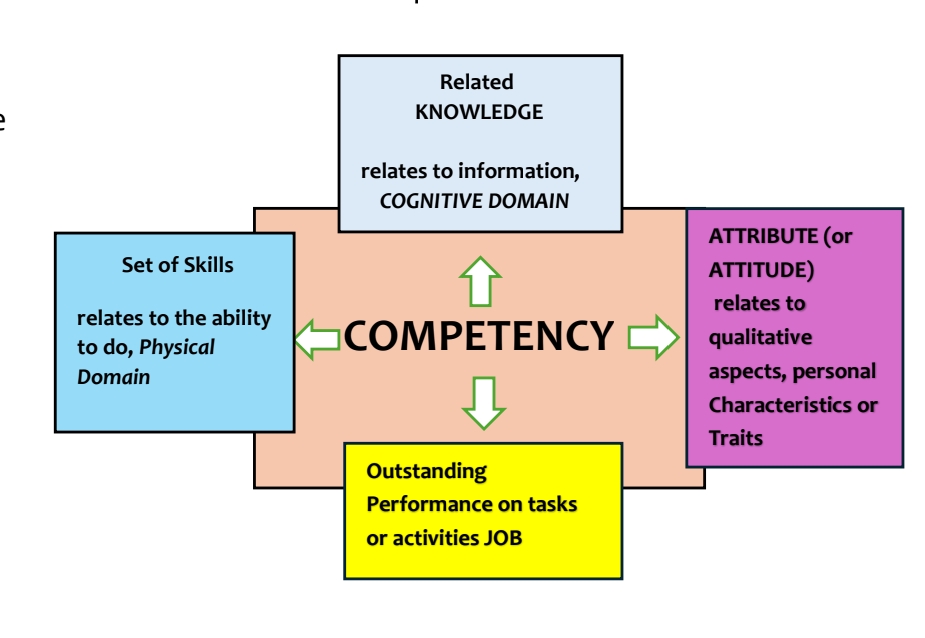
Related Knowledge
Attributes
Set of Skills
Outstanding Performance on tasks
The KSA Framework:
Relates Knowledge
relates to information, COGNITIVE DOMAIN
Attributes
relates to qualitative aspects, personal Characteristics or Traits
Set of Skills
relates to the ability to do, Physical Domain
Working conditions/Job Context
Any particular physical requirements or environmental considerations that are unique to the position must be mentioned.
Working conditions/Job Context
ex. Office work, Field work, exposed to health hazards/accidents, long hours of standing
Compensation information
Although there is some disagreement, salary and benefits information should be part of the position is exempt or non-exempt, salaried or hourly, part time or full-time can be included here.
Tools & Equipments
lists all the tools and equipment used to perform the work activities
Job Analysis
is used to identify important requirements such as the tasks to be performed and the competencies needed to perform those tasks.
Employee Selection
By identifying those, tests or interview questions can be selected to determine whether a particular applicant possesses the necessary KSAO’s required of the job.
Training
Job analysis yields list of job activities can be systematically used to create ______ programs.
Personpower Planning
Job analysis can also be used to determine worker mobility within the organization
to ensure that there is a better match between the person being promoted and the requirements of the job.
Peter Principle
The idea that organizations tend to promote good employees until they reach the level at which they are not competent - the other words, their highest level of incompetence.
Performance Appraisal
Job Analysis ensures that the evaluation of employee performance must be job related.
➢ Specific, job-related categories lead to more accurate ____________
Performance Appraisal
can serve as excellent source of employee training and counselling.
Job Classification
Job analysis enables the HR professional to classify jobs into groups based on similarities in requirements and duties.
Job Classification
is used for determining pay levels, transfers, and promotions.
Job Evaluation
Job analysis information can also be used to determine the worth of a job.
Job Design
Job analysis information can be used to determine the optimal way in which a job should be performed.
Job Design
is the process of creating a job that allows the organization to achieve its goal while motivating and rewarding the employee.
Org is Starting operations
New job created
Job changed significantly by the nature of operations
Technology introduction
Restructuring
WHEN IS JOB ANALYSIS PROGRAM UNDERTAKEN?
O-N-J-T-R
HR dept.
Job workers, Supervisors, External consultants
WHO WILL CONDUCT JOB ANALYSIS?
changes
A job description should be updated if a job _____ significantly.
Job Crafting
a process in which employees unofficially change their job duties to better fit their interests and skills.
 Note
Note  Flashcards (65)