HAN 312 Chapter 10+17
 Call Kai
 Learn
Learn Practice Test
 Spaced Repetition
 Match
Match Flashcards
 Knowt Play
1/373

There's no tags or description
Looks like no tags are added yet.
Name | Mastery | Learn | Test | Matching | Spaced | Call with Kai |
|---|
No analytics yet
Send a link to your students to track their progress
374 Terms
nervous system function
carry impulses between brain, neck, head, spinal nerves
release neurotransmitters
control voluntary n involuntary bodily functions
CNS
brain
spinal cord
PNS (peripheral NS)
nerves throughout body
cranial n. (12 pairs)
spinal n. (31 pairs)
autonomic n. - involuntary function
parasympathetic (rest digest) n sympathetic (fight flight)
sympathetic NS
influence bodily function during stress
fight or flight
parasympathetic NS
heart rate
breathing
GI tract mm
rest n digest
brain division
cerebrum
diencephalon
cerebellum
brainstem
cerebrum
largest n uppermost portion of brain
left n right halves (cerebral hemispheres)
subdivided into lobes
cerebral cortex
surface nerve cells
gray matter
control higher mental function
speech, vision, smell, movement, hearing, thought
gyrus
raised convolution on surface of cerebrum
sulcus
groove or fissure on surface of brain
cerebral lobes
frontal
occipital
parietal
temporal
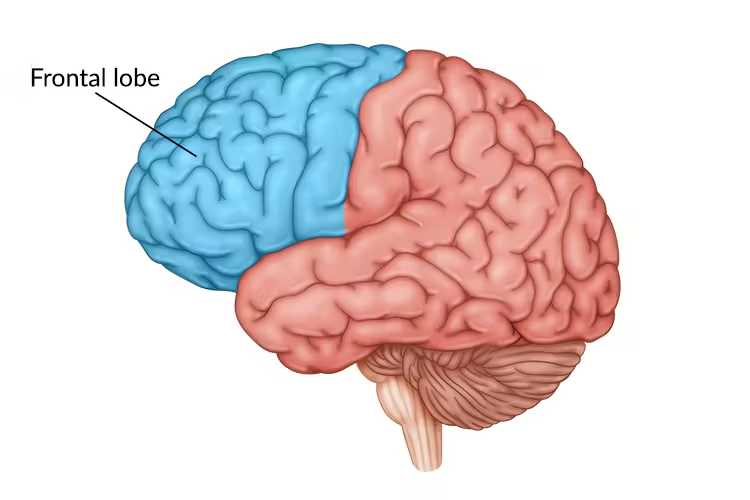
frontal lobe
front portion of cerebrum
controls voluntary mm movement
for emotions
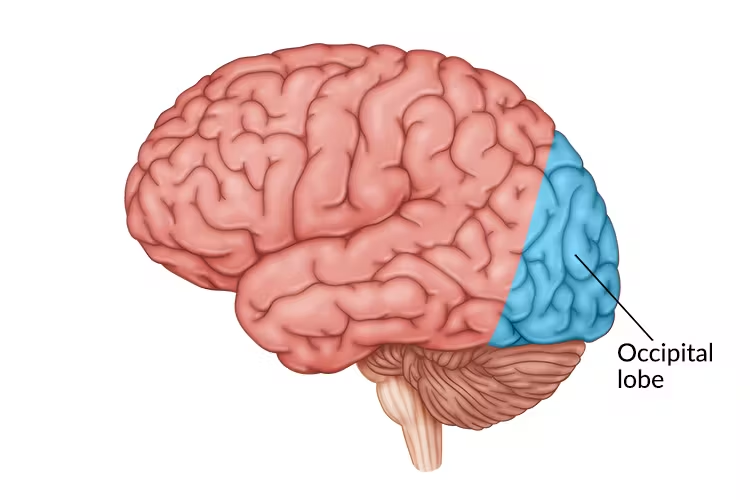
occipital lobe
back portion of cerebrum
vision
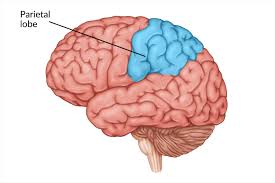
parietal lobe
middle top portion of cerebrum
perception of touch, temp, pain
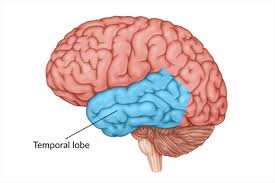
temporal lobe
below frontal lobe
controls hearing, smell, memory, emotion, speech, behavior
diencephalon , hypophysis
deep in brain that have thalamus, hypothalamus, pituitary gland
for directing sensory info to cortex
thalamus
integrates n monitors impulses from skin
ie: pain
hypothalamus
under thalamus
controls body temp, sleep, appetite, sexual desire, hormones
pituitary gland
release hormone
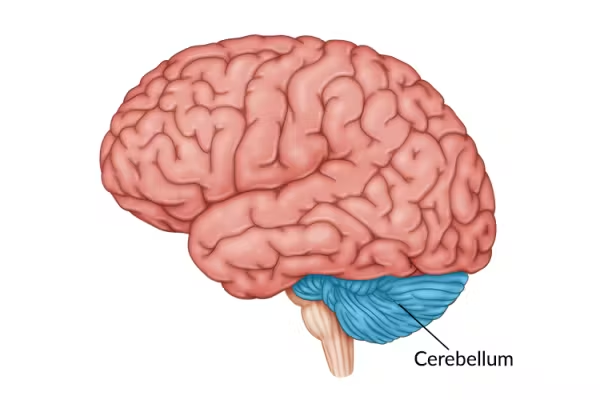
cerebellum , hindbrain
posterior part of brain
coordinates voluntary mm n maintain balance
wernicke’s area
language comprehension
understanding
in temporal lobe
broca’s area
language expression
speech
in frontal lobe
brainstem
connect brain to spinal cord
assist in
breathing
heart rhythm
vision
consciousness
include
midbrain
pon
medulla oblongata
midbrain , mesencephalon
uppermost part
connects brainstem to cerebellum
control sensory processes
pons
bridges cerebrum n cerebellum with rest of brain
houses nerves for face n eyes
medulla oblongata
connects brain n spinal cord
controls
respiration
heartbeat
blood vessel size
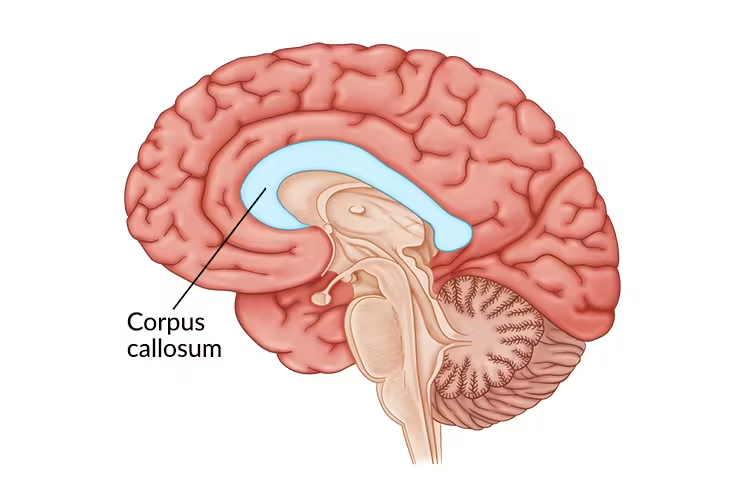
corpus callosum
connects brain hemispheres
thick band of white fiber
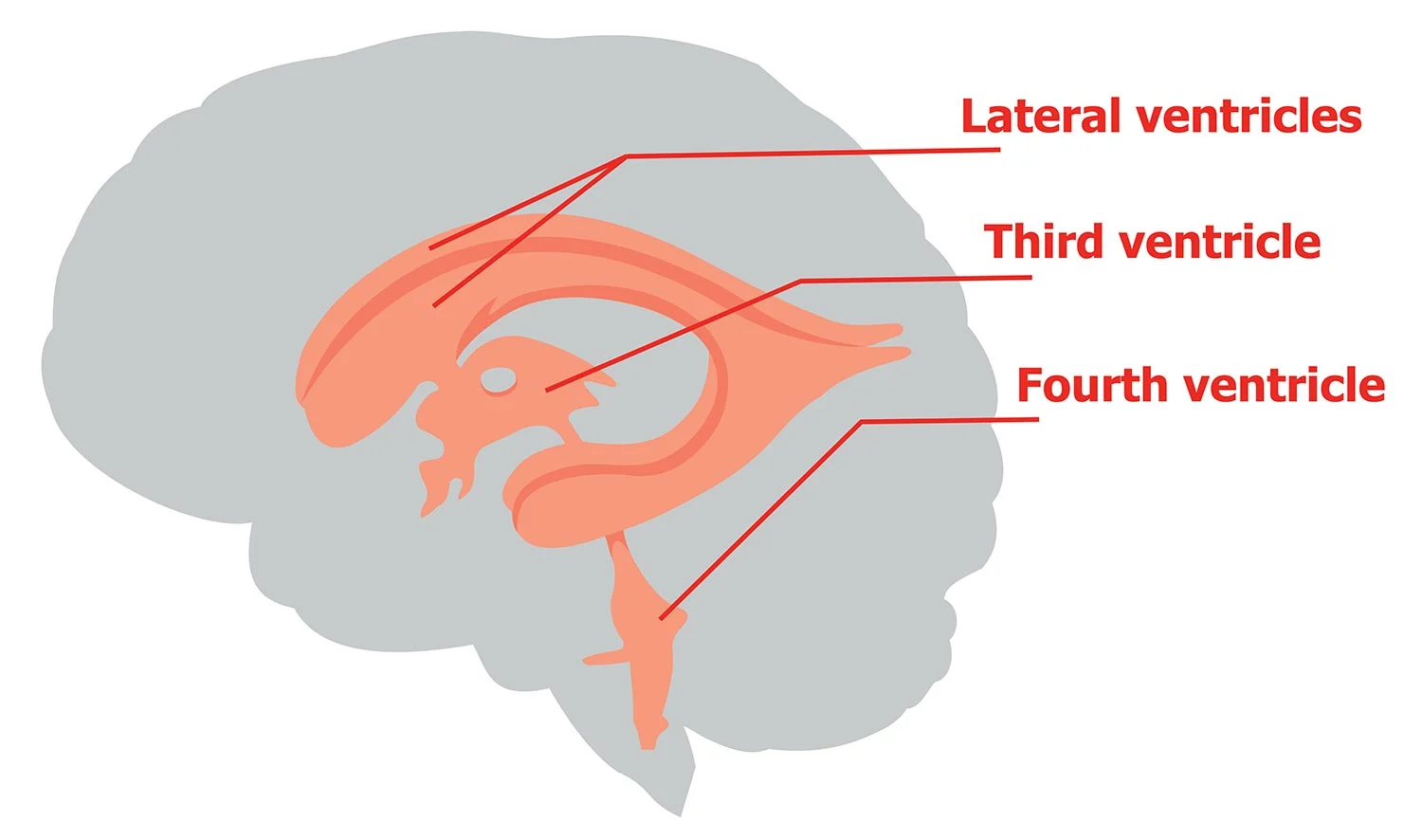
ventricle
one of four interconnected cavities within brain
contain n secrete cerebrospinal fluid
cerebrospinal fluid (CSF)
colorless fluid circulates in n around brain + spinal cord
protector
transport nutrients
meninges
membranous covering of brain n spinal cord
layers (outer to inner)
dura mater
arachnoid
pia mater
dura mater
strong fibrous outermost layer of meninges
subdural space
arachnoid
delicate fibrous membrane in middle layer of meninges
subarachnoid space
pia mater
thin inner layer of meninges
attaches directly to brain n spinal cord
spinal cord
portion of CNS in spinal or vertebral canal
for nerve conduction to n from brain + body
start at brainstem n end at first+second lumbar vertebrae
culminates in cauda equina
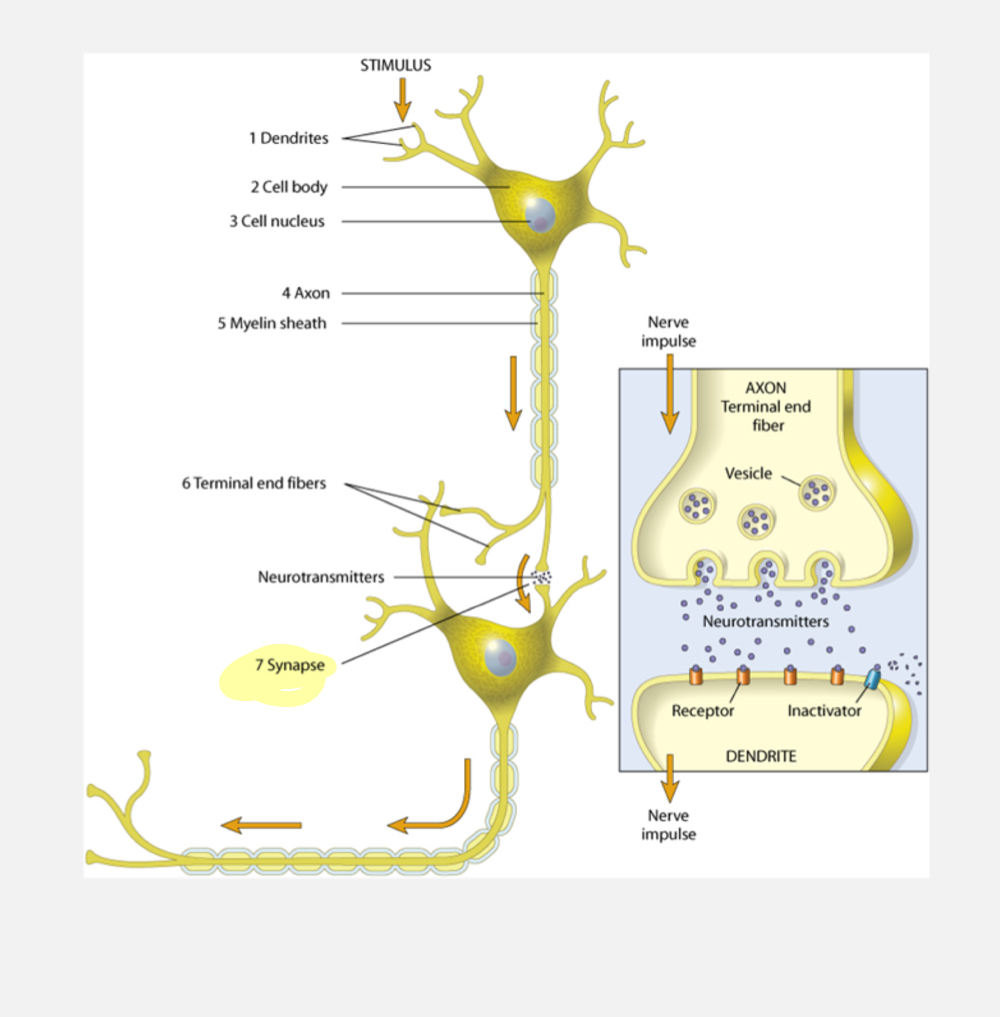
neurons / nerve cell
individual n. cells that make basic structure of nervous system
conduct impulses
10 billion in adults
collect into macroscopic nerves
neuron parts
dendrite
cell body
cell nucleus
axon
myelin sheath
terminal end fibers
secrete neurotransmitters across synapse
ganglion
group of n. cell bodies located along pathway of nerve
plexus
interlacing network of nerves
neurotransmitters
chemical messenger released into synapse by neuron
stimulate or inhibit cell
nerves
cordlike structure that transmit stimuli
afferent / sensory nerves
carry messages toward brain
efferent / motor nerves
carry messages away from brain
mixed nerves
carry both sensory n motor fibers
nerve roots
dorsal - carry sensory impulses toward spinal cord/brain
ventral - carry motor impulses away from brain/spinal cord to mm or glands
cranial nerves
12 pairs of nerves that emerge from cranium
spinal nerves
31 pairs of nerves that emerge from spine
neuroglia , glia
cells that support n protect nervous tissue
don’t transmit impulses
CNS nerve cells
astrocytes
oligodendrocytes
ependymal cells
microglia
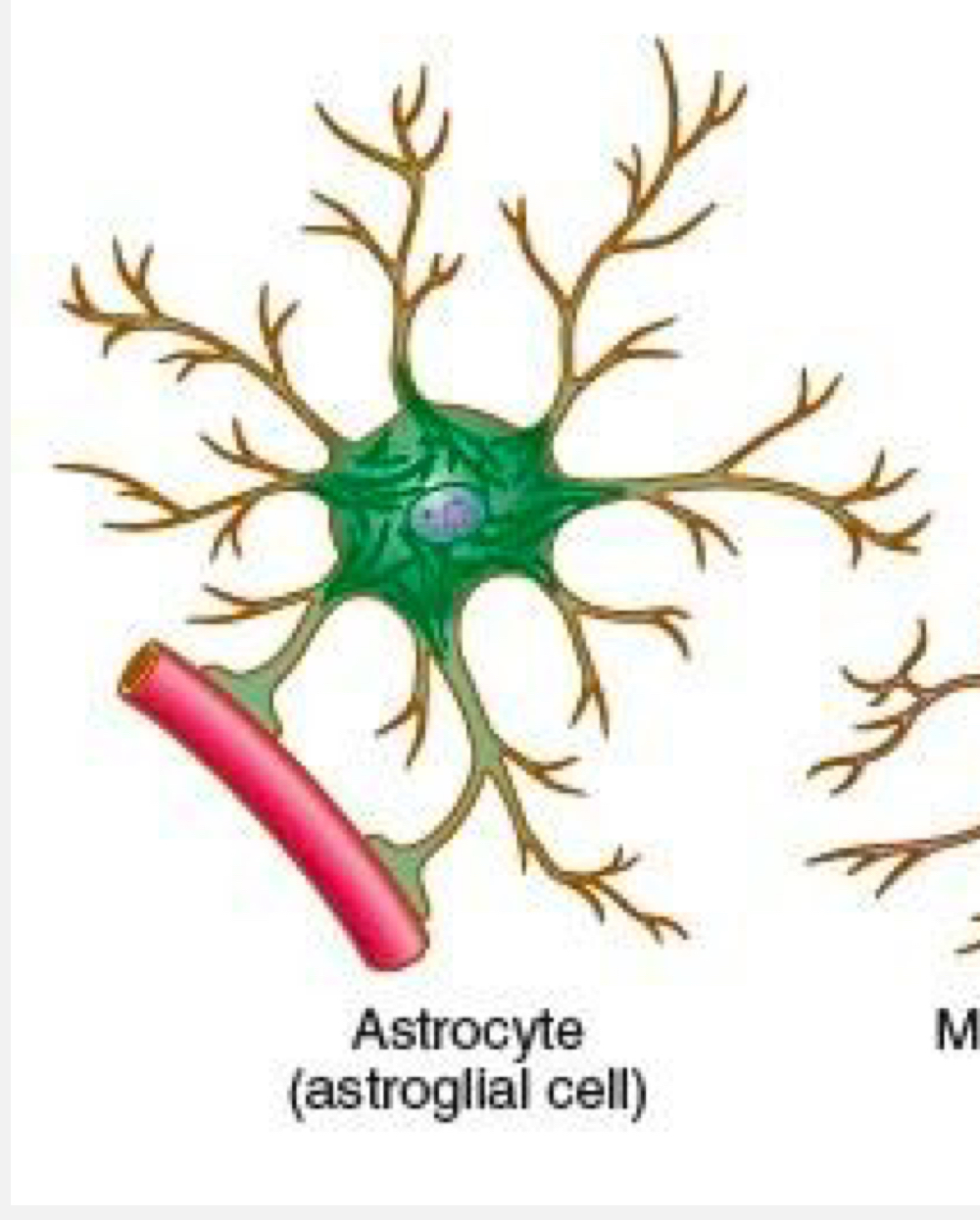
astrocytes
provide structural (BBB) n metabolic support
repair cells
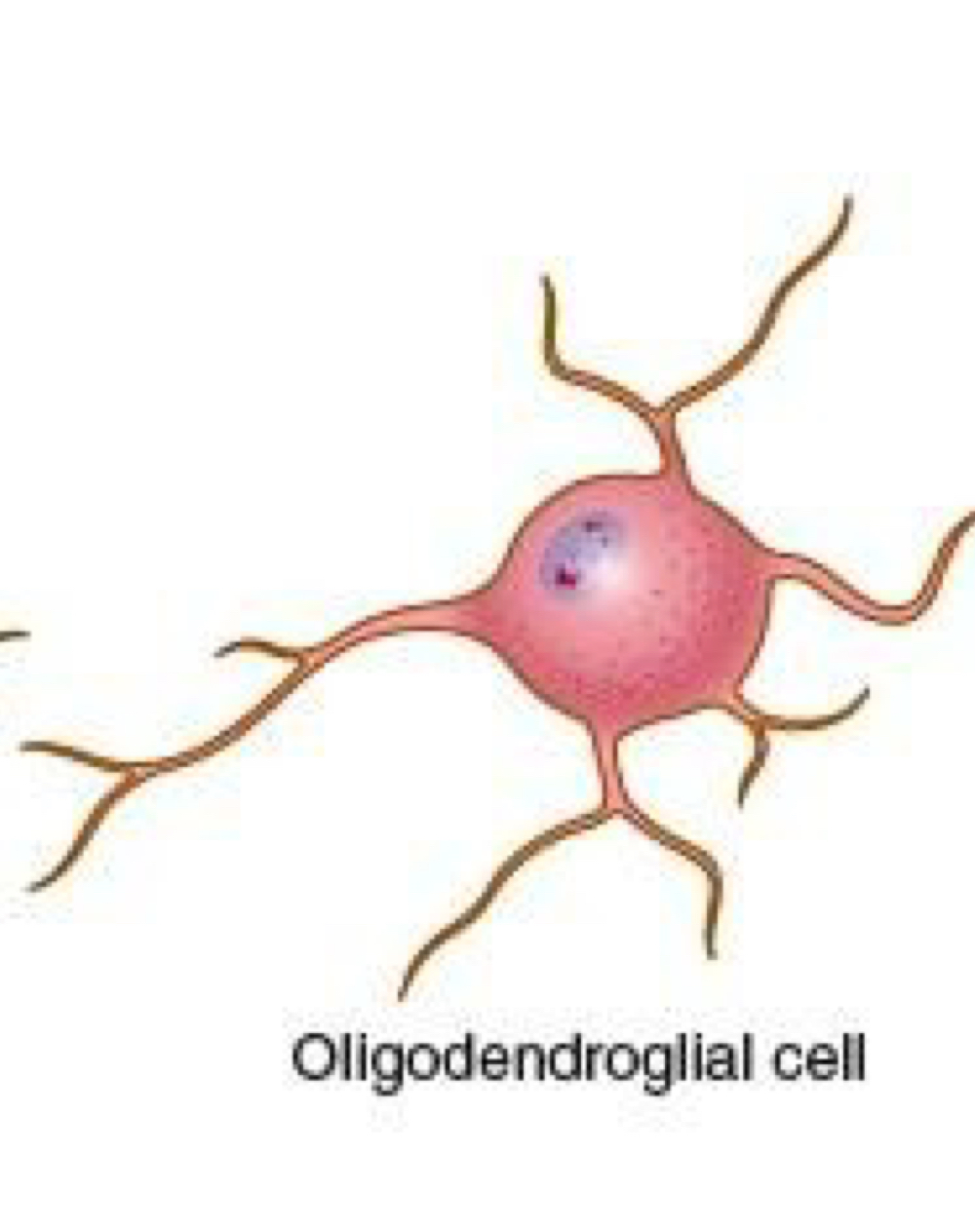
oligodendrocytes
myelinate axons in brain
insulate electrical impulses
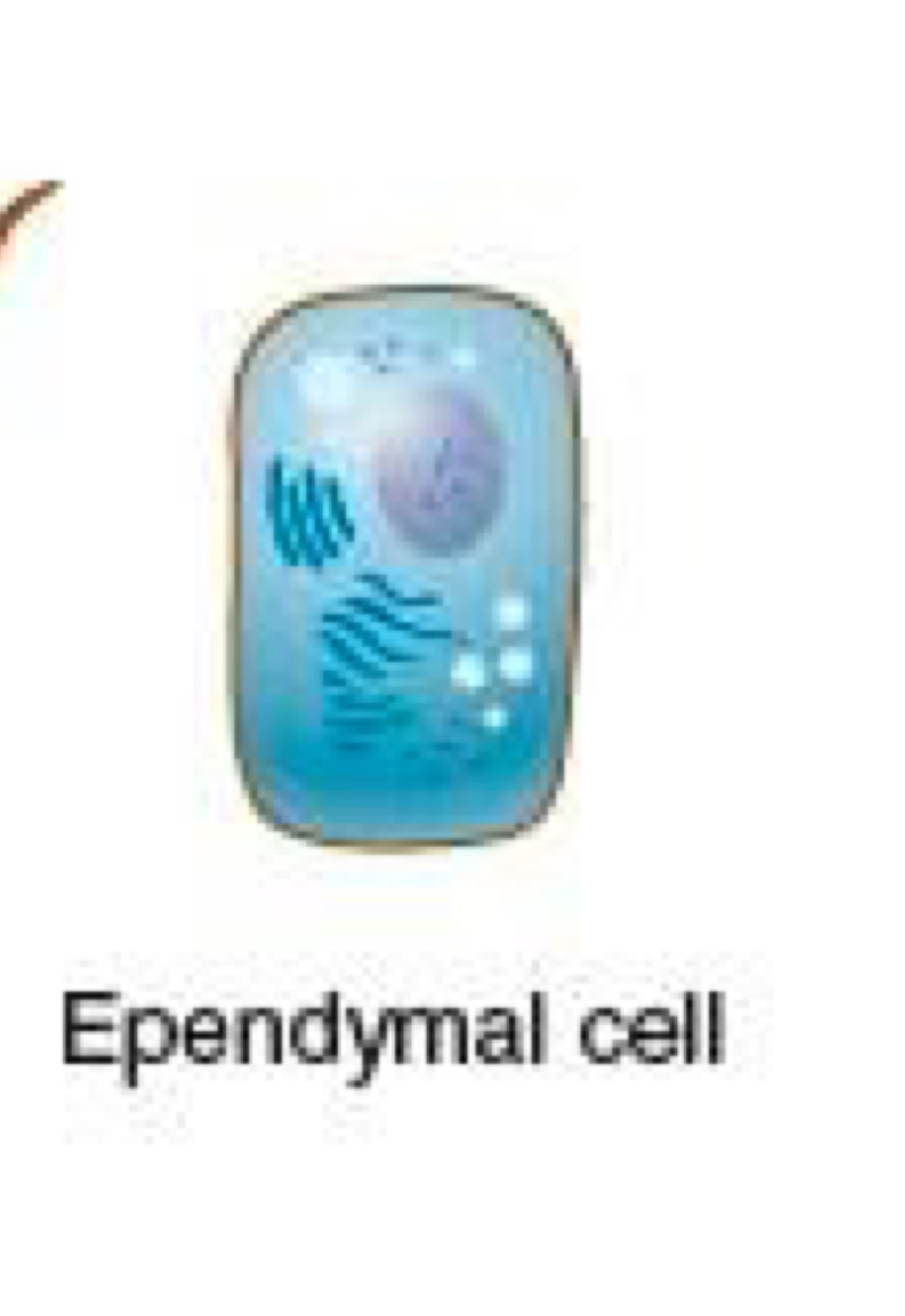
ependymal cells
make n move CSF
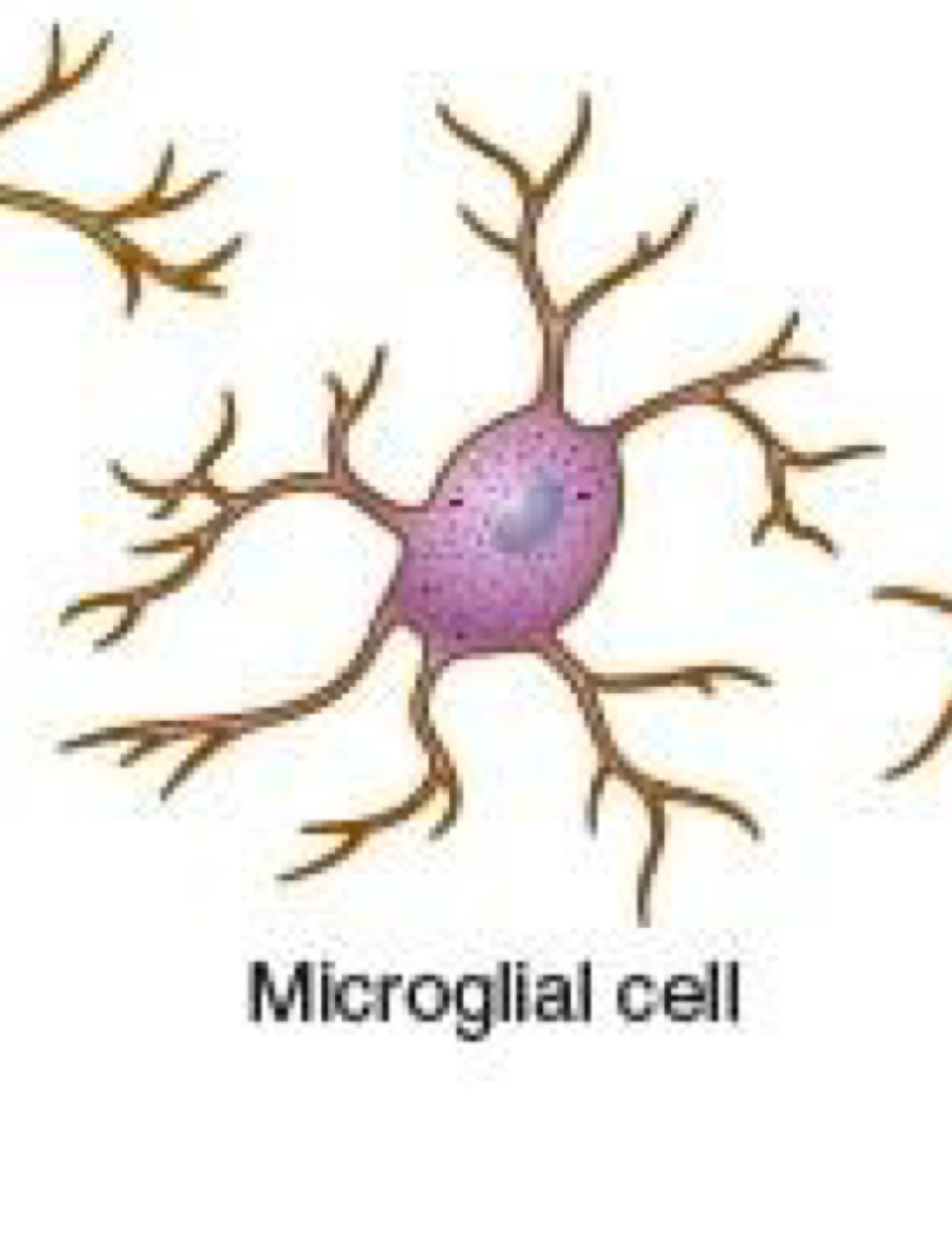
microglia
defense n immune response
PNS nerve cells
satellite cells
schwann cells
satellite cells
provide structural n metabolic support for cell body of neurons
schwann cells
myelinate axons in PNS
insulate electrical impulses
poli/o
gray
esthesi/o
sensation
perception
phas/o
speech
lex/o
word
phrase
my/o
mm
kines/o
movement
tax/o
order
coordination
encephal/o
brain
crani/o
cranium
skull
cephal/o
head
cerebr/o
cerebrum
cortic/o
cortex
thalam/o
thalamus
cerebell/o
cerebellum
pont/o
pons
mening/o , meningi/o
meninges
thec/o
sheath (referring to meninges)
dur/o
hard, dura mater
ventricul/o
ventricle
spin/o
spine
spondyl/o , vertebr/o
vertebra
myel/o
spinal cord
bone marrow
gangli/o , ganglion/o
ganglion
gli/o
glue
neroglia
olig/o
few
scanty
neur/o
nerve
radicul/o
nerve root
vag/o
vagus n
hemi-
half
epi-
on
following
hyper-
above
excessive
hypo-
below
deficient
para-
beside
poly-
many
much
quadri-
four
-phrenia
the mind
-phasia
speech
-kinesia , -kinesis , -kinetic
movement
-praxia
action
-sthenia
strength
alges/o
excessive sensitivity to pain
esthesi/o
nervous sensation
syncop/o
cut off
somn/o , somn/i
sleep
narc/o
stupor
sleep

