lecture 1.1 summary
 Studied by 0 people
 Call with Kai
 Learn
Learn Practice Test
 Spaced Repetition
 Match
Match Flashcards
 Knowt Play
1/7

There's no tags or description
Looks like no tags are added yet.
Name | Mastery | Learn | Test | Matching | Spaced | Call with Kai |
|---|
No study sessions yet.
8 Terms
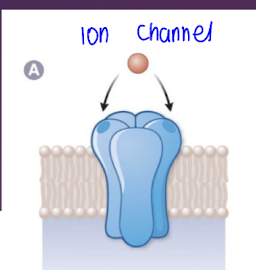
Ion channels
Mechanism: proteins embedded in cell membranes that form pores
examples: Sodium channels. Charged particles like sodium cannot cross lipid bilayers without help. Channels facilitate their passage
Therapeutic relevance: Modulating ion channels can alter cell function. For neurons, sodium channel activation leads to depolarization, which can be beneficial (cognition, wakefulness) or detrimental (seizures)
Types: Ligand-gated, voltage-gated
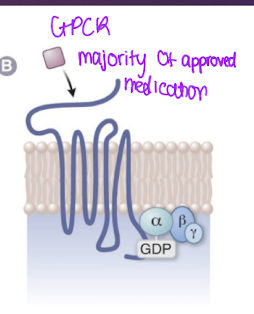
G Protein-Coupled Receptors (GPCRs)
Prevalence:The majority of currently approved drugs amplifies the signal
Mechanism: Involve a cascade(G protein activation) that amplifies the signal
G protein Subtypes:
G alpha S: stimulatory (eg. activates adenylyl cyclase)
G alpha I: inhibitory
G alpha Q: Activates different pathways
Significance: The cascade effect allows for single drug molecule to have a powerful and rapid impact on the cell.
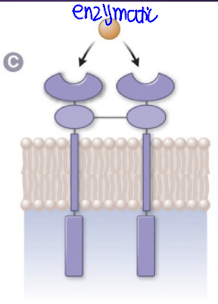
Enzymatic Receptors
Prevalence:Only about 3% of current drugs affect enzymatic targets
Types:
Receptor Tyrosine Kinase (RTKs):Ligand binding causes dimerization and activation of an enzyme that phosphorylates tyrosine amino acids
Phosphates Receptors
Kinase Function: kinases are enzymes that add phospahte groups to molecules
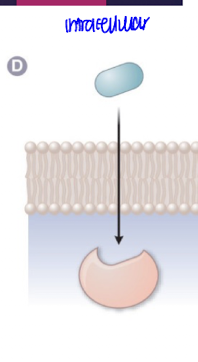
Intracellular receptors
Mechanism:Drugs must be lipophilic enough to cross the cell membrane to bind these receptors, which are located in the cytosol or nucleus
Outcome: Binding typically leads to changes in DNA transcription and the production of new proteins.
Examples: Steroid hormones like testosterone can affect muscle protein production.
ion channel picture
GPCR picture
enzymatic picture
intracellular picture
 Note
Note  Flashcards (46)