Aquatic Ent-- Week 8 Mating Systems
 Studied by 0 people
 Call Kai
 Learn
Learn Practice Test
 Spaced Repetition
 Match
Match Flashcards
 Knowt Play
1/22

There's no tags or description
Looks like no tags are added yet.
Name | Mastery | Learn | Test | Matching | Spaced | Call with Kai |
|---|
No analytics yet
Send a link to your students to track their progress
23 Terms
What are the 5 general ideas of mating systems?
Sexual Selection (Darwin 1871)
Bateman’s principle (1948)
Parental investment theory (Trivers 1972)
Handicap Principle (Zahavi & Zahavi 1997)
social selection (Roughgarden 2004)
Sexual selection— why do males have such elaborate behaviors and morphologies?
competition between males for females
Mate choice by females
Bateman’s principle— Why are eggs are a limiting resource and not sperm?
sperm in cheap; male fitness is limited by their ability to inseminate females
eggs are expensive— females fitness is limited by egg production
What is Parental Investment Theory?
the sex that invests more time, energy and resources in raising offspring = more selective when choosing a mate.
the sex with the lower parental involvement = compete more for mating opportunities.
What is the Handicap Principle?
Shows costly behaviors, displays; honest signals of male quality
What is social selection?
It differentiates between gender and sex
it accommodates multiple genders— some male damsel/dragon flies have different color morphs (territorial, female mimics)
What 2 things are included in swarming? What is the function of swarming?
swarm markers
Males— male dominated
Functions as mate selection and species identification
What is a territory? What can it cause? When can territories become dangerous?
territories are an oviposition site guarded by a male
Can cause aggression— circle fights, speed and agility competitions
They can become dangerous when both males are territorial (6%) or one is non-territorial (28%) → in Odonates
What are the two types of acoustic signals? How are they made? What do they mean?
Drumming in Plecoptera→ abdominal vibration on substrate; possible form of prezygotic isolation
Stridulation in waterboatman→ sound made from ‘pala’ on foretibia; males call and receptive females answer (a password)
What are hydrodynamic waves? Who causes them? And why?
Wave propogation on the surface
Hemiptera→ Gerridae and Belostomatidae cause this
Indicates receptivity; possibly a species identifier
What are pheromones for? Who uses them the most?
A species specific chemical/sent for mating, finding food, and warning
Diptera, Coleoptera, Trichoptera→ they have fluffy, thick antennae
What is different about odonate males? What are the steps in mating within odonates?
Males have 1 genitalia at the tip of their abdomen and a 2nd under Ab 2&3
Before mating, males transfer sperm to 2nd genitalia
Male holds female with grasping appendages (tandem)
Mating occurs when female loops tip of abdomen to males 2nd genitalia→ makes heart shape
What happens in sperm competition among Ebony Jewelwings (Calopteryx maculata)? What is the outcome?
males defend territories (non territorial males also present)
Males remove sperm from females after pervious matings→ last male advantage
Guarding the female is important for egg laying in Calopteryx (13min = 90-140 eggs guarded vs 2min= 15 eggs not guarded)
What are the 3 sexual conflicts in water striders?
Unnecessary Mating is costly to females
There is a benefit in resisting copulations
defense and counter-defense between males and females→ neither win
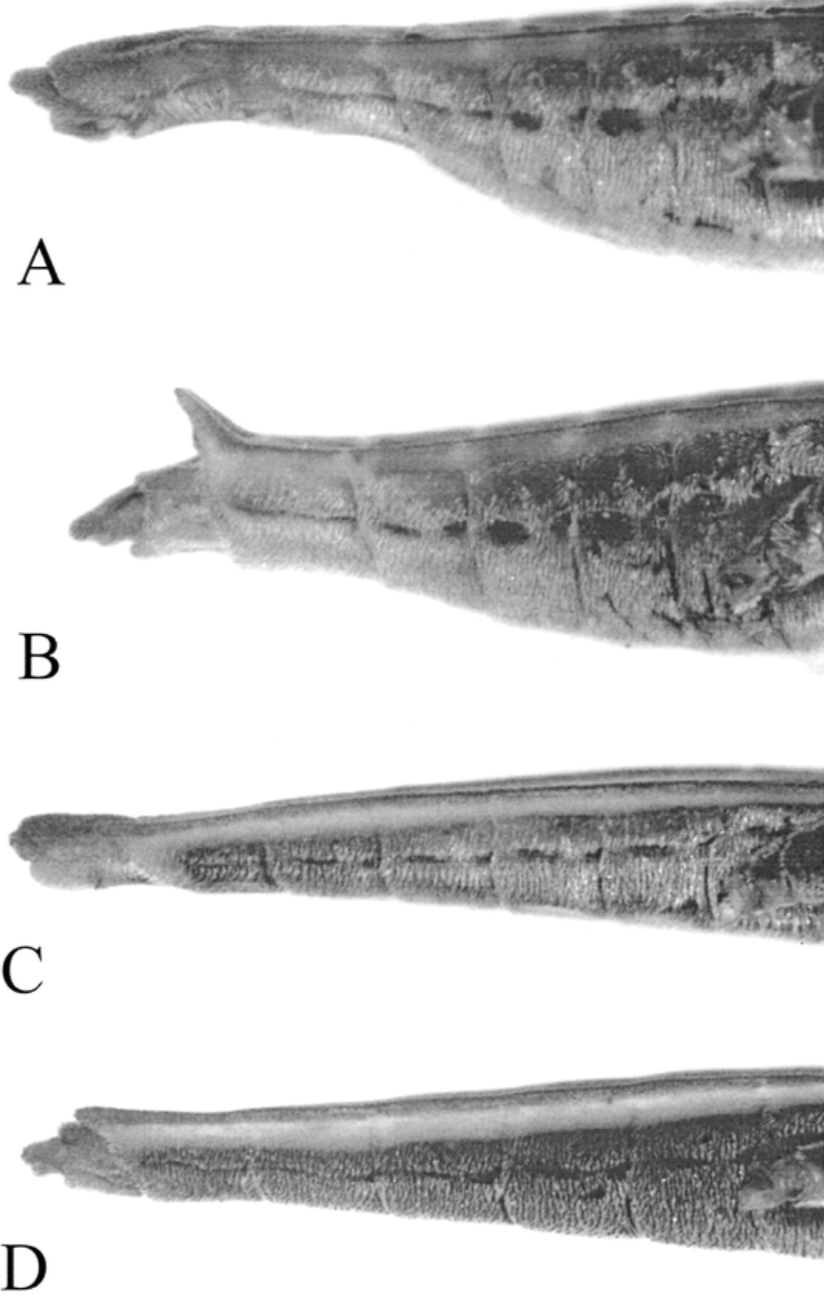
What trait has evolved in female water striders to lessen unwanted advances?
They have a little spine on their second to last abdominal segment that they can manipulate to push the male off.
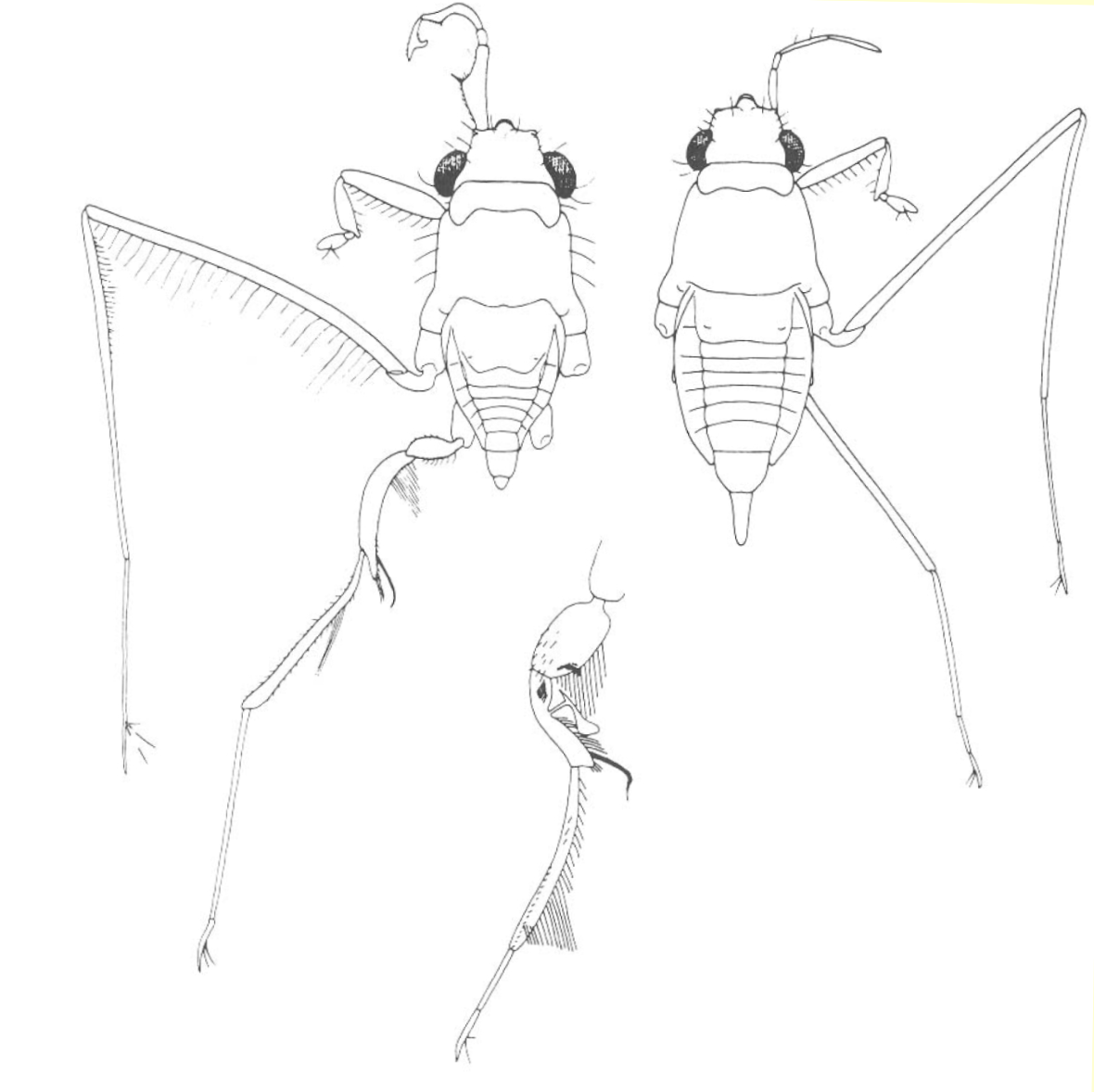
What trait has evolved in male water striders to combat sexual conflict?
Males have hooks and many hairs on their hind legs, and hooks on their antenna to help grab onto females
What is the evolution of our understanding of back-brooding in Giant Water Bugs (4)?
1899— We assumed females carried the eggs (traditional parenting)
1899— “Male chafes under burden” hypothesis
1906— Idea of Forced labor & care
1976— Host Manipulation Hypothesis (HMH) is at odds with the modern selection theory
How is paternity assurance shown in Giant Water Bugs? (4)
males carry eggs; invest energy in care
Females store sperm (up to 3 months)
Males insist on repeated couplings
~100% sperm priority— most recent sperm will fertilize eggs
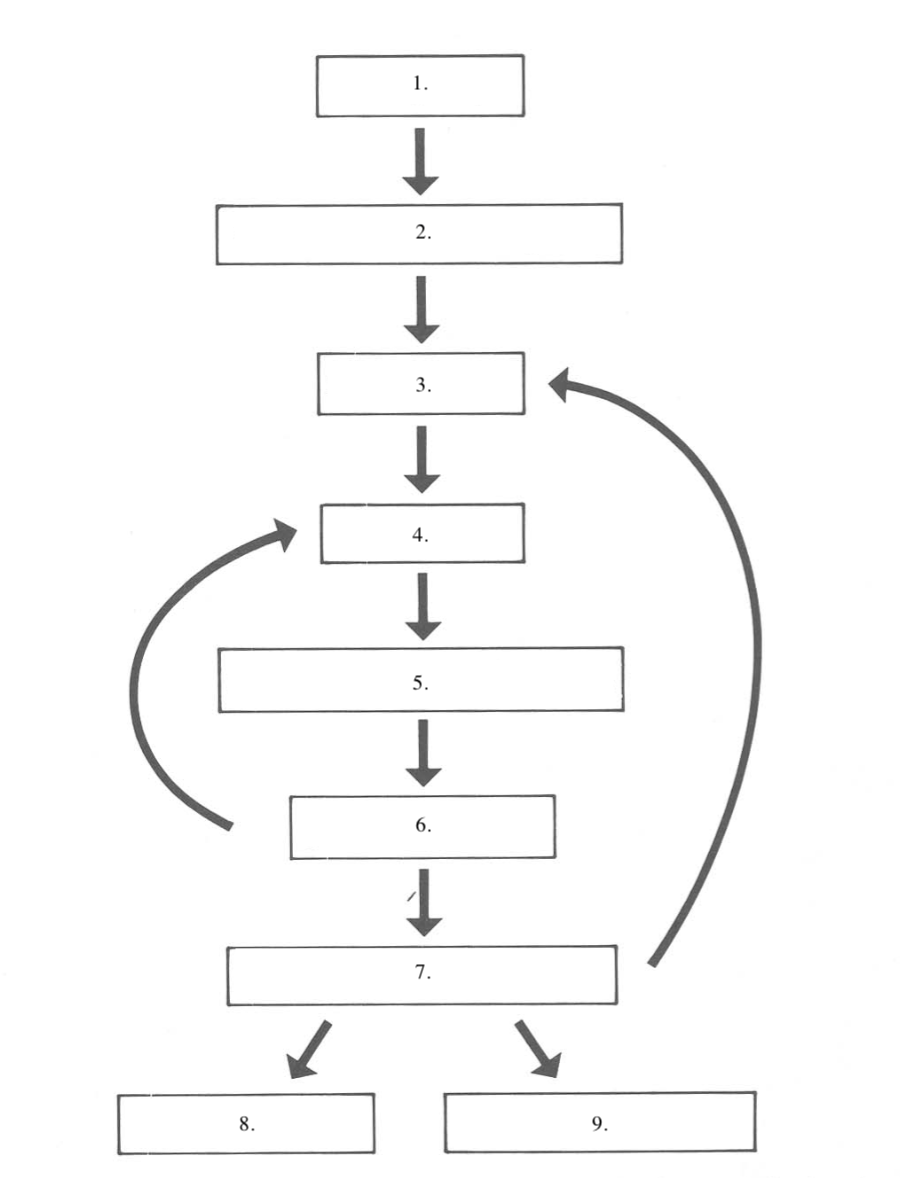
What is the order of copulating activities in Giant Water Bugs?
Male makes a pumping motion
female tries to oviposit
male pumps again
copulation happens
male taps females back
pair uncouples
female lays ~2 eggs
female leaves
male broods eggs
What are the 2 kinds of parental care?
Back brooding— keeping eggs on back
Emergent brooding— laying eggs on vegetation & guarding them
Why did back-brooding evolve in giant water bugs? (3)
Large body size— big prey (frogs, fish, birds)
Big eggs= big problems— O2 diffuses slower in water; eggs have large SA= more need for diffusion
eggs dry out easily
How did water bugs evolve to be bigger? What are the constraints?
growing bigger between molts— Dyar’s Rule limits growth by molts to 1.4 times
add more molts— Hemiptera are fixed at 5 molts
Bigger egg size— head start on being big→ able to grow bigger; big eggs create diffusion issues
Why do males care for the eggs and not females?
Females can’t oviposit on themselves?— No, emergent brooding evolved first; either sex can provide parental care
Greater cost of parental care by females?— this could be true; it takes a lot of energy to lay eggs, and females produce eggs multiple times
Males are better egg defenders?— possible, males could be more readily available to guard eggs and have the energy for it.
 Note
Note  Flashcards (81)