Baroque Art Unit 3 Study Guide
 Studied by 6 people
 Call Kai
 Learn
Learn Practice Test
 Spaced Repetition
 Match
Match Flashcards
 Knowt Play
1/25

There's no tags or description
Looks like no tags are added yet.
Name | Mastery | Learn | Test | Matching | Spaced | Call with Kai |
|---|
No analytics yet
Send a link to your students to track their progress
26 Terms
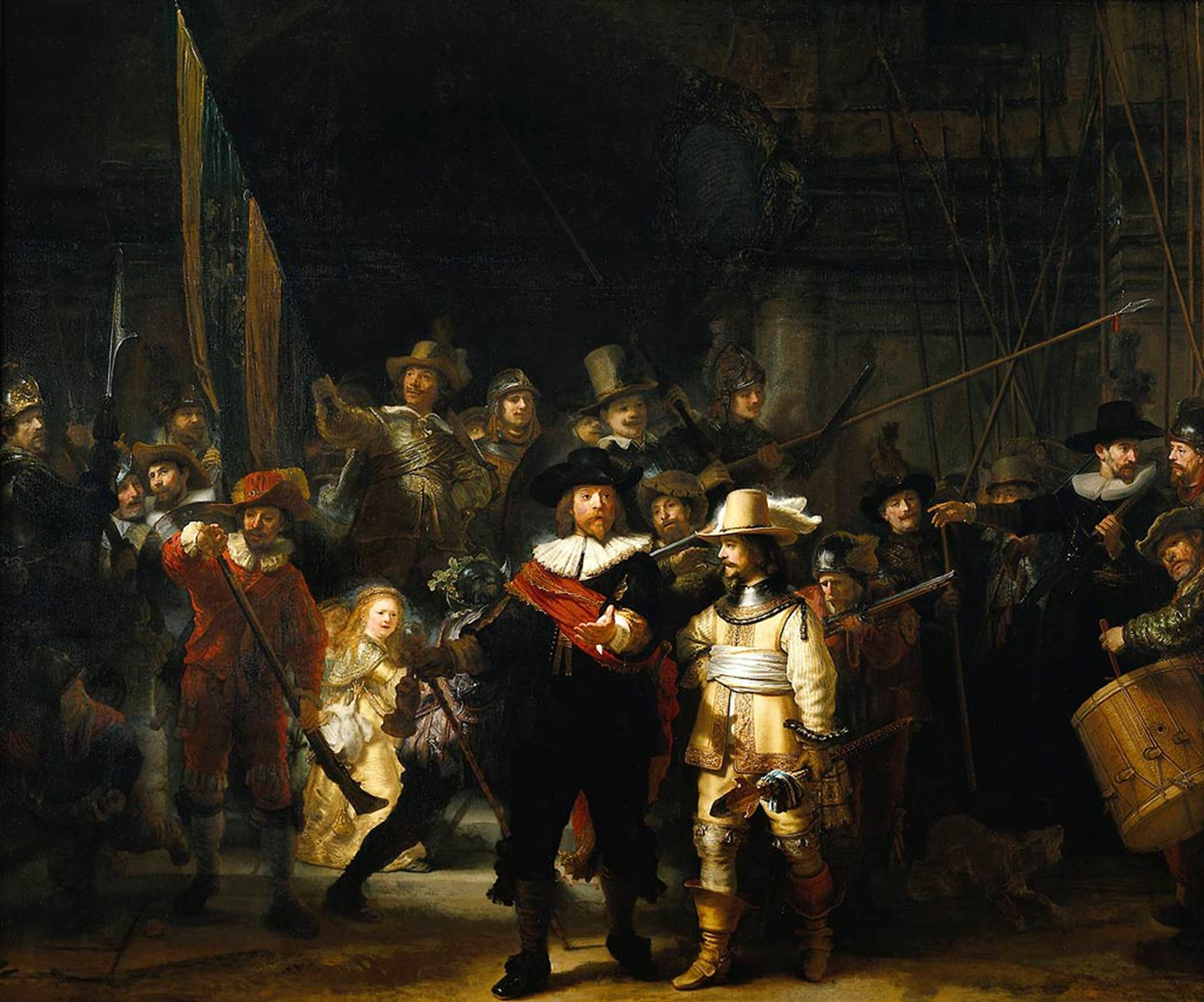
Rembrandt, Night Watch, 1642
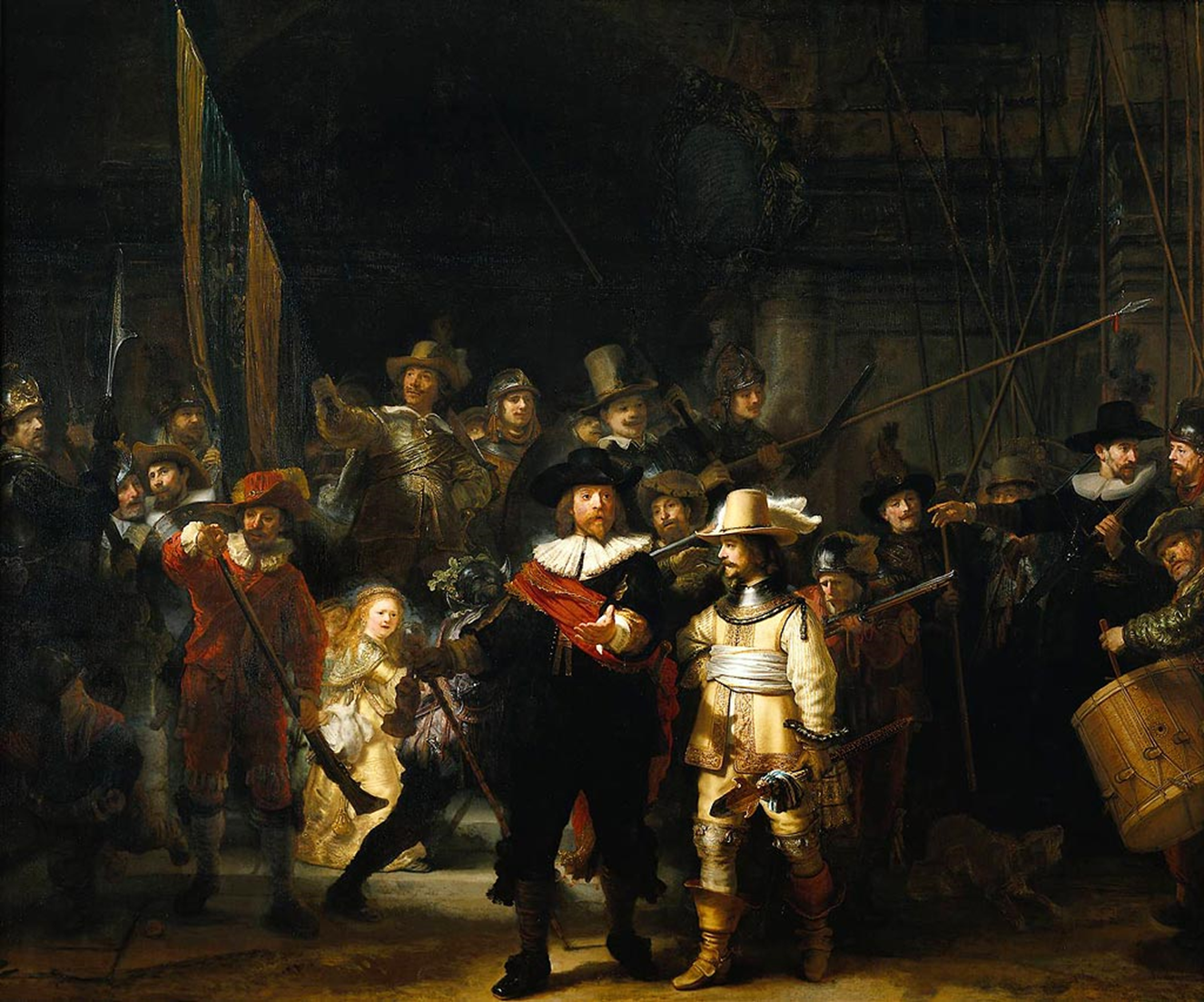
“The Night Watch” is unusual within the long tradition of Dutch civic-guard portraiture because it breaks almost every convention of the genre. Rather than depicting a militia company in a static, evenly lit, front-facing group, Rembrandt transforms the scene into a dramatic, narrative moment full of movement, tension, and theatrical lighting. He arranges the men not as a horizontal row of equal participants but as an active procession, using Baroque dynamism, deep chiaroscuro, and diagonal composition to suggest a company preparing to march. This injects a sense of urgency, energy, and storytelling rarely seen in Dutch group portraits, which typically favored calm display rather than action.
Points to Remember:
- Uses chiaroscuro
- Rembrandt painting
Rembrandt, Night Watch, 1642
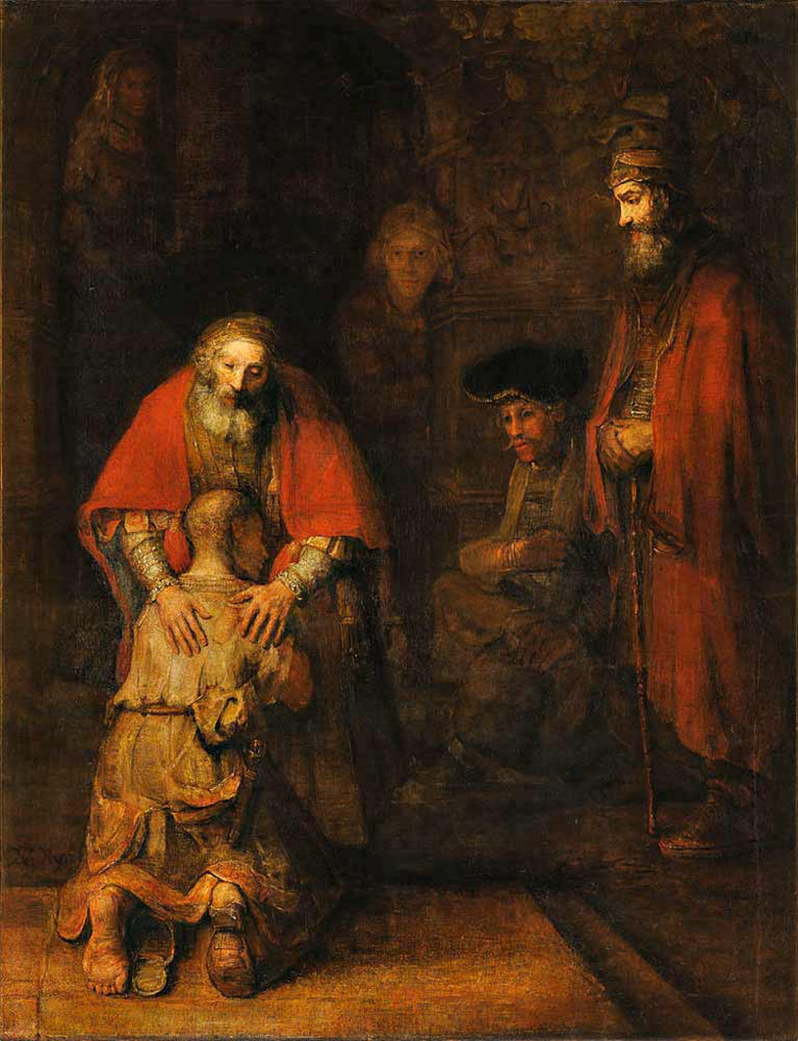
Rembrandt, Return of the Prodigal Son, 1668
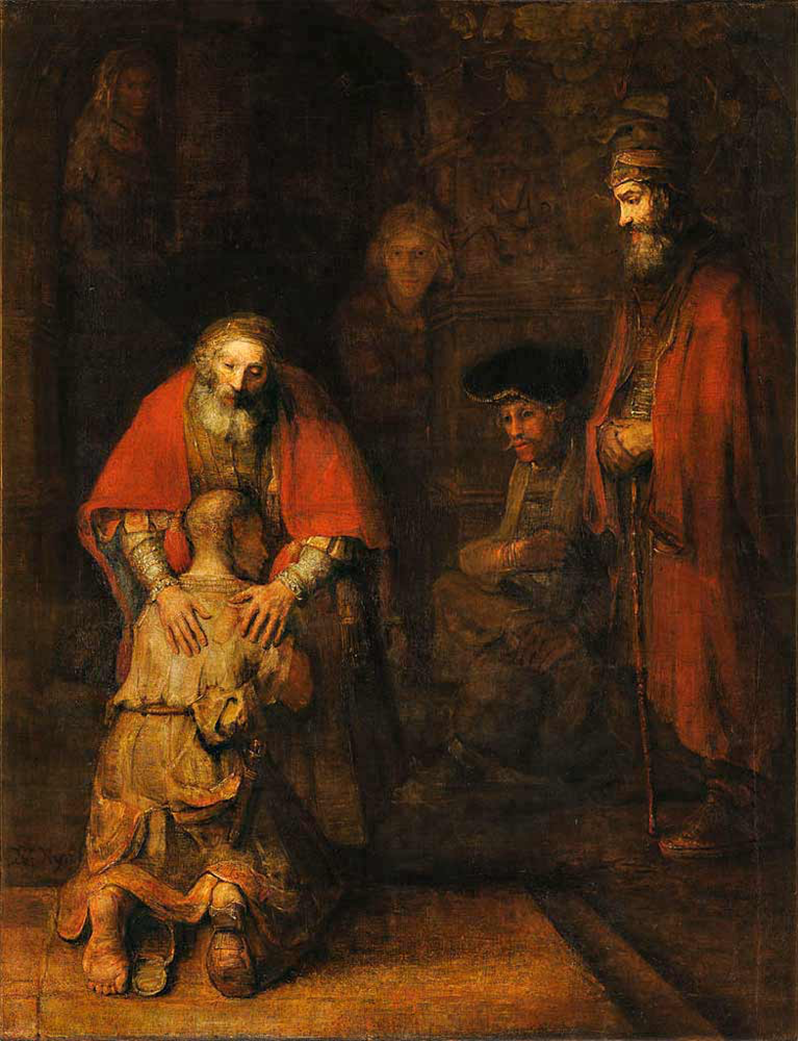
Impasto
Definition: The process or technique of laying on paint or pigment thickly so that it stands out from a surface.
Rembrandt, Return of the Prodigal Son, 1668
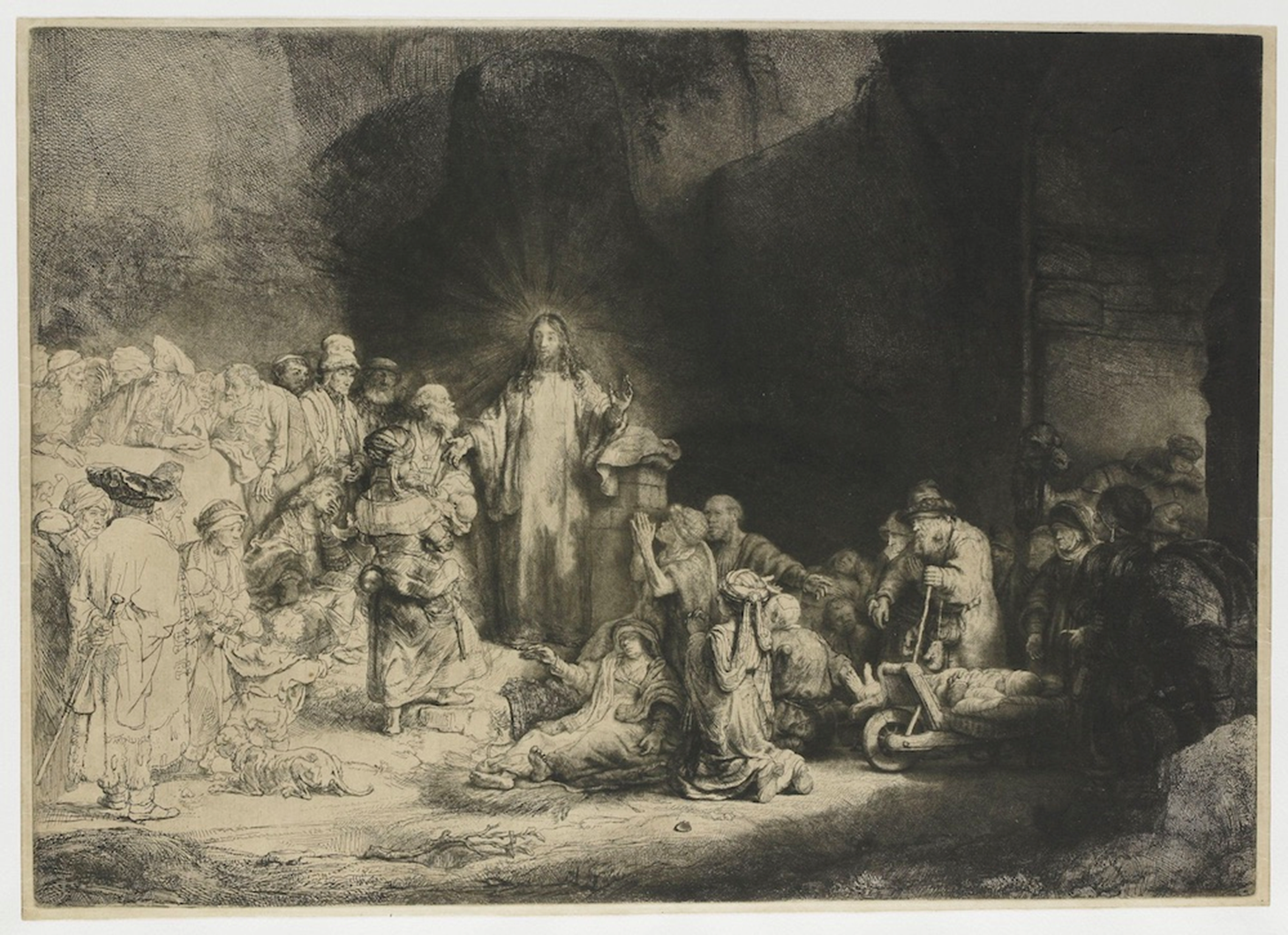
Rembrandt, The Hundred Guilder Print, 1649 (etching & drypoint)
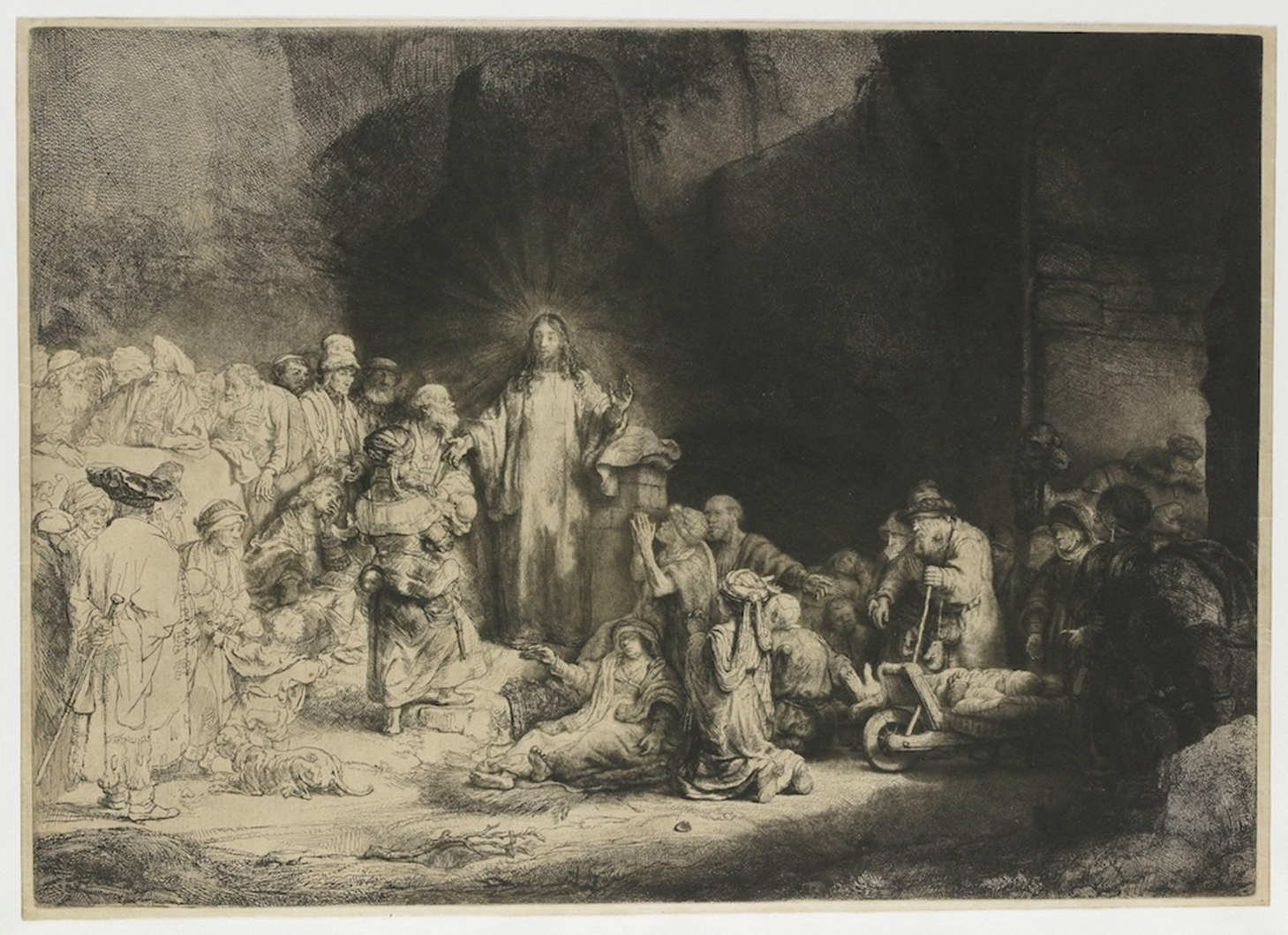
Etching
Definition: An intaglio printmaking technique where a design is incised into a metal plate using an acid-resistant ground and acid.
Drypoint
Definition: An intaglio printmaking technique where an image is incised into a plate with a sharp, needle-like tool.
Sub-Definition (Intaglio): A printmaking technique and sculpture method where the design is incised, cut, or engraved into a surface, such as a metal plate or stone.
Rembrandt approached printmaking as an experimental, improvisational art, not a mechanical reproductive craft. Unlike most of his contemporaries, who treated prints as polished, uniform products, Rembrandt treated the printing plate the way he treated a painted surface: as a site for revision, risk, and expressive mark-making. He constantly reworked his plates, issued multiple states, varied inking and wiping from impression to impression, and embraced the unpredictability of the medium. For him, printmaking was a laboratory of visual effects rather than a tool for consistency.
Points to Remember:
- Combining etching and drypoint for dramatic contrasts
He used etched lines for sharp detail and drypoint burr for dark, atmospheric passages, enabling deep blacks, diffused shadows, and soft textures—effects unique in Northern printmaking.
- Varying inking and wiping (“surface tone”)
By leaving more or less ink on the plate’s surface, Rembrandt produced impressions ranging from bright and crisp to smoky and atmospheric. Each print could look different, turning the printing process itself into an expressive tool.
-Reworking plates across multiple “states”
Rembrandt would return to a plate months or even years later, changing backgrounds, altering light, adding figures, or deepening shadows. These revisions created evolving compositions and intensified the drama, making each state a new interpretation rather than a corrected mistake.
Rembrandt, The Hundred Guilder Print, 1649 (etching & drypoint)
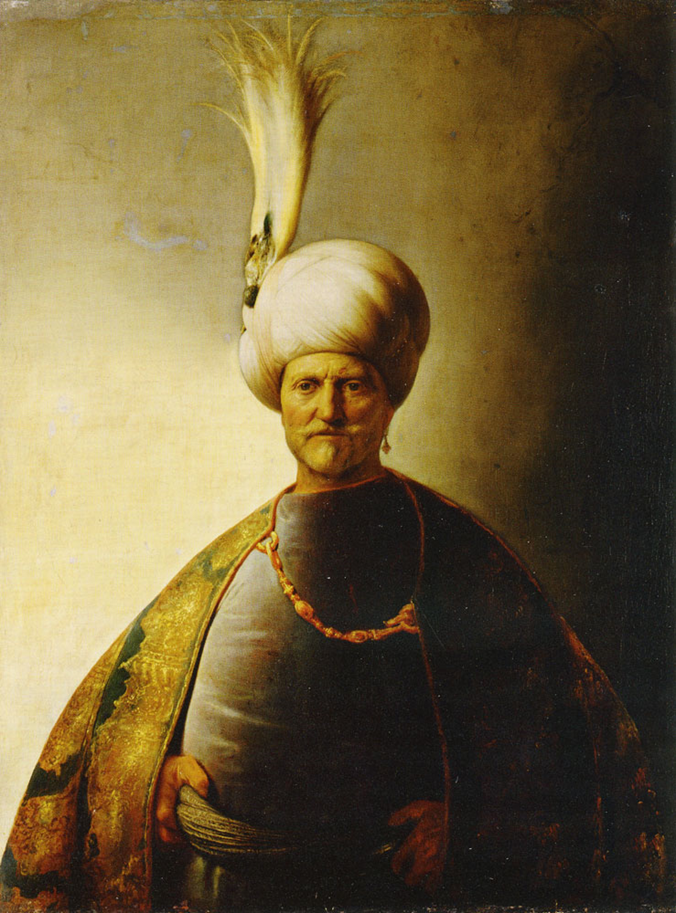
Jan Lievens: Man in Oriental Costume (1630)
Vanitas
Definition: A genre of still-life painting, popular in the 17th-century Netherlands, that uses symbolic objects to remind viewers of the transience of life, the futility of earthly pleasures, and the certainty of death.
A tronie was a type of seventeenth-century Dutch and Flemish painting that depicted a head or bust-length figure meant to represent a type, expression, or character, rather than a specific, identifiable individual. Tronies often show exaggerated facial expressions, unusual costumes, or “exotic” dress (turbans, armor, luxurious fabrics), and they explore lighting, physiognomy, and painterly technique without the constraints of portrait likeness.
Points to Remember:
Tronie Uses:
- As artistic exercises or demonstrations of skill
- As marketable studio products
- As models for larger narrative or history paintings
- As imaginative or “exotic” costume studies
Jan Lievens: Man in Oriental Costume (1630)

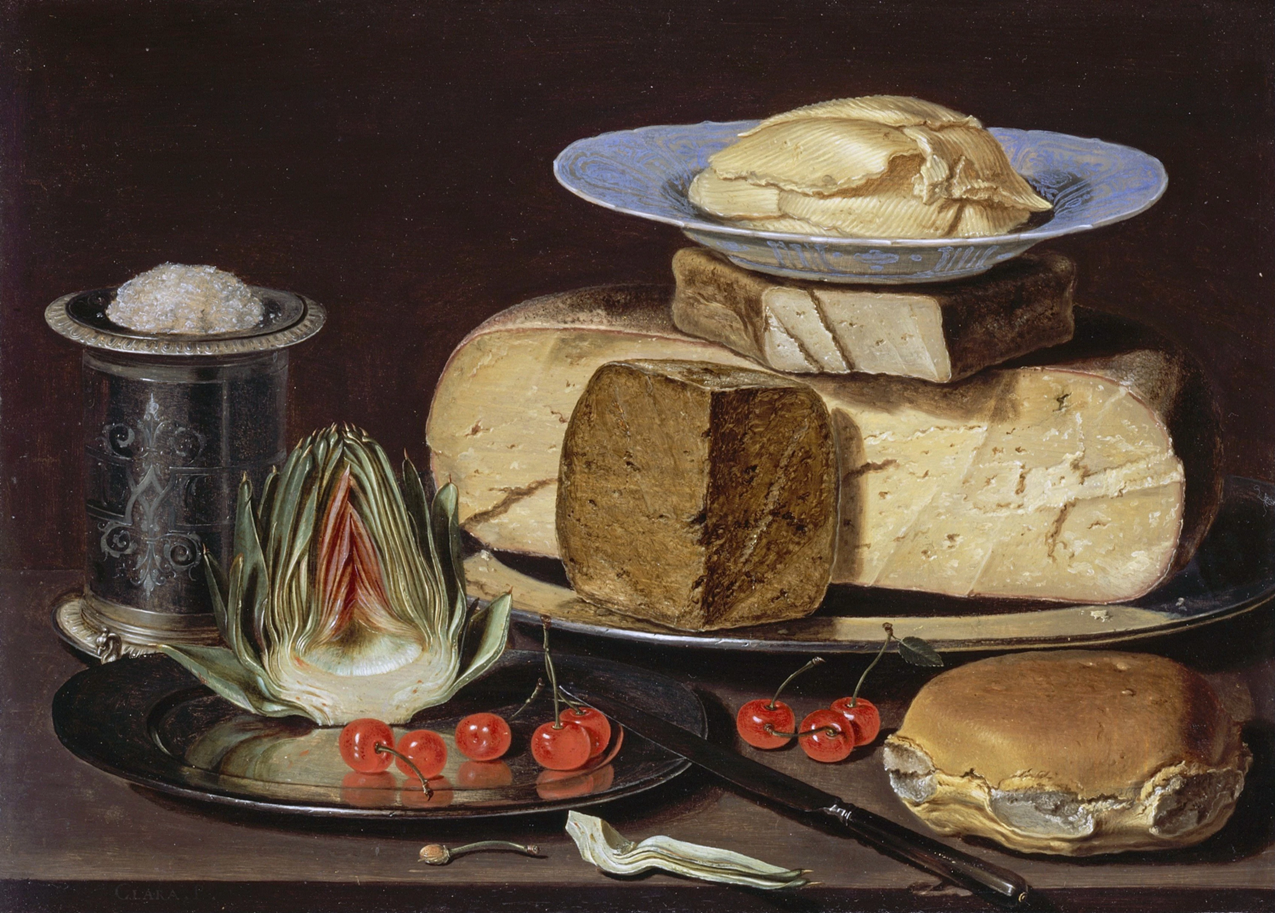
Clara Peeters, Still Life with Cheese, Artichoke, and Cherries, 1625
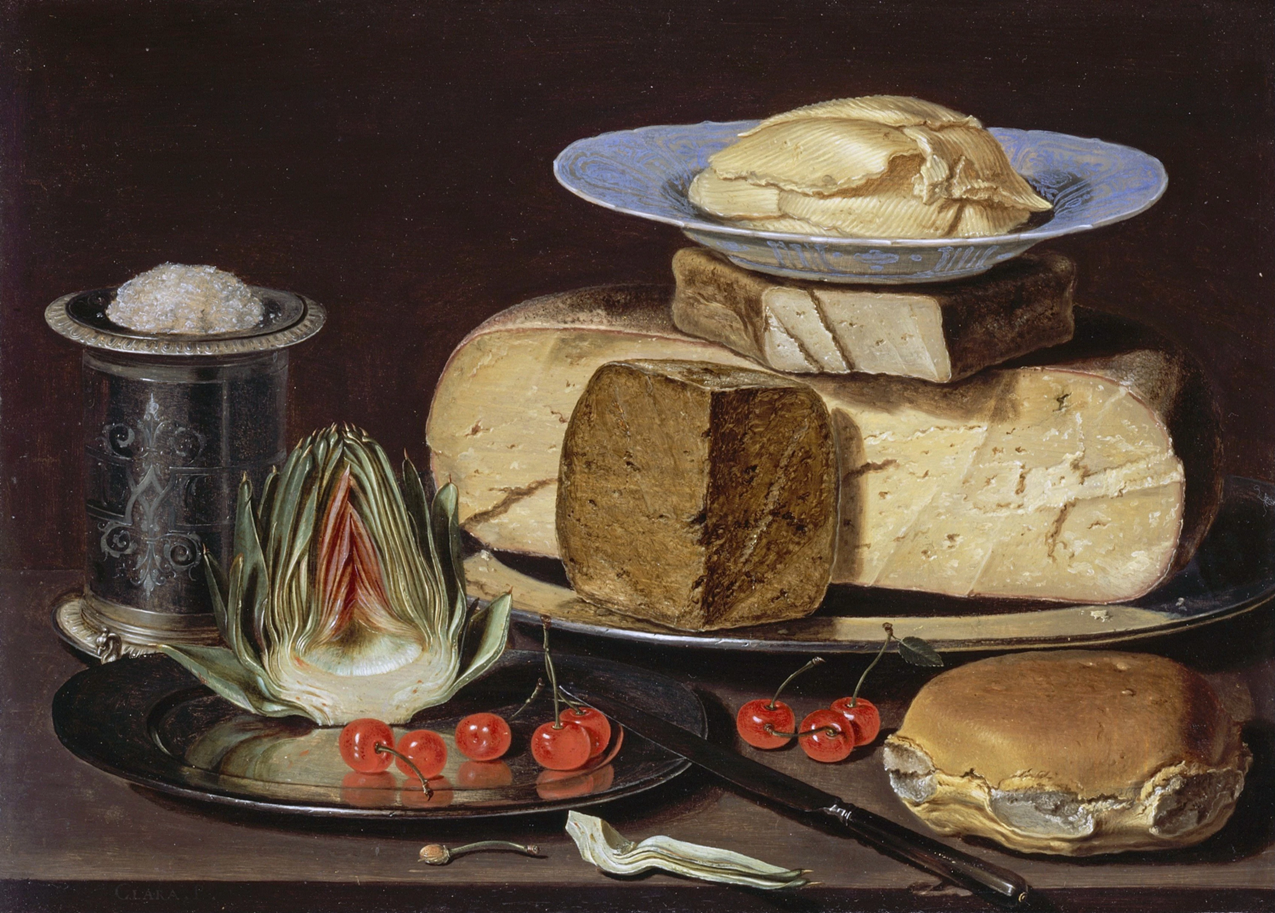
Breakfast Piece
Definition: a type of Dutch still life painting that depicts a simple, early meal with items like bread, cheese, or fish.
Clara Peeters, Still Life with Cheese, Artichoke, and Cherries, 1625
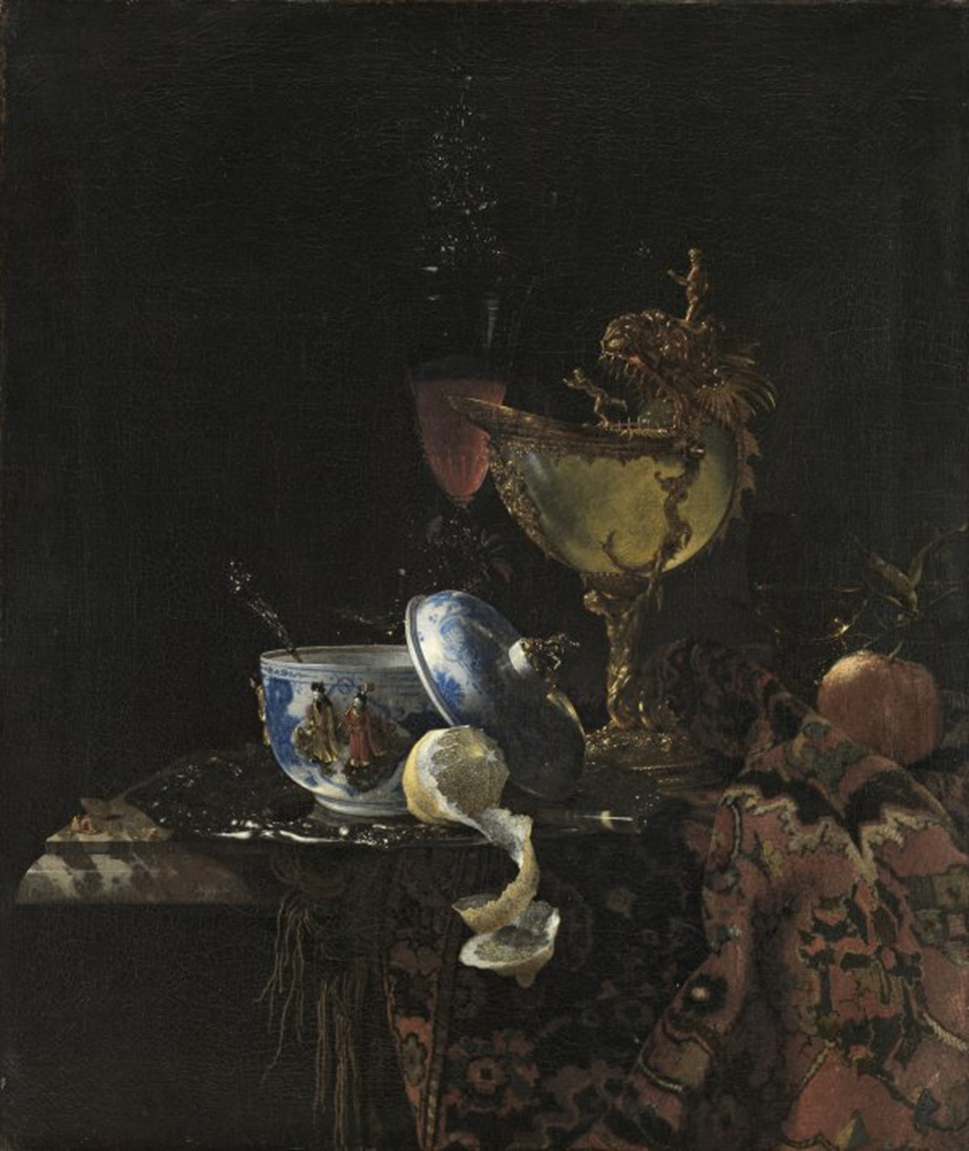
Willem Kalf: Still Life with Nautilus Cup (circa 1662)
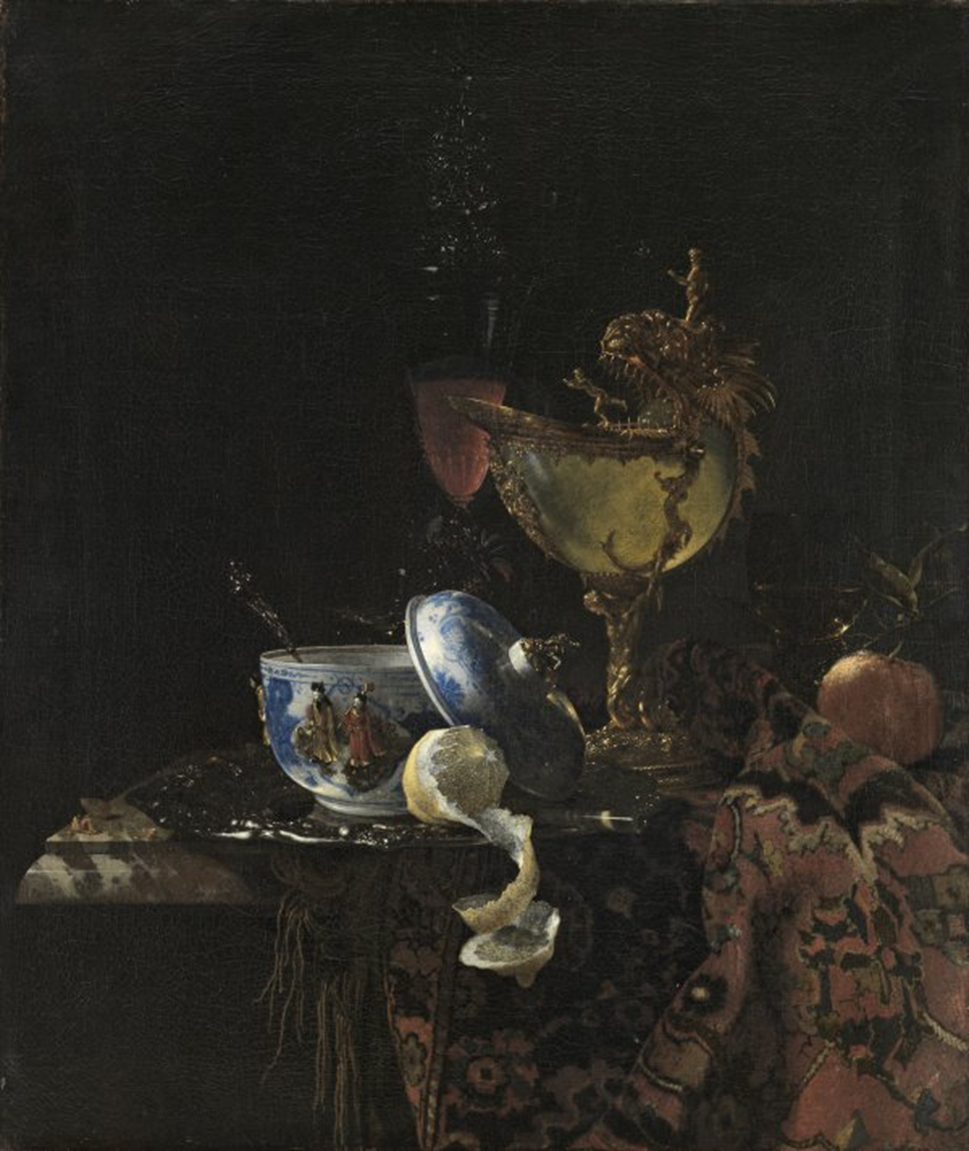
Pronk
Definition: the Dutch term for a lavish, ostentatious still life that flourished in the mid- to late 17th century.
Willem Kalf: Still Life with Nautilus Cup (circa 1662)
Hoogstraten, Trompe-l’oeil Still-Life, 1666
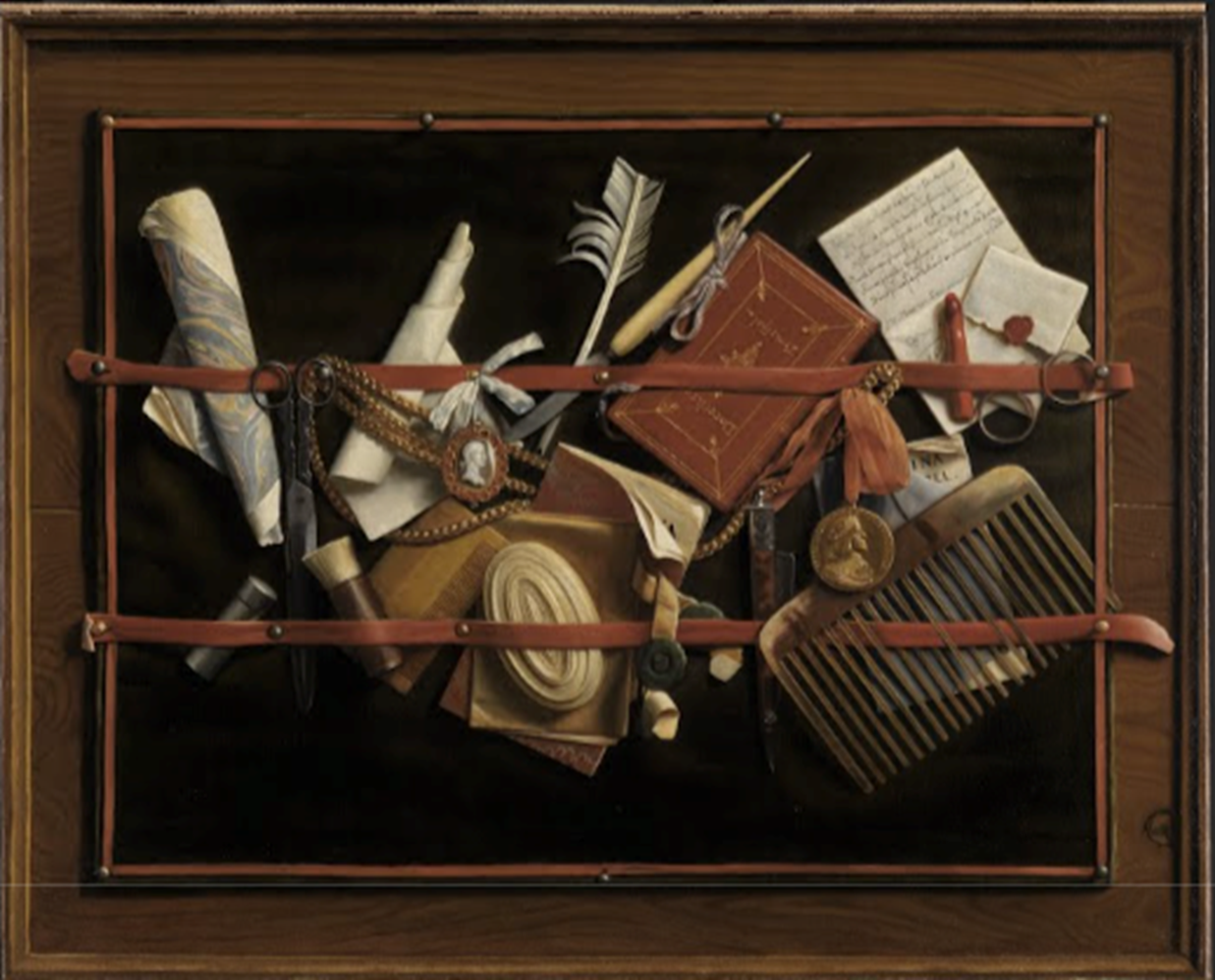
Trompe-l’oeil
Definition: An art technique creating the illusion of three-dimensional objects on a two-dimensional surface.
By creating paintings that could visually “defeat” viewers—making them momentarily mistake paint for reality—he aligned himself with the highest aims of art theory: to rival nature, to demonstrate mastery of optical knowledge, and to elevate painting to a learned profession. Hoogstraten’s illusionistic wall boards typically feature portraits of Emperor Ferdinand III. This reference to the Holy Roman Emperor reflects Hoogstraten’s time in Vienna and his desire to signal association with powerful patrons. Including the emperor’s image reinforces his aspirations toward courtly recognition and international status. This includes displaying official documents, seals and letters, as well as ribbons, quills, folded papers and hanging print sheets.
Points to Remember:
- An internationally connected court artist
- A learned theorist aligned with elite intellectual culture
- A technically brilliant creator whose skills transcend simple representation
- A painter worthy of prestige comparable to the aristocrats and rulers whose objects populate his compositions
Hoogstraten, Trompe-l’oeil Still-Life, 1666

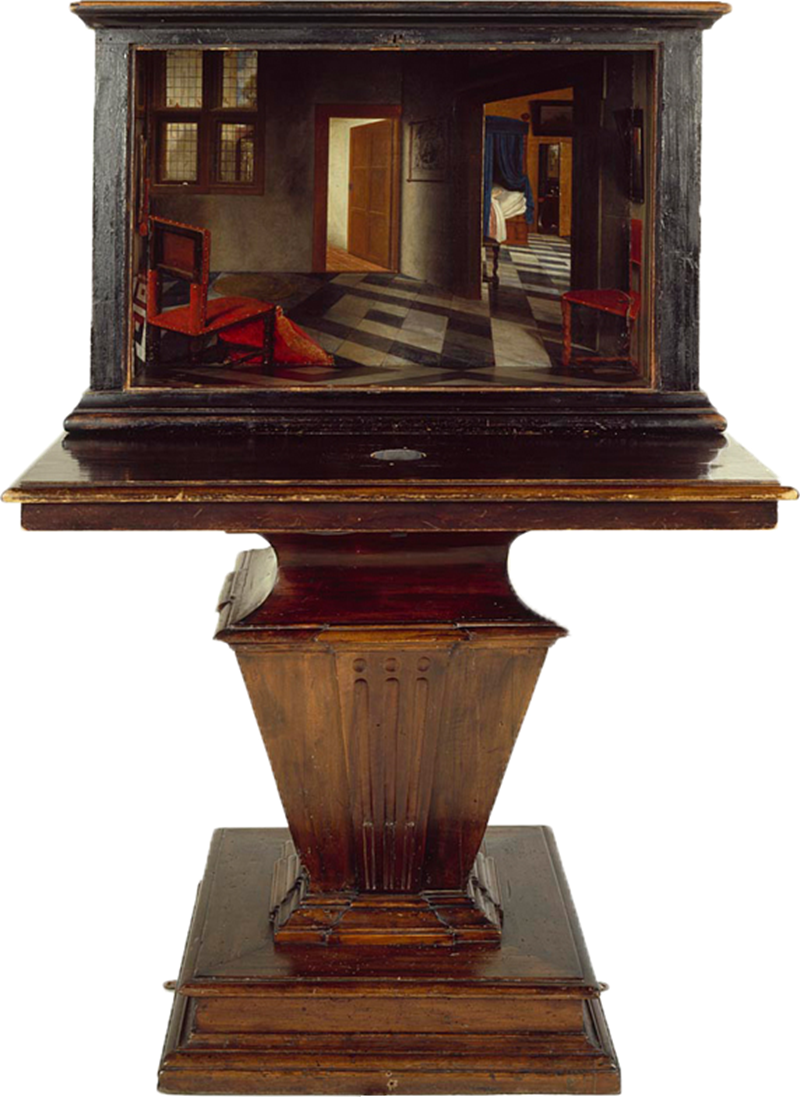
Hoogstraten, Perspective Box,1660

Trompe-l’oeil
Definition: An art technique creating the illusion of three-dimensional objects on a two-dimensional surface.
Mastery of Perspective and Visual Deception,
Engagement with Contemporary Optical Science,
Experiments with Light and Reflection,
Optical Illusion as Proof of Artistic Genius
The Perspective Box
Points to Remember:
- He saw painting as a discipline grounded in optics, perspective, and visual psychology.
Hoogstraten, Perspective Box,1660
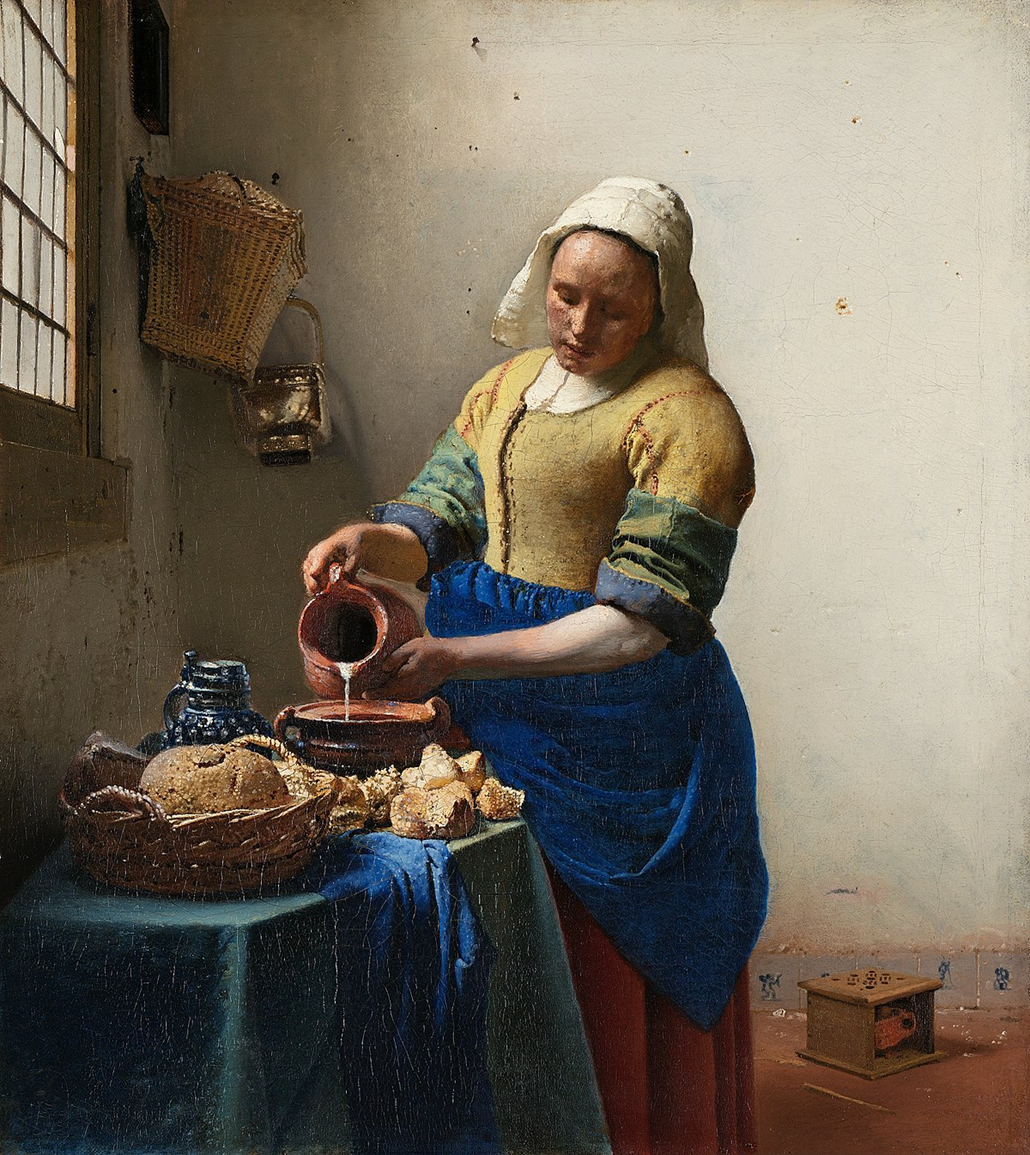
Vermeer, The Milkmaid, 1660
Genre Painting
Definition: a style of painting depicting scenes from ordinary life, especially domestic situations. Genre painting is associated particularly with 17th-century Dutch and Flemish artists.
Camera Obscura
Definition: A darkened room or box with a small hole or lens that projects an inverted image of its surroundings onto a surface inside.
Vermeer diverges from typical Dutch genre painting through his serene stillness, optical precision, compositional abstraction, luxurious materials, and ambiguous meanings. Economically, he was highly unusual—sustained by a single major patron, shielded from the competitive market, producing slowly and privately, and therefore leaving behind a small but extraordinarily refined body of work.
Points to Remember:
Genre Divergence:
- Unusual Stillness and Psychological Depth
- Abstract, Geometric Composition
- Exceptional Use of Light and Color
- Ambiguous Iconography
- Slower, More Meticulous Working Method
Market Relations:
- He Did Not Rely on Open-Market Sales (Due to having a patron)
- He Worked Almost Like a Court or Household Artist
- High Cost of Materials, Slow Production
- His Art Was Not Widely Known or Circulated in His Lifetime
Vermeer, The Milkmaid, 1660
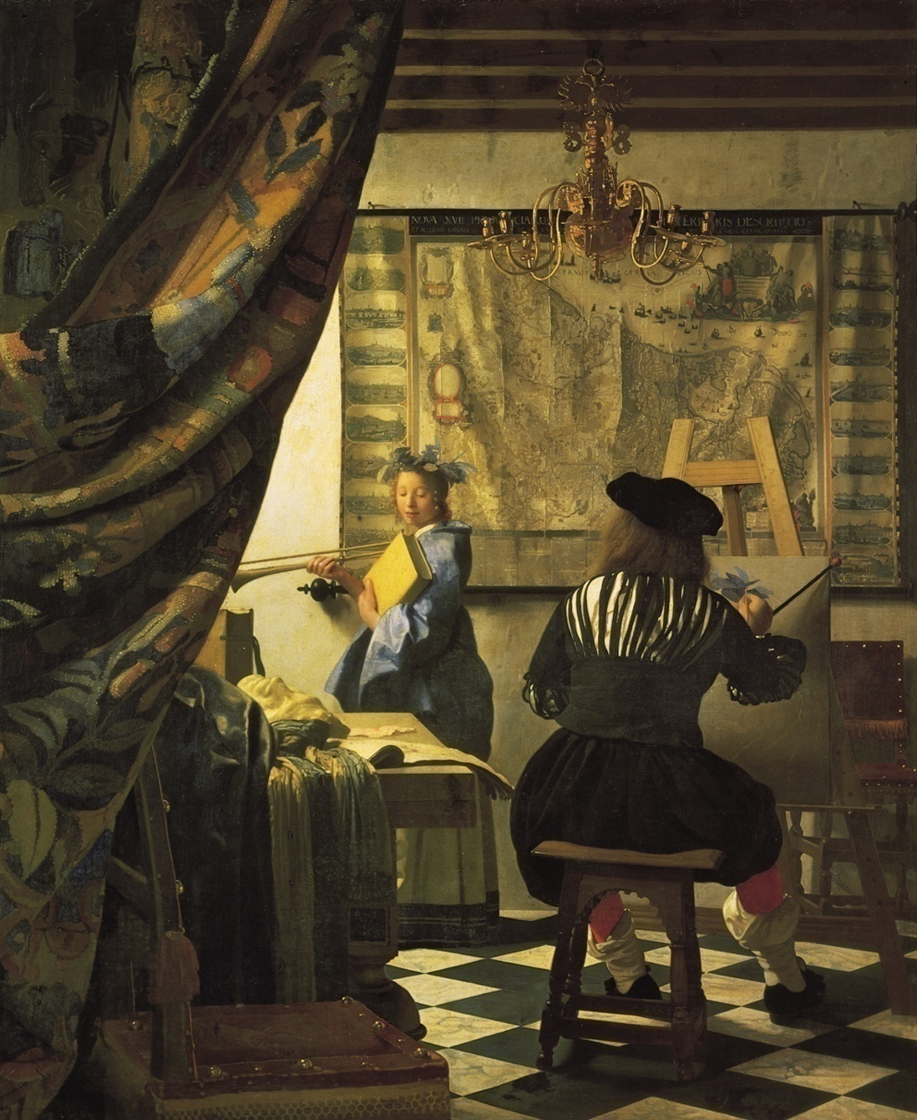
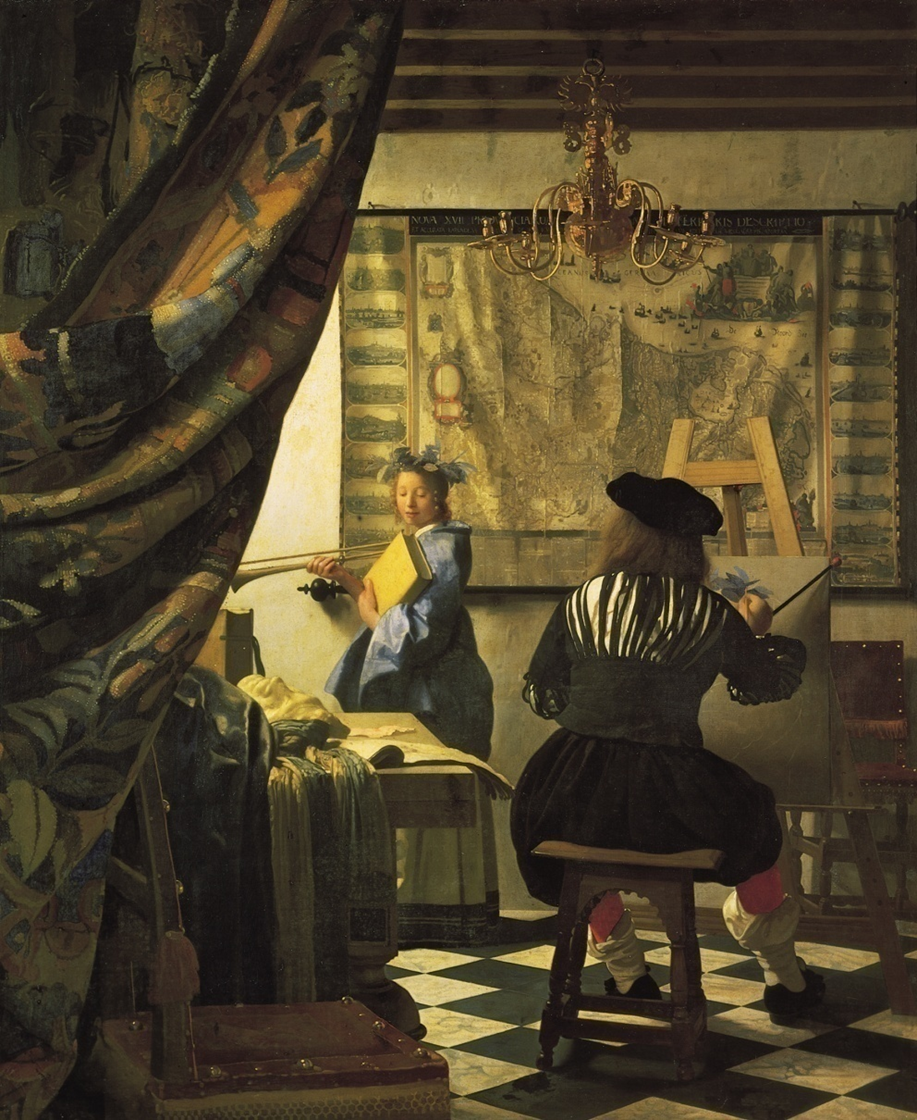
Vermeer, The Art of Painting (1666)
Genre Painting
Definition: a style of painting depicting scenes from ordinary life, especially domestic situations. Genre painting is associated particularly with 17th-century Dutch and Flemish artists.
Camera Obscura
Definition: A darkened room or box with a small hole or lens that projects an inverted image of its surroundings onto a surface inside.
Vermeer is associated with the camera obscura because his paintings show optical qualities that the human eye alone does not naturally perceive—blurred highlights, focus falloff, lens-like cropping, and light behavior characteristic of a projected image. Combined with Delft’s scientific milieu and Vermeer’s extraordinary precision, these effects make the connection compelling, even if still unproven.
Points to Remember:
- Optical Effects: Halation, Shallow Focus and Extreme Optical Precision
- Compositional Cropping
- Interest in Lenses and Scientific Culture: Lens Grinding, Optical Experimentation, and Scientific Inquiry
- His Meticulous Treatment of Light
- Slowness and Precision of His Working Method
Vermeer, The Art of Painting (1666)
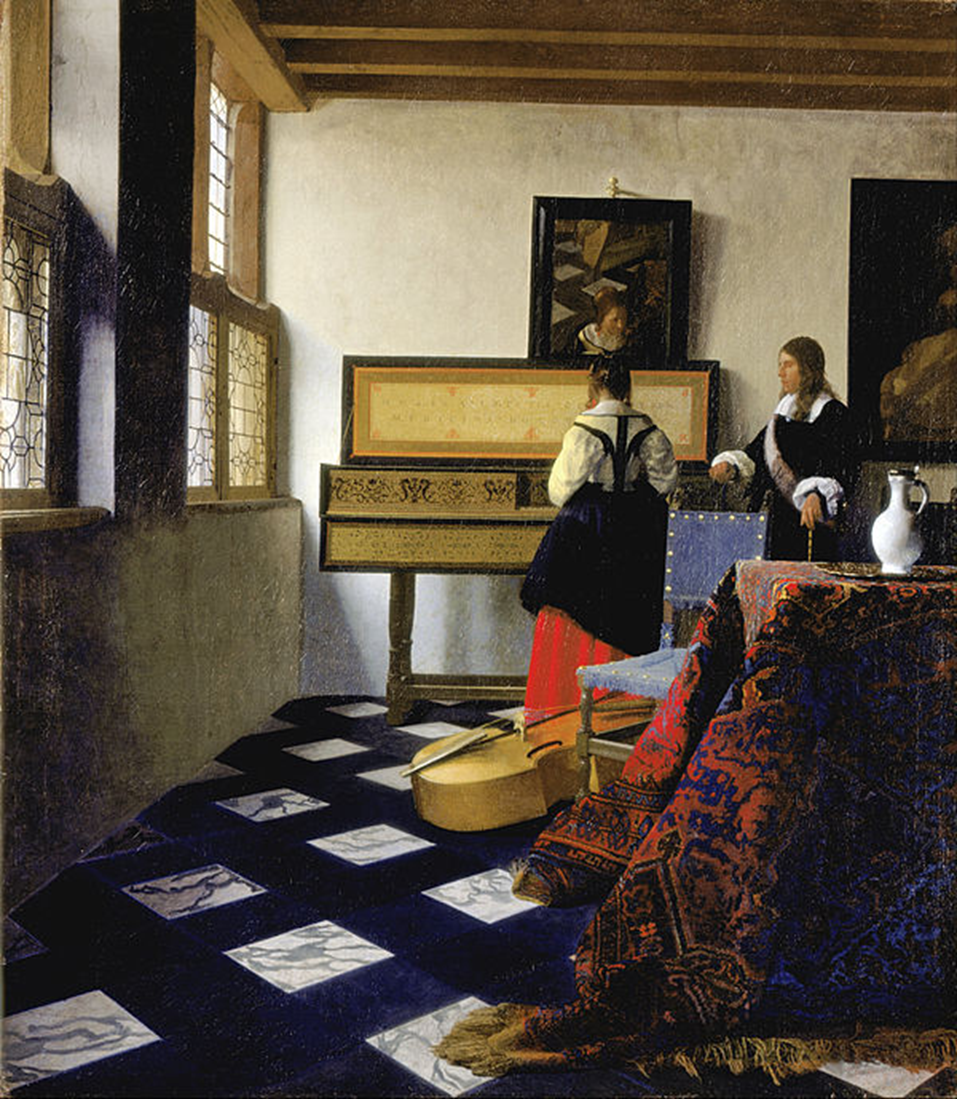
Vermeer, The Music Lesson (1665)
Genre Painting
Definition: a style of painting depicting scenes from ordinary life, especially domestic situations. Genre painting is associated particularly with 17th-century Dutch and Flemish artists.
Camera Obscura
Definition: A darkened room or box with a small hole or lens that projects an inverted image of its surroundings onto a surface inside.
In “The Music Lesson”, Vermeer sets up a restrained, elegant domestic scene that, through musical symbolism, suggestive objects, and compositional intimacy, evokes the theme of courtship. At the same time, the painting showcases his extraordinary command of perspective, reflections, and the geometry of interior space, making it both a subtly romantic and technically dazzling work.
Points to Remember:
The Scene:
- A young woman standing at a virginal
- A gentleman beside her, appearing to give instruction
- Instruments on the table (including a viola da gamba)
- A mirror reflecting parts of the scene, including the woman’s face
Why It Connects to Love and Courtship:
- Teacher–student intimacy
- The viola da gamba
- Mirror reflectionsq
- Literary and pictorial precedents
Why It Also Demonstrates Vermeer’s Perspectival Skill:
- Deep, carefully measured recession
- Complex interplay of mirrors and reflections
- Subtle shifts in focus and light
- Perfect ordering of objects
Vermeer, The Music Lesson (1665)
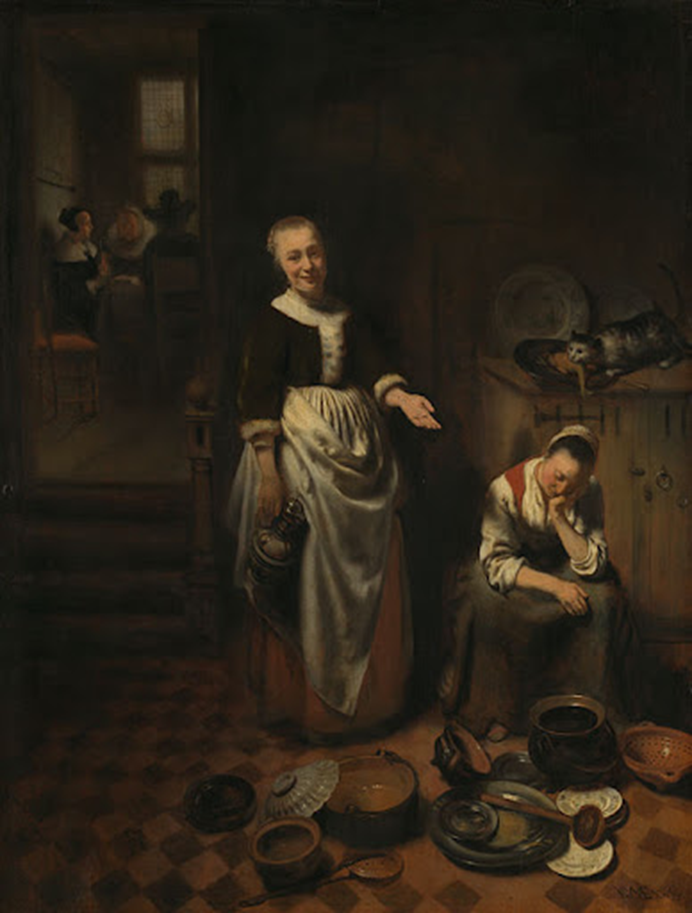
Nicolaes Maes: Idle Servant (1655)
Genre Painting
Definition: a style of painting depicting scenes from ordinary life, especially domestic situations. Genre painting is associated particularly with 17th-century Dutch and Flemish artists.
Cats’ 1625 Marriage
Definition: The book is a detailed treatise on marriage, written in verse, that provides advice to women on various stages of life, from courtship to widowhood. It is richly illustrated and was extremely popular in the Dutch Republic
Dutch genre paintings articulate ideal gender roles by depicting domestic life as a moral space in which men and women perform socially prescribed behaviors. Their symbols, household settings, and contrasts between order and disorder align closely with the lessons of conduct literature like Cats’ treatises, making them visual counterparts to early modern instruction on proper life, love, and family.
Points to Remember:
How Dutch Genre Paintings Articulate Ideal Gender Roles:
- Women as Symbols of Household Virtue
- Domestic Interiors as Moral Spaces
- Subtle Warnings via “Improper” Behavior
Why These Paintings Relate to Domestic Conduct Literature (e.g., Jacob Cats):
- Visual Emblems Echoing Literary Emblems
- Shared Focus on Everyday Life as Moral Terrain
- Art as a Pleasant, Subtle Moral Lesson
Nicolaes Maes: Idle Servant (1655)

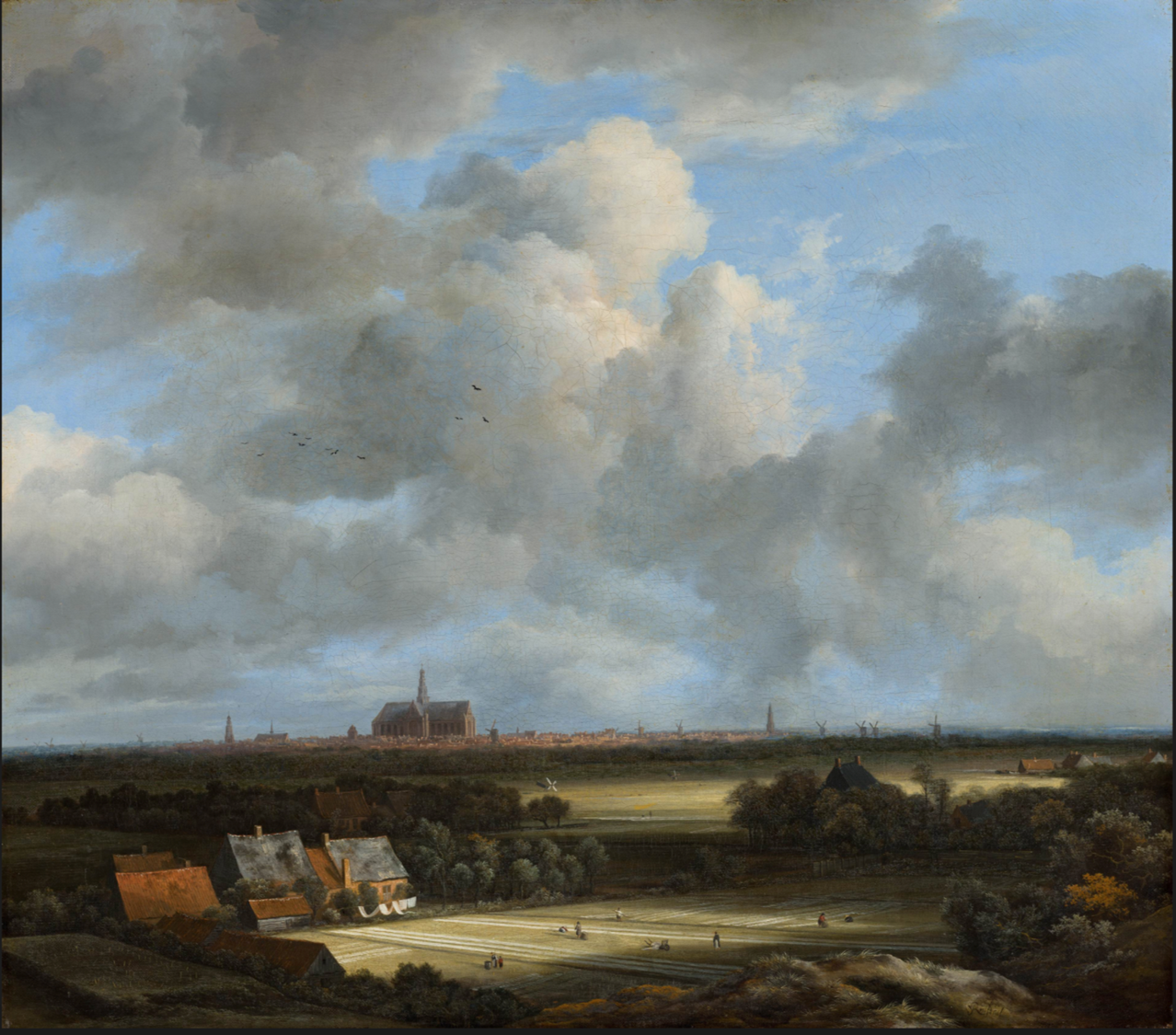
Jacob van Ruisdael, View of Haarlem with Bleaching Grounds, 1675

Haarlempjes
Definition: a genre of 17th-century Dutch landscape painting depicting panoramic views of the city of Haarlem and its surroundings.
Ruisdael’s Haarlem landscapes celebrate civic pride by foregrounding the city’s famous bleaching industry, highlighting St. Bavo as a proud civic emblem, depicting Haarlem as harmonious and prosperous, and granting the city monumental dignity through composition and scale. His paintings transform local labor and landscape into an image of communal identity and achievement.
Points to Remember:
The Bleaching Fields: A Signature Haarlem Industry:
- Bleaching grounds, workers handling linen, and orderly rows of cloth
- Symbolizing prosperity, industriousness, municipal identity and the success of local labor.
The Great Church of St. Bavo as a Civic Landmark:
- Represents the city’s history, its independence, and its spiritual and civic unity
A Harmonious City Integrated with Land and Sky:
- Sand dunes, cultivated fields, distant city roofs, and an expansive sky.
Monumentality and Scale:
- Sweeping panoramas, elevated viewpoints, and majestic cloud formations, making the city appear heroic.
A Protestant Ethic of Labor and Community:
- Hard Work, Orderly Society, and prosperity earned through industry
Jacob van Ruisdael, View of Haarlem with Bleaching Grounds, 1675
 Note
Note  Flashcards (154)