Module Thee: Development in Early Childhood
 Call Kai
 Learn
Learn Practice Test
 Spaced Repetition
 Match
Match Flashcards
 Knowt Play
1/39

There's no tags or description
Looks like no tags are added yet.
Name | Mastery | Learn | Test | Matching | Spaced | Call with Kai |
|---|
No analytics yet
Send a link to your students to track their progress
40 Terms
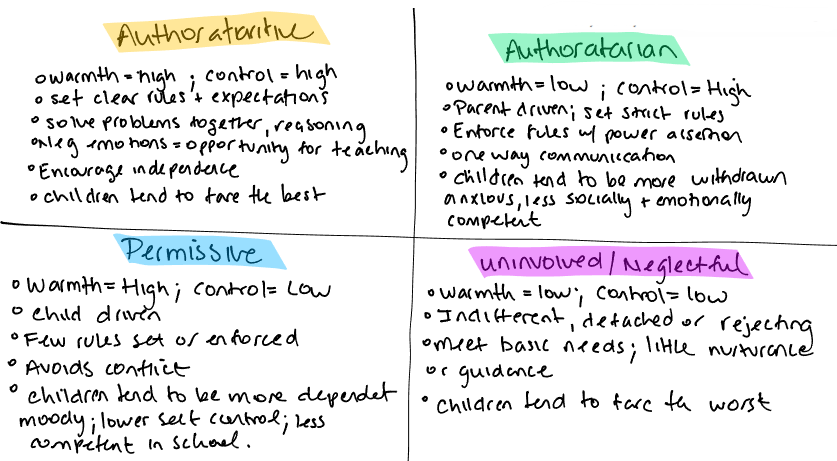
What are the four different parenting styles? Name characteristics of each.
What are factors influence to the Generalizability of parenting research?
Generalizability refers to the extent to which the findings from a study or set of studies can apply to the broader population or different groups of individuals, contexts, or situations.
Consistency of Caregiving: The effects of caregiving styles can vary significantly depending on how consistent or inconsistent the caregiving is, affecting the generalizability of findings.
Timing, Children, and Social Contexts: Research must account for different developmental stages, individual differences, and social contexts (e.g., cultural norms, socioeconomic status, and multi-parent homes) to ensure findings are relevant to diverse families.
Multi-Parent Homes: In families with multiple caregivers (e.g., two parents, grandparents, or stepparents), parenting dynamics may be more complex than in single-parent homes. Research on parenting often overlooks the influence of extended family or non-biological parents, leading to findings that may not apply to multi-parent household
Causality: Establishing causal relationships between parenting behaviors and child outcomes is difficult, and studies often show correlations rather than cause-and-effect relationships, which can limit the ability to generalize findings across all populations.
Variability of Family Make-Up: Parenting research may not always be applicable to families with different structures (e.g., single-parent, blended, or same-sex parent families) because each family type presents unique dynamics that may affect parenting outcomes differently.
What are some different types of family arrangements? What is an important factor when considering a healthy home life?
-Single-Parent Families
-Grandparent Parents
-Multigenerational Families
-Blended Families
-LGBT Parent Families
—>Importance is to have healthy, adjusted caregivers who can create supportive environments
Is economic status important to a child’s development?
Importance of Economic Resources:
Regardless of the family structure, economic status plays a key role in a child’s development. Families with higher socioeconomic status (SES) generally have access to better healthcare, education, and living conditions, which can positively influence a child's well-being.
Lower SES can lead to stress related to financial insecurity, which can affect caregiving practices, access to educational resources, and overall child outcomes. Children in families with higher SES tend to have more opportunities for enrichment and growth.
How does divorce affect children, emotionally, socially and finically?
-“Short-term” difficulties in health, mental health, delinquency, academics
-Many children return to pre-divorce adjustment
-Younger children more likely to blame selves
-Decline in financial status, standard of living
-Divorce may be improvement for children previously living in home environments high in parental conflict, hostility
What are some ways to assist in the child’s transition to their new life?
-Co-Parenting: The ability of parents to effectively co-parent after a divorce is a critical factor in how children adjust. Co-parenting involves both parents working together to ensure the child’s well-being, even if they are no longer in a romantic relationship.
-Maternal Well-Being: The emotional and psychological well-being of the mother plays a significant role in determining how well the child adjusts to divorce. Children tend to fare better when the mother is emotionally healthy and able to provide a stable, supportive environment.
-External Support: Children who receive support and guidance during this time are more likely to develop positive coping strategies and resilience, which can help them adjust and thrive in the long term.
What is the EC-Home and its components
-Early Childhood Home Observation for Measurement of the Environment (EC-HOME) is a tool used to assess the quality of the home environment and the interactions within it.
Learning materials: Child has 3 or more puzzles
Language stimulation: Child is encouraged to learn the alphabet
Physical environment: Building appears safe and free of hazards
Responsivity: Parent converses with child at least twice during visit Academic stimulation: Child is encouraged to learn colors
Modelling: TV is used judiciously
Variety: Child has real or toy musical instrument
Acceptance: Parent does not scold or yell at or derogate child more than once
Why should parents monitor what their children watch on tv?
“Environments” are important and what children watch is apart of that.
Television: focus on having child consume educational television (such as sesame street or PBS), instead of non-educational shows or commercials.
How do children develop who they are/ sense of self.
Self-Concept: “Who Am I?”
Self-concept refers to a person’s understanding and perception of themselves. It begins to form early in childhood and becomes more refined over time. At its core, self-concept is about how individuals define themselves based on internal and external factors. As children grow, their sense of self becomes increasingly complex and includes various dimensions such as identity, values, and social roles
Categorical Self: a basic sense of self-awareness that children develop around the ages of 2 to 3 years. At this stage, children begin to categorize themselves based on external attributes (physical traits, gender and age)
Internal Traits, Behaviors: Between the ages of 3 to 4, children begin to develop a deeper sense of self that includes internal traits, abilities, and behaviors. This shift is from just noticing external characteristics to understanding that they have internal attributes as well (emotions, personality traits and abilities)
Evaluative Judgments: Around the age of 4 and beyond, children start to make evaluative judgments about themselves, incorporating more comparative elements into their self-concept. This phase marks the beginning of self-esteem (start comparing to others based on skills, social behavior and apperance)
Cultural Influences: Sense of self is heavily influenced by the cultural context in which they grow up. Different cultures emphasize various aspects of identity and may shape how children view themselves and their relationships to others:
Individualistic Cultures (e.g., the U.S., Western Europe): These cultures often stress the importance of independence, personal achievement, and the individual. Children from these cultures may emphasize traits such as being unique or successful.
Collectivistic Cultures (e.g., many Asian cultures, some African cultures): These cultures tend to focus more on group harmony, family ties, and the social roles a person plays within the community. Children in these cultures might describe themselves in terms of social roles and relationships.
Parenting style
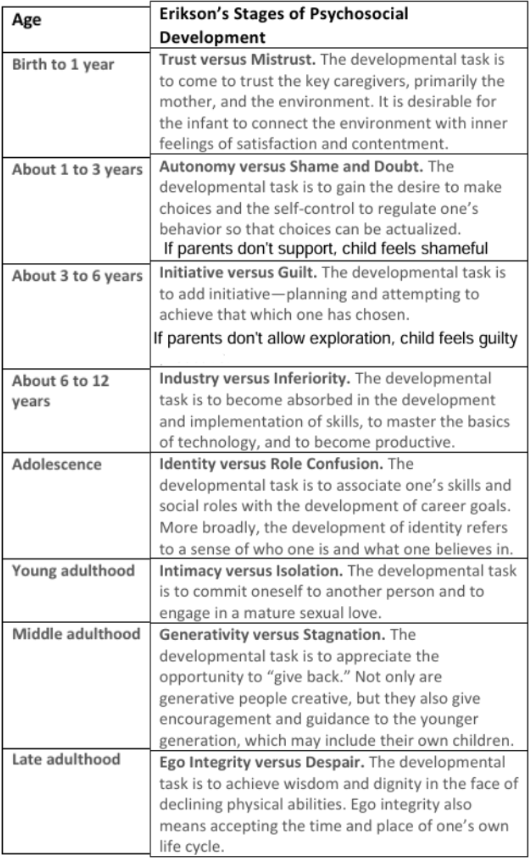
List Erikson’s Psychosocial Development stages and identify which stages align with the development of sense of self.
Initiative vs guilt and Autonomy vs shame
How do gender roles and stereotypes affect how children perceive themselves?
Cultural stereotypes: Men are stronger and more independent and women are weaker and dependent
Behavioral expectations based on gender: Women are to be caregivers and men provide
“traditional” views through early childhood (adolescents more flexible): Traditional gender roles are often more rigid in early childhood. Young children tend to develop strong ideas about what behaviors and activities are "appropriate" for their gender. As they get older, there is often a greater degree of flexibility and a willingness to question or reject traditional gender roles.
Both male and female children tend to view their OWN gender more positively
Sex Assignment (physical characteristics), Gender Identity (internal sense of being), Gender Roles (socially constructed roles that individuals are expected to follow based on their gender)
Age 2-2.5 – labeling themselves & others
Age 3 – knowledge of gender stereotypes; firm sense of Gender Identity
What are some difference in boys and girls play preference and cognitive abilities.
Inconsistent in Infancy; Early childhood somewhat more pronounced
Play:
-Same-sex preference; preference for gender-stereotyped toys
-Boys: larger groups; more rough and tumble; more aggression
-Girls: more crafts & organization; more empathy, fear
-Dramatic play (imaginative play) – adult roles versus media figures
-Girls more likely to deviate from gender stereotyped roles
Cognitive abilities: Boys more visual-spatial; Girls more verbal
Name how the different perspectives (biological, social cognitive learning and cognitive) contribute to gender differences.
Biological Perspectives: Prenatal Sex Hormones, brain organization and evolutionary approach: adaptation, selection
Social-Cognitive Learning Perspectives: Observational Learning socialization and Operant Conditioning
Cognitive Perspectives: Bem’s Gender Schema Theory: Gender schemas ~2-3 years Gender typing based on schemas Gender identity typically conforms
When do children start to notice racial differences/ cultural identity?
Race, Ethnicity are significant to identity
Racial awareness begins in Infancy
Preschoolers – notice differences based on skin color, identify as member of a group
Parent impact on perceptions, attitudes
Ethnic Awareness somewhat later
How do children learn to identity emotions?
Self-conscious emotions: Emotions that arise from a child's awareness of themselves in relation to others and to social norms. These emotions typically emerge around 18-24 months and continue to develop throughout early childhood. (Guilt, shame, pride and embarrassment)
Emotion Understanding
-Expressive emotion recognition (labeling): recognizing and labeling emotions based on facial expressions, body language, and vocal tones. For example, a child might learn to associate a frown with sadness or a smile with happiness. This skill typically begins to develop in infancy and is refined through the toddler and preschool years.
-Emotion situation knowledge: ability to understand the context in which different emotions arise. For example, a child learns that people feel happy when they get a gift but might feel angry when they lose a toy.
-Cultural influences – values, expectations: Cultural values and expectations significantly influence how emotions are expressed and understood; certain emotions more values or accepted in different parts of the world.
What are some different ways caregivers can help children learn to regulate emotions? Why is it important that children learn how to regulate their emotions?
Caregiver socialization strategies:
-Maintain calm demeanor during interactions
-Scaffold emotion labeling: caregivers can help children label emotions by naming the emotions they observe
-Validate emotions, scaffold emotion situation knowledge: Caregivers can help children link emotions to situations by explaining why a certain event might cause specific feelings
-Coaching through regulatory strategies: Caregivers can teach and model strategies to regulate emotions, such as taking deep breaths when angry, using words instead of actions when frustrated, or taking a break when feeling overwhelmed
Importance: The ability of children to be able to regulate their emotion is a strong predictor of outcomes across domains including academic success, social relationships, and emotional resilience
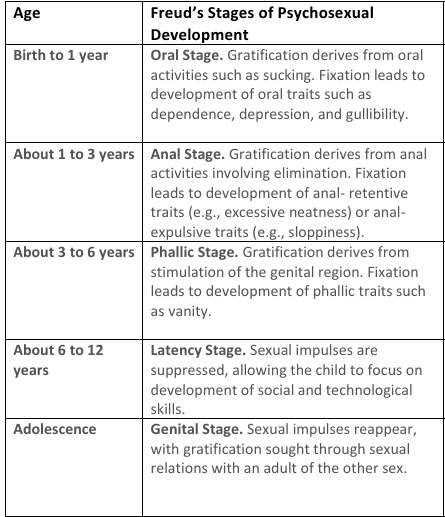
What are the stages of Freud’s Psycosexual development?
List and explain Piaget’s cognitive stages
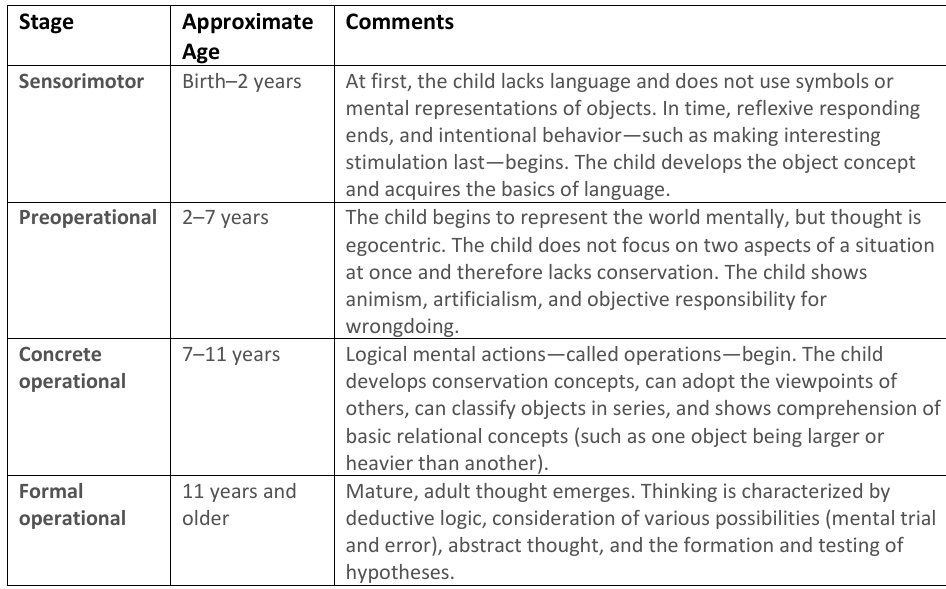
Expand further on Piaget’s preoperational stage.
Development of Symbolic thinking: Ability to use symbols to represent objects and relationships
Connected to language/ Language grows from cognitive advances: As children develop symbolic thinking, language also grows rapidly. They start to use words and phrases to express ideas, thoughts, and needs. Language becomes the primary tool for them to communicate their thoughts and organize their understanding of the world.
Preoperational children limited “Operations”: Mental actions (schemas) that children perform on objects or ideas. These mental operations are flexible and can be reversed
Understand objects can be transformed and but not understand as much that the object can be returned to original states
Explain the operations that preoperational children are unable to perform/ engage in.
Egocentrism: View world from their perspective; inability to understand/ consider perspective of others
Precausal Thinking: Tendency of children to engage in illogical thinking about cause and effect; may attribute a cause to something that is not logically related to the effect.
—>Transudative reasoning: Tendency to make connections between unrelated events based on superficial similarities, rather than logical or causal relationships.
—>Animism: Attribution of human-like qualities (such as feelings, intentions, or desires) to inanimate objects or non-living things. This is a form of magical thinking.
—>Artificialism: Belief that the world and its natural phenomena are man-made or constructed by humans. Children who engage in artificialism may believe that natural events, such as thunderstorms or sunsets, are caused by people or are intended for a specific purpose.
Confusion of mental & physical events: May believe thoughts reflect reality and believe dreams are true
Centration (lack of Conservation): Focus on only one dimension at a time; They struggle to understand that quantities and properties can stay the same despite changes in appearance.
Lack of Class Inclusion: Inability to recognize class and subclass at the same time; child is unable to understand that a subcategory is part of a larger class. Children in the Preoperational Stage often focus on one aspect of a problem at a time (this is known as centration), which prevents them from recognizing the relationship between the whole class and its parts.
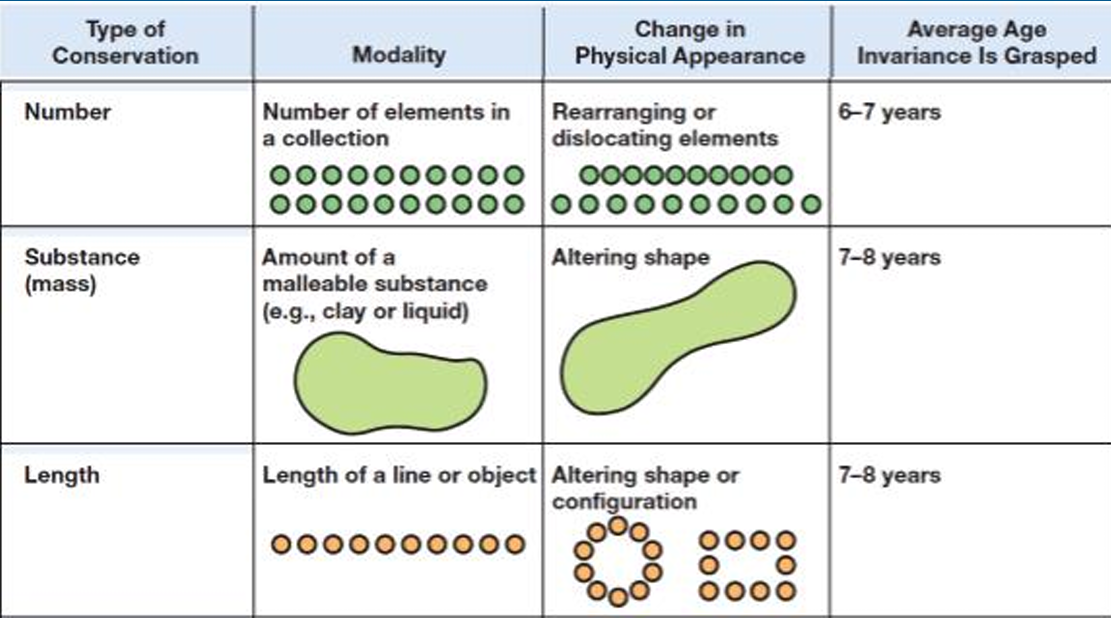
Explain Piaget’s test of conservation and how a child in the preoperational stage would view each test.
Conservation of number: Two rows of objects, arranged in a way that both rows contain the same number of objects. One row is then spread out, making the objects in that row appear more spaced out. The child is then asked which row has more objects
-Preoperational children (ages 2-7) may say that the spread-out row has more objects because they focus on the spatial arrangement rather than the actual number of objects.
Conservation of substance (Mass/Volume): Clay, dough, or liquid, that is initially in one shape (e.g., a ball or in a container). The substance is then transformed in some way (e.g., by rolling the clay into a snake shape or pouring liquid into a differently shaped container). The child is asked whether the amount of substance has changed
-Preoperational children often believe that the snake-shaped clay has more because it appears longer or the flattened clay has less, not understanding that the quantity (substance) is the same
Conservation of Length: objects of equal length (e.g., sticks or pieces of string) are shown to the child. One object is then moved or manipulated, making it appear longer or shorter. The child is asked if both objects are still the same length
-Preoperational children may claim that the stretched stick is now longer, focusing on its appearance, rather than recognizing that length remains unchanged unless altered physically.
Evaluate Piaget’s Cognitive theory- Preoperational Stage. List its strengths and critisms.
Strengths
-Insightful and groundbreaking observations
-Important concepts and developmental stages highlighted
Criticisms
-Children more capable at an earlier age
-Continuous development rather than stages?
-Language development confounds
-Focusing on capabilities rather than deficiencies finds evidence for higher degree of capability in preschoolers
What is theory of mind and how do you test it?
Definition: A child’s developing ability to understand that other people have thoughts, beliefs, desires, and intentions that may be different from their own. It is the understanding of how the mind works
-False belief tests: Key test of Theory of Mind. Children are typically unable to understand that someone can hold a belief that is false and different from their own, until about the age of 4-5 (pass) (3 Y/O fail).
Provide an example of a false belief test and compare between a child who has theory of mind and one who doesn’t.
Example (Sally-Anne Task): In the Sally-Anne task, a child is shown a scenario where Sally places a ball in a basket and leaves the room. Anne then moves the ball to a different location. When Sally returns, the child is asked where Sally will look for the ball.
Young children (around age 3) typically fail this task, thinking that Sally will look where the ball actually is, because they cannot understand that Sally has a false belief about the ball’s location (she doesn’t know it was moved).
Older children (around age 4-5) succeed, recognizing that Sally will look where she originally left the ball, showing an understanding that Sally has a false belief about the ball’s location.
What is appearance reality. Provide an example of an appearance reality task.
Appearance-Reality refers to the understanding that an object may look like one thing but be something else in reality. This cognitive milestone typically develops around age 4 to 5.
Example: In a common appearance-reality task, children may be shown a rock that looks like a cake. When asked whether the rock looks like a cake or really is a cake, younger children (around age 3) may say that it is a cake because they focus on its appearance. However, older children (around 4-5) recognize that, while it looks like a cake, it is actually a rock.
What is rudimentarily knowledge?
-Around ages 3-4, preschoolers begin to have a basic understanding that people’s actions are motivated by their mental states (thoughts, beliefs, emotions, desires).
-They can start predicting and explaining others' behaviors and emotions in terms of mental states, such as realizing that someone may act angry because they are upset or that someone may want a toy because they like it.
-Children begin to understand the source of knowledge
How does language cognition connect to early childhood language development?/ what is the interactionist view?
Cognitive development first? (Piaget): Piaget’s theory of cognitive development suggests that cognitive abilities (such as categorization, symbolic thought, and mental representations) develop before language abilities; Categorization capability prior to vocabulary explosion
Language development first?
-Vocabulary creates categories: As children acquire new words, they begin to use them to organize their world and make sense of their experiences. Words are tools that help children define concepts and categorize the world around them
Interactionist View: Both cognition and language develop together and influence each other.
-Early on, concepts precede words; later, language influences thought
-Vygotsky’s private speech: self-directed speech that children often use when engaging in problem-solving or self-regulation; EX: A child building a tower of blocks, saying, "Now I need to put this one on top".
What re some different types of child care programs?
Center-Based Programs
—> Private: They may have higher fees, but they often offer flexible care options, specialized curriculums, or enhanced services.
—> Non-profit: affordable care and are often focused on community service. They may receive funding from grants, donations, or government programs to help keep fees lower for families.
—> Publically funded: government-funded or subsidized and are intended to provide affordable care, especially for low-income families. Programs may include Head Start, pre-kindergarten, or other government-supported initiatives aimed at helping children from disadvantaged backgrounds.
Family Child Care (Home based care): Licensing Requirements: In some regions, family child care providers must meet licensing standards set by the government or local child care agencies to ensure they provide a safe, healthy environment.
Public School Programs: Preschool programs, pre-k; Eligibility: Public school child care programs may have specific eligibility requirements, such as age, income level, or residency within a certain school district.
What does quality care mean?
Quality:
-Educators: Well-trained and knowledgeable educators can promote children's learning and development by providing stimulating activities, positive role models, and supportive environments.
-Interactions: Positive, nurturing interactions between caregivers and children are vital. Research shows that children benefit from responsive caregiving that encourages language development, social interaction, and problem-solving skills.
-Environments: physical and social environment in which children spend time significantly impacts their development. A well-designed learning space, both indoors and outdoors, encourages curiosity, exploration, and discovery.
-“Standards ” for quality improvement: Quality standards provide a framework for assessing, improving, and maintaining high-quality care in early childhood programs. These standards typically address areas such as educator qualifications, child-to-caregiver ratios, curriculum and instructional practices, safety, and environment. High-quality early care programs are committed to continuous improvement. This includes regular assessments, parent and caregiver feedback, and the ongoing professional development of educators
What is the effectiveness of early childhood education programs like head start?
Head Start: enrichment programs for children and families living in poverty
Head Start Early Childhood Language & Knowledge Center (ECLKC)
Provide child care, health screenings, and social services to children and families
Encourage parental involvement
Increases cognitive skills, social and emotional and behavioral skills, educational attainment
Reduces maladaptive behavior
How does the purpose of preschool vary across different Countries? (U.S., Japan and China)
U.S: To make children more independent and self reliant
Japan: to give children experience being a member of a group
China: To give children a good start academically
What does social interaction provide?
Friendship
Shared activities
Companionship, attachment
Having fun
Why is play important?
Play: Pleasurable activity, done for enjoyment/recreation
Promotes cognitive development
Promotes social and emotional development
Promotes physical development
What are the four types of play accourding to piaget?
Functional – repetitive motor activity
Constructive – drawing, making
Symbolic – pretend, imaginative play
Formal – games with rules
What are the six types of play according to Parten?
Non-Social
Unoccupied Play: The child is not actively engaged in any specific play activity. They may be moving around, observing the environment, or simply being present without a clear focus. It typically occurs in the early stages of development.
Solitary Play: The child plays alone and does not seek to interact with others. They are fully immersed in their own activity, which can involve exploration or manipulating objects.
Onlooker Play: The child observes others playing but does not participate. They may watch closely and show interest in the activities, but they do not join in. This stage is often seen in toddlers or young children who are learning social cues.
Social
Parallel Play: Children play alongside each other but do not actively engage with one another. They may use similar materials or mimic each other's actions but remain focused on their individual play. This is commonly observed in toddlers.
Associative Play: Children begin to interact with each other, sharing materials or actions, but they do not have a shared goal or organized structure. They may talk or exchange toys, but the play lacks a clear direction.
Cooperative Play: In this stage, children work together towards a common goal, creating a shared narrative or structure. They engage in role-playing or collaborative activities, demonstrating strong social and communication skills. This type of play typically emerges in preschool or early childhood.
What are forms of prosocial behavior in childhood?
Altruism = helping behaviors with no expectation of reward
Perspective Taking: Ability to understand and consider the emotions, thoughts, or viewpoints of others. It's closely related to prosocial behavior, as children who can take the perspective of others are more likely to engage in helping behaviors
Empathy: Sensitivity to the feelings of others, Begins early; Girls show more than boys Social Influences:
-Parenting: higher empathy; reasoning; Parents who engage in empathetic and responsive caregiving, and who model prosocial behaviors themselves, are likely to raise children who show more concern for others and are more likely to engage in helping behaviors.
-Family Responsibility: Children who are given responsibilities within the family, such as taking care of younger siblings or helping with household tasks, are more likely to develop a sense of responsibility and empathy for others' needs.
-Adult and Peer Reinforcement: Positive reinforcement from adults and peers plays a crucial role in encouraging prosocial behavior. When children are praised or thanked for helping others, they are more likely to repeat these behaviors.
-Social Modeling: Children learn by observing the behavior of adults and peers. When children see adults or older peers engaging in helping behaviors, they are more likely to imitate those actions
What are the types of aggression by age group? Does aggression remain the same?
Preschoolers: possession-oriented: Involves physical or verbal conflict over objects (e.g., fighting over a toy or pushing someone to take something).
School-agers: person-oriented: Target of aggression is another person rather than an object. This can manifest as name-calling, bullying, or hitting other children.
Declines overall, but stable patterns
What are the causes of antisocial behavior based on the different psychological perspectives?
Biological perspectives
-Genetics, testosterone, temperament
-Evolution, survival of the fittest
Cognitive perspective
-Behavioral attributions
-Perspective-taking
Behavioral perspective
-Reinforcement
-Observational learning (Bandura, Bobo)
Can Media Violence Contribute to Aggression?
Observational Learning
Increased Arousal
Priming of Aggression
Habituation, Desensitization
Social Norms
What are different ways to monitor influence in children?
Monitor media viewing
Help consider alternate explanations
Model non-aggressive behaviors and responses
Promote observations of prosocial behavior
Teach reasoning and self-control

