ASE B4 - Mitchel/Delmar Collision Test Preparation Handbook (1999, 1st Edition) - SECTION 6 - Additional Test Questions for Practice
 Call Kai
 Learn
Learn Practice Test
 Spaced Repetition
 Match
Match Flashcards
1/91

Earn XP
Description and Tags
Mitchel/Delmar Collision Test Preparation Handbook (1999, 1st Edition)
Name | Mastery | Learn | Test | Matching | Spaced | Call with Kai |
|---|

92 Terms
Technician A says the strut tower gauge measures the upper body area. Technician B says compare strut tower gauge measurements with a dimension chart. Who is right?
A. A only
B. B only
C. Both A and B
D. Neither A nor B
Technician A says the strut tower gauge measures the upper body area. Technician B says compare strut tower gauge measurements with a dimension chart. Who is right?
C. Both A and B
(B4)
Answer A is wrong. Technician A is right.
Answer B is wrong. Technician B is right.
Answer C is correct.
Answer D is wrong.
A frontal collision where the point of impact is high on the vehicle could cause all of the following EXCEPT:
A. a large opening between the front upper part of the door and the roofline.
B. the cowl to move rearward.
C. the rear of the vehicle to move downward.
D. the roof to move toward the rear of the vehicle.
A frontal collision where the point of impact is high on the vehicle could cause all of the following EXCEPT:
A. a large opening between the front upper part of the door and the roofline.
(B7)
Answer A is correct. The roof does not move forward in a high front impact.
Answer B is wrong. The cowl could move rearward in a high front impact.
Answer C is wrong. The rear of the vehicle moves down in a high front impact.
Answer D is wrong. The roof moves rearward in a high front impact.
Technician A says that a unibody vehicle is designed to absorb impact to protect the vehicle's occupants. Technician B says that a damaged unibody vehicle must be carefully measured to identify all damage. Who is right?
A. A only
B. B only
C. Both A and B
D. Neither A nor B
Technician A says that a unibody vehicle is designed to absorb impact to protect the vehicle's occupants. Technician B says that a damaged unibody vehicle must be carefully measured to identify all damage. Who is right?
C. Both A and B
(B1)
Answer A is wrong. Technician A is right.
Answer B is wrong. Technician B is right.
Answer C is correct.
Answer D is wrong.
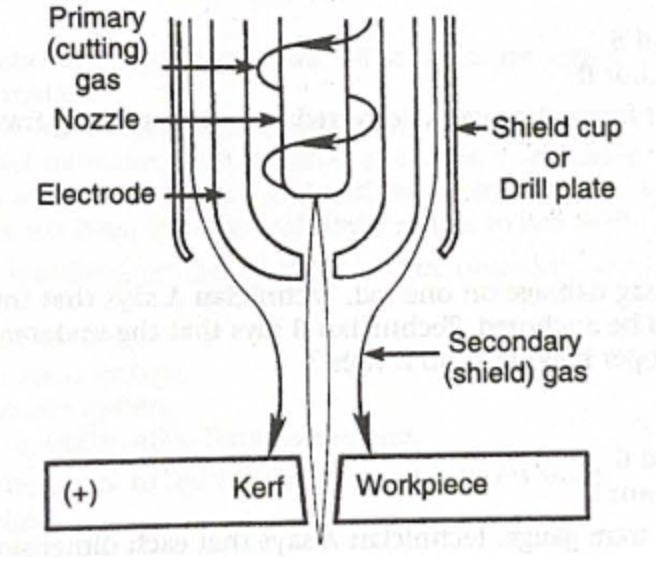
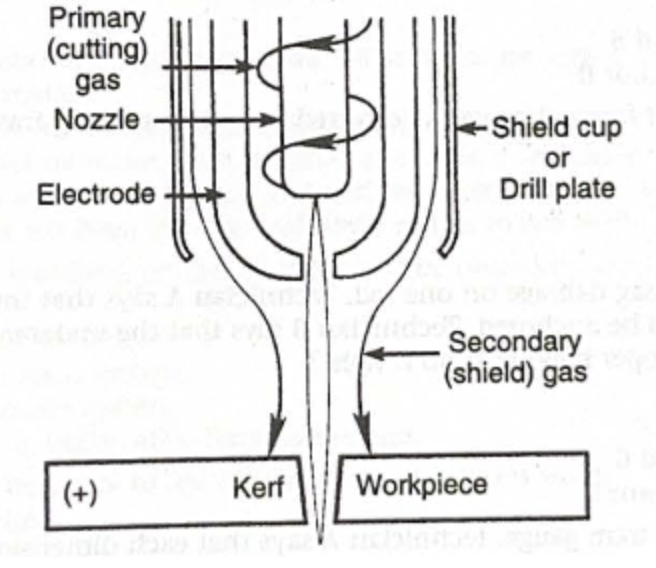
What type of process, as shown, creates an intensely hot air stream over a very small area that melts and removes metal?
A. Arc cutting
B. Oxyacetylene torch cutting
C. Laser cutting
D. Plasma arc cutting
What type of process, as shown, creates an intensely hot air stream over a very small area that melts and removes metal?
D. Plasma arc cutting
(D14)
Answer A is wrong. Plasma arc cutting is shown in the diagram.
Answer B is wrong.
Answer C is wrong.
Answer D is correct.
Technician A says that a three-dimensional measuring system can be used to check for all types of frame damage at the same time. Technician B says that self-centering gauges can be used to check for mash. Who is right?
A. A only
B. B only
C. Both A and B
D. Neither A nor B
Technician A says that a three-dimensional measuring system can be used to check for all types of frame damage at the same time. Technician B says that self-centering gauges can be used to check for mash. Who is right?
A. A only
(A1)
Answer A is correct. A three dimensional measuring system can be used to check for all types of frame damage at one time.
Answer B is wrong. Self-centering gauges cannot be used to check for mash.
Answer C is wrong.
Answer D is wrong.
When using a strut tower gauge, the vertical scales should link the upper and the lower horizontal bars to set the lower bar. Set the lower bar at the:
A. centerline.
B. datum line.
C. diagonal line.
D. horizontal line.
When using a strut tower gauge, the vertical scales should link the upper and the lower horizontal bars to set the lower bar. Set the lower bar at the:
B. datum line.
(B4)
Answer A is wrong.
Answer B is correct. Set the lower bar at datum line.
Answer C is wrong.
Answer D is wrong.
The work clamp must be attached to:
A. bare metal near the weld area.
B. the opposite side of the vehicle from the weld area.
C. the negative battery cable.
D. the positive battery cable.
The work clamp must be attached to:
A. bare metal near the weld area.
(D7)
Answer A is correct. The work clamp should be attached to bare metal near the weld area.
Answer B is wrong. The work clamp should be as close as possible to the weld area.
Answer C is wrong. Do not attach the work clamp to the battery.
Answer D is wrong. Do not attach the work clamp to the battery.
Technician A says that you should correct twist damage by pushing up on the low corners of the vehicle's center section. Technician B says that you should correct twist damage by pulling down on the high corners of the vehicle's center section. Who is right?
A. A only
B. B only
C. Both A and B
D. Neither A nor B
Technician A says that you should correct twist damage by pushing up on the low corners of the vehicle's center section. Technician B says that you should correct twist damage by pulling down on the high corners of the vehicle's center section. Who is right?
C. Both A and B
(A6)
Answer A is wrong. Technician A is right.
Answer B is wrong. Technician B is right.
Answer C is correct.
Answer D is wrong.
A steel structural panel needs plug welds. What type of welder should be used?
A. Resistance spot welder
B. Oxyacetylene torch
C. MIG welder
D. TIG welder
A steel structural panel needs plug welds. What type of welder should be used?
C. MIG welder
(D3)
Answer A is wrong. A resistance spot welder should not be used, the welds are not strong enough.
Answer B is wrong. An oxyacetylene torch should not be used, the welds are not strong enough.
Answer C is correct. A MIG welder should be used.
Answer D is wrong. Although a TIG welder can be used on steel, a MIG welder is a better choice.
Extensive rusting is obvious under the windshield adhesive. Which method of installation is required?
A. Rust removal
B. Replacement metal installation
C. Full cutout
D. Partial cutout
Extensive rusting is obvious under the windshield adhesive. Which method of installation is required?
C. Full cutout
(C3)
Answer A is wrong.
Answer B is wrong.
Answer C is correct. The full cutout method should be used so all of the rust can be treated.
Answer D is wrong.
Which of the following types of frame damage is identified with a tram gauge?
A. Sag
B. Diamond
C. Twist
D. Kickup
Which of the following types of frame damage is identified with a tram gauge?
B. Diamond
(A1)
Answer A is wrong. Sag damage is identified with gauges.
Answer B is correct. Diamond damage is identified with a tram.
Answer C is wrong. Twist damage is identified with gauges.
Answer D is wrong. Kickup damage is identified with gauges.
What position is the easiest to weld in?
A. Overhead
B. Vertical
C. Horizontal
D. Flat
What position is the easiest to weld in?
D. Flat
(D8)
Answer A is wrong. Overhead is the most difficult position to weld in.
Answer B is wrong. Vertical is more difficult to weld in than flat.
Answer C is wrong. Horizontal is more difficult to weld in than flat.
Answer D is correct. Flat is the easiest position to weld in.
Technician A says that a stitch weld causes less distortion than a continuous weld. Technician B says that a stitch weld is the preferred weld on thin panels. Who is right?
A. A only
B. B only
C. Both A and B
D. Neither A nor B
Technician A says that a stitch weld causes less distortion than a continuous weld. Technician B says that a stitch weld is the preferred weld on thin panels. Who is right?
C. Both A and B
(D12)
Answer A is wrong. Technician A is right.
Answer B is wrong. Technician B is right.
Answer C is correct.
Answer D is wrong.
What grade of lens is recommended for wear when MIG welding?
A. Grade 7 or 8
B. Grade 9 or 10
C. Grade 11 or 12
D. Grade 13 or 14
What grade of lens is recommended for wear when MIG welding?
B. Grade 9 or 10
(D5)
Answer A is wrong. Grade 7 or 8 is not dark enough.
Answer B is correct. Grade 9 or 10 is recommended when MIG welding.
Answer C is wrong. Grade 11 or 12 is too dark.
Answer D is wrong. Grade 13 or 14 is not made.
When pulling high on the vehicle to prevent distortion to the roof, it is also necessary to:
A. pull high on the other side.
B. tie down the opposite side.
C. tie down the same side.
D. tie down the vehicle ends.
When pulling high on the vehicle to prevent distortion to the roof, it is also necessary to:
B. tie down the opposite side.
(B9)
Answer A is wrong.
Answer B is correct. The opposite side needs to be tied down when pulling high on the body.
Answer C is wrong.
Answer D is wrong.
Technician A says that a plasma cutter can be used to cut sheet metal. Technician B says that plasma arc cutting produces minimal warpage. Who is right?
A. A only
B. B only
C. Both A and B
D. Neither A nor B
Technician A says that a plasma cutter can be used to cut sheet metal. Technician B says that plasma arc cutting produces minimal warpage. Who is right?
C. Both A and B
(D14)
Answer A is wrong. Technician A is right.
Answer B is wrong. Technician B is right.
Answer C is correct.
Answer D is wrong.
A rear impact has pushed the rear side member into the wheel house. Technician A says that you should pull on the quarter panel only. Technician B says that you should pull on the rear side member only. Who is right?
A. A only
B. B only
C. Both A and B
D. Neither A nor B
A rear impact has pushed the rear side member into the wheel house. Technician A says that you should pull on the quarter panel only. Technician B says that you should pull on the rear side member only. Who is right?
B. B only
(B10)
Answer A is wrong. Pull on the rear side member only.
Answer B is correct. Pull on the rear side member only.
Answer C is wrong.
Answer D is wrong.
When spraying self-etching primer over bare metal, how many coats should be applied?
A. One
B. Two
C. Three
D. Four
When spraying self-etching primer over bare metal, how many coats should be applied?
B. Two
(A9)
Answer A is wrong.
Answer B is correct. Two coats of self-etching primer should be applied over base metal.
Answer C is wrong.
Answer D is wrong.
A heated glass windshield is to be removed. Technician A says that you should check the manufacturer's recommendations. Technician B says that you should disconnect the electrical wire before removal. Who is right?
A. A only
B. B only
C. Both A and B
D. Neither A nor B
A heated glass windshield is to be removed. Technician A says that you should check the manufacturer's recommendations. Technician B says that you should disconnect the electrical wire before removal. Who is right?
C. Both A and B
(C1)
Answer A is wrong. Technician A is right.
Answer B is wrong. Technician B is right.
Answer C is correct.
Answer D is wrong.
A pickup truck has diamond damage. Technician A says that you should hold the undamaged rail in place and align the damaged rail. Technician B says that diamond damage is detected by making an X-check on the vehicle's center section. Who is right?
A. A only
B. B only
C. Both A and B
D. Neither A nor B
A pickup truck has diamond damage. Technician A says that you should hold the undamaged rail in place and align the damaged rail. Technician B says that diamond damage is detected by making an X-check on the vehicle's center section. Who is right?
C. Both A and B
(A7)
Answer A is wrong. Technician A is right.
Answer B is wrong. Technician B is right.
Answer C is correct.
Answer D is wrong.
A modular glass is to be reused. Technician A says that you should use piano wire to remove the glass. Technician B says that you should use a pneumatic knife to remove the glass. Who is right?
A. A only
B. B only
C. Both A and B
D. Neither A nor B
A modular glass is to be reused. Technician A says that you should use piano wire to remove the glass. Technician B says that you should use a pneumatic knife to remove the glass. Who is right?
B. B only
(C2)
Answer A is wrong. Piano wire cannot be used to remove modular glass without damage.
Answer B is correct. A pneumatic knife can be used to remove modular glass without damage.
Answer C is wrong.
Answer D is wrong.
Spring hammering under tension returns the damaged metal to its original location by:
A. heating the metal.
B. vibrating the metal's molecules.
C. stretching the metal's molecules.
D. shrinking the metal's molecules.
Spring hammering under tension returns the damaged metal to its original location by:
B. vibrating the metal's molecules.
(A3)
Answer A is wrong.
Answer B is correct. Spring hammering under tension vibrates metal molecules back to its original location.
Answer C is wrong.
Answer D is wrong.
A vehicle has side sway in the front section. Technician A says that you should anchor the center section. Technician B says that you should pull on the center section. Who is right?
A. A only
B. B only
C. Both A and B
D. Neither A nor B
A vehicle has side sway in the front section. Technician A says that you should anchor the center section. Technician B says that you should pull on the center section. Who is right?
A. A only
(A5)
Answer A is correct. In front side sway, the center section should be anchored.
Answer B is wrong. The center section should be anchored, not pulled on.
Answer C is wrong.
Answer D is wrong.
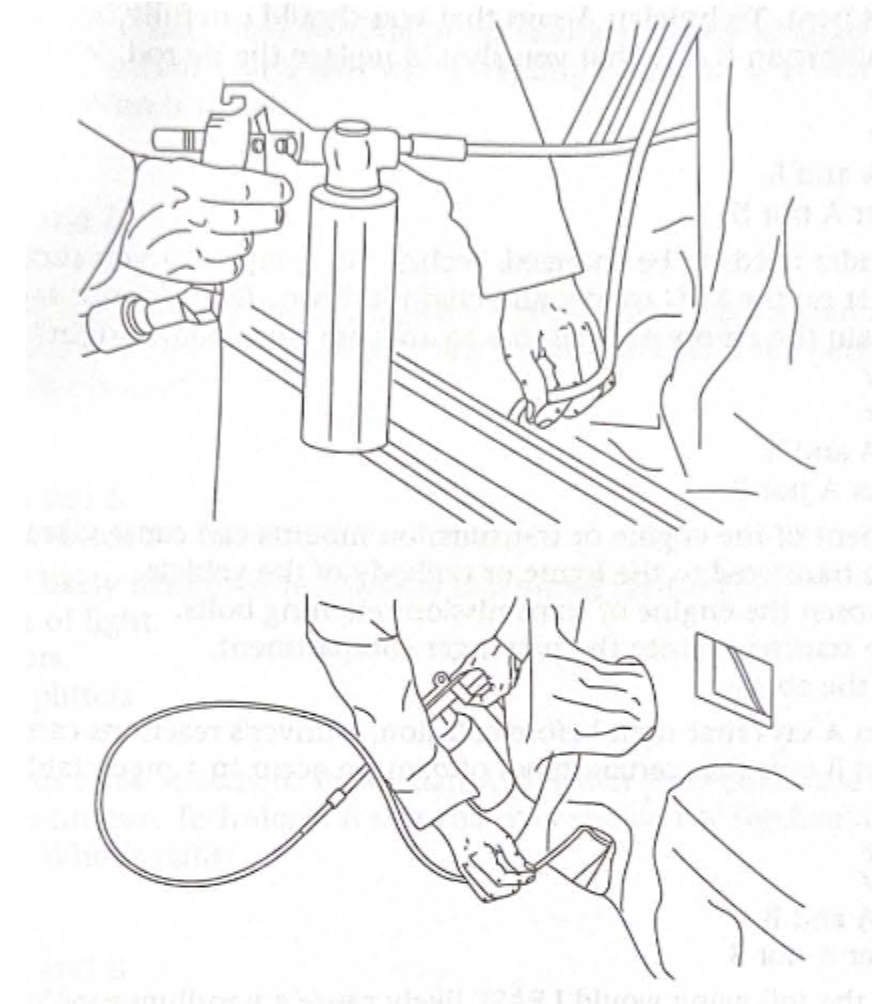
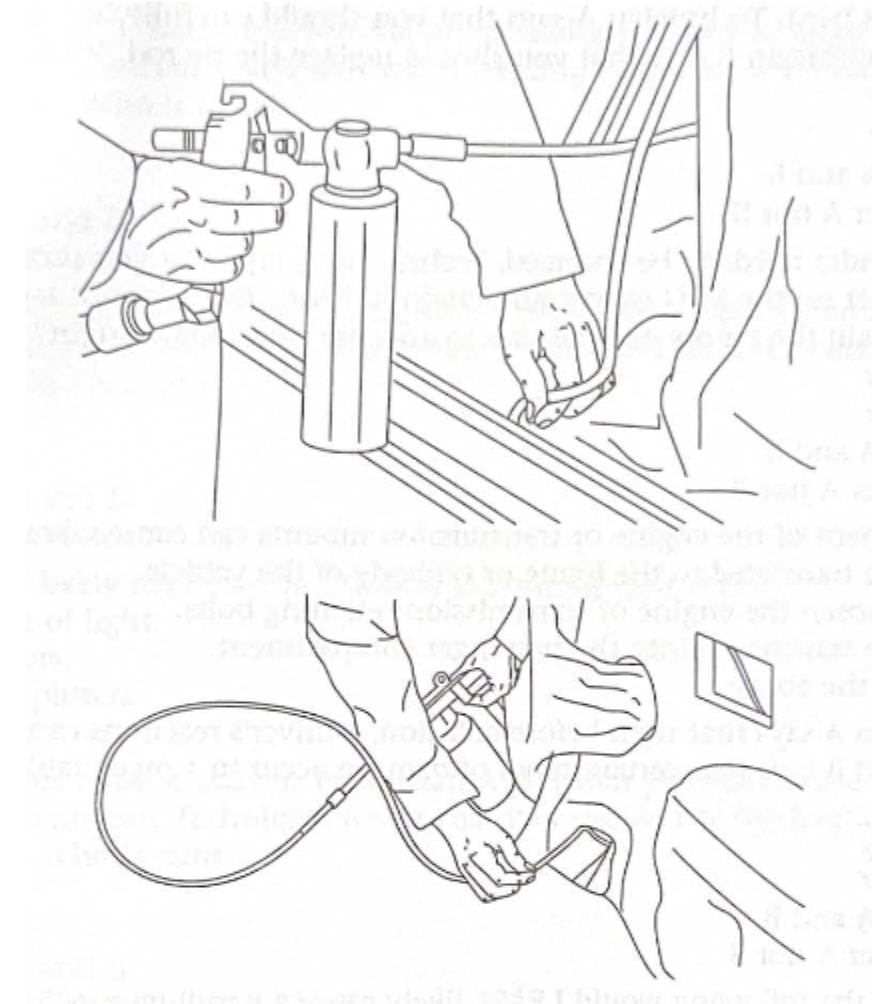
In the figure shown, technician A says that corrosion prevention implies the lifetime of the vehicle. Technician B says that corrosion protection is not the same as rustproofing. Who is right?
A. A only
B. B only
C. Both A and B
D. Neither A nor B
In the figure shown, technician A says that corrosion prevention implies the lifetime of the vehicle. Technician B says that corrosion protection is not the same as rustproofing. Who is right?
C. Both A and B
(B16)
Answer A is wrong. Technician A is right.
Answer B is wrong. Technician B is right.
Answer C is correct.
Answer D is wrong.
Bench fixtures can be used for all of the following functions EXCEPT:
A. to show where a reference point should be.
B. to allow accurate assembly of parts on the vehicle.
C. to provide gauging of all the reference points at the same time.
D. to take accurate actual measurements.
Bench fixtures can be used for all of the following functions EXCEPT:
D. to take accurate actual measurements.
(B5)
Answer A is wrong. The bench can show where a reference point should be.
Answer B is wrong. The bench can show accurate assembly of parts.
Answer C is wrong. The bench can gauge all reference points at the same time.
Answer D is correct. The bench does not take actual measurements.
Technician A says that the last areas to be damaged are aligned first. Technician B says that the first areas to be damaged are aligned last. Who is right?
A. A only
B. B only
C. Both A and B
D. Neither A nor B
Technician A says that the last areas to be damaged are aligned first. Technician B says that the first areas to be damaged are aligned last. Who is right? C. Both A and B
(B11)
Answer A is wrong. Technician A is right.
Answer B is wrong. Technician B is right.
Answer C is correct.
Answer D is wrong.
A magnet will stick to all of the following EXCEPT:
A. high-strength steel.
B. aluminum.
C. stainless steel.
D. mild steel.
A magnet will stick to all of the following EXCEPT:
B. aluminum.
(D1)
Answer A is wrong. A magnet will stick to high-strength steel.
Answer B is correct. A magnet will not stick to aluminum.
Answer C is wrong. A magnet will stick to stainless steel.
Answer D is wrong. A magnet will stick to mild steel.
A tie rod is bent. Technician A says that you should carefully heat and reshape the tie rod. Technician B says that you should replace the tie rod. Who is right?
A. A only
B. B only
C. Both A and B
D. Neither A nor B
A tie rod is bent. Technician A says that you should carefully heat and reshape the tie rod. Technician B says that you should replace the tie rod. Who is right?
B. B only
(B2)
Answer A is wrong. No damaged steering or suspension parts should be repaired.
Answer B is correct. Damaged steering or suspension parts should be replaced.
Answer C is wrong.
Answer D is wrong.
A gas cylinder needs to be changed. Technician A says that you should mount the gas cylinder on the MIG welder and chain it down. Technician B says that you should chain the empty gas cylinder to a secure area. Who is right?
A. A only
B. B only
C. Both A and B
D. Neither A nor B
A gas cylinder needs to be changed. Technician A says that you should mount the gas cylinder on the MIG welder and chain it down. Technician B says that you should chain the empty gas cylinder to a secure area. Who is right?
C. Both A and B
(D6)
Answer A is wrong. Technician A is right.
Answer B is wrong. Technician B is right.
Answer C is correct.
Answer D is wrong.
Misalignment of the engine or transmission mounts can cause vibrations that:
A. can be translated to the frame or unibody of the vehicle.
B. will loosen the engine or transmission retaining bolts.
C. can be transferred into the passenger compartment.
D. All of the above
Misalignment of the engine or transmission mounts can cause vibrations that:
C. can be transferred into the passenger compartment.
(A11)
Answer A is wrong. Technician A is right.
Answer B is wrong. Technician B is right.
Answer C is correct.
Answer D is wrong.
Technician A says that right before collision, a driver's reactions can be predicted. Technician B says that certain types of damage occur in a predictable pattern. Who is right?
A. A only
B. B only
C. Both A and B
D. Neither A nor B
Technician A says that right before collision, a driver's reactions can be predicted. Technician B says that certain types of damage occur in a predictable pattern. Who is right?
C. Both A and B
(B7)
Answer A is wrong. Technician A is right.
Answer B is wrong. Technician B is right.
Answer C is correct.
Answer D is wrong.
Which of the following would LEAST likely cause a handling problem?
A. Body mount system
B. Suspension system
C. Steering system
D. Power train system
Which of the following would LEAST likely cause a handling problem?
A. Body mount system
(B2)
Answer A is correct. The body mount system is the least likely of the listed systems to cause a handling problem.
Answer B is wrong. Damage to the suspension system could cause a handling problem.
Answer C is wrong. Damage to the steering system could cause a handling problem.
Answer D is wrong. Misalignment of the power train system could cause a handling problem.
What type of shielding gas is used when MIG welding?
A. 25% argon, 75% carbon dioxide
B. 25% carbon dioxide, 75% argon
C. 40% argon, 60% carbon dioxide
D. 40% carbon dioxide, 60% argon
What type of shielding gas is used when MIG welding?
B. 25% carbon dioxide, 75% argon
(D4)
Answer A is wrong. 25% carbon dioxide, 75% argon shielding gas is used when MIG welding.
Answer B is correct.
Answer C is wrong.
Answer D is wrong.
Which of the following describes a dedicated bench and fixture system?
A. Go-no-go gauge
B. Measurement gauge
C. Alignment rack
D. Frame straightener
Which of the following describes a dedicated bench and fixture system?
A. Go-no-go gauge
(B5)
Answer A is correct. A dedicated bench and fixture system is a go-no-go gauge.
Answer B is wrong.
Answer C is wrong.
Answer D is wrong.
Technician A says that all damaged structural panels can be sectioned. Technician B says that some manufacturers may not allow sectioning. Who is right?
A. A only
B. B only
C. Both A and B
D. Neither A nor B
Technician A says that all damaged structural panels can be sectioned. Technician B says that some manufacturers may not allow sectioning. Who is right?
B. B only
(B15)
Answer A is wrong. Some manufacturers may not allow sectioning of structural panels.
Answer B is correct. Some manufacturers may not allow sectioning of structural panels.
Answer C is wrong.
Answer D is wrong.
Technician A says that when welding horizontally, it is best to angle the gun downward. Technician B says that when welding overhead, it is best to have a larger puddle. Who is right?
A. A only
B. B only
C. Both A and B
D. Neither A nor B
Technician A says that when welding horizontally, it is best to angle the gun downward. Technician B says that when welding overhead, it is best to have a larger puddle. Who is right?
D. Neither A nor B
(D8)
Answer A is wrong. When welding horizontally, the gun should be angled up, not down.
Answer B is wrong. When welding overhead, the weld puddle should be kept small, otherwise molten metal may drip into the gun nozzle.
Answer C is wrong.
Answer D is correct.
All adhesive is removed prior to windshield installation. Technician A says that this is the full cutout method. Technician B says that this is the partial cutout method. Who is right?
A. A only
B. B only
C. Both A and B
D. Neither A nor B
All adhesive is removed prior to windshield installation. Technician A says that this is the full cutout method. Technician B says that this is the partial cutout method. Who is right?
A. A only
(C3)
Answer A is correct. The full cutout method means all adhesive is removed.
Answer B is wrong. The partial cutout method means that most of the adhesive is left in place.
Answer C is wrong.
Answer D is wrong.
The LEAST likely item used in the laser measuring system is:
A. a beam of light.
B. reflectors.
C. beam splitters.
D. targets.
The LEAST likely item used in the laser measuring system is:
B. reflectors.
(B6)
Answer A is wrong. A beam of light is needed.
Answer B is correct. Reflectors are the least likely to be needed.
Answer C is wrong. Beam splitters are needed.
Answer D is wrong. Targets are needed.
A dent needs to be stretched. Technician A says that you should use the hammer-on-dolly technique. Technician B says that you should use the hammer-off-dolly technique. Who is right?
A. A only
B. B only
C. Both A and B
D. Neither A nor B
A dent needs to be stretched. Technician A says that you should use the hammer-on-dolly technique. Technician B says that you should use the hammer-off-dolly technique. Who is right?
A. A only
(B14)
Answer A is correct. Hammer-on-dolly is used to stretch metal.
Answer B is wrong. Hammer-off-dolly is not used to stretch metal.
Answer C is wrong.
Answer D is wrong.
Technician A says that damaged side rails can be replaced. Technician B says that damaged cross members can be replaced. Who is right?
A. A only
B. B only
C. Both A and B
D. Neither A nor B
Technician A says that damaged side rails can be replaced. Technician B says that damaged cross members can be replaced. Who is right?
C. Both A and B
(A8)
Answer A is wrong. Technician A is right.
Answer B is wrong. Technician B is right.
Answer C is correct.
Answer D is wrong.
Welding at too rapid a pace can cause all the following EXCEPT:
A. poor penetration.
B. thin bead width.
C. dome-shaped bead.
D. burn through holes.
Welding at too rapid a pace can cause all the following EXCEPT:
D. burn through holes.
(D4)
Answer A is wrong. Poor penetration can result from welding too rapidly.
Answer B is wrong. Thin weld bead width can result from welding too rapidly.
Answer C is wrong. A dome-shaped bead can result from welding too rapidly.
Answer D is correct. Burn through holes are caused by welding too slowly.
Straightening a rear section of a vehicle requires attaching clamps or hooks to all the following EXCEPT:
A. the rear side member.
B. the rear floor pan.
C. the rear bumper.
D. the quarter panel.
Straightening a rear section of a vehicle requires attaching clamps or hooks to all the following EXCEPT:
C. the rear bumper.
(B10)
Answer A is wrong. The rear side member should be pulled.
Answer B is wrong. The rear floor pan should be pulled.
Answer C is correct. The rear bumper does not need to be pulled.
Answer D is wrong. The quarter panel should be pulled.
Technician A says the application of anti-rust agents is only necessary before welding. Technician B says the application of anti-rust agents is only necessary before painting. Who is right?
A. A only
B. B only
C. Both A and B
D. Neither A nor B
Technician A says the application of anti-rust agents is only necessary before welding. Technician B says the application of anti-rust agents is only necessary before painting. Who is right?
D. Neither A nor B
(B16)
Answer A is wrong. Anti-rust is needed before welding and before painting.
Answer B is wrong. Anti-rust is needed before welding and before painting.
Answer C is wrong.
Answer D is correct.
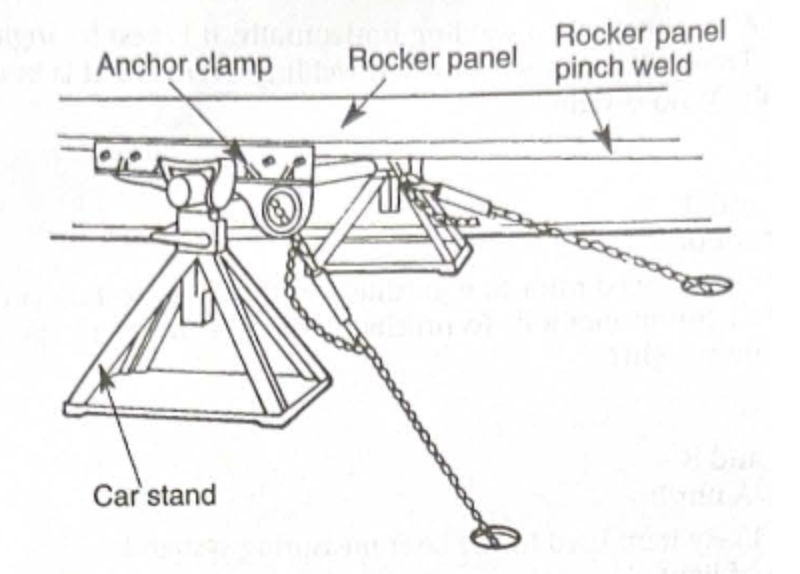
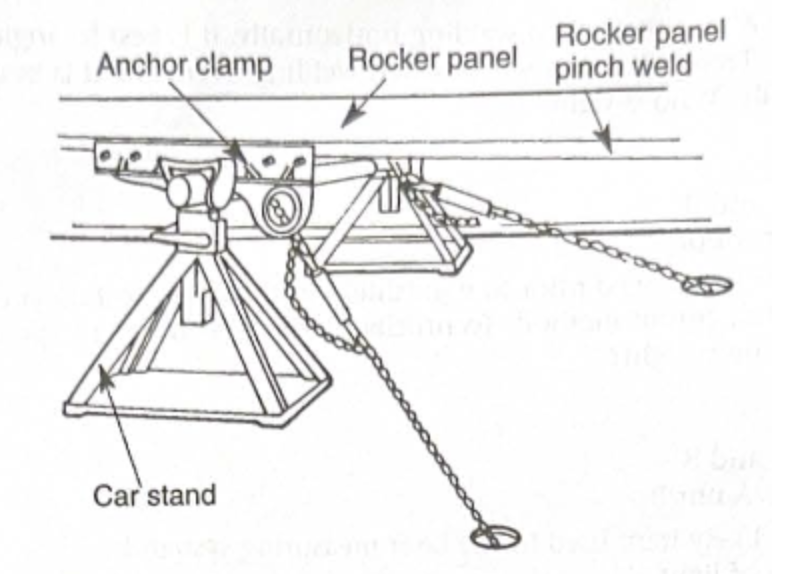
Technician A says that the set up pictured shown is used to anchor a full-frame vehicle. Technician B says that the setup pictured shown is used to anchor a unibody vehicle. Who is right?
A. A only
B. B only
C. Both A and B
D. Neither A nor B
Technician A says that the set up pictured shown is used to anchor a full-frame vehicle. Technician B says that the setup pictured shown is used to anchor a unibody vehicle. Who is right?
B. B only
(A2)
Answer A is wrong. Pinch weld clamps are used to anchor a unibody vehicle.
Answer B is correct. Pinch weld clamps are used to anchor a unibody vehicle.
Answer C is wrong.
Answer D is wrong.
To prevent panel warpage when butt welding thin panels, the welds should not be longer than:
A. 3/4 in.
B. 1 in.
C. 1 1/4 in.
D. 1 1/2 in.
To prevent panel warpage when butt welding thin panels, the welds should not be longer than:
A. 3/4 in.
(D12)
Answer A is correct. To prevent warpage, the welds should not be longer than 3/4 in. when butt welding thin panels.
Answer B is wrong.
Answer C is wrong.
Answer D is wrong.
If it is not possible to fit an insert into a cracked frame rail, the frame rail should be:
A. replaced.
B. welded.
C. straightened.
D. pulled.
If it is not possible to fit an insert into a cracked frame rail, the frame rail should be:
A. replaced.
(A10)
Answer A is correct. If an insert cannot be fitted, the cracked rail should be replaced.
Answer B is wrong.
Answer C is wrong.
Answer D is wrong.
Technician A says that diamond damage is corrected by pulling down on the high corner. Technician B says that diamond damage is corrected first when making frame pulls. Who is right?
A. A only
B. B only
C. Both A and B
D. Neither A nor B
Technician A says that diamond damage is corrected by pulling down on the high corner. Technician B says that diamond damage is corrected first when making frame pulls. Who is right?
D. Neither A nor B
(A7)
Answer A is wrong. Diamond damage does not involve a height problem.
Answer B is wrong. Diamond damage is corrected last.
Answer C is wrong.
Answer D is correct.
Weld-through primer is applied to bare metal before welding to:
A. prevent corrosion.
B. remove oil.
C. enhance the welding operation.
D. strengthen the weld joint.
Weld-through primer is applied to bare metal before welding to:
A. prevent corrosion.
(D10)
Answer A is correct. Weld-through primer prevents corrosion.
Answer B is wrong. Weld-through primer does not remove oil.
Answer C is wrong. Weld-through primer does not enhance welding.
Answer D is wrong. Weld-through primer does not strengthen the joint.
What type of welding technique has replaced earlier techniques and become commonplace?
A. Arc welding
B. Oxyacetylene welding
C. MIG welding
D. Spot welding
What type of welding technique has replaced earlier techniques and become commonplace?
C. MIG welding
(D2)
Answer A is wrong. MIG welding is the most widely used type of welding in a collision repair shop.
Answer B is wrong.
Answer C is correct.
Answer D is wrong.
The dolly block is used for all the following EXCEPT:
A. hard-to-reach areas.
B. a backing block.
C. unrolling buckles.
D. raising low areas.
The dolly block is used for all the following EXCEPT:
A. hard-to-reach areas.
(B14)
Answer A is correct. A spoon, not a dolly, is used in hard-to-reach areas.
Answer B is wrong. A dolly is used as a backing block.
Answer C is wrong. A dolly can be used to unroll buckles.
Answer D is wrong. A dolly can be used to raise low areas.
Technician A says a three dimensional laser can measure all three dimensions, but only two at a time. Technician B says a three dimensional laser system has four-wheel alignment capability. Who is right?
A. A only
B. B only
C. Both A and B
D. Neither A nor B
Technician A says a three dimensional laser can measure all three dimensions, but only two at a time. Technician B says a three dimensional laser system has four-wheel alignment capability. Who is right?
B. B only
(B6)
Answer A is wrong. A three dimensional laser can measure three dimensions at once.
Answer B is correct. A three dimensional laser has four-wheel alignment capability.
Answer C is wrong.
Answer D is wrong.
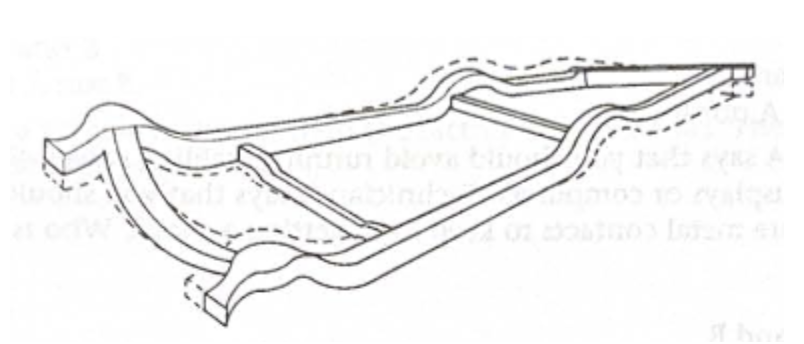
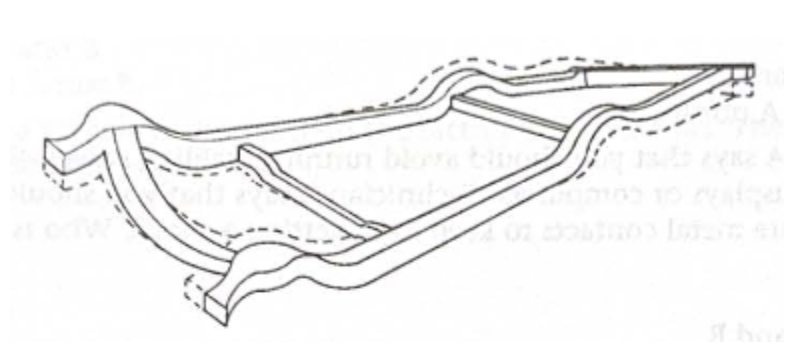
The damage picture shown, confined to the center section of the vehicle is:
A. mash.
B. sag.
C. twist.
D. kickup.
The damage picture shown, confined to the center section of the vehicle is:
C. twist.
(A6)
Answer A is wrong. Mash damage is shown in the drawing.
Answer B is wrong. Sag is shown at the left front and right rear.
Answer C is correct. Twist means that the front and rear portions of the center section are not level, double kickup and double sag.
Answer D is wrong. Kickup is shown on the right front and left rear.
A continuous weld needs to be removed. Technician A says that you should use an air chisel. Technician B says that you should use a cut-off wheel. Who is right?
A. A only
B. B only
C. Both A and B
D. Neither A nor B
A continuous weld needs to be removed. Technician A says that you should use an air chisel. Technician B says that you should use a cut-off wheel. Who is right?
B. B only
(D16)
Answer A is wrong. An air chisel may cut into the weld site.
Answer B is correct. A cut-off wheel is easier to control.
Answer C is wrong.
Answer D is wrong.
A unibody vehicle is anchored by how many pinch weld clamps?
A. One
B. Two
C. Three
D. Four
A unibody vehicle is anchored by how many pinch weld clamps?
D. Four
(A2)
Answer A is wrong.
Answer B is wrong.
Answer C is wrong.
Answer D is correct. Four pinch weld clamps are needed to anchor a unibody vehicle.
When stress-relieving damaged metal, technician A says original state means original strength. Technician B says original state means original form. Who is right?
A. A only
B. B only
C. Both A and B
D. Neither A nor B
When stress-relieving damaged metal, technician A says original state means original strength. Technician B says original state means original form. Who is right?
C. Both A and B
(B12)
Answer A is wrong. Technician A is right.
Answer B is wrong. Technician B is right.
Answer C is correct.
Answer D is wrong.
A vehicle has kickup damage on the rail. Technician A says that you should anchor the vehicle’s center section and hold the undamaged rail at the proper height. Technician B says that you should pull down on the high rail. Who is right?
A. A only
B. B only
C. Both A and B
D. Neither A nor B
A vehicle has kickup damage on the rail. Technician A says that you should anchor the vehicle’s center section and hold the undamaged rail at the proper height. Technician B says that you should pull down on the high rail. Who is right?
C. Both A and B
(A4)
Answer A is wrong. Technician A is right.
Answer B is wrong. Technician B is right.
Answer C is correct.
Answer D is wrong.
A vehicle has been involved in an impact. After the repair process is completed, the vehicle’s transmission performs erratically. Technician A says that the engine and/or the transmission mounts may be misaligned. Technician B says that the transmission may have been damaged in the accident. Who is right?
A. A only
B. B only
C. Both A and B
D. Neither A nor B
A vehicle has been involved in an impact. After the repair process is completed, the vehicle’s transmission performs erratically. Technician A says that the engine and/or the transmission mounts may be misaligned. Technician B says that the transmission may have been damaged in the accident. Who is right?
C. Both A and B
(A11)
Answer A is wrong. Technician A is right.
Answer B is wrong. Technician B is right.
Answer C is correct.
Answer D is wrong.
Technician A says that if different types of materials are welded, they may not mix correctly, causing a poor or weak weld. Technician B says that a cosmetically poor weld will also be a poor or weak weld, structurally speaking. Who is right?
A. A only
B. B only
C. Both A and B
D. Neither A nor B
Technician A says that if different types of materials are welded, they may not mix correctly, causing a poor or weak weld. Technician B says that a cosmetically poor weld will also be a poor or weak weld, structurally speaking. Who is right?
C. Both A and B
(D13)
Answer A is wrong. Technician A is right.
Answer B is wrong. Technician B is right.
Answer C is correct.
Answer D is wrong.
Technician A says that you should avoid running welding cables close to electronic displays or computers. Technician B says that you should avoid touching bare metal contacts to keep from getting a shock. Who is right?
A. A only
B. B only
C. Both A and B
D. Neither A nor B
Technician A says that you should avoid running welding cables close to electronic displays or computers. Technician B says that you should avoid touching bare metal contacts to keep from getting a shock. Who is right?
A. A only
(D9)
Answer A is correct. Welding cables close to electronic components may produce currents that could damage the electronics.
Answer B is wrong. Touching bare metal contacts should not be done with hands. Oil from the skin can cause corrosion, not shocks.
Answer C is wrong.
Answer D is wrong.
A frame rail is higher than the specified height. This damage is known as:
A. sag.
B. mash.
C. side sway.
D. kickup.
A frame rail is higher than the specified height. This damage is known as:
D. kickup.
(A4)
Answer A is wrong. Sag means that a frame rail is lower than the specified height.
Answer B is wrong. Mash means a frame rail is shorter than specified.
Answer C is wrong. Side sway means the vehicle’s centerline is off.
Answer D is correct. Kickup means that a frame rail is higher than the specified height.
Gas cylinders either on a cart or in the shop should always be:
A. filled.
B. emptied.
C. heated.
D. supported.
Gas cylinders either on a cart or in the shop should always be:
D. supported.
(D6)
Answer A is wrong. Gas cylinders do not need to be filled.
Answer B is wrong. Gas cylinders do not need to be emptied.
Answer C is wrong. Gas cylinders should never be heated.
Answer D is correct. Gas cylinders should always be supported to prevent from falling.
Modular glass is made with a:
A. gasket.
B. molding.
C. sunscreen.
D. shade.
Modular glass is made with a:
B. molding.
(C2)
Answer A is wrong.
Answer B is correct. Modular glass is made with a molding.
Answer C is wrong.
Answer D is wrong.
A replacement part is to be welded. Technician A says that you should align the part before welding. Technician B says that you should spray on weld-through primer prior to alignment. Who is right?
A. A only
B. B only
C. Both A and B
D. Neither A nor B
A replacement part is to be welded. Technician A says that you should align the part before welding. Technician B says that you should spray on weld-through primer prior to alignment. Who is right?
C. Both A and B
(D16)
Answer A is wrong. Technician A is right.
Answer B is wrong. Technician B is right.
Answer C is correct.
Answer D is wrong.
Technician A says that as long as a frame splice is properly welded, it may be located in a crush zone. Technician B says that you should avoid crush zones whenever considering a splice joint location. Who is right?
A. A only
B. B only
C. Both A and B
D. Neither A nor B
Technician A says that as long as a frame splice is properly welded, it may be located in a crush zone. Technician B says that you should avoid crush zones whenever considering a splice joint location. Who is right?
B. B only
(A8)
Answer A is wrong. Splice joints should not be located in crush zones.
Answer B is correct. Splice joints should not be located in crush zones.
Answer C is wrong.
Answer D is wrong.
A unibody vehicle has severe damage from a side impact. Technician A says that you should push in on the undamaged side. Technician B says that you pull the rear section rearward. Who is right?
A. A only
B. B only
C. Both A and B
D. Neither A nor B
A unibody vehicle has severe damage from a side impact. Technician A says that you should push in on the undamaged side. Technician B says that you pull the rear section rearward. Who is right?
D. Neither A nor B
(B9)
Answer A is wrong. The correct way to straighten a banana hit is a double stretch pull on the end sections and an outward pull on the center section.
Answer B is wrong. The correct way to straighten a banana hit is a double stretch pull on the end sections and an outward pull on the center section.
Answer C is wrong.
Answer D is correct.
Technician A says that self-etching primer may be used to protect a bare metal area on a frame. Technician B says that epoxy primer may be used to protect a bare metal area on a frame. Who is right?
A. A only
B. B only
C. Both A and B
D. Neither A nor B
Technician A says that self-etching primer may be used to protect a bare metal area on a frame. Technician B says that epoxy primer may be used to protect a bare metal area on a frame. Who is right?
C. Both A and B
(A9)
Answer A is wrong. Technician A is right.
Answer B is wrong. Technician B is right.
Answer C is correct.
Answer D is wrong.
A frame of a vehicle is shorter than the factory specifications. This is an indication of what type of damage?
A. Mash
B. Twist
C. Sag
D. Kickup
A frame of a vehicle is shorter than the factory specifications. This is an indication of what type of damage?
A. Mash
(A3)
Answer A is correct. A shorter than normal rail has mash damage.
Answer B is wrong.
Answer C is wrong.
Answer D is wrong.
Which dimension is restored first?
A. Length
B. Centerline
C. Height
D. Width
Which dimension is restored first?
A. Length
(B11)
Answer A is correct. Length is restored first.
Answer B is wrong. Centerline is restored second.
Answer C is wrong. Height is restored third.
Answer D is wrong. Width or centerline is restored second.
All of the following should be worn when MIG welding galvanized steel EXCEPT:
A. sunglasses.
B. gloves.
C. a welding helmet with grade 9 or 10 lens.
D. a respirator.
All of the following should be worn when MIG welding galvanized steel EXCEPT:
A. sunglasses.
(D5)
Answer A is correct. Sunglasses do not give adequate protection.
Answer B is wrong. Gloves should be worn.
Answer C is wrong. A welding helmet with a 9 or 10 lens should be worn.
Answer D is wrong. A respirator should be worn when welding galvanized steel.
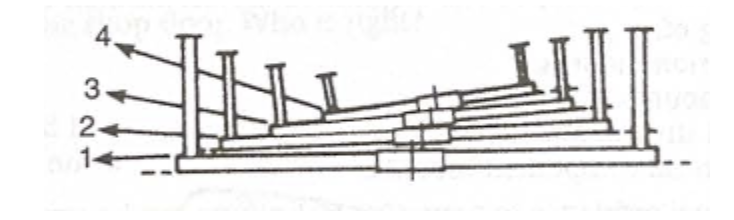
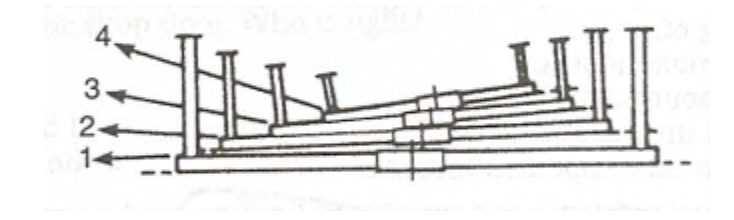
The drawing shown represents:
A. tram gauges.
B. laser measurement.
C. self-centering gauges.
D. bench measurement.
The drawing shown represents:
C. self-centering gauges.
(B3)
Answer A is wrong. Technician A is right.
Answer B is wrong. Technician B is right.
Answer C is correct.
Answer D is wrong.
A vehicle has side sway in the center section. Technician A says that you should anchor the center section. Technician B says that you should anchor the rear section. Who is right?
A. A only
B. B only
C. Both A and B
D. Neither A nor B
A vehicle has side sway in the center section. Technician A says that you should anchor the center section. Technician B says that you should anchor the rear section. Who is right?
D. Neither A nor B
(A5)
Answer A is wrong. The center section must be able to move. Do not anchor it.
Answer B is wrong. Both the front and rear sections should be anchored in a way that allows them to move.
Answer C is wrong.
Answer D is correct.
The purpose of an anchoring system is to:
A. measure the damage.
B. hold the vehicle solidly in place.
C. pull out the damage.
D. lift the vehicle.
The purpose of an anchoring system is to:
B. hold the vehicle solidly in place.
(B8)
Answer A is wrong. The anchoring system does not measure the vehicle.
Answer B is correct. The anchoring system holds the vehicle in place.
Answer C is wrong. The anchoring system does not pull out the damage.
Answer D is wrong. The anchoring system’s main purpose is not to lift the vehicle.
The letters MIG stand for:
A. metal invert gap.
B. metal invert gas.
C. metal insert gas.
D. metal invert gas.
The letters MIG stand for:
B. metal invert gas.
(D1)
Answer A is wrong. The letters MIG stand for metal inert gas.
Answer B is correct.
Answer C is wrong.
Answer D is wrong.
A damaged panel has twenty spot welds. How many plug welds should be placed in the replacement panel?
A. Five
B. Ten
C. Fifteen
D. Twenty
A damaged panel has twenty spot welds. How many plug welds should be placed in the replacement panel?
D. Twenty
(D15)
Answer A is wrong.
Answer B is wrong.
Answer C is wrong.
Answer D is correct. Twenty plug welds should replace twenty spot welds.
When electronic parts and their connectors are removed, they should be protected by putting them in:
A. the trunk of the vehicle.
B. plastic cases.
C. a wooden box.
D. anti-static bags.
When electronic parts and their connectors are removed, they should be protected by putting them in:
D. anti-static bags.
(D9)
Answer A is wrong. The trunk may be dusty.
Answer B is wrong. A plastic case does not protect from dust.
Answer C is wrong. A wooden box does not necessarily protect from dust.
Answer D is correct. Anti-static bags protect electronic components from dust.
Technician A says that holes in the weld are called weld distortion. Technician B says that holes in the weld are called weld porosity. Who is right?
A. A only
B. B only
C. Both A and B
D. Neither A nor B
Technician A says that holes in the weld are called weld distortion. Technician B says that holes in the weld are called weld porosity. Who is right?
B. B only
(D13)
Answer A is wrong. Weld distortion is uneven weld bead, not porosity.
Answer B is correct. Weld porosity is holes in the weld.
Answer C is wrong.
Answer D is wrong.
A back glass is to be removed. Technician A says that you should use a pneumatic knife. Technician B says that you should use piano wire. Who is right?
A. A only
B. B only
C. Both A and B
D. Neither A nor B
A back glass is to be removed. Technician A says that you should use a pneumatic knife. Technician B says that you should use piano wire. Who is right?
C. Both A and B
(C1)
Answer A is wrong. Technician A is right.
Answer B is wrong. Technician B is right.
Answer C is correct.
Answer D is wrong.
All appearance fits and suspension alignments are determined by the accuracy of the positioning of:
A. the suspension mounts.
B. the body mounts.
C. the welded structural panels.
D. the mechanical component mounts.
All appearance fits and suspension alignments are determined by the accuracy of the positioning of:
C. the welded structural panels.
(B15)
Answer A is wrong. The suspension mounts do not influence appearance fit.
Answer B is wrong. The body mounts do not influence suspension alignment.
Answer C is correct. The position of welded panels determines appearance fit and suspension alignment.
Answer D is wrong. The mechanical component mounts do not influence appearance fit.
A metal's internal resistance to corrective techniques can be caused by all of the following EXCEPT:
A. improper pull angle.
B. OEM stamping.
C. improper welding techniques.
D. deformation.
A metal's internal resistance to corrective techniques can be caused by all of the following EXCEPT:
A. improper pull angle.
(B12)
Answer A is correct. Stress is not caused by improper pull angle.
Answer B is wrong. Stress is caused by OEM stamping.
Answer C is wrong. Stress can be caused by improper welding.
Answer D is wrong. Stress can be caused by deformation.
A plug weld is the body shop equivalent to a factory:
A. spot weld.
B. butt weld.
C. lap weld.
D. flange weld.
A plug weld is the body shop equivalent to a factory:
A. spot weld.
(D12)
Answer A is correct. A plug weld is equivalent to a factory spot weld.
Answer B is wrong.
Answer C is wrong.
Answer D is wrong.
When straightening a large panel or member, the LEAST likely tool used is a:
A. hammer.
B. wood block.
C. spoon.
D. oxyacetylene torch.
When straightening a large panel or member, the LEAST likely tool used is a:
D. oxyacetylene torch.
(B13)
Answer A is wrong. A hammer can be used to straighten a panel.
Answer B is wrong. A wood block can be used to straighten a panel.
Answer C is wrong. A spoon can be used to straighten a panel.
Answer D is correct. An oxyacetylene torch is the least likely tool to be used.
When using MIG welding, as shown above, what determines the proper arc length?
A. Shielding gas flow
B. Wire thickness
C. Penetration
D. Arc voltage
When using MIG welding, as shown above, what determines the proper arc length?
D. Arc voltage
(D4)
Answer A is wrong. Proper arc length is determined by arc voltage.
Answer B is wrong.
Answer C is wrong.
Answer D is correct.
Technician A uses a magnet to determine if a metal is steel. Technician B says that if a metal is not magnetic and it turns a dull gray when brushed with a stainless steel brush, it is aluminum. Who is right?
A. A only
B. B only
C. Both A and B
D. Neither A nor B
Technician A uses a magnet to determine if a metal is steel. Technician B says that if a metal is not magnetic and it turns a dull gray when brushed with a stainless steel brush, it is aluminum. Who is right?
A. A only
(D1)
Answer A is correct. A magnet can be used to identify steel.
Answer B is wrong. A non-magnetic, dull-when-brushed metal is magnesium.
Answer C is wrong.
Answer D is wrong.
Technician A says in-floor straightening systems have small steel cups cemented in the shop floor. Technician B says in-floor straightening systems have rails cemented in the shop floor. Who is right?
A. A only
B. B only
C. Both A and B
D. Neither A nor B
Technician A says in-floor straightening systems have small steel cups cemented in the shop floor. Technician B says in-floor straightening systems have rails cemented in the shop floor. Who is right?
C. Both A and B
(B8)
Answer A is wrong. Technician A is right.
Answer B is wrong. Technician B is right.
Answer C is correct.
Answer D is wrong.
The figure above shows the measuring of undersurface dimensions. These measuring dimensions must be held to within a maximum value of less than:
A. 1/4 in. (6.4 mm).
B. 1/8 in. (3.2 mm).
C. 1/16 in. (1.6 mm).
D. 1/32 in. (0.8 mm).
The figure above shows the measuring of undersurface dimensions. These measuring dimensions must be held to within a maximum value of less than:
B. 1/8 in. (3.2 mm).
(B1)
Answer A is wrong.
Answer B is correct. The maximum tolerance for a unibody vehicle is 1/8 in. or 3.2 mm.
Answer C is wrong.
Answer D is wrong.
Technician A says that the work clamp should be attached to painted steel. Technician B says that the work clamp should be attached to bare steel. Who is right?
A. A only
B. B only
C. Both A and B
D. Neither A nor B
Technician A says that the work clamp should be attached to painted steel. Technician B says that the work clamp should be attached to bare steel. Who is right?
B. B only
(D7)
Answer A is wrong. The work clamp must be attached to bare, not painted, steel.
Answer B is correct. The work clamp must be attached to bare, not painted, steel.
Answer C is wrong.
Answer D is wrong.
A cracked frame rail is to be repaired. Technician A says that you should obtain an insert that is made of the same material as the cracked frame rail. Technician B says that you should cut the insert so it is three inches long. Who is right?
A. A only
B. B only
C. Both A and B
D. Neither A nor B
A cracked frame rail is to be repaired. Technician A says that you should obtain an insert that is made of the same material as the cracked frame rail. Technician B says that you should cut the insert so it is three inches long. Who is right?
A. A only
(A10)
Answer A is correct. The insert should be made of the same material as the damaged frame rail.
Answer B is wrong. The insert is usually at least twelve inches in length.
Answer C is wrong.
Answer D is wrong.
A damaged high-strength steel structural part is to be heated. Technician A says that you should heat the steel to cherry red and cool with a wet rag. Technician B says that you should follow manufacturer's recommendations for heating. Who is right?
A. A only
B. B only
C. Both A and B
D. Neither A nor B
A damaged high-strength steel structural part is to be heated. Technician A says that you should heat the steel to cherry red and cool with a wet rag. Technician B says that you should follow manufacturer's recommendations for heating. Who is right?
B. B only
(B12)
Answer A is wrong. Always follow manufacturer’s recommendations for heating HSS.
Answer B is correct. Always follow manufacturer’s recommendations for heating HSS.
Answer C is wrong.
Answer D is wrong.
How many self-centering gauges should be placed on a vehicle?
A. Two
B. Four
C. Six
D. Eight
How many self-centering gauges should be placed on a vehicle?
B. Four
(B3)
Answer A is wrong.
Answer B is correct. Four self-centering gauges should be hung on a vehicle.
Answer C is wrong.
Answer D is wrong.
All of the following should be removed before removing a spot weld EXCEPT:
A. paint film.
B. undercoating.
C. anti-rust agents.
D. sealer.
All of the following should be removed before removing a spot weld EXCEPT:
C. anti-rust agents.
(D15)
Answer A is wrong. Paint film should be removed.
Answer B is wrong. Undercoating should be removed.
Answer C is correct. Anti-rust agents do not have to be removed.
Answer D is wrong. Sealer should be removed.
A panel is being prepped for MIG welding. Technician A says that paint must be removed from the surface. Technician B says that a sander can be used to remove the paint. Who is right?
A. A only
B. B only
C. Both A and B
D. Neither A nor B
A panel is being prepped for MIG welding. Technician A says that paint must be removed from the surface. Technician B says that a sander can be used to remove the paint. Who is right?
C. Both A and B
(D10)
Answer A is wrong. Technician A is right.
Answer B is wrong. Technician B is right.
Answer C is correct.
Answer D is wrong.
What type of weld requires special welding nozzles and settings to be used on a MIG welder?
A. Plug weld
B. Lap weld
C. Flange weld
D. Spot weld
What type of weld requires special welding nozzles and settings to be used on a MIG welder?
D. Spot weld
(D12)
Answer A is wrong. A plug weld requires no special nozzle or settings.
Answer B is wrong. A lap weld requires no special nozzle or settings.
Answer C is wrong. A flange weld requires no special nozzle or settings.
Answer D is correct. A spot weld requires a special nozzle and settings.
 Note
Note  Flashcards (32)