Research Methodology
 Studied by 1 person
 Call Kai
 Learn
Learn Practice Test
 Spaced Repetition
 Match
Match Flashcards
 Knowt Play
1/98

There's no tags or description
Looks like no tags are added yet.
Name | Mastery | Learn | Test | Matching | Spaced | Call with Kai |
|---|
No analytics yet
Send a link to your students to track their progress
99 Terms
Review of Research Process
Identification of general problem/question
Literature review
Specify questions/hypothesis
Determination of design/methodology
Data collection
Data analysis/presentation
Interpretation of findings
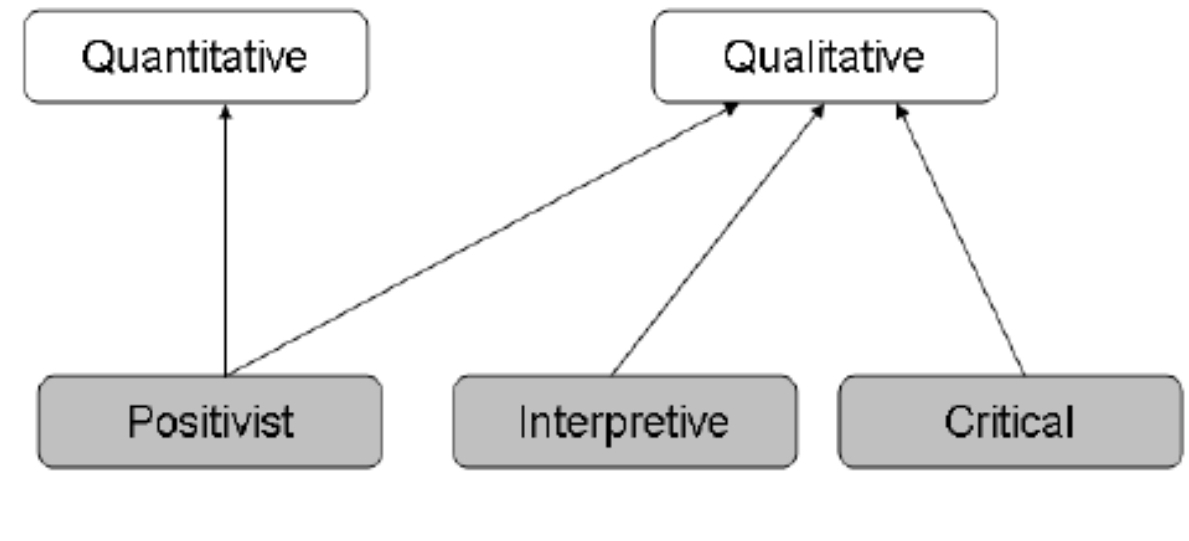
Based upon the idea of LOGICAL POSITIVISM
there is singular reality with stable, social facts that are separate from the feelings and beliefs of individuals
Quantitative
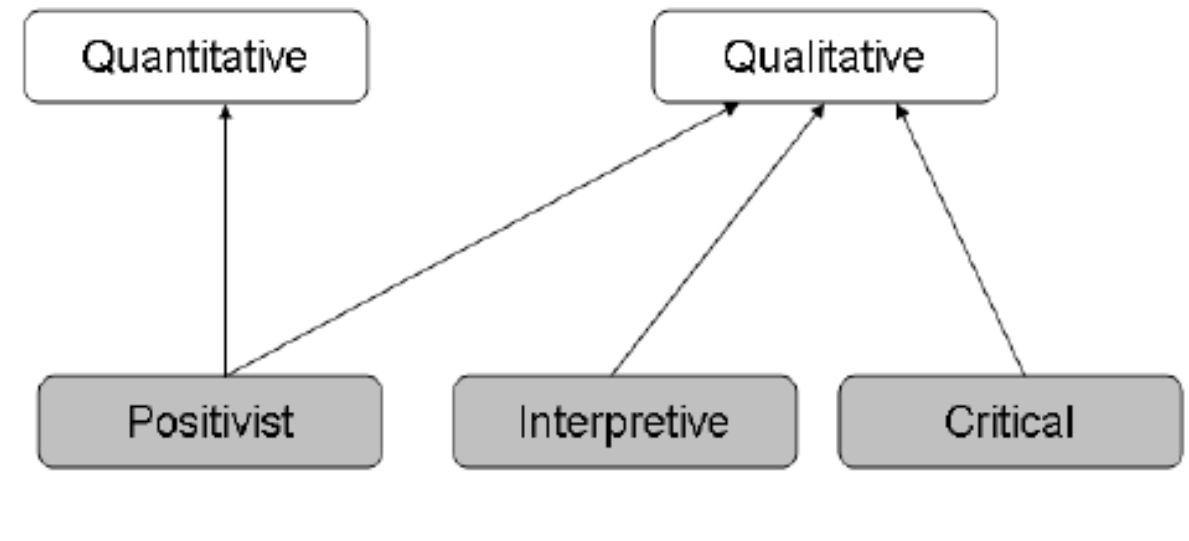
Based on CONSTRUCTIVISM
Multiple realities that are socially constructed through individual and collective perceptions or views of the same situations
Qualitative
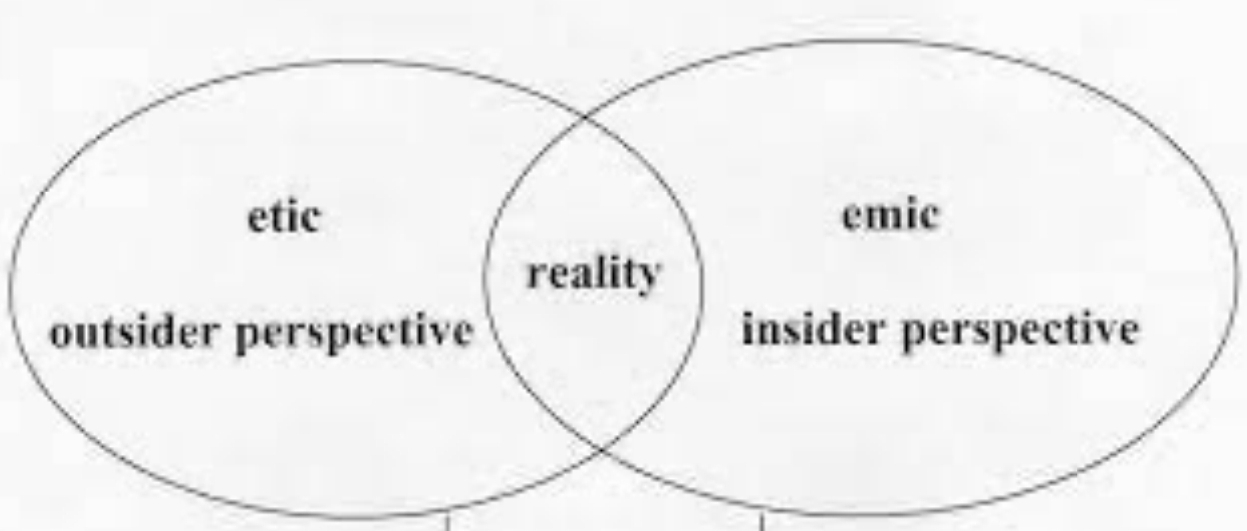
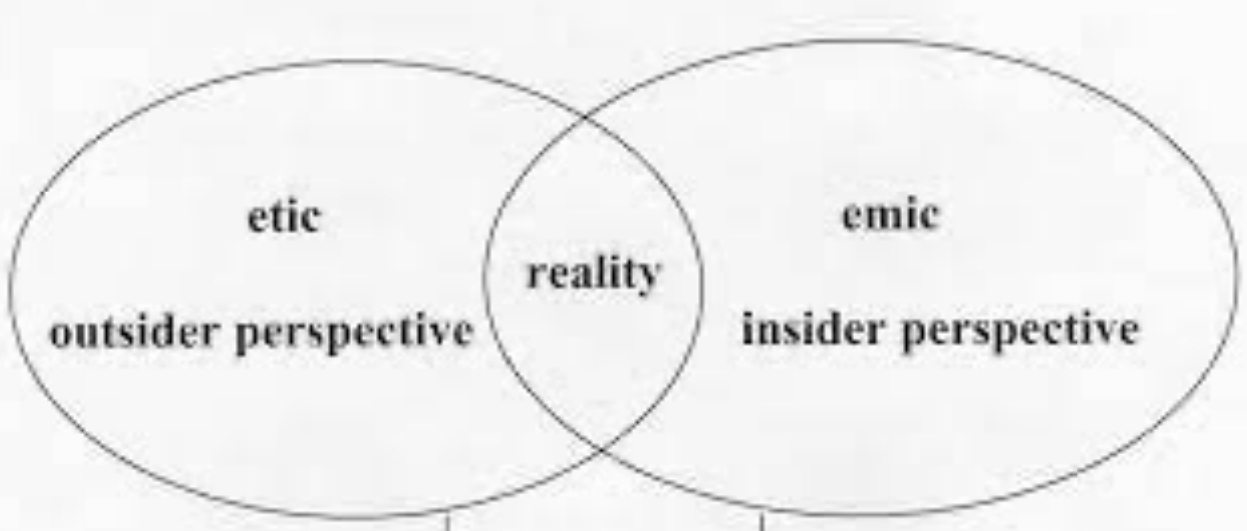
Concern is with the understanding of social phenomenon from participant's perspective
Requires researcher's participation
Qualitative
Seeks to establish relationships and explain causes of changes in measured variables
Goal of science is to explain and predict
Quantitative
Data Type in Qualitative
Words
Objects
Pictures
Observations
Symbols
Data Type in Quantitative
Number and Statistics
Quantitative research is also known as
Priori or pre-established design
Use of emergent design utilizing constant comparison and revision
Qualitative research
Descriptive
Correlational
Causal-comparative
Experimental
Quantitative
Ethnography
Narrative
Phenomenological
Grounded theory
Case study
Qualitative
Used to reduced error, bias, and influence of extraneous variables
Control of bias is through design
Experimental or correlational designs
Helps readers understand the multiple perspectives of the situation by persons studied
Subjectivity in data analysis and interpretation is acknowledged
Ethnography
Detachment from study in order to avoid bias
Quantitative
Immersion in the situation and phenomenon being studied
Qualitative
Obtained through the use of measurements and statistics
Quantitative
Provided by detailed description of phenomenon
Qualitative
Results replicated by others
Quantitative
Extension of understanding by others
Qualitative
Who, what where, when
Quantitative
Why, how
Qualitative
Match with outcomes about knowledge and comprehension
Quantitative
Match with outcomes about application, analysis, synthesis, evaluate
Qualitative
May be generalized to greater population with larger samples
Easily replicated
Quantitative
Seeks to explain and understand
Ability to capture elusive evidence of student learning and development
Qualitative
Qualitative research uses _ reasoning
INDUCTIVE
Obeservation or experiment > generalizations > paradigm or theory
Quantitative research uses _ reasoning
DEDUCTIVE
Paradigm or theory > predictions > experiment or observations
Epidemiological Studies
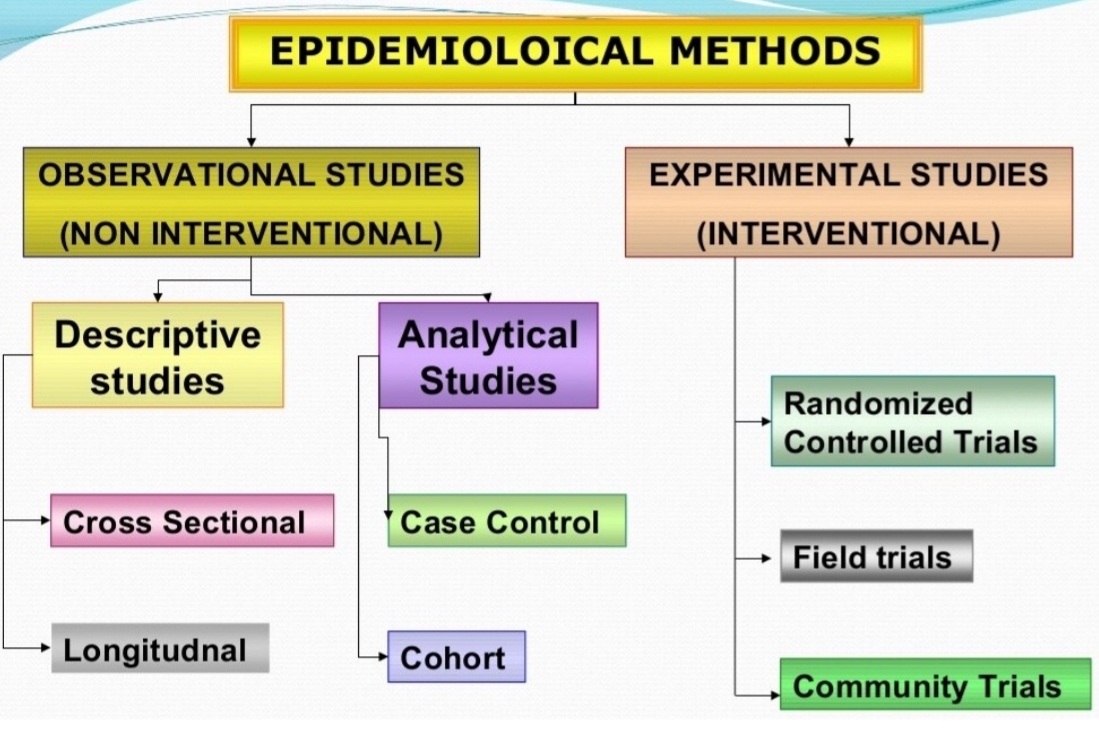
Hierarchy of Research Designs
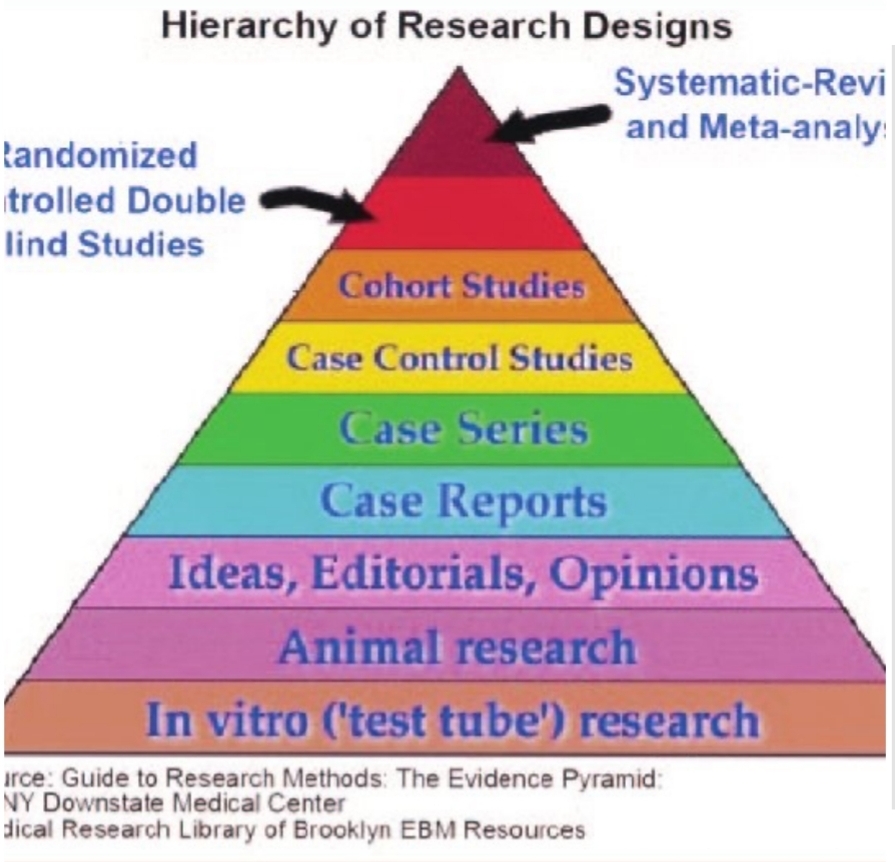
Hierarchy of Research Design
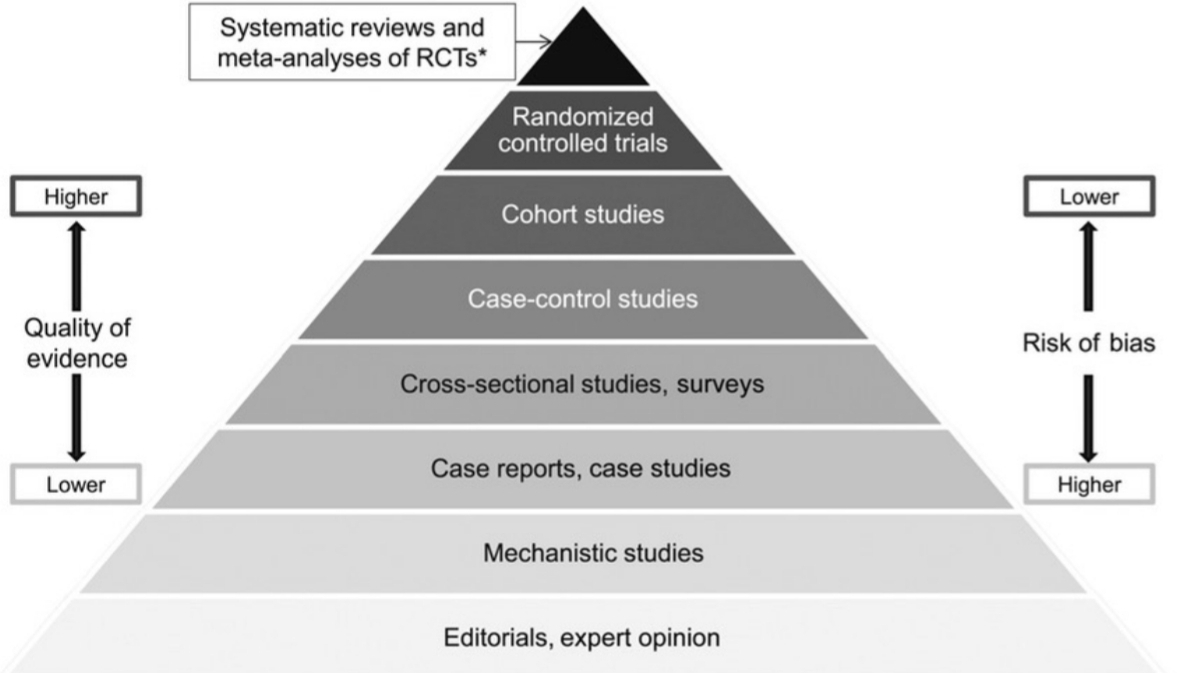
Study Design Sequence
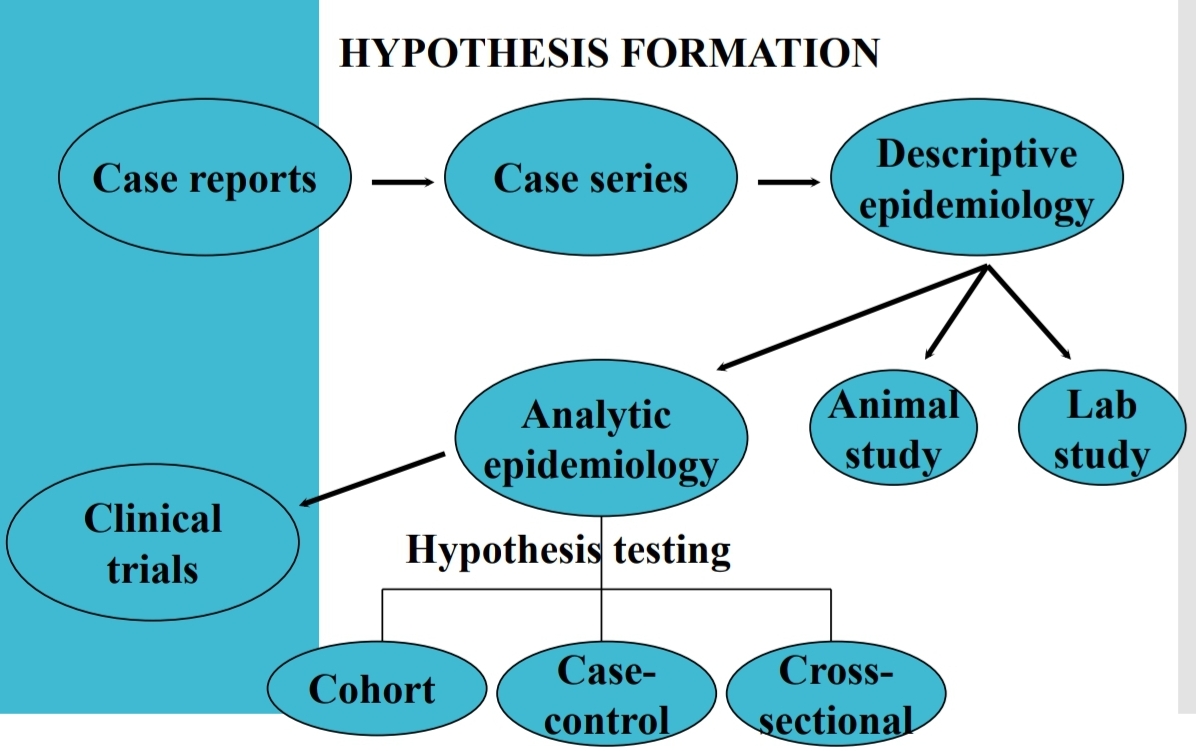
Types of Quantitative Studies
Descriptive
True experimental
Quasi-experimental
Correlational
Predictive
Research using Primary Data
Cross-sectional
Case control
Cohort
Randomized controlled trial
Data gathered at one point in time
Often used for surveys
Cannot make interferences about causality
Cross-sectional study
Start with the outcome
Identify a samp,e with condition of interest
Identify similar control group
Look back to determine exposure
Calculate the risk in cases and controls
Cannot use established prevalence
Case Control study
Start with identified group
Determine exposurein everyone at the same time
Follow the groupto determine who develops the outcome of interest
Can be used to determine prevalence
Association measured as relative risk (rate ratios)
Cohort Study
Gold standard for determining associations
Identify a group
Randomly assigned individuals to exposure
Only reliable way tocontrolfor confounding factors
Randomized controlled trial
Research using secondary data
Literature review
Systematic review
Meta-analysis
Analysis of existing data collected for another purpose
Gather articles on a topic of interest
Summarizethe findings
Literature review
Gather articles using a pre-defined search strategy—may include unpublished studies
Develop a priori objective criteria to evaluate quality of studies
Summarize the quality of data and results
Systematic review
Do a systematic review
Obtain primary data if possible
Summarize the data quantitatively
Meta-analysis
Fundamental assumption in Epidemiology and Health Research
Disease doesnt occur in a vacuum
Disease is not randomly distributed
Uses a systematic approach to study the differences in disease distribution in subgroups
Allows for study of causal and preventive factors
Epidemiology
Components of Epidemiology
Disease frequency
Distribution of disease
Determinants of disease
Quantify disease
Disease frequency
Who is getting disease?
Where is disease occuring?
When is disease occuring?
Formulation of hypothesis concerning causaland preventive factors
Distribution of disease
Hypothesis are tested using epidemiologic studies
Determinants of disease
Types of Primary Studies
Descriptive studies
Analytic studies
Describe occurence of outcome
Descriptive studies
Describe assocaition between exposure and outcome
Analytic studies
Research Designs
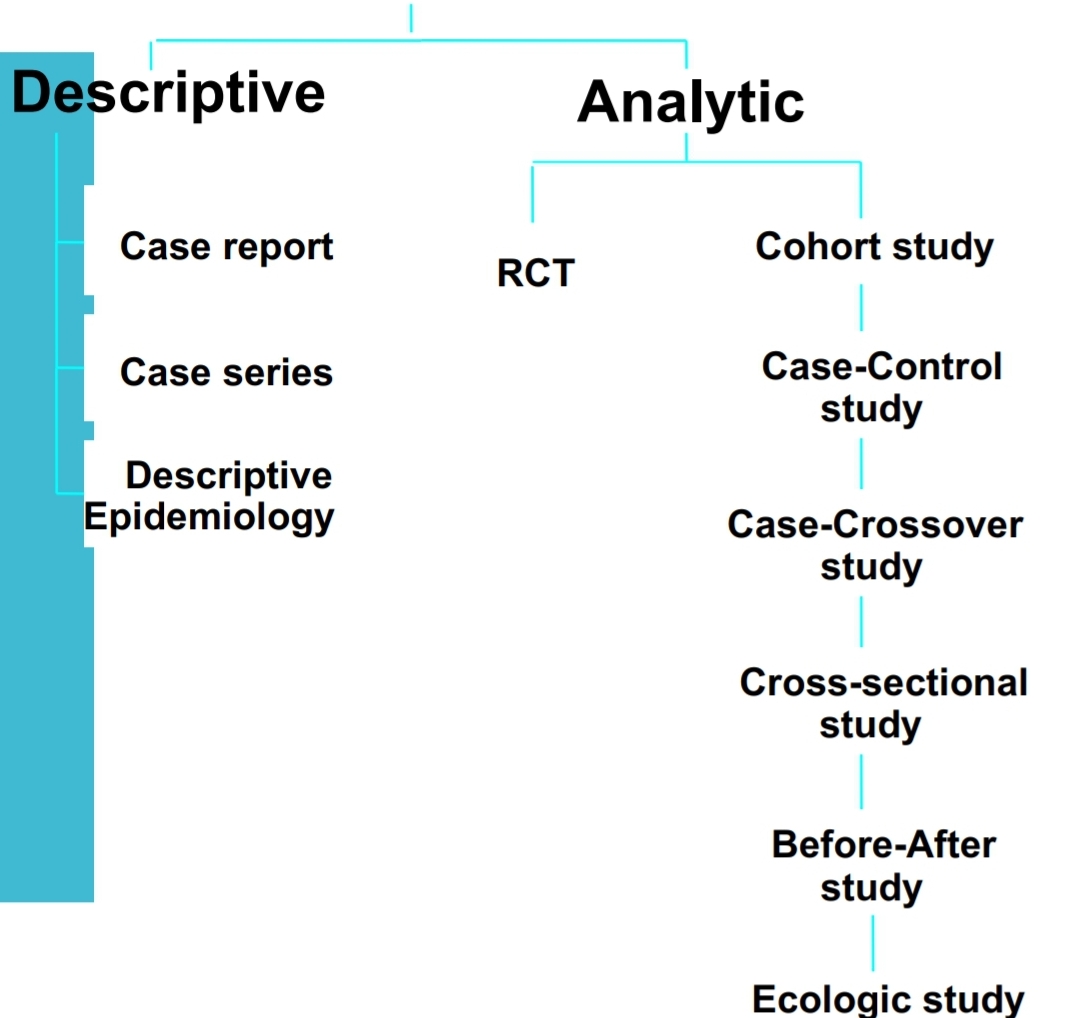
Timeframe of Studies
Prospective
Retrospective
Looks forward, looks to the future, examines future events, follows a condition into the futire
Prospective
To look back, looks back in timeto study events that have already occurred
Retrospective
Increasing Knowledge of Disease/Exposure
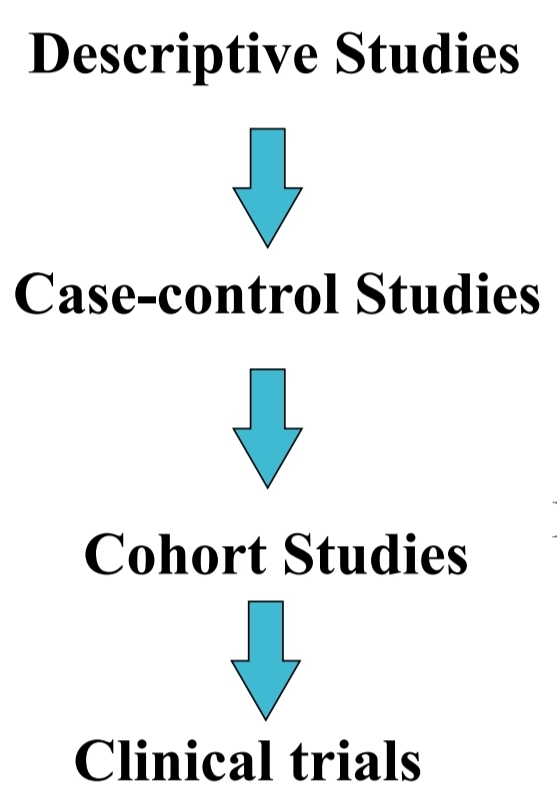
Develop hypothesis
Descriptive studies
Investigate its relationship to outcomes
Case Control Studies
Defines its meaning with exposures
Cohort studies
Test link experimentally
Clinical trials
Descriptive studies
Case reports
Case series
Detailed presentation of a single case or handful of cases
Generally reports a new or unique finding
Case Reports
Experience of a group of patients with similar diagnosis
Assesses prevalent disease
Cases may be identified from a single or multiple sources
Generally reporton new/unique condition
May be only realistic design for rare disorders
Case series
Advantages of case series
Useful for hypothesis generation
Informative for very rare disease withfew established risk factors
Characterizes averages for disorder
Disadvantages of case series
Cannot study cause and effect
Cannot assess disease frequency
One case of unusual findings
Case report
Multiple cases of findings
Case series
Population-based cases with denominator
Descriptive Epidemiology Study
Analytical Studies
Observational
Experimental
Experimental Studies
Randomized Controlled Trials
Community Trials
Observational Studies
Group data
Individual data
Group data
Ecologic
Individual data
Cross-sectional
Cohort
Case control
Case crossover
Treatment and exposures occur in a controlled environment
Planned research designs
Experimental studies
Most well known experimental designs
Uses randomly assigned data
Clinical trials
Uses non-random data
Community trials
Non-experimental
No individual intervention
Non-controlled environment
Individuals can be observed prospectively, retrospectivelu or currently
Observational
An observational design that surveys exposures and disease status at a single point in time (a cross-section of the population)
Cross-sectional studies
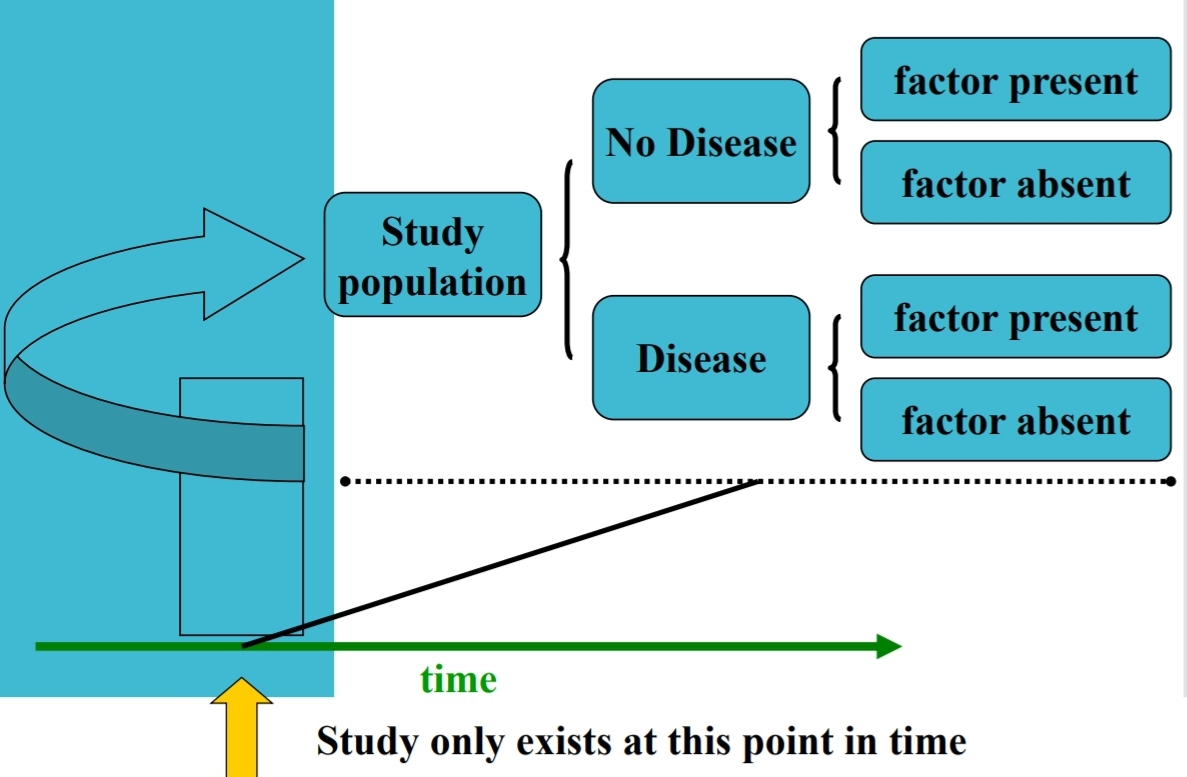
Often used to study conditions that are relatively frequent with long duration of expression (non-fatal chronic conditions)
Measures prevalence, not incidence
Examples are community surveys
Not suitable for studying highly fatal diseases or a disease with short duration of expression
Cross-sectional studies
Disadvantages of Cross-sectional studies
Weakest observational design, (it measures prevalence, not incidence of disease)
Prevalent cases are survivors
The temporal sequence of exposure and effect may be difficult or impossible to determine
Usually dont know when disease occured
Rare events a problem
Quickly emerging disease a problem
Observational design comparing exposures in disease cases vs. healthy controls from same population
Exposure data collected retrospectively
Most feasible design where disease outcomes are rare
Case-Control Studies
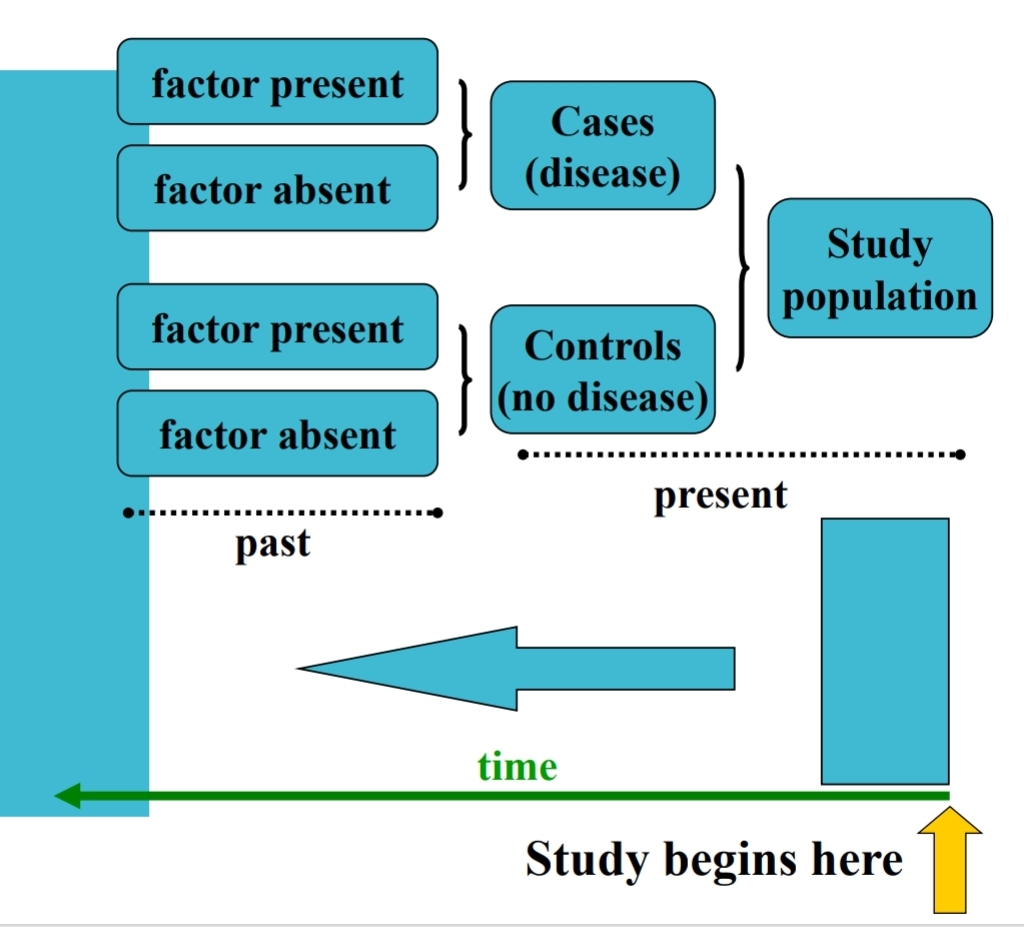
Case-Control Studies
Cases:
Controls:
Cases: Disaese
Controls No disease
Case-Control Study
Advantages
Less expensive and time consuming
Efficient for studying rare diseases
Case-Control Studies
Disadvantages
Inappropriate when disease outcome for a specific exposure is not jnown at start of study
Exposure measurements taken after disease occurence
Disease status can influence selection of subjects
Study of “triggers” within an individual
“Case and control component but information of both components will come from the same individual
Case-Crossover Studies
Hazard period which is thetime period right before the disease or event onset
Case component
Control period which is a specified time interval onther than the hazard period
Control component
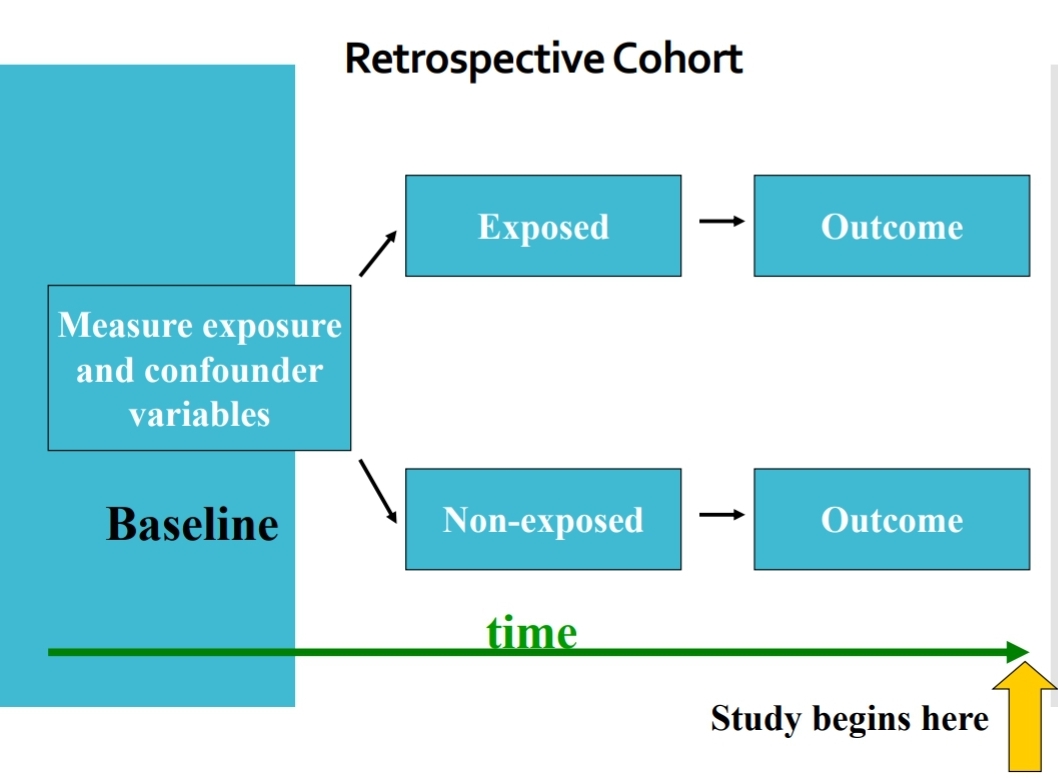
An observational design comparing individuals with a known risk factor or exposure with others without the risk factor or exposure
Looking for a difference in the risk (incidence) of a disease over time
Best observational design
Data usually collected prospectivelt (some restrospective)
Cohort studies
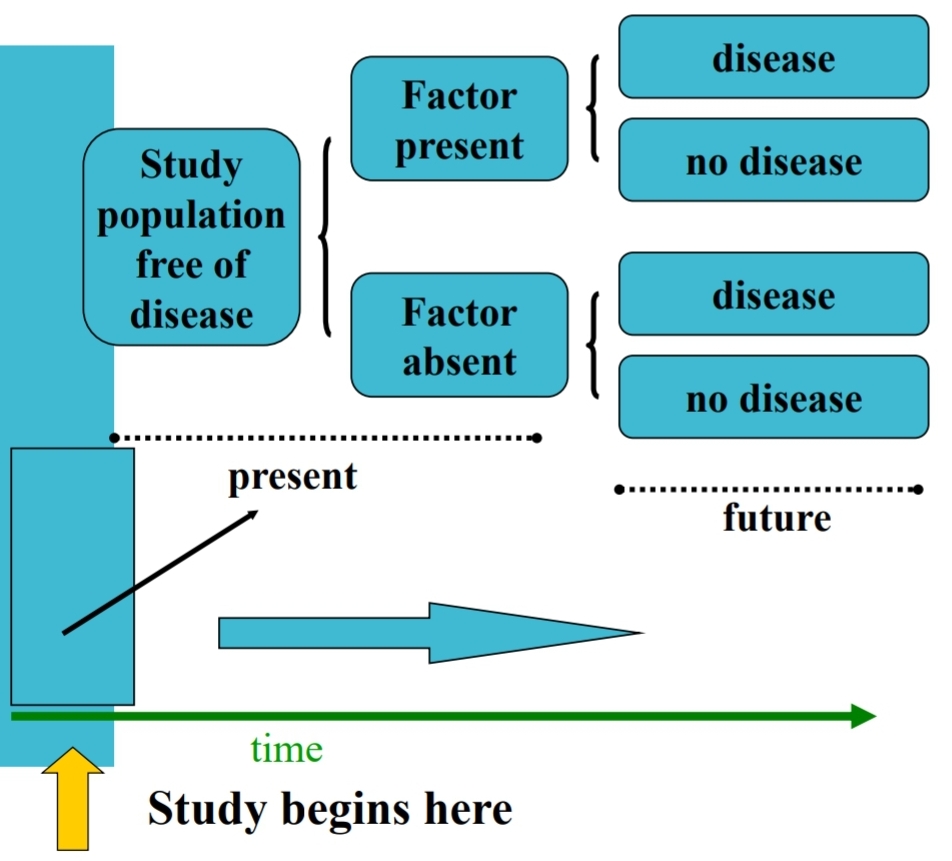
Prospective Cohort Study
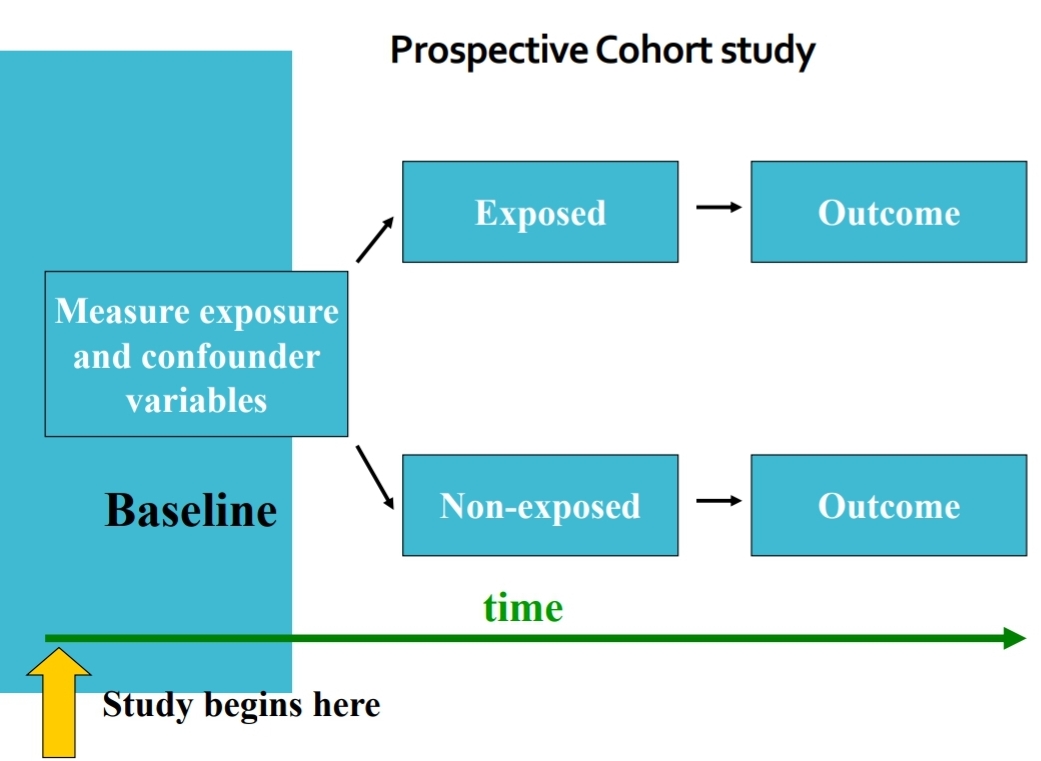
Retrospective Cohort Study
Advantages of Cohort Study
Exposure status determined before disease detection
Subjects selected before disease detection
Can study several outcomes for each exposure
Disadvantages of Cohort Studies
Expensiveand time-consuming
Inefficient for rare diseases or diseaseswith long latency
Lost to follow-up
Investigator can control the exposure
Akin to laboratory experiments except living populatio s are the subjects
Generally involves random assignment to groups
Clinical trials are the most well known exa,p,e
The ultimate step in testinb causal hypothesis
Experimental
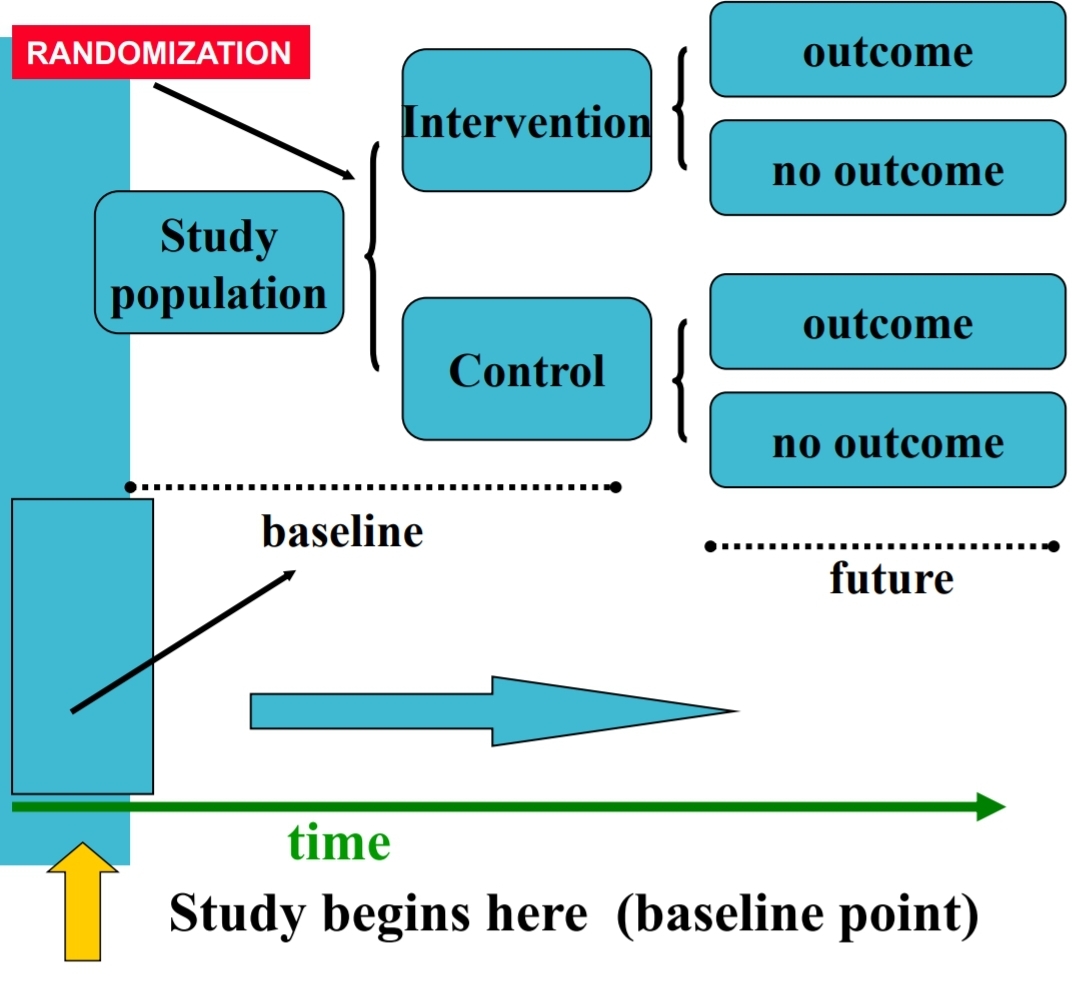
The subjects in the study who actually receive the treatment of interest
Treatment group
Subject of study who receive no treatment or a different treatment
Comparison group
A design with subjects randomly assigned to treatment and comparison groups
Provides most convincing evidence of relationship between exposure and effects
Not possible to use to test effects of exposurez that are expected to be harmful for ethical reasons
Randomized Controlled Trials (RCT)
Gold standard of research designs
Provides most convincing evidence of relationships between exposure and effect
Randomized Controlled Trials
Disadvantages of Randomized Controlled Trials
Very expensive
Not appropriate to answer certain types of questions
 Note
Note  Flashcards (57)