Types of Geophytes and Plant Propagation Methods in Botany
 Studied by 0 people
 Call Kai
 Learn
Learn Practice Test
 Spaced Repetition
 Match
Match Flashcards
 Knowt Play
1/111

There's no tags or description
Looks like no tags are added yet.
Name | Mastery | Learn | Test | Matching | Spaced | Call with Kai |
|---|
No analytics yet
Send a link to your students to track their progress
112 Terms
what are the six types of geophytes
1. bulbs
2. corms
3. tubers
4. tuberous roots
5. swollen hypocotyl
6. rhizome
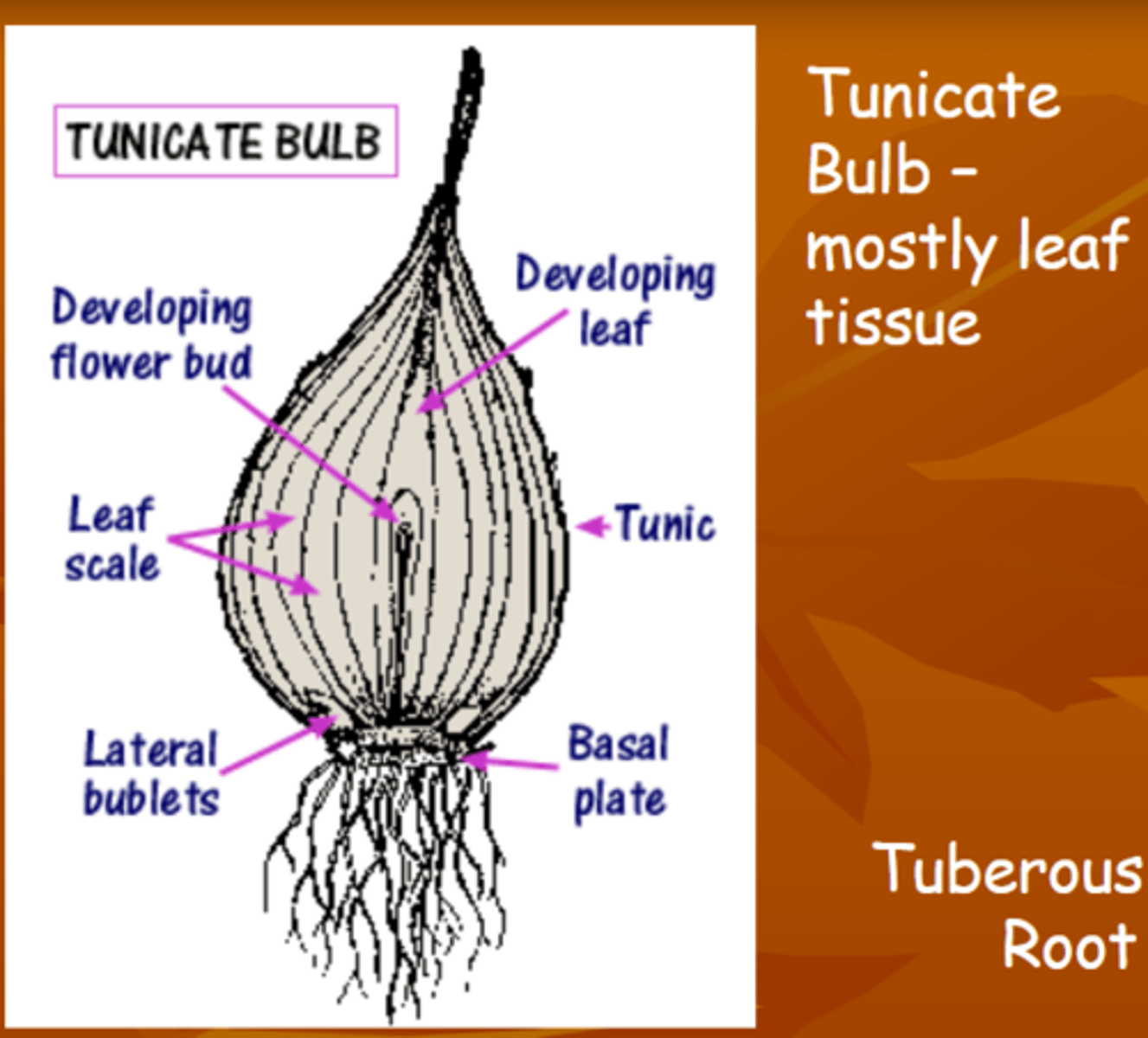
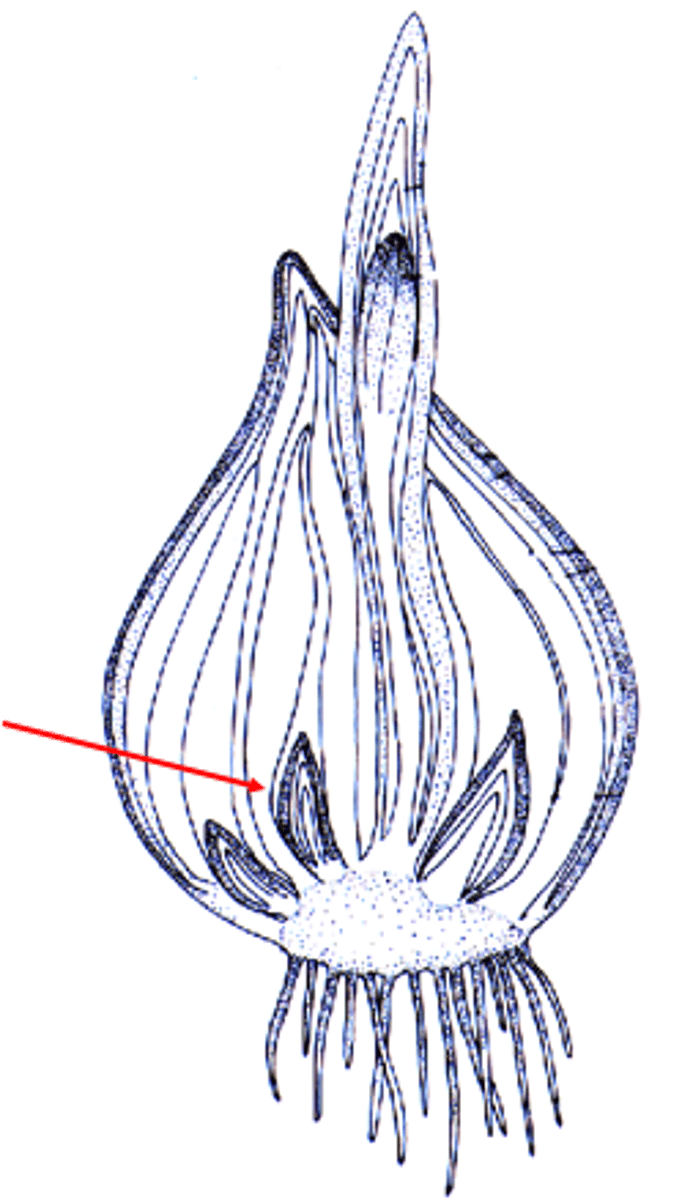
what is a bulb
a short stem (basal plate) surrounded by fleshy, modified leaves called scales
draw a bulb parts
what is a tuber
swollen, modified stem that functions as an underground storage organ
what are examples of tubers
potatoes, caladiums, artichoke
how are tubers propagated
division and tuber nodal cutting
what is a corm
swollen base of a stem axis enclosed by dry scale-like leaves
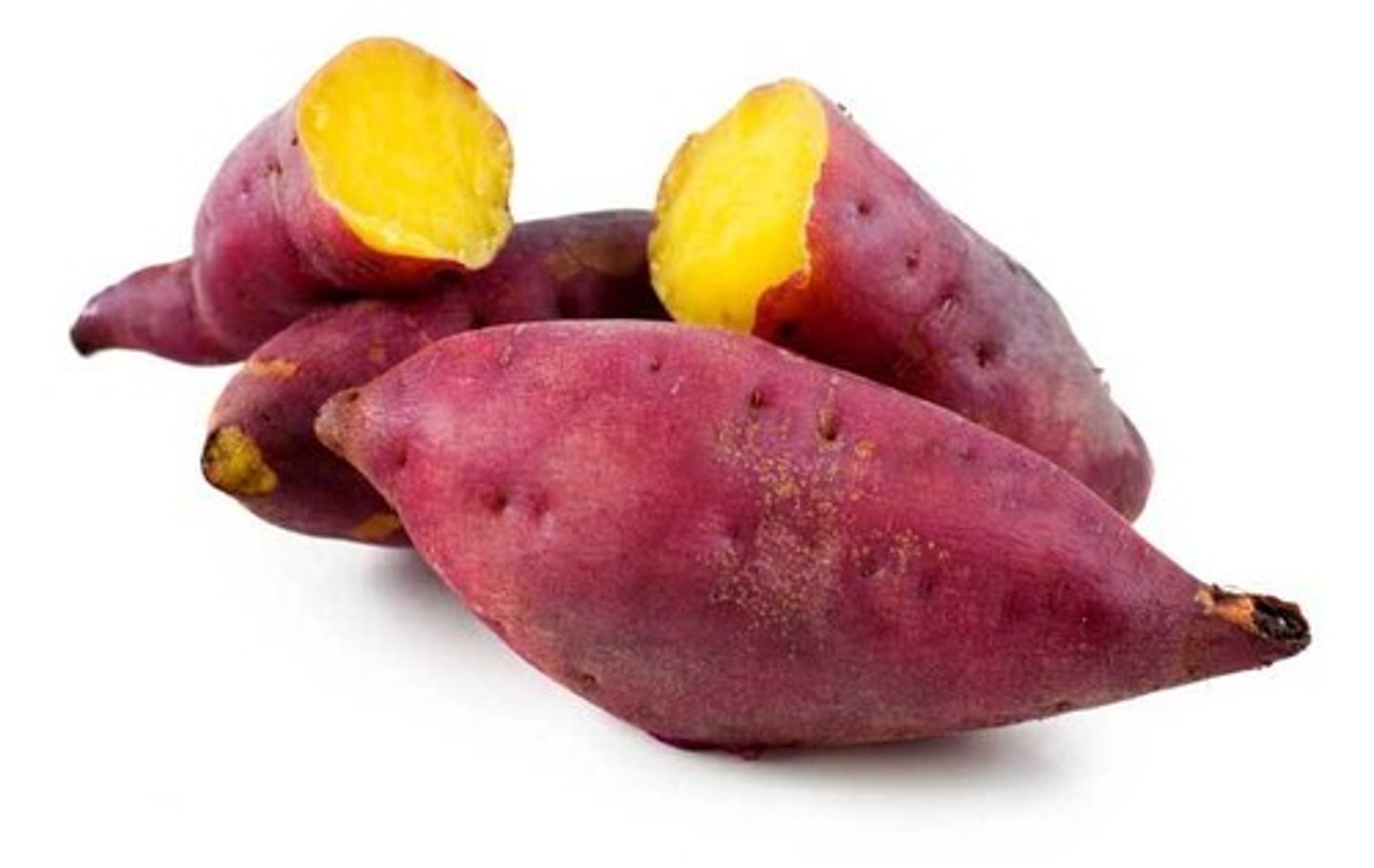
what is a tuberous root
NOT STEMS. fleshy thickened root
examples of tuberous roots
sweet potato and dahilas
bulb picture
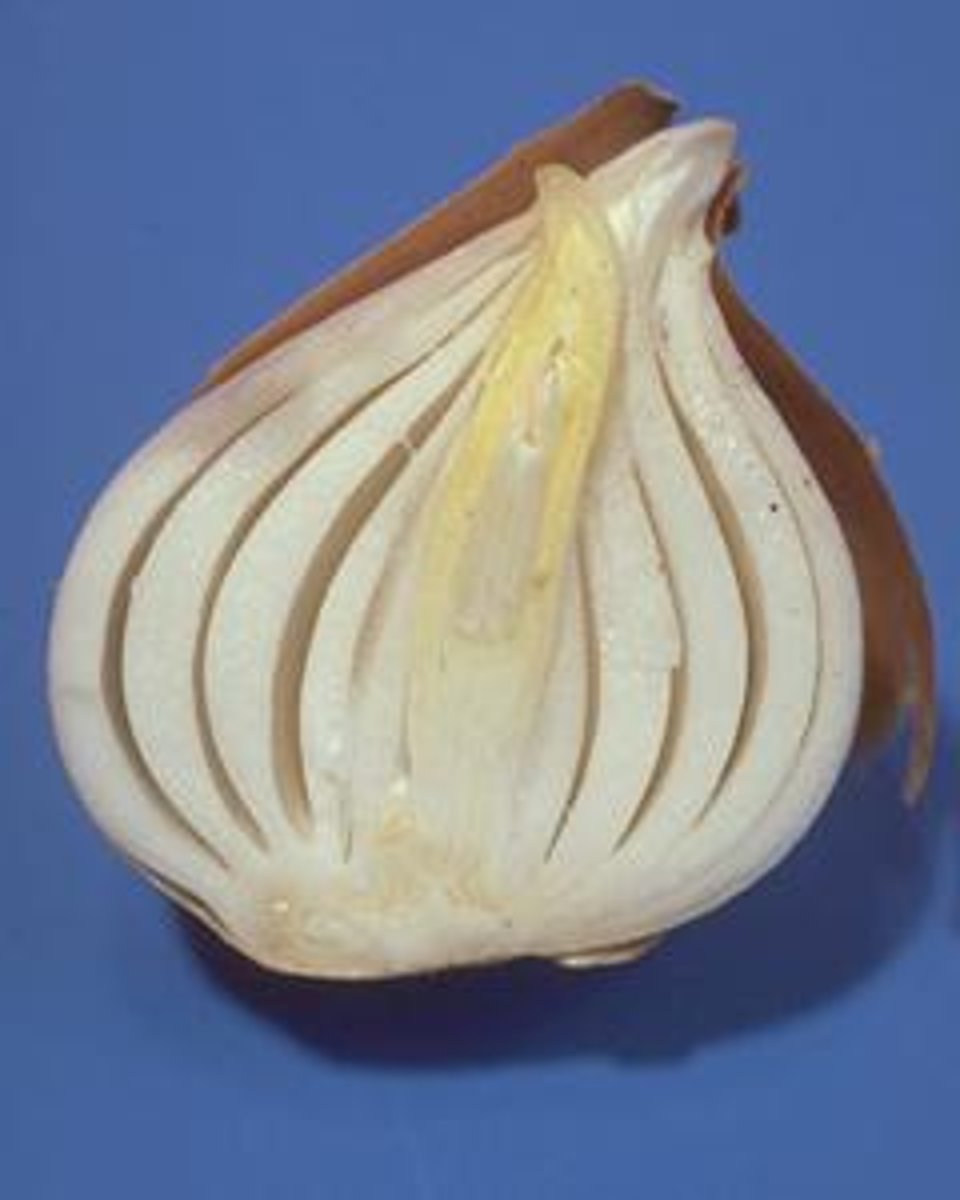
corm picture
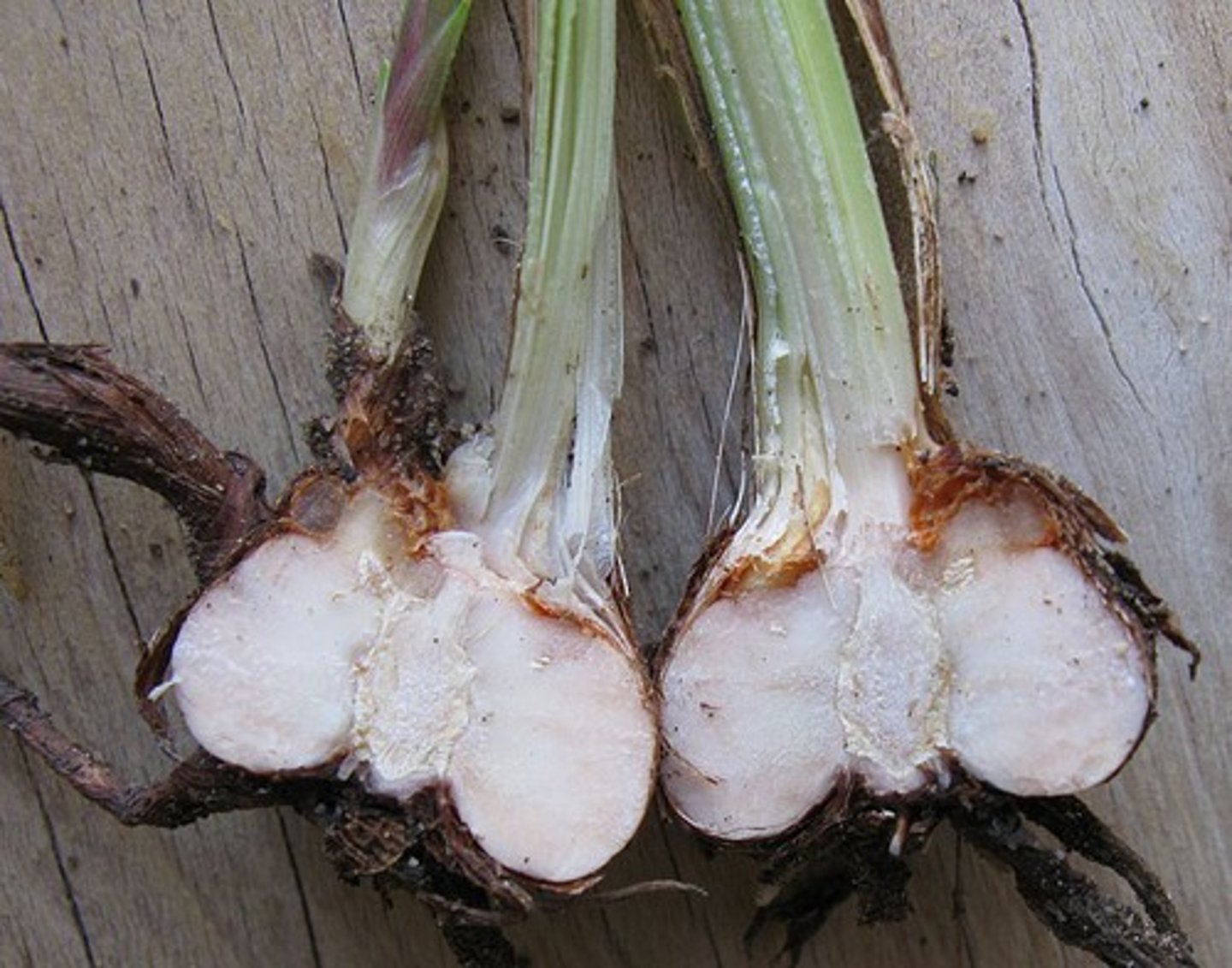
tuber picture
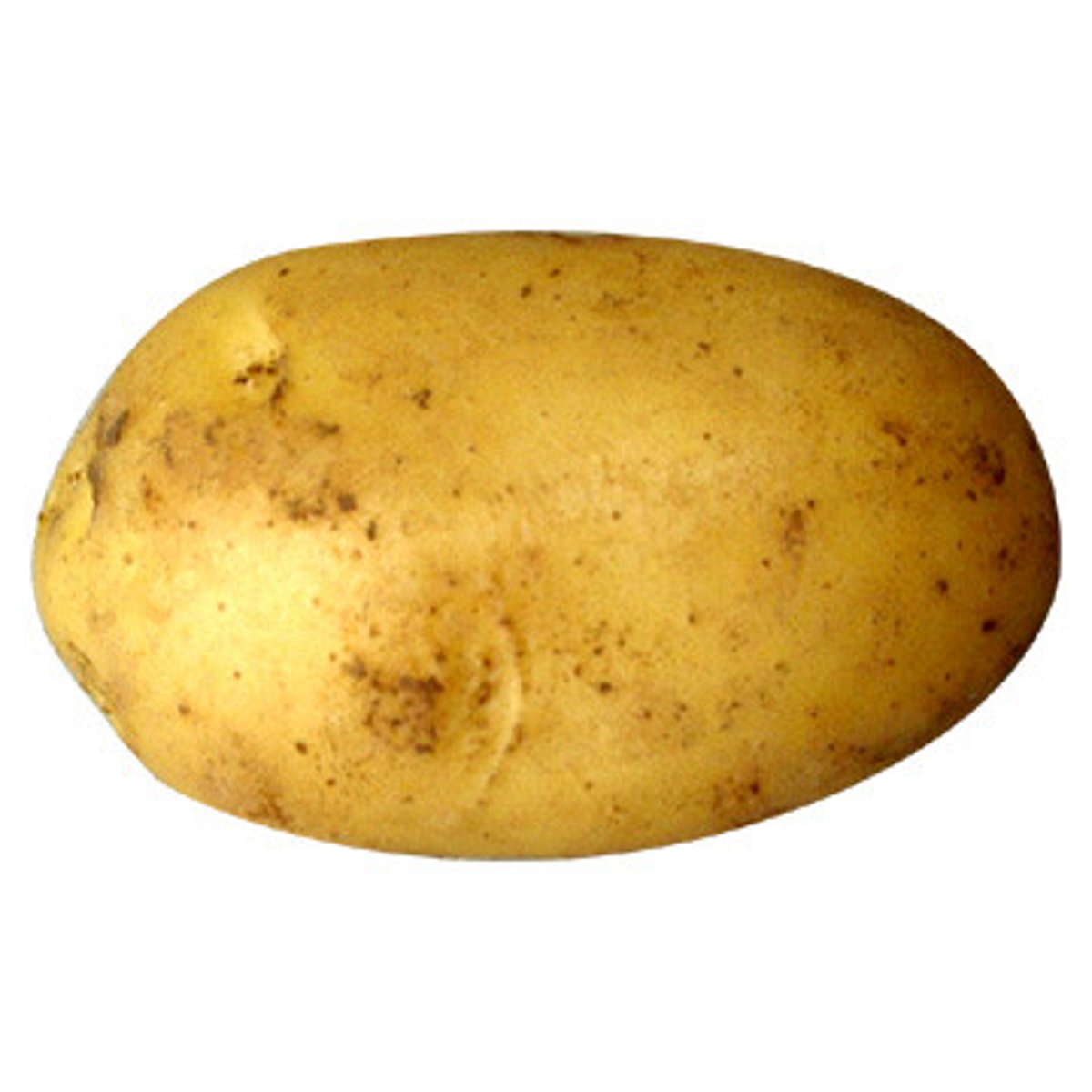
tuberous roots picture
swollen hypocotyl
rhizome picture
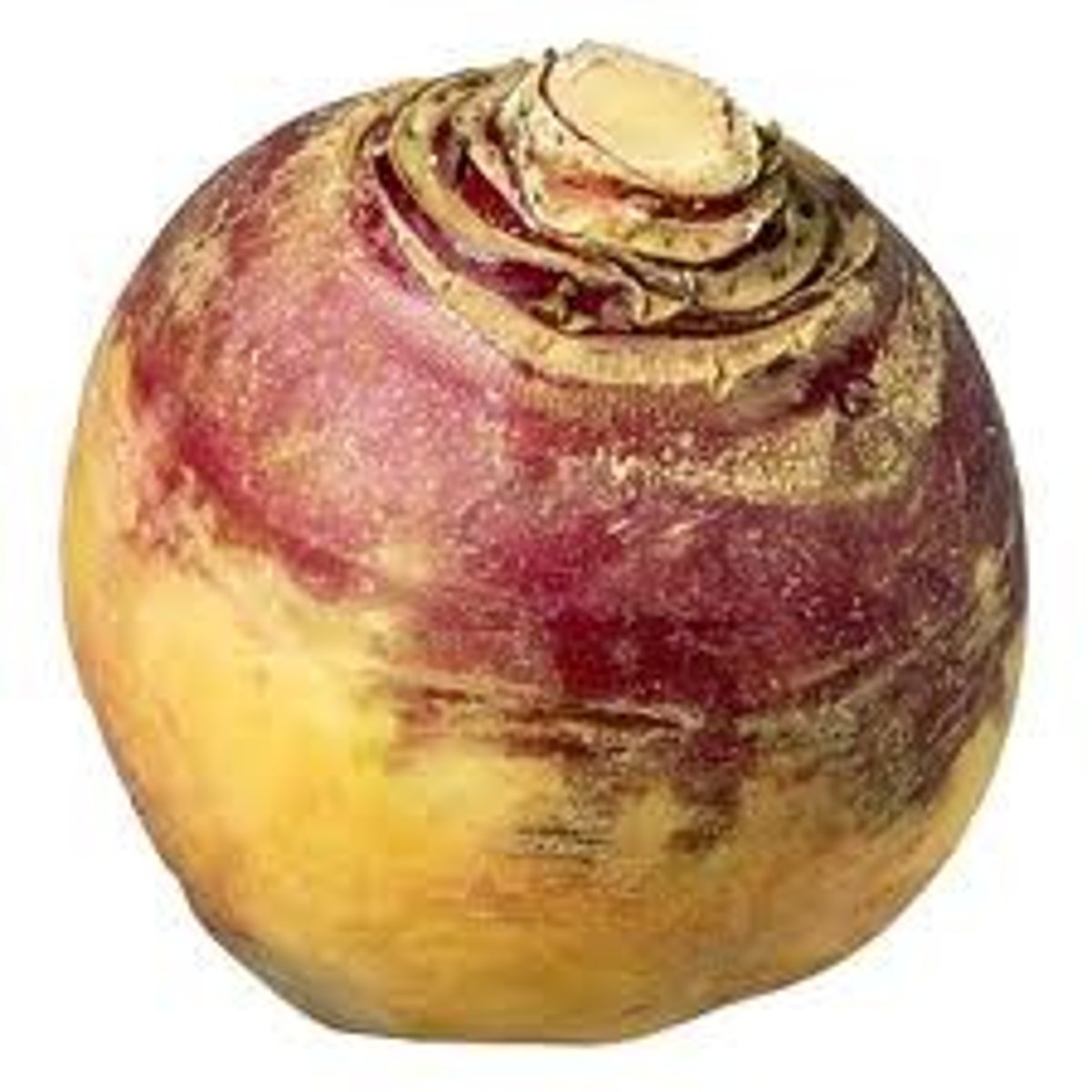
what us a swollen hypocotyl
flattened, swollen stem produced by enlargement of the hypocotyl (below the cotyledon)
examples of swollen hypocotyl
beets, begonia
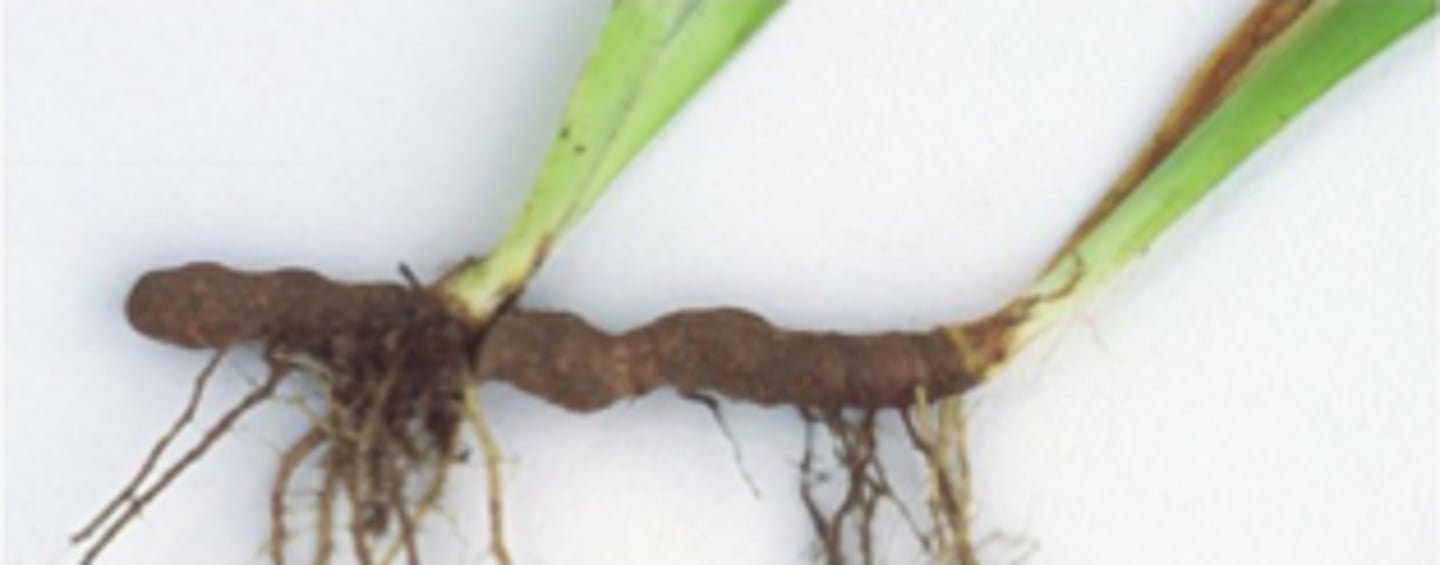
what is a rhizome
specialized stem structure in which the main axis of the plant grows horizontally at or below the soil surface
examples of rhizome
bamboo, iris, canna
what are two ways of basal cutting
scooping and scoring
what is scooping
-a type of basal cutting, removal of the entire basal plate.
-Adventitious bulbs (bulblets) develop on cut scales (modified leaves)
what is scoring
- a type of basal cutting, cutting through the basal plate
-promotes development of axillary buds
why can scoring be bad
It damages the apical meristem and eliminates apical dominance
What are the two types of bulbs
tunicate and nontunicate
what is a tunicate (type of bulb)
-membranous outer bulb scales (tunic)
-fleshy concentric inner scales
what is nontunicate (type of bulb)
- no dry membranous covering
-scales loosely arranged
normal offset picture
stem bulblets
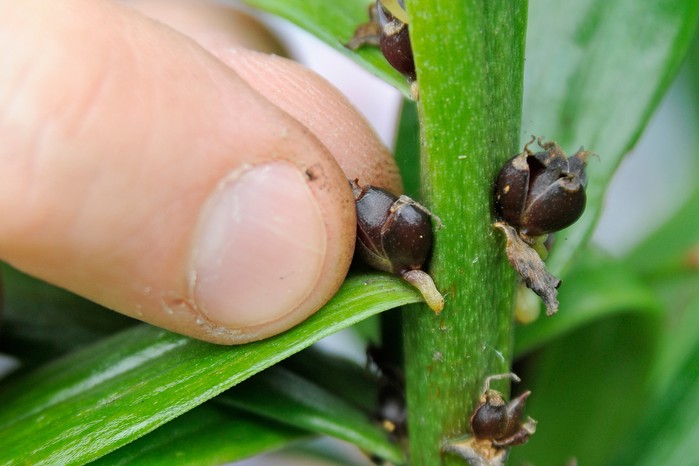
scaling and twin scaling picture
(NEEDS PICTURE HERE)
basal cutting
(needs picture here)
what are the four type of propgation of bulbs
-normal offset
-stem bulblets
-scaling and twin scaling
-casal cuttage
what is layering
another type of vegetative prop, it is the rooting of a propagule while it is still attached to the mother plant
layering picture example
sporogenesis def
development of pollen mother cell into pollen grains and megaspore mother cells into the 8-nucleate embryo sac
pollination def
Transfer of pollen from anther to the stigma
fertiliation def
fusion of gametes to form a zygote
what is double fertiziliation
- 1 sperm (1x) fuses with an egg (1x) to form zygote (2x embryo)
- then another sperm (1x) fuses with the 2 polar nuclei (each 1x) which develops endosperm (3x)
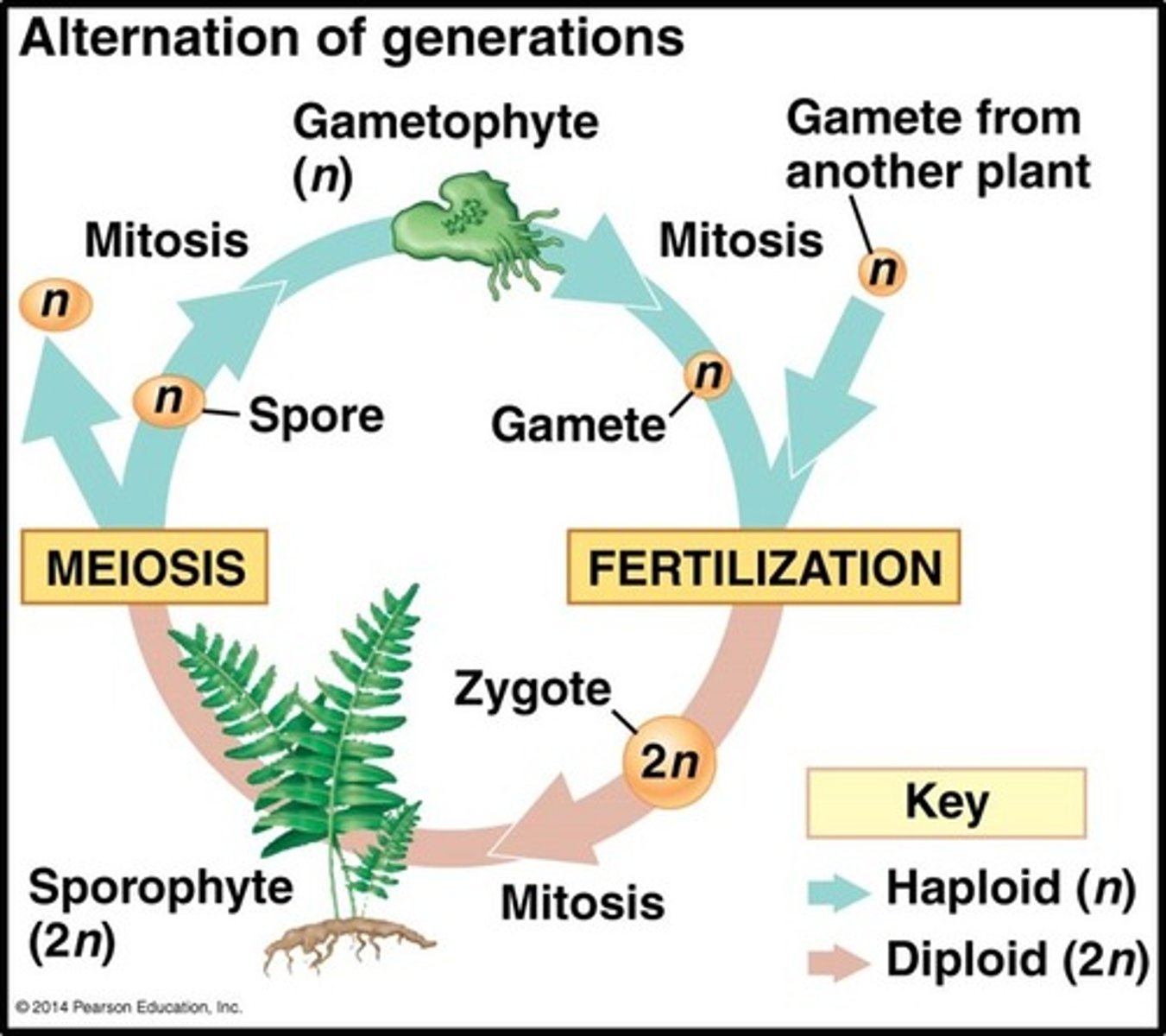
draw a diagram of the alternation of generations
draw the mature gametophytic stage of a fern
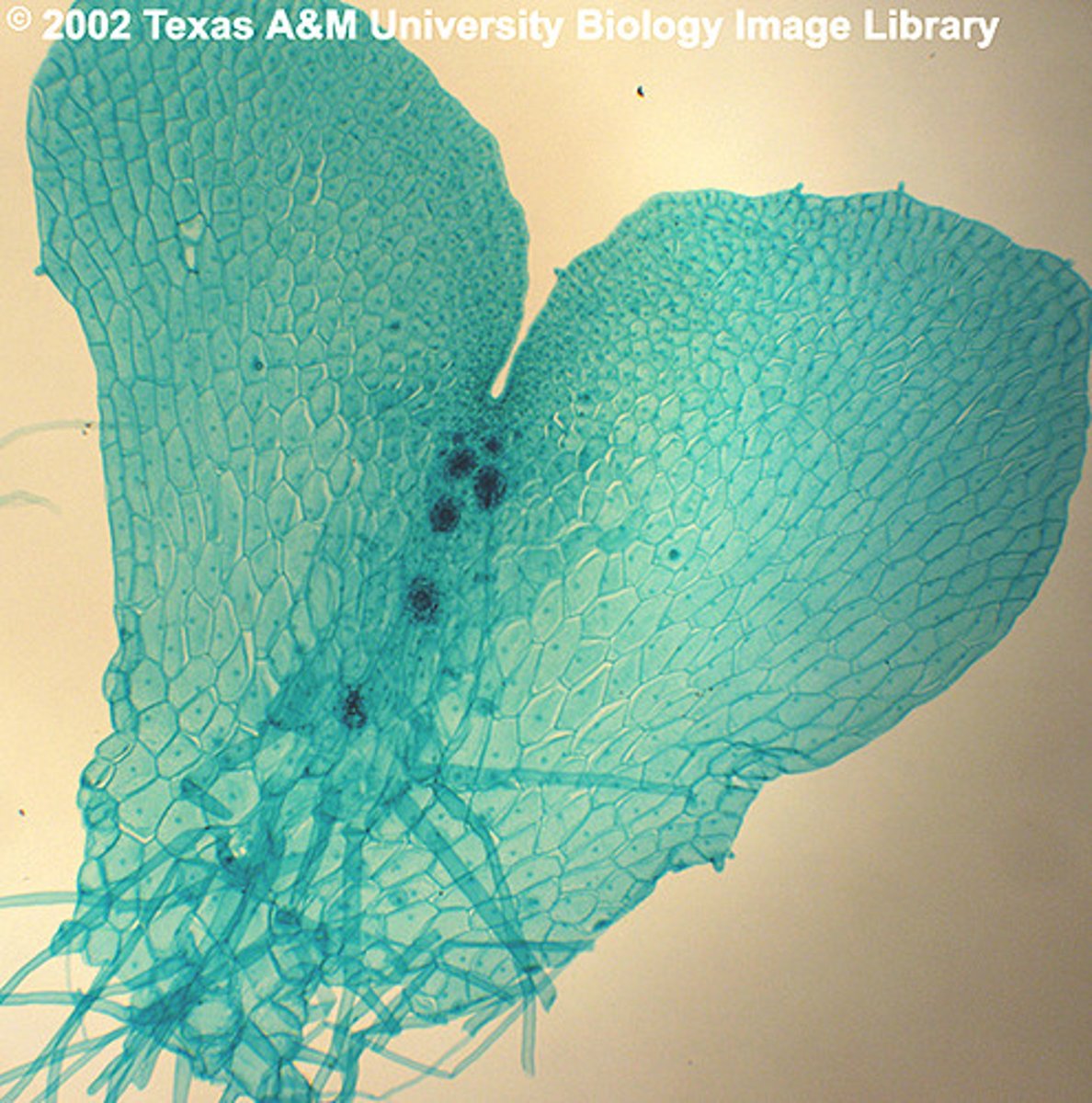
what is the mature gametophytic stage of fern called
prothallus
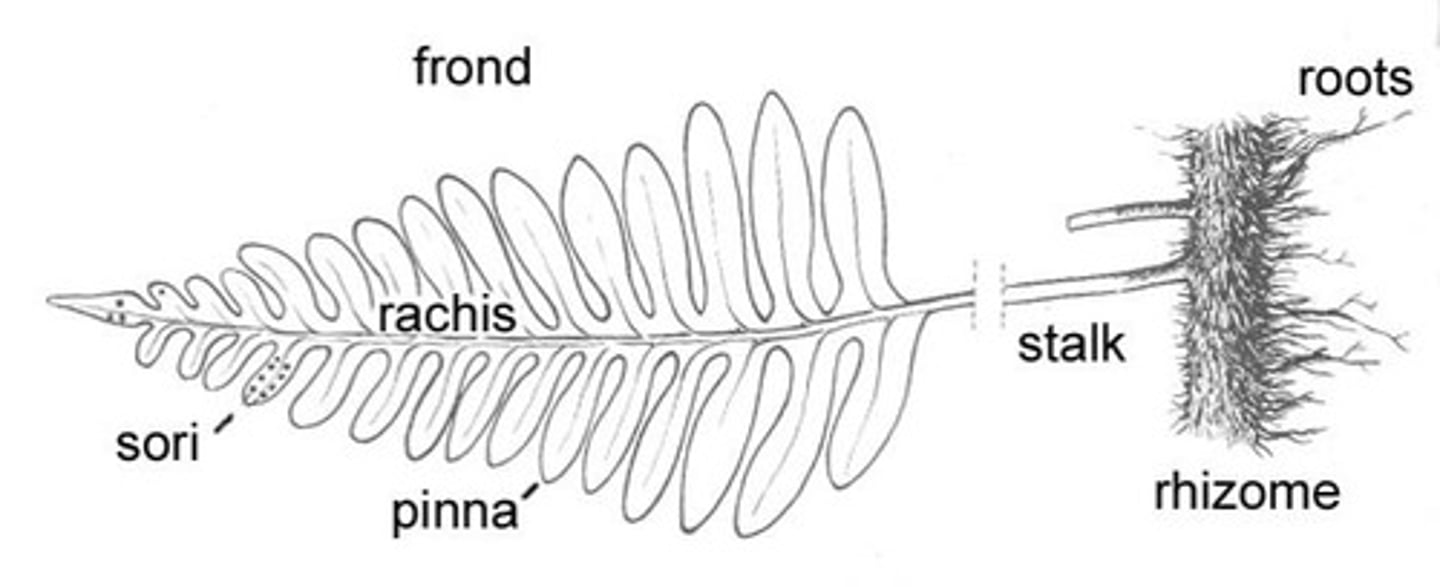
What is the mature sporophytic stage of a fern
the large, visible fern plant. It contains fond (leaves), a rhizome (stem), and roots.
draw the mature sporophytic stage of a fern
sex expression within a flower
male (stamen), female (pistil), or both
sex expression within a plant
male, female, or both
draw a dicot and monocot seed that incldes the anatomical parts: seed coat,cotyledons, radcile, endosperm, hilum, and micropyle
seed def
a ripened ovule containing protective tissue (seed coat), food storage tissue (endosperm), and embryo (baby plant)
what is the hium seed part
region of seed where attachment to mother plant occured
what is this seed part called
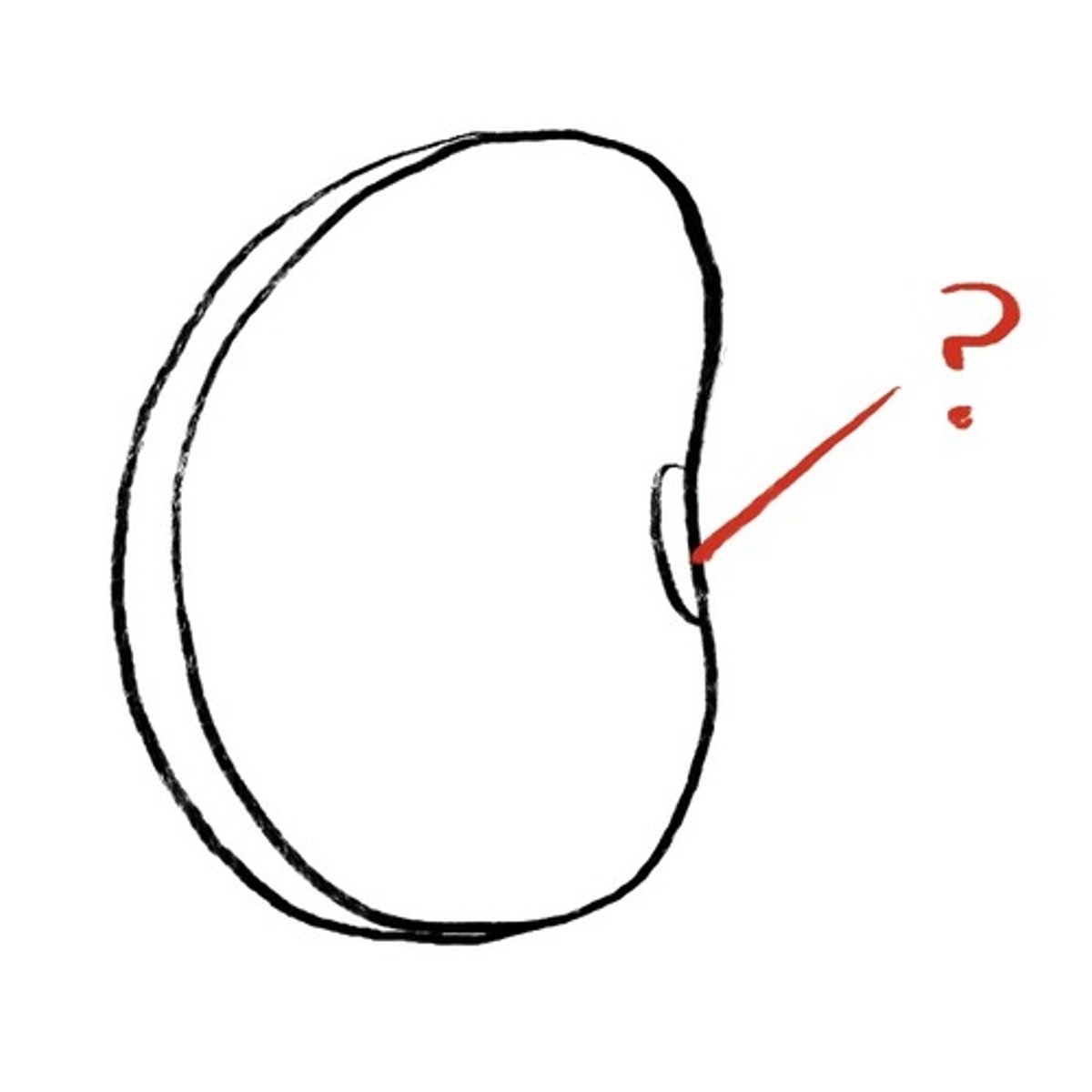
what is micropyle
where water is imbibed in the seed for germination
what is a cotyldeon
the seed leaves
what is this structure called
cotyledon
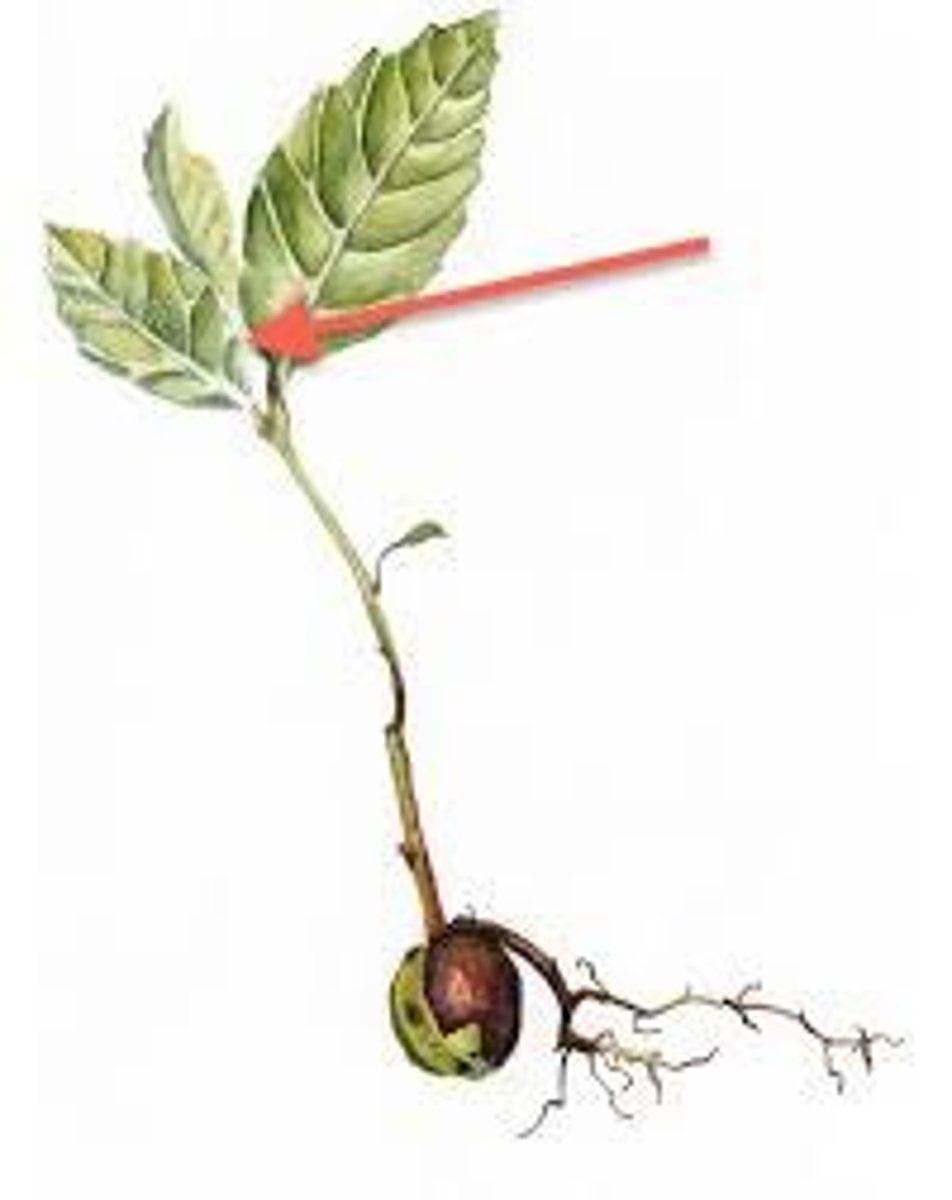
What is the radicle
The first root that emerges from the seed
what is hypocotyl
below te cotyledons
what is epicotyl
above the cotyledons
wat do the stoarge tissue of a seed contain
cotyledons and endosperm
the development of ______ precedes _______ development
storage tissues, embryo
seed coats (testa) are derived from
-integuments of the ovule
-remains of nucellus and endosperm
the seed coat (testa) and contain how many layers
1, 2, or rare 3 layers
parthenocarpy means (latin name)
virgin fruit
parthenocarpy def
development of fruit in the absence of fertilization and hence lacking seed
stenospermocarpy def
genetically programmed (single gene mutation) abortion of embryo early in fruit development by manipulating the ploidy
How are seedless watermelons produced
-by a development called stimulative parthenocarpy.
- treated normal diploid (2x) plants with a chemical, colchicine
-which results in double the normal chromosomes
-then cross a diploid parent (2x) with the tetraploid parent (4x)
-the resulting seed will be triploid (3x)
-The seed is sold to a grower and develops into a triploid plant
-They will be sexually sterile because they have an odd chromosome number, so they can't produce eggs or pollen
-thus, no embryos in the ovule, and cannot produce a seed
if a triploid plant cane make seed how do they produce fruit?
in a field of seedless watermelons, every 10th row wis planted normal, (2x) so a seeded diploid variety is present
what is apomixis
asexual formation of a seed from the maternal tissue of the ovule, (bypassing) the process of fertilization
apomixis embroys are ______ to the mother plant
genetically identical (like a clone)
what is the process of apomixis
1. generation of a cell in the ovule capable of forming an embryo
2. fertilization-independent development of the embryo and seed from that cell (parthenogenesis)
what is the first apomixis type and the steps
adventitious embryony
1. Normal meiosis to form the embryo sac and the haploid egg
2. 1x eggs fertilized to form sexual embryos
3. Some nucellar cells of the ovule will become embryogenic and form 2x embryos identical to the mom
apomixis type: adventitious embryony steps simplified
-single seed with multiple embryos
-one embryo is sexually derived
-additional embryos within same seed are maternally drived and clonal
what is the second apomixis type and def
recurrent apomixis.
embryo sac develops but meiosis doesnt occur and embryo devlops
a plant that demonstrates adventitious embryony
mango
a plant that demonstrates recurrent apomixis
no pollination: allium (onion) and dandelions
with pollination: Malus (apple), Rudbeckia, raspberry
a plant that demonstrates vegetative apomixis
onion, venus fly trap
what is the third type of apomixis and def
-nonrecurrent apomixis (rare)
-embryo sac devlops, meiosis occurs and embryo develops
what is the fourth type of apomixis and def
vegetative apomixis
production og vegetative structure other than embryos
vegetative buds or bulbils are produced in the inflorescence in place of flowers
why is apomixis important
ensures uniformity in seed propagation
gets rid of viruses on old clones (seeds dont transmit viruses)
what is primary dormancy
The seed will not germinate even when environmental conditions (water, temp, ad air) are permissive for germination
vivipary latin meaning
bearing live young
what is vivipary
germination of the seed while it is still attached to the parent plant
why are viviparous seeds able to germinate in mother plant
Viviparous mutations lack the ability to synthesize or perceive the hormone abscisic acid (ABA)
(different to dormancy because it is prevented by controlling mechanisms within the seed coat)
what is secondary dormancy
induced under favorable conditions and may further delay germination
-when a seed enters a state of dormancy after it has been dispersed, typically due to unfavorable environmental conditions such as high temperatures, lack of light, or poor oxygen levels
what are quiescent seeds
seeds that are physiologically capable of germination (non-dormant), but fail to germinate because of unfavorable enviro. conditons
what are advanatges of dormancy
-Timing ensures seedling survival
-creation of a seed bank
-synchronization of germination
-facilitates seed disperal
what is a polymorphic seed
taxa that produced durit containing two or more morphologically different (polymorphic) seeds with different dormacy mechanisms
what are the five categories of primary seed dormancy
physical (exogenus dormany)
physiclougcal dorayc
morphological dormancy
morphophysiological dormancy
combinational dormancy
what is the first primary seed dormacy and def
physical (exogenous) dormancy
-hard impermeable seed covering that prevents entrance of water
-scarification
what are the three types of physicological dormancy
non deep
deep
epicotyl
what is nondeep physiological dormancy
embryos excised froms seeds produce normal seedlings
found in many manuals, binennals and some herbaceous perennials
how to overcome non deep physiclofual dormany
prolonged dry seed storage, short chilling exposure or GA treatemnt
what is deep physioloigcal dormany
disapeersonly after 3-4 months of prolonged cool, moist, startification
dormany cannot be covercome by GA
how to overcome deep pysicological dormancy
-startification
-Presoak seed overnight orior to placement in cool stratification
-seed must be hydrated to facilitate successful cool stratifctaion
what is startification
seed exposed to moist cool temo for a period of time
what happens if temperature isnt regulated for seed germ
lack of germination
physiological dwarfing: germination occurs bur seedlings malformed
epicotyl physiological dormany type 1
Radicle develops in autium, following seed dispersal; however, epicotyl development only occurs after moist chilling
epicotyl phsiological dormany type 2
Moist chilling during the first winter following seed dispersal is necessary for radicle development the following spring
Then, the next period of moist chilling after summer will get epicotyl development
explain morpholoigcal dormancy
embryo development is not complete when the seed is shed
undevloped embryos
no chemical dormancy
how to overcome morphological dormancy
exposure to temperatures less than 60°F
exposure to alternating temps
treatment with potassium nitrate or GA
morphophysiological dormancy
morphological + physiological
-embryos underdeveloped at the time of dispersal
-embryos contain biochemical inhibitors that prevent germination
how to overcome morphophysiological dormancy
-The embryo must increase in size before germination can occur
-seed exposed to warm, moist stratification for 1-3 months to facilitate the development of the embryo
-The seed must be exposed to cool, moist stratification for 3-4 months
-Drying is often harmful to these seeds
what is combinational dormancy
-two dormancy mechanisms (physiological and physiological) are operative in the same seed
-hard seed coat (physical) and deep chemical dormancy (physiological)
how to overcome combinational dormancy
1st: scarification of seed coat
2nd: cool, moist stratification
 Note
Note  Flashcards (58)