Fisheries and Introduced organisms
 Call Kai
 Learn
Learn Practice Test
 Spaced Repetition
 Match
Match Flashcards
 Knowt Play
1/39

There's no tags or description
Looks like no tags are added yet.
Name | Mastery | Learn | Test | Matching | Spaced | Call with Kai |
|---|
No analytics yet
Send a link to your students to track their progress
40 Terms
what are the 10 native fish species of Flathead lake
bull trout
Cutthroat
mountain whitefish
pygmy whitefish
sculpin
longnose sucker
largescale sucker
pikeminnow
pea mouth chub
redside shiner
what are the 11 non native fish in Flathead lake
lake whitefish
largemouth bass
lake trout
pumpkinseed sunfish
back bullhead catfish
brook trout
rainbow trout
kokanee
yellow perch
northern pike
brown trout
of the 11 non native fish in Flathead lake, what are the illegal introductions
northern pike and brown trout
what year were Kokanee introduced to Flathead lake
1916
how many kokanee did the spawning run range up to in Flathead lake
100 000 + fish
what did the annual harvest often exceed of kokanee in Flathead lake
100 000
what was Mysis considered to be before 2005, now what is it considered to be
circumpolar, now purely European species
when were Mysis introduced into upper catchments of Flathead valley
1968 to 1975
when was mysis first noticed in Flathead lake
1981
when did shrimp population levels reach 49 / m2
1985 (took four years)
what percent of the kokanee diet did mysis constitute
none
where did kokanee feed and live
feed in the day, lived in the top 30 meters of water column
where did Mysis feed and live
lived below 30 meters during the day and only came out at night
what do BOTH kokanee and Mysis feed on
Planktivorous - they compete for the same resource
what happened to the kokanee in 1980s
began to decline because none were being caught AND very few were spawning
what is the current status of kokanee in Flathead lake
runs are SMALL
why did Mysis suddenly decline
as they outcompeted each other for the same food source
what happened to the bald eagles? grizzly bears?
eagles
used to be numerous as they fed on the kokanee
as kokanee disappeared only 1 or 2 are seen in the fall
grizzly
they became active later in the season to match when the kokanee ran (so their hibernation was later)
why were WT deer feeding on kokanee
for the calcium and antler growth
what was the major tourist draw to Glacier park
eagles and bears
how did tourism change pre 1983 (before kokanee declined) compared to after the decline
before decline": 46 500 tourists
after decline: 100 tourists
what were other contributors (beside Mysis) that led to the decline in kokanee
overfishing
water level fluctuations caused by dam
what was the Kootenay lake experience
introduction of Mysis into the lake system wasn’t very effective (declines were seen mostly by changes in hydrologic flow due to dam)
why was kokanee stocking done in Lake Tahoe
to provide food for the lake trout to divert the predation of cutties
why was Mysis introduced to lake Tahoe
to provide forage for kokanee
what was the overall experience in Lake Tahoe for lake trout and bull trout
lake trout
young ones could feed on young mysis but as they get bigger mysis no longer a food base
bull trout
small initial surge as they feed on lake whitefish (which had Mysis in their diet)
as food sources declined so did the whitefish = bulls lost their food source too
did the Mysis survive in wateron
NO
what is whirling disease
name for symptoms caused by the infection of salmons via Myxobolus Cerebralis
what is the main vector of whirling disease
birds
is whirling disease only found in hatcheries ’
NO - also found in wild
how did whirling disease first enter the USA
via processed fish shipments from Denmark
what is whirling disease now considered
cnidarian w
what are symptoms of whirling disease
deformities of the spine
pug headness
blackening of the tail
how many hosts and forms does the whirling disease parasite have
2 hosts and 2 forms
what is the lifecycle of whirling disease
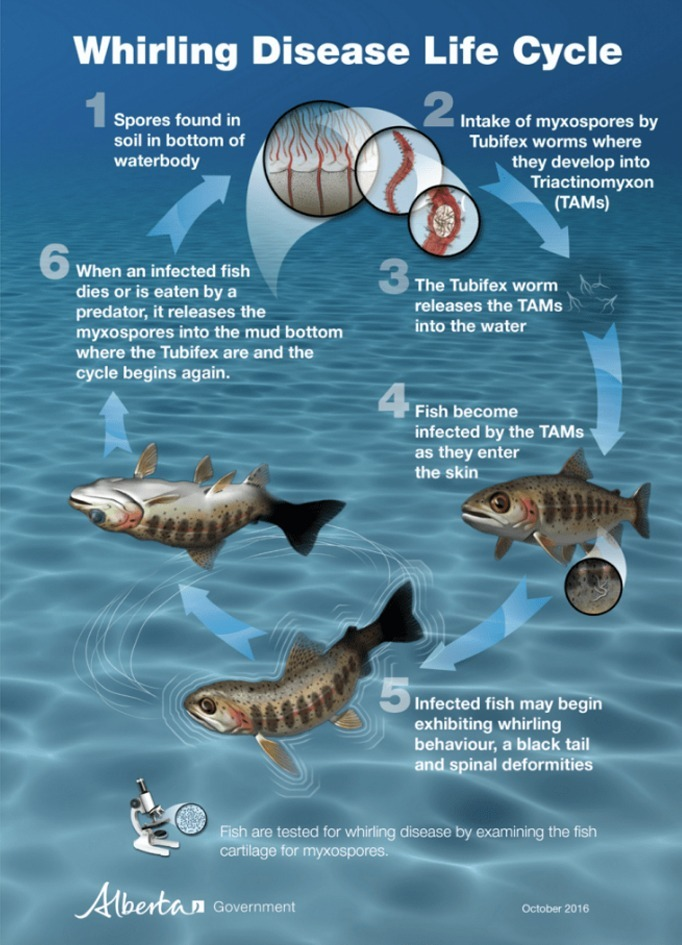
will fish that eat the tubfex worm become infected with whirling disease
NO
what is the most susceptible species to whirling disease
rainbow trout
how many months does it take for NEW whirling disease spores to in fish
3 to 4 months
how can we monitor the effects of whirling disease
sentinel fish
tissue testing
filtering for tams
how are some methods for the control of whirling disease
develop a vaccine
impose strict regulations of fish transport
raise large whitefish (4 to 5 inches)
eliminate earthen ponds
decrease habitat degradation

