Lab 4: The Axial Skeleton (matt)
 Studied by 0 people
 Call Kai
 Learn
Learn Practice Test
 Spaced Repetition
 Match
Match Flashcards
 Knowt Play
1/36

There's no tags or description
Looks like no tags are added yet.
Name | Mastery | Learn | Test | Matching | Spaced | Call with Kai |
|---|
No analytics yet
Send a link to your students to track their progress
37 Terms
Haversian Canal
canals that transports nutrients and remove wastes
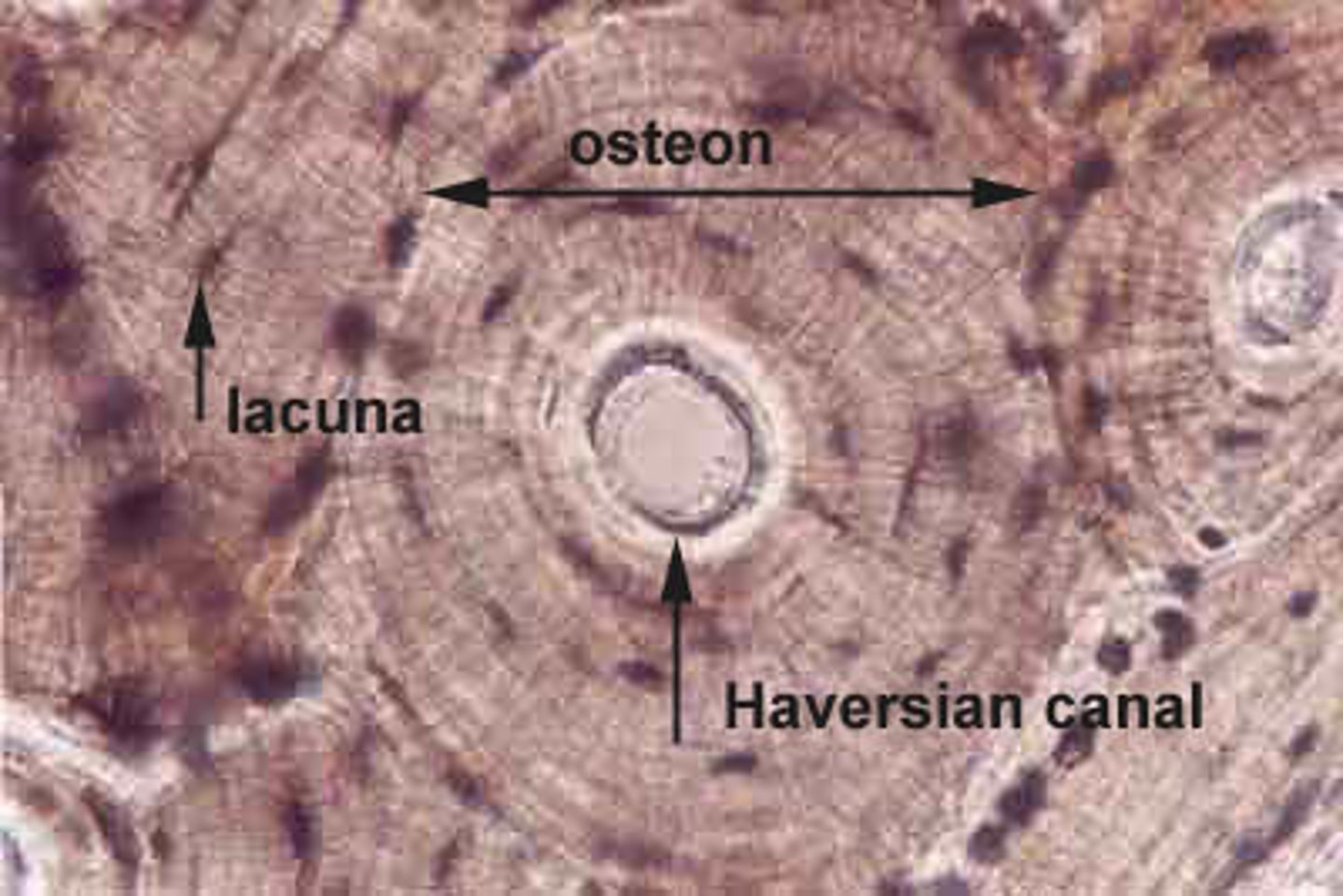
Lacunae
small cavities that houses osteocytes
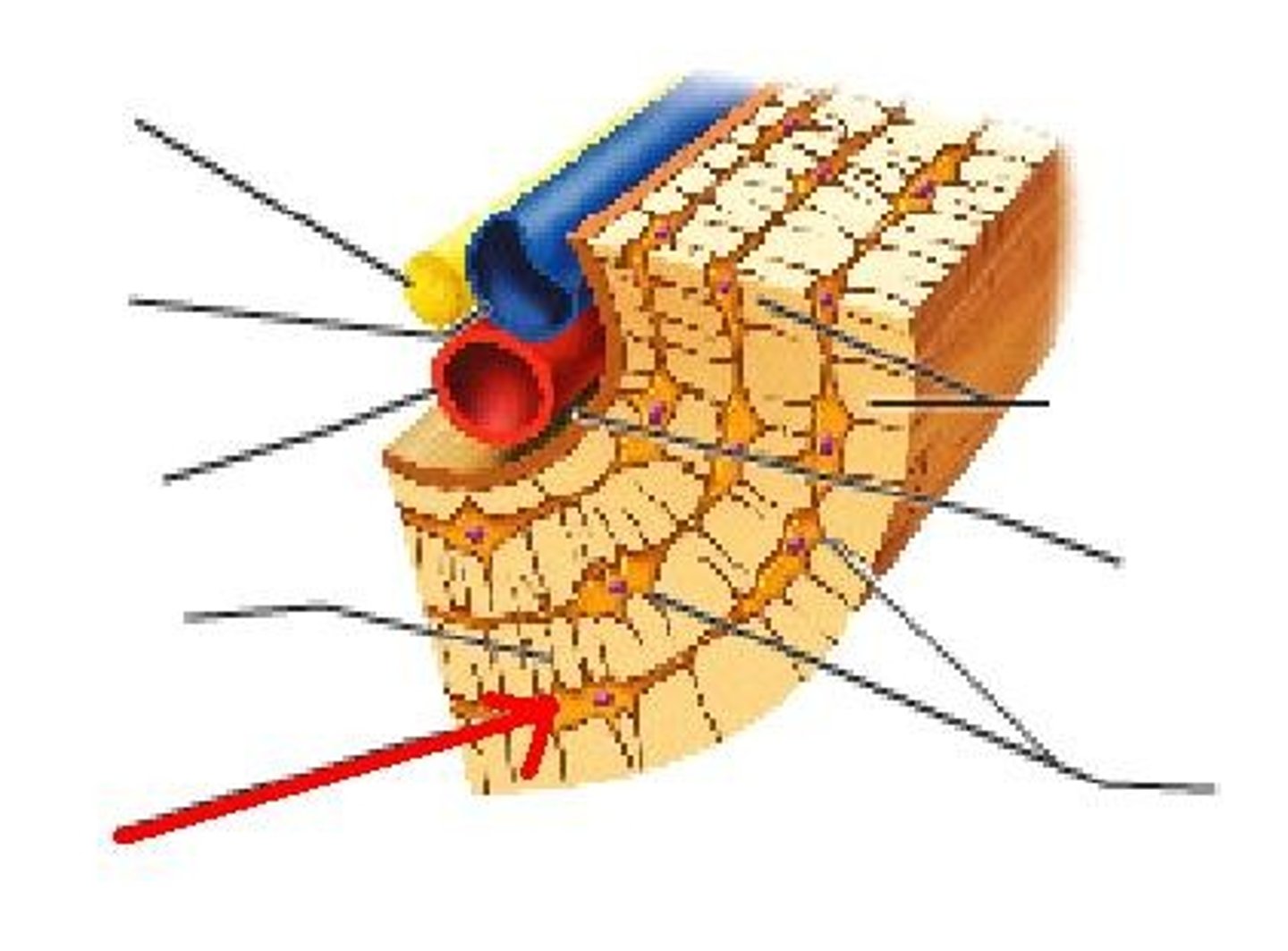
Osteocytes
regulates bone formation and resorption
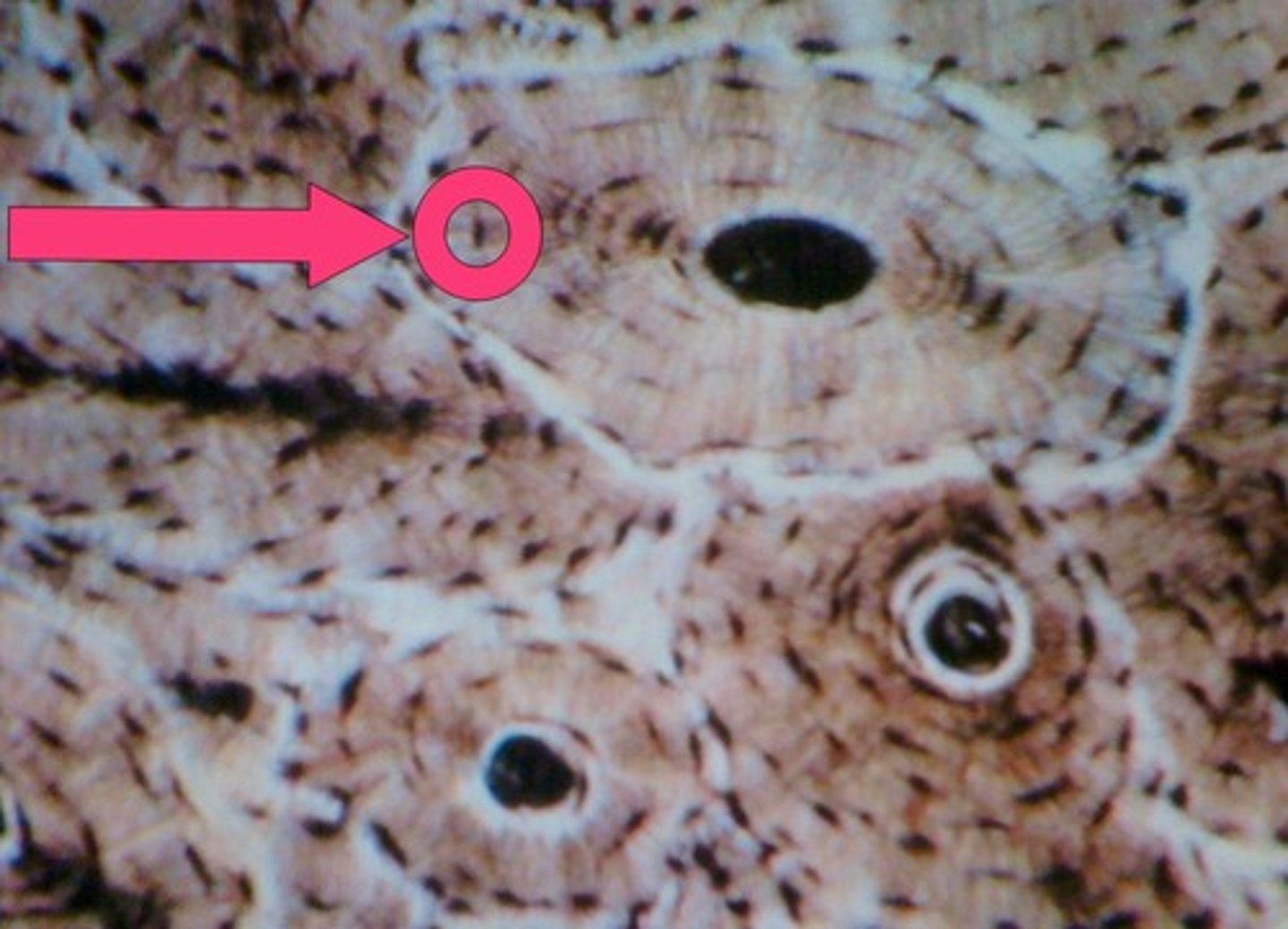
Concentric lamellae
provides structural support and strength
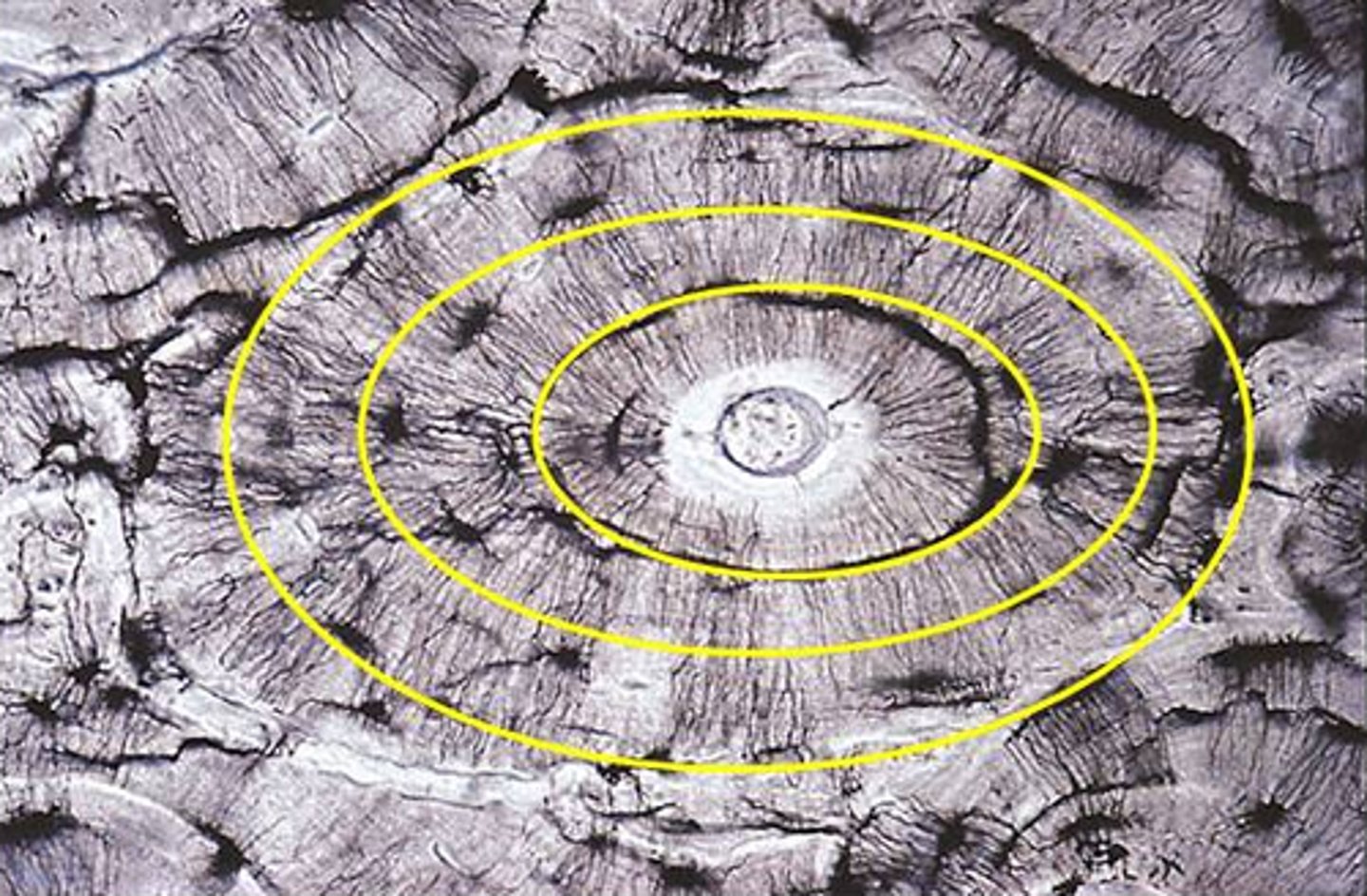
Canaliculi
channels that transport signals between osteocytes
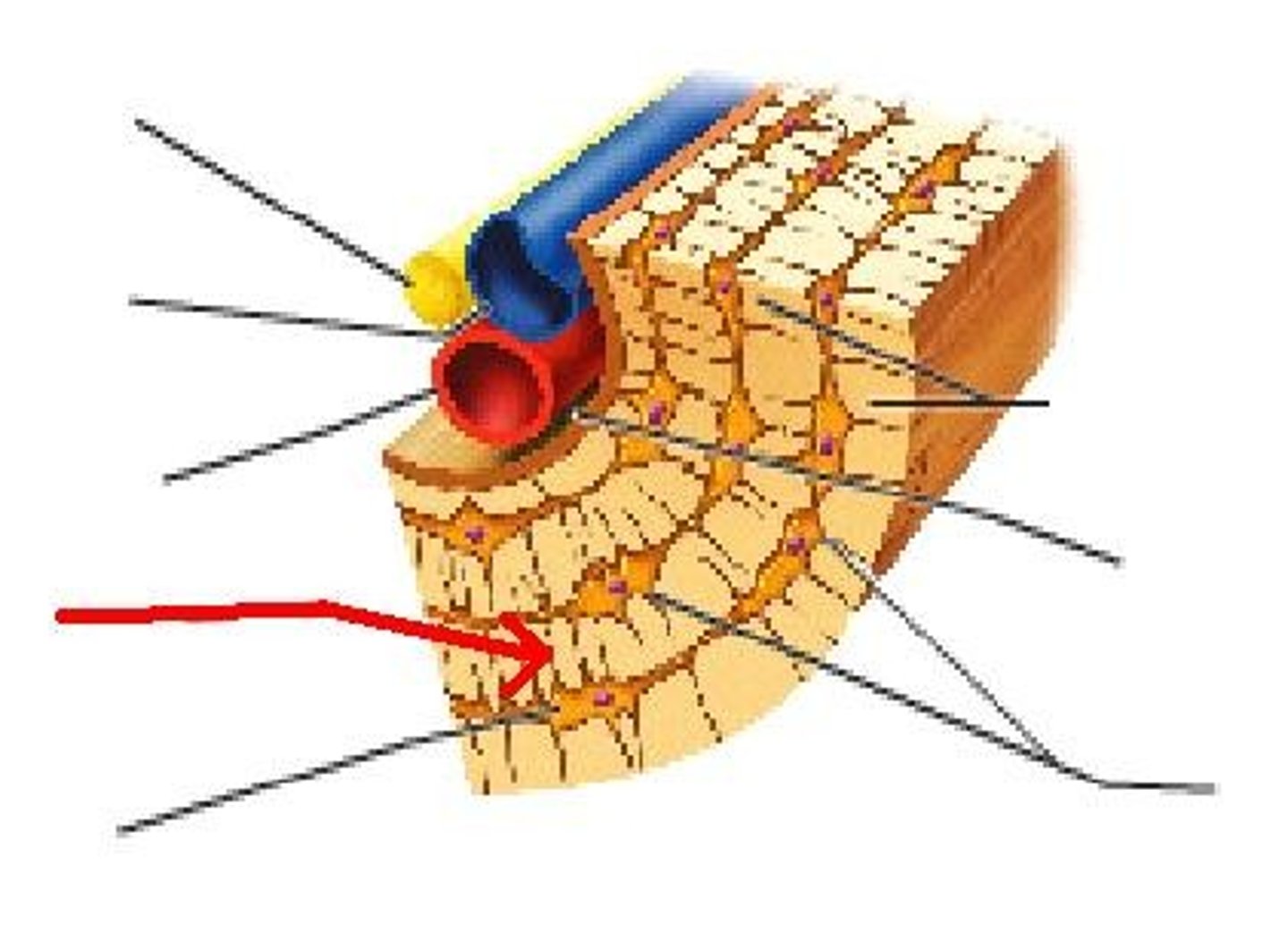
Trabeculae
provides mechanical strength
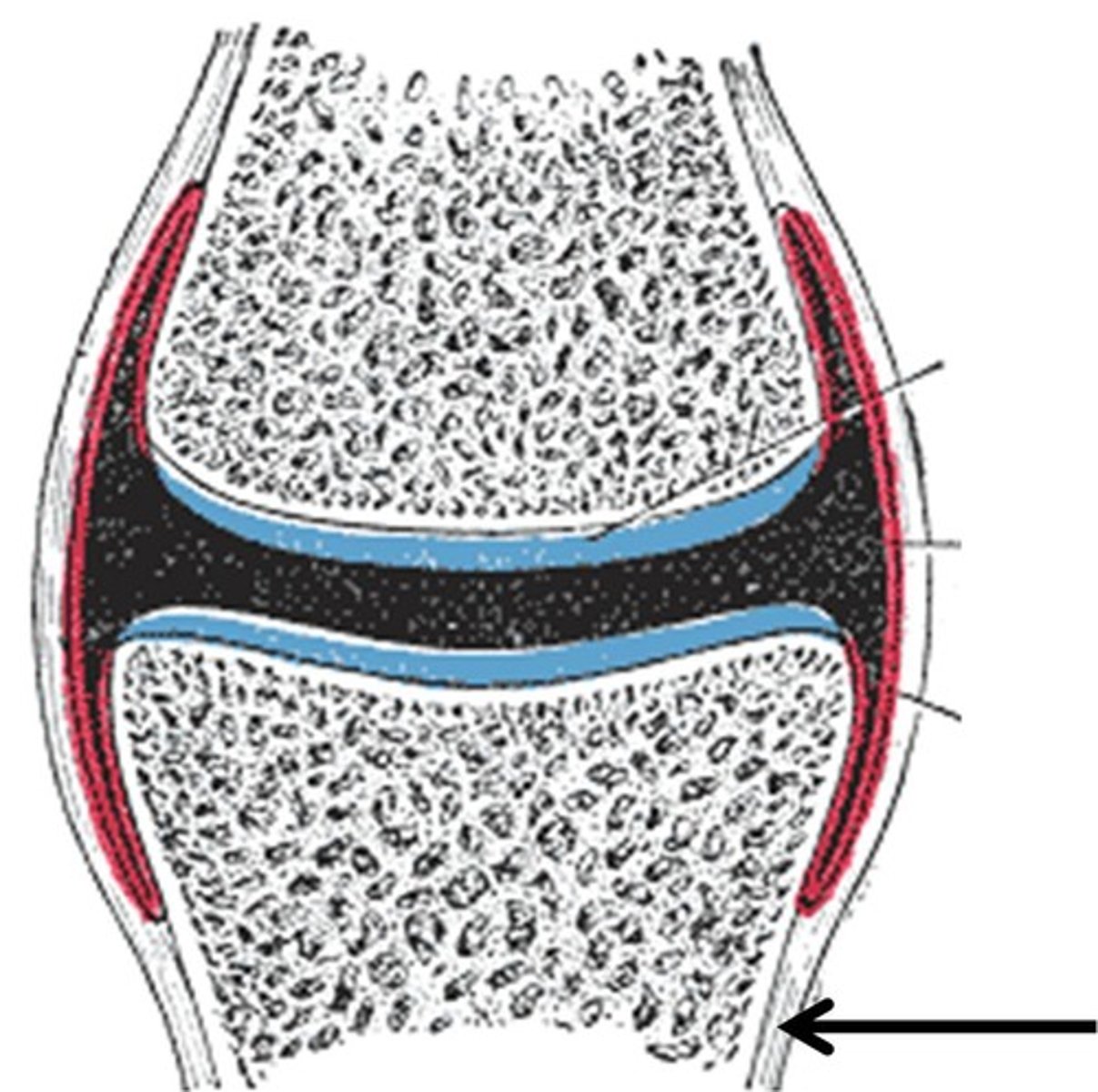
Periosteum
connective tissue covering the bone
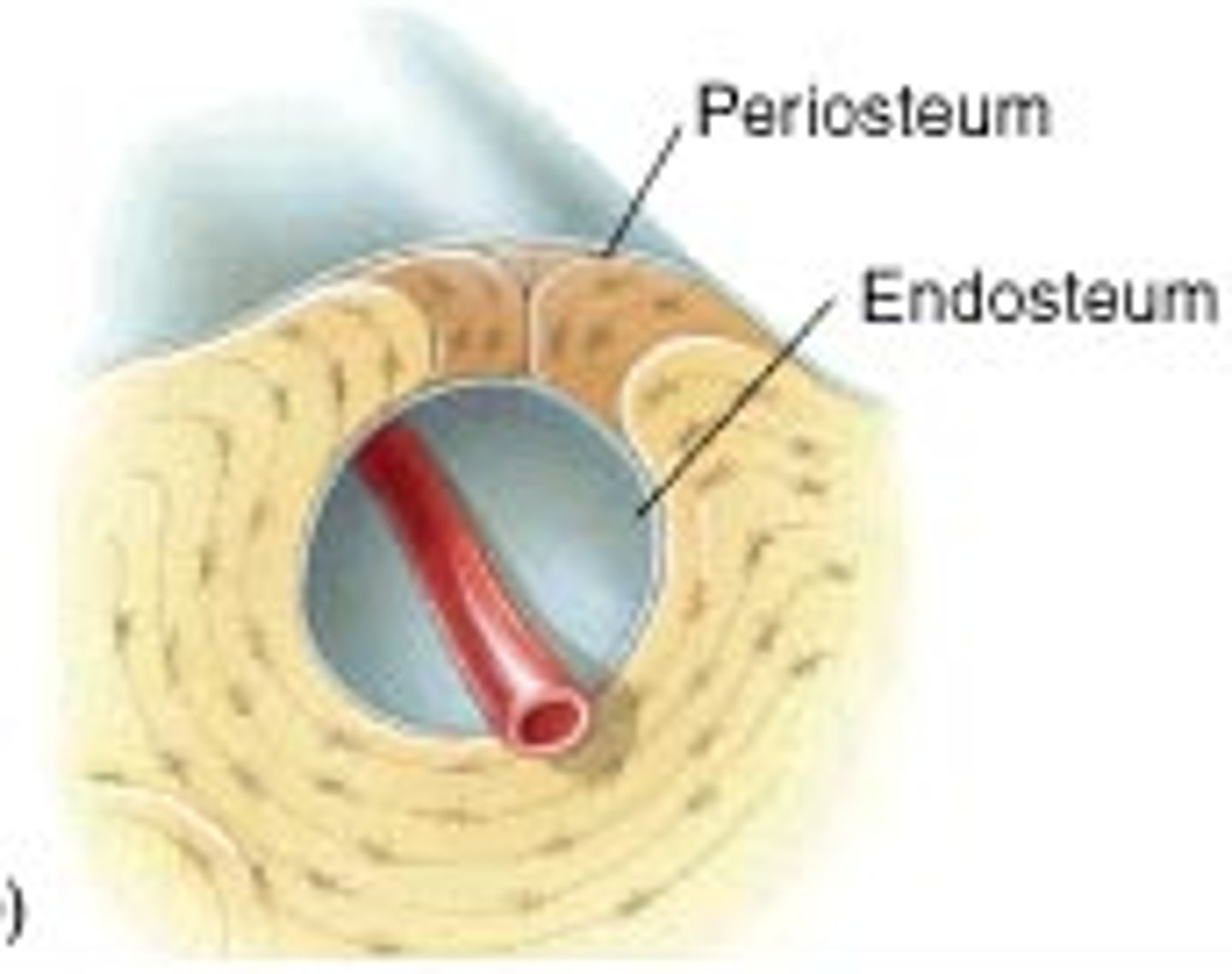
Endosteum
lines the medullary cavity
Medullary (marrow) cavity
filled with yellow bone marrow
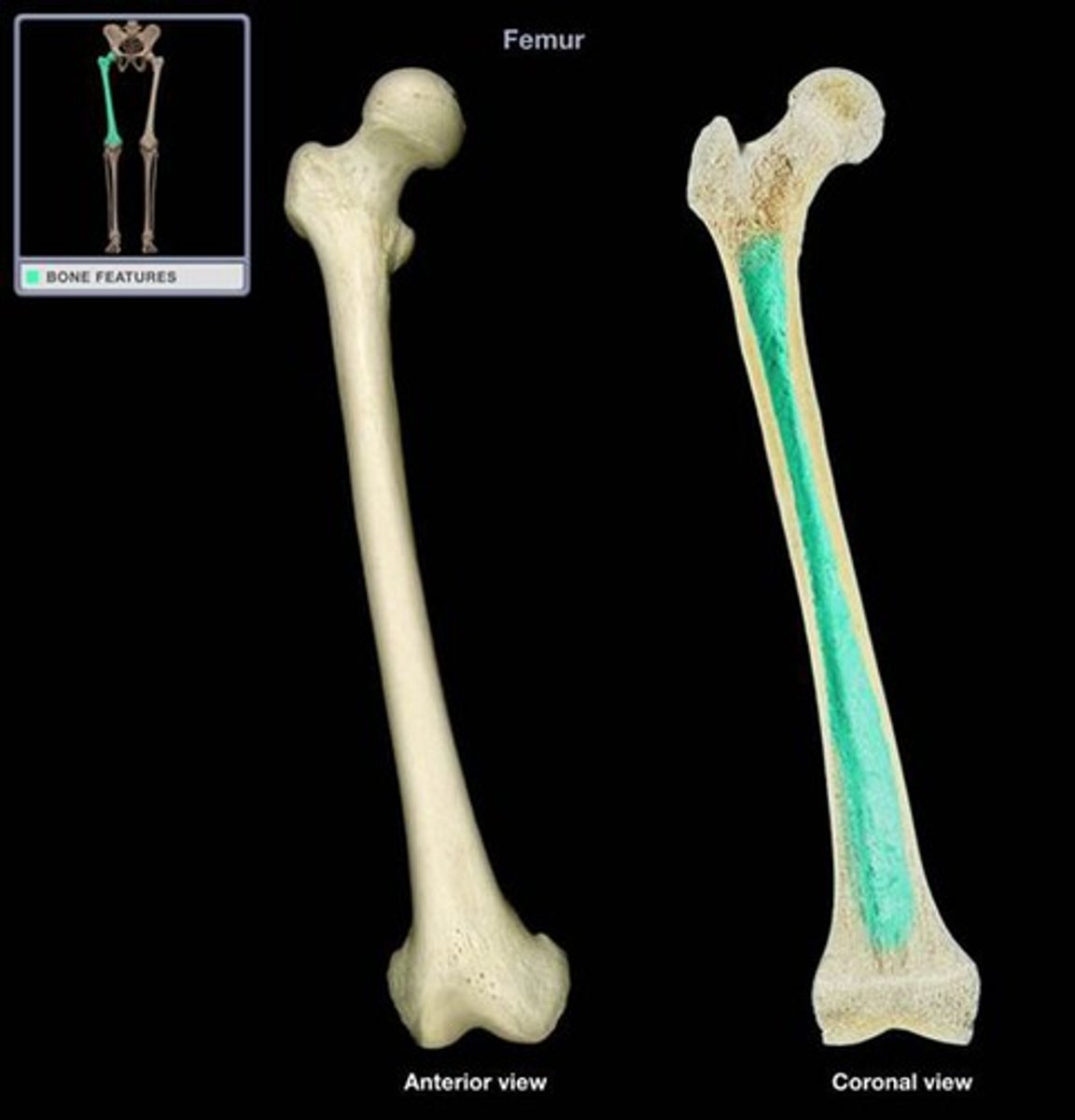
Meatus bone marking
passageway for nerves and blood vessels
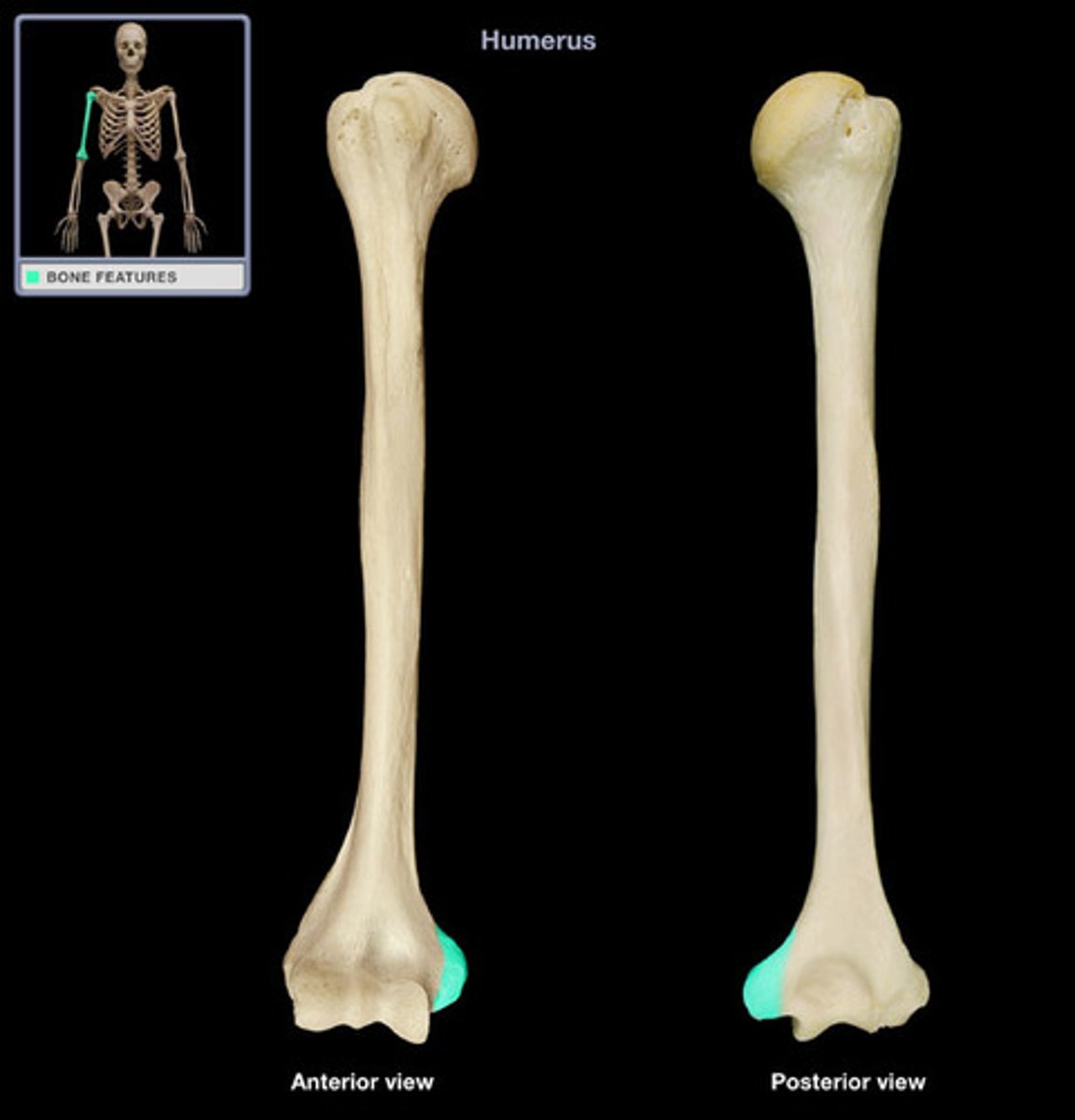
Condyle bone marking
provides stability and allows movement
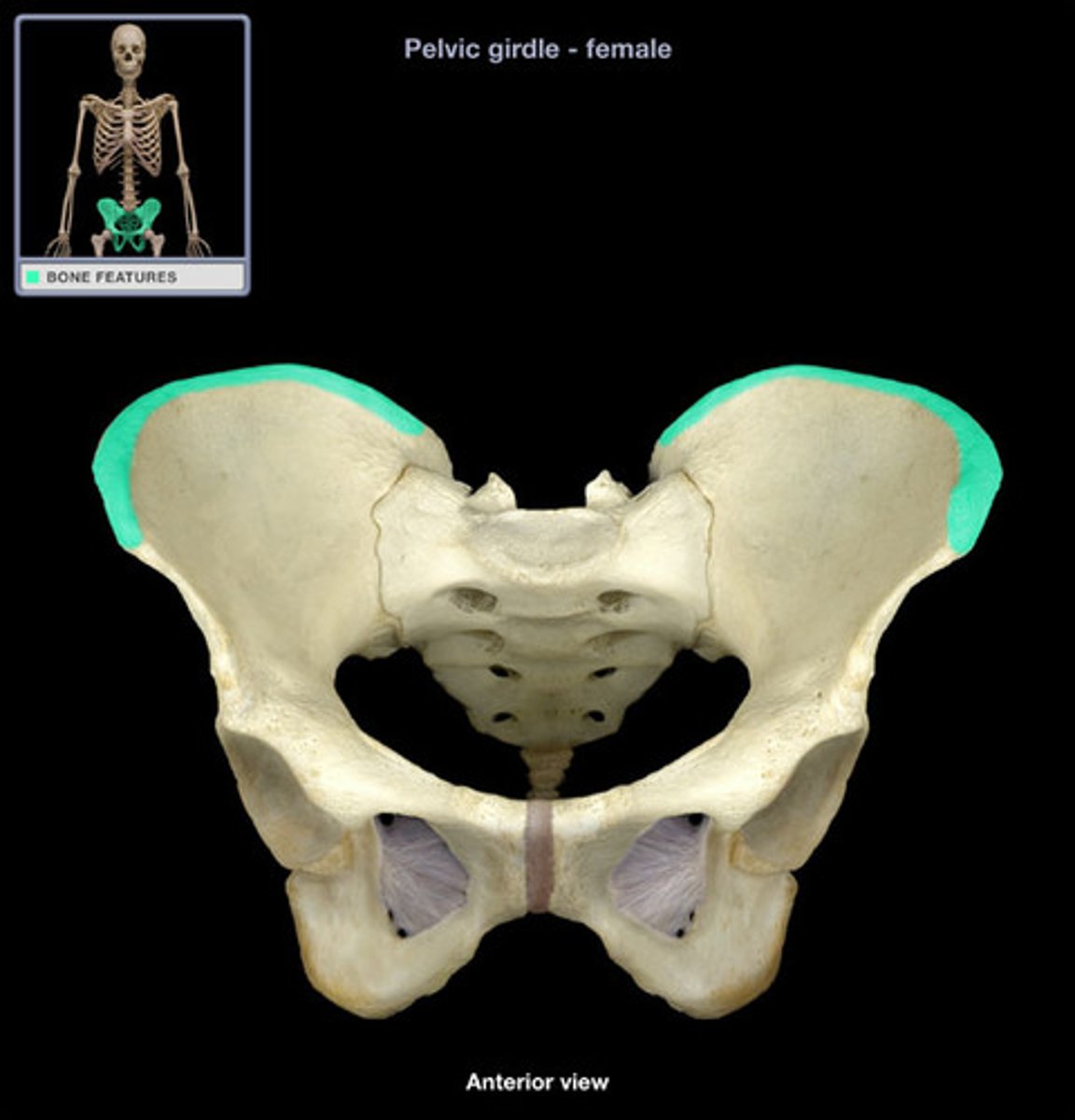
Crest bone marking
attachment point for muscles
Facet bone marking
supports the spine
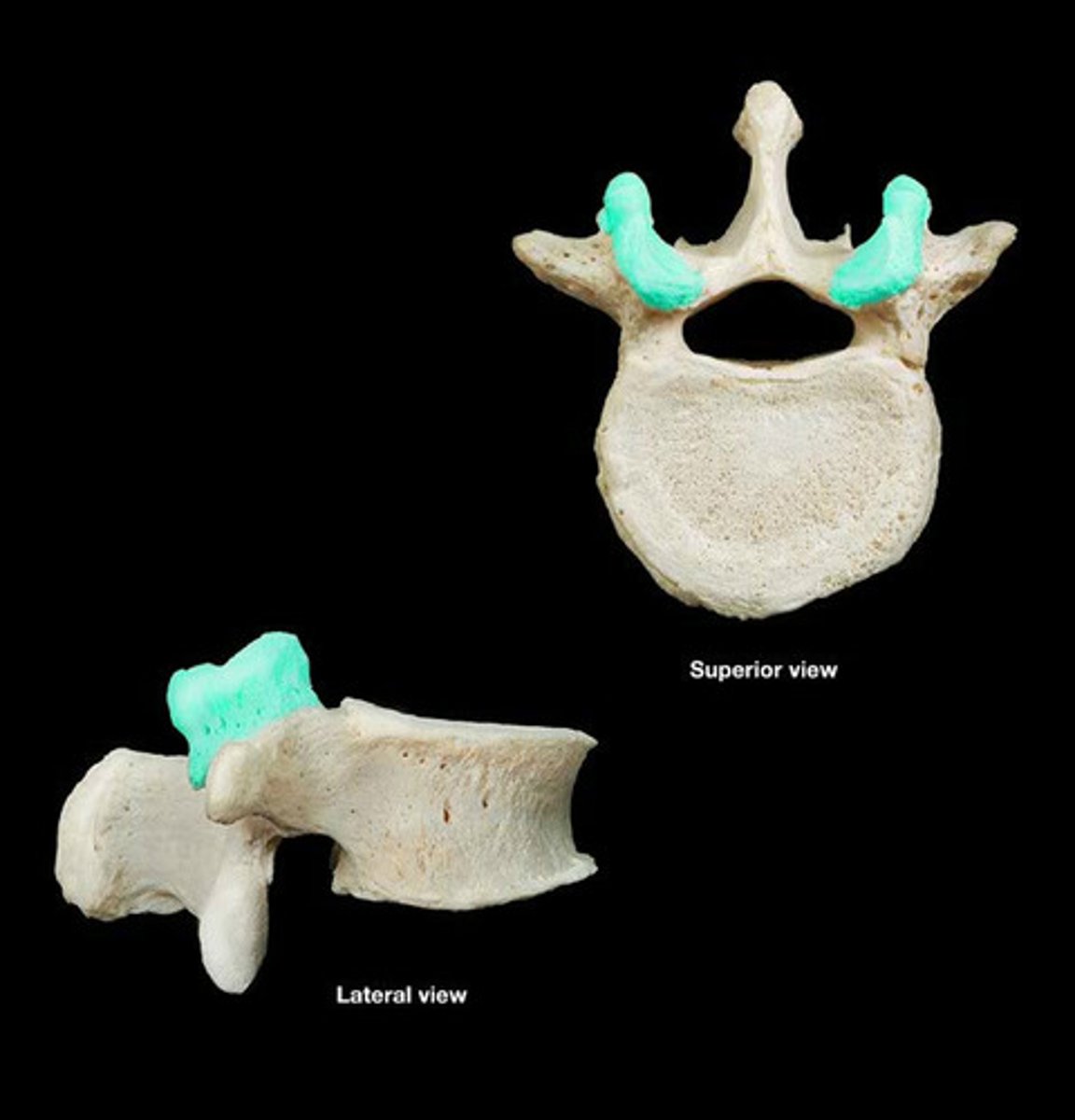
Head bone marking
ends of a bone that forms part of a joint
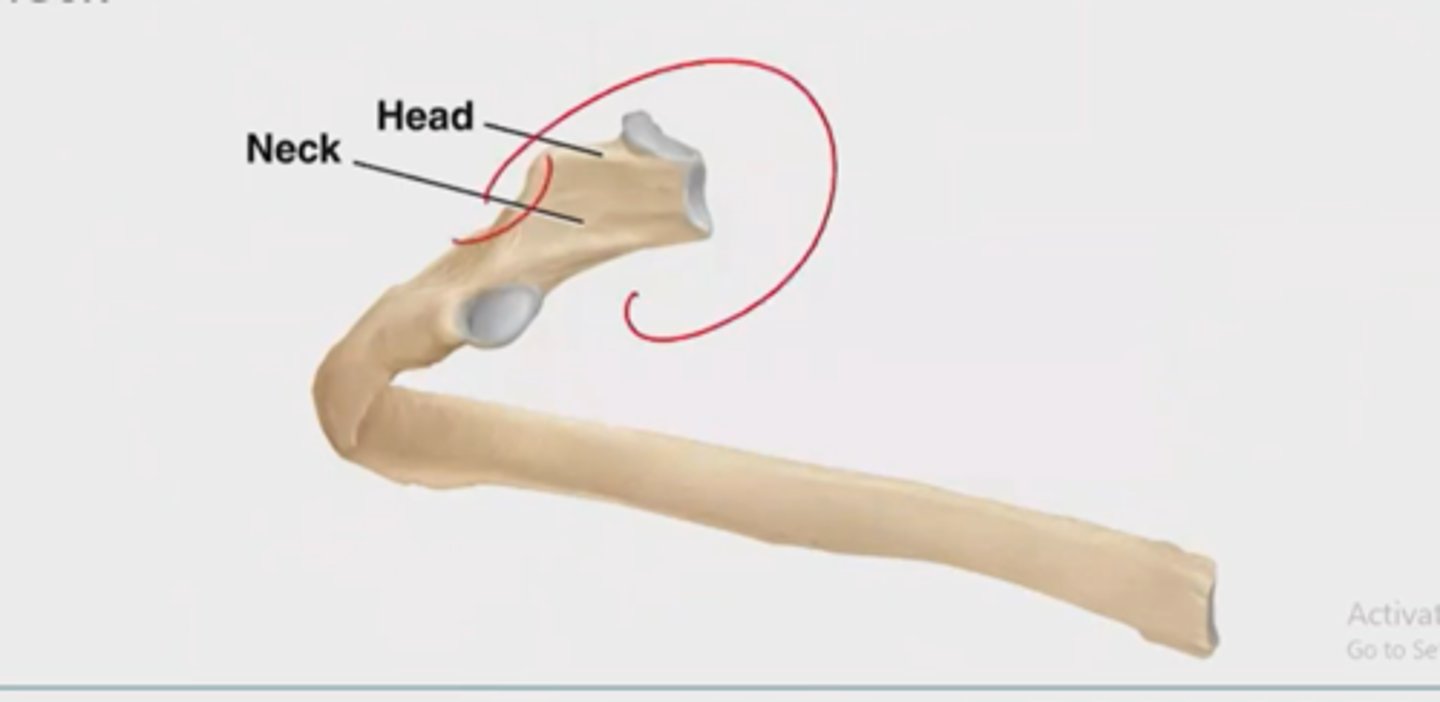
Crista galli
serves as an attachment point for membranes surrounding the brain
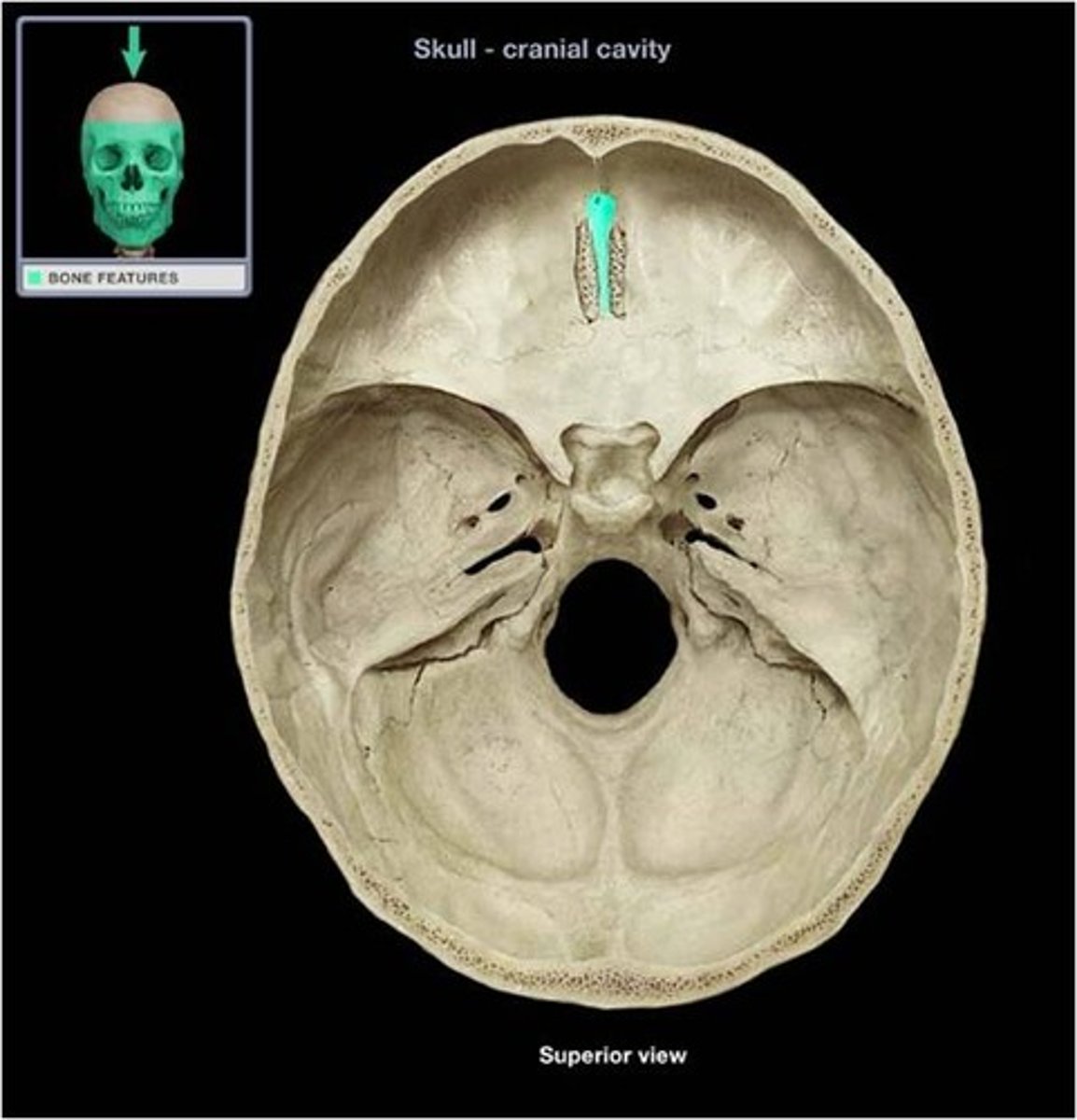
Cribriform plate
allows the passage of olfactory nerves from the nasal cavity to the brain.
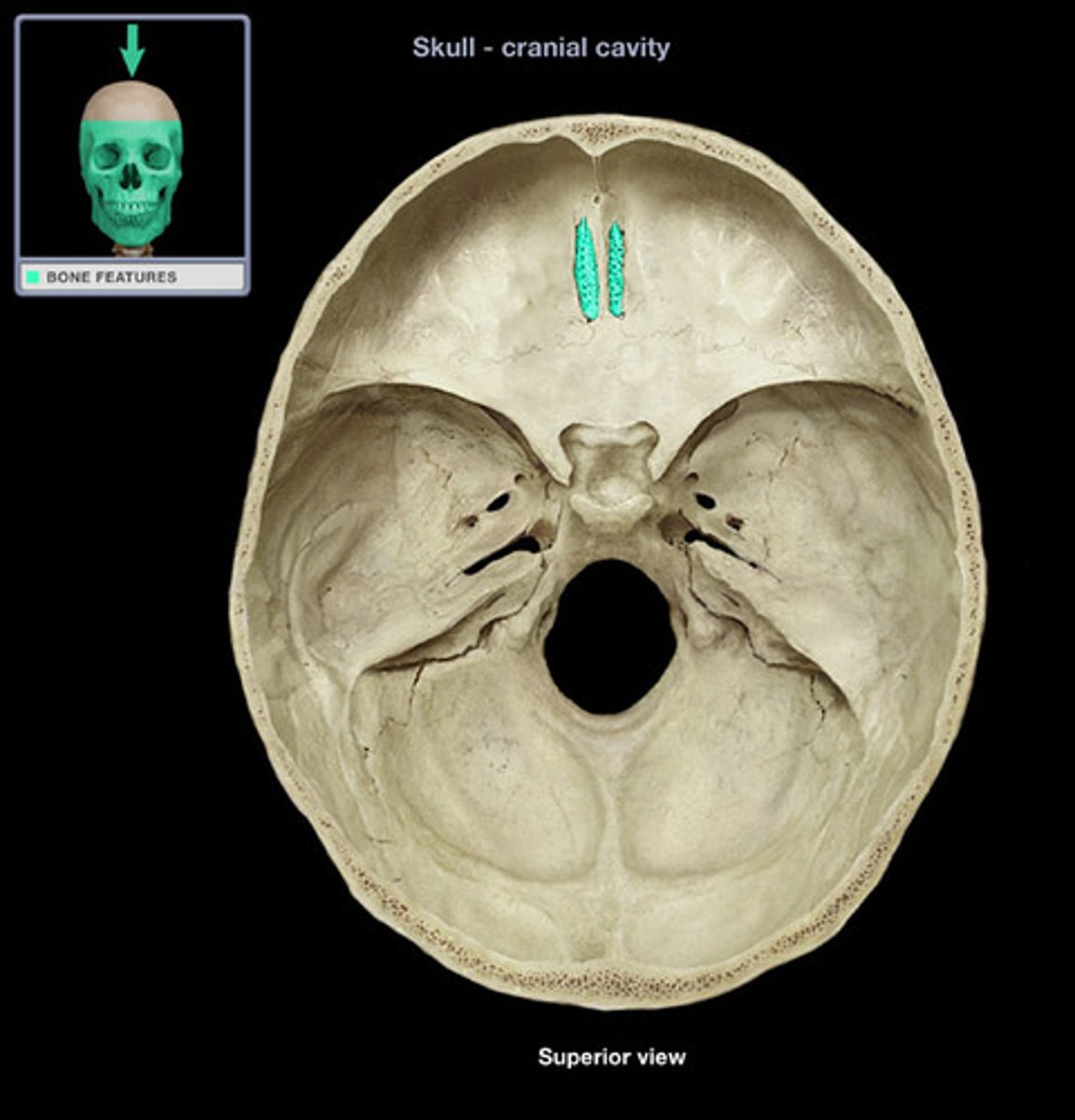
Perpendicular Plate
forms the upper portion of the nasal septum
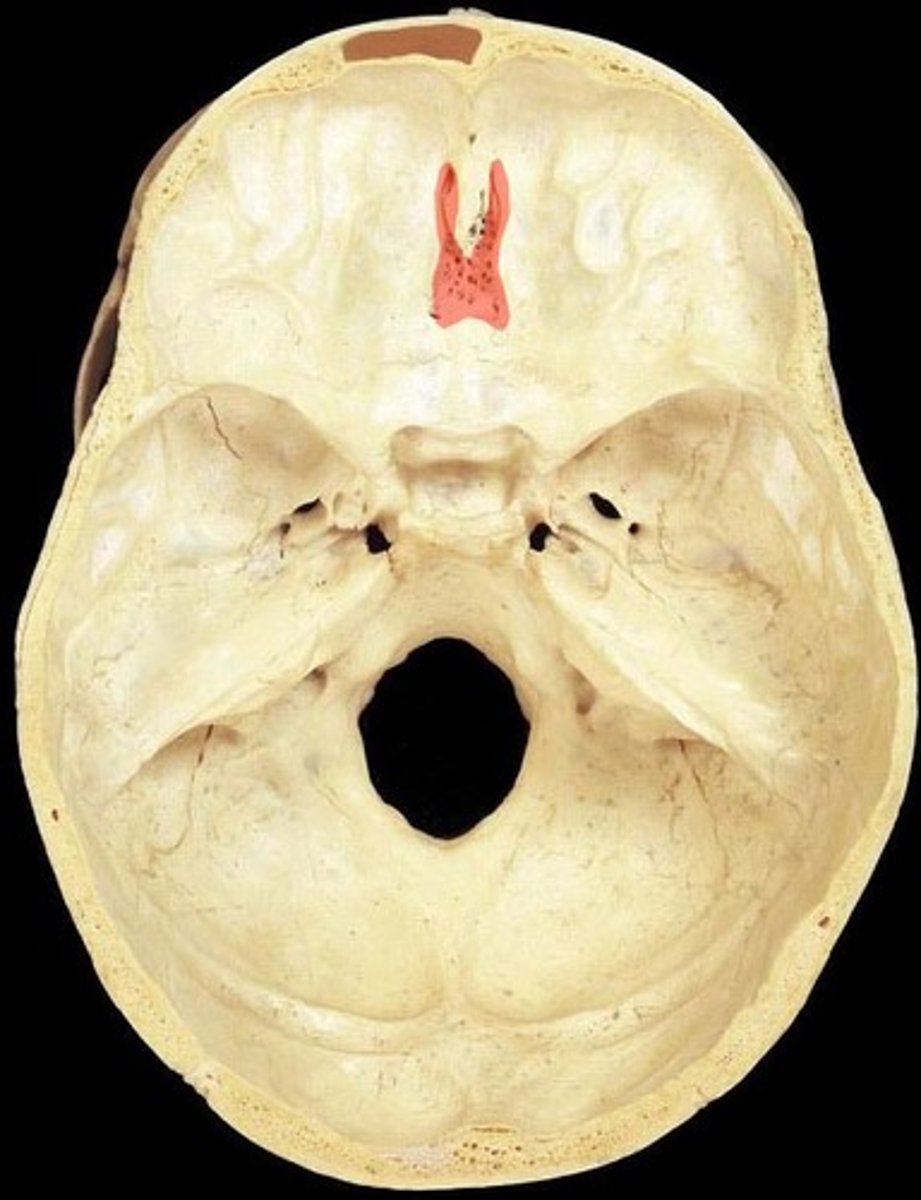
Olfactory Foramina
allows olfactory nerves to pass through
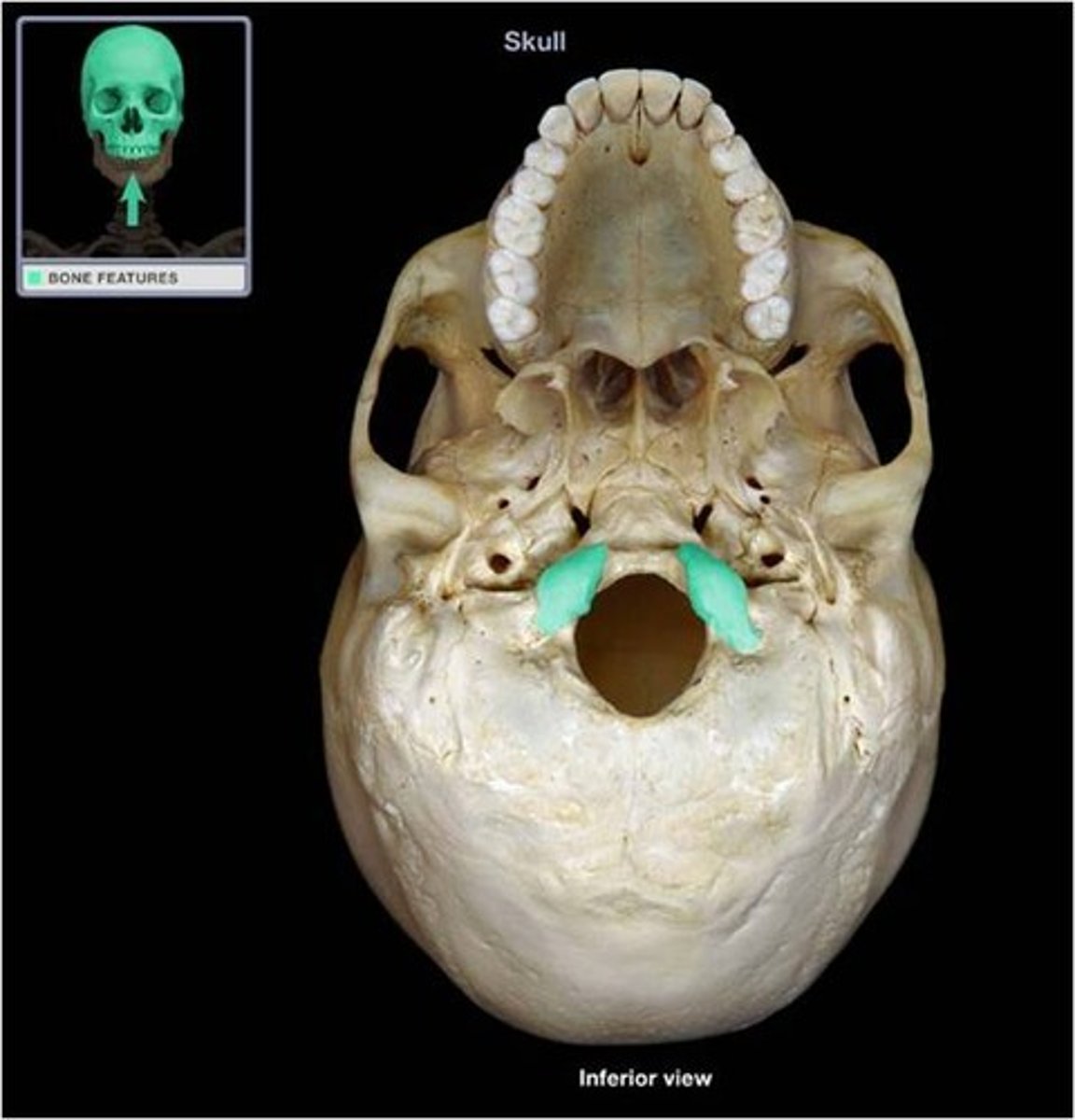
Occipital Condyle
articulates with atlas to support the skull
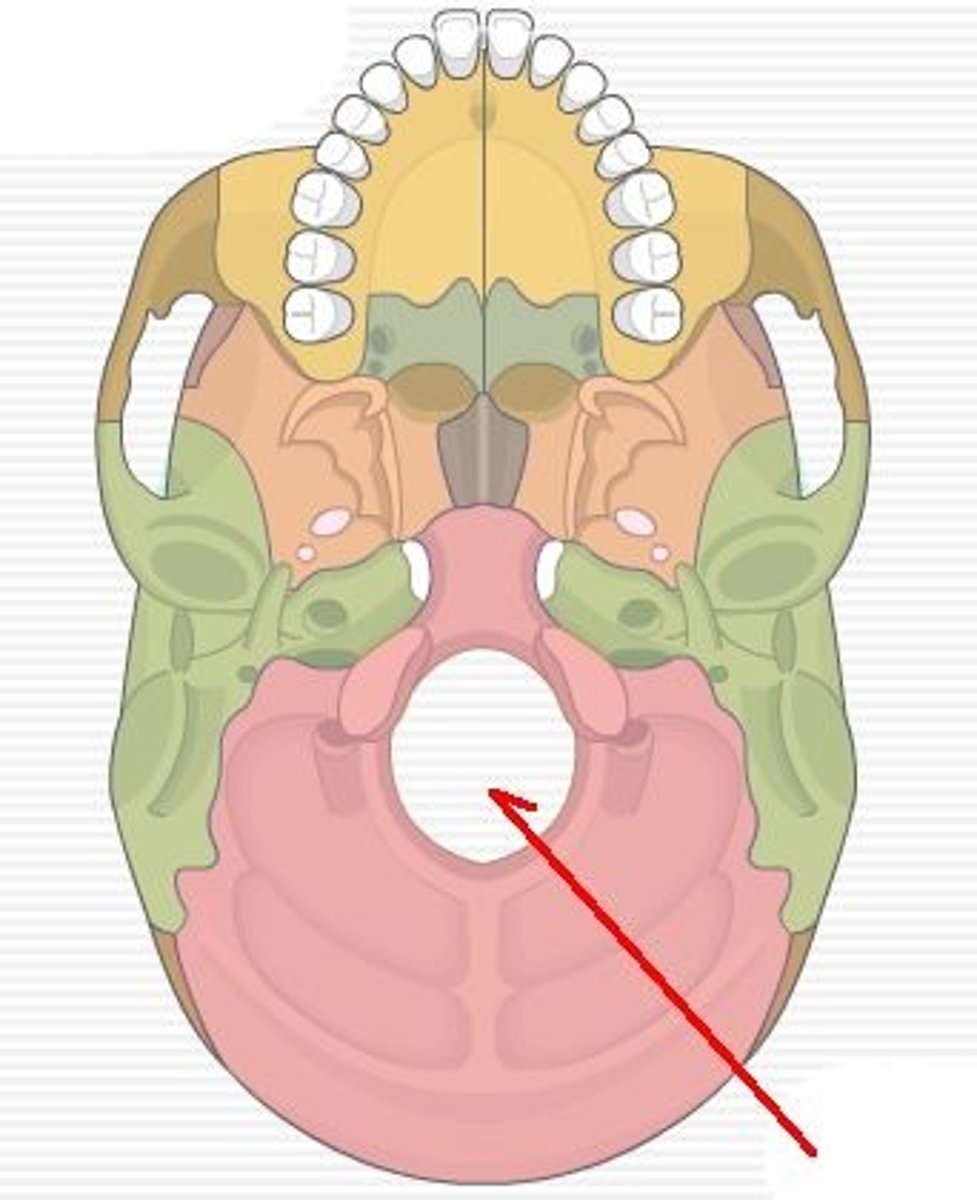
Foramen Magnum
allows the spinal cord to join with the brain stem
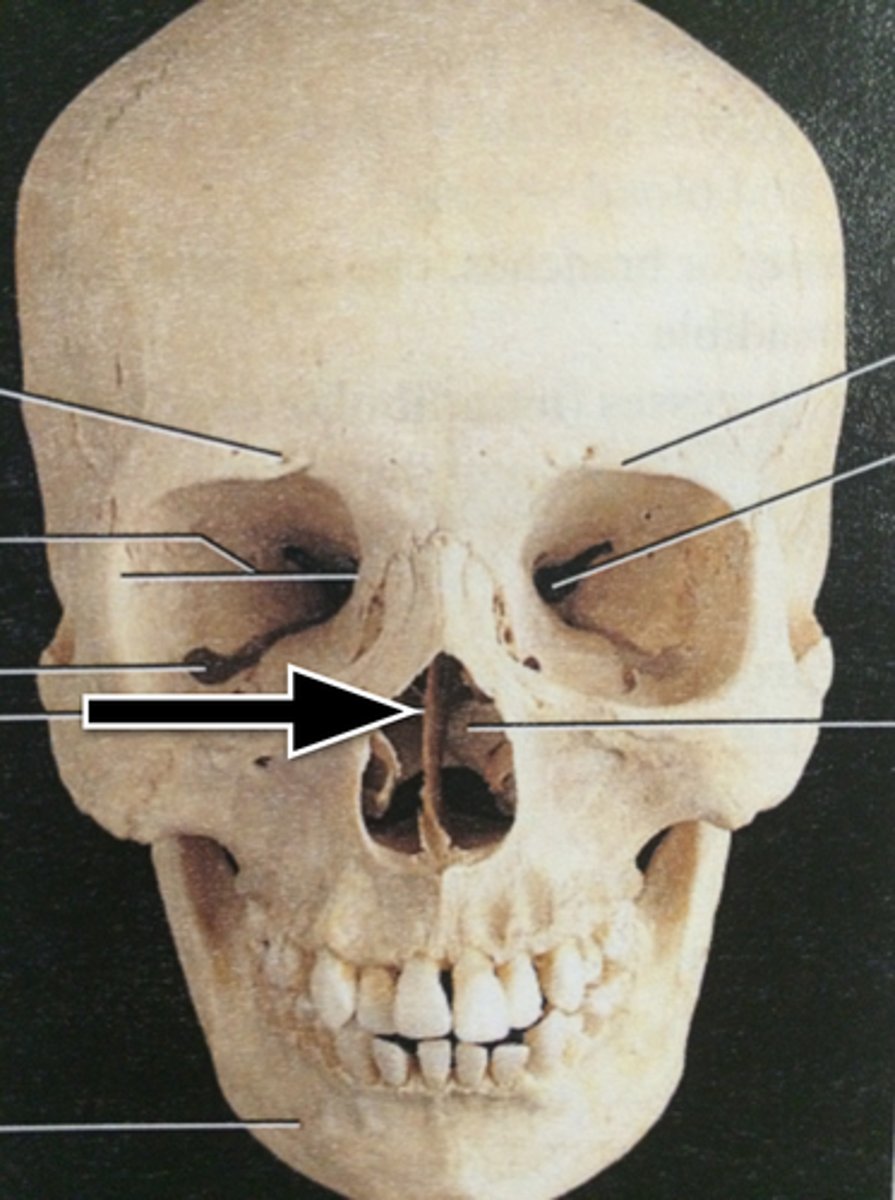
Optic Foramen
passageway for the optic nerve
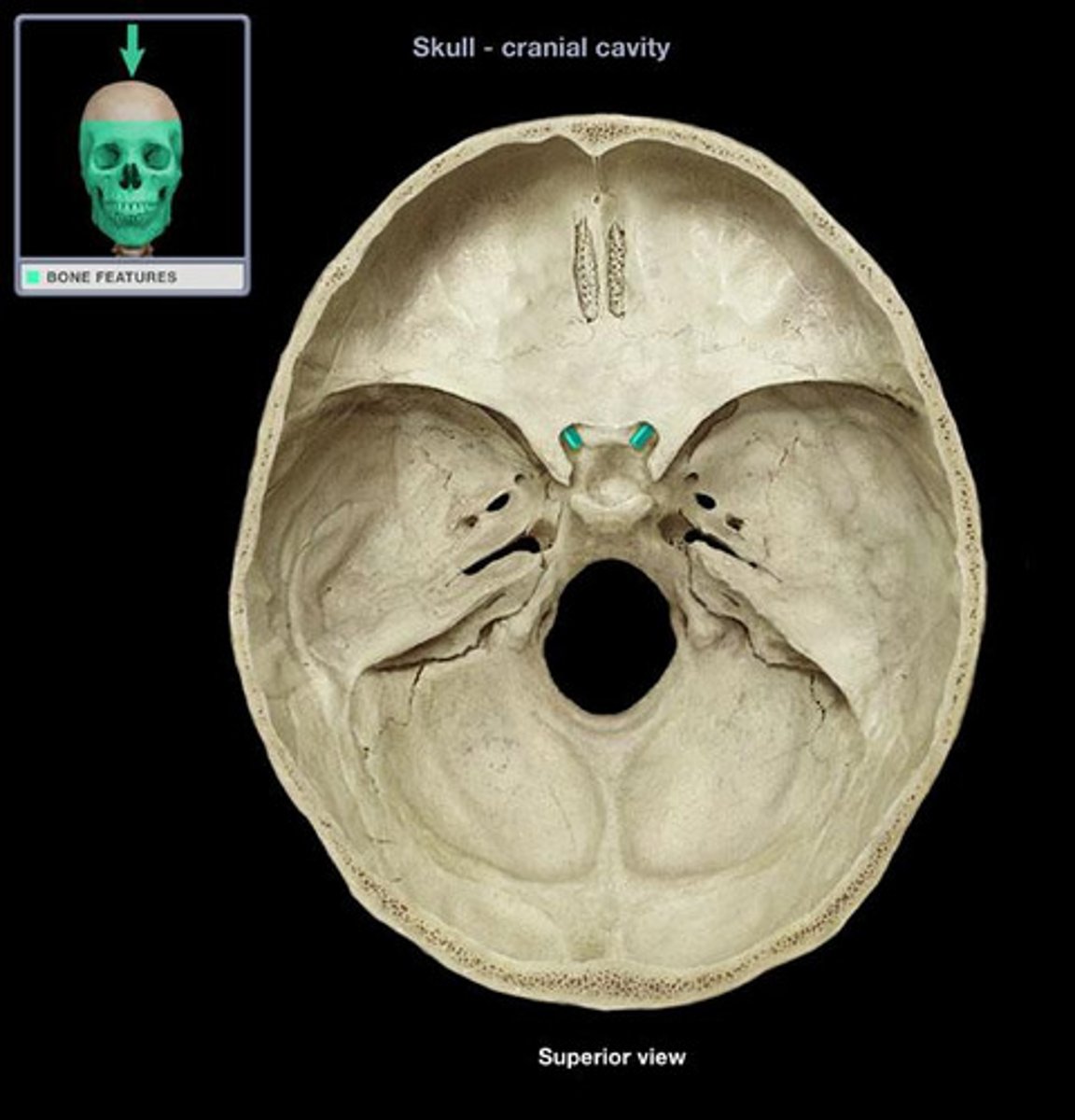
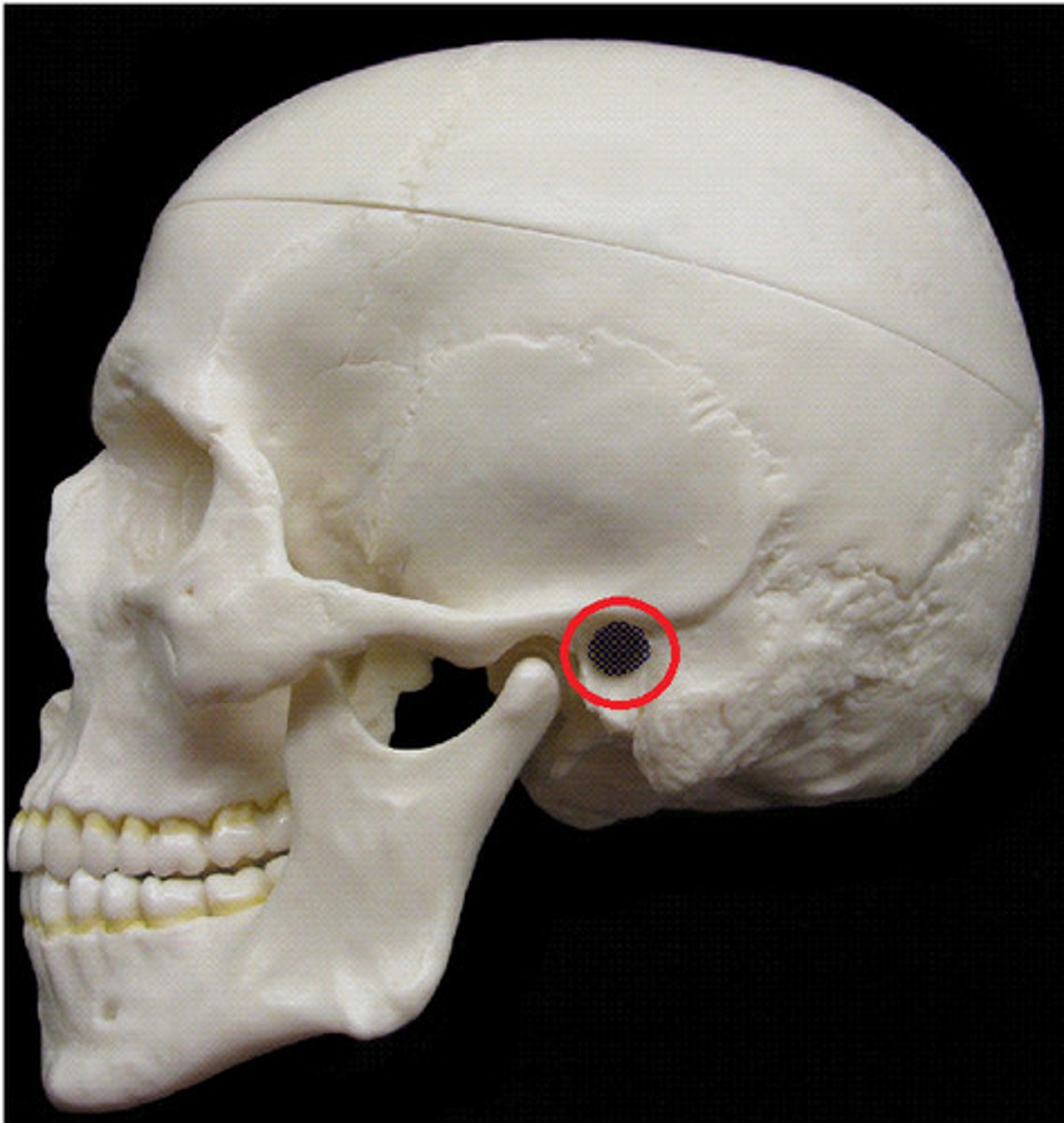
Mandibular Fossa
forms the socket for the mandible
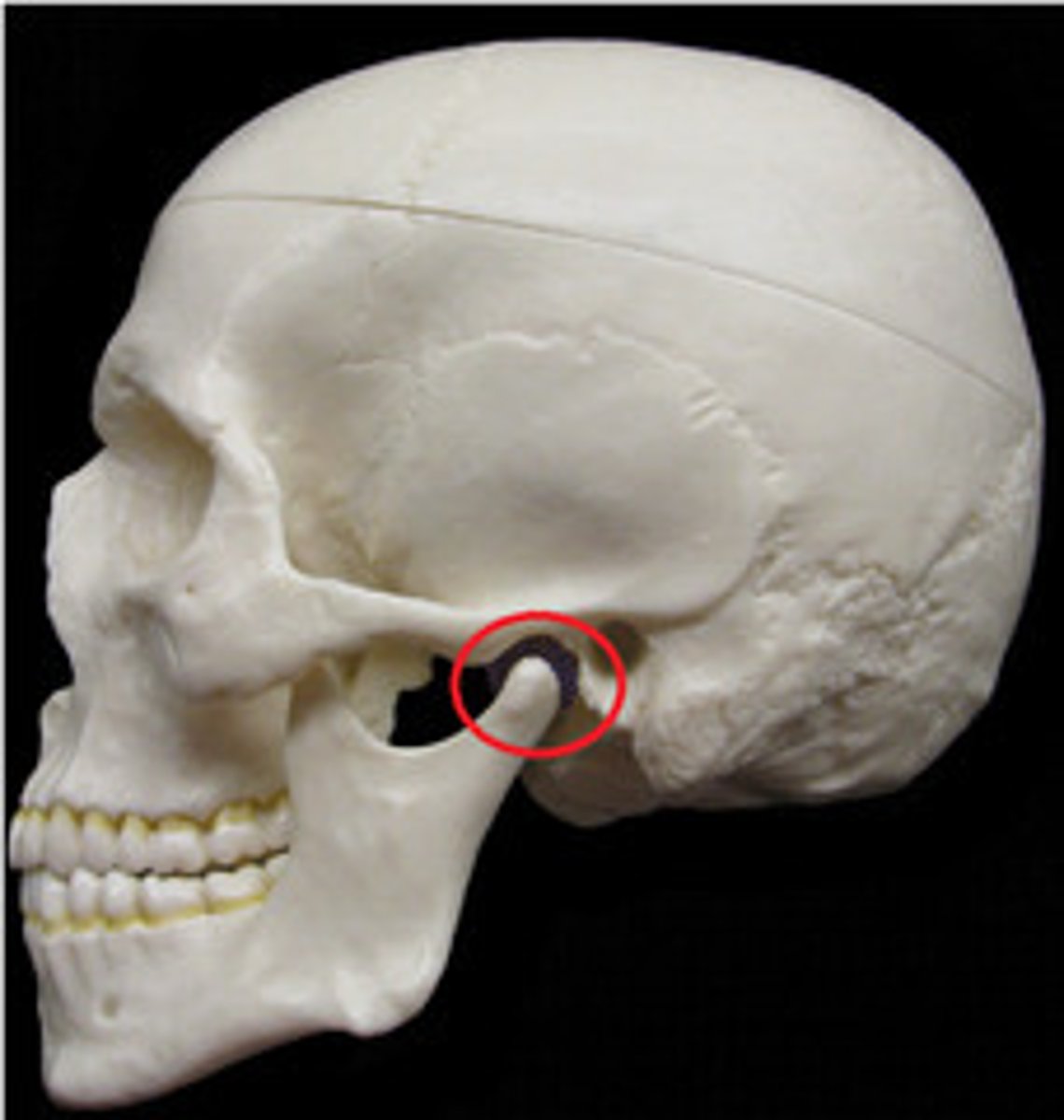
Styloid Process
attachment point for muscles involved in oral functions
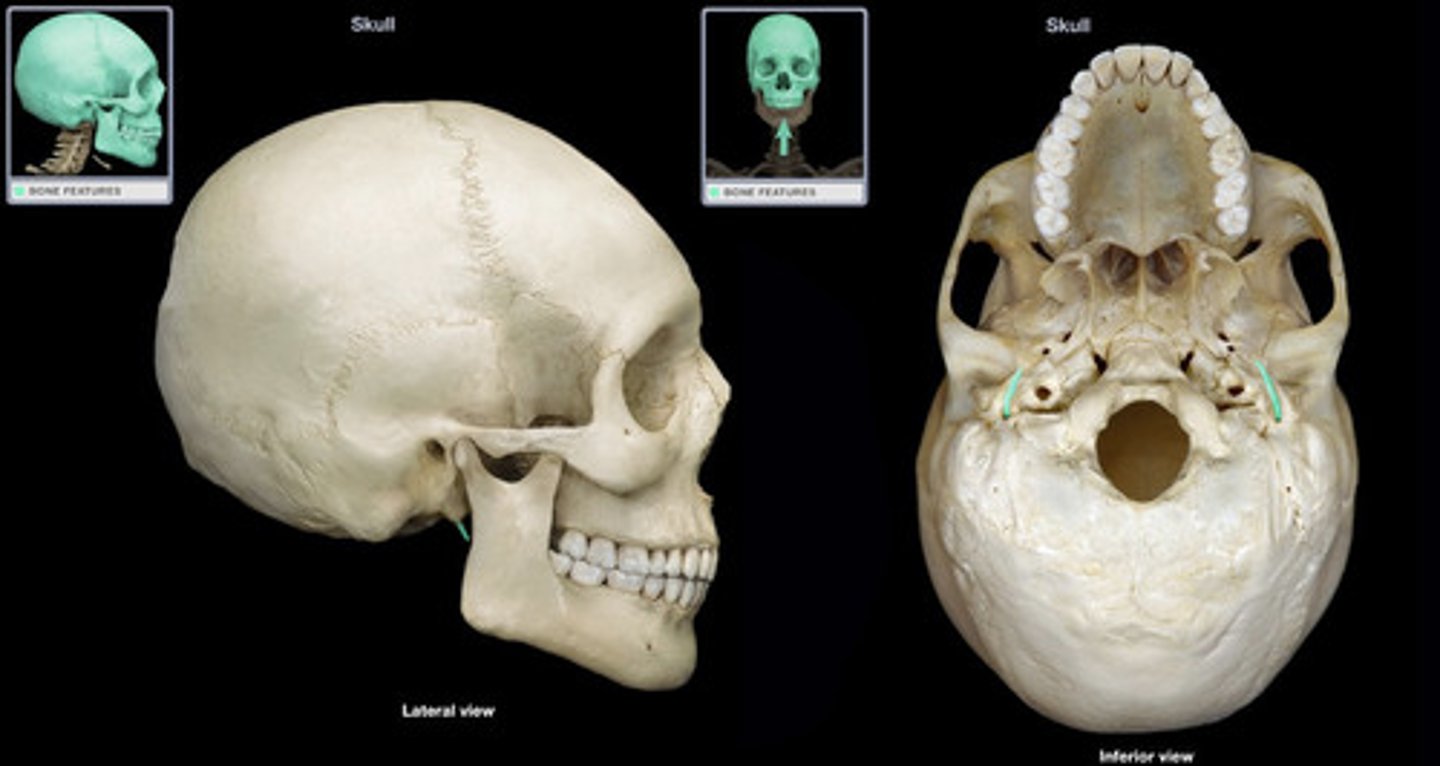
Mastoid Process
attachment for neck muscle
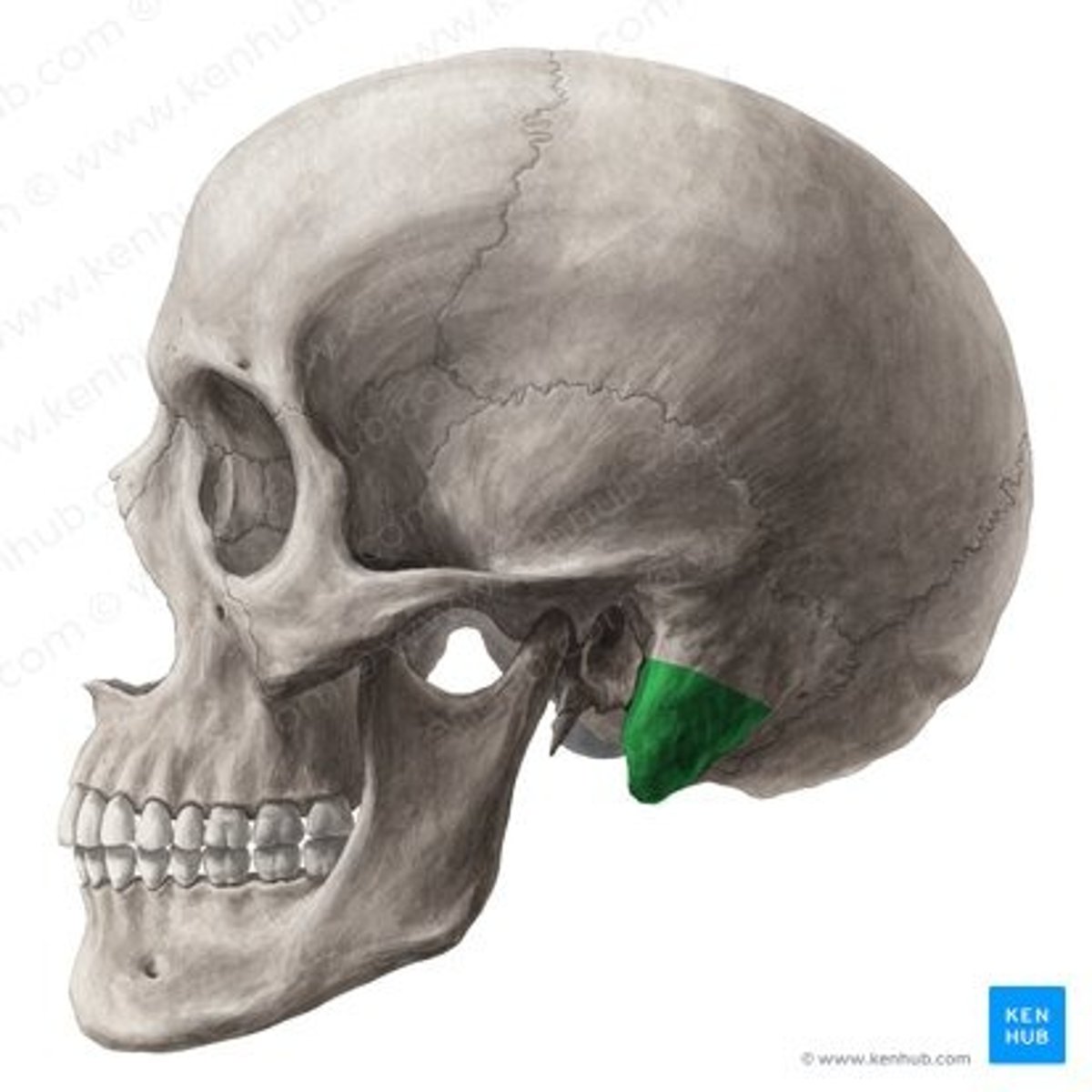
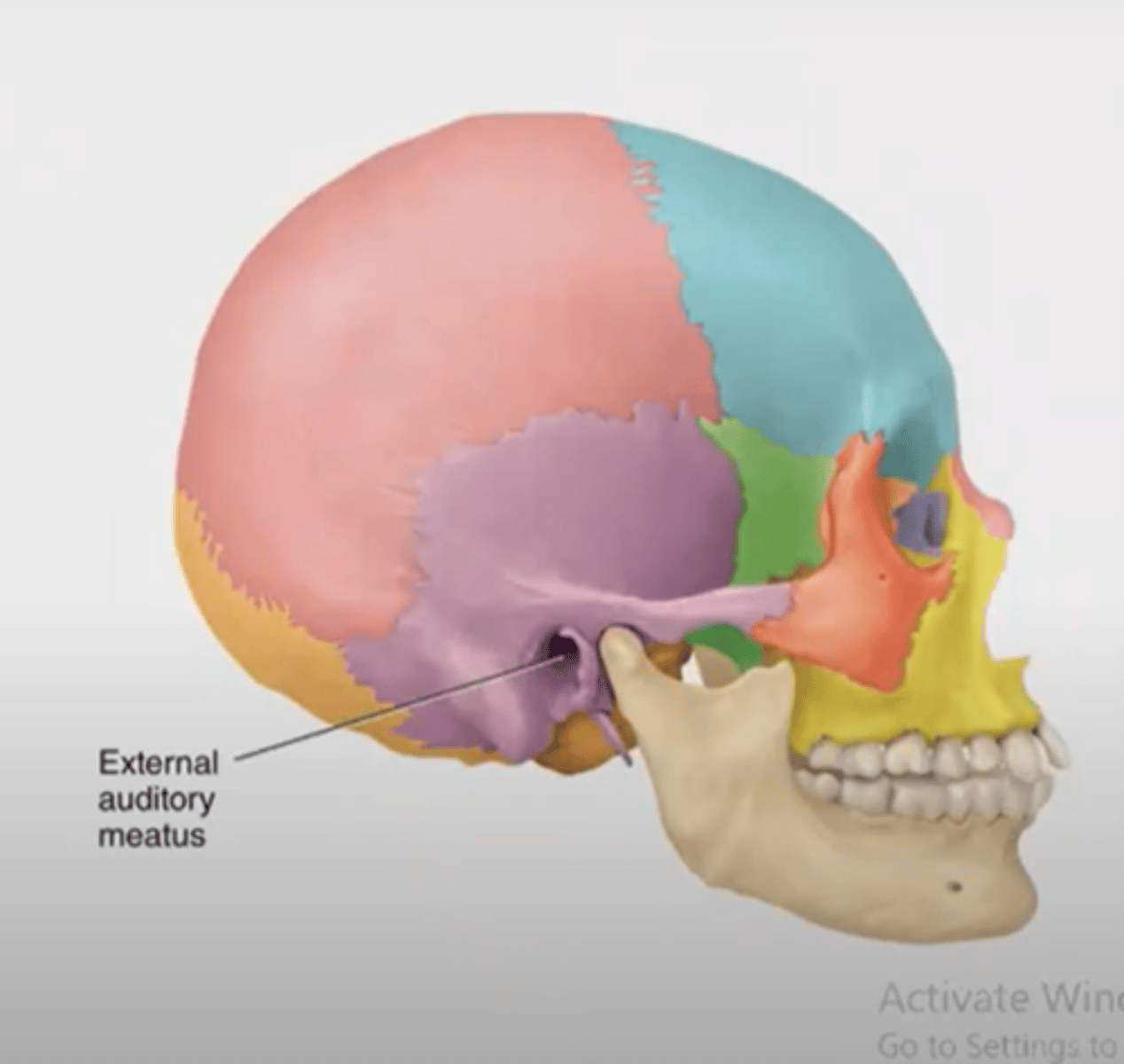
External Auditory Meatus
gathers sound waves
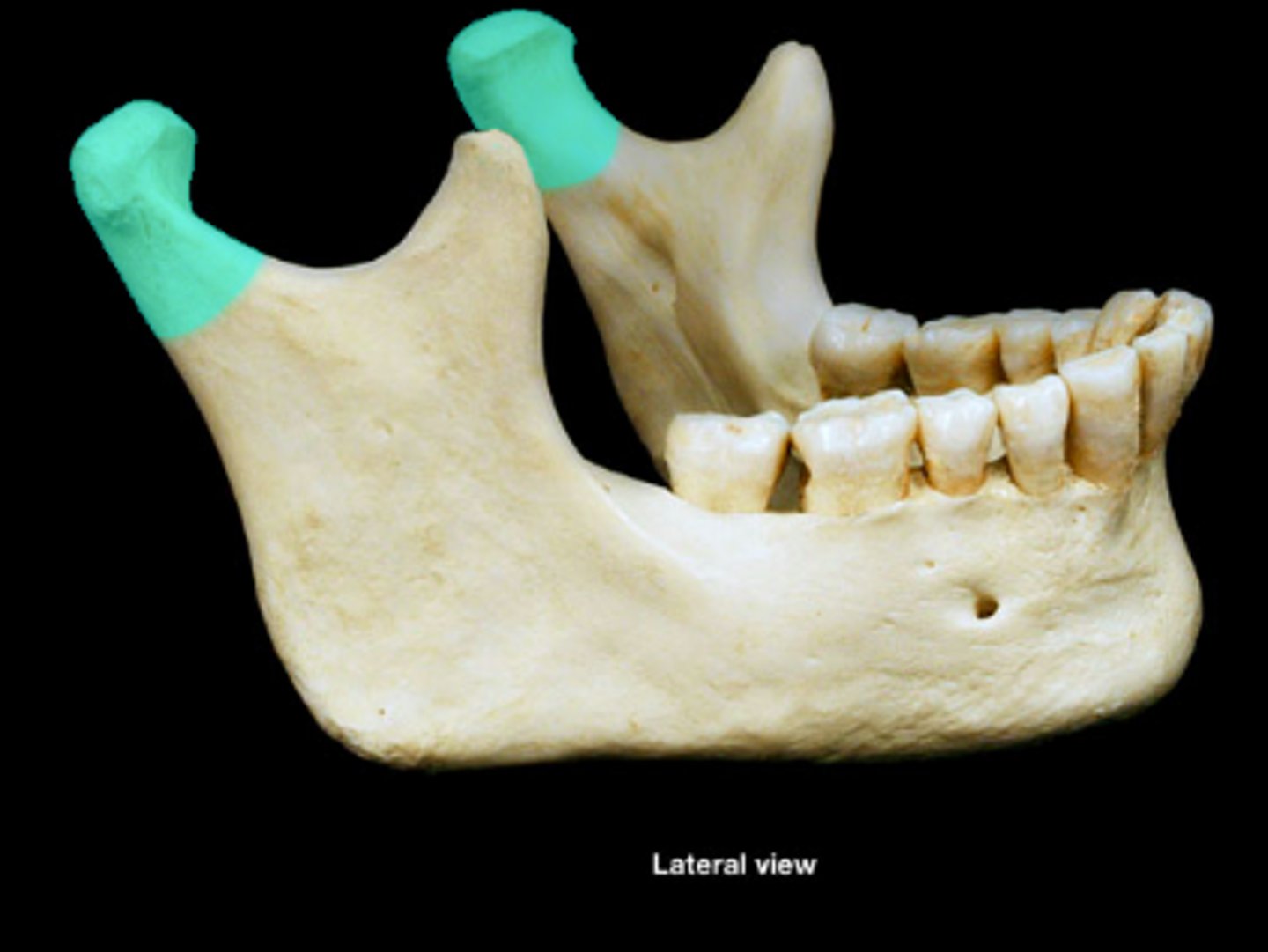
Condylar Process
attachment of mandible to skull
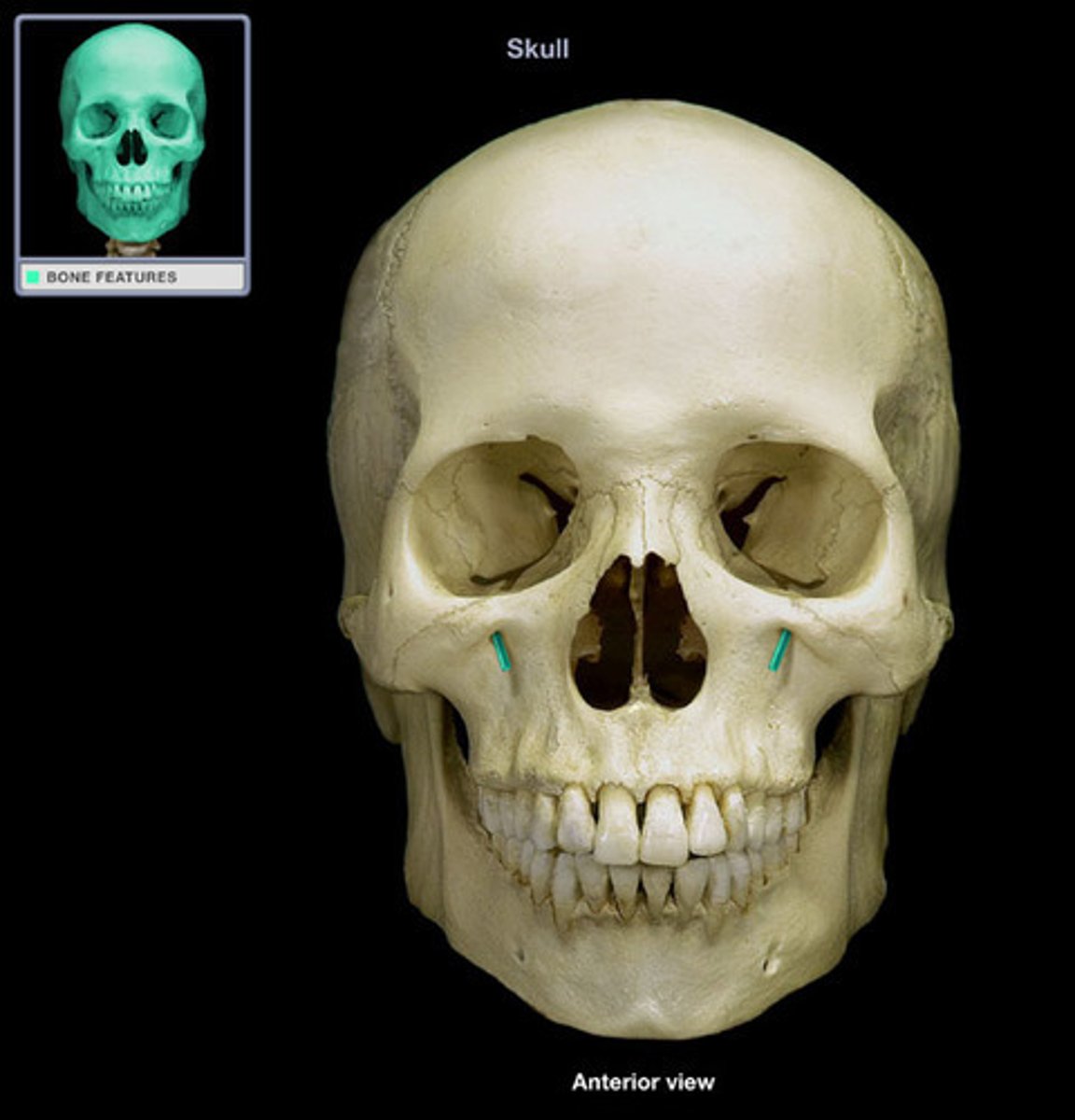
Infraorbital Foramen
passageway for nerves and veins
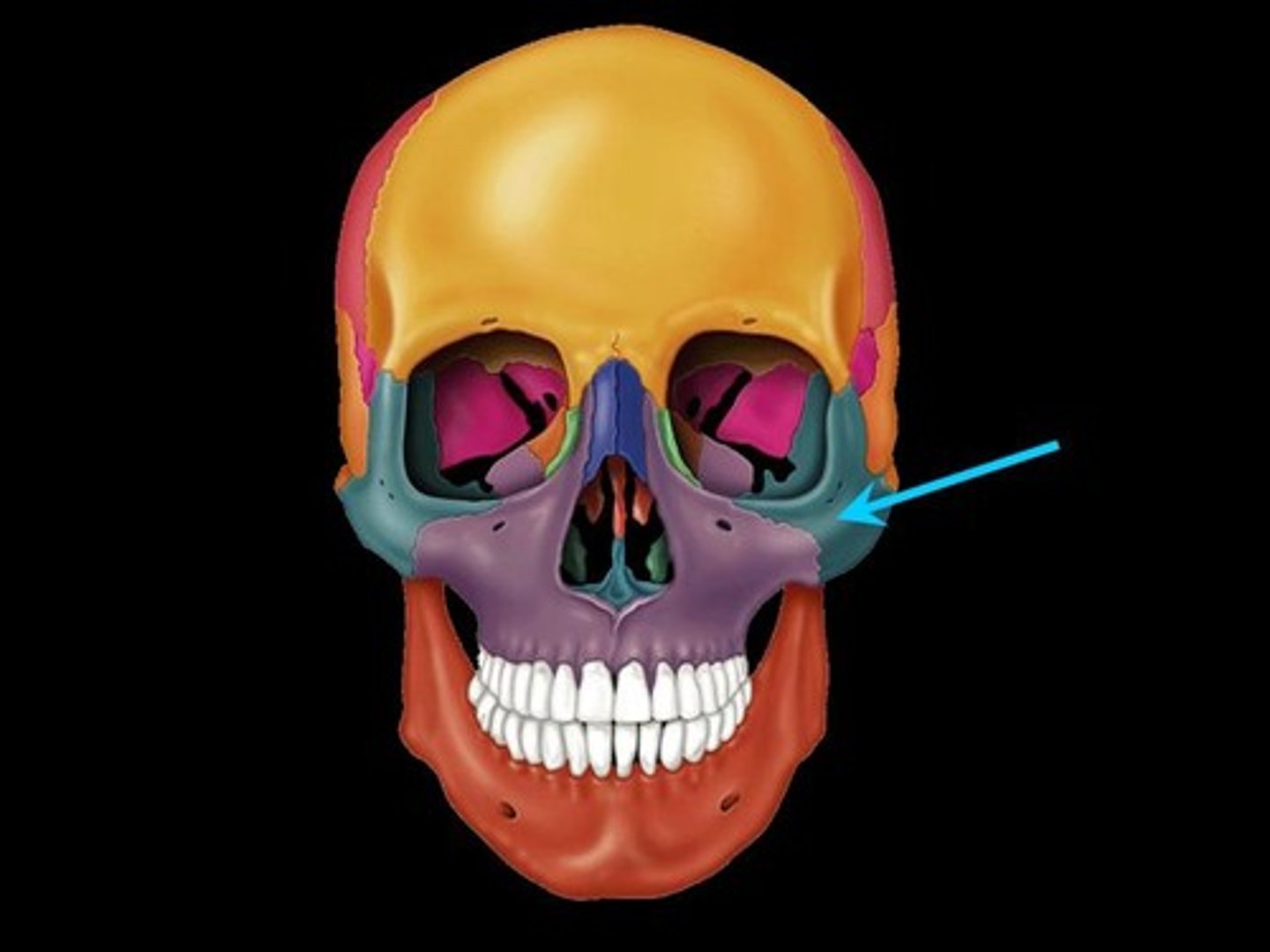
Zygomatic
muscle attachment site for facial expressions
Palatine Process
forms hard palate
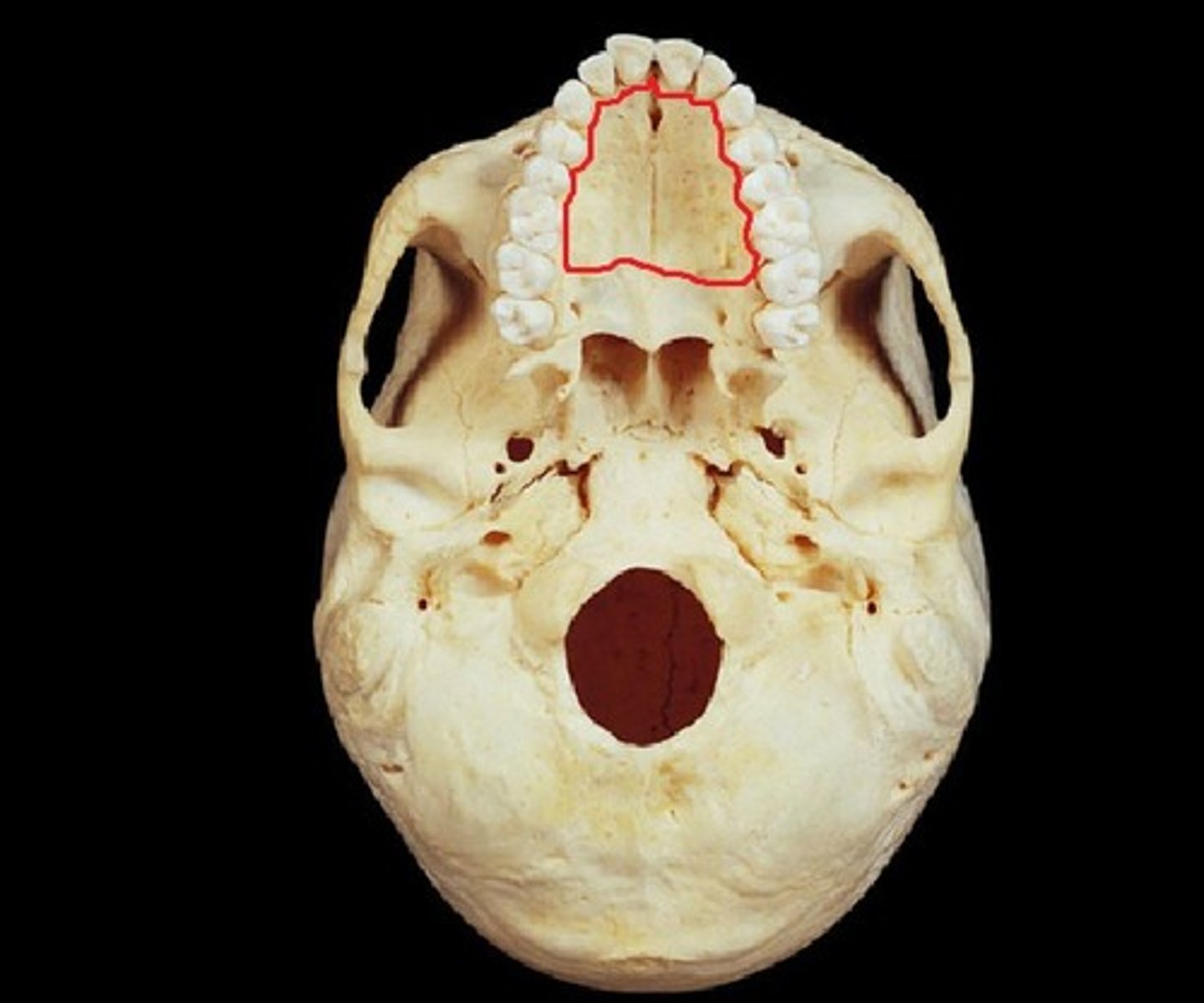
Palatine
forms posterior part of the hard palate
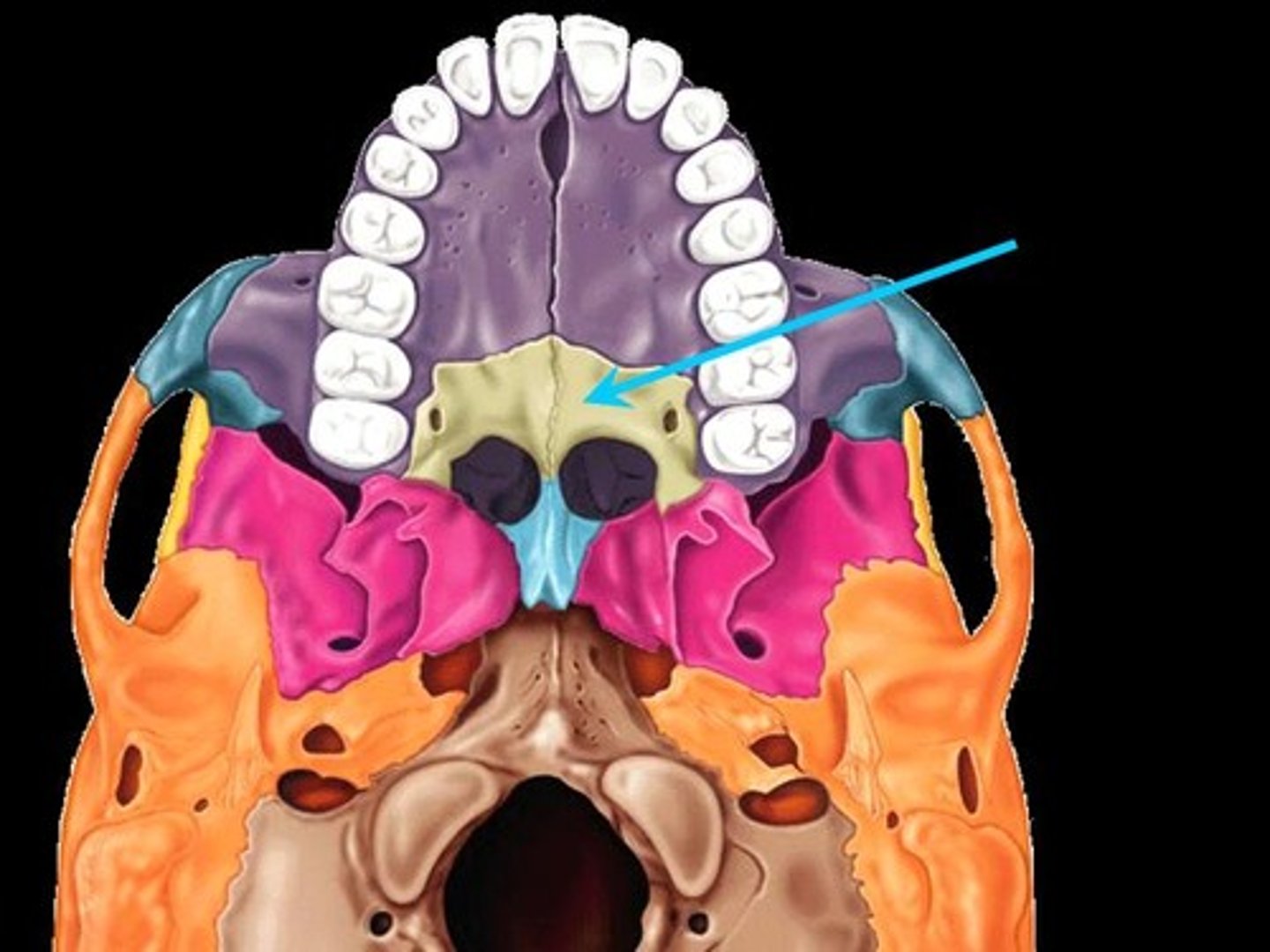
Vomer
Forms part of the nasal septum
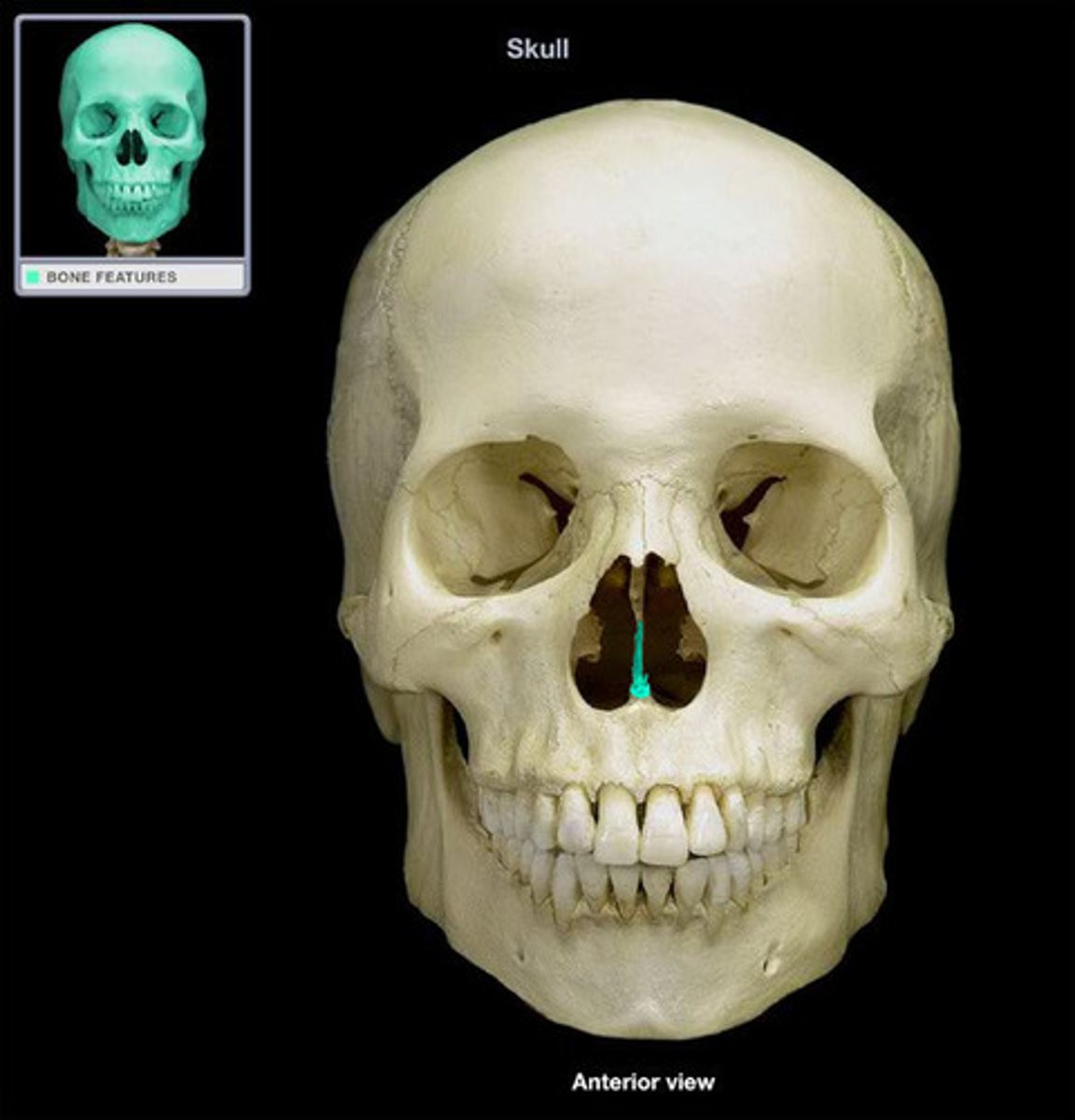
Inferior Nasal Concha
warms inhaled air
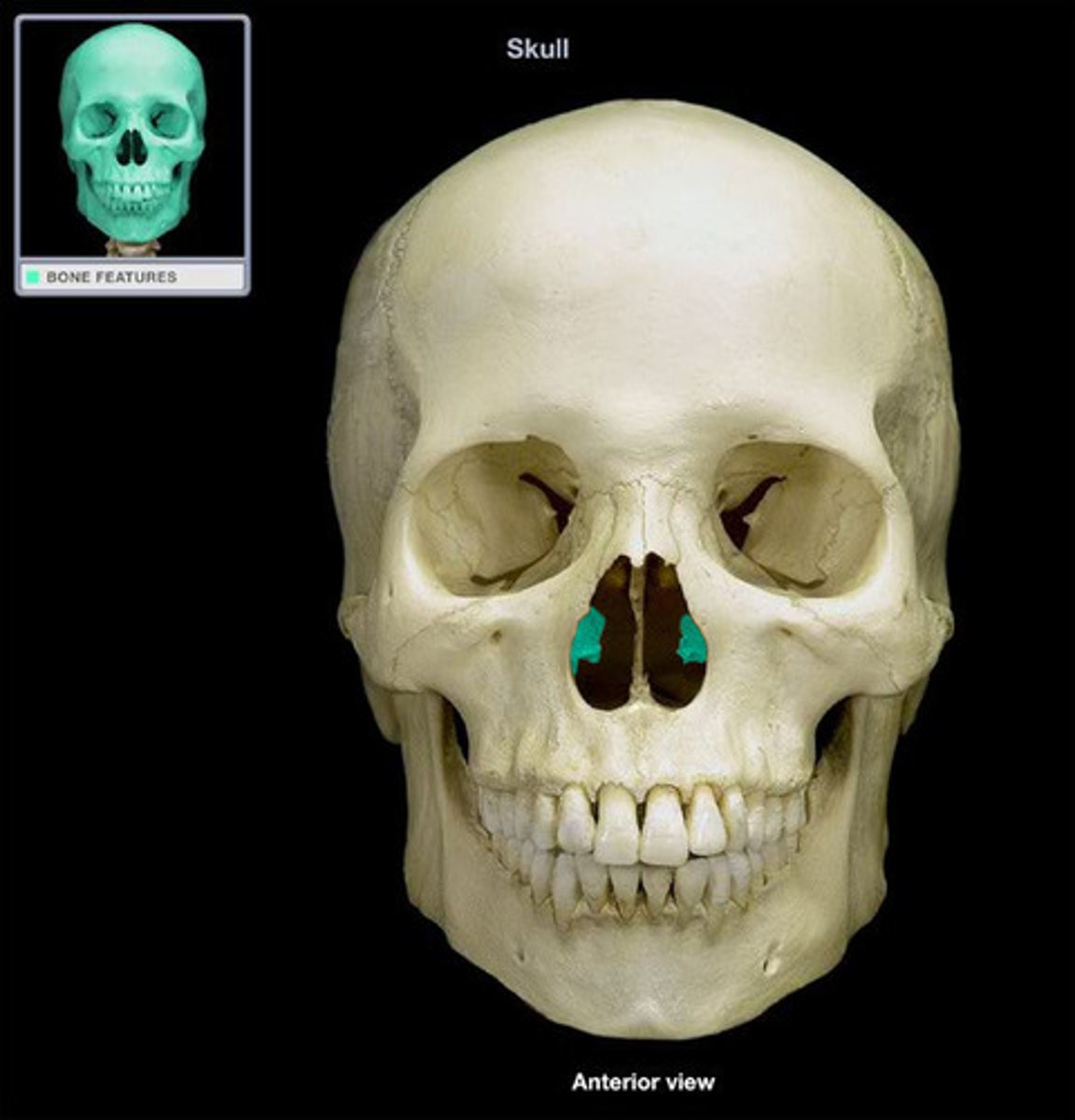
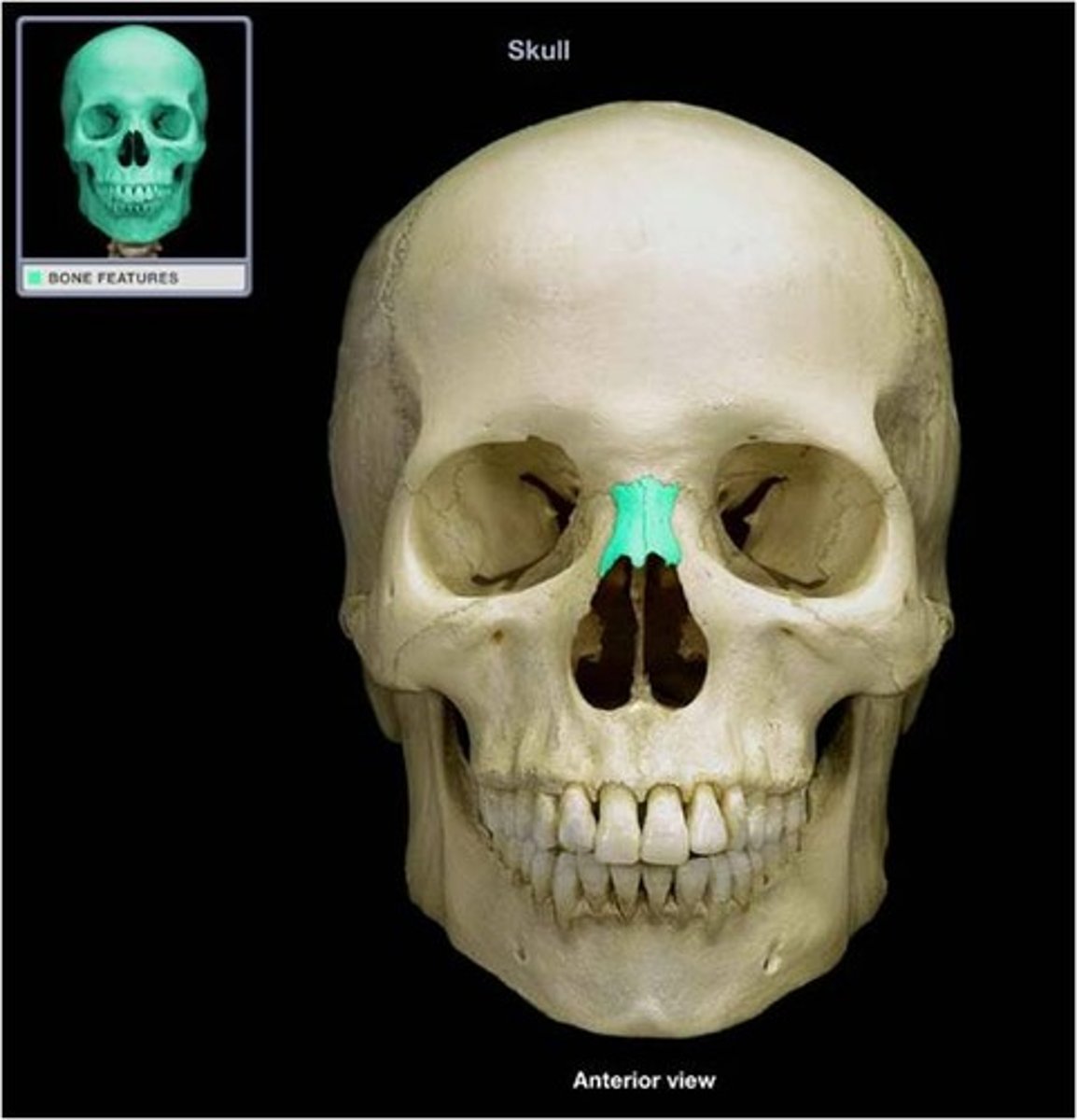
Nasal
forms the nasal bridge
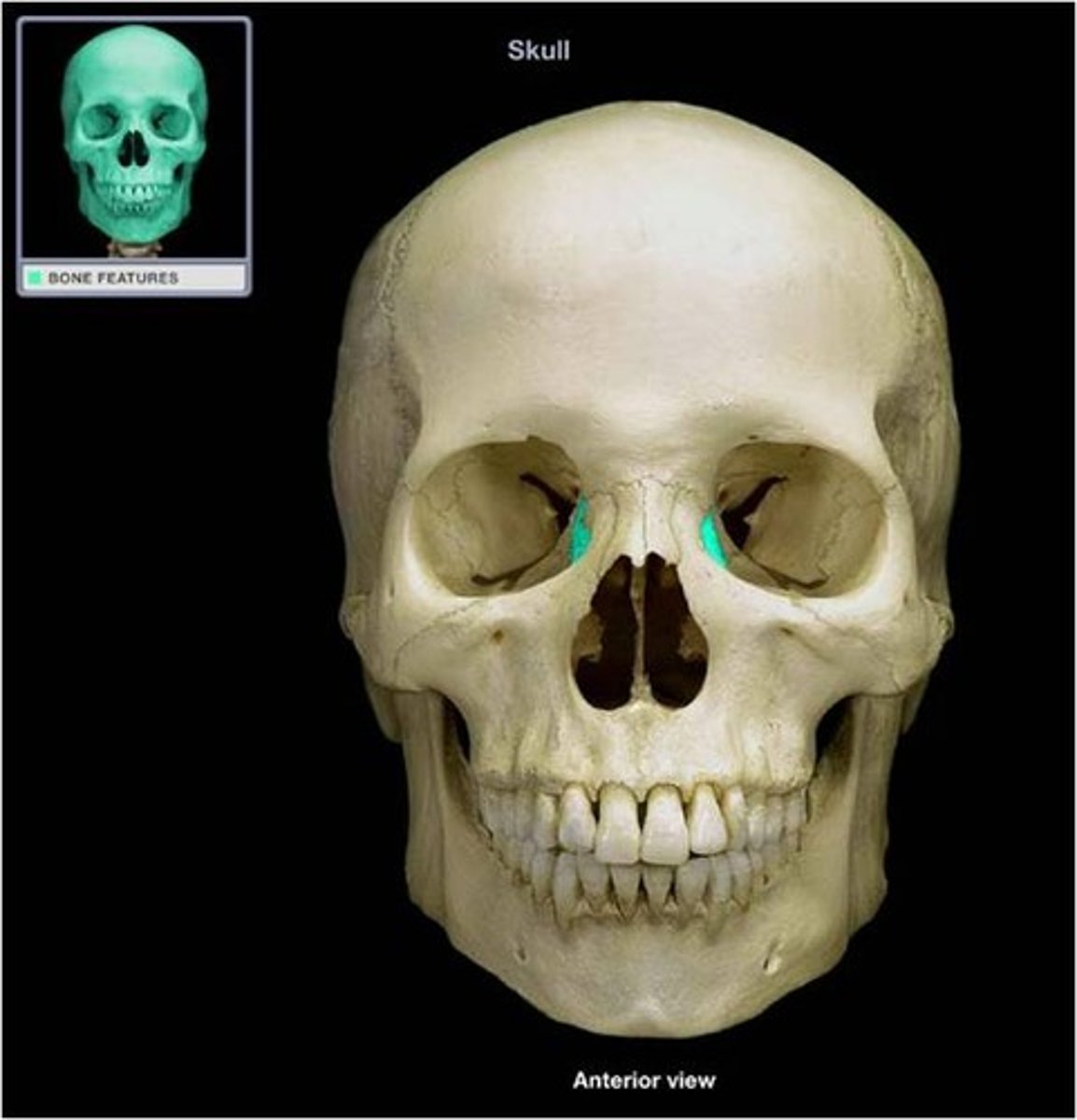
Lacrimal
releases fluid to lubricate eyes
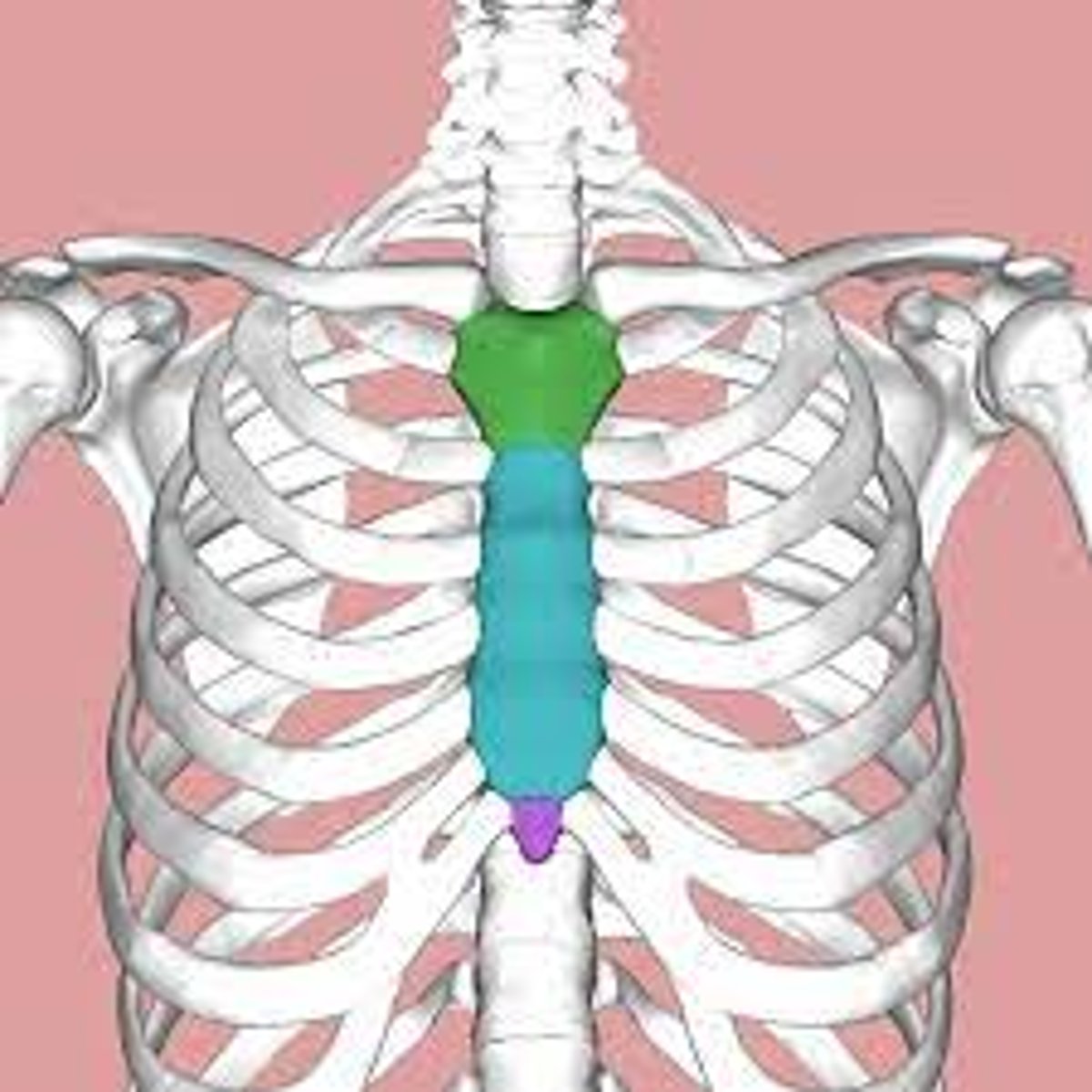
Components of the sternum
manubrium, body, xiphoid process
Two functions of the paranasal sinuses
reduce weight of head and sound resonance
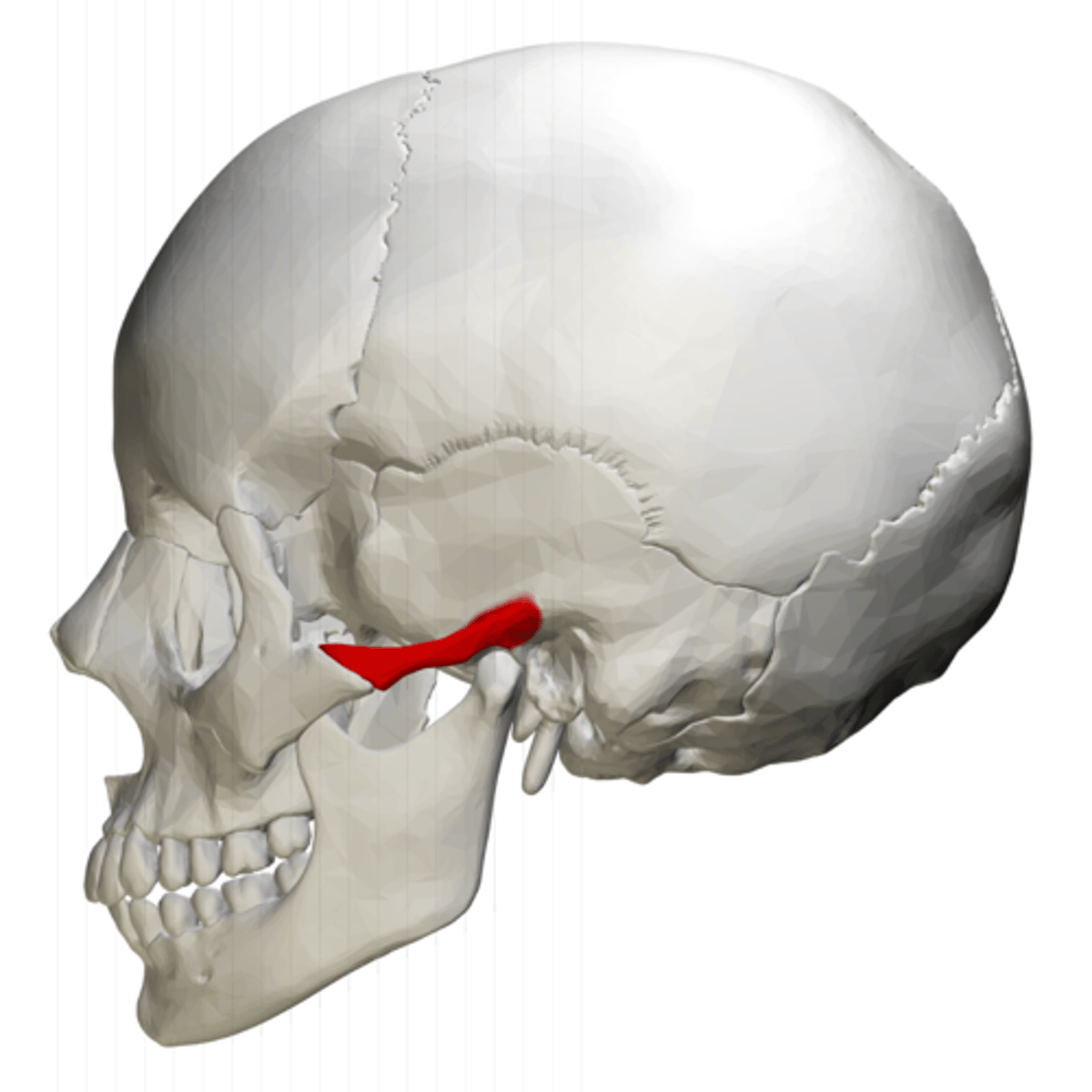
What bones form the zygomatic arch?
zygomatic bone and temporal bone
 Note
Note  Flashcards (42)