Chapter 12 Problem Solving
 Studied by 0 people
 Call Kai
 Learn
Learn Practice Test
 Spaced Repetition
 Match
Match Flashcards
 Knowt Play
1/25

There's no tags or description
Looks like no tags are added yet.
Name | Mastery | Learn | Test | Matching | Spaced | Call with Kai |
|---|
No analytics yet
Send a link to your students to track their progress
26 Terms
Problem solving – definition
problem solving is a mental process directed at achieving a goal when you do not know the solution right away.
it includes recognizing a problem, gathering information, analyzing and solving it, assessing the solutions effectivity
Goal: to overcome barriers and find a solution that best solves the problem
problems are all mental processes directed at achieving a goal when you do not have an immediate solution
What are mental processes that contribute to problem solving?
Recognizing
a problem.
Account for all relevant information…
From the environment
(Bottom-Up)
From knowledge/experience
(Top-Down)
Memory and problem solving
As you analyzing & solve the problem, you may search your memory for
relationship between current and past problems...
Facts
Strategies
Beliefs
Concepts
Influence problem-oriented processing
Generating solutions
Next, you must think about the problem and generate possible solutions.
Take in relevant
information into account
Manipulate information
to generate solutions.
Assess outcomes of solution
attempts to assess effectiveness.
Recursive Dynamics:
Steps are repeated as many times as necessary.
The problem-solving cycle
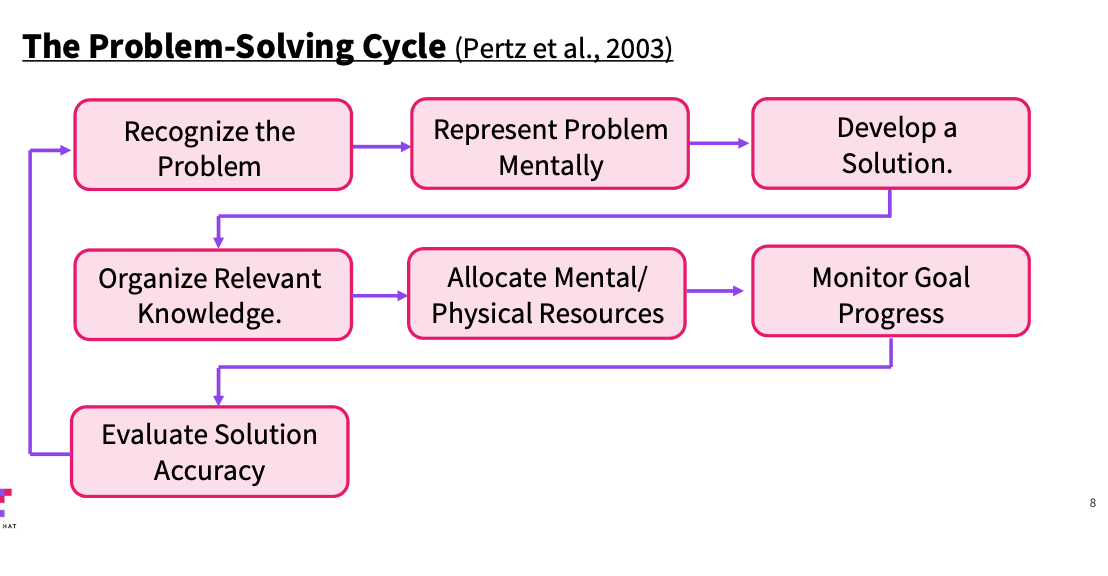
models of problem solving
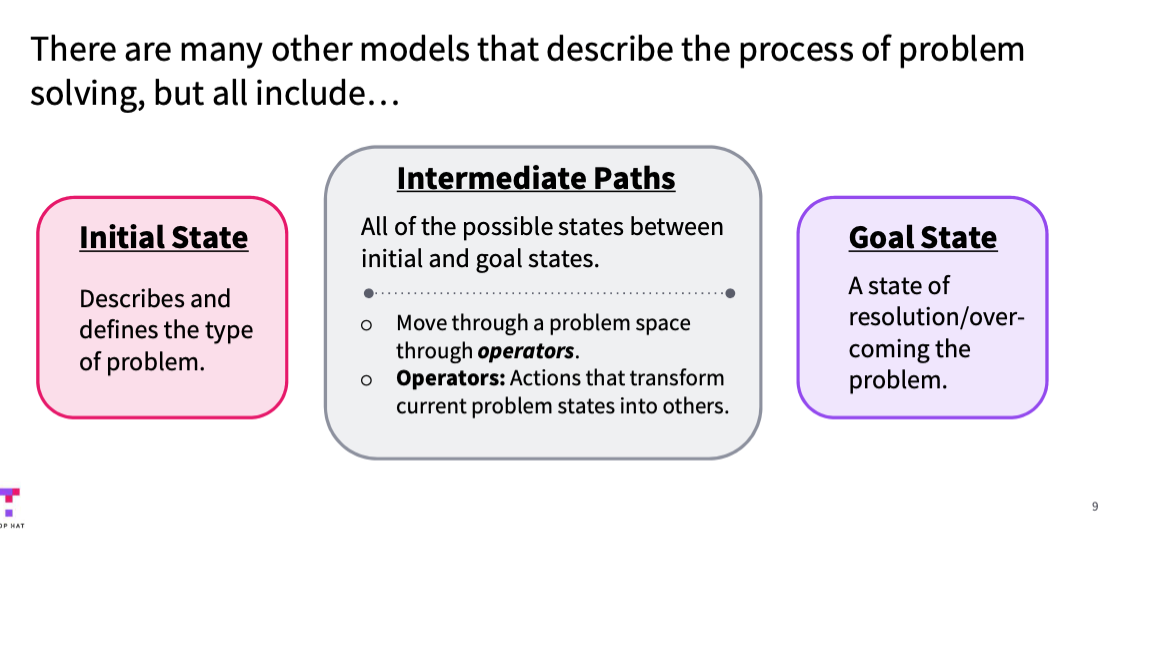
well defined, vs ill-defined problems
Well-defined problems have correct answers, clearly defined states, and clearly defined initial states, goal states, and operators. They are effectively solved by humans and computers and are easily solved using algorithms.
Ill-defined problems do not have one correct answer, can be solved in many ways, have unclear goal states, and are difficult for computers to solve. Examples include choosing a college major, relationship issues, and moral qualms.
Anderson (1985) stated that all cognitive activities are fundamentally problem solving in nature because human cognition is always purposeful, directed toward achieving goals and removing obstacles to those goals.
Problem-solving approaches
There are two main theories describing how people approach solving problems…
The Behaviorist Approach
→ Problems are solved using knowledge, trial, and error.
The Gestalt Approach
→ Problems are solved by considering them more deeply.
The Behaviorist Approach
Behaviorism
Concerned with observable behaviors that results from stimulus-response pairs, reinforcement, and punishment; based on principles of cause and effect
Thorndike (1898, 1911)
Proposed problem solving was a reproductive process:
Involves using past knowledge from experience to generate conscious/deliberate solutions to problems.
Rely on trial and error…as we work thought problem solving, information is gained, and used in subsequent problem scenarios.
The Law of Effect
Responses more closely followed by satisfaction are closely tied to the situation.
Any response that produces a satisfying effect/positive outcome gradually becomes stronger.
Responses more closely followed by discomfort become weakly connected.
Any response that does not produce a satisfying effect/positive outcome becomes weaker.
The Gestalt Approach
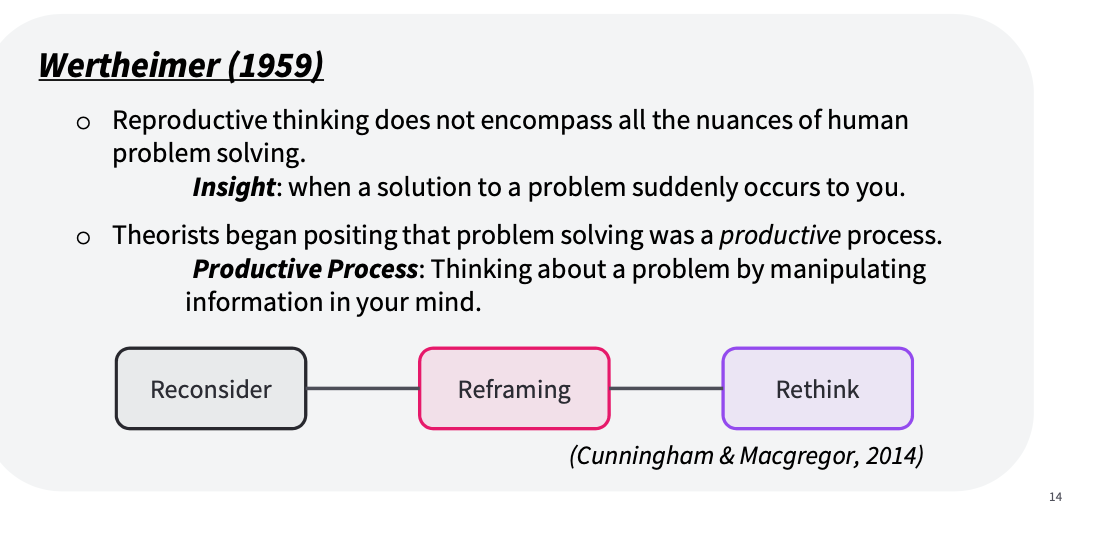
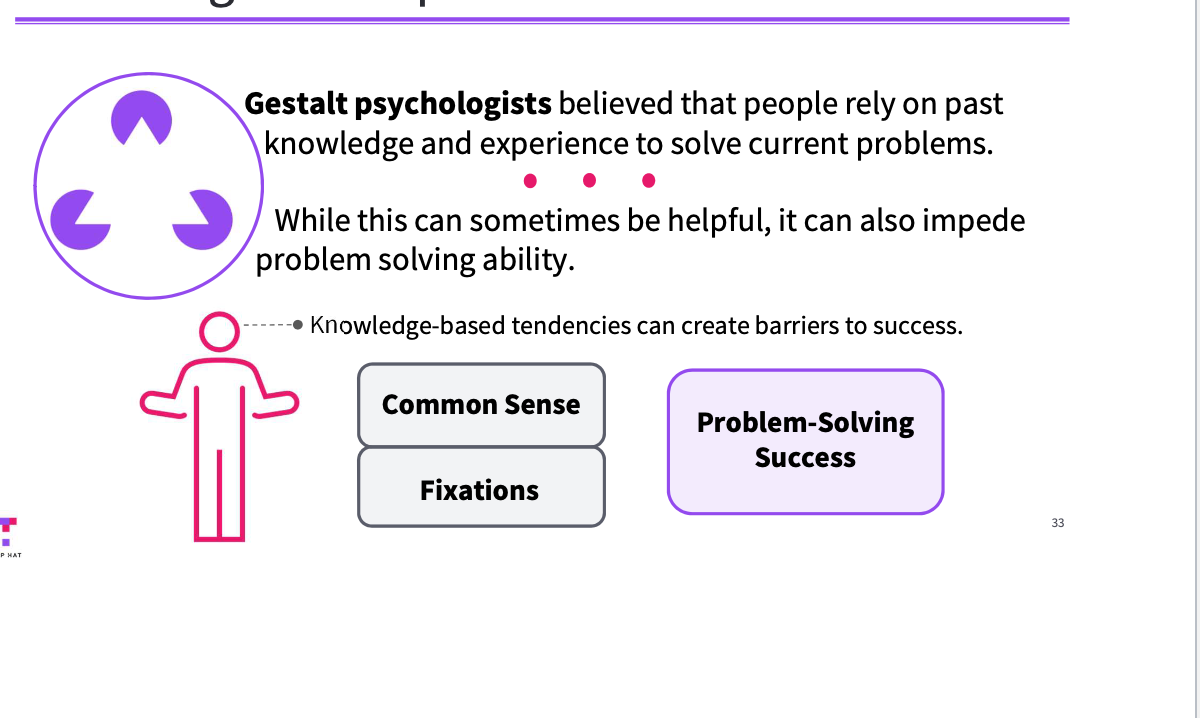
The key mechanism in this perspective of problem solving is cognitive restructuring of information.
Flexible thinking is a requirement for representing all the possible ways to solve a problem.
Gestaltists assert that ‘a-ha’ moments are the emergent outcomes of novel information restructuring.
New insights are often surprising because reframing occurs below levels of consciousness.
“The whole is greater than the sum of its parts.”
Gestalt theorists are interested in more than just the steps involved in problem-solving.
They also want to understand the parts and emergent outcomes.
This perspective provides a sound theoretical framework for describing both expected and unexpected problem solutions.
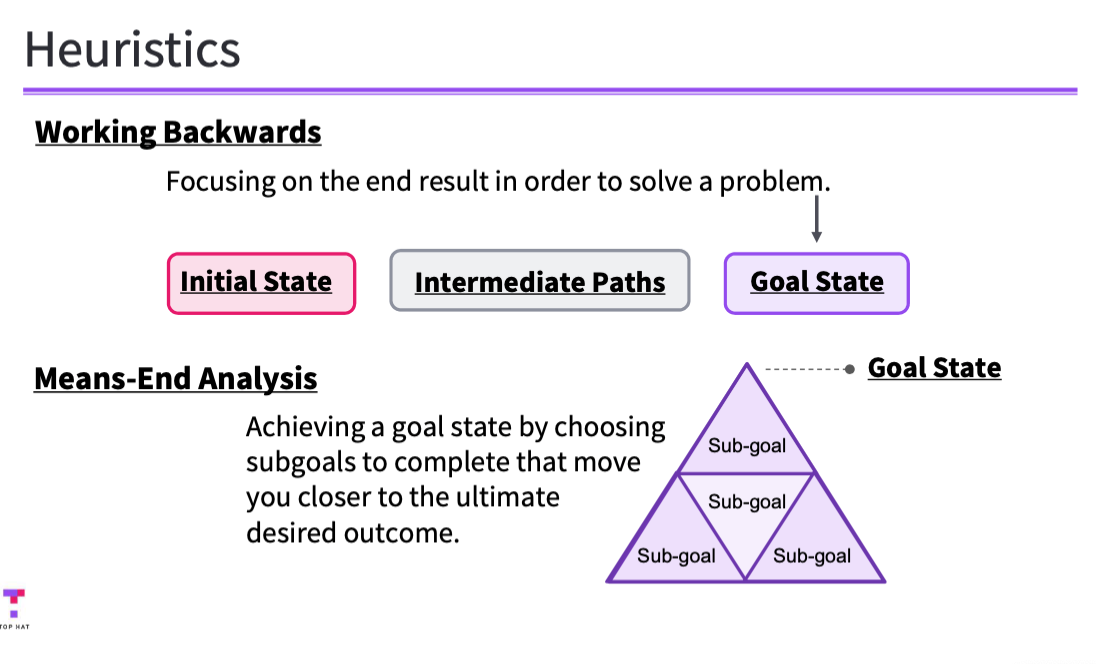
Heuristics
Rules of thumb or problem-solving shortcuts
Based on previous experience
Guide judgments and evaluations
When heuristics are used more often
Information overload
Time-sensitive tasks
Unimportant situations
Limited information
Competing heuristics
Working backwards and means end analysis
barriers to solving problems
Ignoring irrelevant information
one must decide what is relevant to the task at hand
ignoring other information is an acquired not innate skill
this is more difficult when dealing with ill versed well defined problems
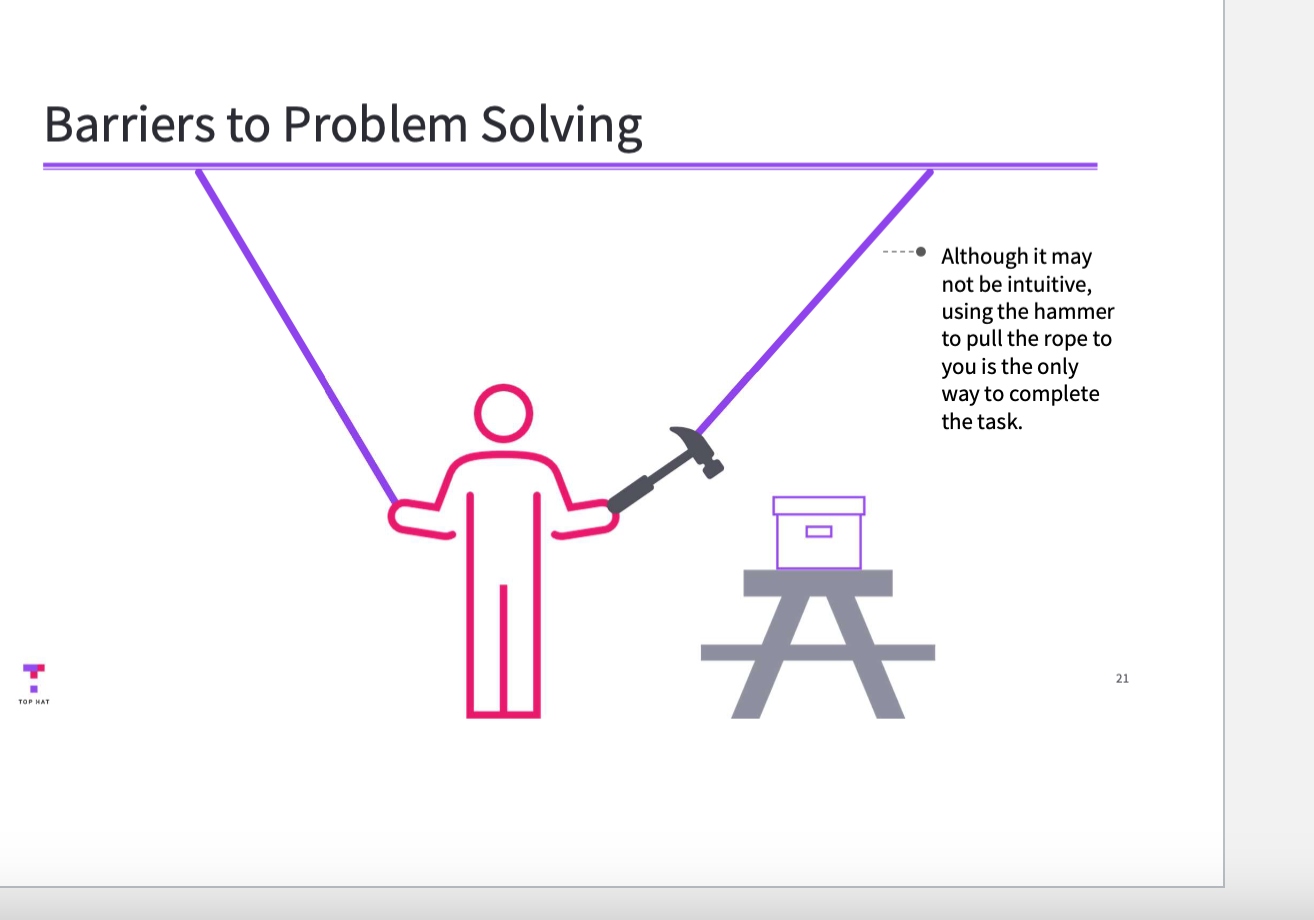
Functional fixedness
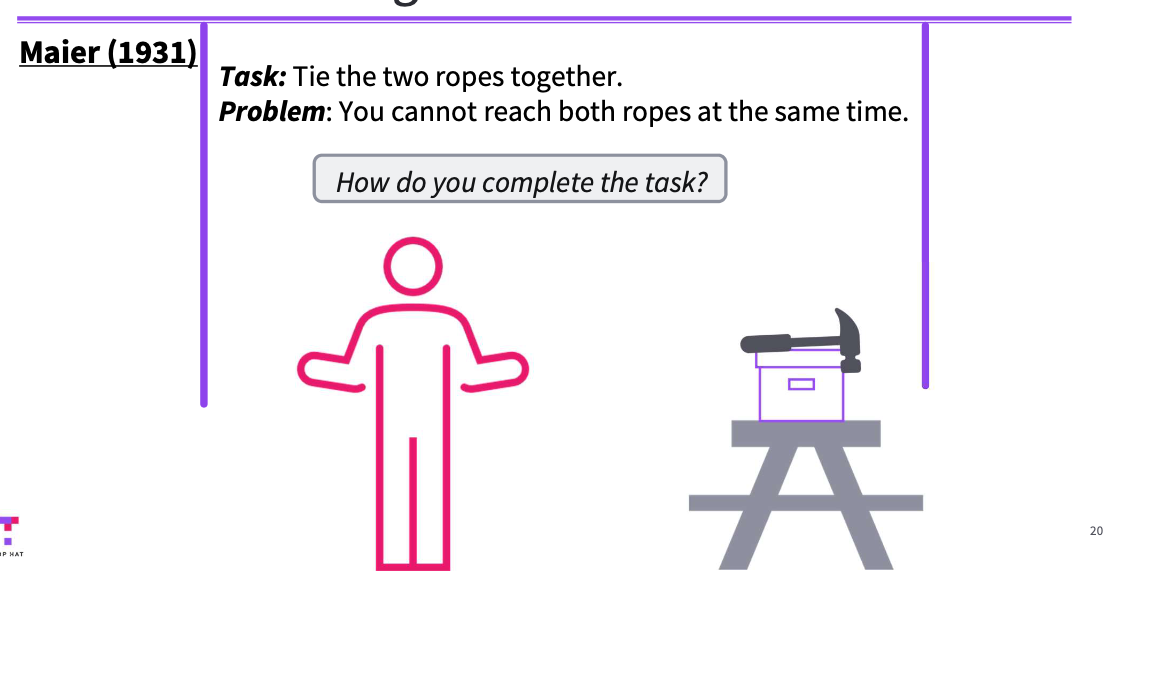
perceiving an item only in terms of its most common use
inhibits other potential interpretations of problem scenarios
people tend to focus on a characteristic of a problem or a fixation which prevents them from finding a solution
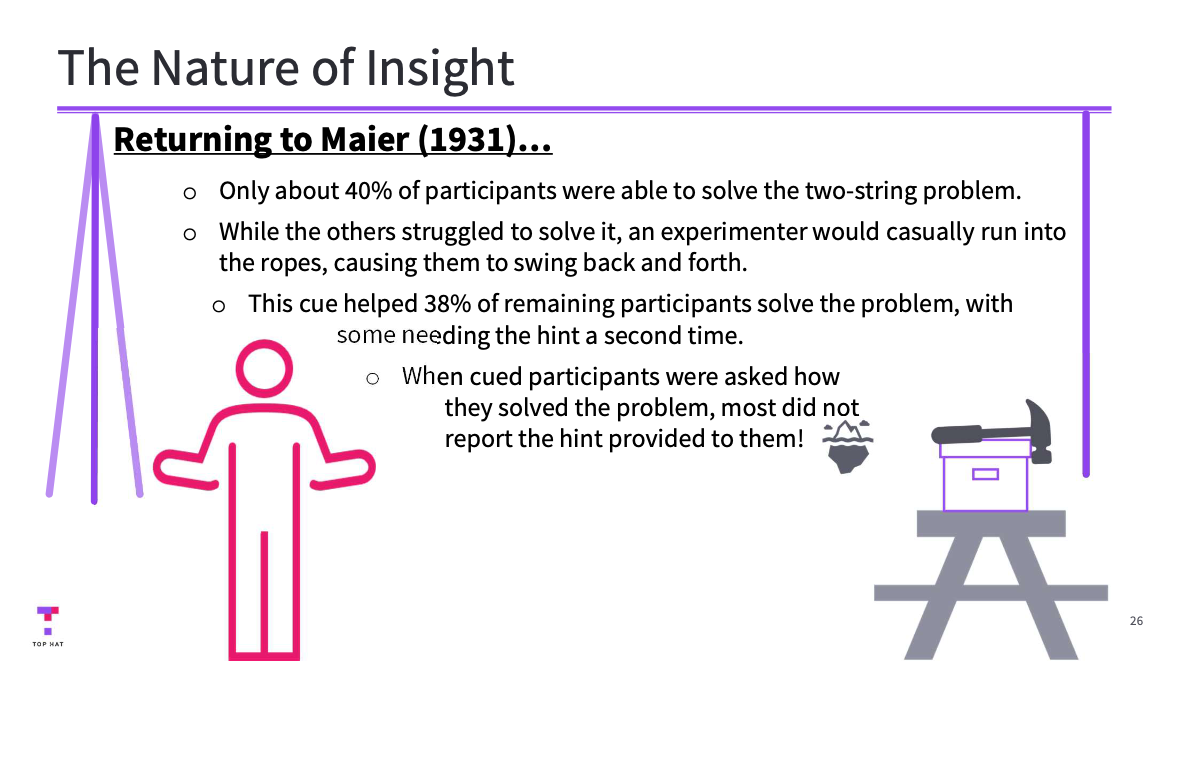
Maier (1931)- hammer pull task
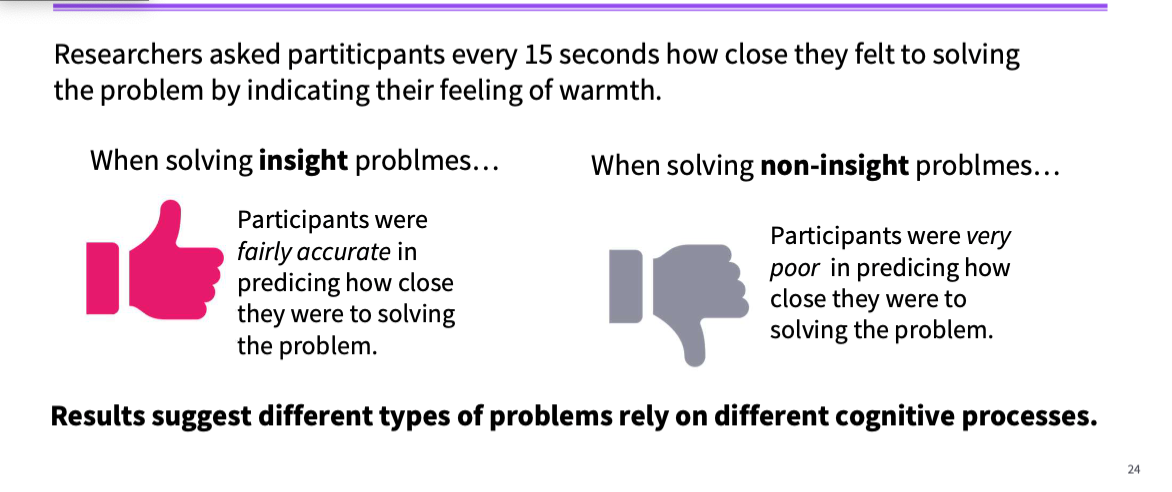
Insight problems and Non-Insight Problems
Insight Problems
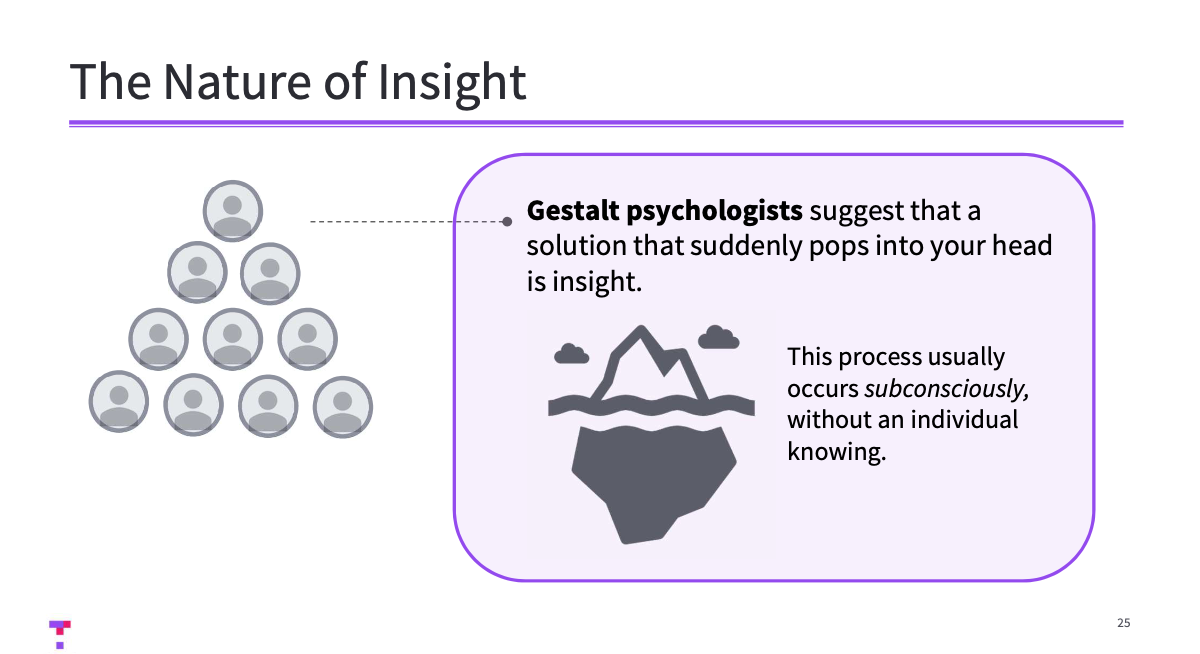
Problem in which the solution occurs suddenly in your consiousness
Non- Insight problems
Problems in which you must consciously work through each step of a problem to arrive at a solution
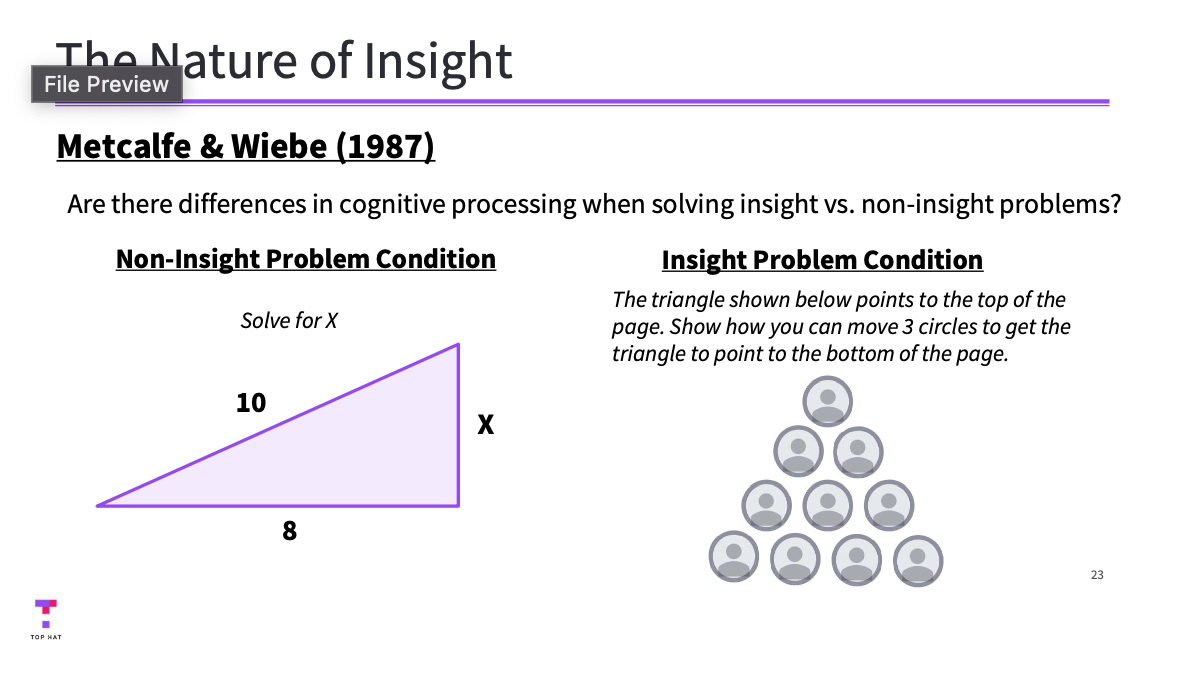
The Nature of Insight
Creativity definition
being able to produce novel ideas that are appropriate and relevant to the situation
creative people are more likely to solve a given problem
they can generate many possible solutions that go beyond functional fixedness
but how can you operationalize, measure and predict creativity?
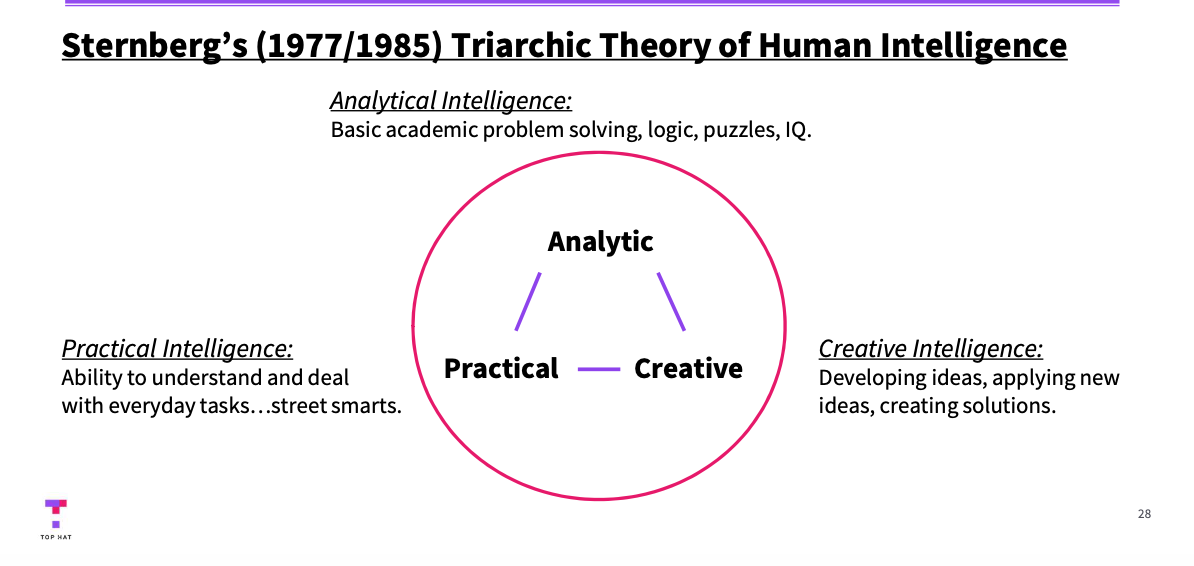
How do we measure creativity?
Idealational Fluency
The number of ideas a person can generate about a topic or item (how many different ways can you use a pencil? arrange a room? describe a stormy night?
Zirghlio 2012
what is the relationship btw problem solving and creativity?
identified a positive relationship btw problem solving and creative capabilities
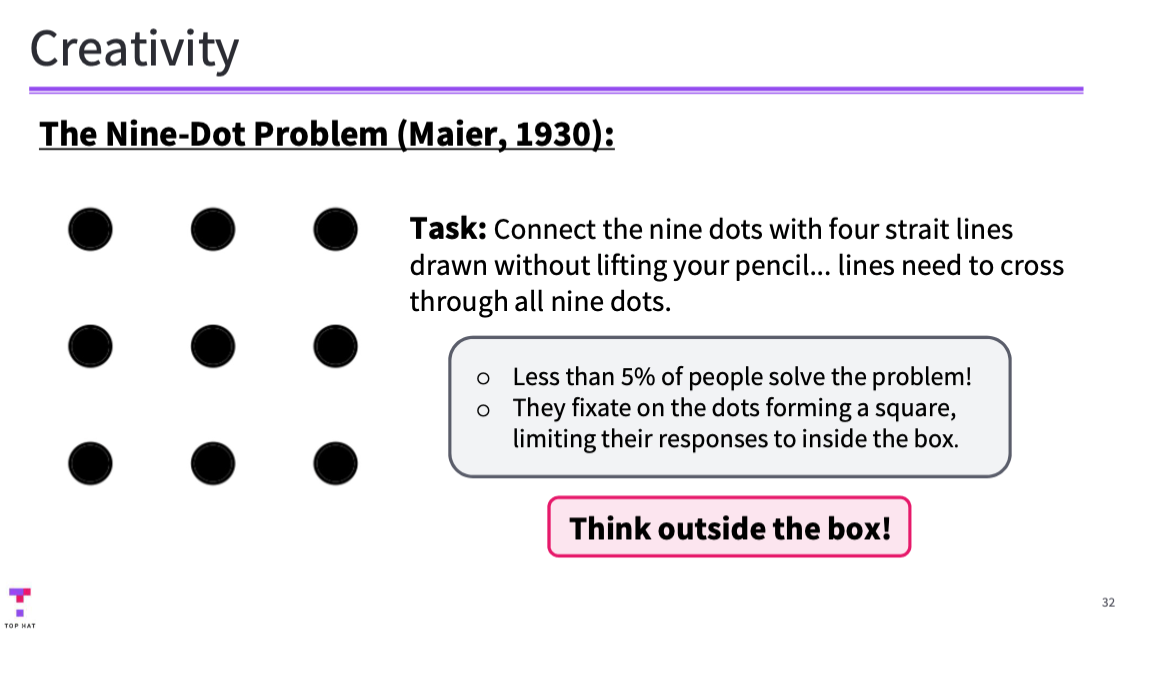
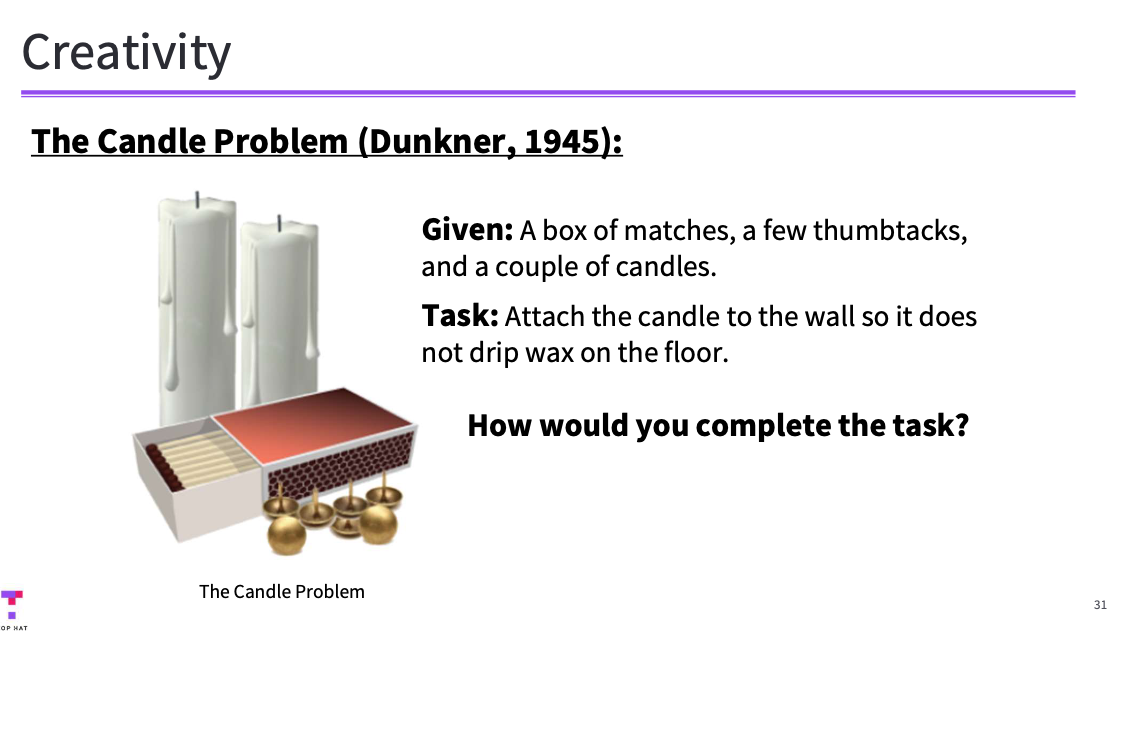
candle problem and the 9 dot problem
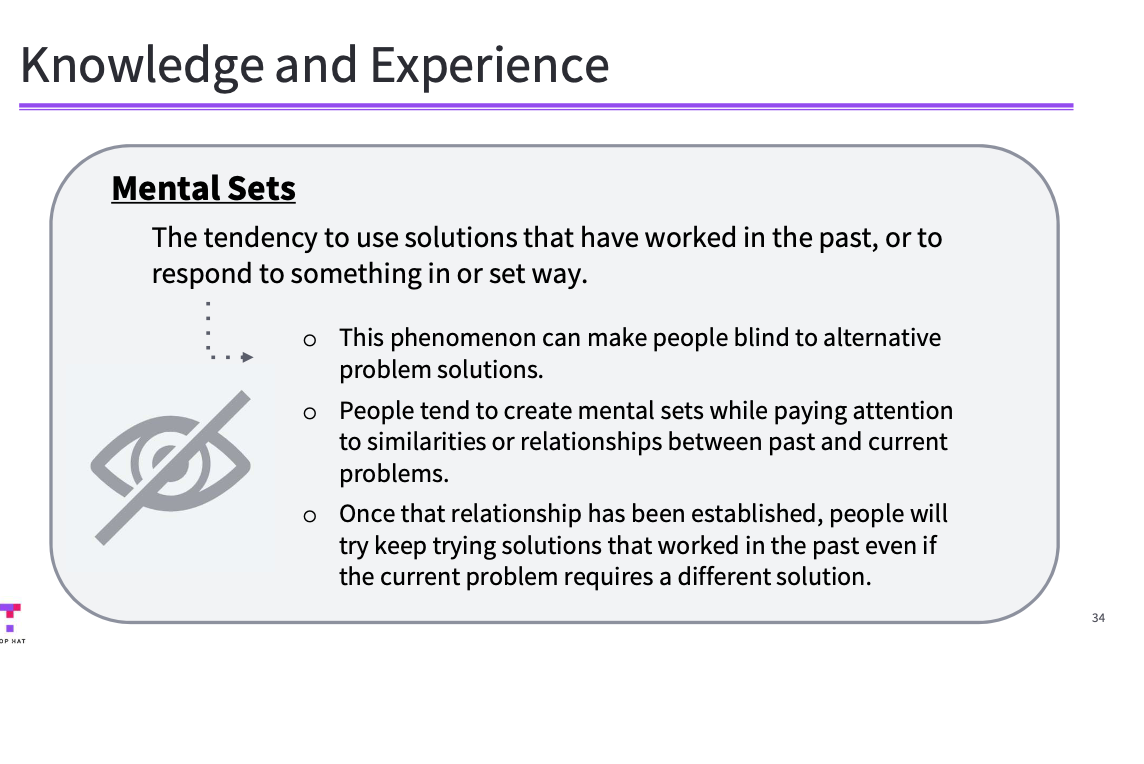
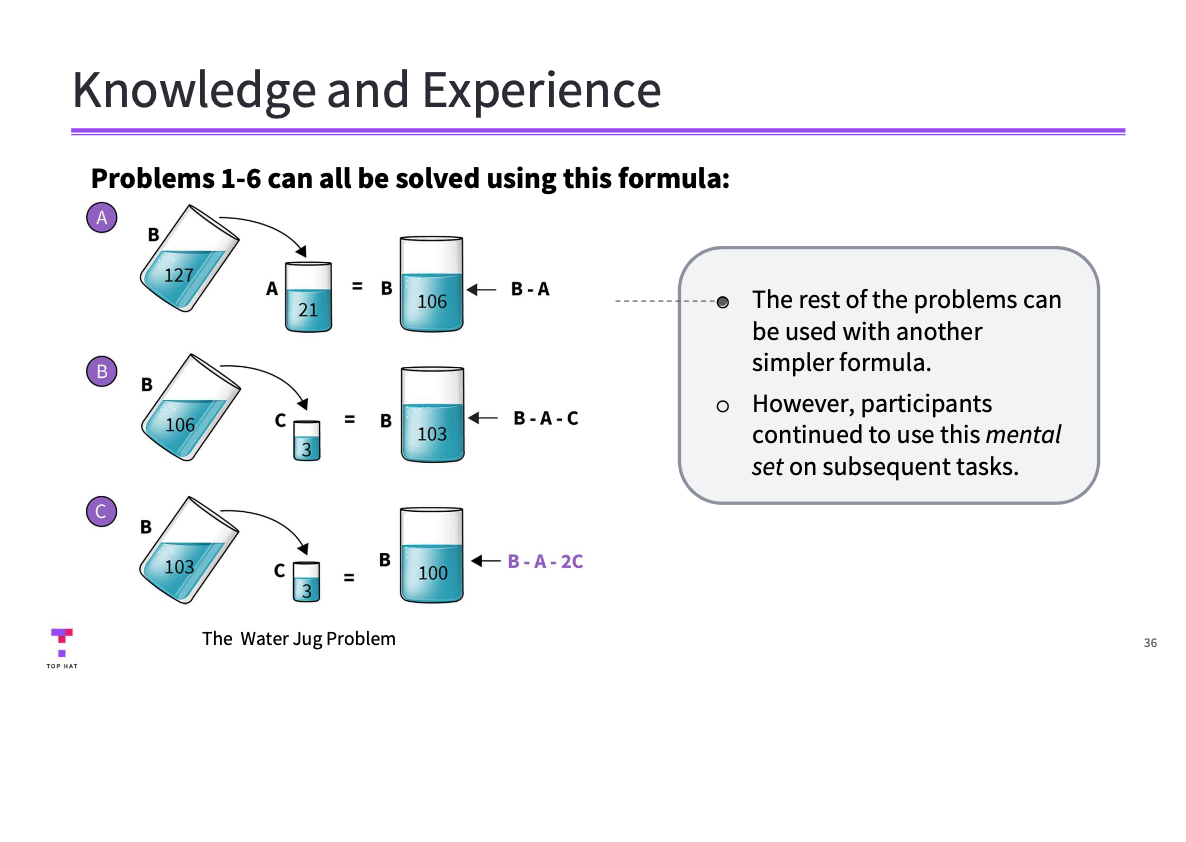
Knowledge and Experience
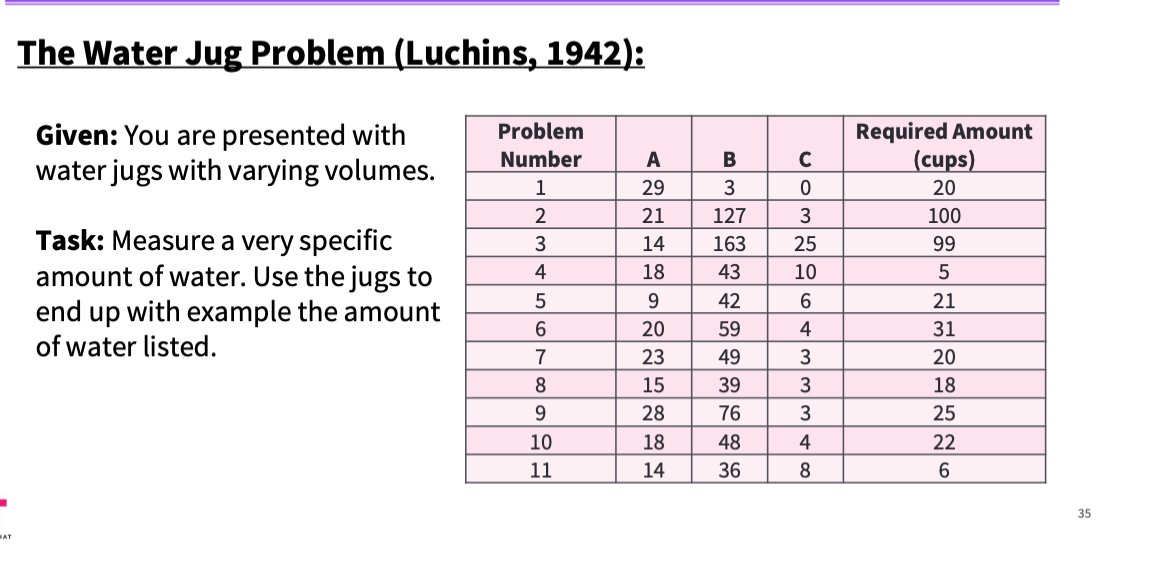
The water jug problem
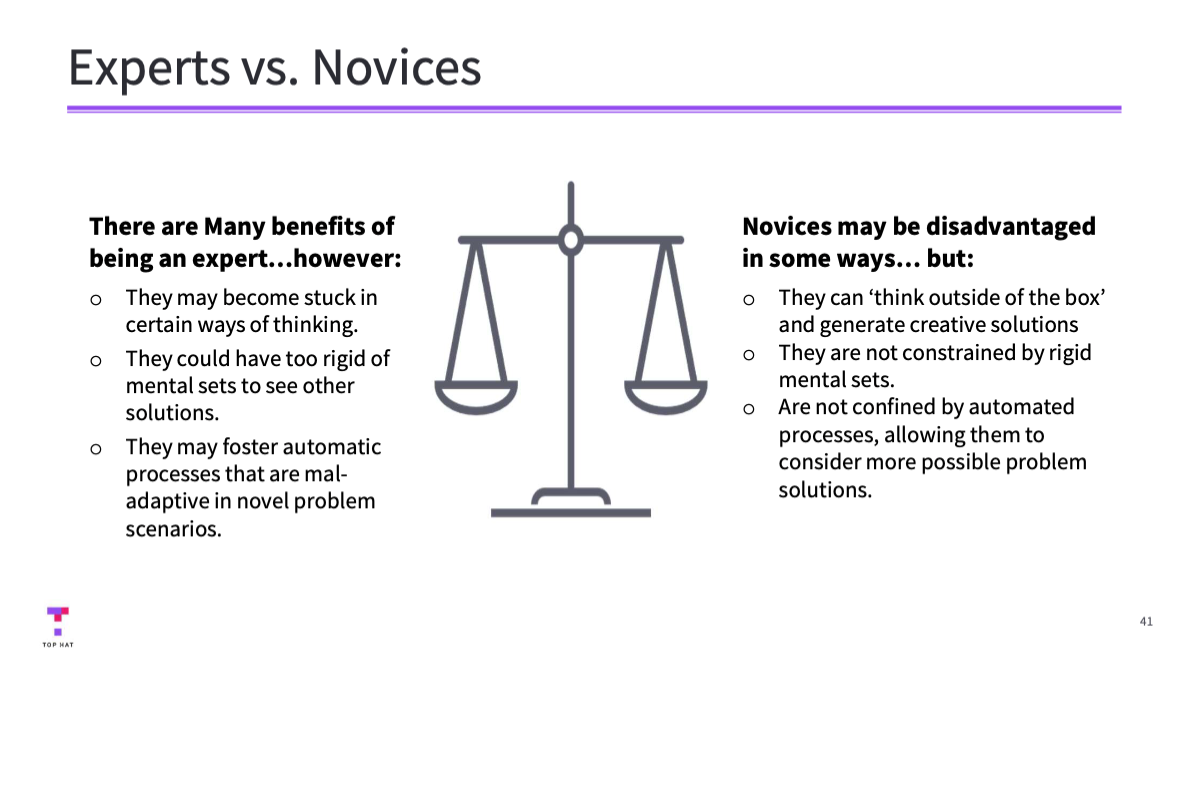
Experts Vs Novices
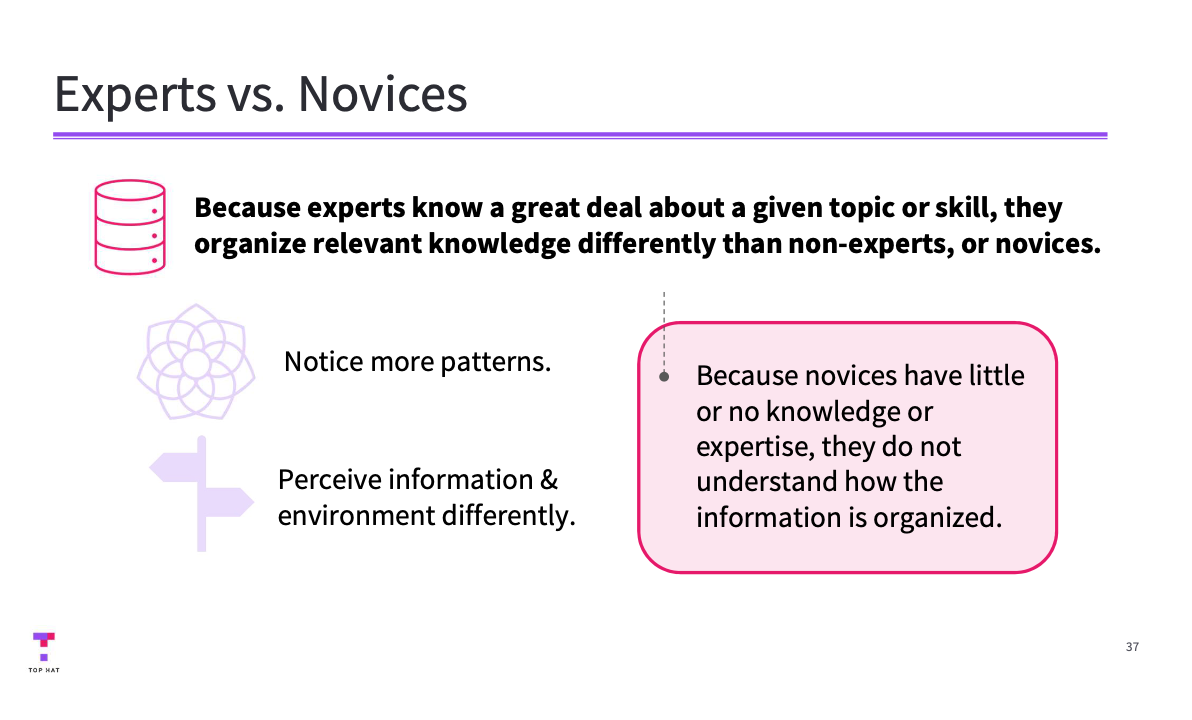
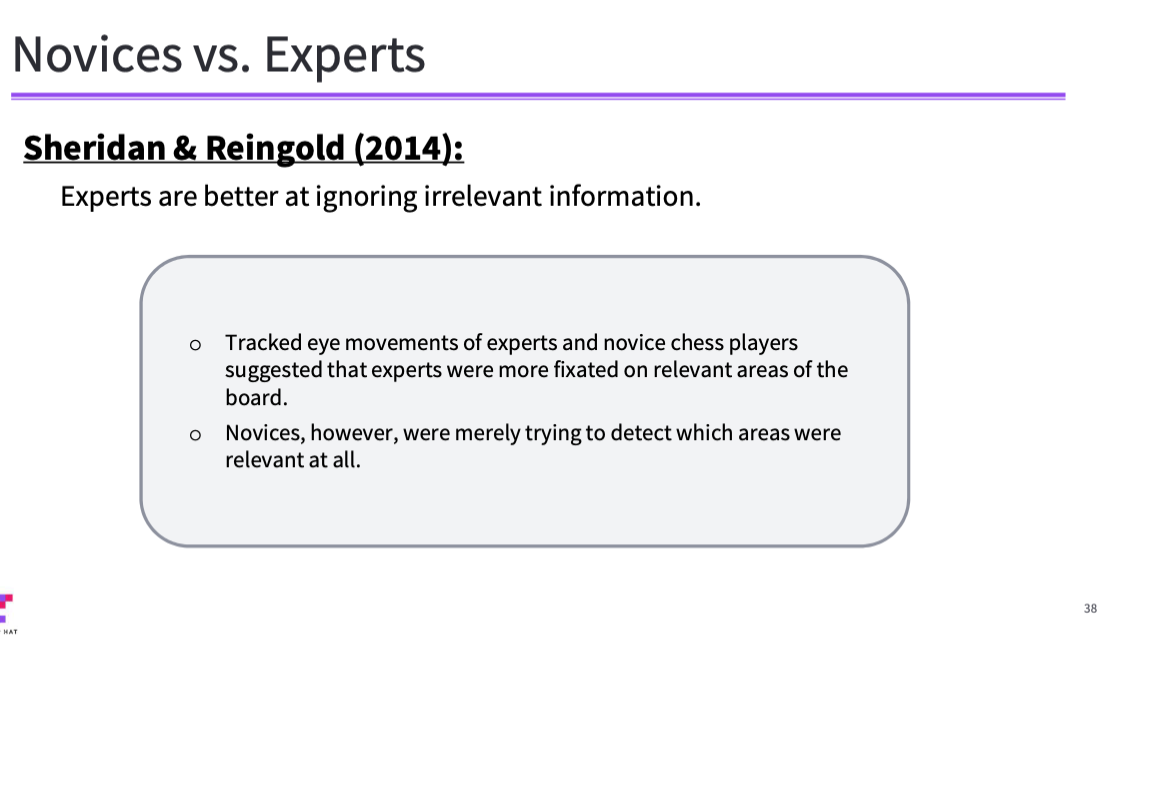
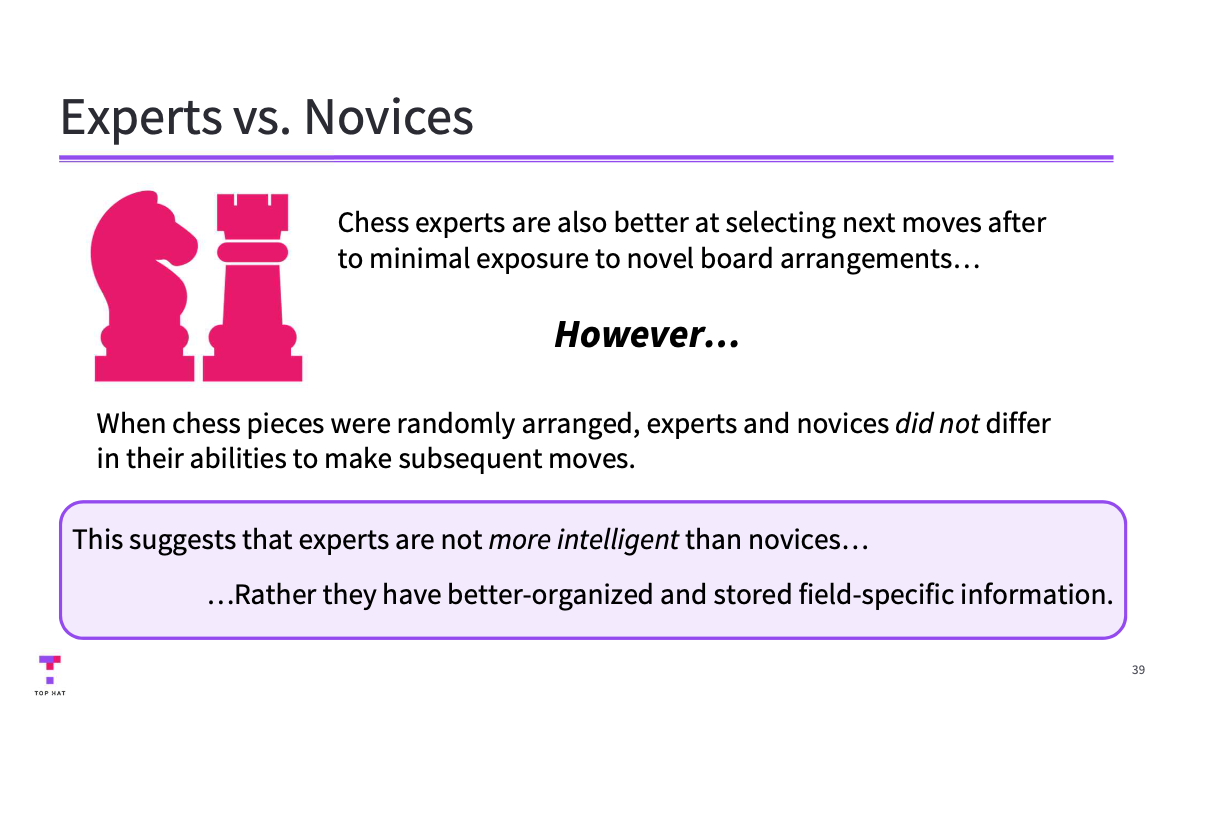
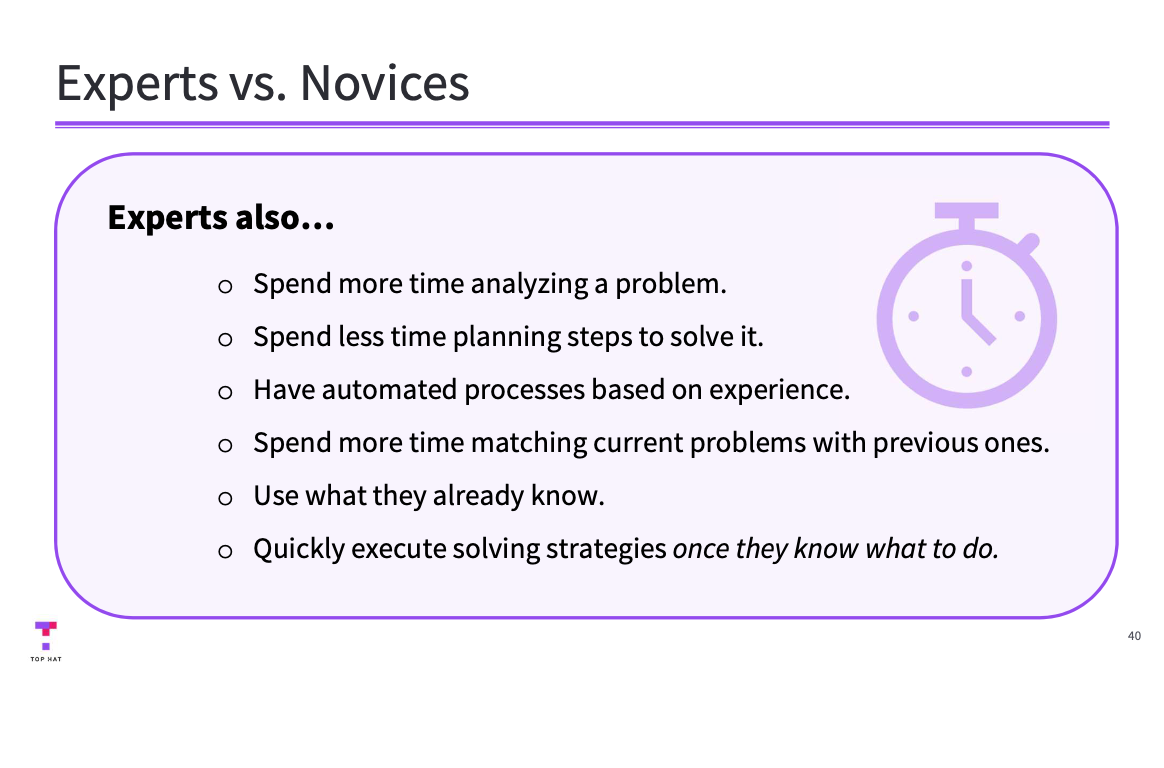
benefits for experts vs novices
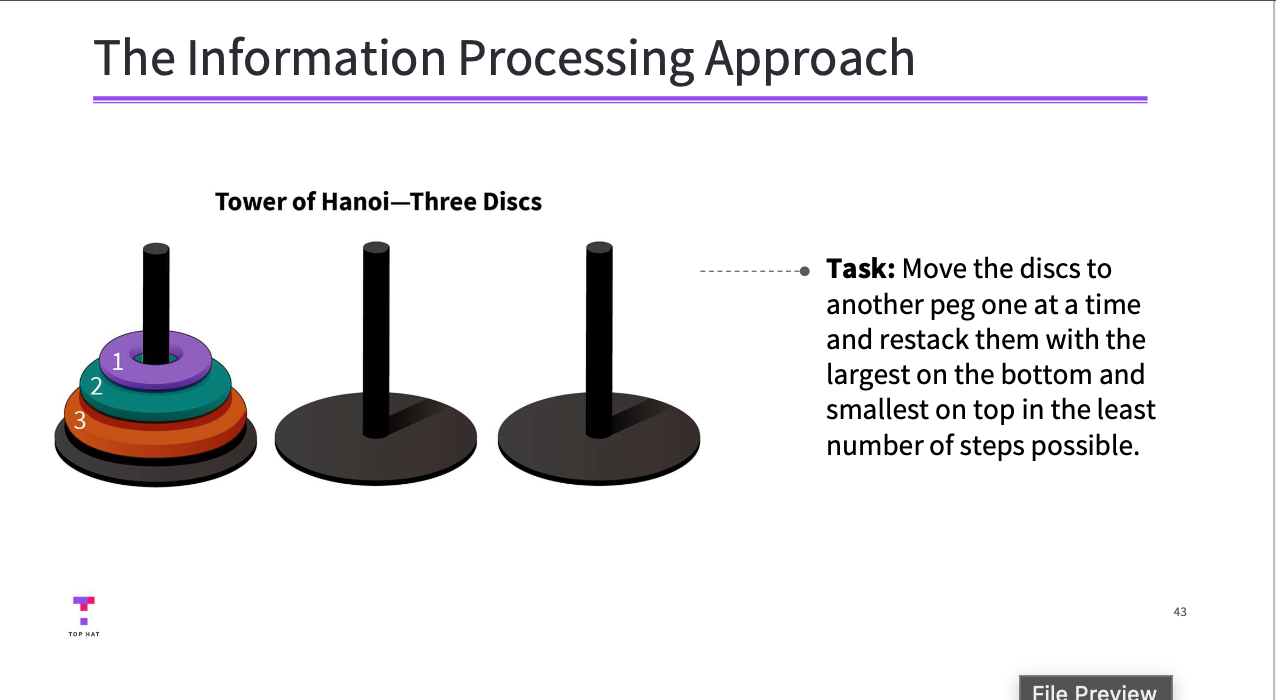
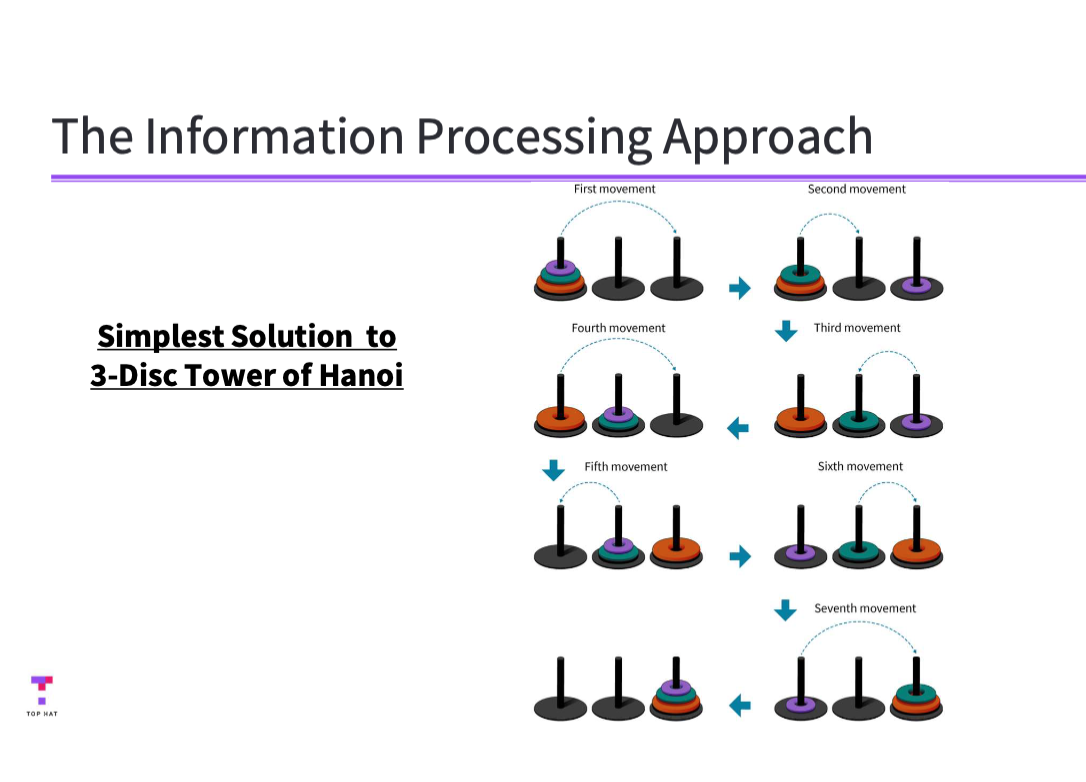
Information processing approach
Tower of Hanoi
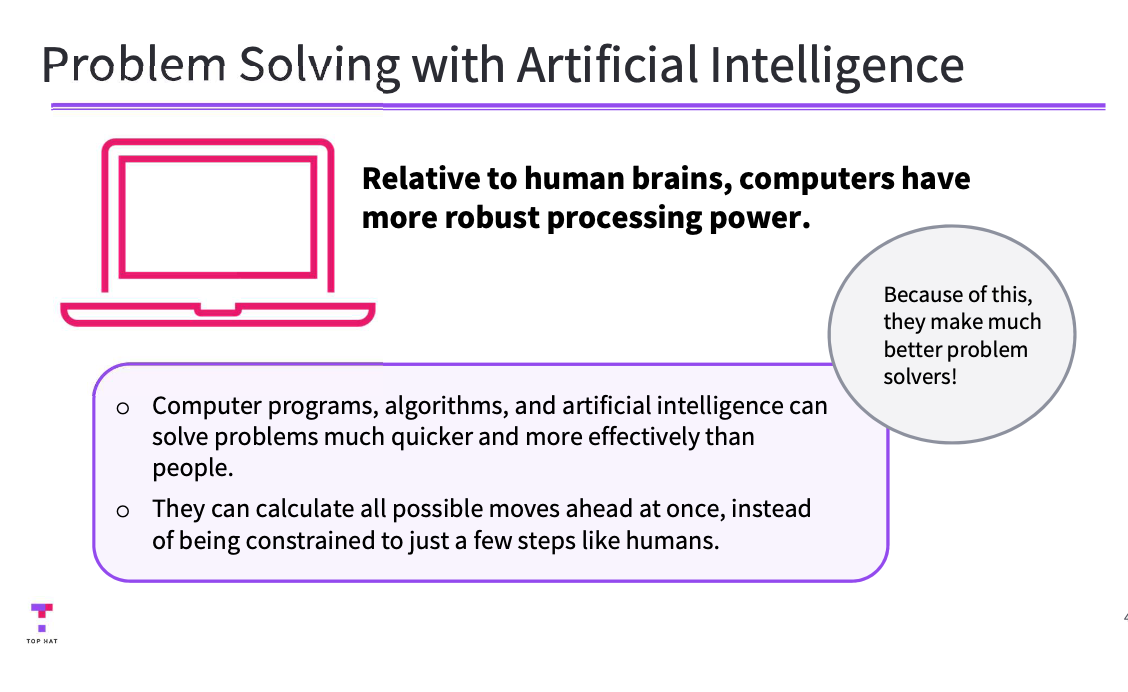
Problem Solving with AI
 Note
Note  Flashcards (150)