APUSH Midterm Exam Multiple Choice (College Board Questions)
 Studied by 3 people
 Call with Kai
 Learn
Learn Practice Test
 Spaced Repetition
 Match
Match Flashcards
 Knowt Play
1/58

There's no tags or description
Looks like no tags are added yet.
Name | Mastery | Learn | Test | Matching | Spaced | Call with Kai |
|---|
No analytics yet
Send a link to your students to track their progress
59 Terms
A. Spread of corn cultivation
Before 1492, many American Indian cultures were strongly influenced by the
A. Spread of corn cultivation
B. ravages of smallpox epidemics
C. Regular contacts with Africa
D. Invention of the spoked wheel
E. Domestication of horses
B. Supported permanent villages
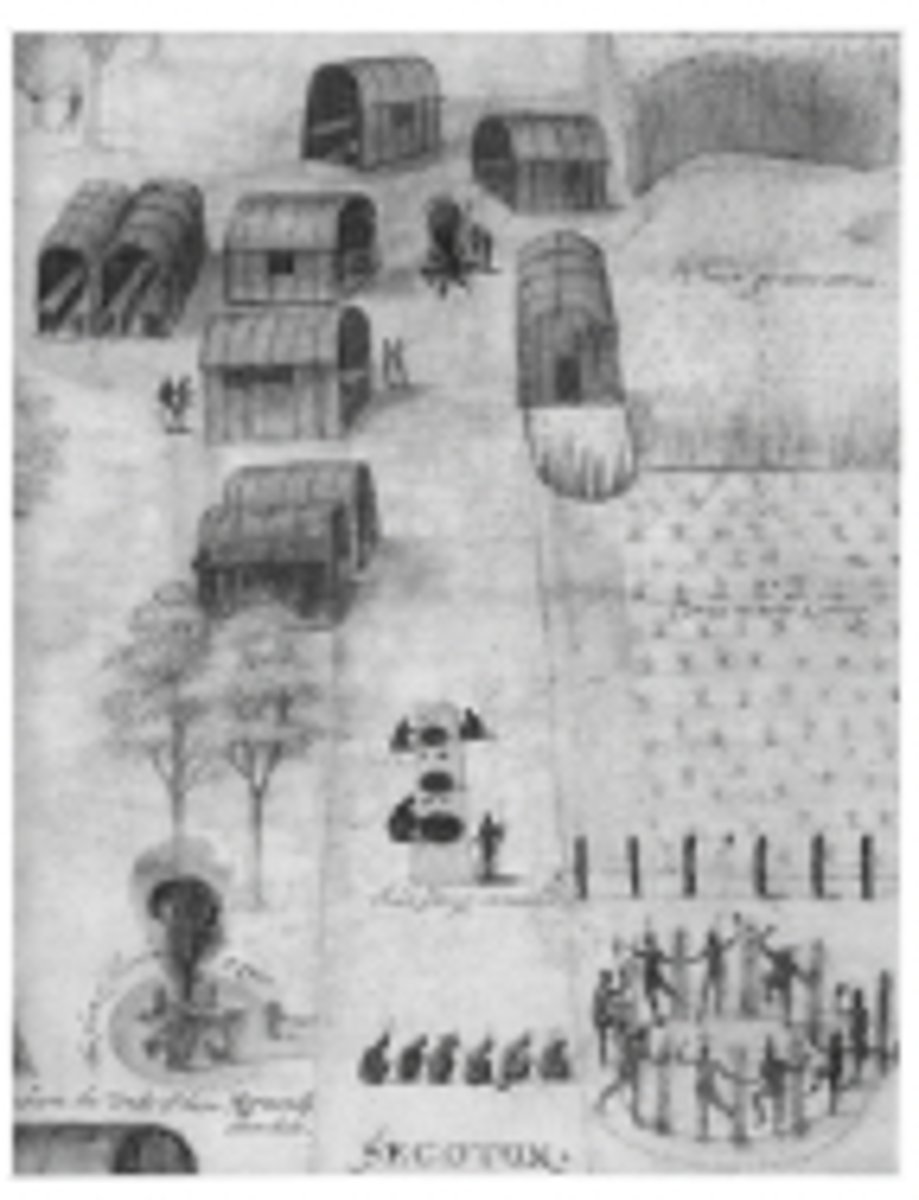
The image best serves as evidence that many Native American groups had developed farming techniques that
A. Spread tobacco cultivation throughout the continent
B. Supported permanent villages
C. Allowed for continuous warfare
D. Differed dramatically from English agricultural practices
A. Maize cultivation spread northward from Mexico
Which of the following most supported the development of the commerce described in the third paragraph?
A. Maize cultivation spread northward from Mexico.
B. Native Americans constructed extensive road networks.
C. Native Americans in the Northeast of North America formed extensive empires.
D. Metal tools became valuable objects in Native American religions.
A. Native American agriculture encouraged the growth of socially diversified urban areas
Which of the following best characterizes the process described in the first paragraph of the excerpt?
A. Native American agriculture encouraged the growth of socially diversified urban areas.
B. An arid climate led Native Americans to construct irrigation projects in the Mississippi River valley.
C. The climate in North America discouraged the development of large settlements.
D. Military power helped Native American hunters and gathers to conquer expansive cities.
B. Settled subsistence farming
Which of the following best describes the economic system that supported the Native American villages discussed in the second paragraph of the excerpt?
A. Seminomadic hunting
B. Settled subsistence farming
C. Trade and manufacturing of luxury goods
D. Migration and colonization of new territories
A. Complex societies with permanent settlements
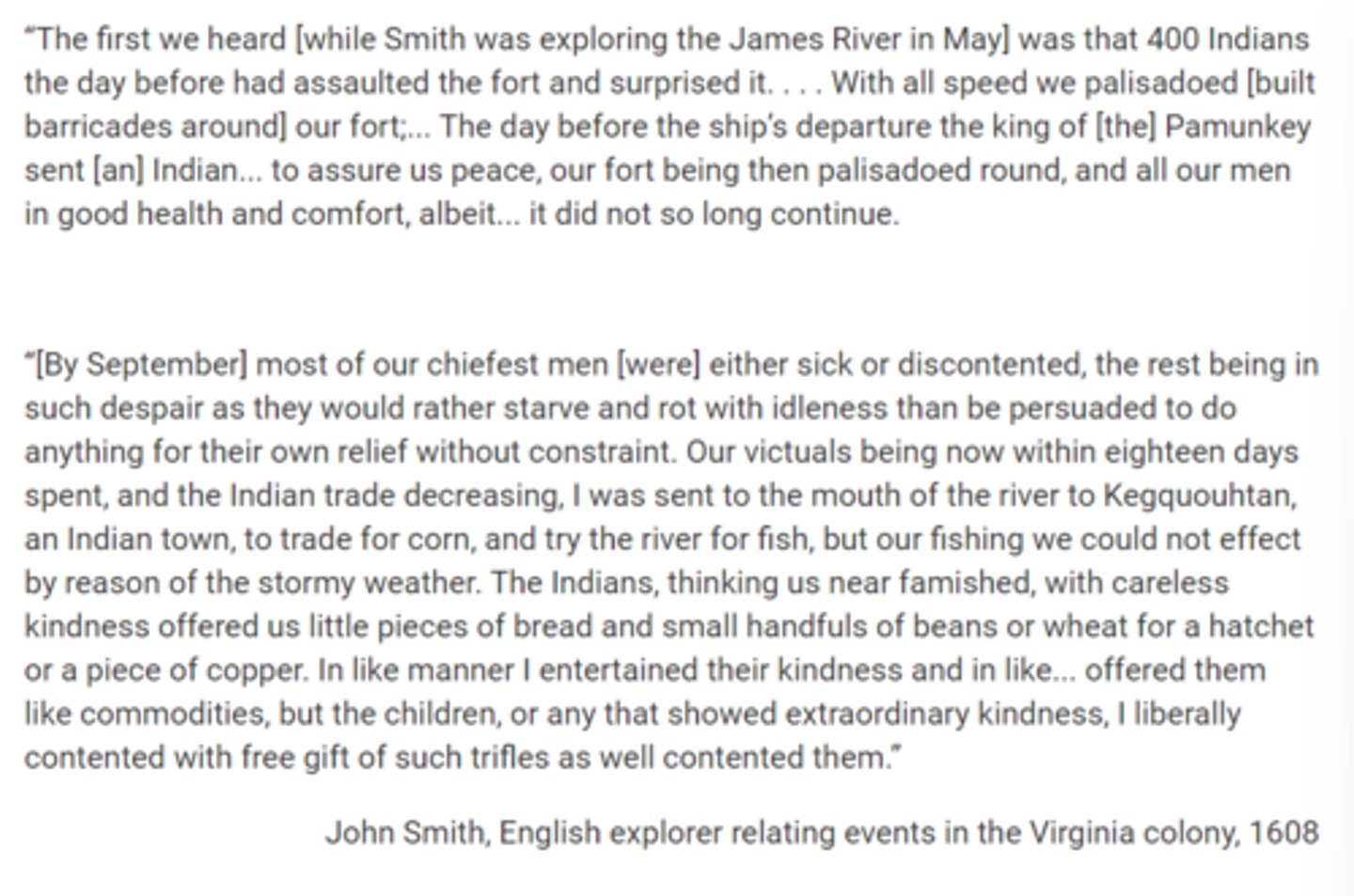
Smith's description of the Pamunkey people's interactions with the Virginia colonists best serves as evidence of which of the following characteristics of American Indians along the Eastern Seaboard in the 1600s?
A. Complex societies with permanent settlements
B. dependence on English trade goods
C. Decreased populations due to epidemic disease
D. Elaborate caste systems
A. There was no established church
Which of the following was a characteristic of colonial Pennsylvania?
A. There was no established church.
B. Founder William Penn endorsed a policy of removing American Indians to the western region of the colony.
C. Poor farmland in the backcountry aggravated the colony's economic woes.
D. All White males could vote.
E. The office of governor was an elective post.
C. Male church members
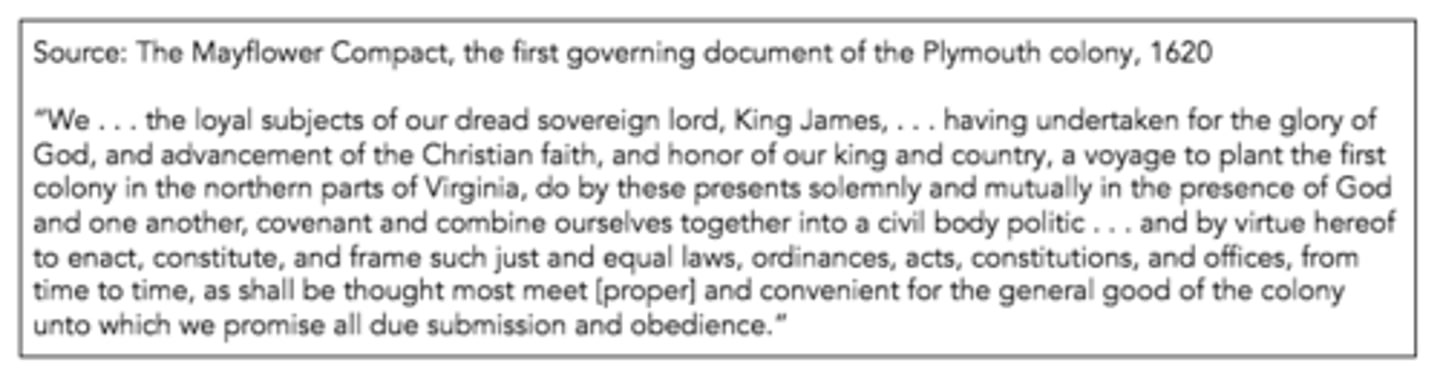
Participation in the "civil body politic" referenced in the excerpt would have been most available to which of the following?
A. Members of the English nobility
B. Sailors and soldiers
C. Male church members
D. Indentured servants
B. The establishment of local representative assemblies
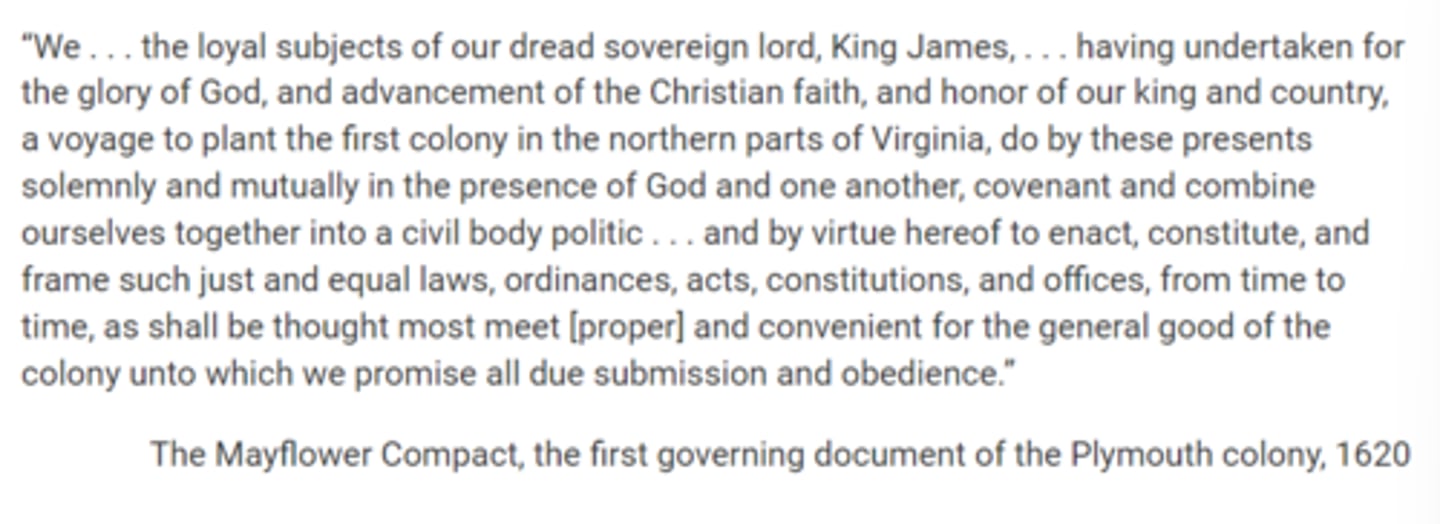
The ideas introduced in the excerpt most directly contributed to which of the following patterns among the British North American colonies?
A. The imposition of strict regulation by the Crown and Parliament
B. The establishment of local representative assemblies
C. The pursuit of trade with England and the West Indies
D. The development of agricultural economies
A. Organizing a system of rules and order in the colony
Which of the following best describes the primary purpose of the document from which the excerpt was taken?
A. Organizing a system of rules and order in the colony
B. Promoting a Protestant denomination
C. Advocating for intercolonial cooperation
D. Encouraging further English investment in the colony
C. Separation between the groups
Compared with French and Spanish interactions with American Indians, English interaction with American Indians more often promoted
A. Respect for political alliances
B. Cultural blending
C. Separation between the groups
D. Assimilation of Americans Indians into colonial societies
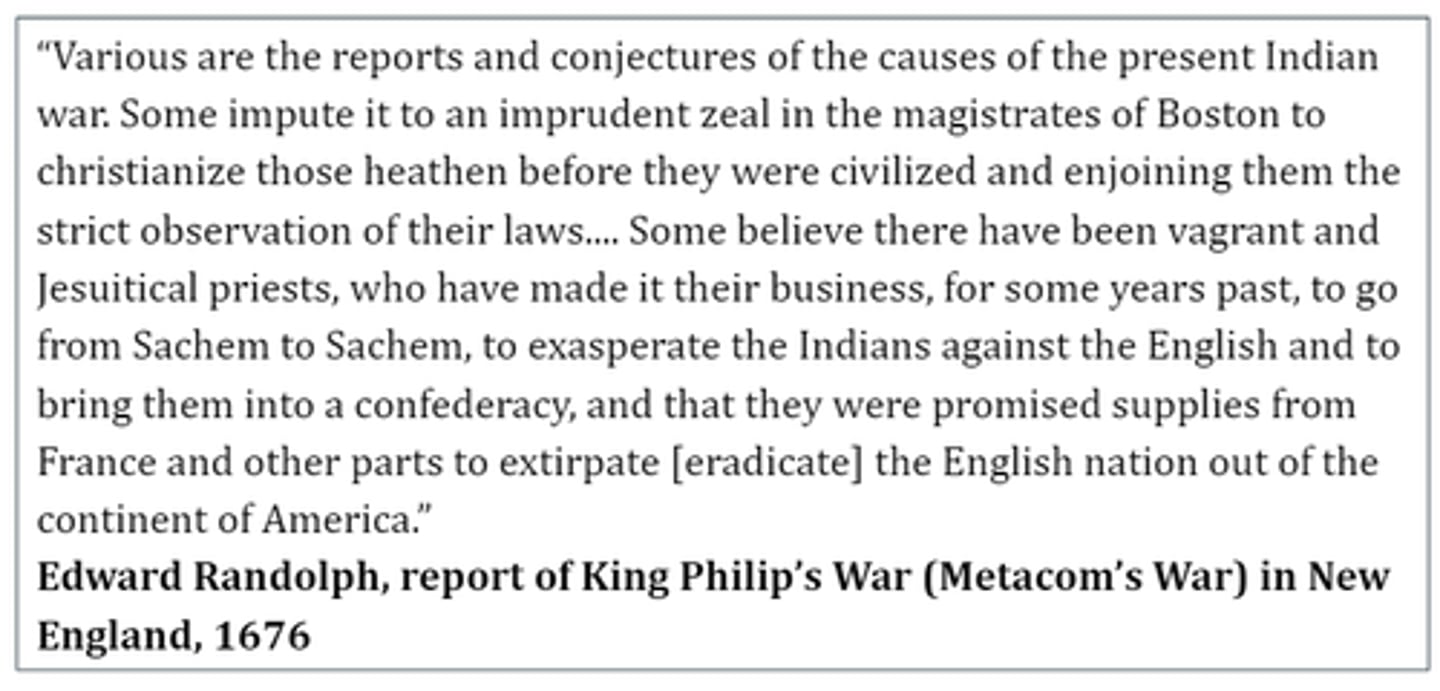
D. The establishment of fenced fields on family farms
Which of the following best supports the general argument in the excerpt about how Europeans changed North America?
A. The emergence of racially and culturally mixed populations
B. The efforts to restrict settlement beyond the Appalachian Mountains
C. The spread of maize agriculture
D. The establishment of fenced fields on family farms
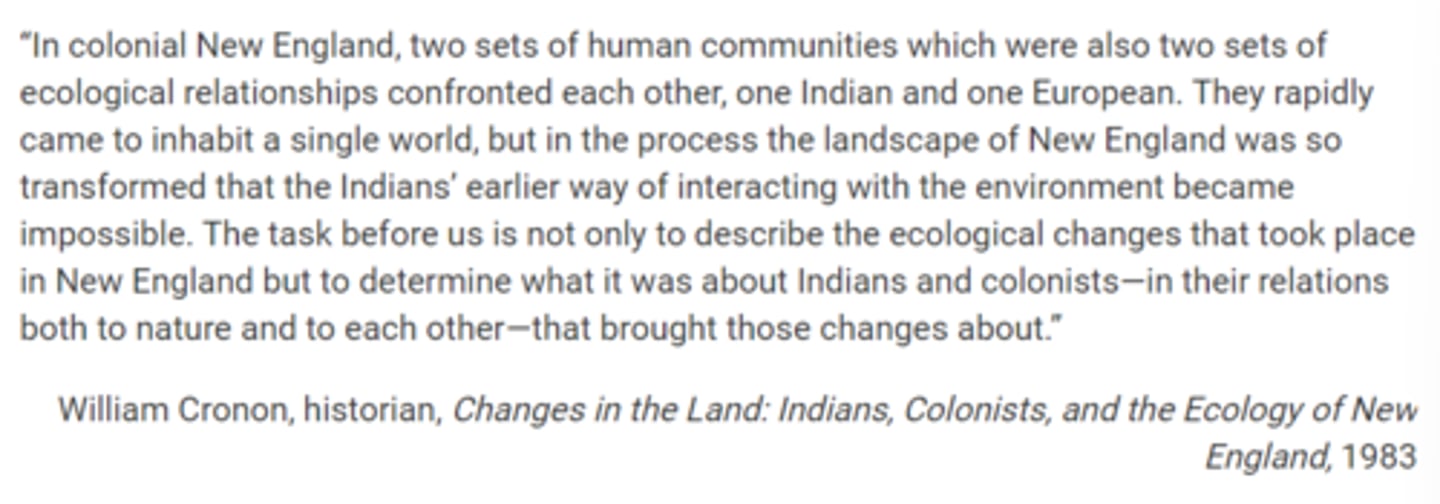
D. Relative autonomy to preserve and adapt African traditions
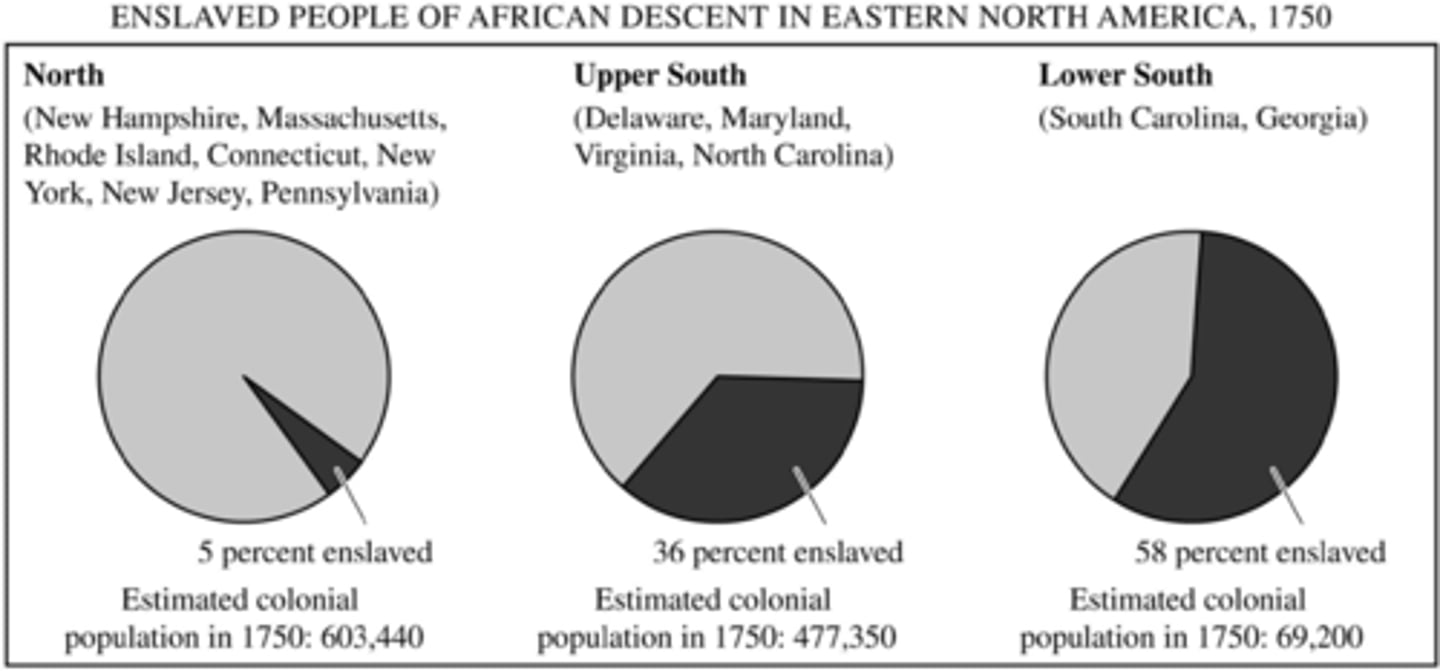
The demographics of the lower South colonies in 1750 most directly contributed to which of the following conditions for enslaved people?
A. Frequent conversion to evangelical Christianity
B. Widespread opportunities for literacy
C. Extensive apprenticeships in skilled trades
D. Relative autonomy to preserve and adapt African traditions
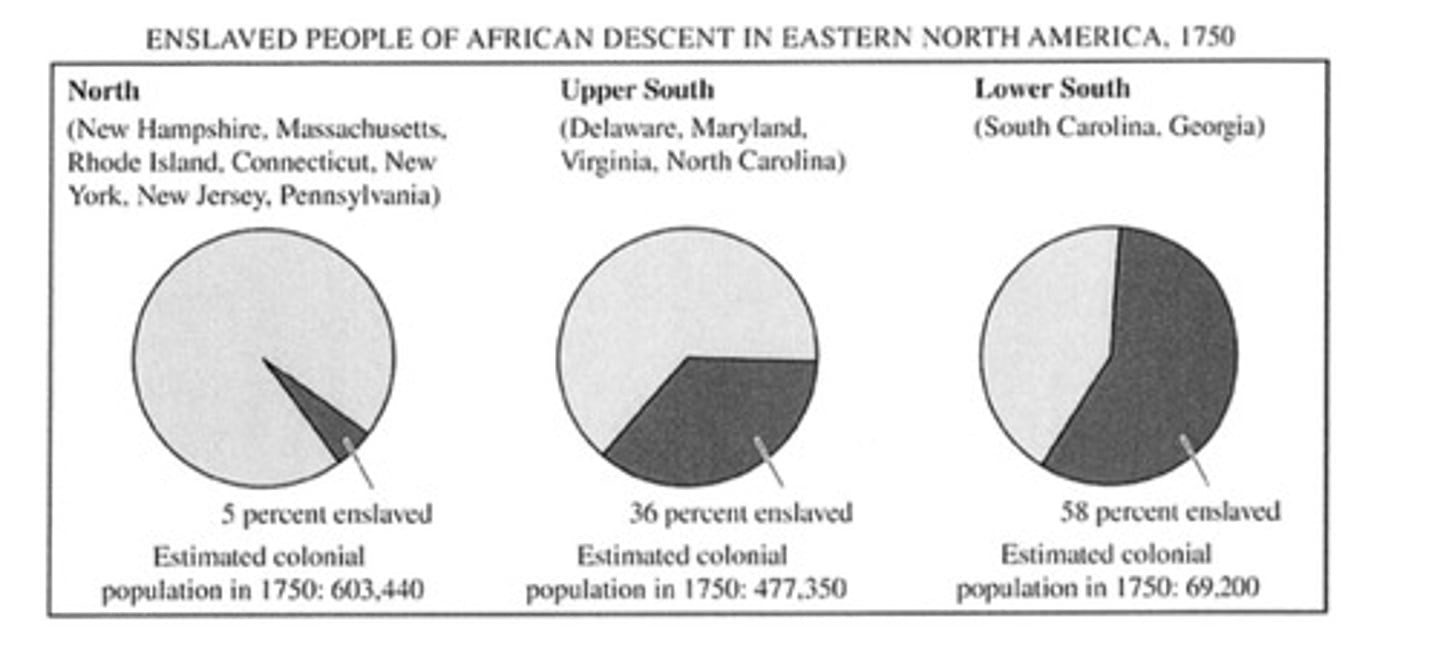
A. Climate and geographic conditions for cash crop agriculture
The difference in slave populations depicted in the graphs most directly resulted from differences in
A. Climate and geographic conditions for cash crop agriculture
B. The degree of participation in the Atlantic economy
C. Colonial relationships with American Indians
D. Structures of British imperial control
A. Require the North American colonies to pay a greater share of the empire's administrative expenses
After the French and Indian War, British political leaders were determined to
A. Require the North American colonies to pay a greater share of the empire's administrative expenses
B. End slavery in the North American colonies
C. Encourage colonial expansion into the Ohio Valley by moving all American Indian peoples further west
D. Strengthen the French colonial holdings in Canada and the northwest to discourage Spanish expansion
E. Convert all Catholic colonists to the beliefs of the Anglican Church
D. Splits among existing religious denominations and the rise of new churches
The Great Awakening of the 1740s led to
A. The growth of religious conformity throughout all the colonies
B. An increase in attacks on American Indian peoples
C. The establishment of Harvard College in Massachusetts
D. Splits among existing religious denominations and the rise of new churches
E. The growth of hysteria in Massachusetts over witchcraft
B. Protesting a lack of representation in Parliament
In the 1760s many English colonists in North America reacted to imperial governance by
A. Opposing restrictions on religious worship
B. Protesting a lack of representation in Parliament
C. Refusing to adopt the English legal system
D. Demanding independence from England
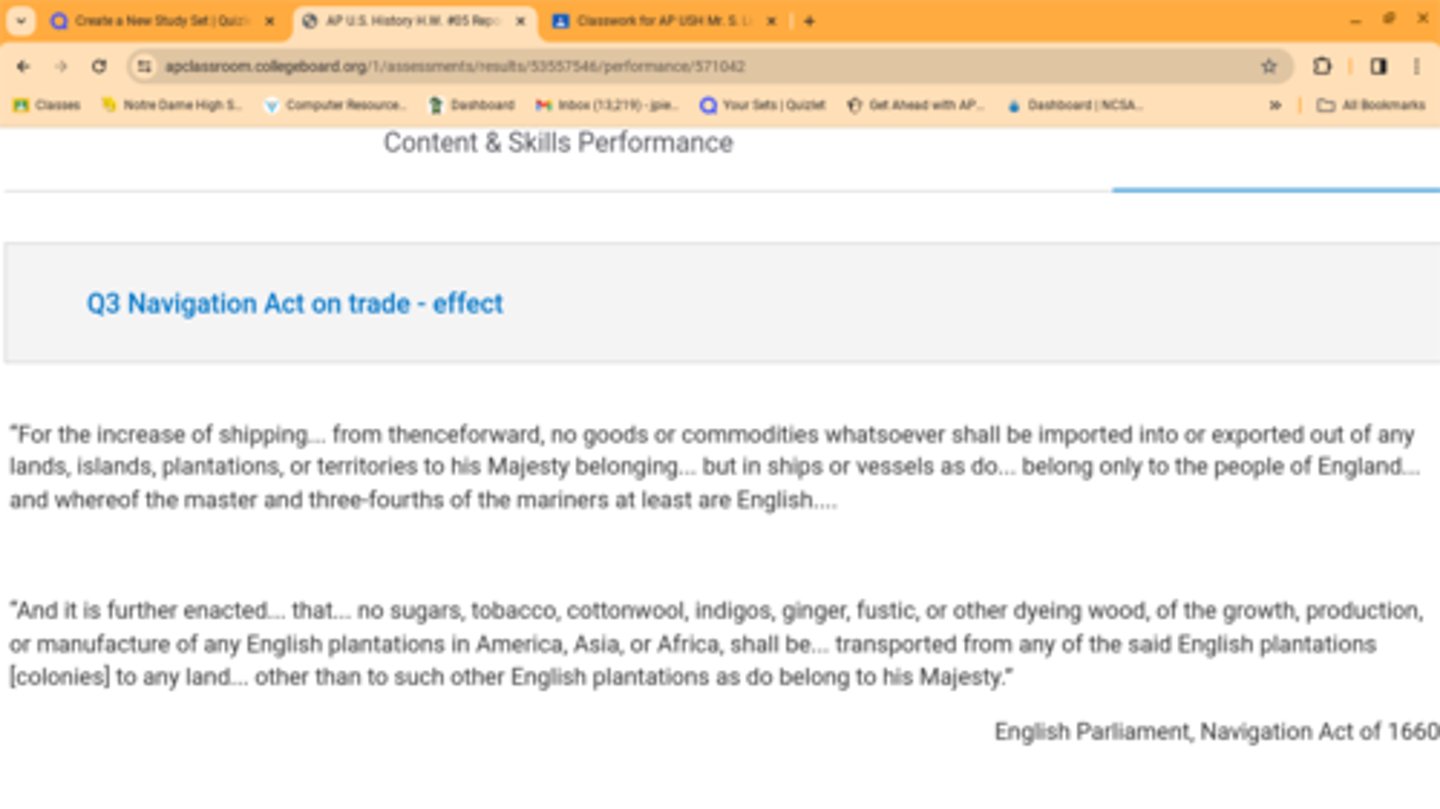
C. The emergence of an Atlantic economy
Which of the following most directly led to the passage of the Navigation Act of 1660?
A. The spread of Enlightenment ideas
B. The development of the English system of slavery
C. The emergence of an Atlantic economy
D. The dominance of market capitalism
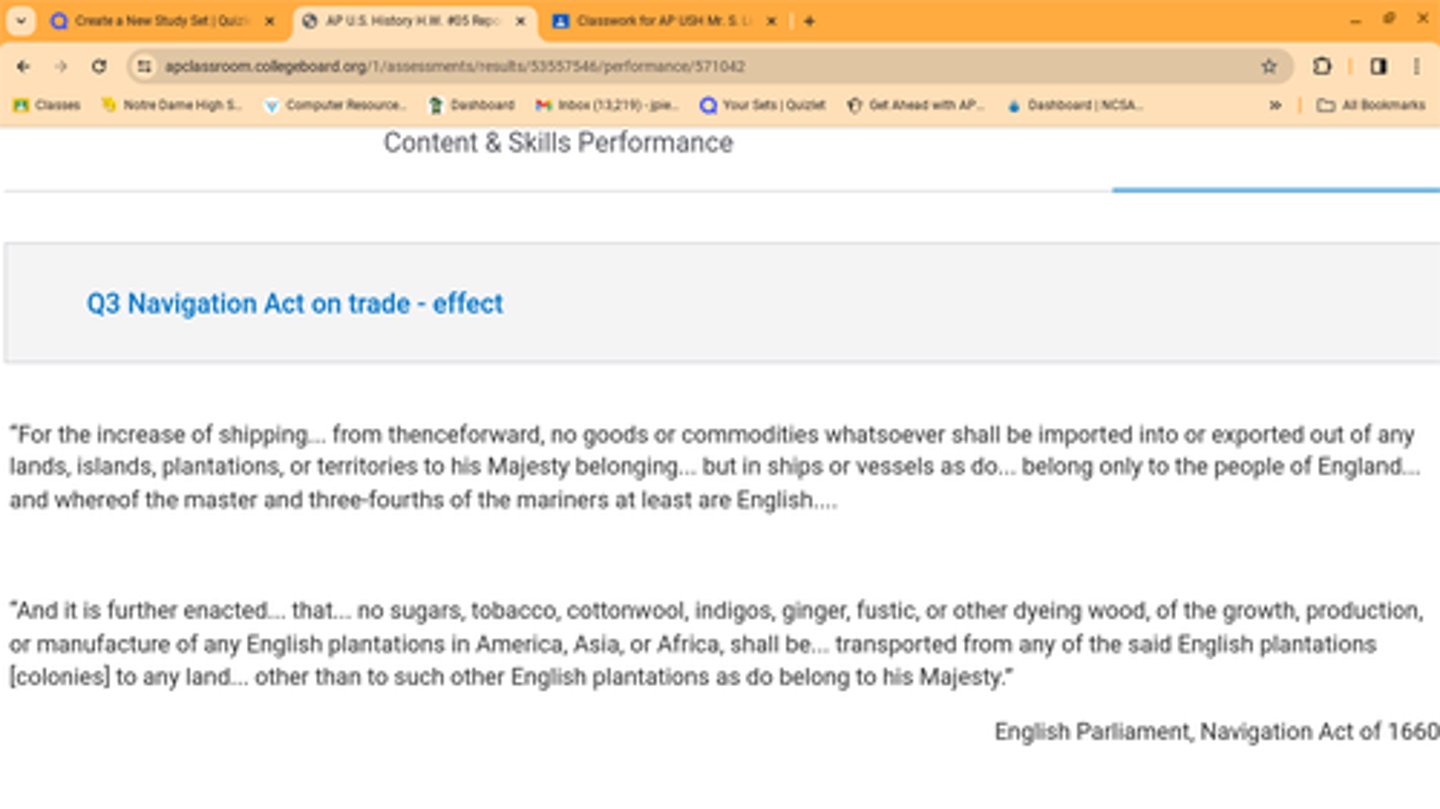
B. The desire to pursue mercantilist goals
Which of the following most likely motivated Parliament to pass the law in the excerpt?
A. The decline of a strong English identity among colonists
B. The desire to pursue mercantilist goals
C. The formation of colonial governments that differed from English models
D. The desire to promote migration to the colonies
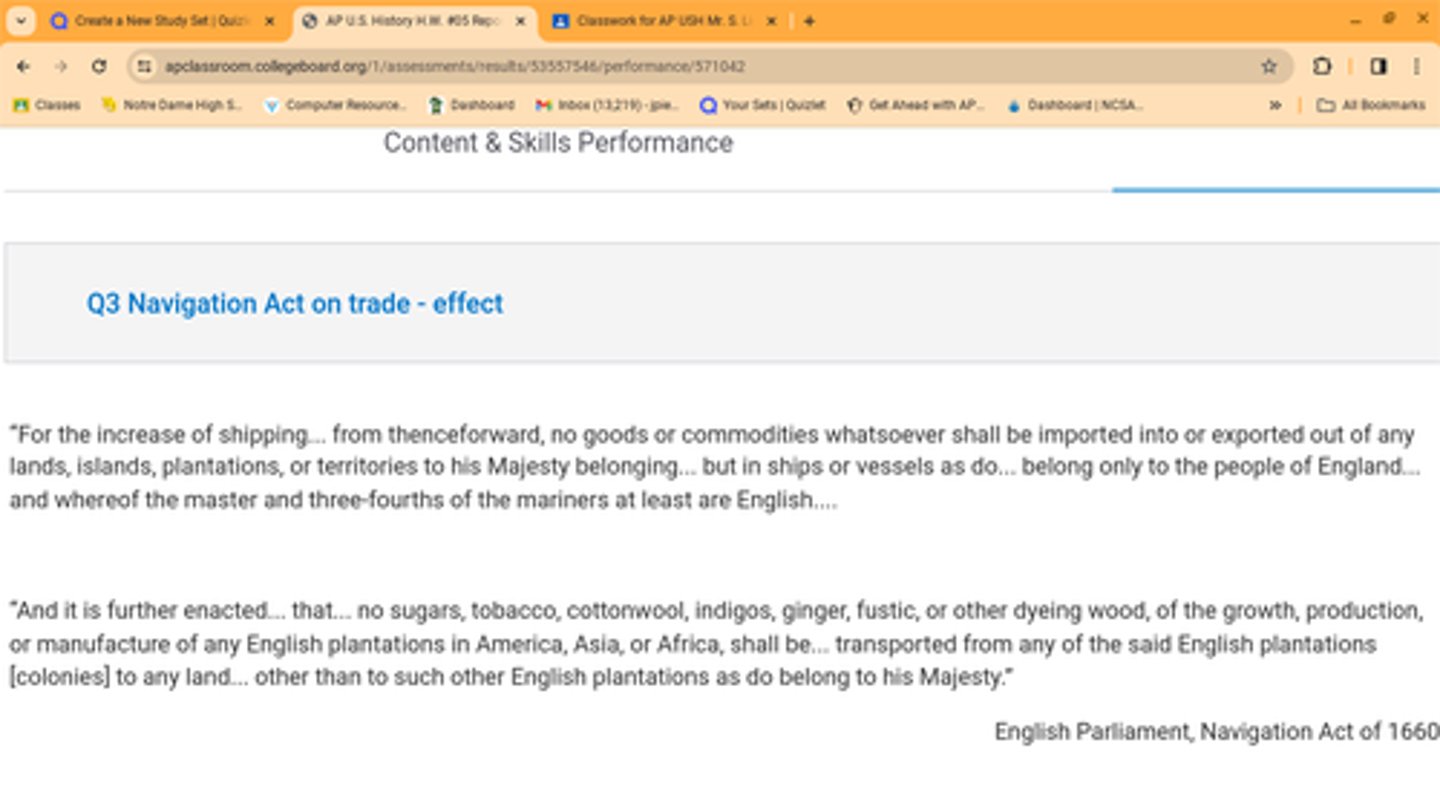
B. The low price and easy availability of land
In the eighteenth century, British colonists wishing to settle west of the Appalachians were principally motivated by
A. The comparatively small numbers of American Indians in the old Northwest
B. The low price and easy availability of land
C. Freedom from the threat of Spanish authorities
D. A desire to escape overcrowded cities along the Atlantic coast
E. Promises of tax breaks for those willing to establish frontier settlements
E. Taxed them without their consent
British colonists in North America objected to the Stamp Act primarily because it
A. Threatened the free press
B. Disrupted trade with the West Indies
C. Closed the colonial courts
D. Enriched corrupt officials
E. Taxed them without their consent
D. Merchants in New England
Which of the following would have been most likely to agree with the sentiments expressed in the excerpt?
A. Native Americans west of the Appalachian Mountains
B. Enslaved people in the South
C. Anglican ministers in the middle colonies
D. Merchants in New England
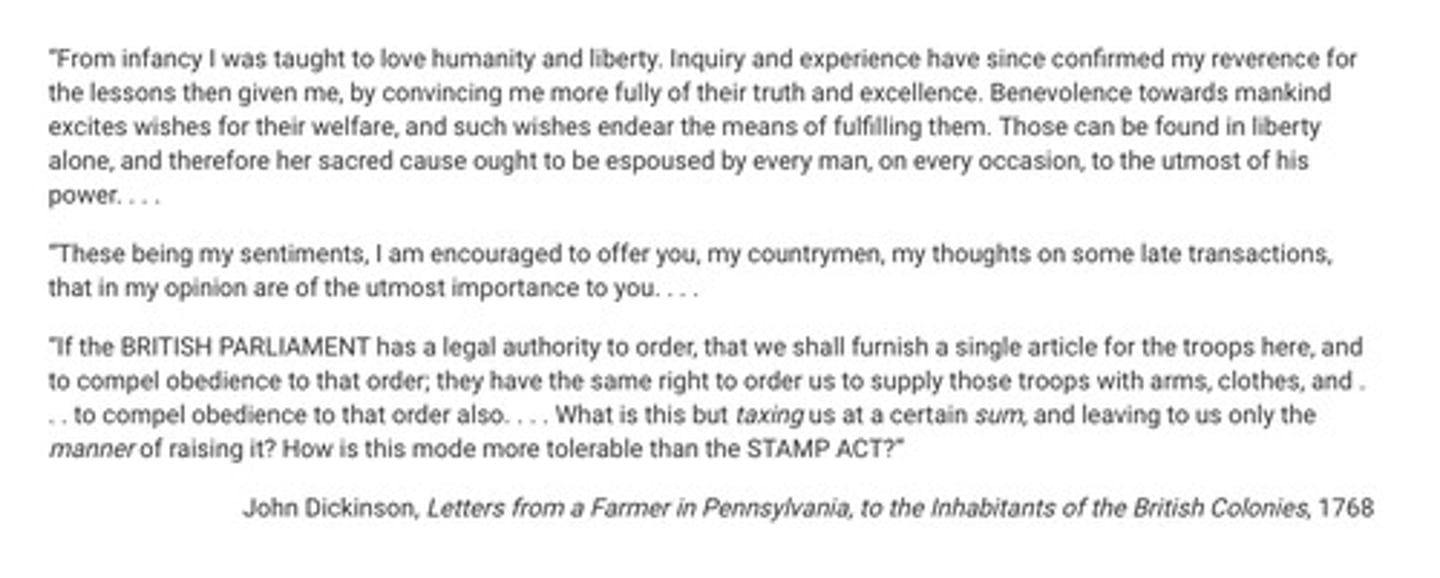
B. Increased taxation and imperial oversight following the Seven Years' War
To which of the following was Dickinson responding in his letters?
A. Native American challenges to European control of the fur trade
B. Increased taxation and imperial oversight following the Seven Years' War
C. Efforts by the Spanish to reclaim territory in North America
D. Arguments regarding the creation of a new national constitution
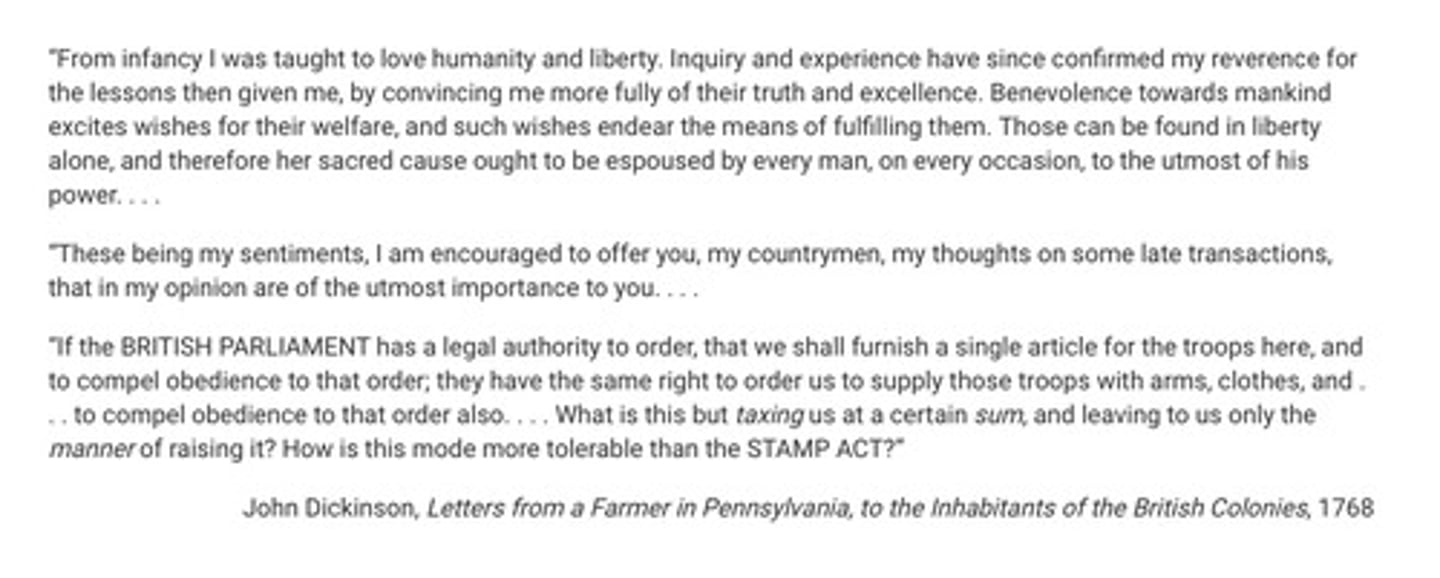
A. Use Enlightenment rhetoric to encourage American autonomy
Based on the excerpt, the most likely purpose of Dickinson's letters was to
A. Use Enlightenment rhetoric to encourage American autonomy
B. Support efforts to claim the French territory of Louisiana
C. Argue for increased industrial production in the colonies
D. Call for the immediate end of the international slave trade
C. Increasing taxes on goods bought and sold in the colonies
Britain attempted to pay for the debt resulting from the Seven Years' War (French and Indian War) by
A. Charging immigrants a fee to relocate to North America
B. Selling ships from its navy to colonial merchants
C. Increasing taxes on goods bought and sold in the colonies
D. Sponsoring expeditions to locate valuable resources
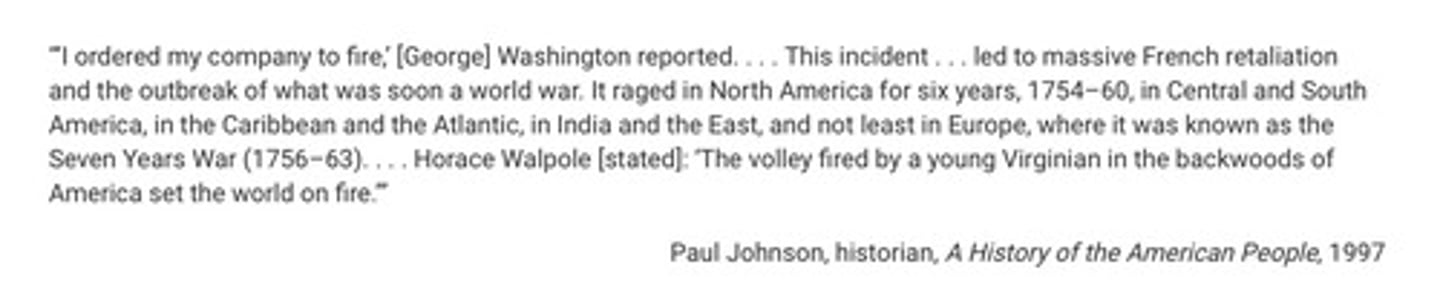
A. Intensified competition between France and Britain over colonies
Which of the following contributed to the outbreak of the Seven Years' War (French and Indian War) in North America?
A. Intensified competition between France and Britain over colonies
B. Efforts by Britain to monopolize tobacco sales in Europe
C. Spanish attempts to end British control of the trans-Atlantic slave trade
D. Britain's desire to enact new taxes on Native American nations
D. Minimize conflicts with Native Americans
The British government attempted to restrict westward settlement following the Seven Years' War (French and Indian War) in order to
A. Support the fur trade east of the Appalachian Mountains
B. Discourage immigration to the North American colonies
C. Give French settlers time to leave Canada
D. Minimize conflicts with Native Americans
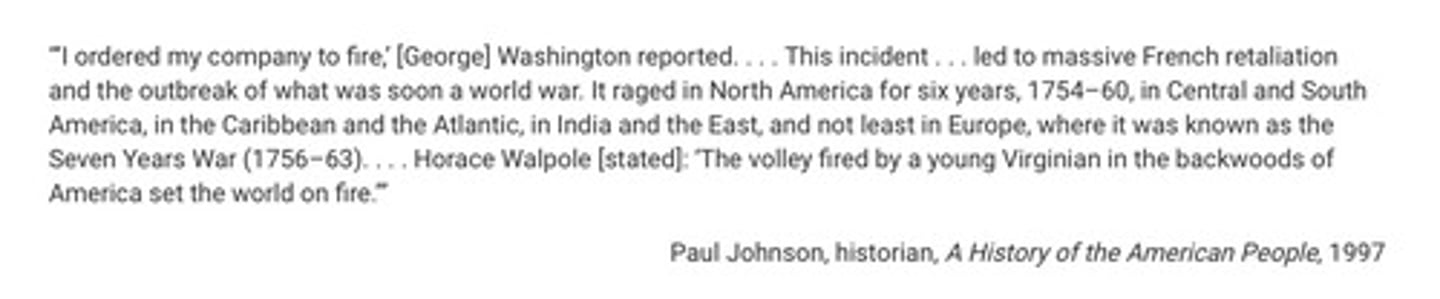
C. To minimize tensions caused by United States expansion into western territory
Which of the following was a primary reason that the United States and Spain agreed to the articles outlined in the excerpt?
A. To force Great Britain to give up its colonial claims in Canada
B. To provide land for the establishment of Catholic missions
C. To minimize tensions caused by United States expansion into western territory
D. To prevent France from reclaiming the territory it lost after the Seven Years' War
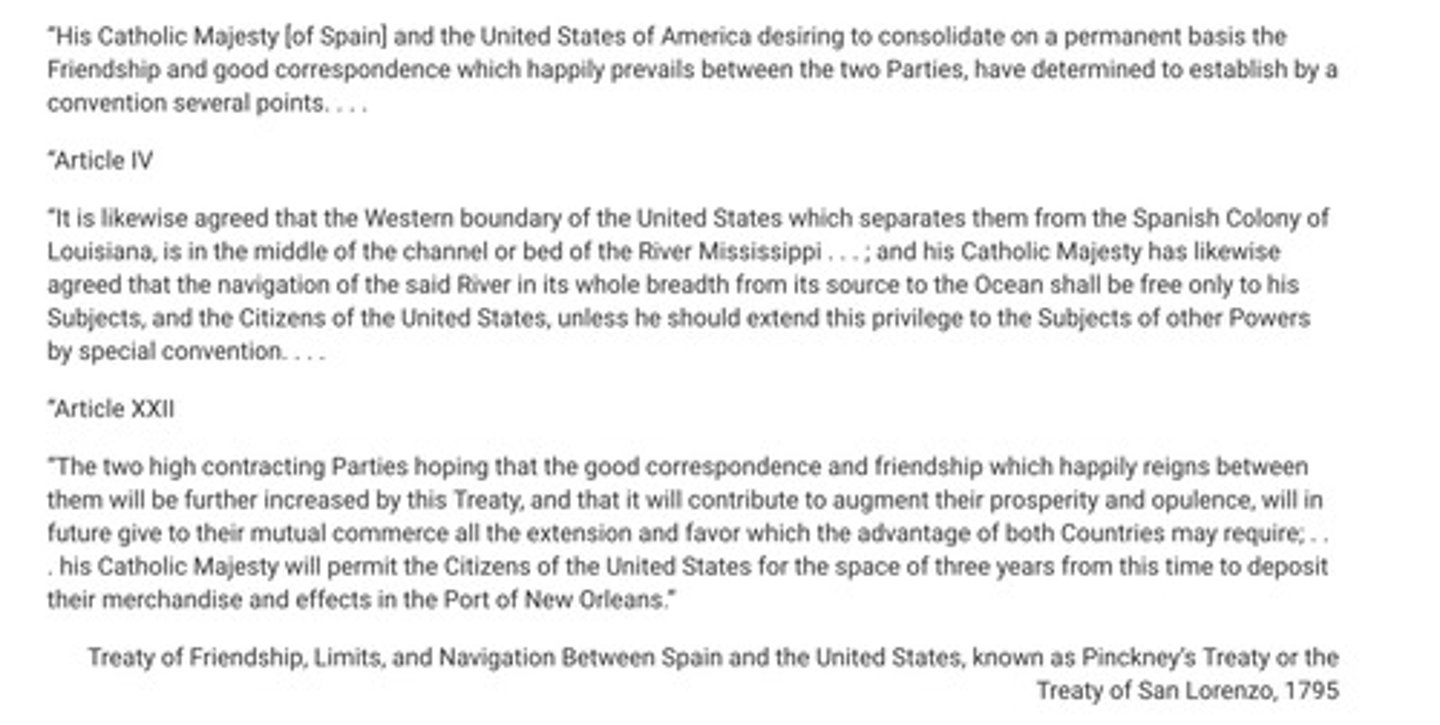
A. How to support western settlers beyond the Appalachian Mountains
The agreements made in the excerpt best reflect which of the following concerns in the United States during this period?
A. How to support western settlers beyond the Appalachian Mountains
B. How to avoid the establishment of political parties
C. Whether to assist the French in their war against Great Britain
D. Whether to allow slavery to expand into new territories
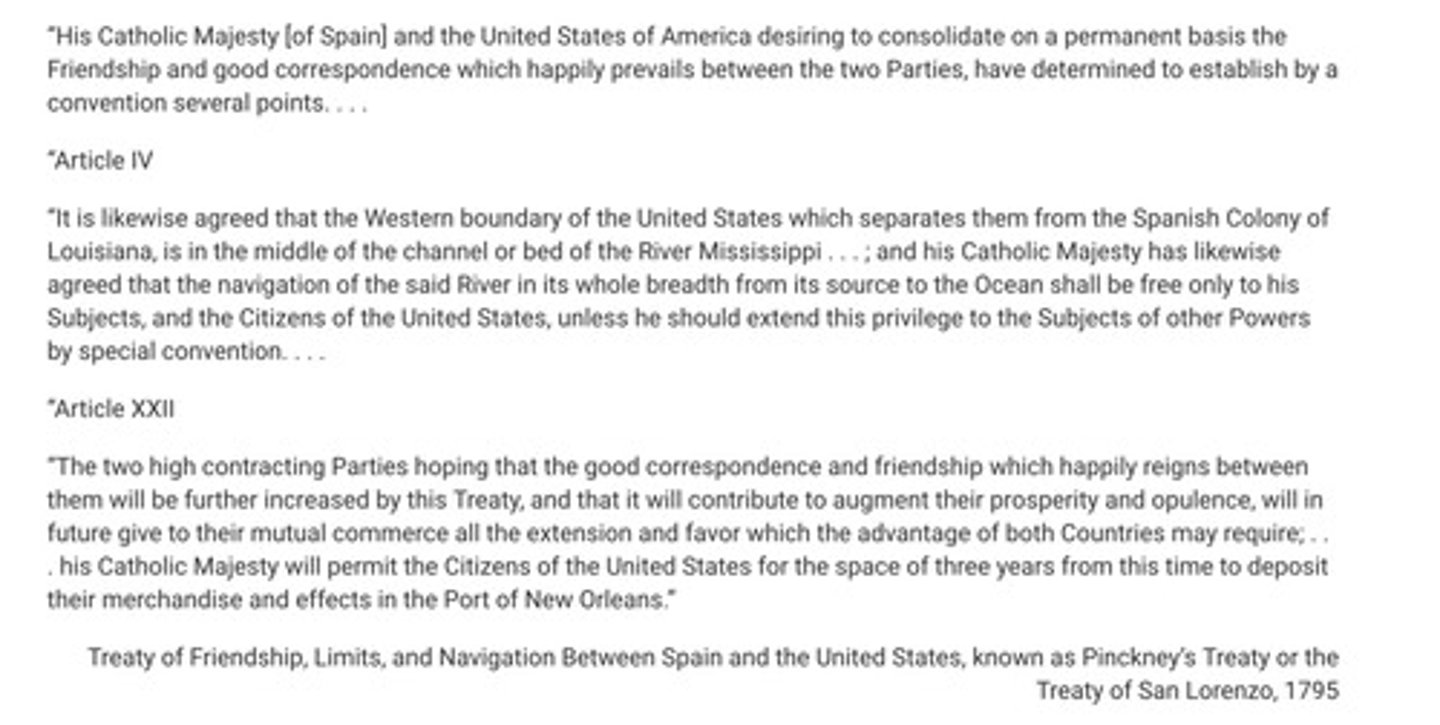
B. White farmers in Kentucky
Which of the following groups would have most likely supported the agreements made in the excerpt?
A. Fur trappers on the Pacific coast
B. White farmers in Kentucky
C. Merchants in New England
D. Native American leaders in Louisiana
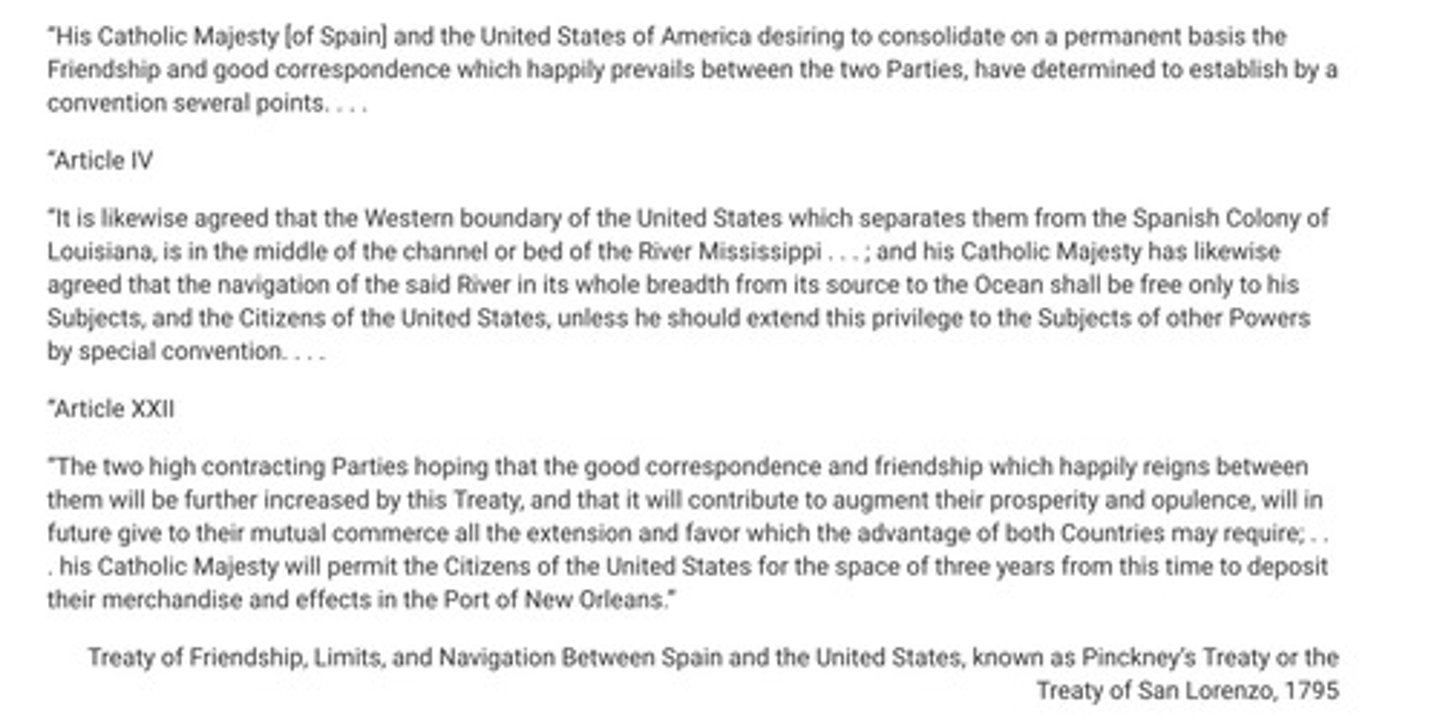
D. The federal government established a new economic policy in part by assuming states' debts from the American Revolution
Which of the following historical events in the 1790s most directly followed from the developments described in the excerpt?
A. Trade and manufacturing increased United States productivity and helped the federal government pay off its bonds more quickly.
B. George Washington's neutrality allowed the United States to trade with France, Britain, and Spain simultaneously and pay down the debt.
C. The federal government granted French merchants a monopoly on the sale of American tobacco to pay debts from the American Revolution.
D. The federal government established a new economic policy in part by assuming states' debts from the American Revolution.
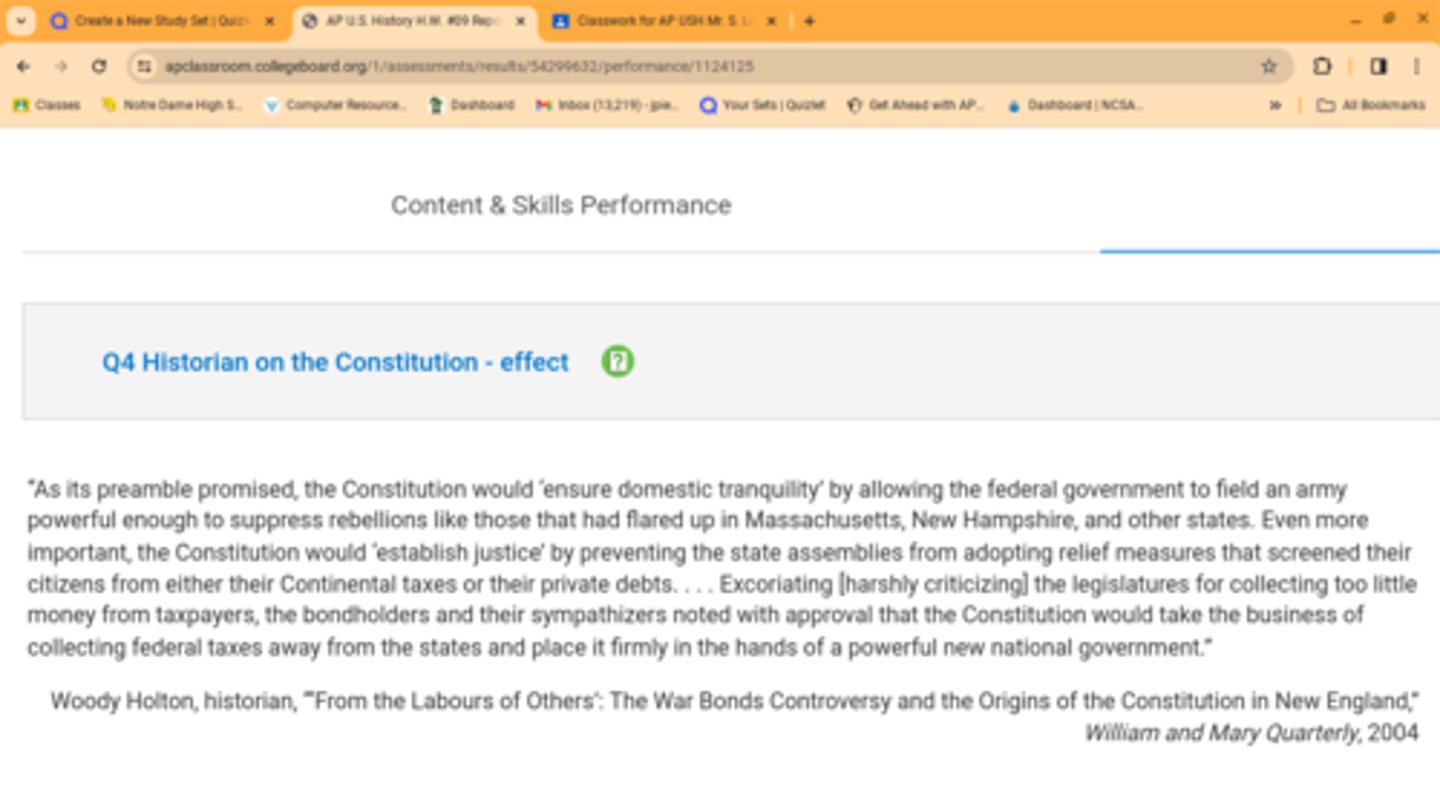
B. The repayment of government creditors at face value for depreciated paper money under Alexander Hamilton's financial plan
Which of the following actions by the new federal government after 1789 best demonstrates Holton's argument in the first paragraph of the excerpt?
A. The acquisition of the Louisiana Territory from France during Thomas Jefferson's administration
B. The repayment of government creditors at face value for depreciated paper money under Alexander Hamilton's financial plan
C. The use of treaties and military force to acquire land for western settlers from American Indian nations
D. The treaty with Spain recognizing navigation rights for United States merchants and farmers along the Mississippi River
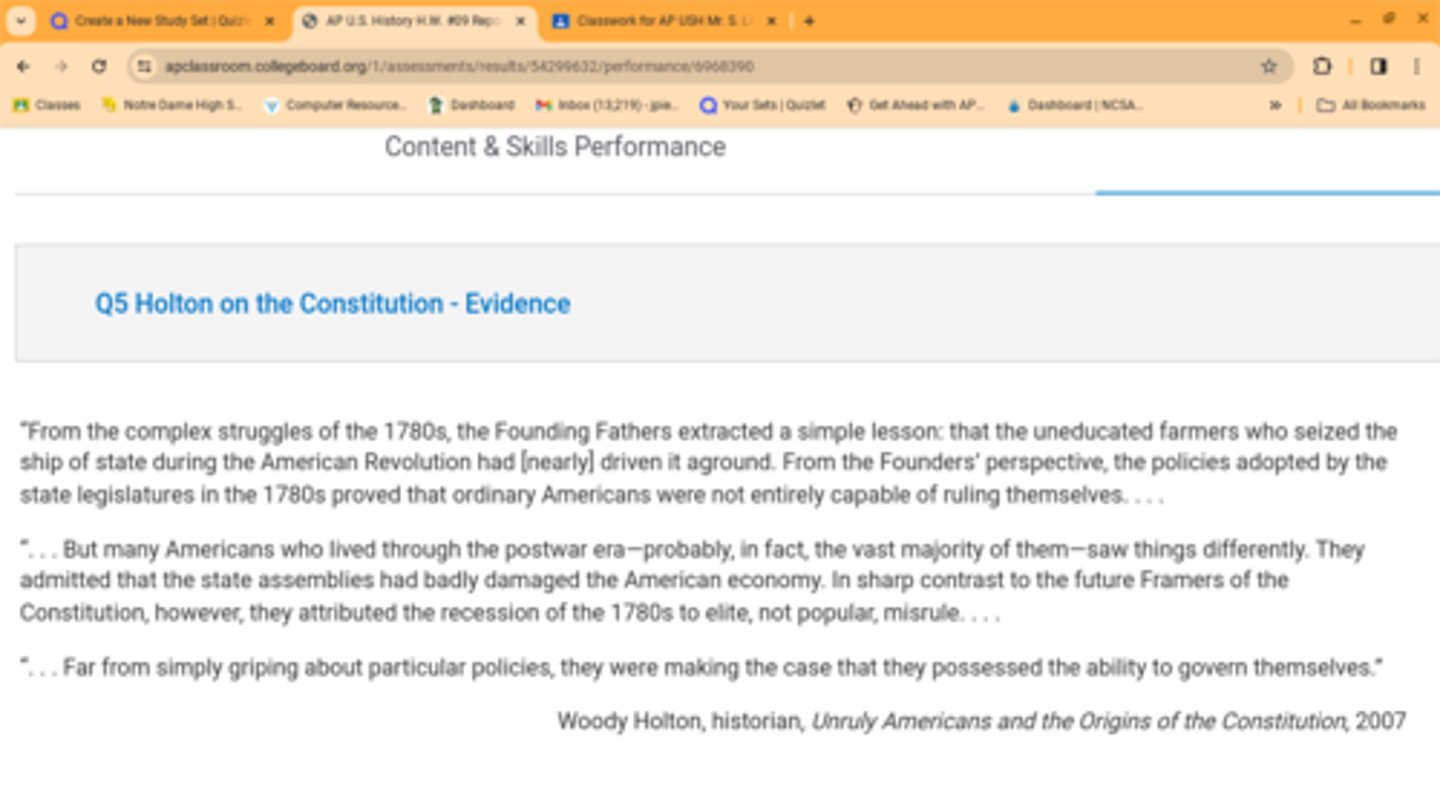
A. British activities and landholdings in North America were an impediment to western settlement and peace along the frontier
Which of the following was a reason the United States government believed it necessary to negotiate a treaty with Great Britain following the American Revolution?
A. British activities and landholdings in North America were an impediment to western settlement and peace along the frontier.
B. Northerners hoped that Britain's antislavery position would pressure southern states to abolish slavery.
C. The Washington administration wanted to improve relations to encourage France to sell the Louisiana Territory.
D. The government wanted to mediate a better relationship between France and Britain to help bring peace to the European continent.
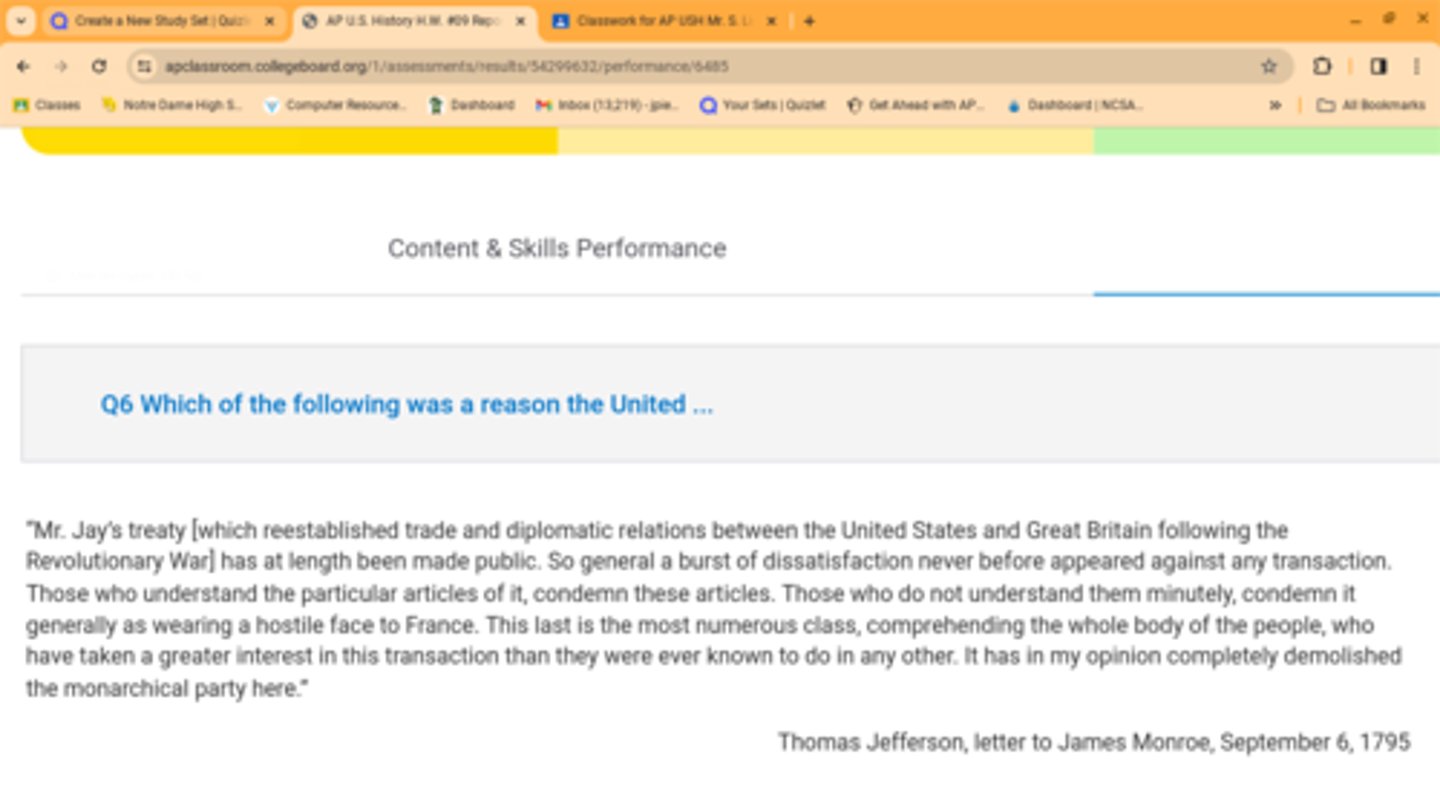
A. Popular support for the idea of Manifest Destiny
The excerpt best reflects which of the following developments?
A. Popular support for the idea of Manifest Destiny
B. The emergence of nativist political parties
C. The collapse of the Second Party System
D. The increase in sectional tensions before the Civil War
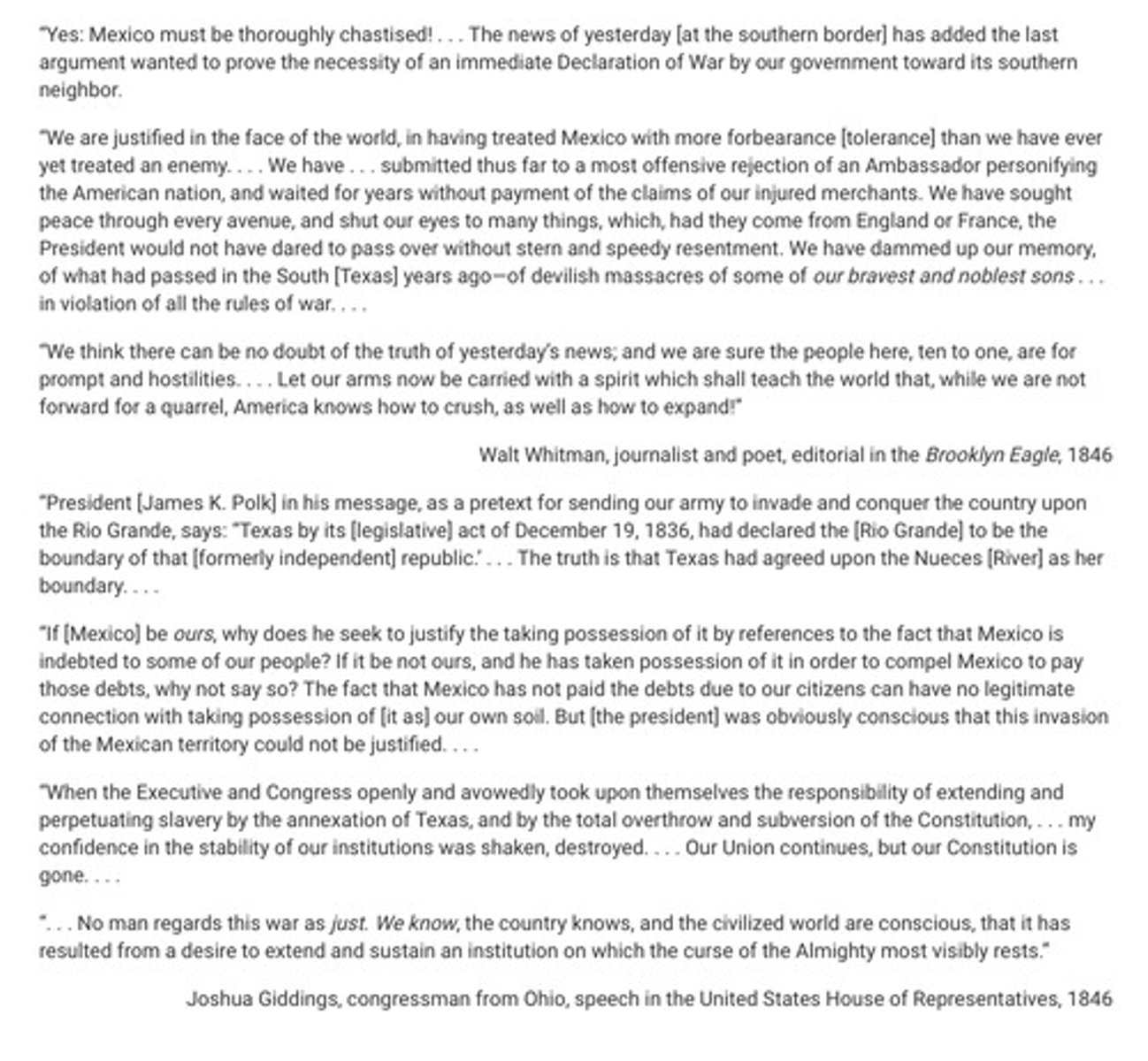
B. Whitman argued that the war was intended to deter bad behavior, while Giddings argued that the war represented aggression by the United States
Which of the following comparisons best describes Whitman's and Giddings' arguments about the Mexican-American War?
A. Whitman believed the United States should show patience before war, while Giddings believed the country had tolerated abuses for too long without war.
B. Whitman argued that the war was intended to deter bad behavior, while Giddings argued that the war represented aggression by the United States.
C. Giddings asserted that the nation entered the war as a last resort, while Whitman asserted that the war was unnecessary to achieve the goals of the United States.
D. Giddings claimed that the war had popular support in the United States, while Whitman claimed that most Americans opposed the war.
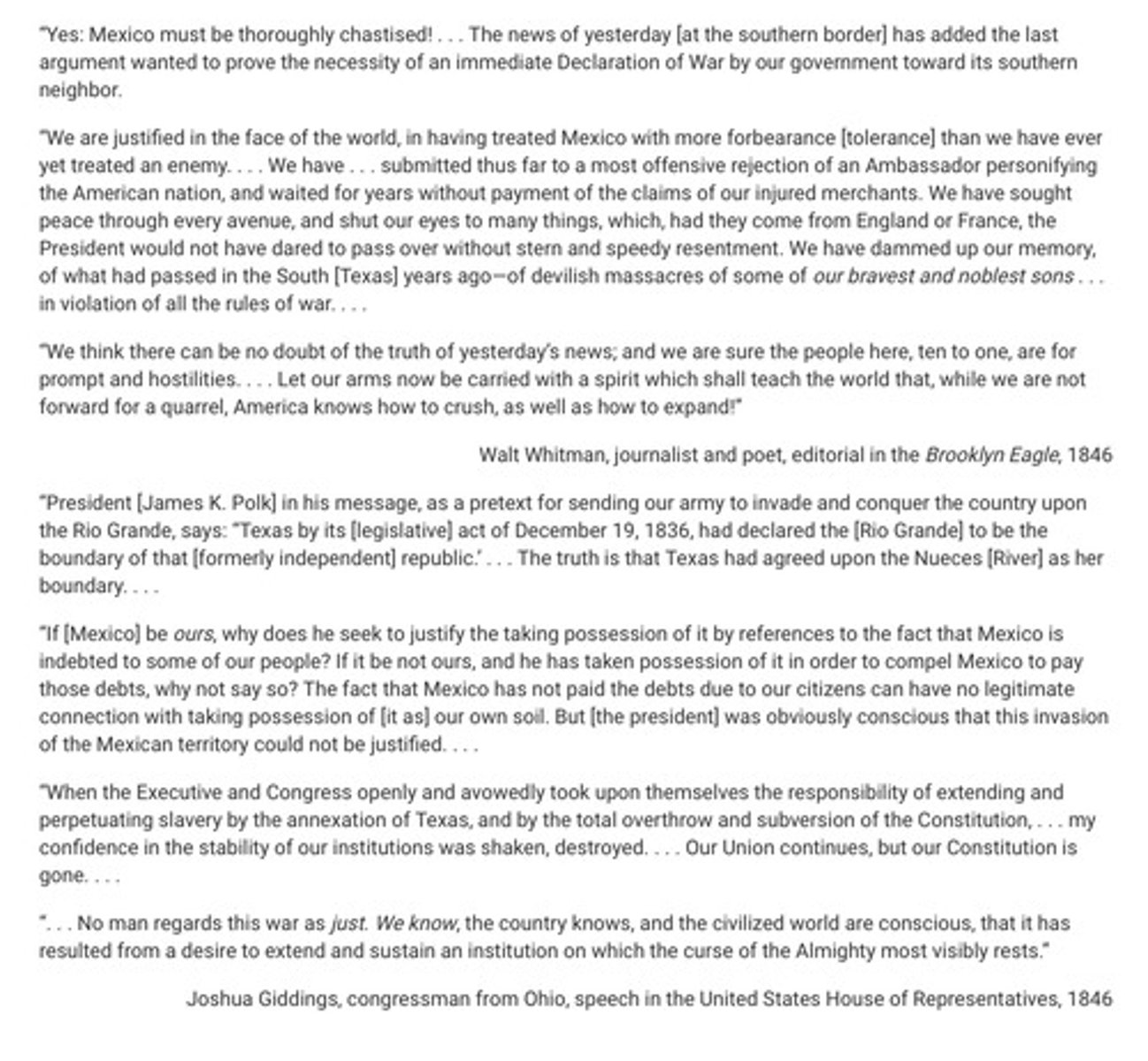
C. The United States desired to expand slavery to Mexican territory
Based on their arguments in the excerpts, Giddings would likely agree with and Whitman would likely disagree with which of the following claims about the causes of the Mexican-American War?
A. The United States sought the repayment of Mexican debts.
B. Mexico had killed Americans during a previous conflict in Texas.
C. The United States desired to expand slavery to Mexican territory.
D. Mexico had sent soldiers across the southern border of the United States.
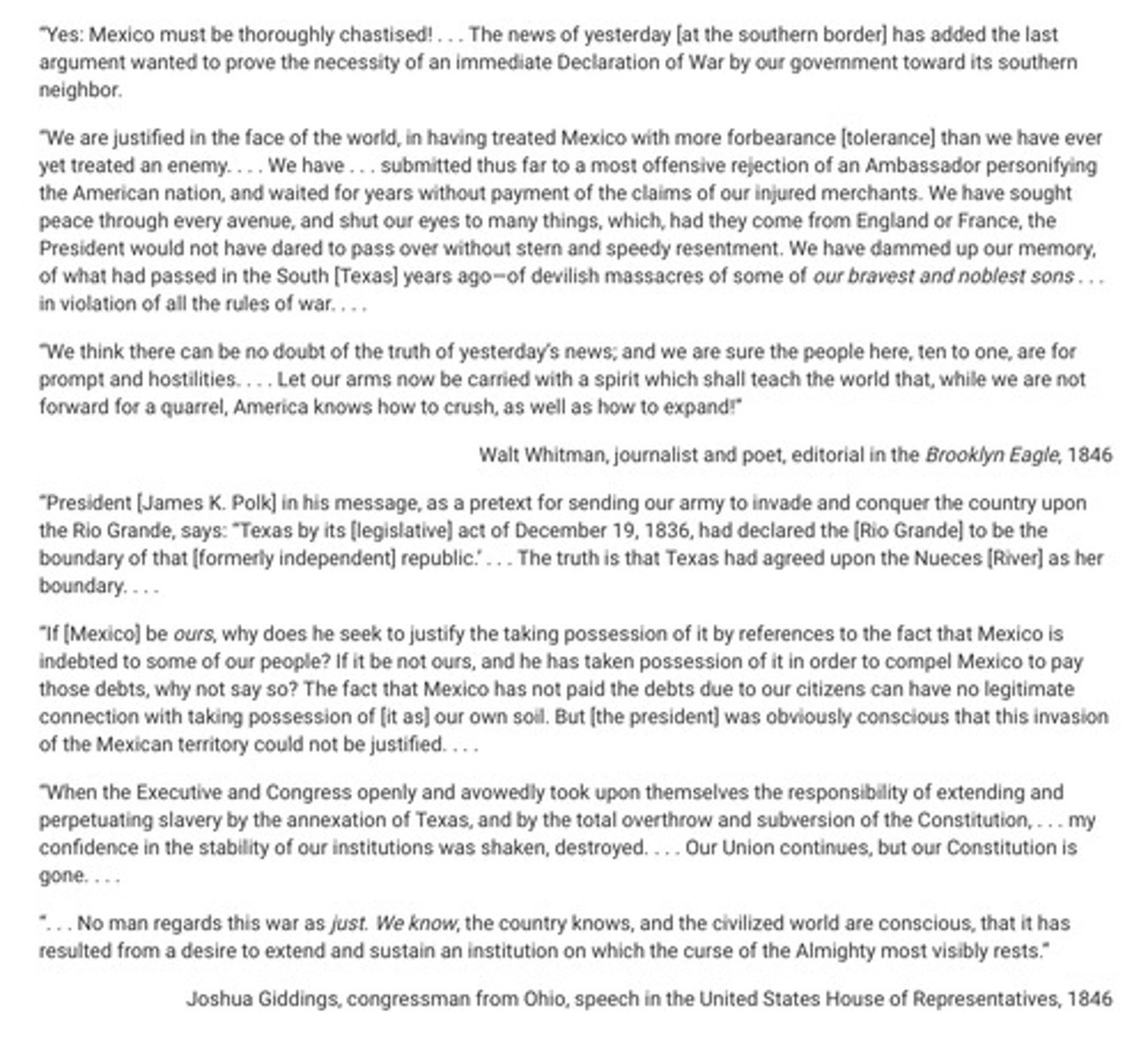
B. Both sought to justify their positions to international observers
Which of the following is a similarity between how Whitman and Giddings made their arguments?
A. Both used examples of Mexico's behavior to support their points.
B. Both sought to justify their positions to international observers.
C. Both drew on principles from the Constitution to make claims.
D. Both made religious appeals to prove their assertions.
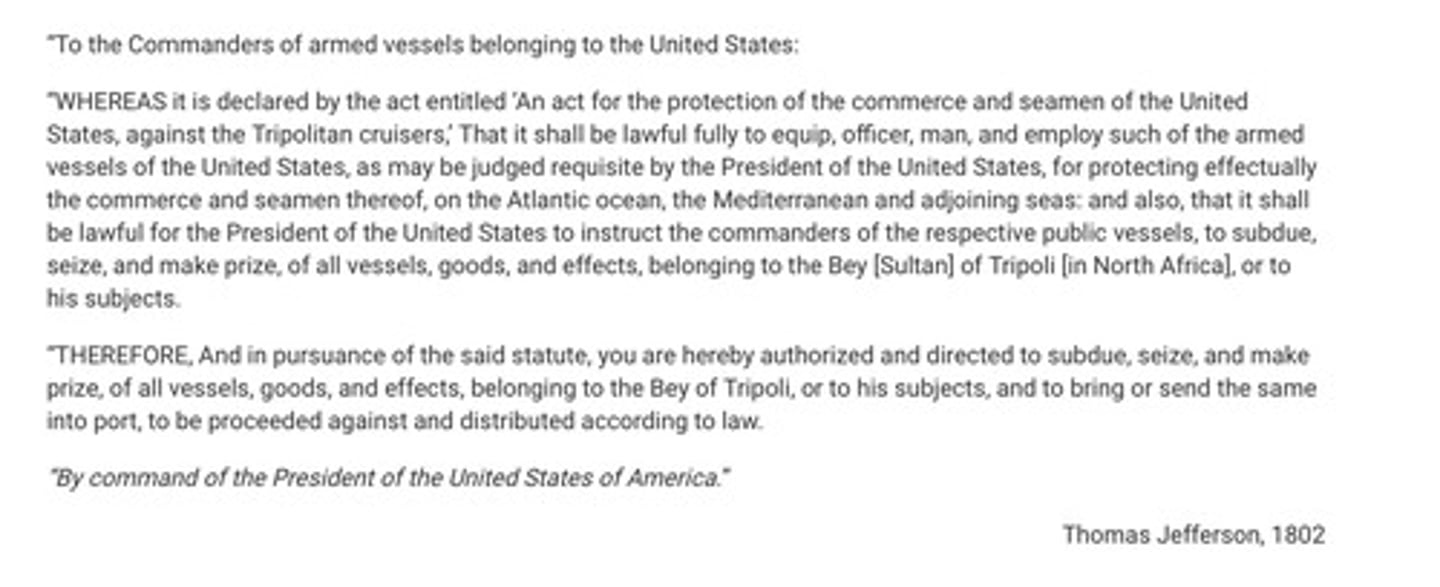
A. Establishing trade routes
President Jefferson sought the protections described in the excerpt most likely for the purpose of
A. Establishing trade routes
B. Enlarging the size of the navy
C. Supporting alliances with European nations
D. Creating United States colonies
C. Using international commerce to expand United States influence
The rhetorical purpose expressed in the excerpt would most likely have been interpreted as promoting which of the following?
A. Expanding suffrage rights to all White men
B. Challenging Great Britain's control of Canada
C. Using international commerce to expand United States influence
D. Investing in technology to make ocean voyages faster

D. Political responses to changing demographics in the United States
Historians could best use the excerpt as an example of which of the following?
A. Expansion of voting rights during the Jackson administration
B. Debates over the separation of church and state in the United States
C. Advocacy for policies promoting the idea of Manifest Destiny
D. Political responses to changing demographics in the United States
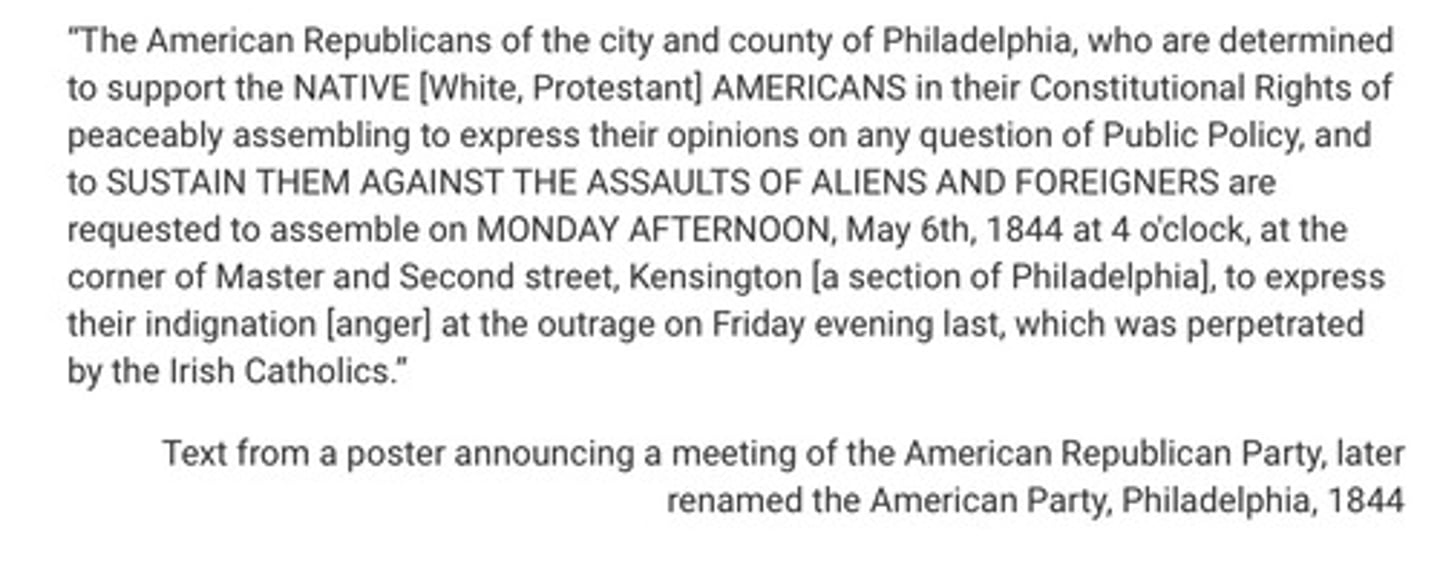
A. The rise in immigration to the United States
Which of the following historical situations can best be used to explain how the excerpt would have been interpreted at the time?
A. The rise in immigration to the United States
B. The decline of the international slave trade
C. The expansion of manufacturing in the South
D. The start of the women's rights movement
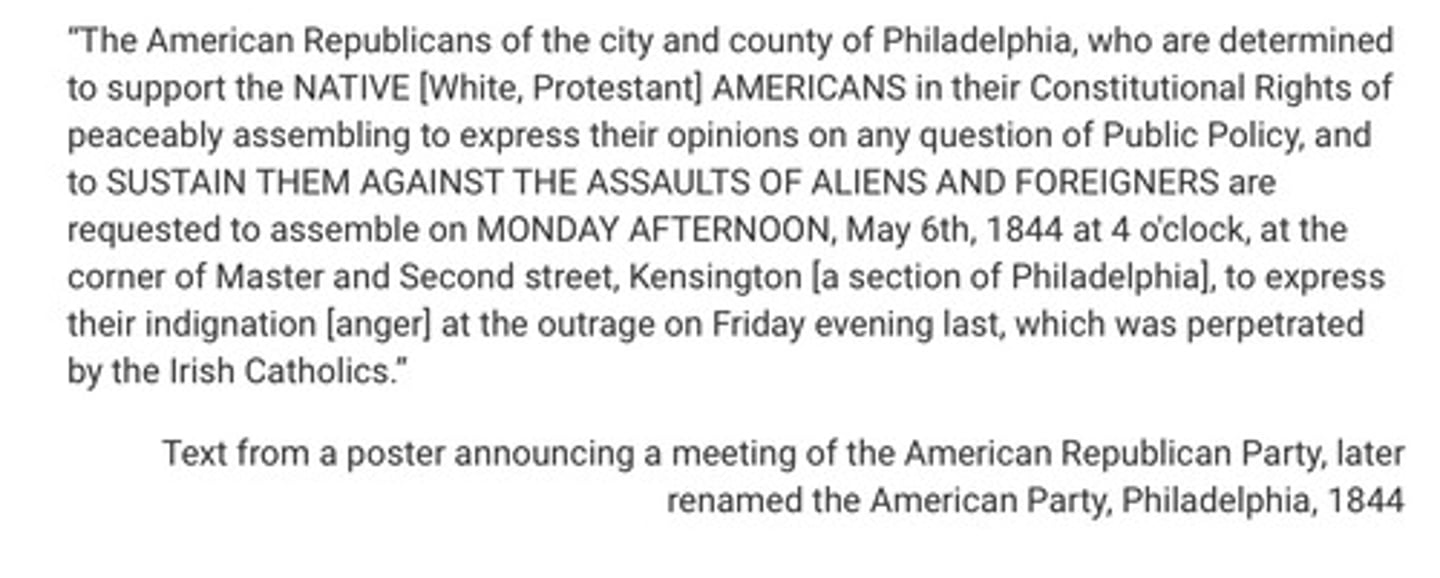
B. Nativist sentiment
The language in the excerpt was most likely interpreted as promoting which of the following?
A. States' rights
B. Nativist sentiment
C. Religious pluralism
D. Abolitionist activism
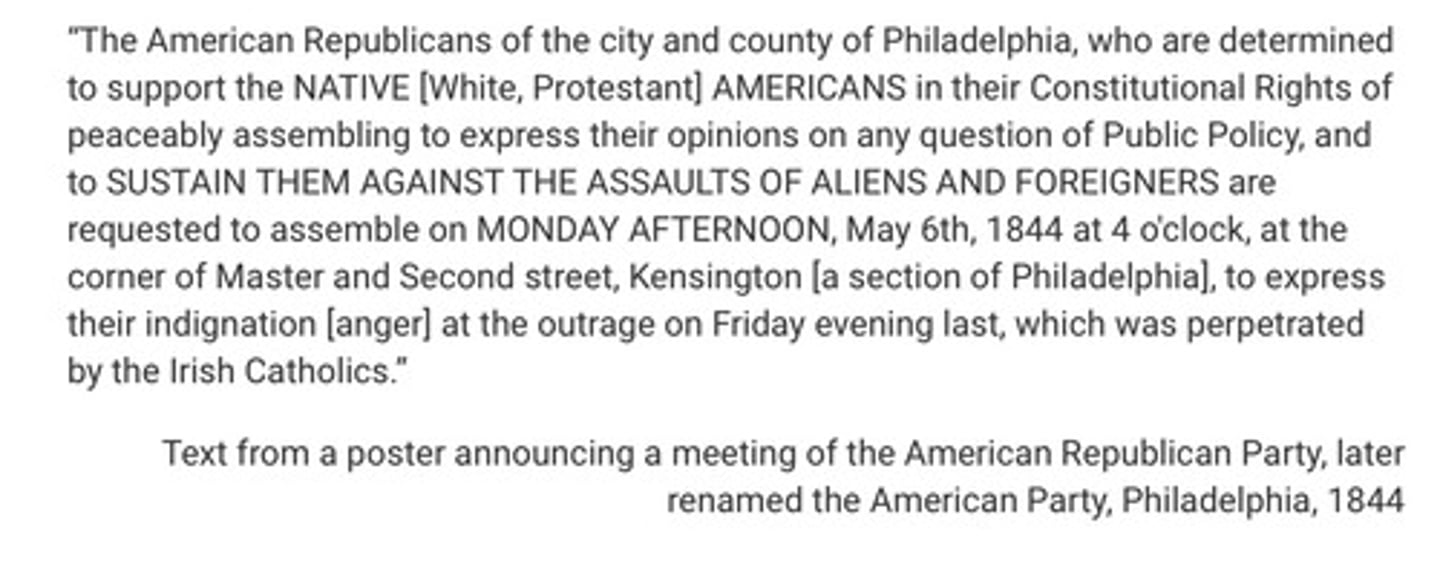
C. The growth among people in the United States of a sense of national identity
Which of the following developments best explains the sentiment expressed in the first verse of the song lyrics?
A.The conflicts between the federal army and Native Americans on western frontiers
B. The resumption of commerce with Great Britain after the American Revolution
C. The growth among people in the United States of a sense of national identity
D. The partisan clash between Democratic-Republicans and Federalists
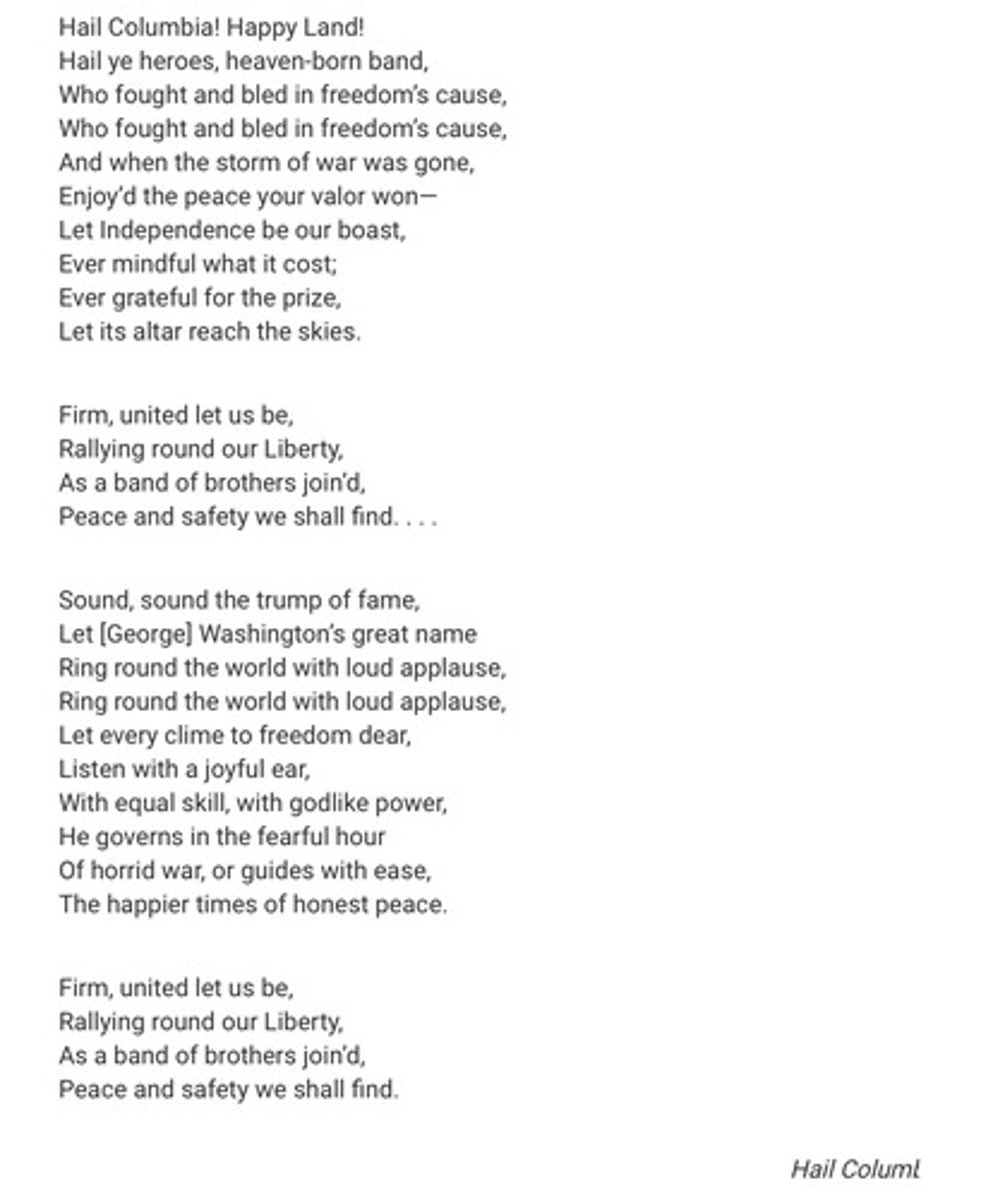
D. The popular image in national culture of Washington as a virtuous leader
Which of the following best explains the depiction of George Washington in the third verse of the song?
A. Washington's public advocacy for abolition
B. The movement to elect Washington president for life
C. Washington's policy of intervening in European conflicts
D. The popular image in national culture of Washington as a virtuous leader

D. The use of federal government funding for internal improvements
People who shared the views expressed in the excerpt most likely opposed which of the following?
A. The expansion of suffrage rights to most White men
B. The maintenance of low tariffs that allowed the export of goods to Europe
C. The expansion of United States territory through war
D. The use of federal government funding for internal improvements
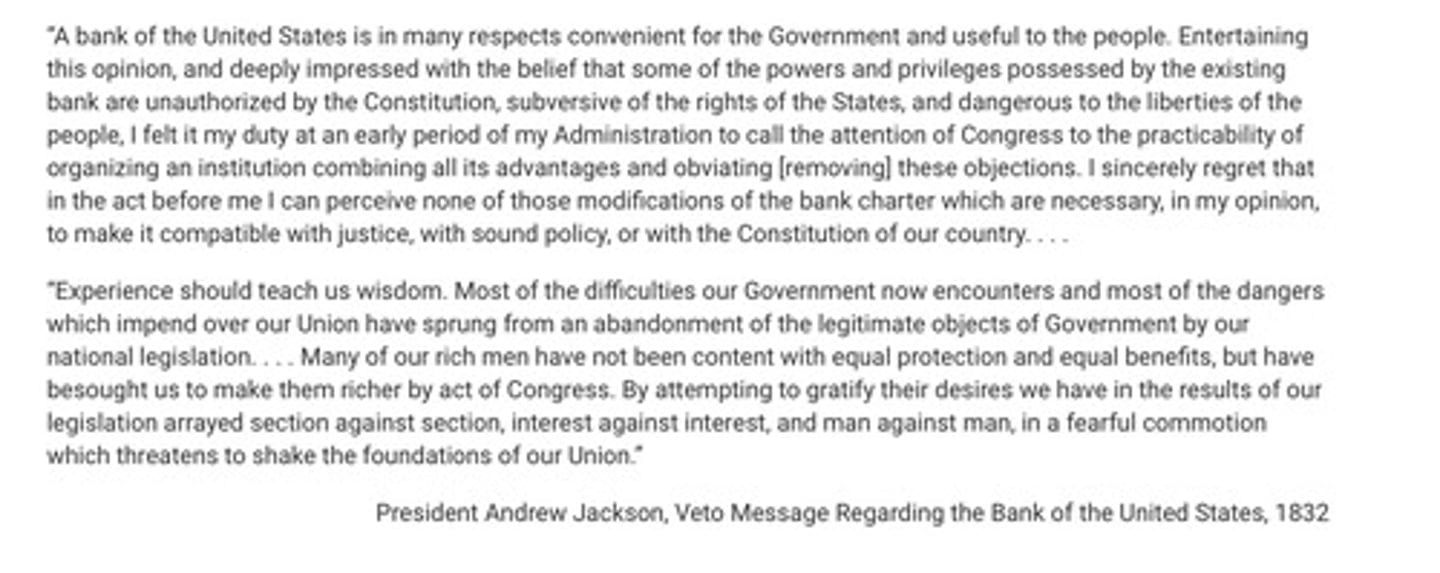
A. The formation of new political parties
The excerpt best reflects which of the following developments during the first half of the nineteenth century?
A. The formation of new political parties
B. The establishment of abolitionist groups
C. The increase of immigration from Europe
D. The emergence of regional cultures
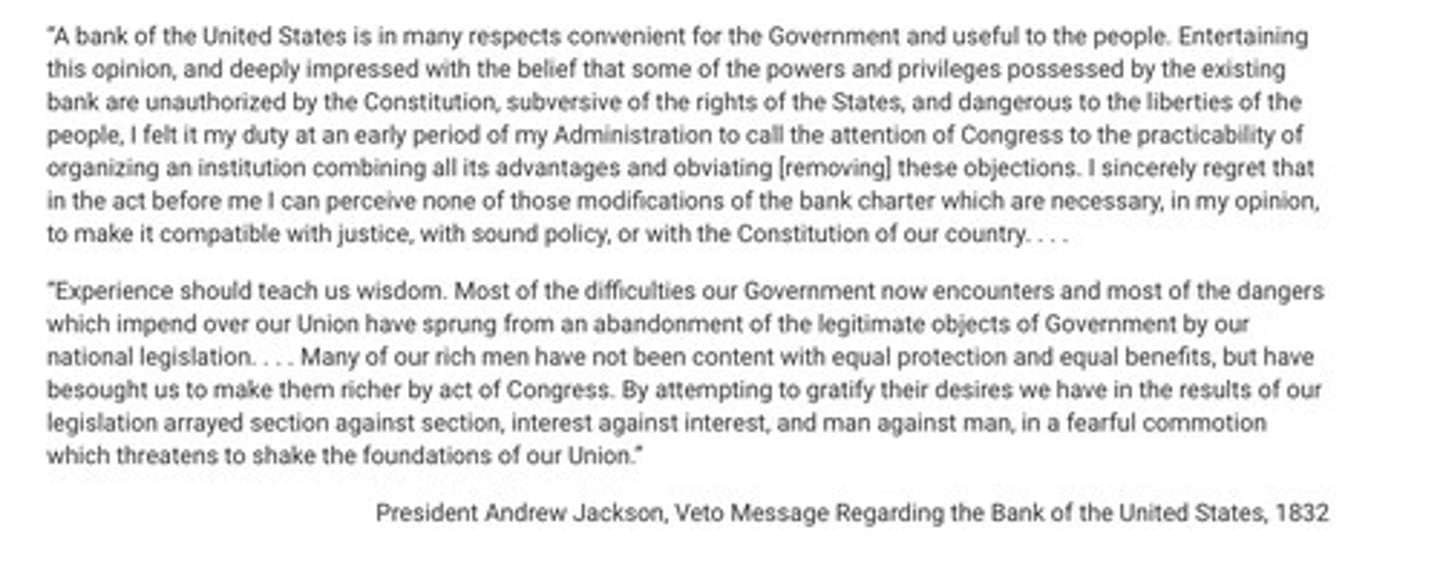
B. The debates over the federal government's proper role had intensified during the early nineteenth century
Which of the following factors best supports the argument in the excerpt?
A. The rise in manufacturing had led to many people relocating to towns and cities as demand for labor increased.
B. The debates over the federal government's proper role had intensified during the early nineteenth century.
C. The public visibility of women as leaders of national social and political reform movements had increased.
D. The South had become increasingly reliant on producing and exporting cotton in the early nineteenth century.
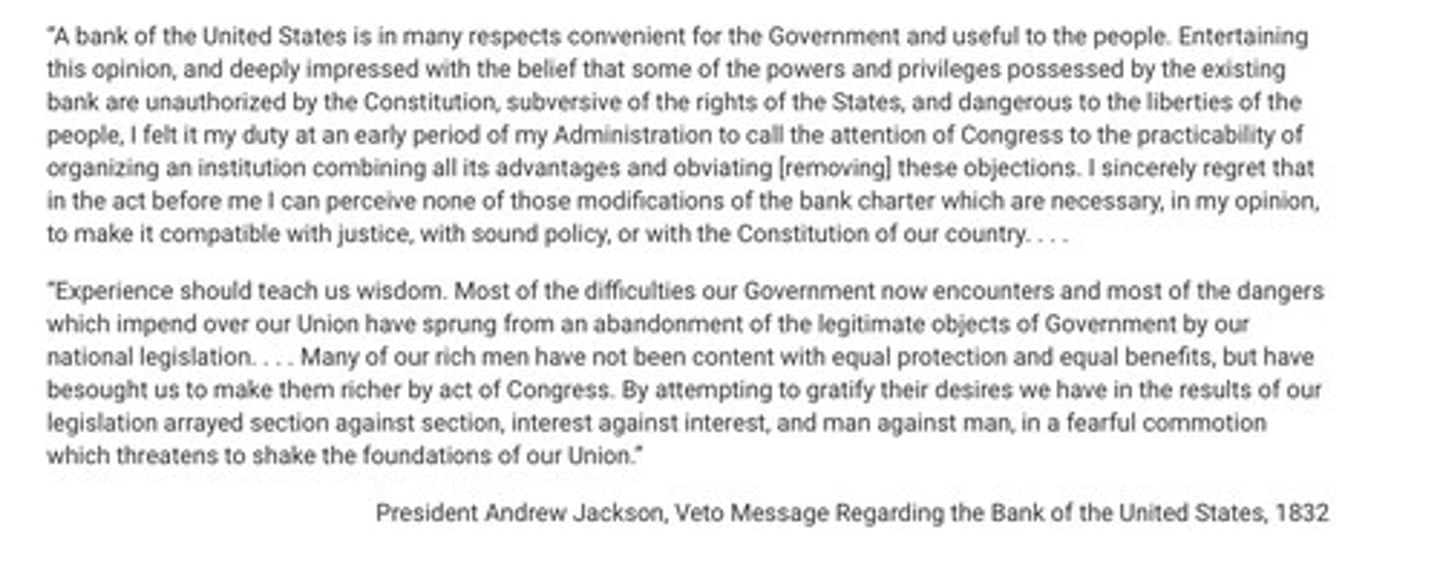
D. The development of regional cultures increasingly defined by the presence of enslaved people
The excerpt best reflects which of the following developments?
A. The establishment of tariffs on textiles to protect domestic cotton production
B. The emergence of an abolitionist movement during the Second Great Awakening
C. The increase of prosperity caused by the production of manufactured goods
D. The development of regional cultures increasingly defined by the presence of enslaved people
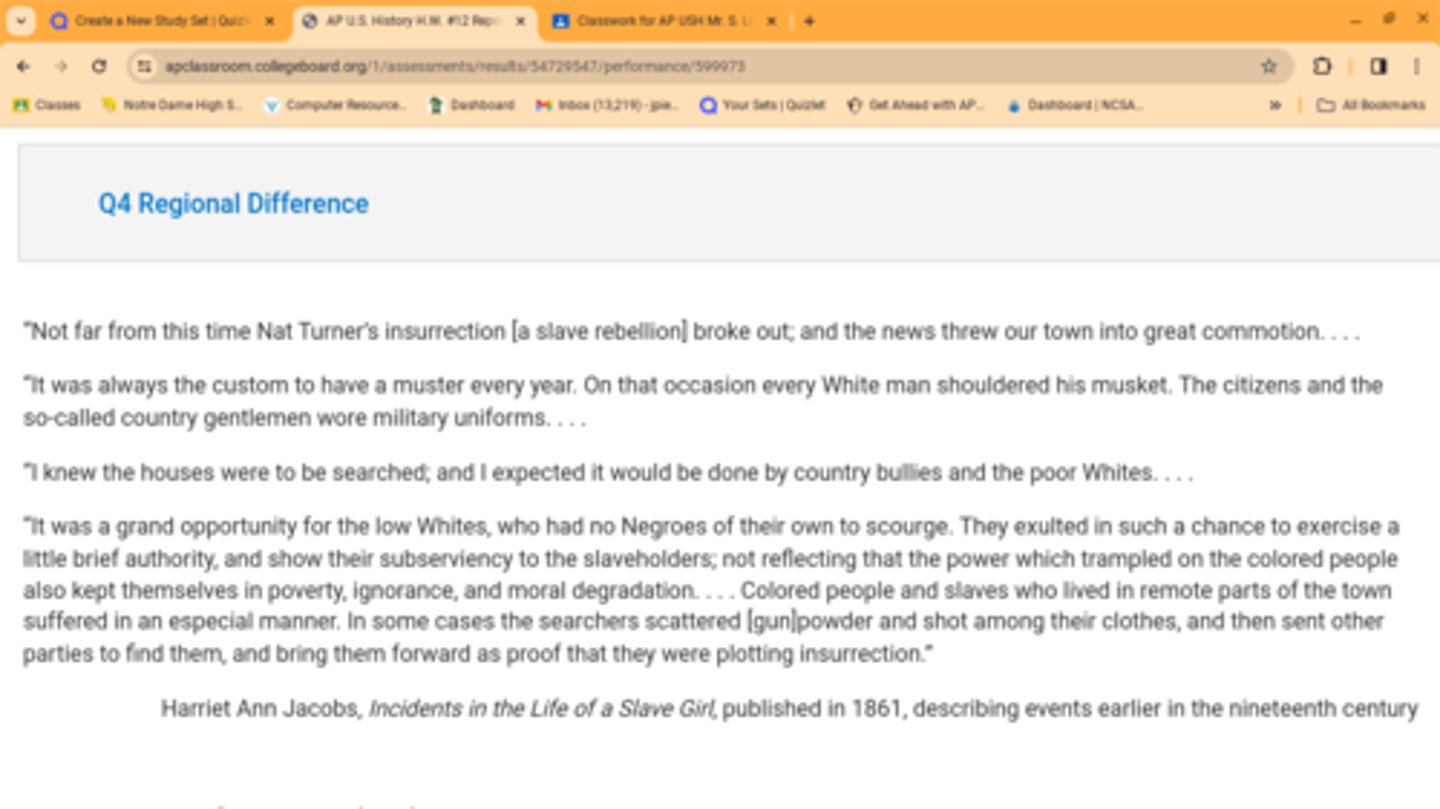
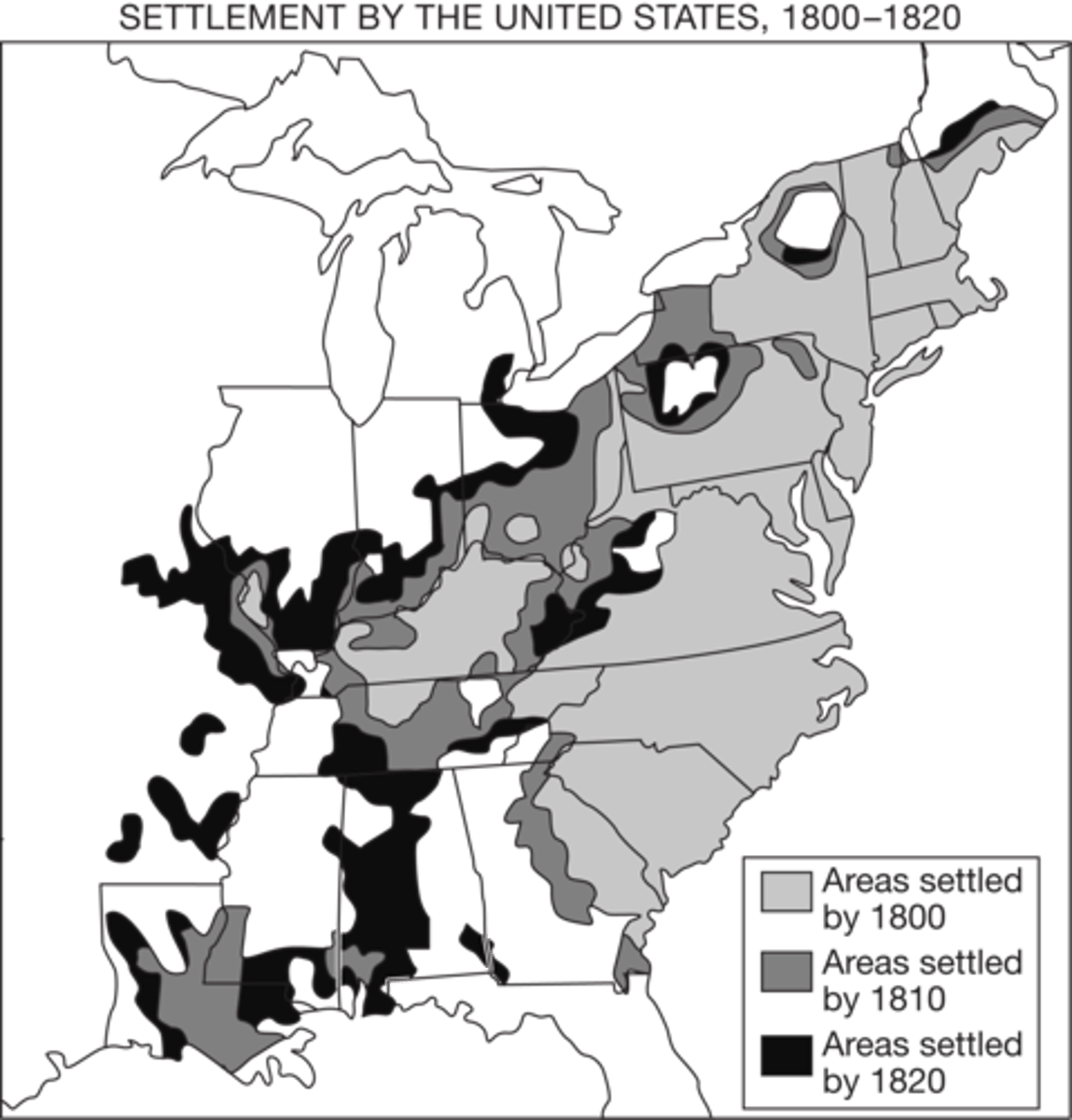
B. American Indians maintained sovereign control over those regions.
Which of the following most likely accounts for the limits of United States settlement in portions of North Carolina and Georgia depicted on the map?
A. Tobacco and sugarcane crops failed to thrive in those areas.
B. American Indians maintained sovereign control over those regions.
C. The Northwest Ordinance prohibited slavery in those regions.
D. The lands were set aside for American Indian reservations.
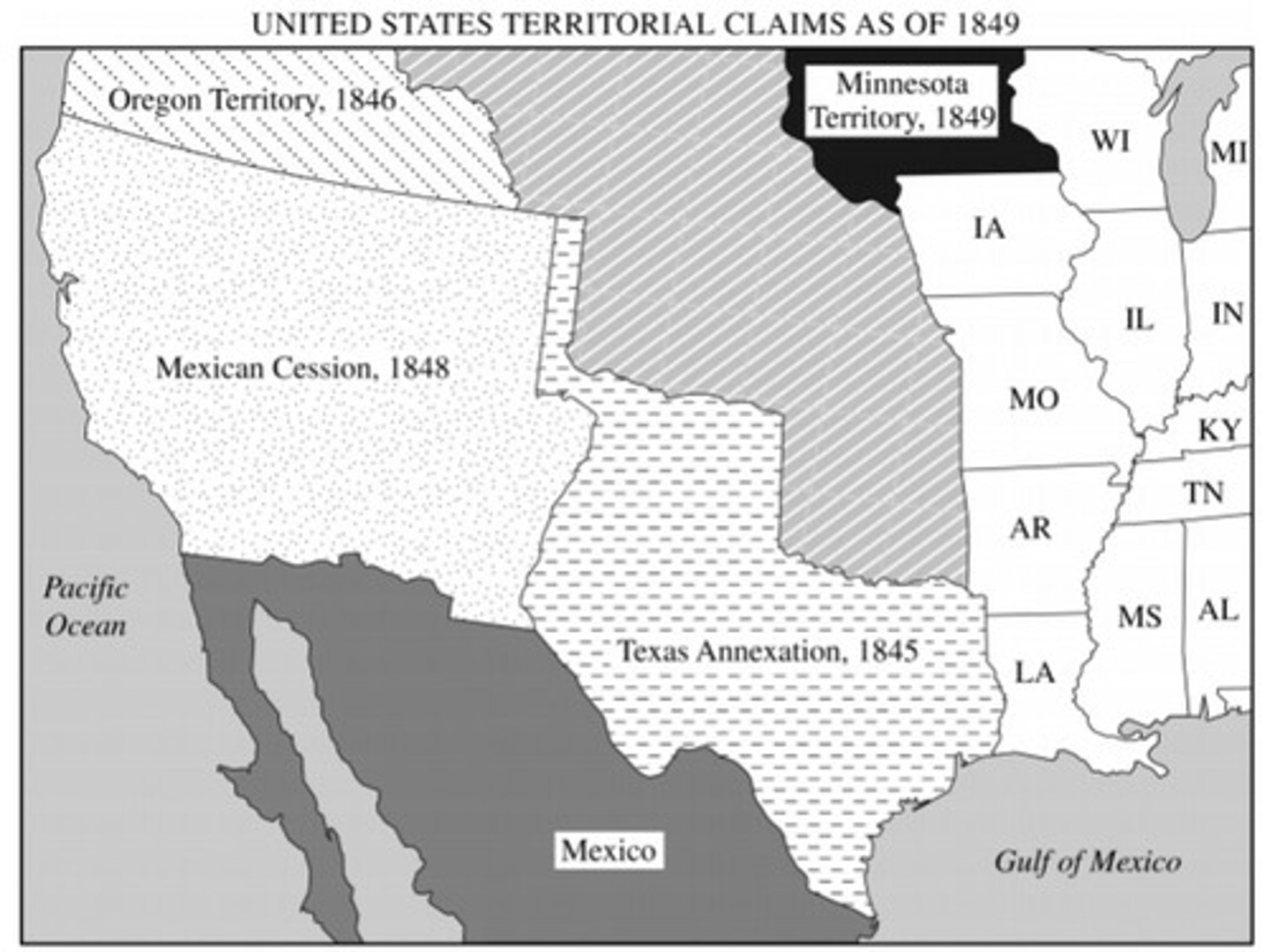
D. The Mexican-American War
The territorial changes shown in the southwestern region of the map most directly resulted from
A. treaties made with American Indian nations
B. The purchase of land from France and Spain
C. The Spanish-American War
D. The Mexican-American War
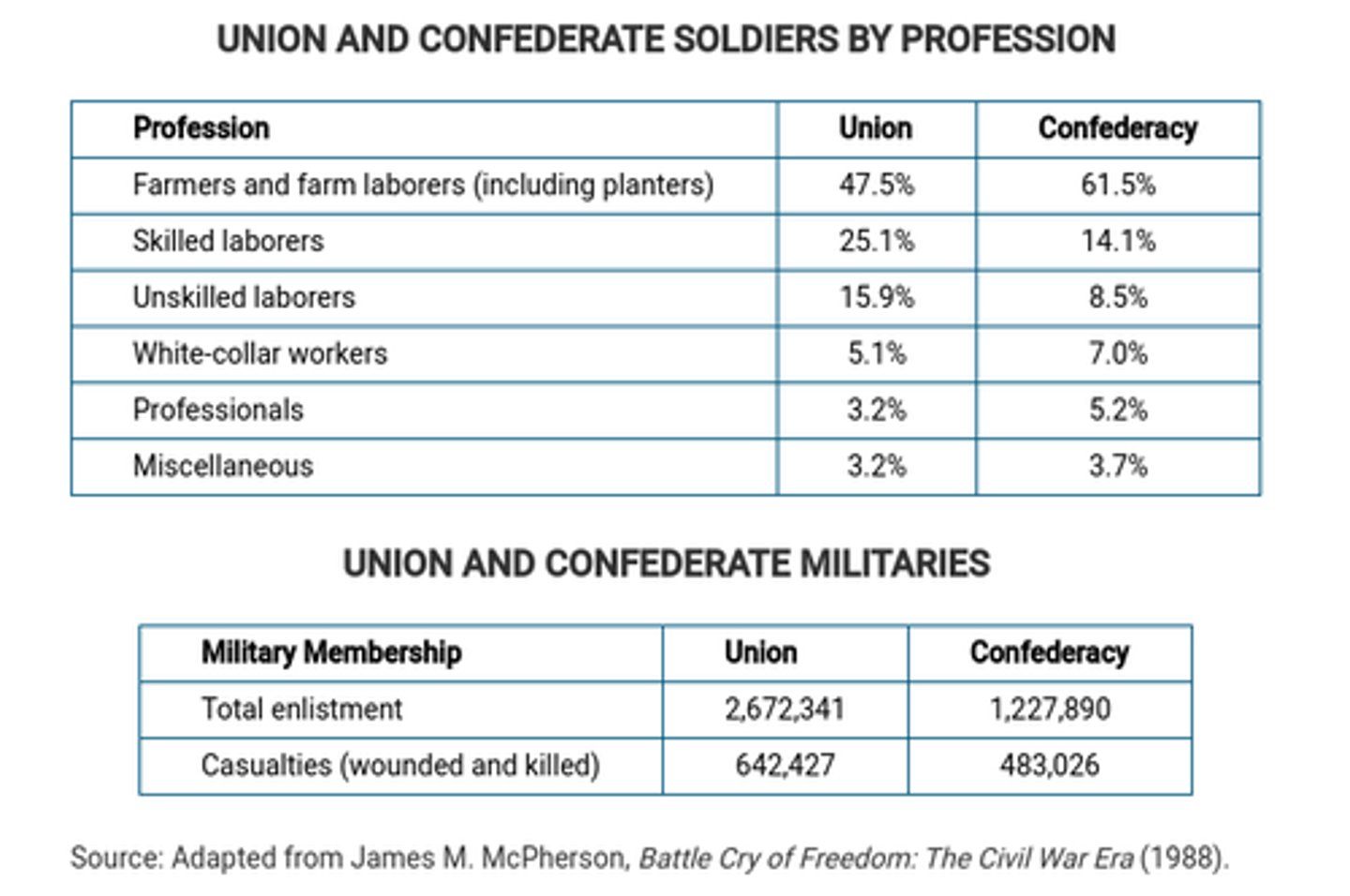
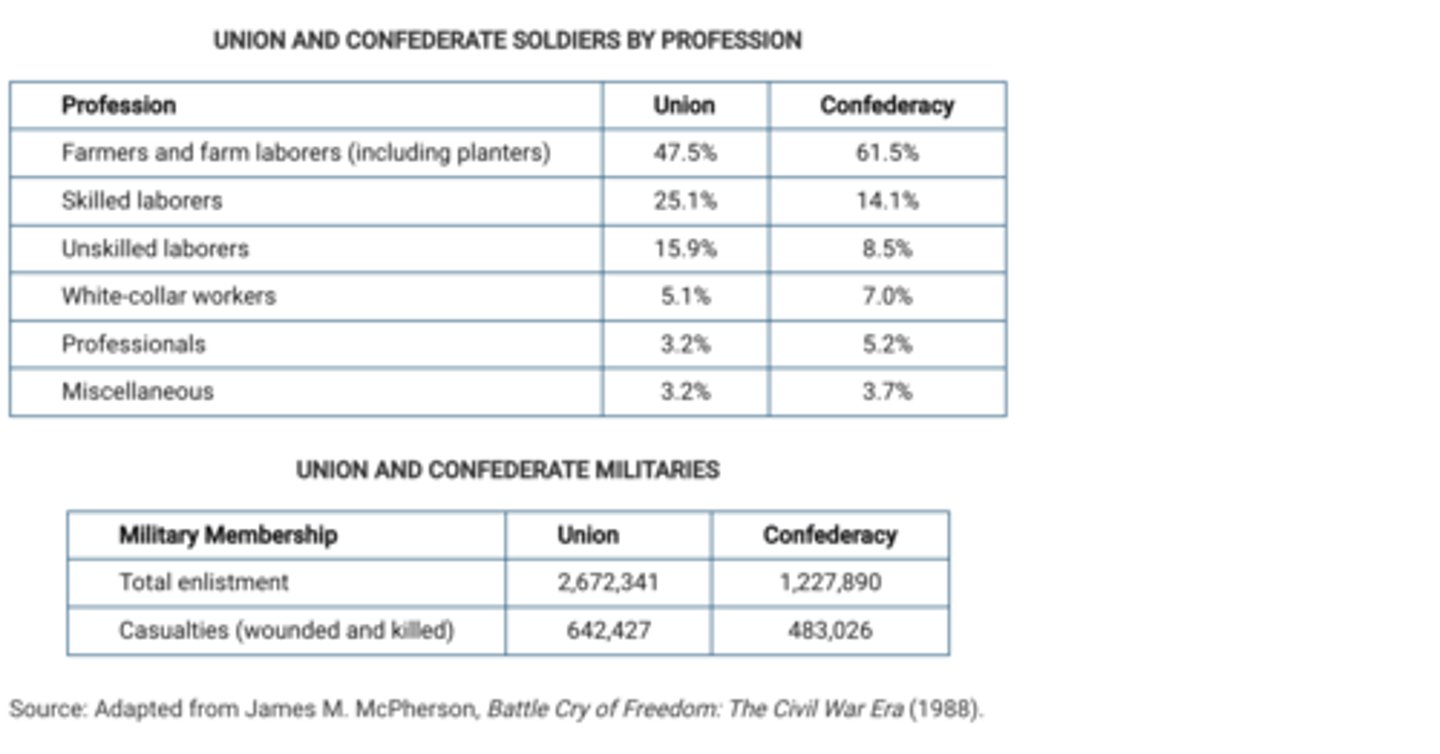
D. Confederate armies lost a greater proportion of its soldiers than did the Union
The data in the tables indicate which of the following?
A. Confederate forces suffered more casualties than did Union forces.
B. The Confederacy lost more of its skilled workers than did the Union.
C. The Union lost a greater percentage of its population than did the Confederacy.
D. Confederate armies lost a greater proportion of its soldiers than did the Union.
B. The Confederacy relied more heavily on agricultural workers to fill its armies than did the Union
The data in the first table most directly indicate which of the following about the professions of soldiers in the Civil War?
A. The Confederacy enlisted more factory workers to fill its armies than did the Union.
B. The Confederacy relied more heavily on agricultural workers to fill its armies than did the Union.
C. The majority of soldiers in both Confederate and Union forces were sharecroppers.
D>.The Confederacy enlisted more skilled workers than did the Union.
C. The Union had a larger and more diverse population of workers to enlist from than did the Confederacy
The data in the tables most likely indicate which of the following?
A. The Union had more educated leadership in its army than did the Confederacy.
B. The Confederacy more typically enlisted enslaved African Americans to fill its army.
C. The Union had a larger and more diverse population of workers to enlist from than did the Confederacy.
D. The Confederacy had more wealthy people in its armed forces than did the Union.
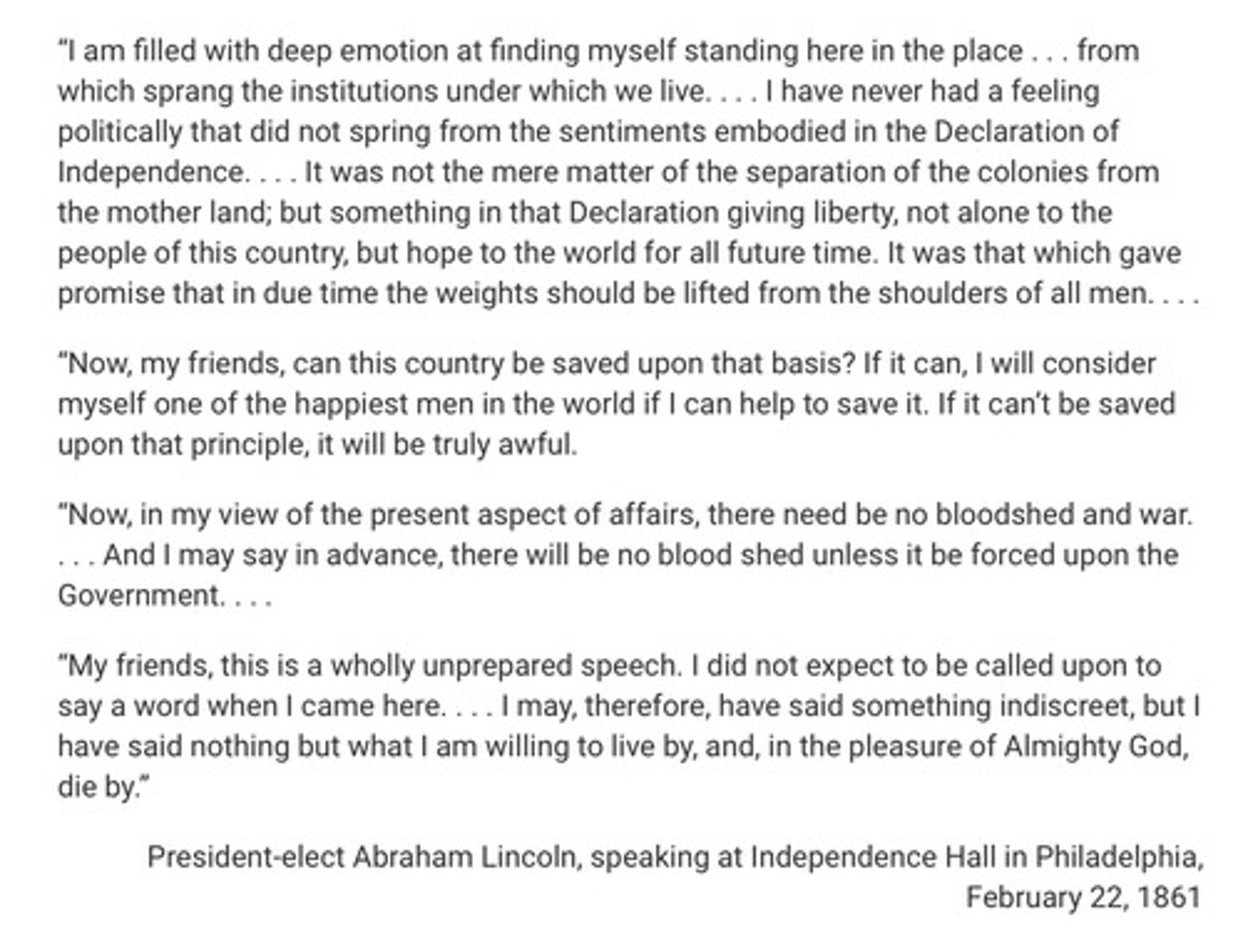
C. Lincoln sought to avoid violence over the issues that divided the country
The excerpt best serves as evidence for which of the following developments?
Responses
A. Abraham Lincoln attempted to increase the size of the army to regain Southern states.
B. Lincoln rejected allowing any additional states to join the United States.
C. Lincoln sought to avoid violence over the issues that divided the country.
D. Lincoln intended to enforce the Kansas-Nebraska Act.
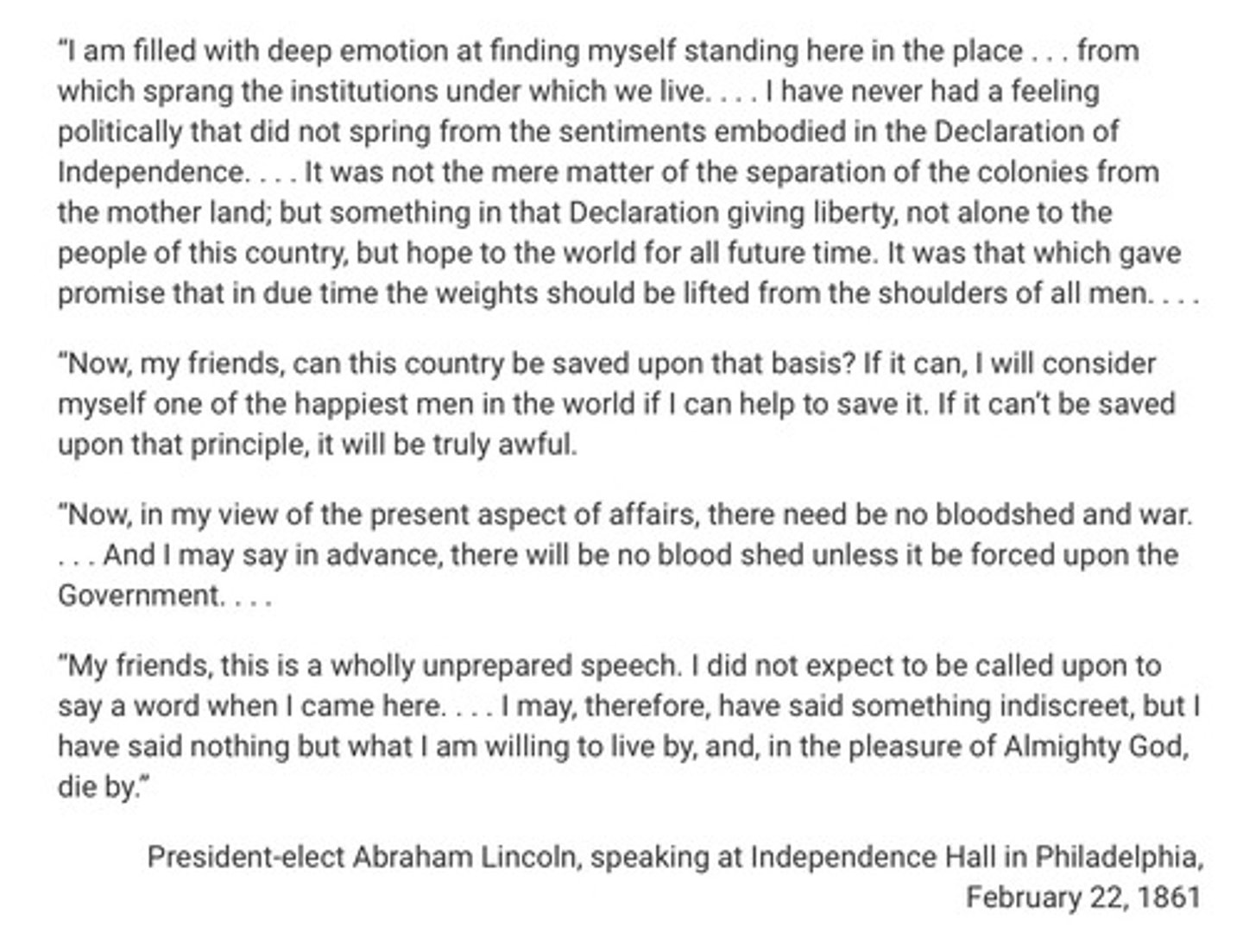
D. States in the South had begun seceding after the presidential election
The excerpt most likely reflects which of the following historical situations?
A. Abraham Lincoln won all of the electoral college votes in the presidential election.
B. Formerly enslaved people were given the right to vote in presidential elections.
C. Southern states refused to participate in the presidential election.
D. States in the South had begun seceding after the presidential election
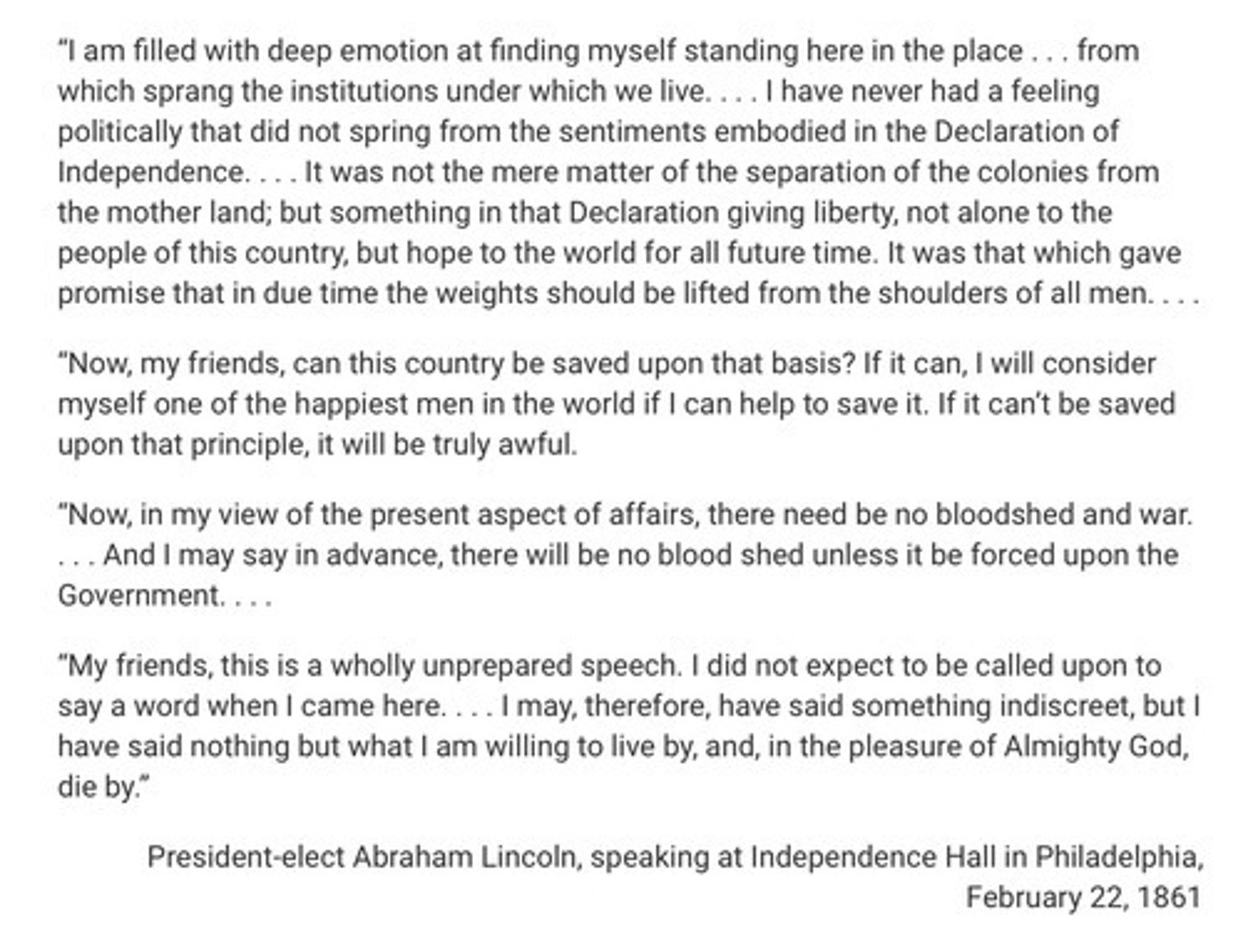
A. Southern politicians would not abandon slavery, and they believed Lincoln was a threat to that system
Evidence in the excerpt best corroborates which of the following?
A. Southern politicians would not abandon slavery, and they believed Lincoln was a threat to that system.
B. Sectional divisions were not as deep as many thought, and there was agreement about gradual abolition.
C. Political leadership in previous administrations had successfully limited sectional conflict.
D. Lincoln viewed foreign influences as serious threats to the stability of the United States.
B. His advocacy for African American equal rights
Douglass' rhetoric in the excerpt was most likely interpreted as promoting which of the following?
A. The need for more soldiers in the Union Army
B. His advocacy for African American equal rights
C. His support for Abraham Lincoln's reelection in 1864
D. Criticism of the limits of the Emancipation Proclamation
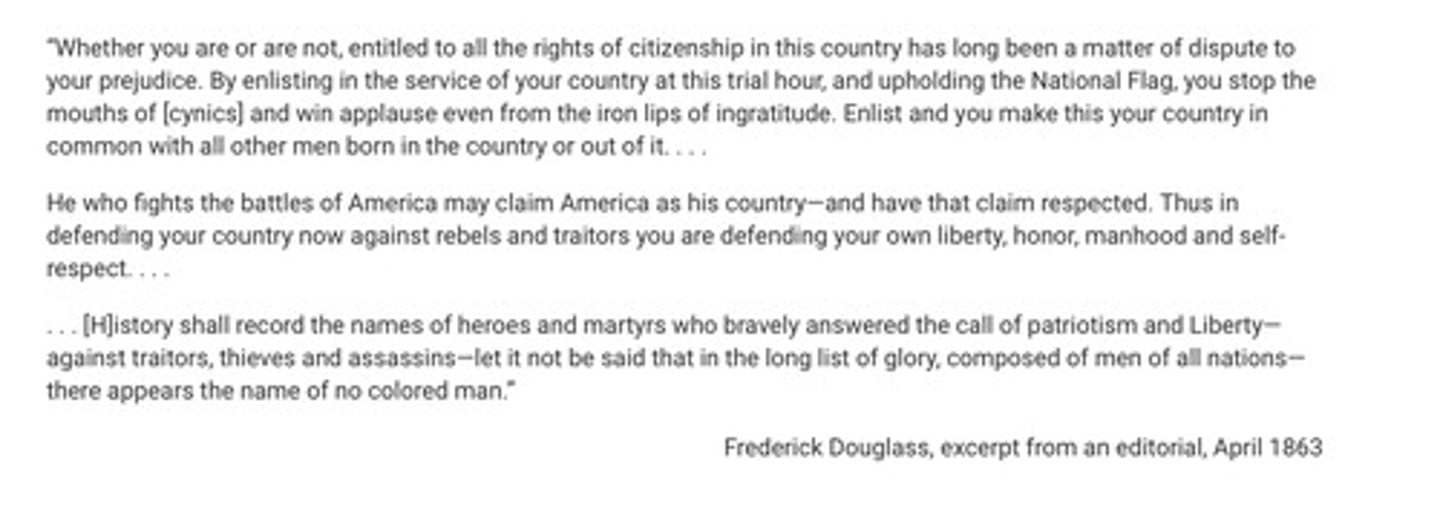
D. The war was no longer just about preserving the union of the states
Ideas expressed by Douglass in the excerpt were most likely interpreted as supporting which of the following arguments?
A. The war would make African Americans feel free.
B. The war was the product of years of injustice against African Americans.
C. The war would take enormous sacrifice of military combat to achieve victory.
D. The war was no longer just about preserving the union of the states.
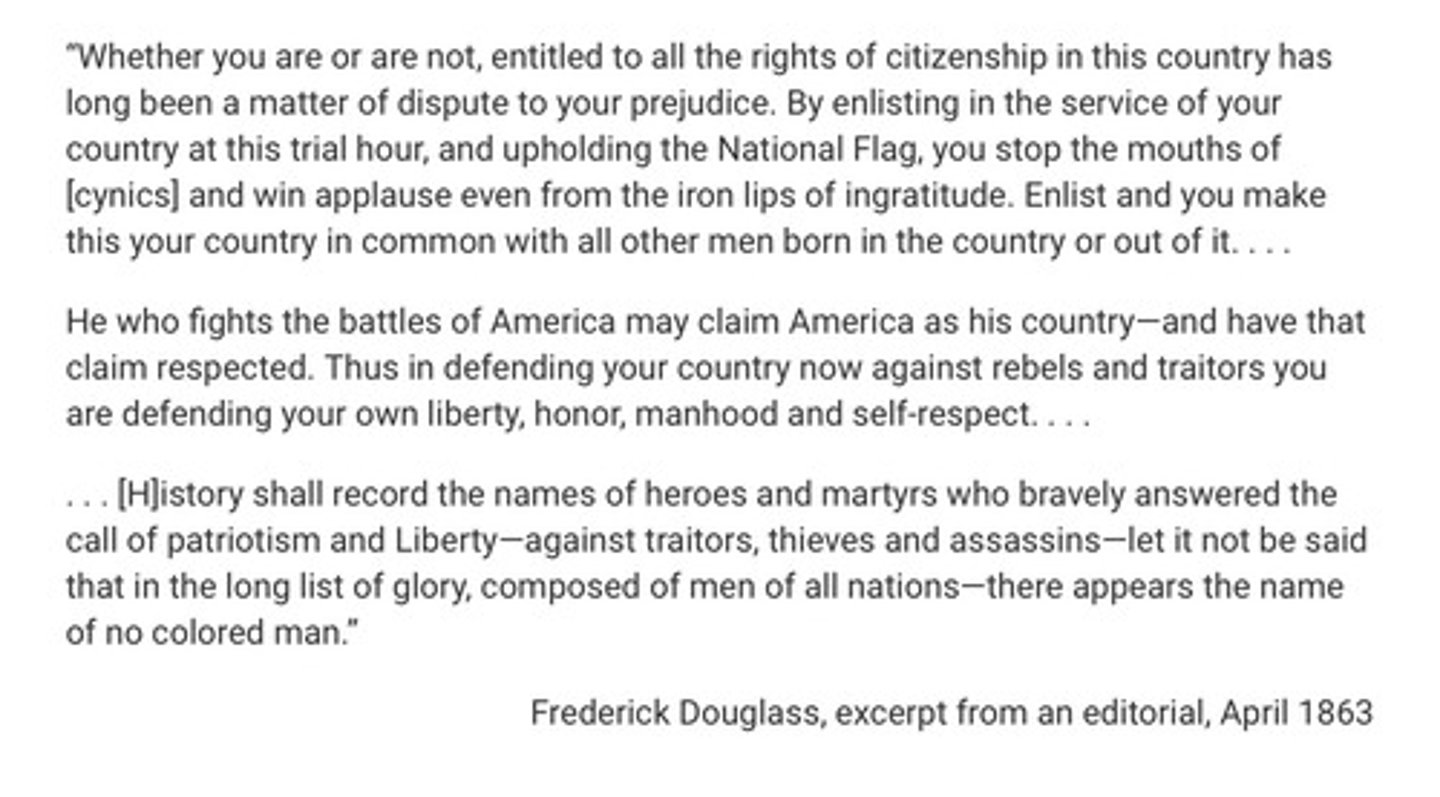
C. Shared sacrifice would help advance African American men's claims to United States citizenship.
Which of the following best explains Douglass' point of view in the excerpt?
A. African American enlistment would enable the Union Army to prevail in the Civil War.
B. Once African American men enlisted, Northern White soldiers would accept them as equals.
C. Shared sacrifice would help advance African American men's claims to United States citizenship.
D. Northern politicians overwhelmingly favored enlistment of African Americans in the Union Army.
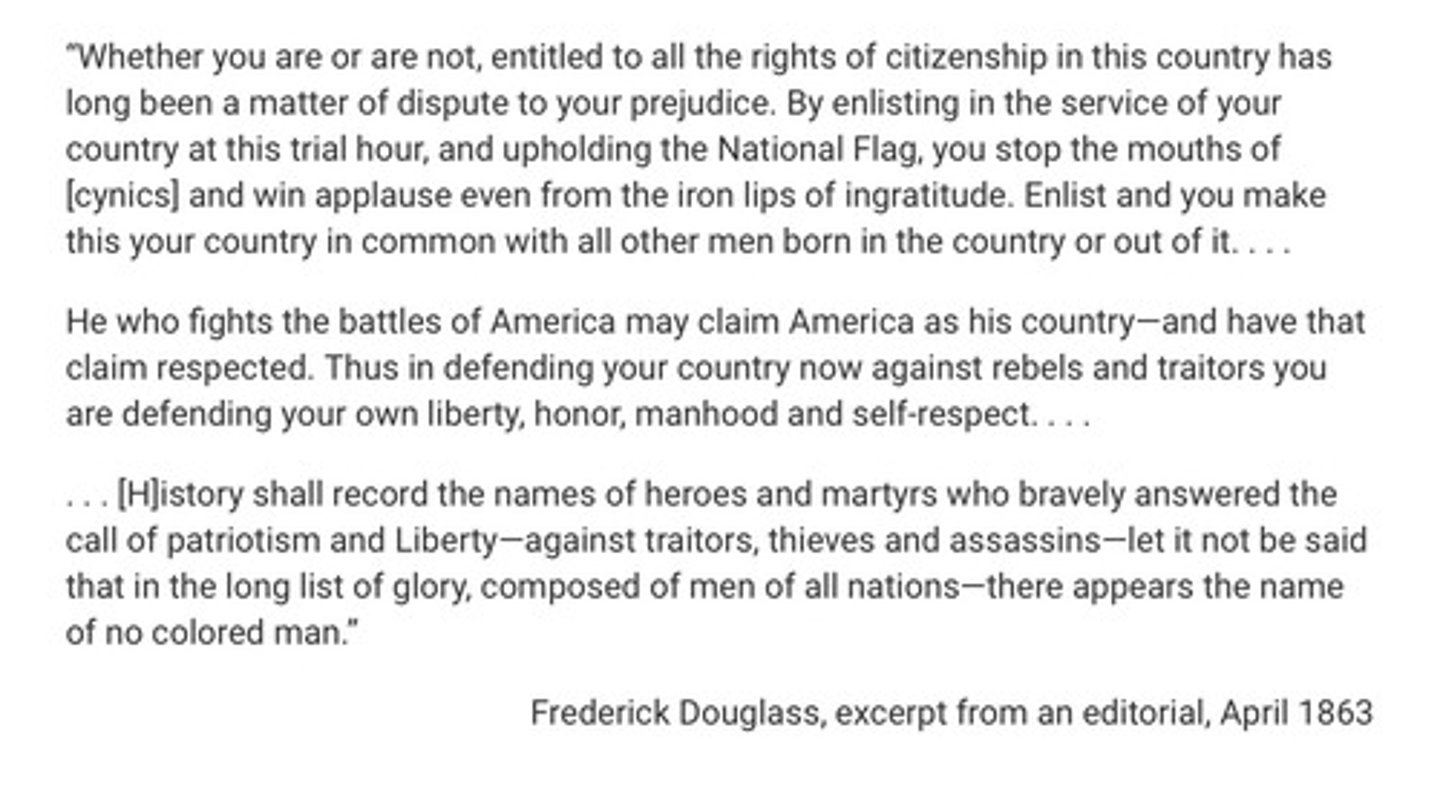
 Note
Note  Flashcards (25)