3. full coverage restorations - tooth preps
 Call Kai
 Learn
Learn Practice Test
 Spaced Repetition
 Match
Match Flashcards
 Knowt Play
1/53

There's no tags or description
Looks like no tags are added yet.
Name | Mastery | Learn | Test | Matching | Spaced | Call with Kai |
|---|
No analytics yet
Send a link to your students to track their progress
54 Terms
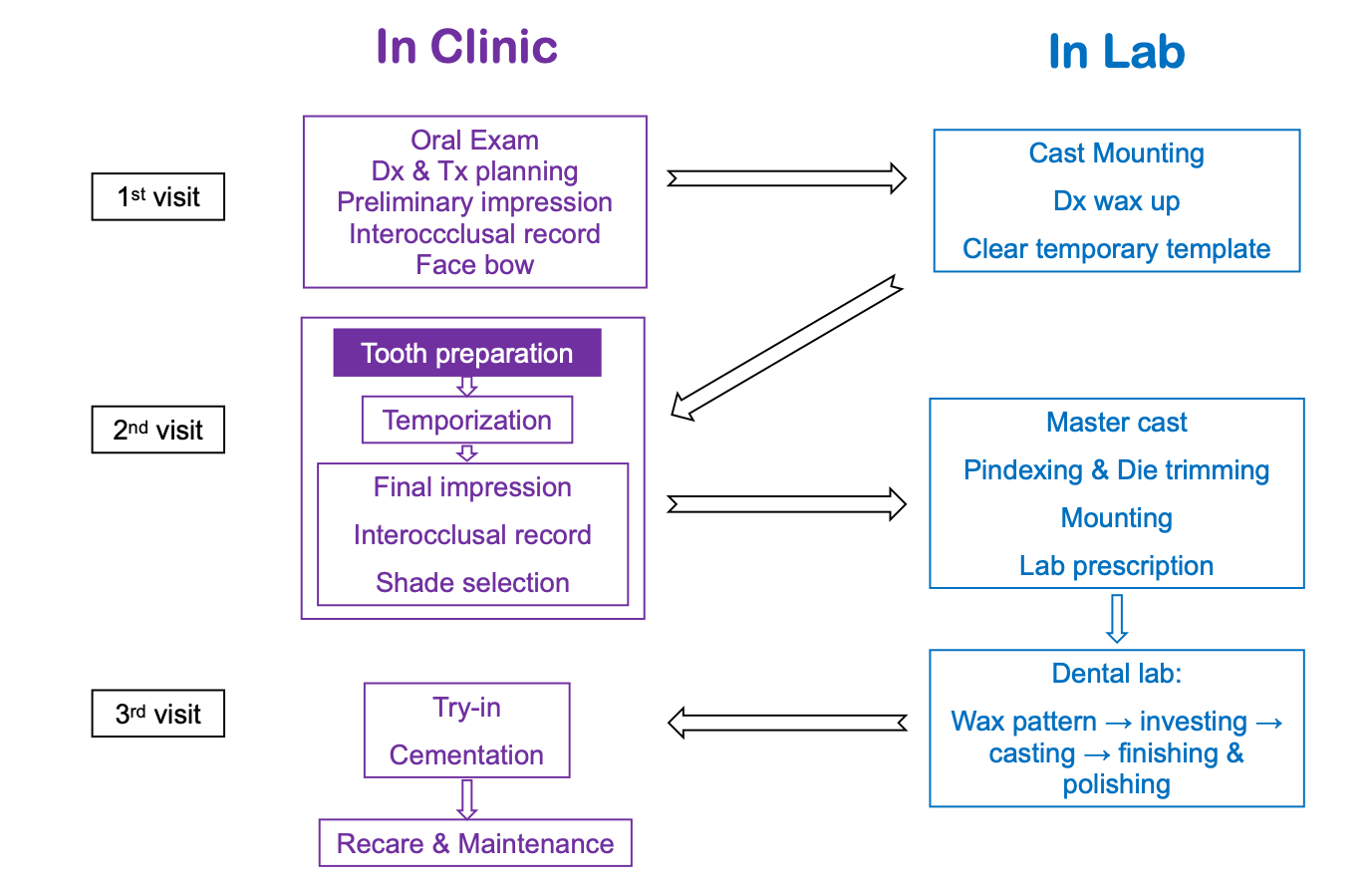
what happens in the 1st, 2nd, and 3rd visits in clinic vs in lab?
amalgam and composite restorations
direct
intracoronal and extracoronal
indirect
inlay and onlay
indirect intracoronal
gold and ceramic
indirect intracoronal onlay
full coverage and partial coverage
indirect extracoronal
full cast metal crown
metal ceramic or PFM
all ceramic
indirect extracoronal full coverage
cast metal ¾ crown
veneer
resin bonded restoration
indirect extracoronal partial coverage
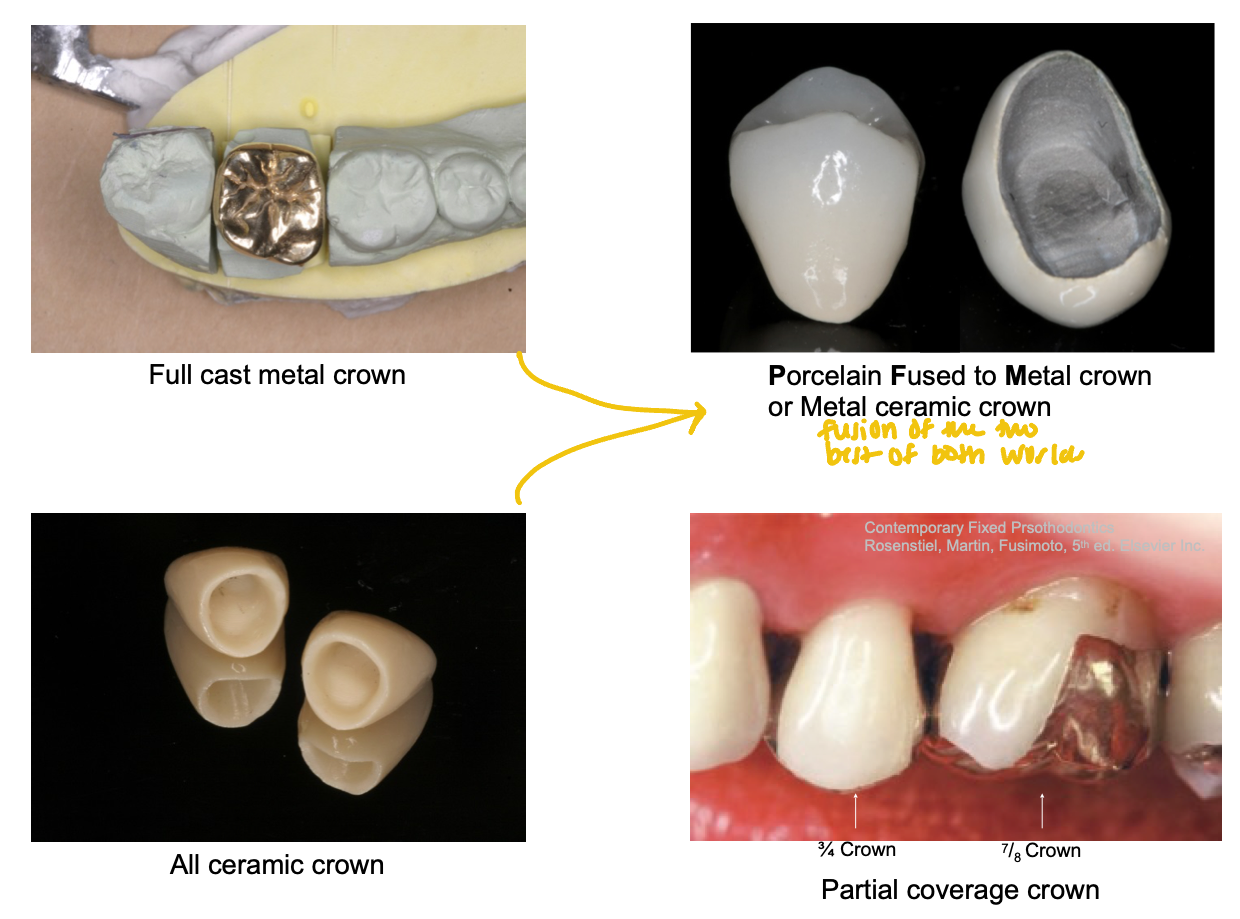
what are the four types of crowns discussed?
full cast metal
PFM
all ceramic
partial coverage (3/4, 7/8)
why do we prep teeth for fixed prosth?
we reduce to make space to replace what is missing

advantages of which full coverage restoration?
full cast metal crown

advantages of which full coverage restoration?
PFM crown
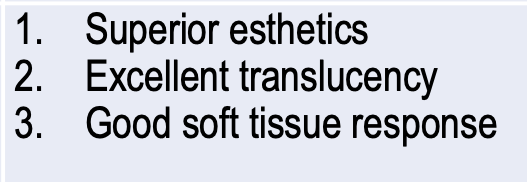
advantages of which full coverage restoration?
all ceramic crown
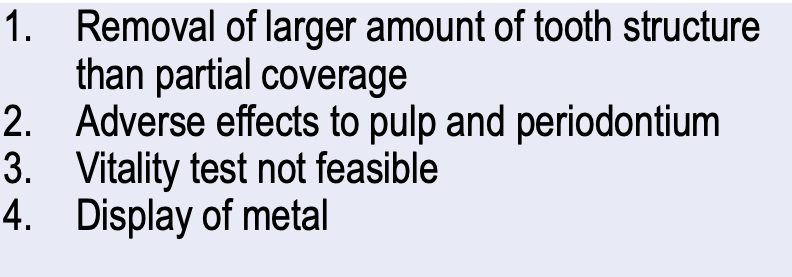
disadvantages of which full coverage restoration?
full cast metal crown
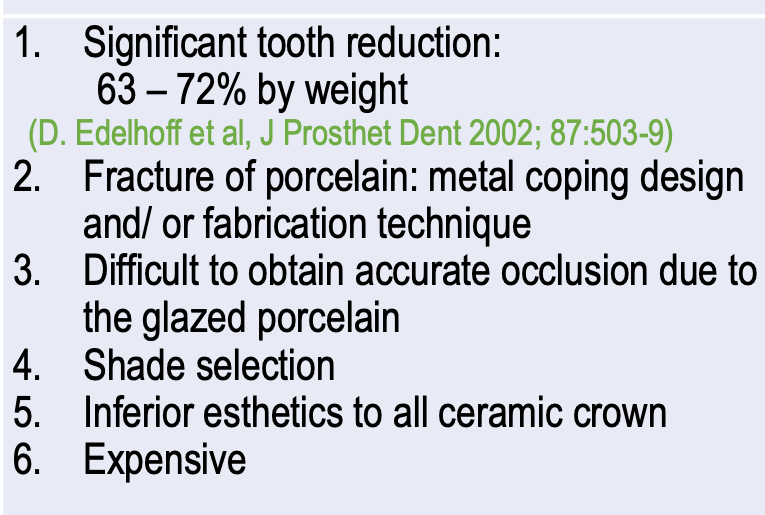
disadvantages of which full coverage restoration?
PFM
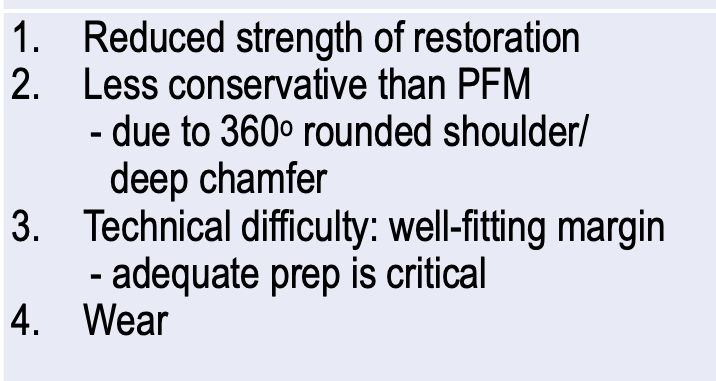
disadvantages of which full coverage restoration?
all ceramic
what are some things to keep in mind with indications of different full coverage restorations?
Conservativeness
Strength
Esthetics
Occlusion
Tooth structure
Tooth condition
Age
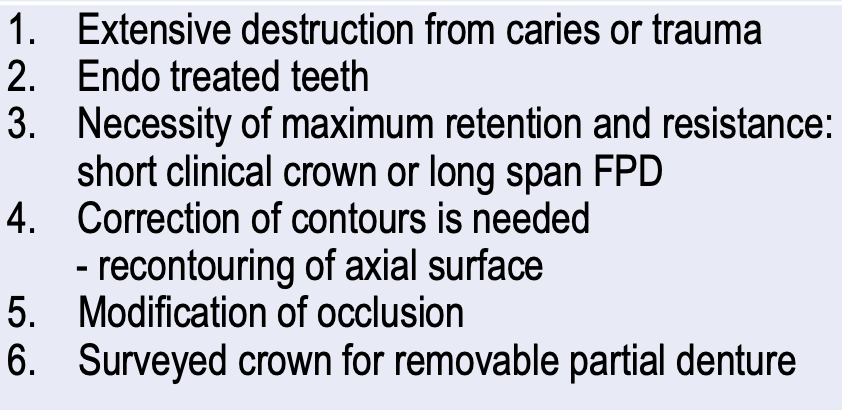
indications of which full coverage restoration?
full cast metal
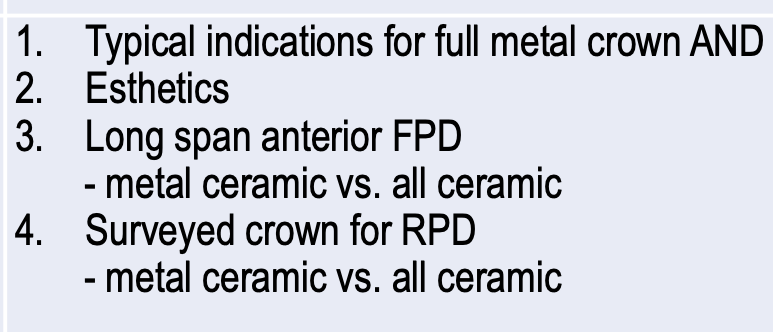
indications of which full coverage restoration?
PFM
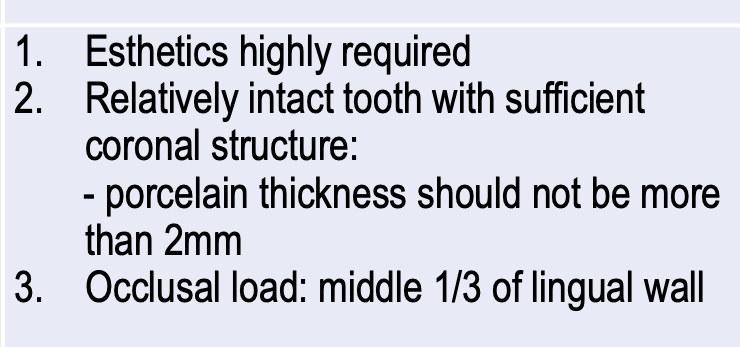
indications of which full coverage restoration?
all ceramic
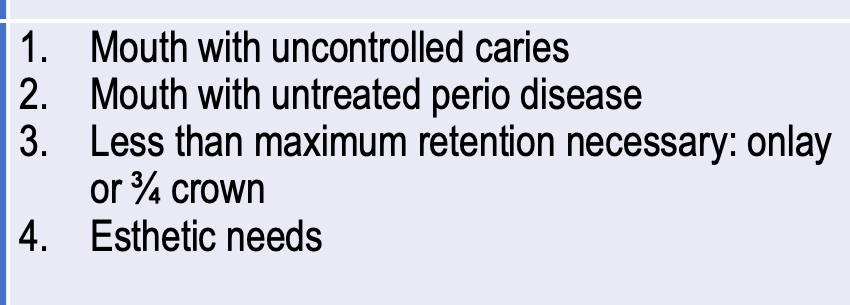
contraindications of which full coverage restoration?
full cast metal

contraindications of which full coverage restoration?
PFM

contraindications of which full coverage restoration?
all ceramic
what are the three major principles of tooth prep?
biological, mechanical, esthetic
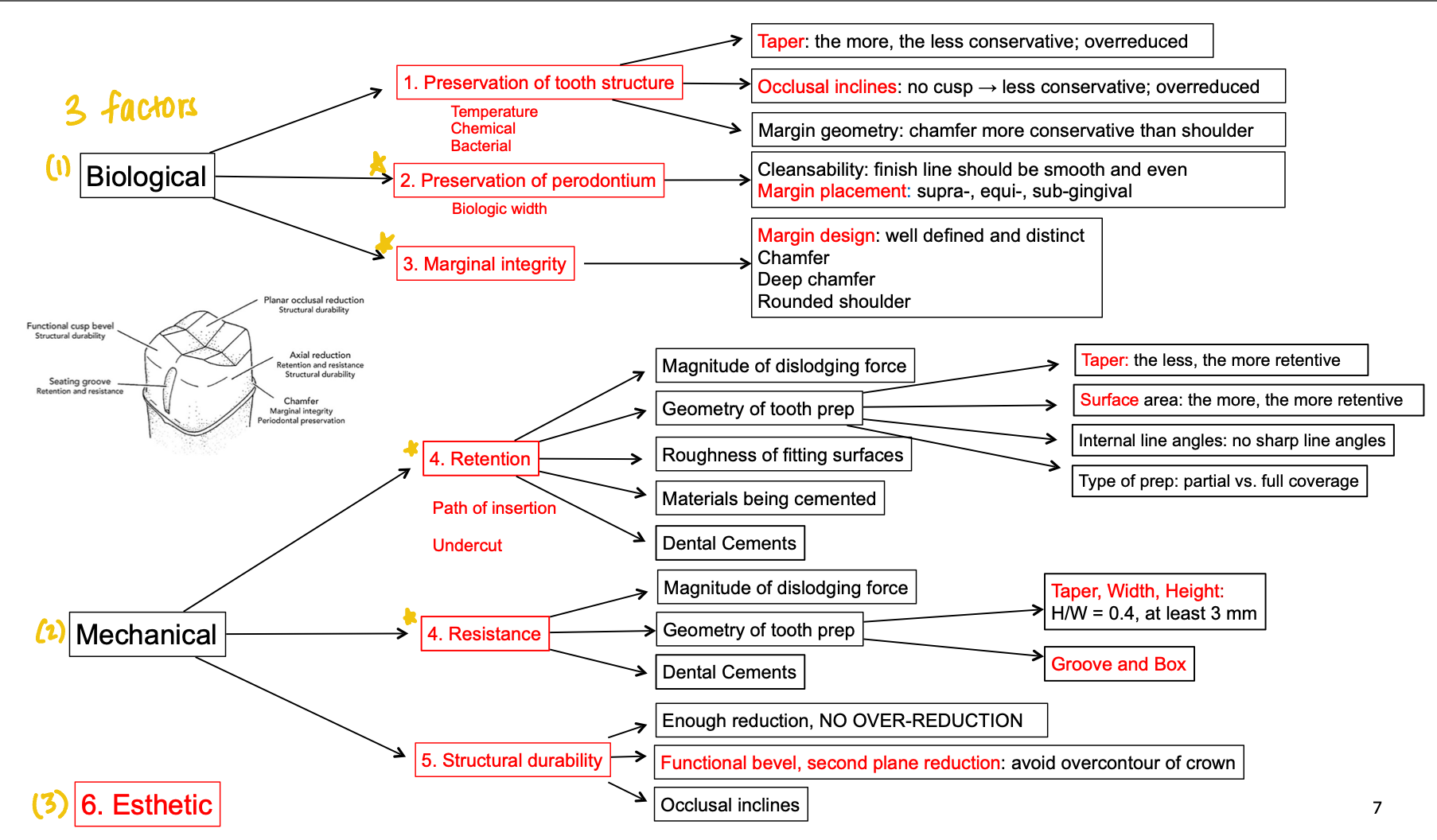
what are the three factors of the biological principles of tooth prep?
preservation of tooth structure: temp, chemical, bacterial
preservation of periodontium
marginal integrity
what are the three factors of the mechanical principles of tooth prep?
retention: path of insertion, undercut
resistance
structural durability
taper, occlusal inclines, and margin geometry which biological factor of tooth prep?
preservation of tooth structure
margin placement which biological factor of tooth prep?
preservation of periodontium
margin design which biological factor of tooth prep?
marginal integrity
geometry of tooth prep and therefore taper and surface area align with which mechanical factor of tooth prep?
retention
taper, width, height where h/w = 0.4 and at least 3mm AND groove and box align with which mechanical factor of tooth prep?
resistance
functional bevel and second plane reduction align with which mechanical factor of tooth prep?
structural durability
bio - preservation of the periodontium
what are the three options for margin placement?
Supragingival: above gingival margin
Equigingival: at gingival margin
Subgingival: 0.5 mm below
which marginal placement is indicated for caries?
subgingival
bio - marginal integrity
shape of margin is determined by (?)
bur shape
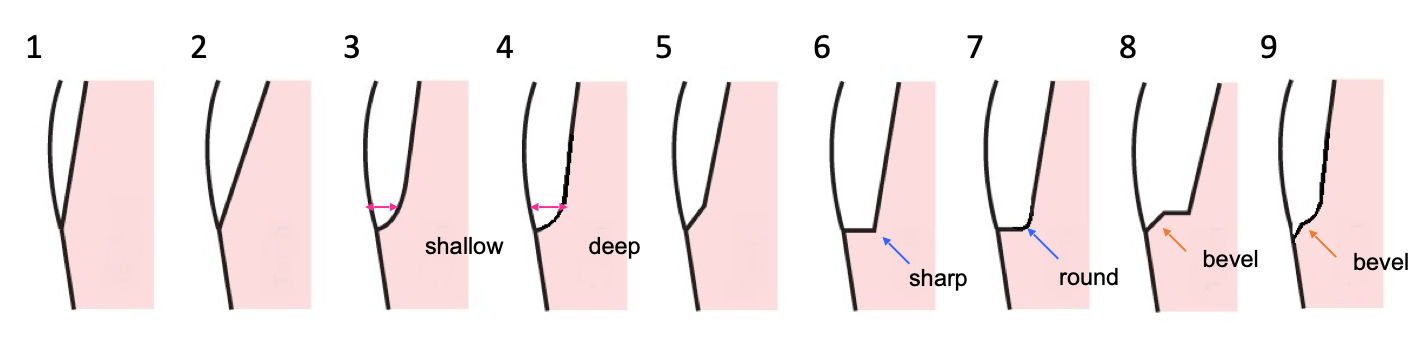
which margin designs and related bur shape?

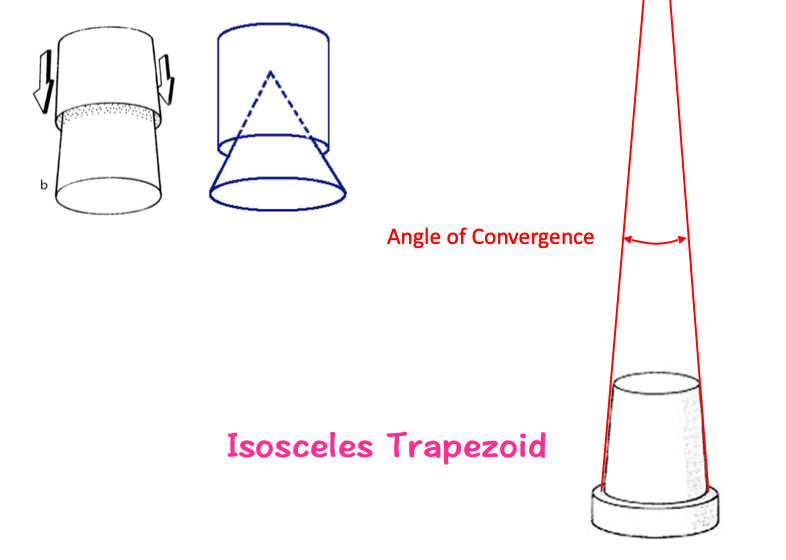
mechanical - retention and resistance
convergence of two opposing external walls of crown prep as viewed in a given plane (path of insertion), e.g. MD BL
taper

mechanical - retention and resistance
any irregularity on the wall of a prepared tooth that prevents the withdrawal or seating of a crown or wax pattern
when the divergence exists between the opposing axial wall or wall segment
undercut
what is the ideal taper and what is clinically acceptable?
ideal: 6-10°
clin acceptable: 10-20°
round end of tapered diamond bur us 2-3° so 4-6 total
increasing taper (increases/decreases) retention and resistance
decreases
taper on which third of crown is most important?
cervical
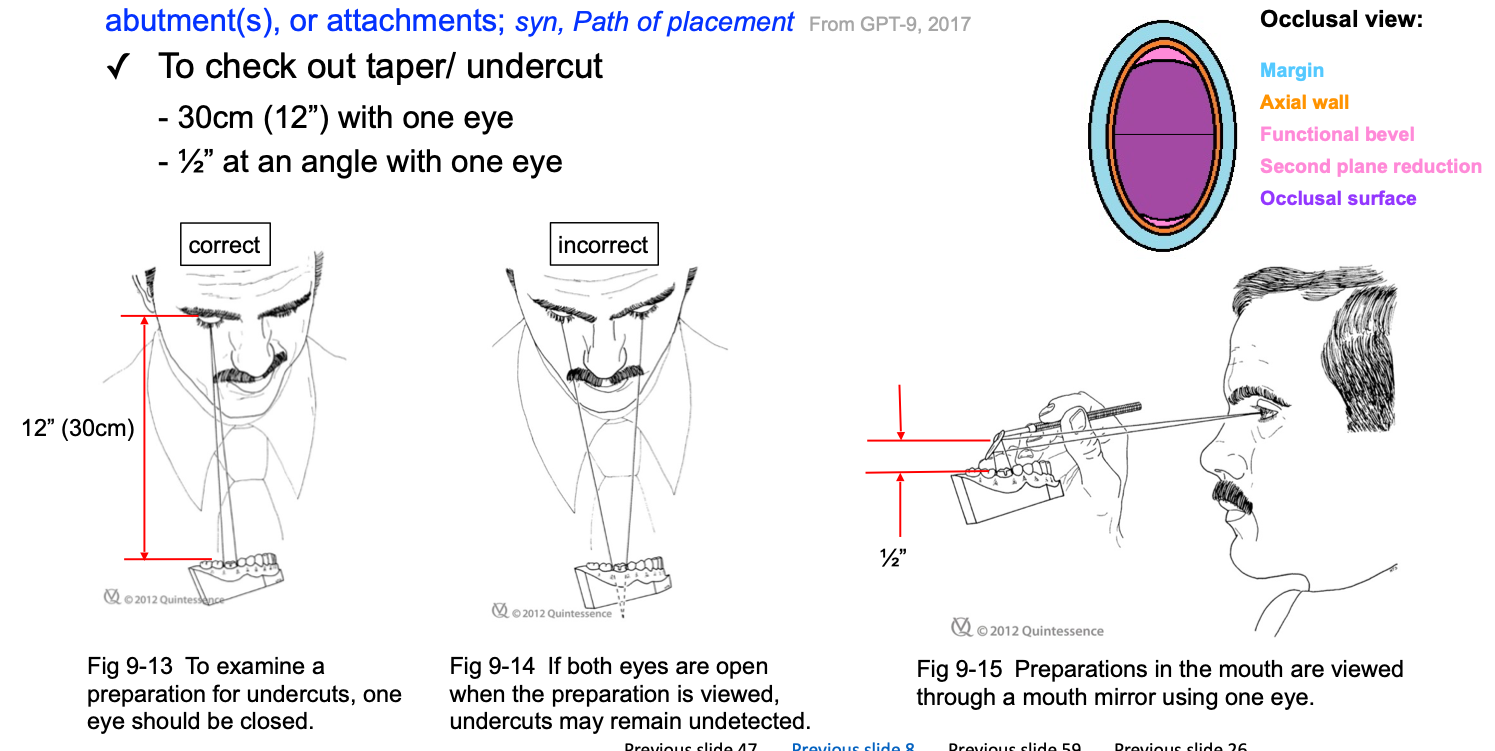
imaginary line along which the restoration is placed onto or removed from the prep
the specific direction in which a prosthesis is placed on the residual alveolar ridge, abutment teeth, dental implant abutment(s), or attachments
path of insertion
describe how to check taper/undercut
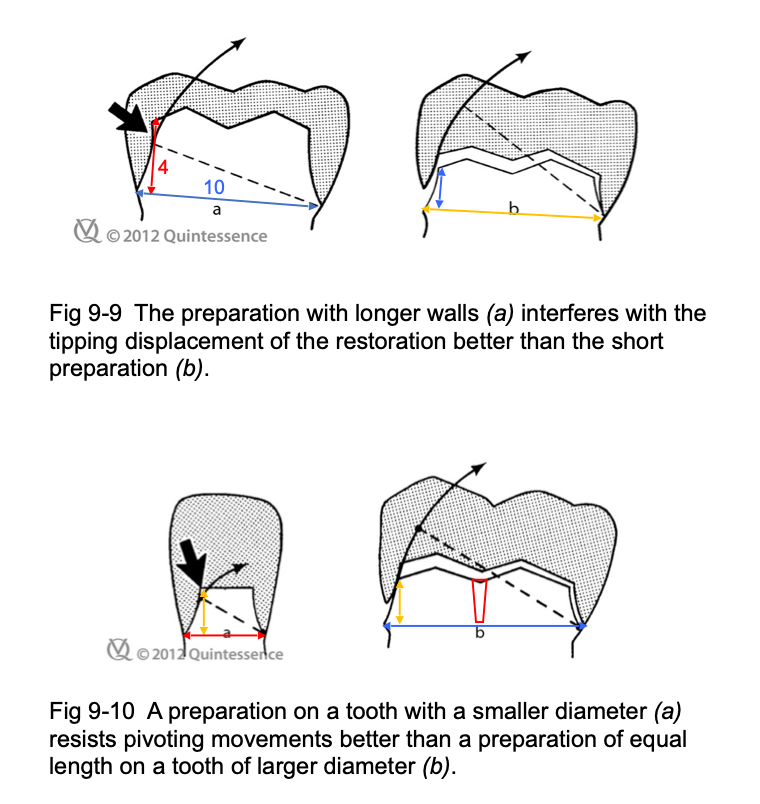
what is the height : width ratio for geometry of tooth prep? (mechanical - resistance)
4:10 +
for lingual of anterior teeth and premolar axial wall height should be
3mm at taper <10°
for molars axial wall height should be
3.5-4mm
geometry of tooth prep

geometry of tooth prep
what is the most acceptable but not the only procedure flow for tooth prep?
Occlusal reduction
Buccal and lingual axial reduction
Proximal axial reduction
Finishing
Evaluation
start reducing slowly!
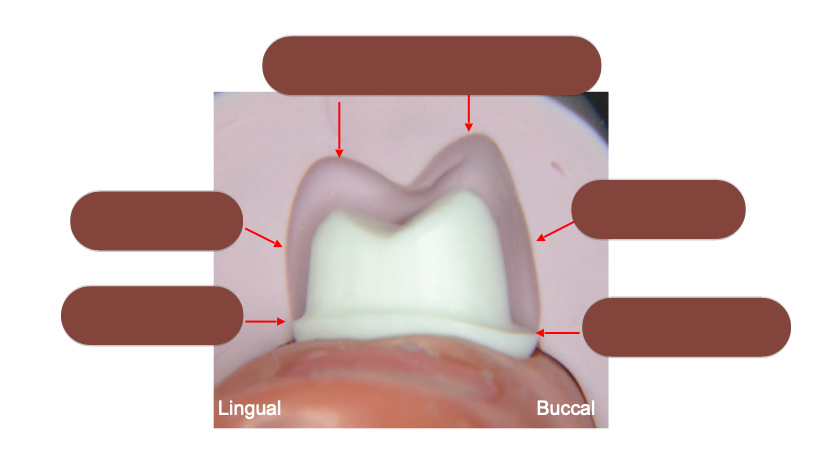
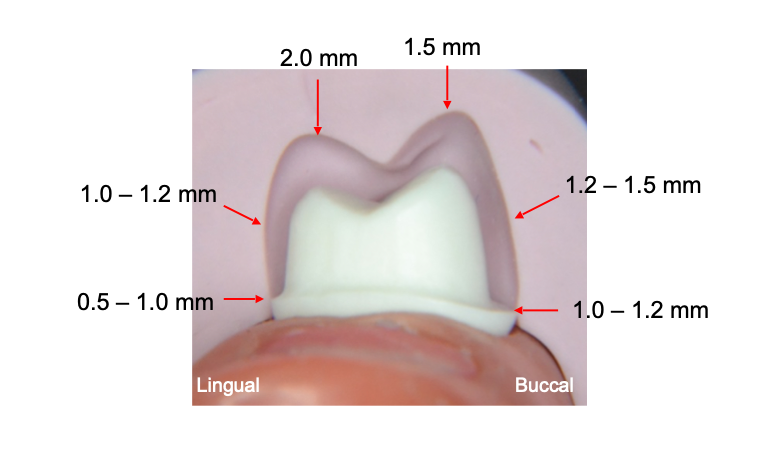
armamentarium for tooth prep

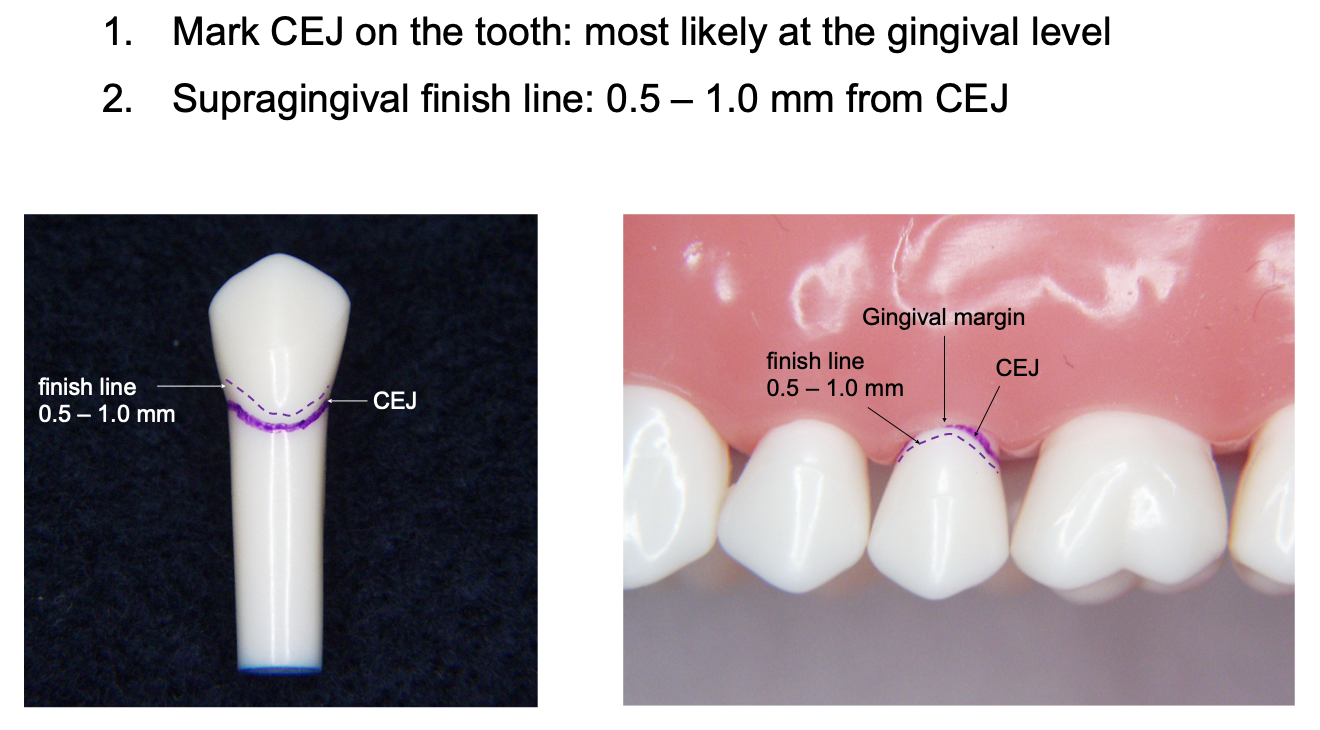
for our tooth prep where are we marking CEJ and where is the finish line?
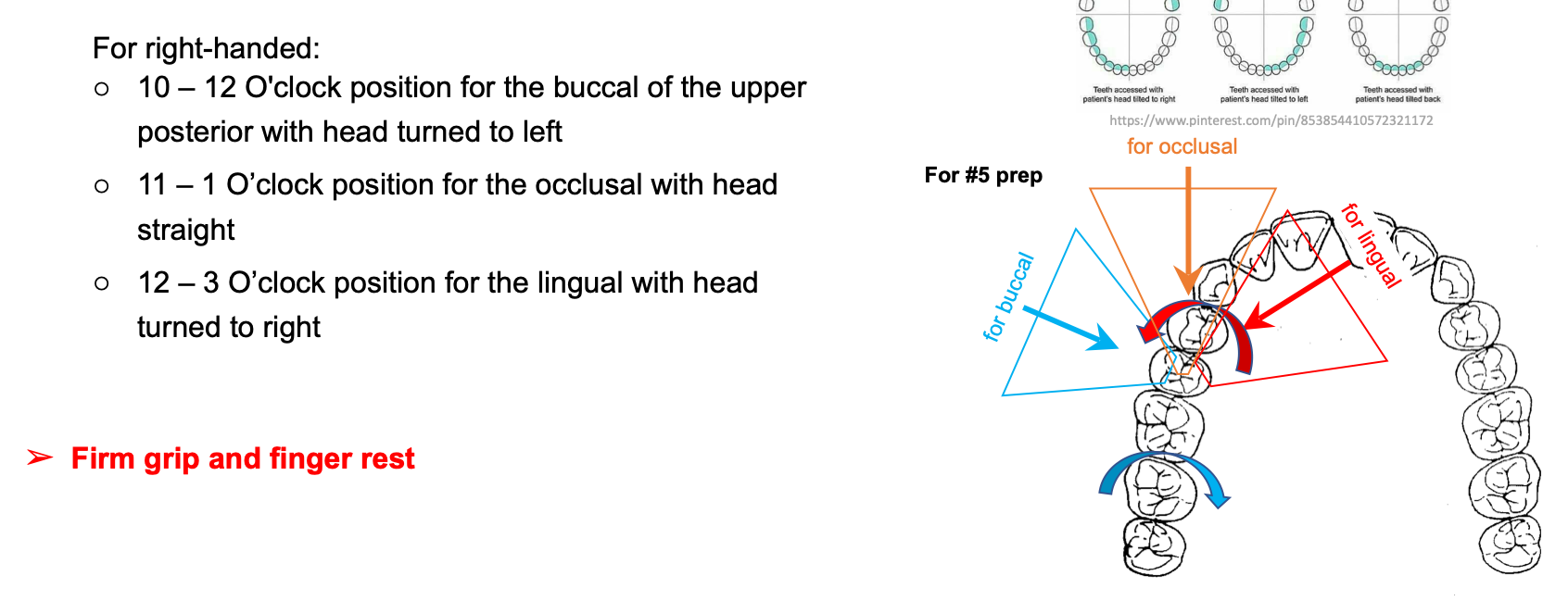
for our tooth prep where are we positioned?
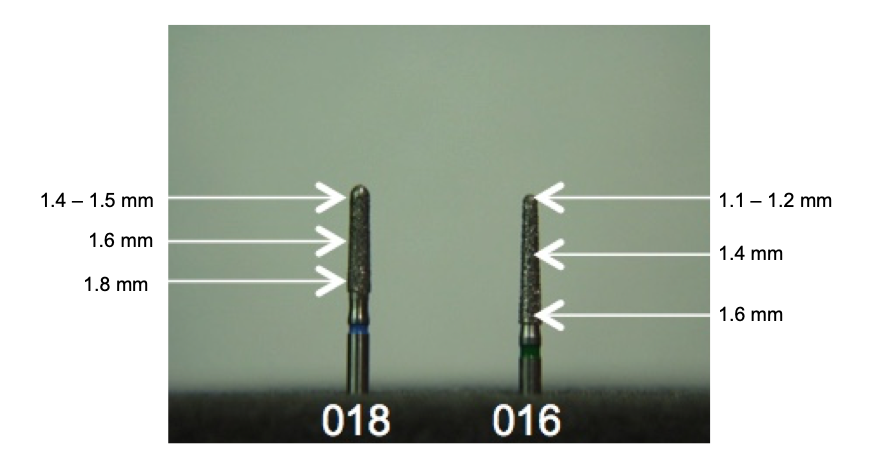
diameters of our burs