DMFE II Midterm
 Studied by 3 people
 Call Kai
 Learn
Learn Practice Test
 Spaced Repetition
 Match
Match Flashcards
 Knowt Play
1/133

There's no tags or description
Looks like no tags are added yet.
Name | Mastery | Learn | Test | Matching | Spaced | Call with Kai |
|---|
No analytics yet
Send a link to your students to track their progress
134 Terms
occlusion
the static relationship between the incising or masticating surfaces of the max. and mand. teeth
articulation
- static and dynamic contact relationship between occlusal surfaces of teeth during function
- "dynamic occlusion"
goal of occlusion
achieve and maintain a harmonious relationship in rest and function b/w dentition, tmj, muscles of mastication and muscles of expression
does ideal occlusion exist? yes/no
no
centric relation (cr)
- maxillomandibular relationship
- independent of tooth contact
- condyles articulate in the anterior-superior position against the posterior slope of the articular eminences
- in this position, the mandible is restricted to a purely rotary movement
- clinically useful and repeatable reference position
centric occlusion (co)
the occlusion of opposing teeth when the mandible is in centric relation
- may or may not coincide with MIP
maximum intercuspation position (mip)
- complete intercuspation of opposing teeth independent of condylar position
- sometimes referred to as "best fit"
- when teeth are in co, each tooth of one arch is in occlusion with two others in opposing arch (except for mand. central incisors and max. third molars
functional cusps
- short and blunt
- lingual cusps of max. posterior teeth
- buccal cusps of mand. posterior
- maintains vertical dimension and mip contacts
non-functional cusps
- tall and sharp
- buccal cusps of max. posterior teeth
- lingual cusps of mand. posterior teeth
- does not bear direct centric occlusal forces
- shears food & deflects tongue (mand. lingual cusps) and the cheek (max. buccal cusps) away from occlusal surfaces
- prevents biting of the tongue
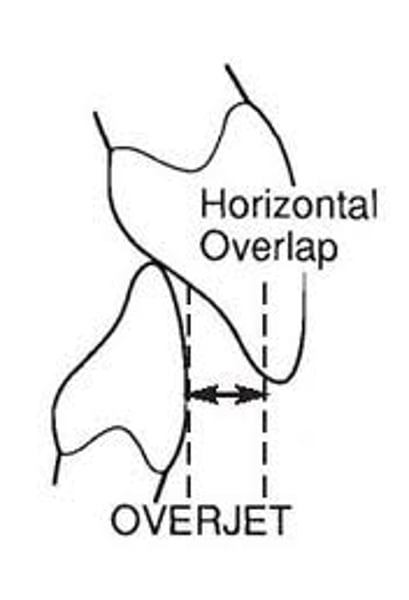
overjet
- horizontal overlap
- projection of teeth beyond their antagonists in the horizontal plane
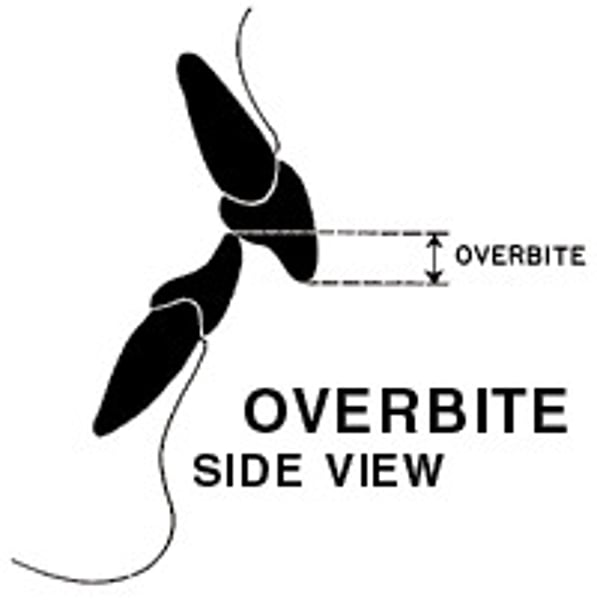
overbite
- vertical overlap
- the distance teeth lap over their antagonists as measured vertically
- vertical relationship of incisal edges of max. incisors to mand. incisors when teeth are in mip
articulator
- mechanical instrument that represents the tmj and jaws
- max. and mand. casts may be attached to simulate some or all mand. movements
- 4 classes of articulators
mandibular movement can occur on which planes?
1) frontal (front from back)
2) sagittal (right from left)
3) horizontal (top from bottom)
transverse horizontal axis
an imaginary line around which the mandible may rotate within the sagittal plane
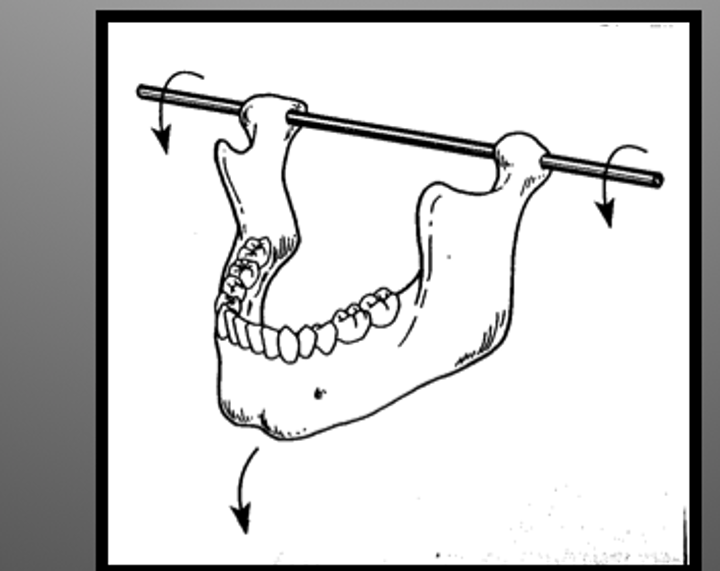
when the mandible moves into left lateral excursion...
left side
- rotating condyle
- laterotrusive side
- WORKING SIDE
right side
- orbiting condyle
- mediotrusive side
- NON-WORKING SIDE
- balancing side
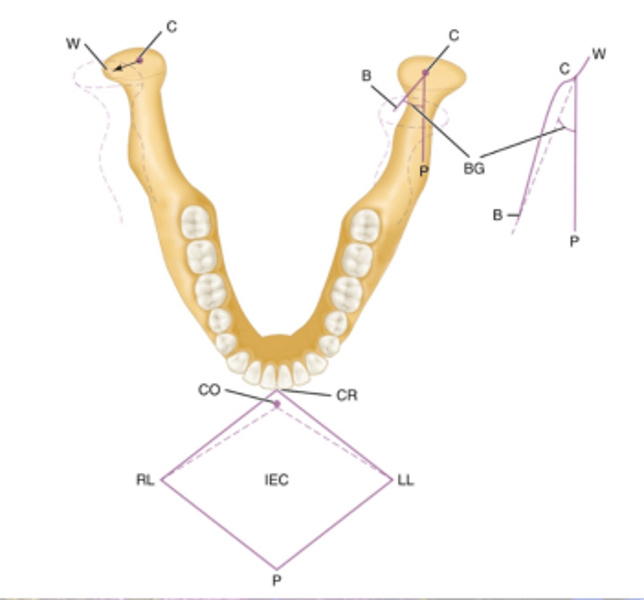
bennett angle (non-working condyle)
- angle formed between the sagittal plane and the average path of the advancing nonworking-side condyle as viewed in horizontal plane during lateral mandibular movements (BG)
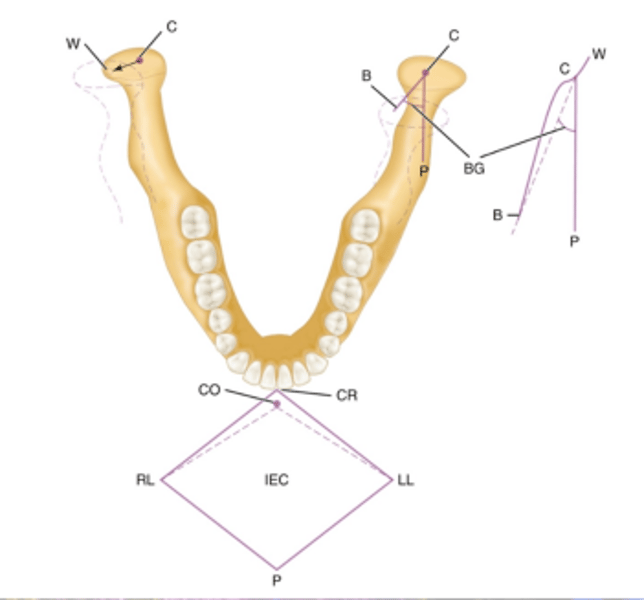
bennett movement (working condyle)
- aka latertrusion
- condylar movement on the working side in the horizontal plane (C-->W)
anterior determinants of occlusion
- anterior guidance
- esthetic, function, phonetics
posterior determinants of occlusion
- R,L condyles
condylar inclination and anterior guidance
- shallow path requires a shorter cusp in presence of min. anterior guidance
- posterior cusps can be lengthened IF anterior guidance is increased
articulator uses
- diagnosis to dental occlusal conditions to PLAN procedures
- aid in fabrication of dental prostheses
- allow better control of recreating occlusal surface
- permit assessments
- communication in lab for occlusal analysis or creation of indirect restorations/pros
- correct or modify completed restorations
class i articulator
a simple holding instrument capable of accepting a single static registration
- vertical motion is possible
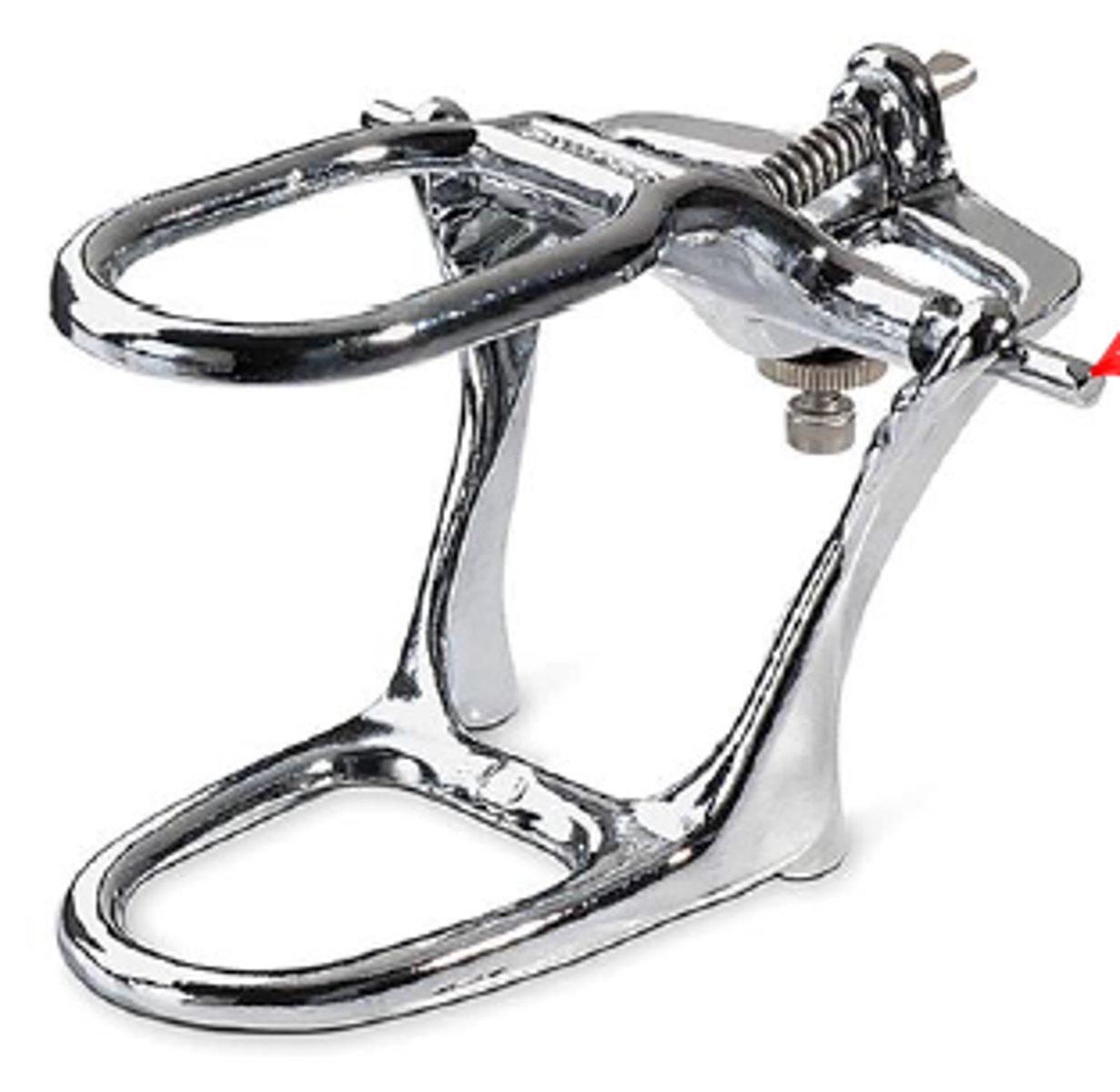
class ii articulator
an instrument that permits horizontal as well as vertical motion but does not orient the motion to the temporomandibular joints
- no correlation to transverse hinge axis
- indications: single unit crown, stable mip, ovd
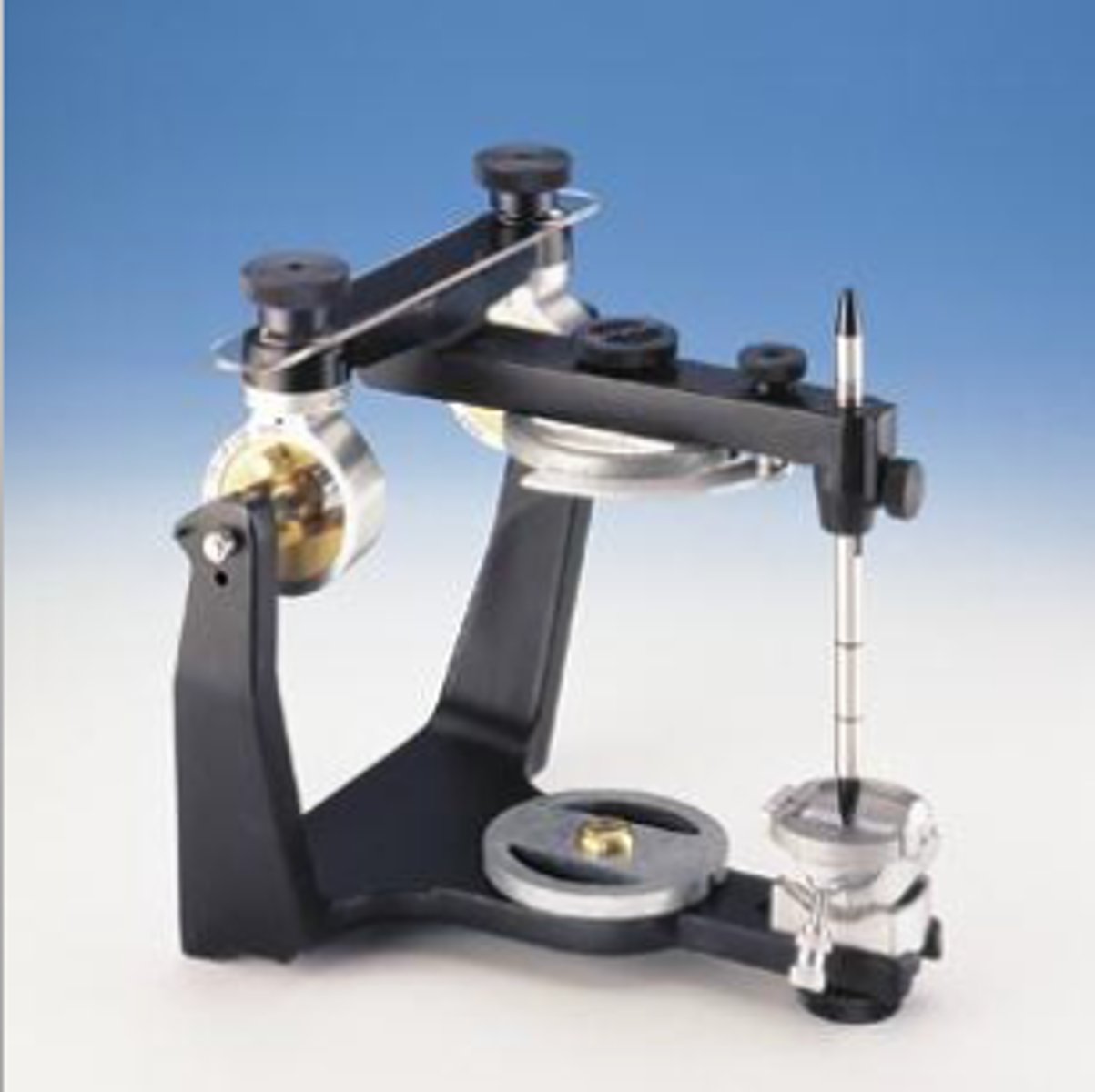
class iii articulator
an instrument that simulates condylar pathways by using averages or mechanical equivalents for all or part of the motion
- allows for orientation of the casts relative to the joints ad may be arcon or non-arcon instruments
- can be non-adjustable or semi-adjustable
class iii articulator indications
- diagnostic purposes
- fixed pros.
- implant pros.
- removable pros.
- fabrication of occlusal devices or orthoses
facebow (kinematic)
locates the actual hinge axis and relate maxilla to the hinge axis/stylus on the face to find the true rotational center
facebow (arbitrary)
a device used to relate the maxillary cast to the condylar elements of an articulator by using average anatomic landmarks to estimate the position of the transverse horizontal axis
facebow indications
1. for esthetic cases
2. to determine occlusal plane and midline OR
- mainly b/c you want to record the relationship of the maxilla to the condyles when mounting in articulator
class iv articulator
an instrument that will accept 3-d dynamic registrations
- allow for orientation of the casts to the temporomandibular joints and simulation of mandibular movement
which articulator do we use?
hanau wide-vue whipmix crop
characteristics of hanau wide-vue
- type iii
- semi-adjustable
- arcon - condyle on lower member
- adjustable incisal guide table
- straight incisal pin
- condylar inclincation (adjustable)
- bennett angle (adjustable)
average intercondylar distance
110mm
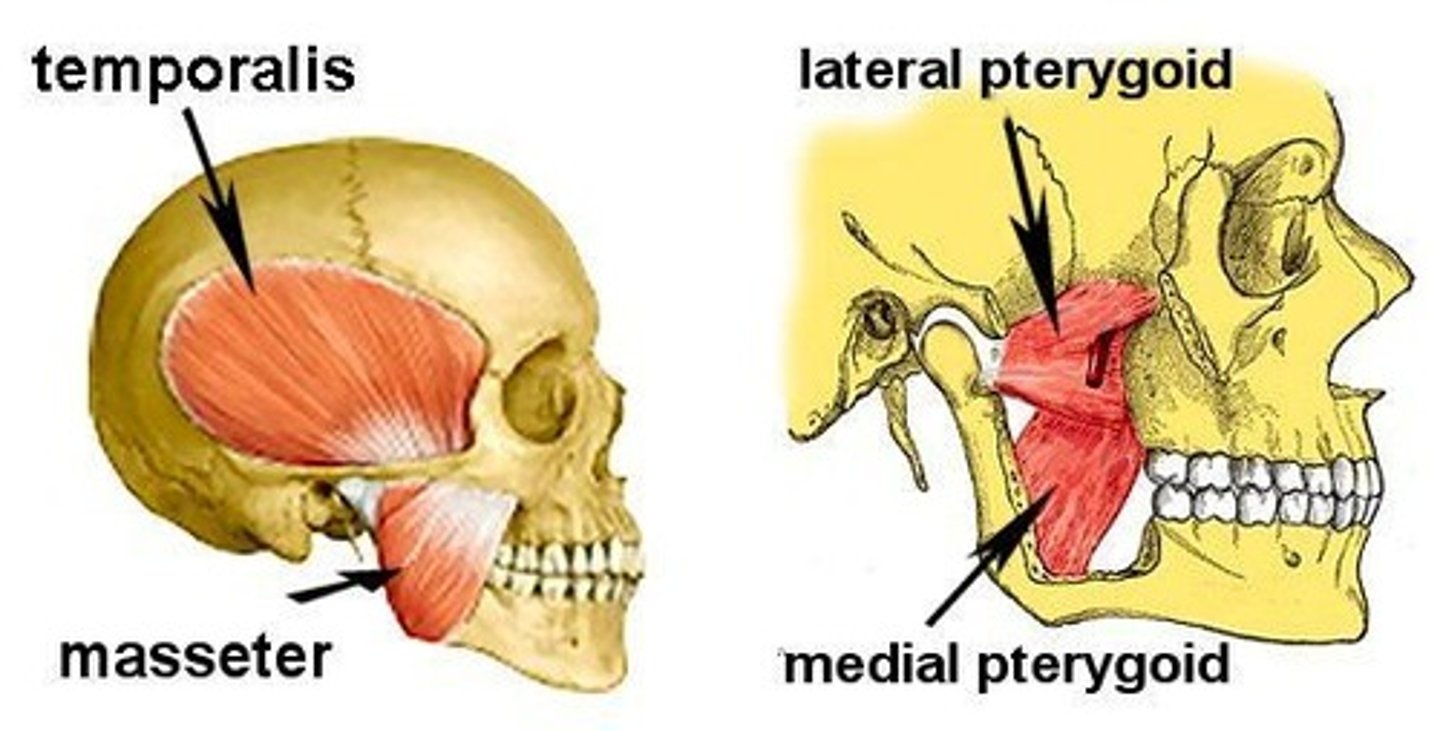
muscles of mastication (elevators)
1. masseter
2. temporalis
3. lateral pterygoid
4. medial pterygoid
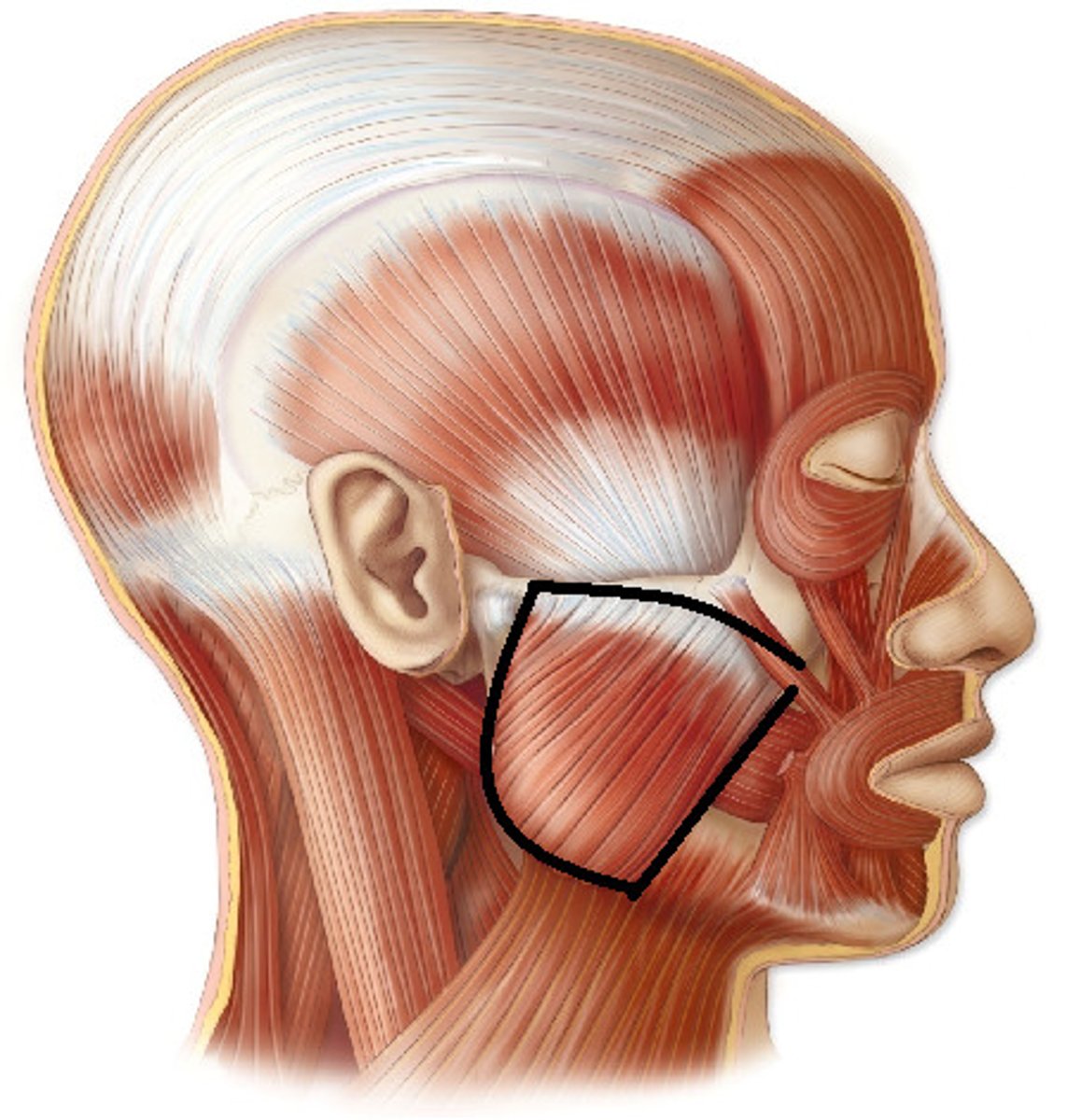
masseter
- origin: zygomatic arch
- insertion: mandible
- action: elevates and protrudes mandible
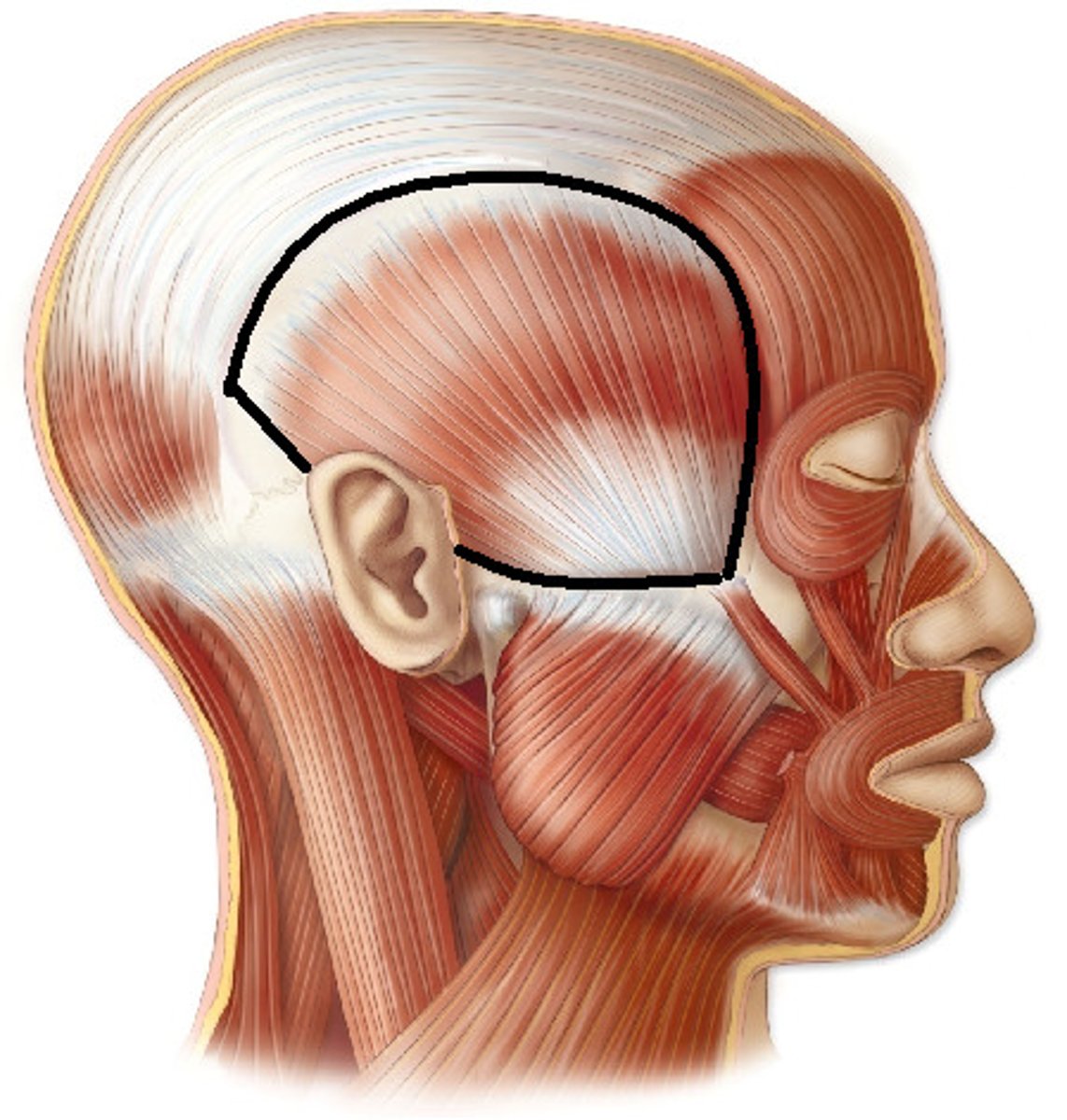
temporalis
- origin: temporal fossa
- insertion: coronoid process of mandible
- action: closes jaw
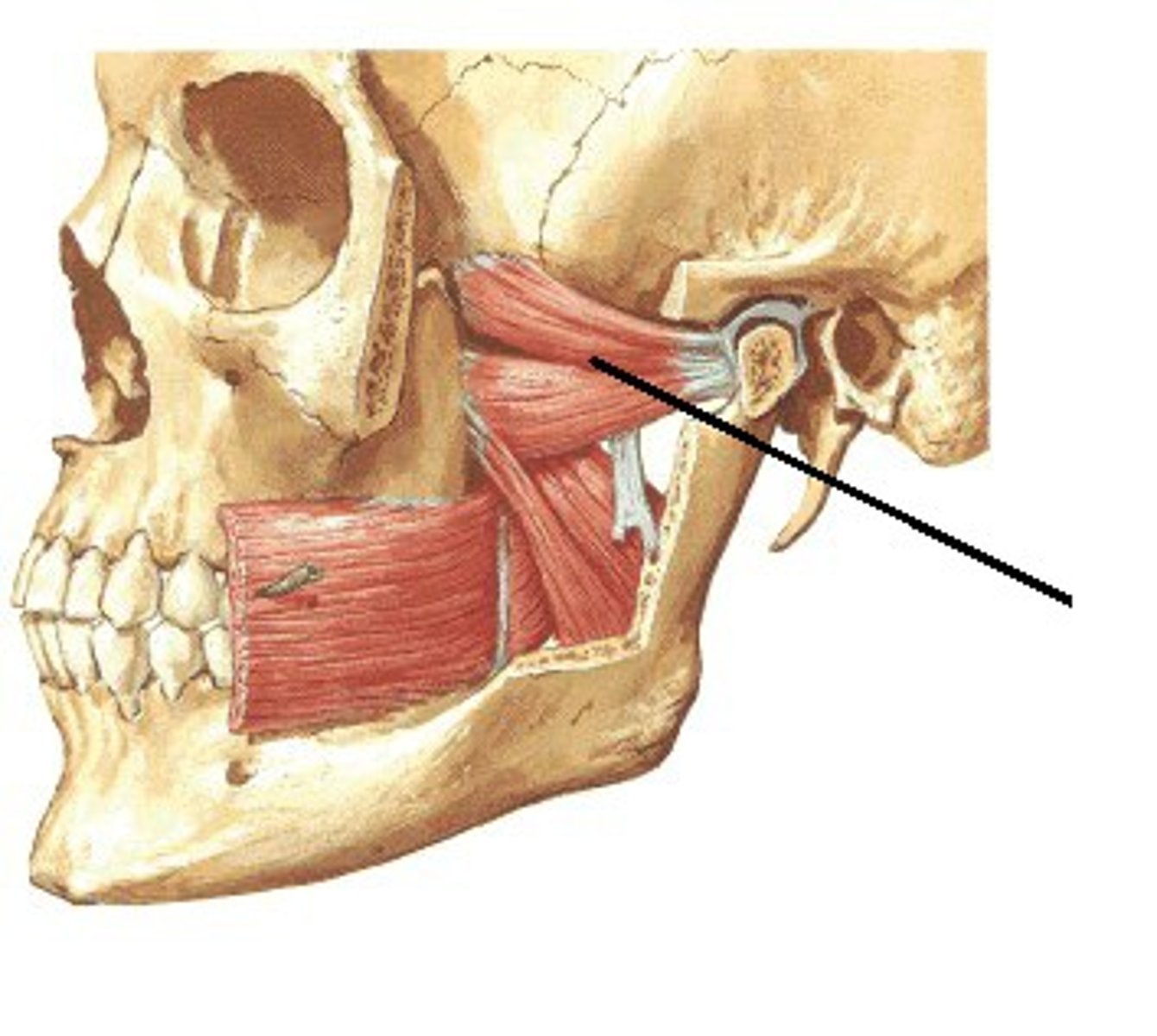
lateral pterygoid
- origin (superior head): infratemporal surface of grater wing of sphenoid
- origin (inferior head): lateral pterygoid plate
- insertion: pterygoid fovea, capsule of tmj
- action (acting together): protrude mandible
- action (acting alone): protrudes side of jaw
- action (acting alternatively): produces grinding motion
medial pyterygoid
- origin (deep head): medial surface of lateral pterygoid plate and palatine bone
- origin (superficial head): tuberosity of maxilla
- insertion: ramus of medial mandible
- action: elevates mandible
capsule ligament
- attachment: temporal fossa & tubercle to mandibular head
- permits side to side motion, protrusion, and retraction
lateral (tmj) ligament
- attachment: temporal to mandible
- thickened fibrous band of capsule
articular disc ligament
- attachment: between temporal bone and mandible
- divides joint into two synovial compartments
stylomandibular ligament
- attachment: styloid process to posterior ramus and angle of jaw
- limits anterior protrusion of mandible
sphenomandibular ligament
- attachment: spine of sphenoid to lingula of mandible
- may act as a pivot by providing tension during opening and closing
sagittal plane
vertical plane that divides body into left and right
horizontal plane
flat plane that divides body into top and bottom
frontal plane
plane parallel to long axis of body, dividing it into front and back parts
curve of spee (anteroposterior curve)
curve in the posterior teeth connecting all the buccal cusp tips
curve of wilson (mediolateral curve)
side-to-side curve that connects the buccal and lingual cusps of the same type of posterior teeth on opposite sides
rotation
- occurs in the lower compartment of tmj capsule
- up to 20-25 mm
translation
- occurs in the upper compartment of tmj capsule
- up to 40-50mm
pure rotation occurs in which planes?
sagittal and frontal
condyles are considered to be in the...
terminal hinge position
retrusion
backward and upward movement of condyle
protrusion
forward and downward movement of the condyle
laterotrusion
lateral movement of the working condyle
mediotrusion
medial movement of the working condyle
during lateral movement of the mandible:
non-working condyle moves...
- medially
- forward
- downwards
working condyle moves...
- laterally
border movements (posselt's envelope of motion)
the most extreme positions to which the mandible is able to move
- all functional movements occur within the borders
maximum opening movement is...
50-60 mm
maximum lateral movement is...
10-12 mm (with no tmj disfunction)
maximum protrusive movement is...
8-11 mm
retrusive range for adults and children is...
1 mm
coincidence of co contact and mip is evident in what percentage of the population?
10%
occlusal scheme
the form and arrangement of occlusal contacts in natural and artificial dentition
types of occlusal schemes
1. mutually protected
2. group function
3. balanced
mutually protected occlusion
posterior teeth prevent excessive contact of anterior teeth in mip & anterior teeth disclude posterior teeth in all excursive movements
- posterior teeth HOLD mylar
- anterior teeth DRAG mylar
mandible is an example of a class ___ lever
III
eccentric movements
lateral and protrusive movement
canine guidance
the vertical and horizontal overlap of the canine teeth disclude all posterior teeth in the excursive movements of the the mandible
anterior guidance
the vertical and horizontal overlap of the anterior teeth disclude all posterior teeth in the excursive movement of the mandible
christensen phenomenon
space between opposing posterior occlusal surfaces during mandibular protrusion
which occlusal scheme is the least damaging in the presence of parafunctional activity?
mutually protected
- allows for immediate disclusion
group function
multiple contact relations between the maxillary and mandibular teeth in lateral movements on the working side
- lateral force distributed equally to all teeth on the working side in eccentric movement
- no tooth contact on non-working side
all posterior teeth need to contact in order for there to be group function? t/f
false
indications of group function
1. compromised or missing anterior teeth
2. severe class ii or iii occlusion
3. seen frequently in natural dentition
4. easier to incorporate into natural dentition
5. force distrubution for long span FPD or compromised abutments
balanced occlusion
the bilateral, simultaneous contact of the anterior and posterior teeth in excursive movements
indications for balanced occlusion
1. complete dentures
- rarely occurs in natural dentition
- difficult and undesirable to incorporate into natural dentition
why only balanced occlusion on complete dentures?
allows for stability of the complete denture
posterior determinants of occlusion (of posterior teeth)
tmj
anterior determinants of occlusion (of posterior teeth)
- incisal guidance
- occlusal plane
- curve of spee
- curve of wilson
can one condyle move without the other?
no, there needs to be reciprocal movement from the other joint
condylar inclination
as the mandible is protruded, the condyle translates and descends along the articular eminence
- is a curved path
- usually measured/recorded by a straight line angle
- measured from horizontal reference plane
steeper articular eminence equals...
larger condyle inclination
horizontal reference plane (frankfurt horizontal plane)
a plane established by the lowest point on the margin of the right or left bony orbit and the highest point on the margin of the right or left bony auditory meatus
the greater the lateral translation movement the...
shorter the posterior cusps
posterior determinants of occlusion are...
anatomical
- may be recorded but cannot be altered (except surgically)
average condylar inclination angle is...
30 degrees
incisal guidance
represented by the vertical and horizontal overlap of the anterior teeth
incisal guidance is usually a ____ surface
curved
incisal angle
the angle formed by the intersection of the plane of occlusion and a line within the sagittal plane determiend by the incisal edges of the max. and mand. central incisors when the teeth are in mip
average incisal angle in natural dentition is...
70-80 degrees
constant vertical overlap + increasing horizontal overlap =
decrease in incisal angle
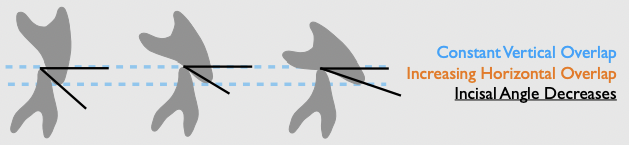
increasing vertical overlap + constant horizontal overlap =
incisal angle increases
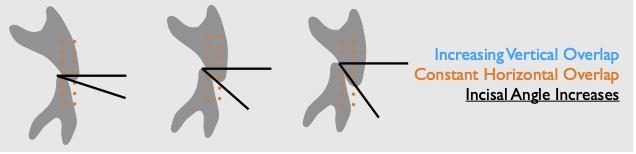
as incisal angle decreases, cusp height....
decreases
on the articulator, you push the incisal pin posteriorly to ____ the mandible
protrude
anterior guidance and incisal angle is considered to be....
variable
- can be altered by ortho, restorations, extractions, caries, habits, and tooth wear
occlusal plane
the average plane established by the incisal and occlusal surfaces of the teeth
first premolar occludes with…
distal triangular fossa of the first premolar
second premolar occludes with…
distal triangular fossa of the second premolar
first molar (mesiolingual) occludes with…
central fossa of the first molar
first molar (distolingual) occludes with…
distal marginal ridge of the first molar and the mesial marginal ridge of the second molar
 Note
Note  Flashcards (117)