Bones of the Skull
 Studied by 2 people
 Call Kai
 Learn
Learn Practice Test
 Spaced Repetition
 Match
Match Flashcards
 Knowt Play
1/17

There's no tags or description
Looks like no tags are added yet.
Name | Mastery | Learn | Test | Matching | Spaced | Call with Kai |
|---|
No analytics yet
Send a link to your students to track their progress
18 Terms
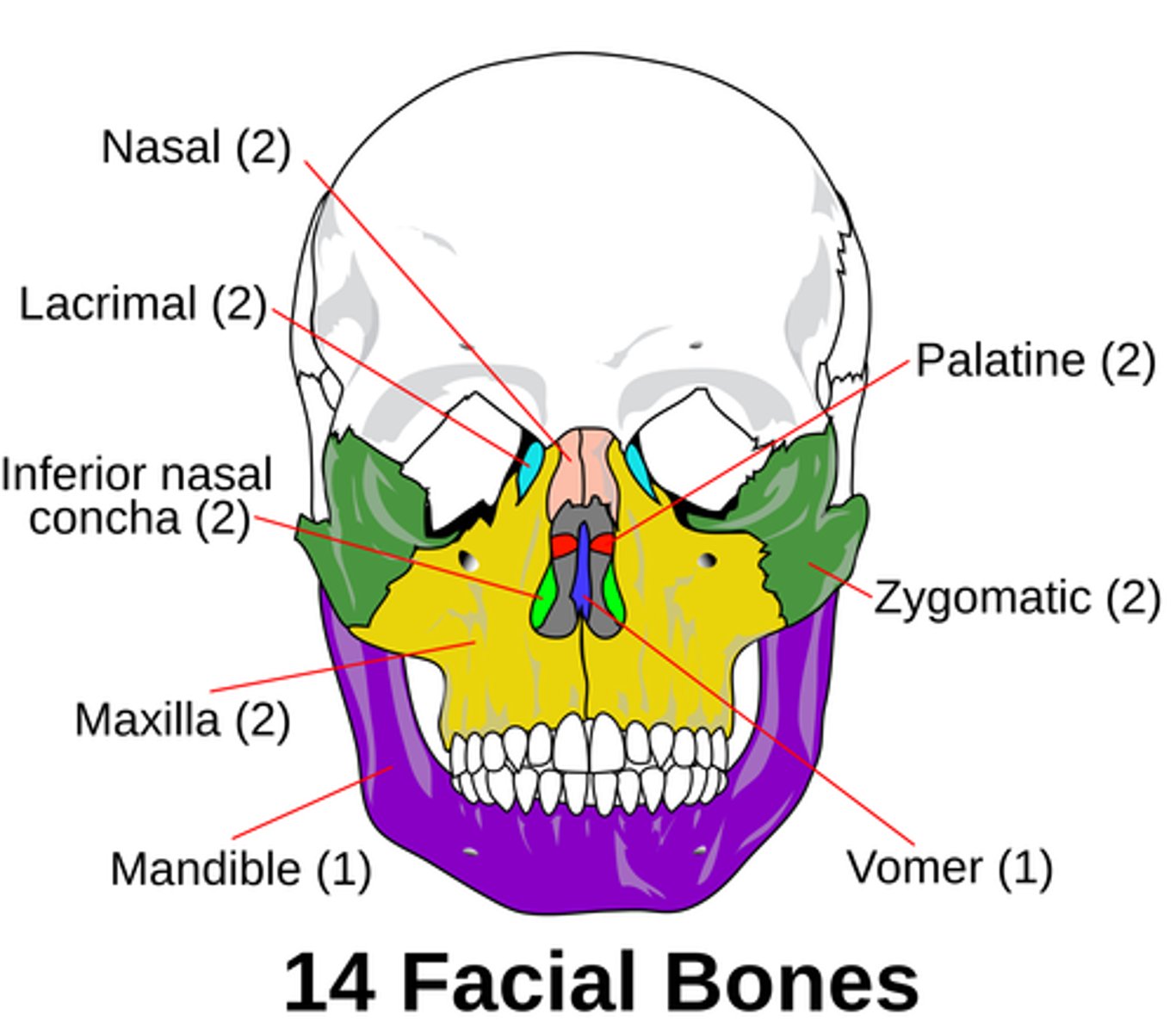
facial bones (14)
2 maxillary, 2 zygomatic, 2 nasal, 2 lacrimal, 2 palatine, 2 inferior nasal conchae, 1 mandible, 1 vomer
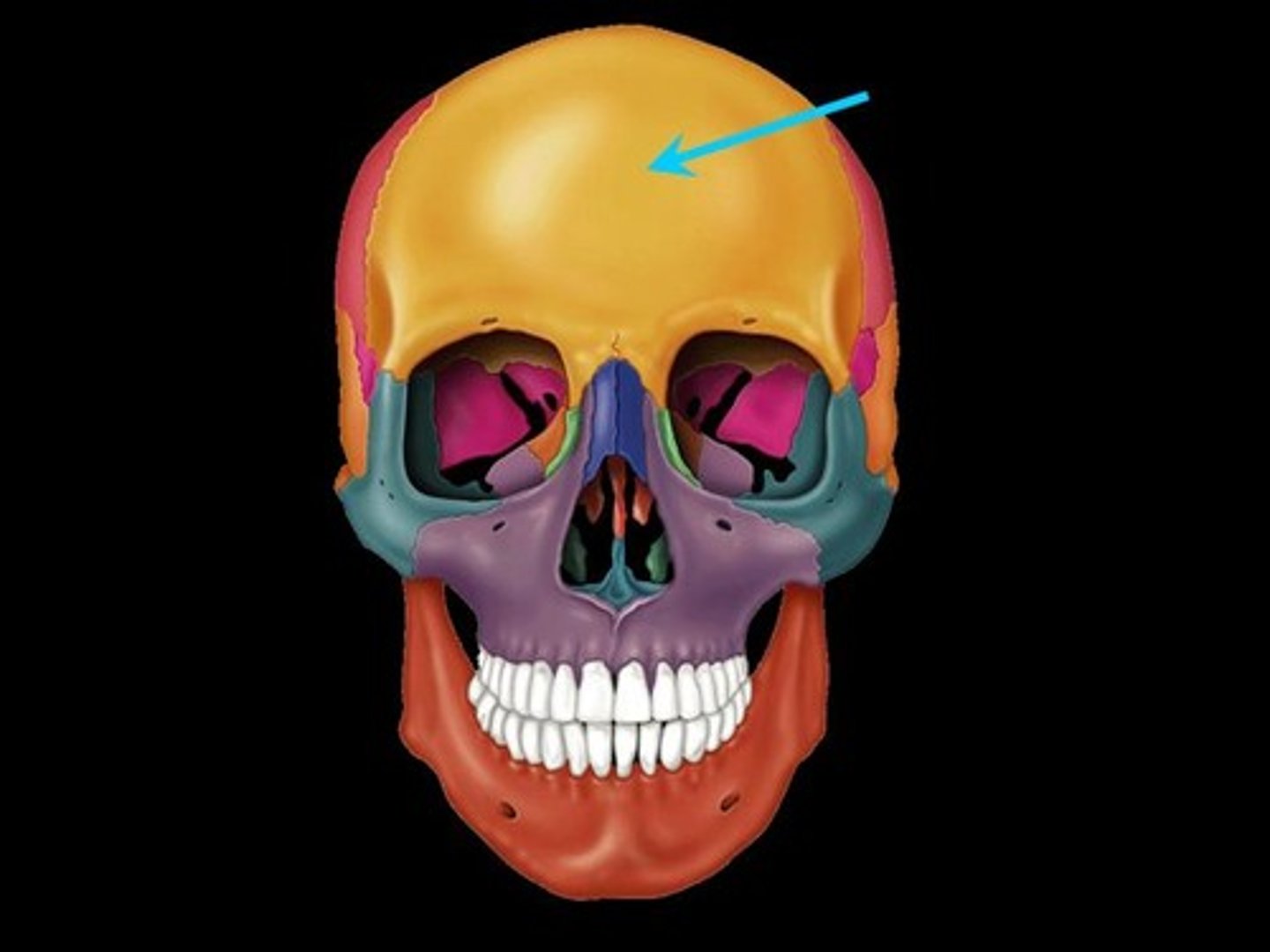
Frontal bone
bone that forms the forehead
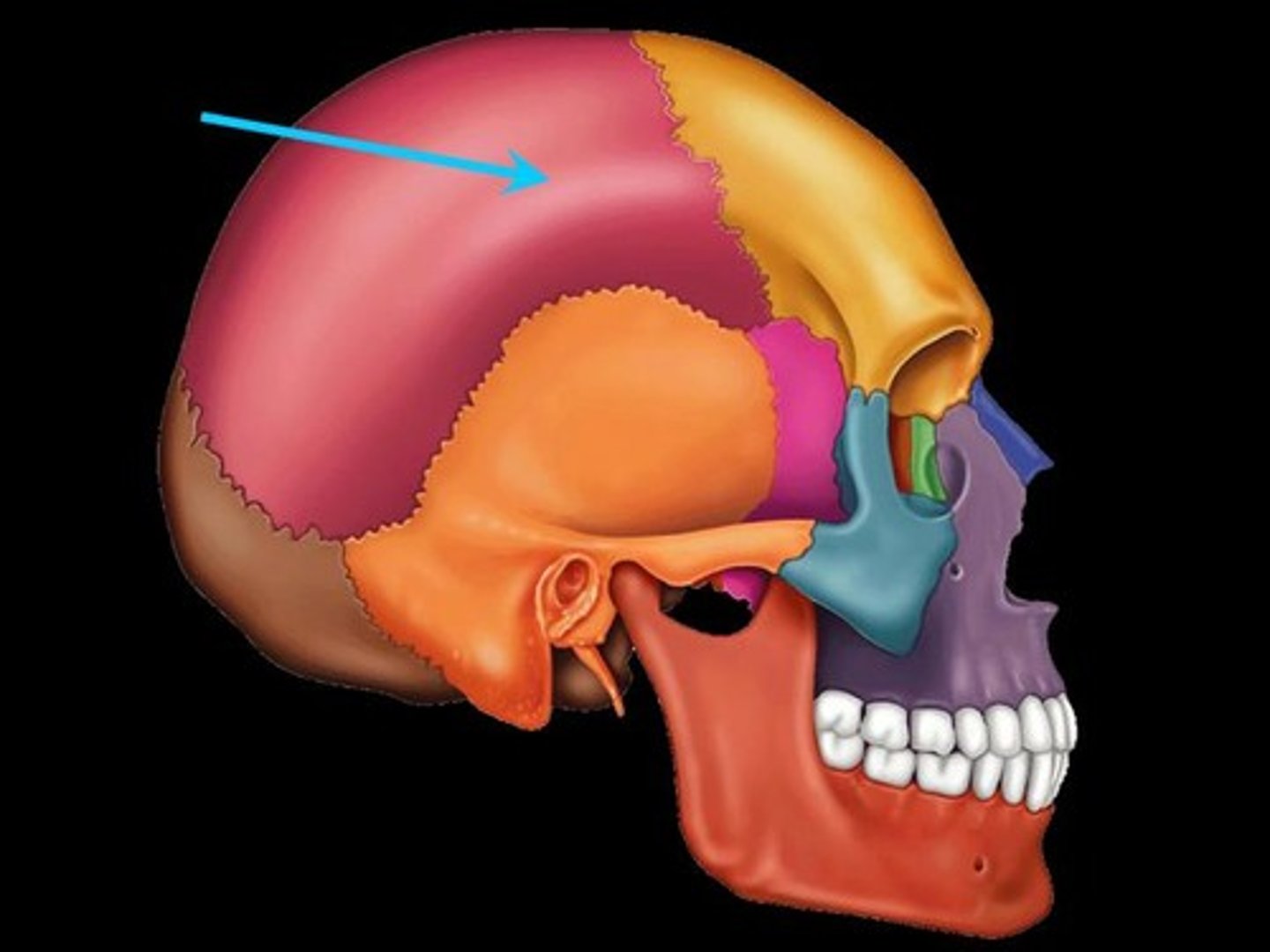
Parietal bone
either of two skull bones between the frontal and occipital bones and forming the top and sides of the cranium
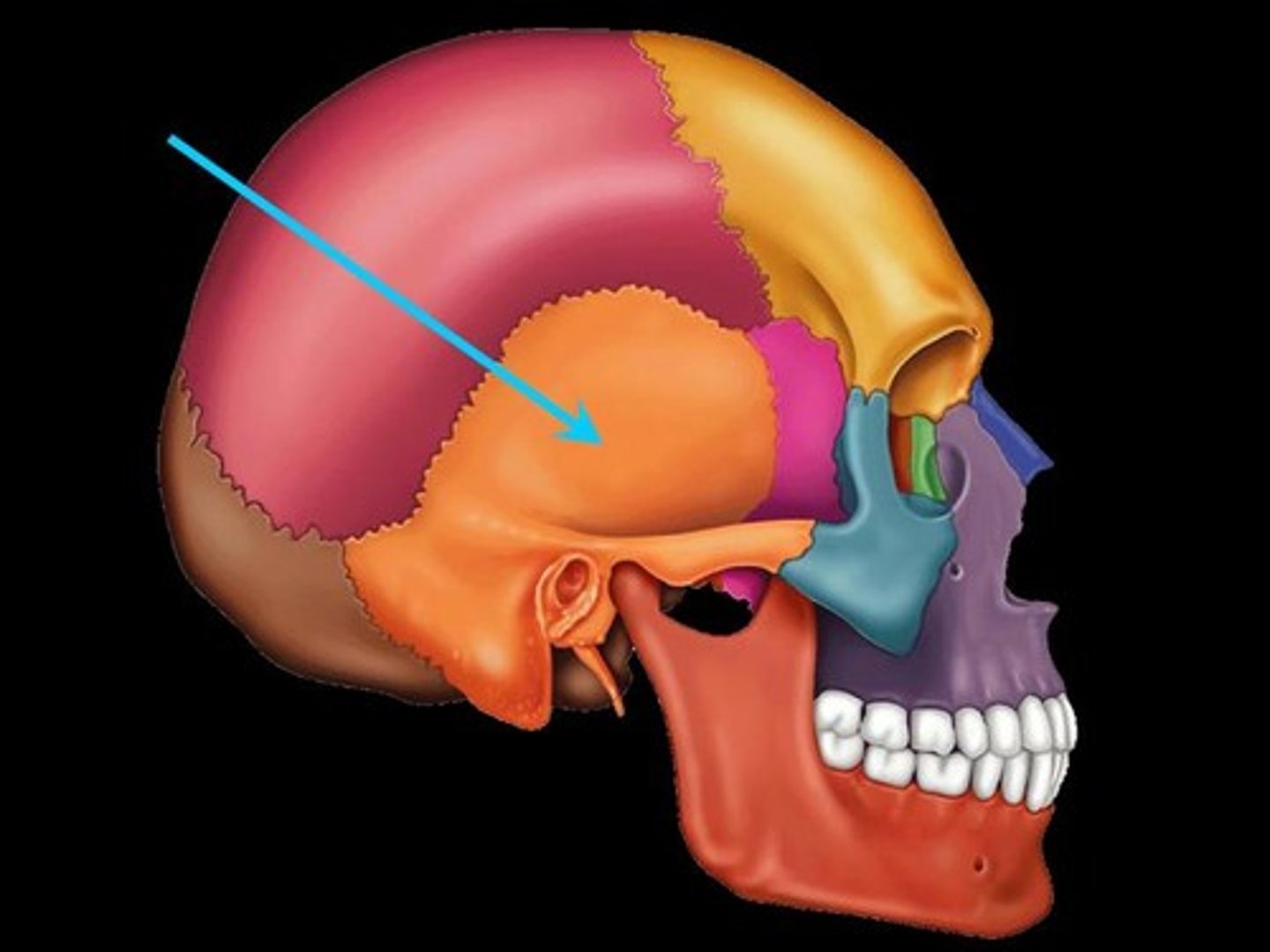
Temporal bone
bone that forms parts of the side of the skull and floor of the cranial activity. There is a right and left side.
Occipital bone
back of head. Forms the base and back wall of skull
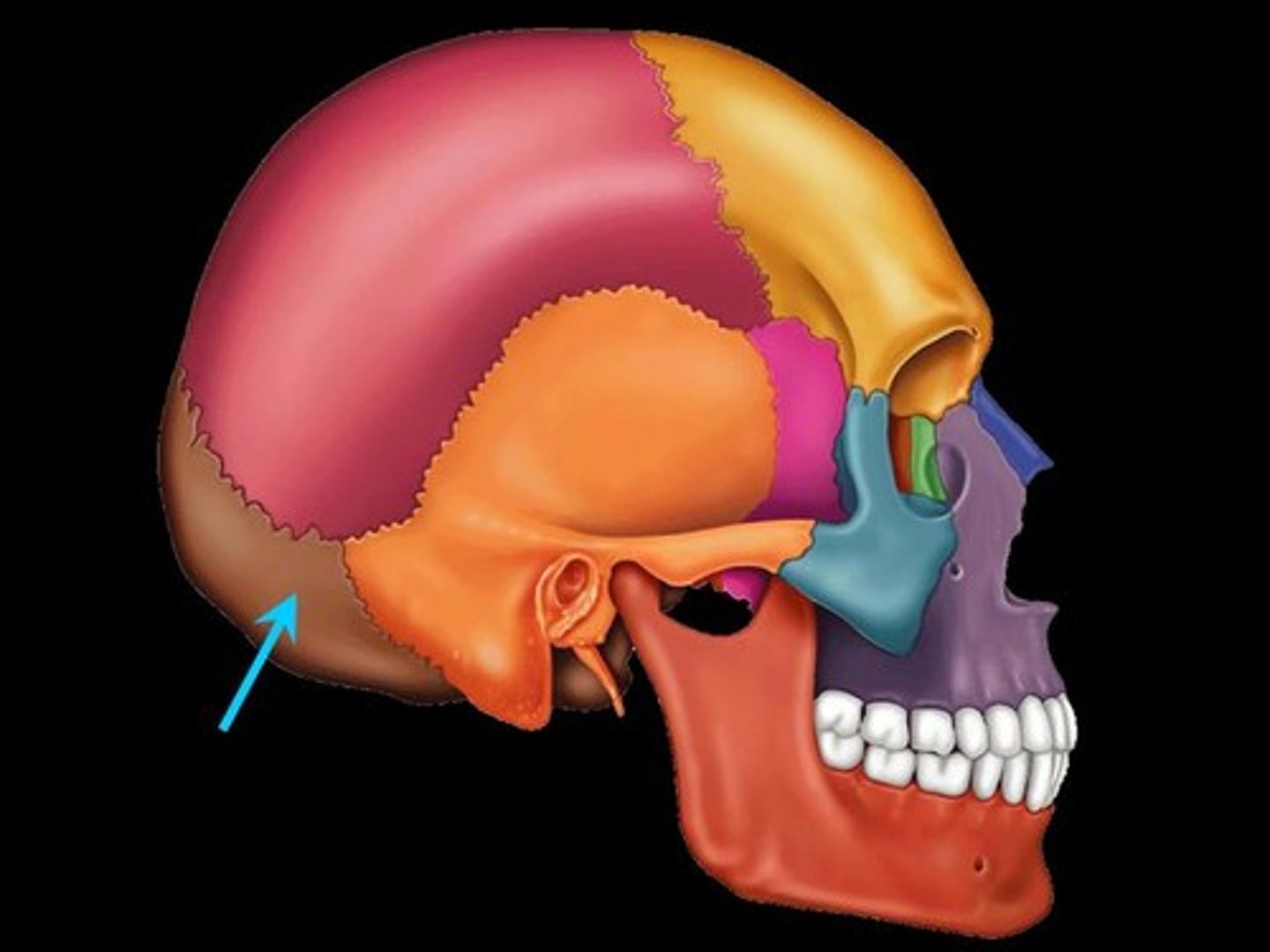
Sphenoid bone (lateral view)
forms part of the base of the skull and parts of the floor and sides of the orbit
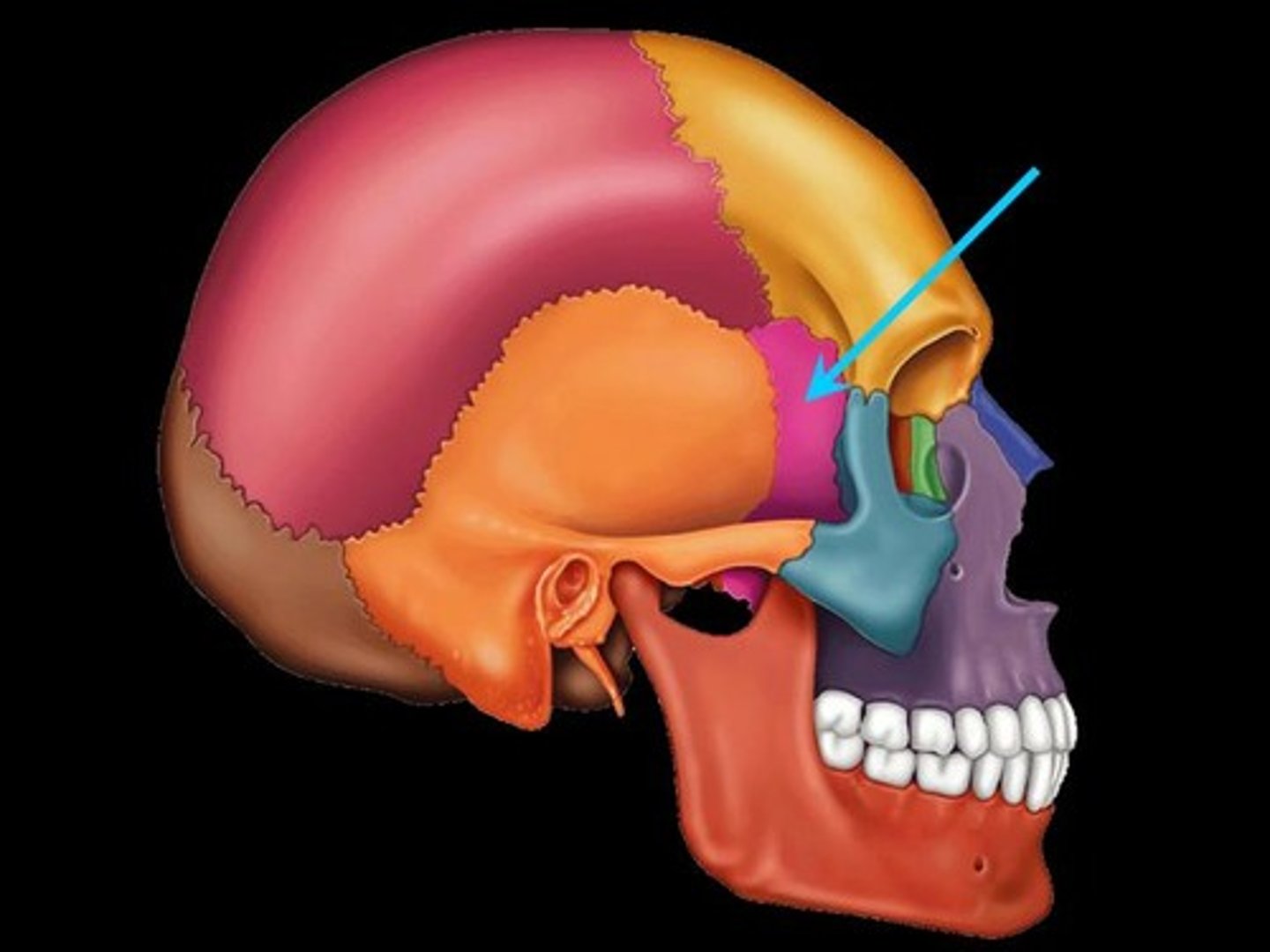
ethmoid bone
forms part of the posterior portion of the nose, the orbit, and the floor of the cranium
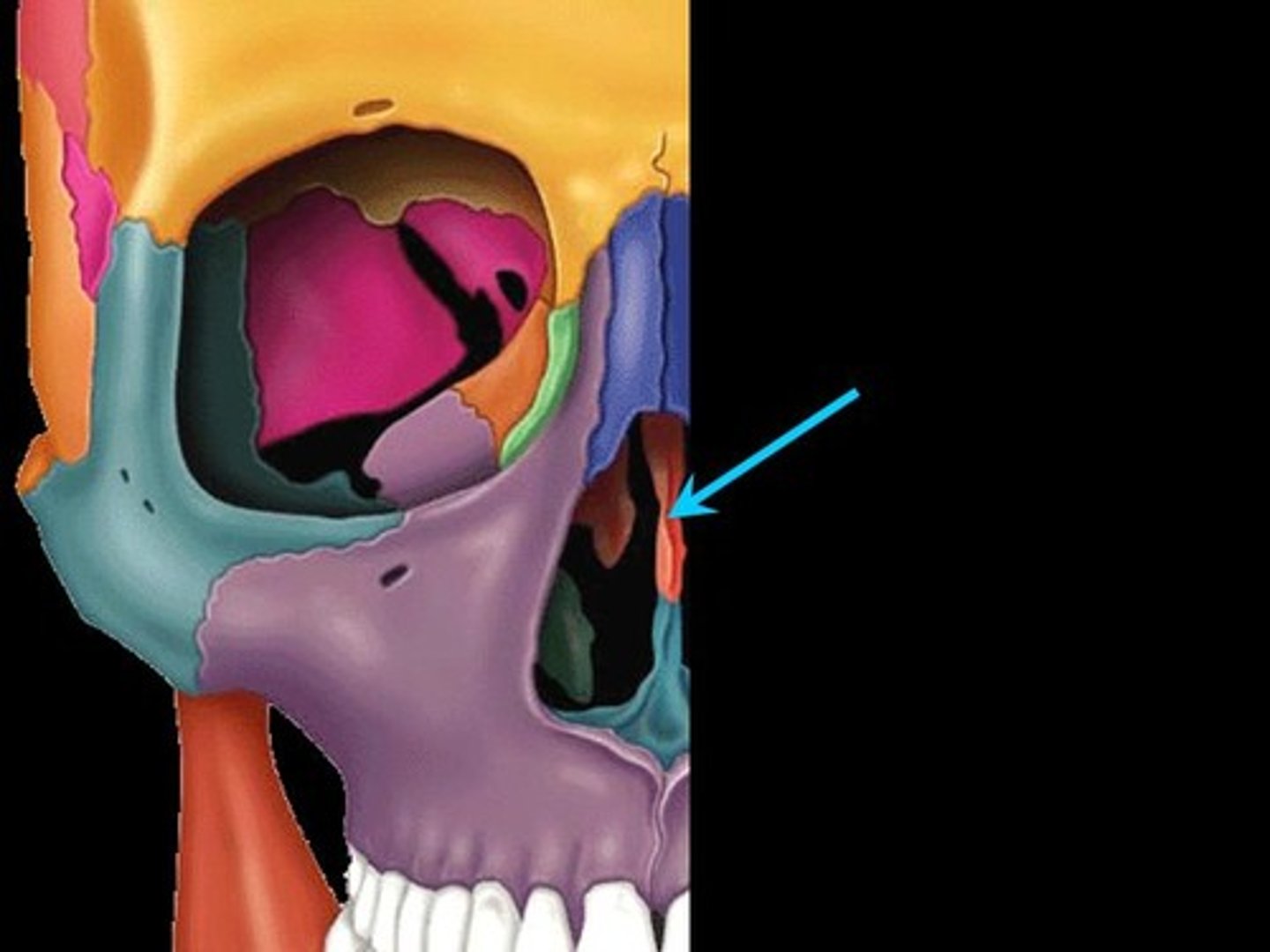
palatine bone
either of two irregularly shaped bones that form the back of the hard palate and helps to form the nasal cavity and the floor of the orbits
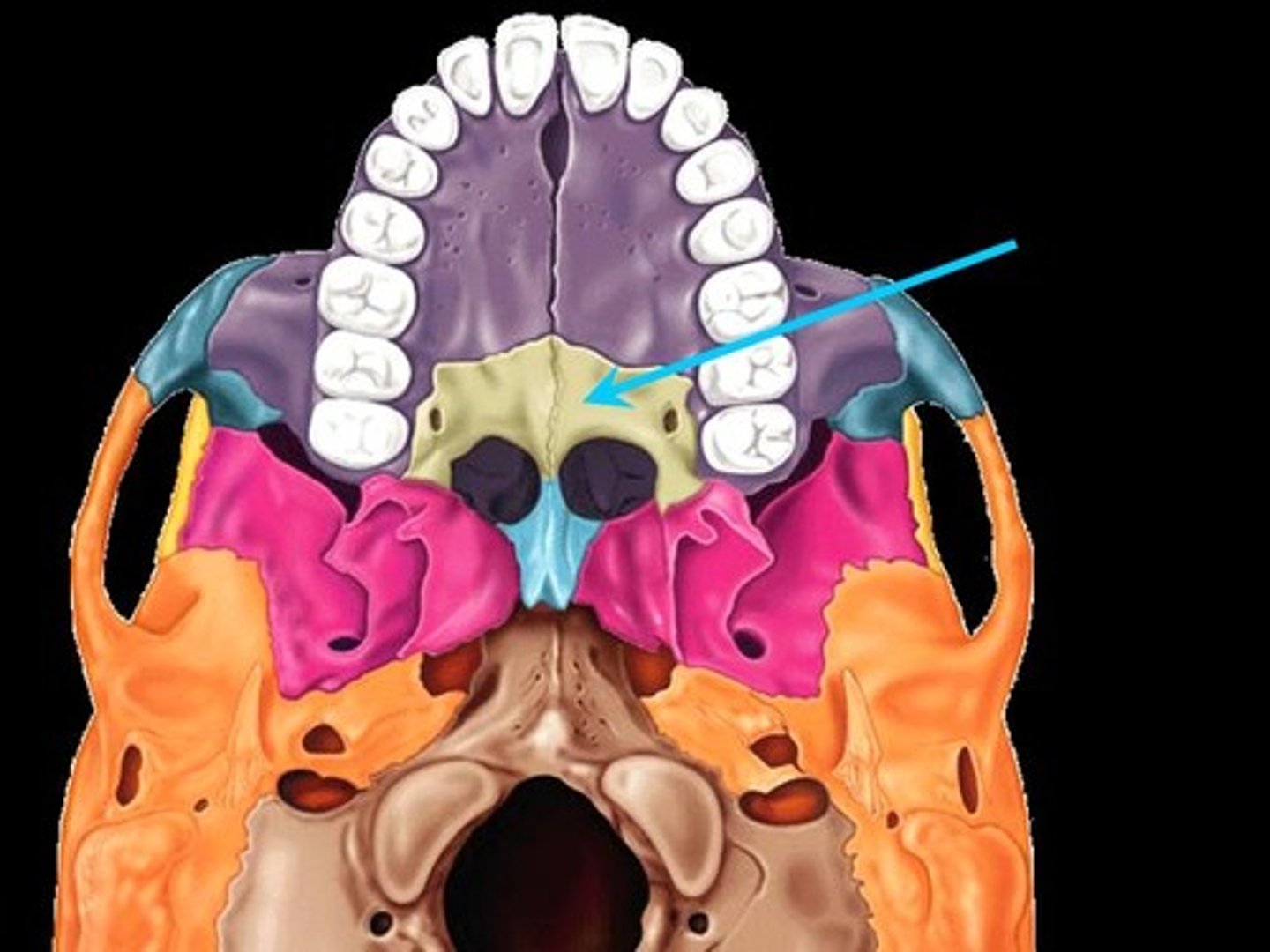
maxillary bones
form most of the upper jaw. All facial bones except mandible join maxillae.
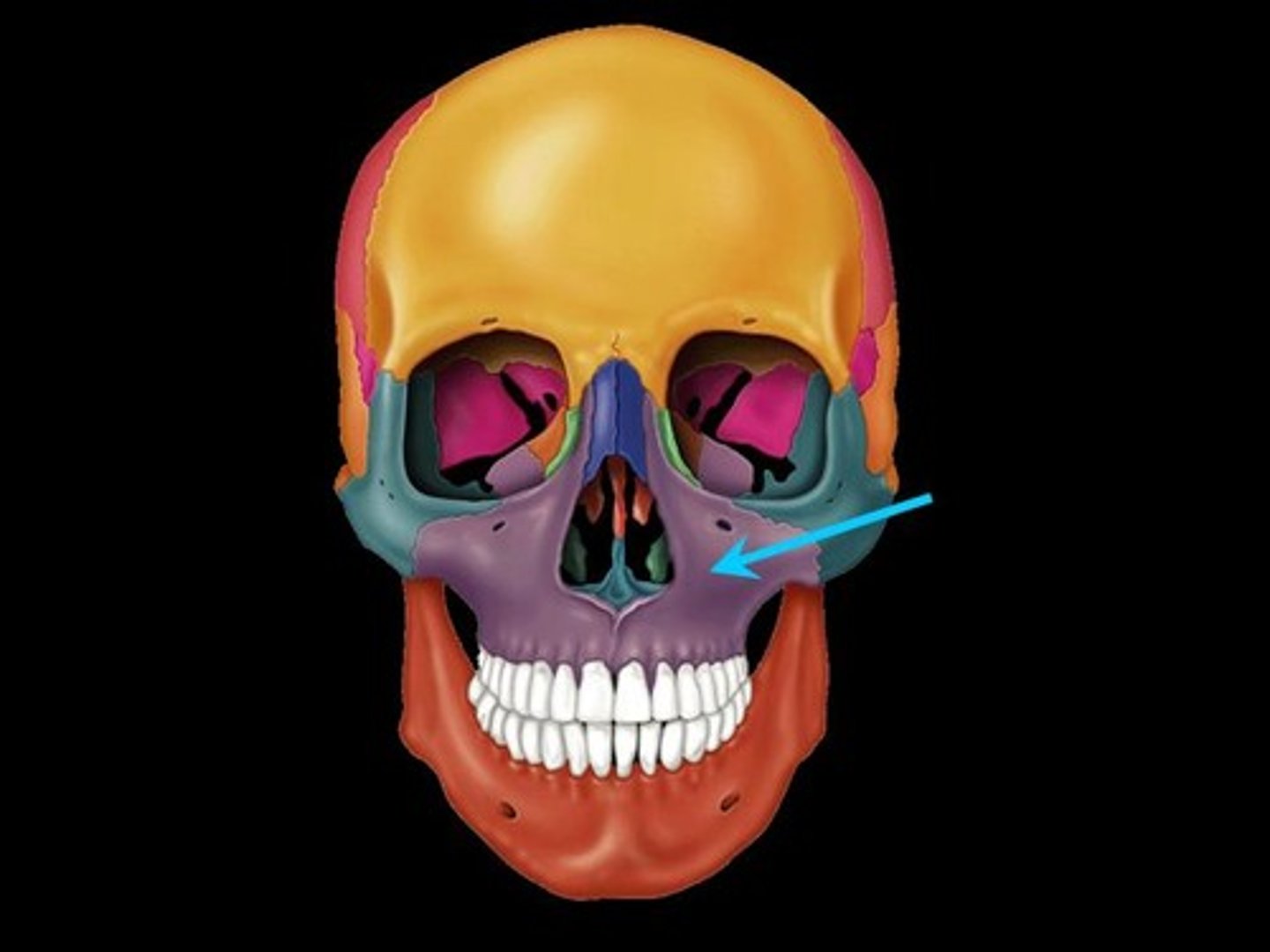
Zygomatic bone
the arch of bone beneath the eye that forms the prominence of the cheek
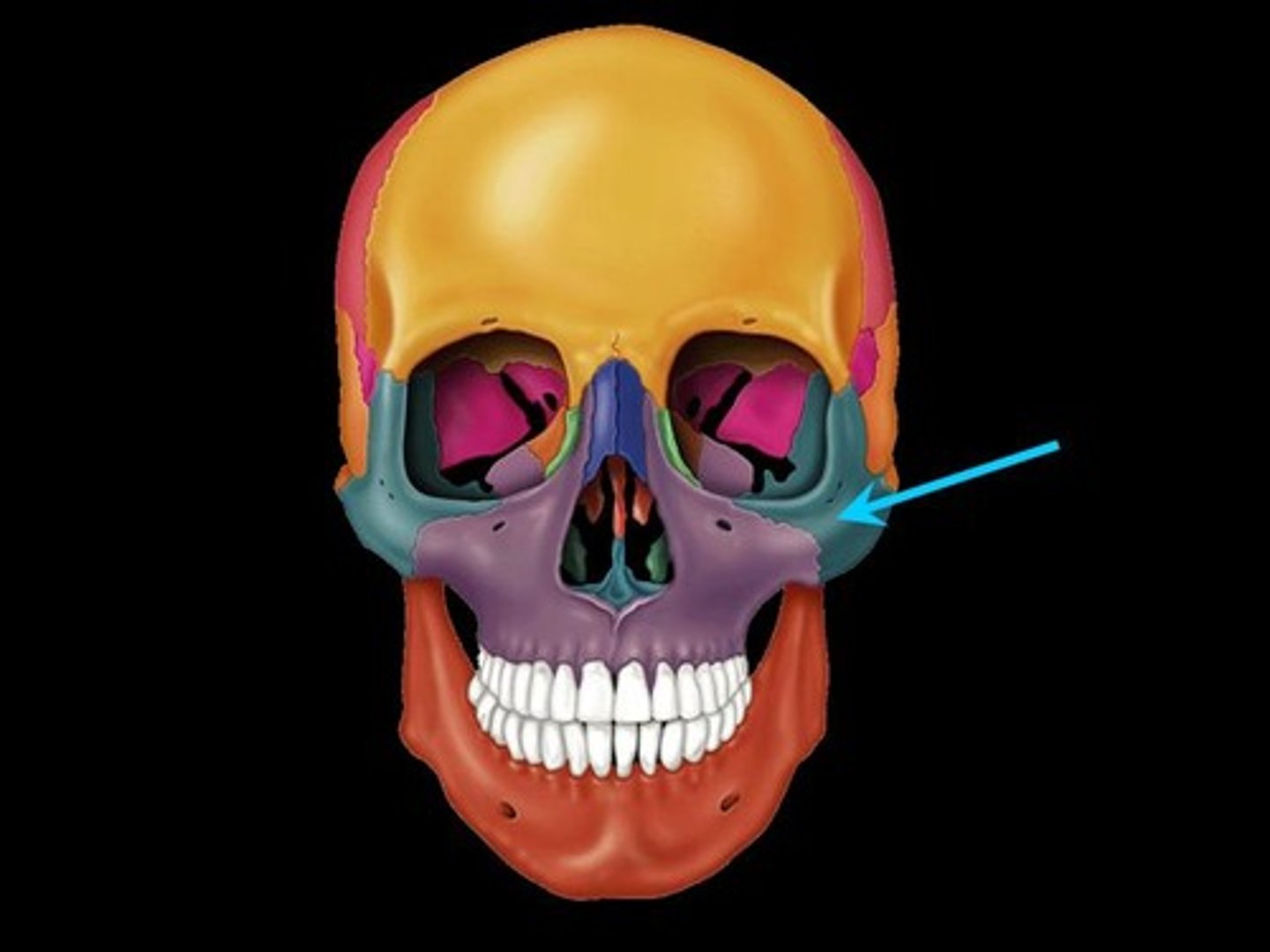
Lacrimal bone
small fragile bone making up part of the front inner walls of each eye socket and providing room for the passage of the lacrimal ducts
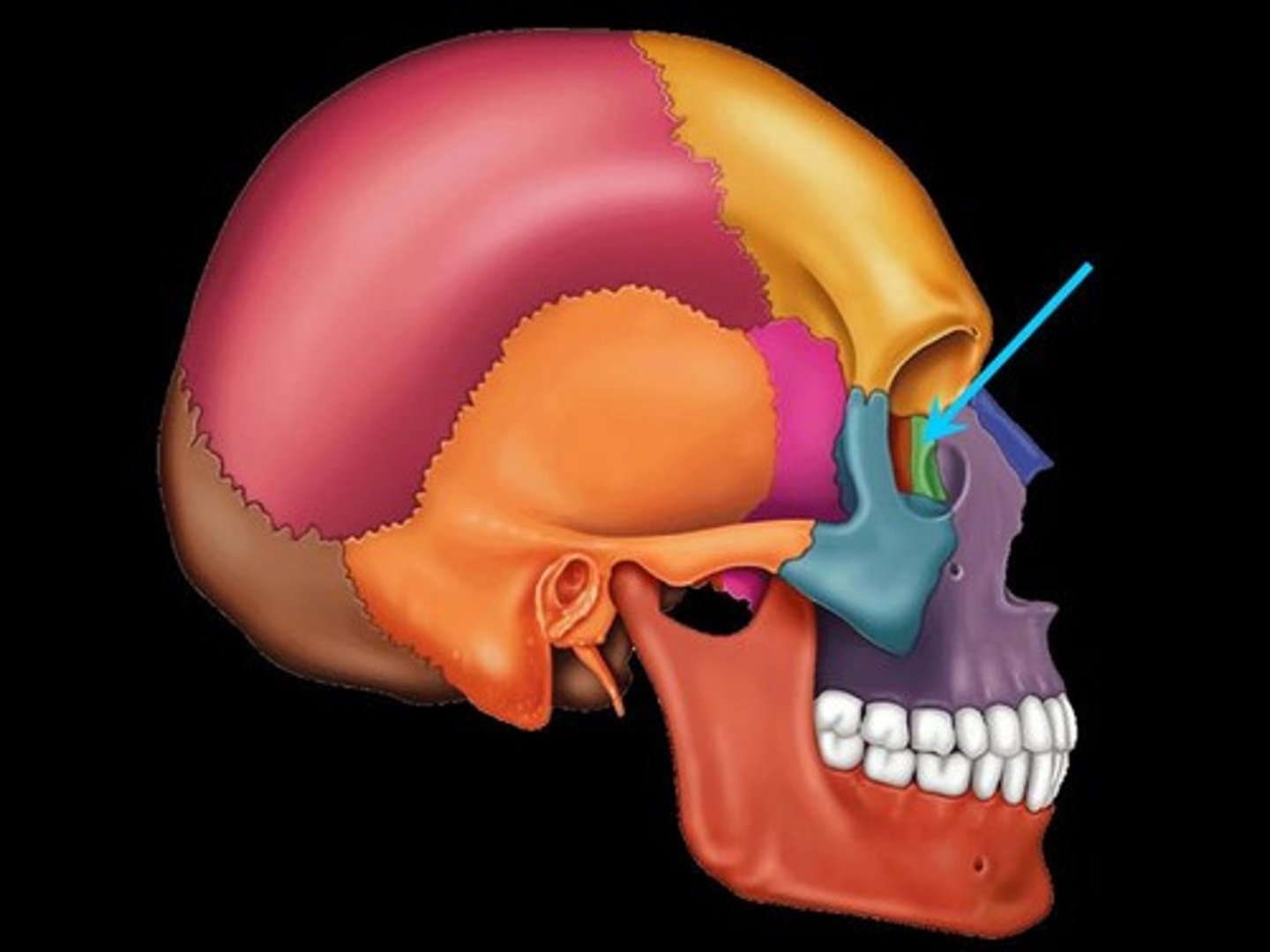
nasal bone
bridge of nose
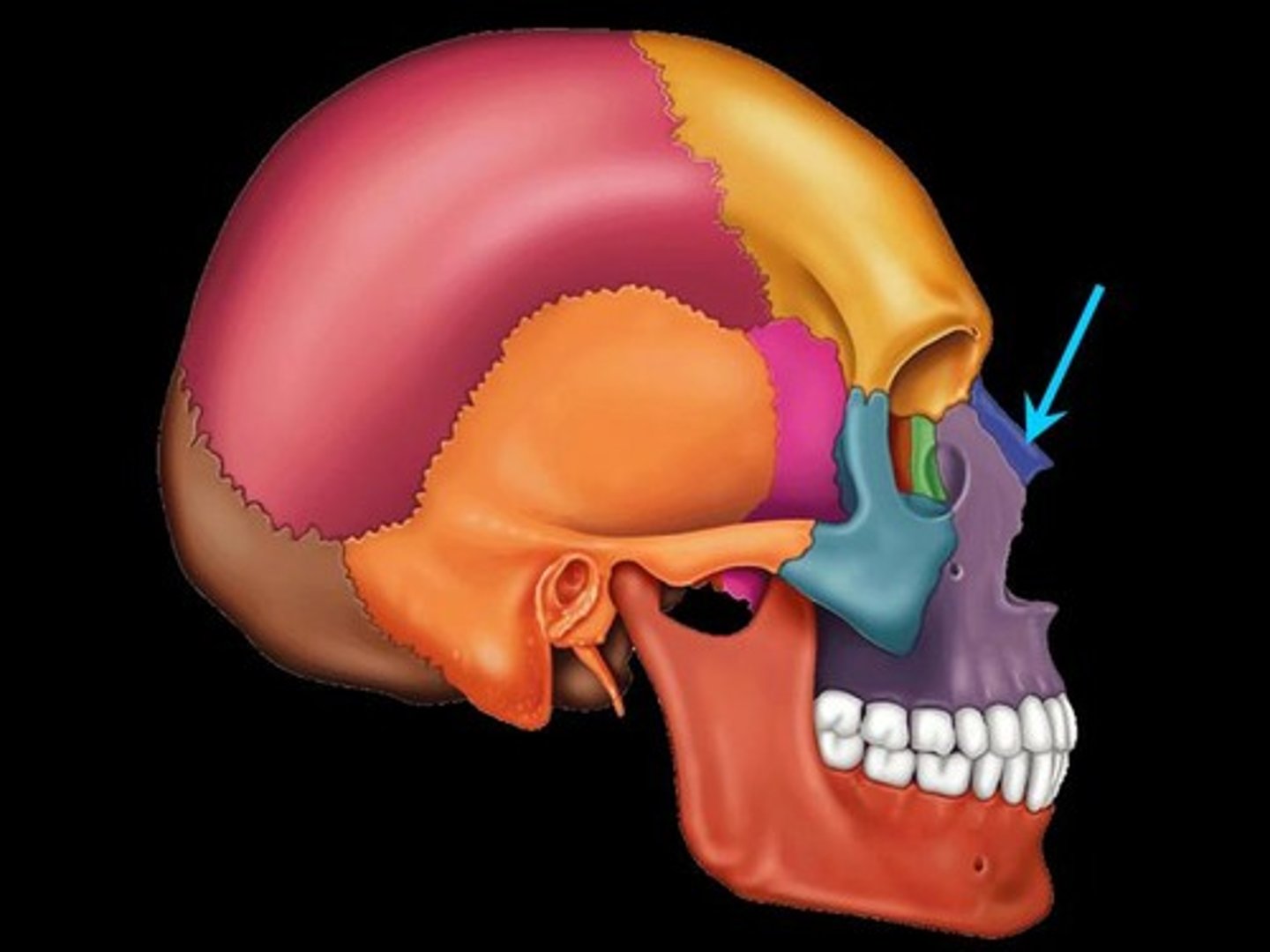
Vomer bone
forms the base for the nasal septum
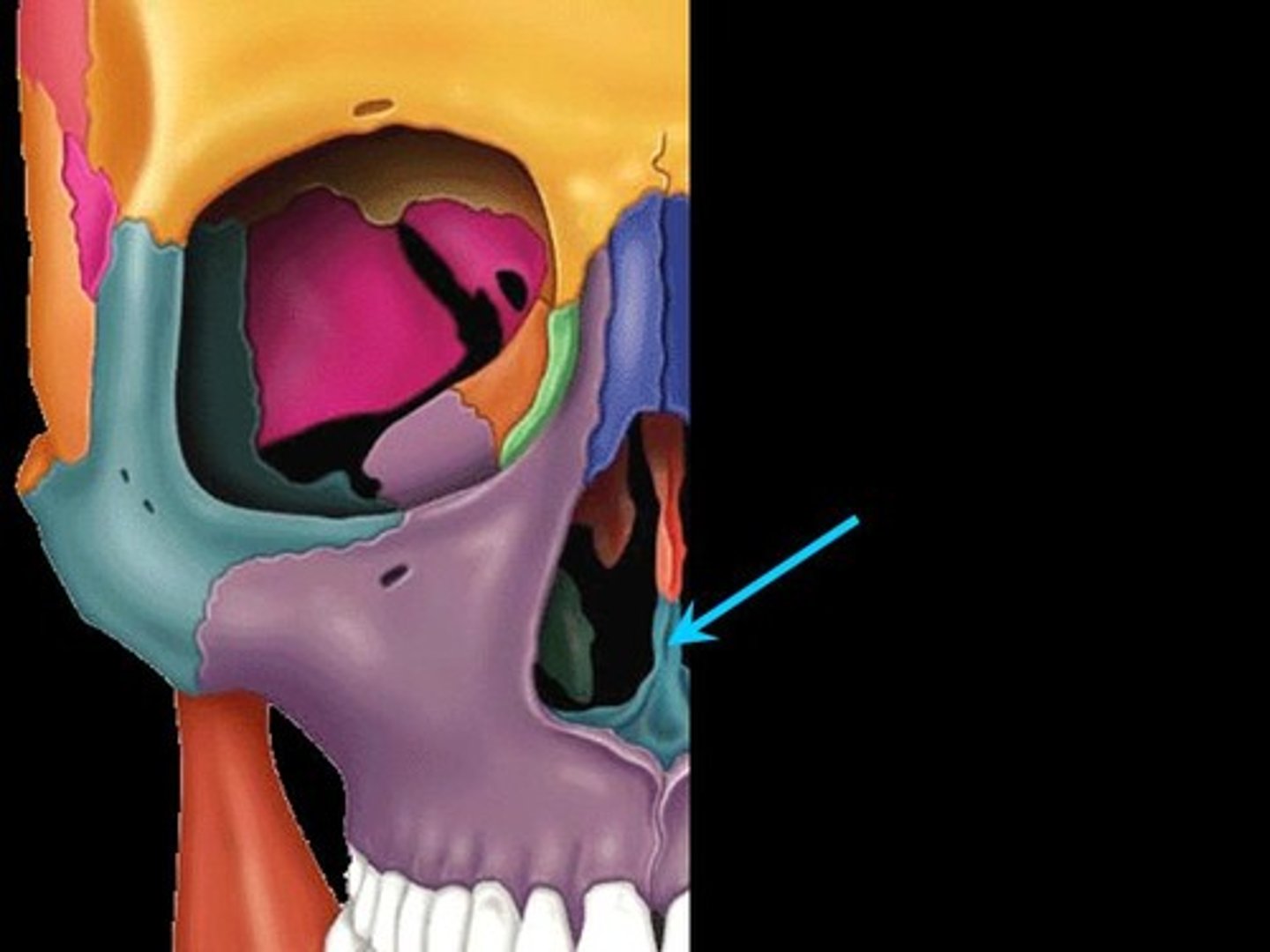
mandible
lower jaw bone
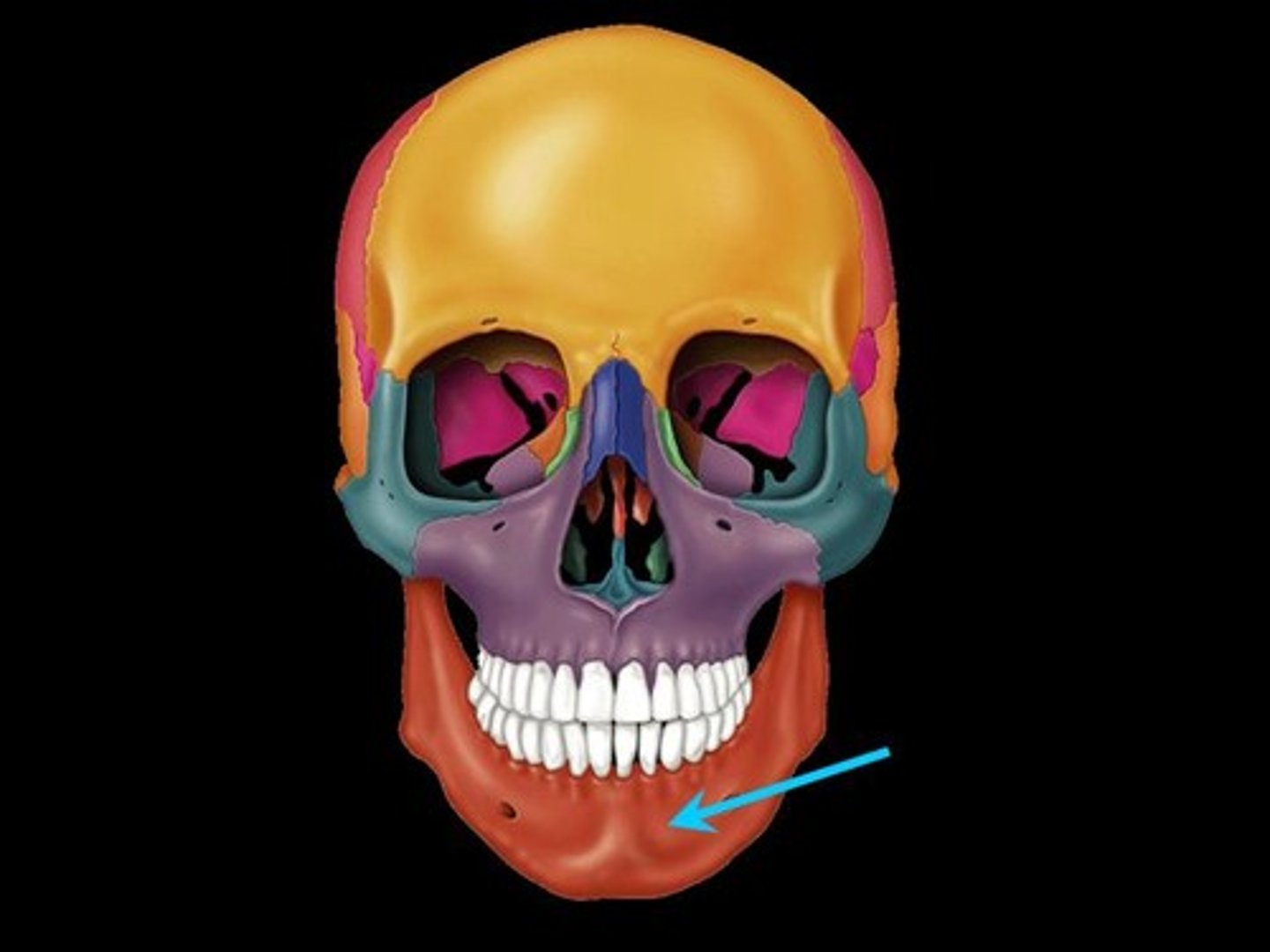
inferior nasal conchae
form part of lateral walls of nasal cavity
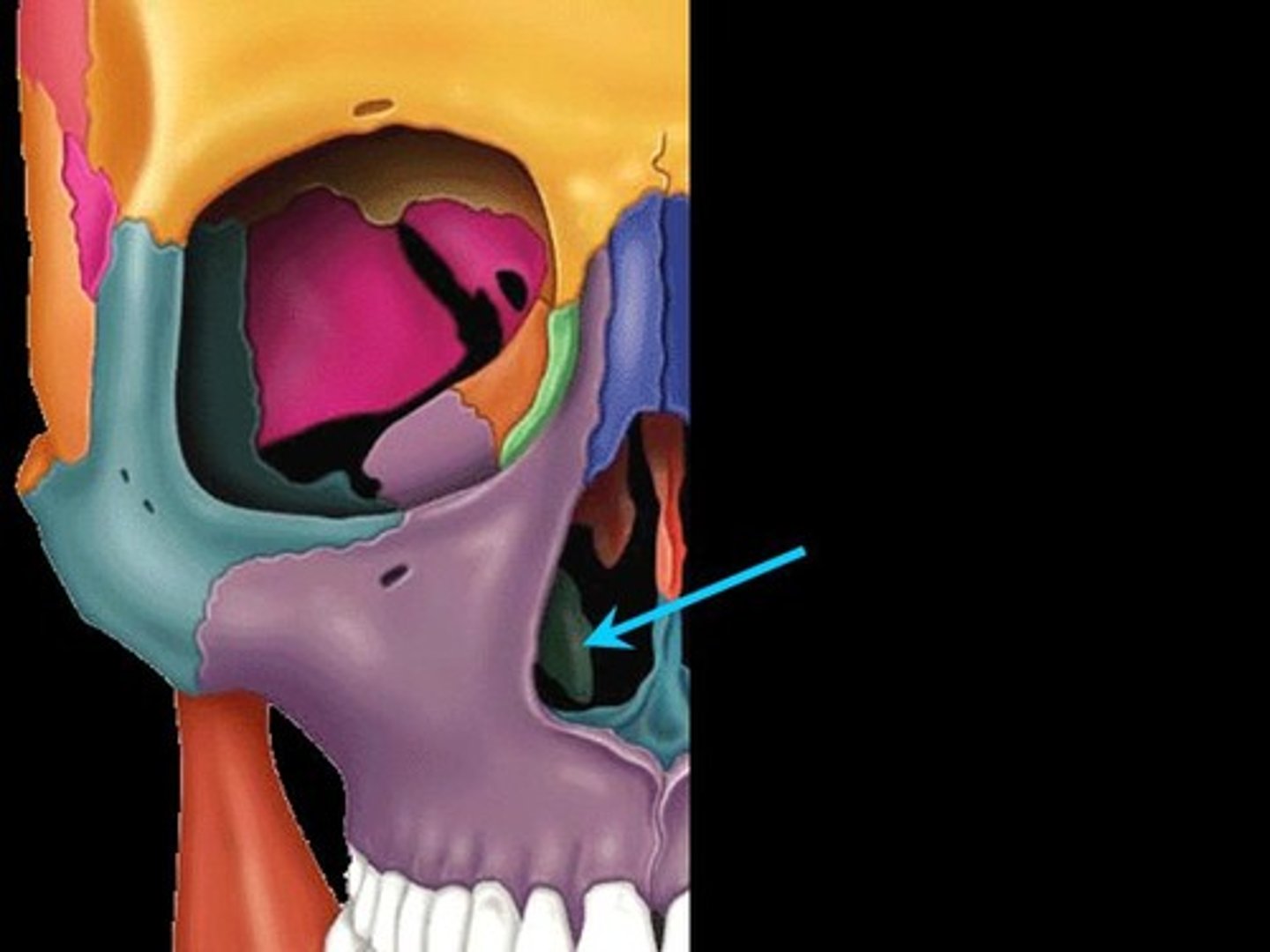
Cranial bones
skull bones: ethmoid, frontal, occipital, parietal, sphenoid, and temporal
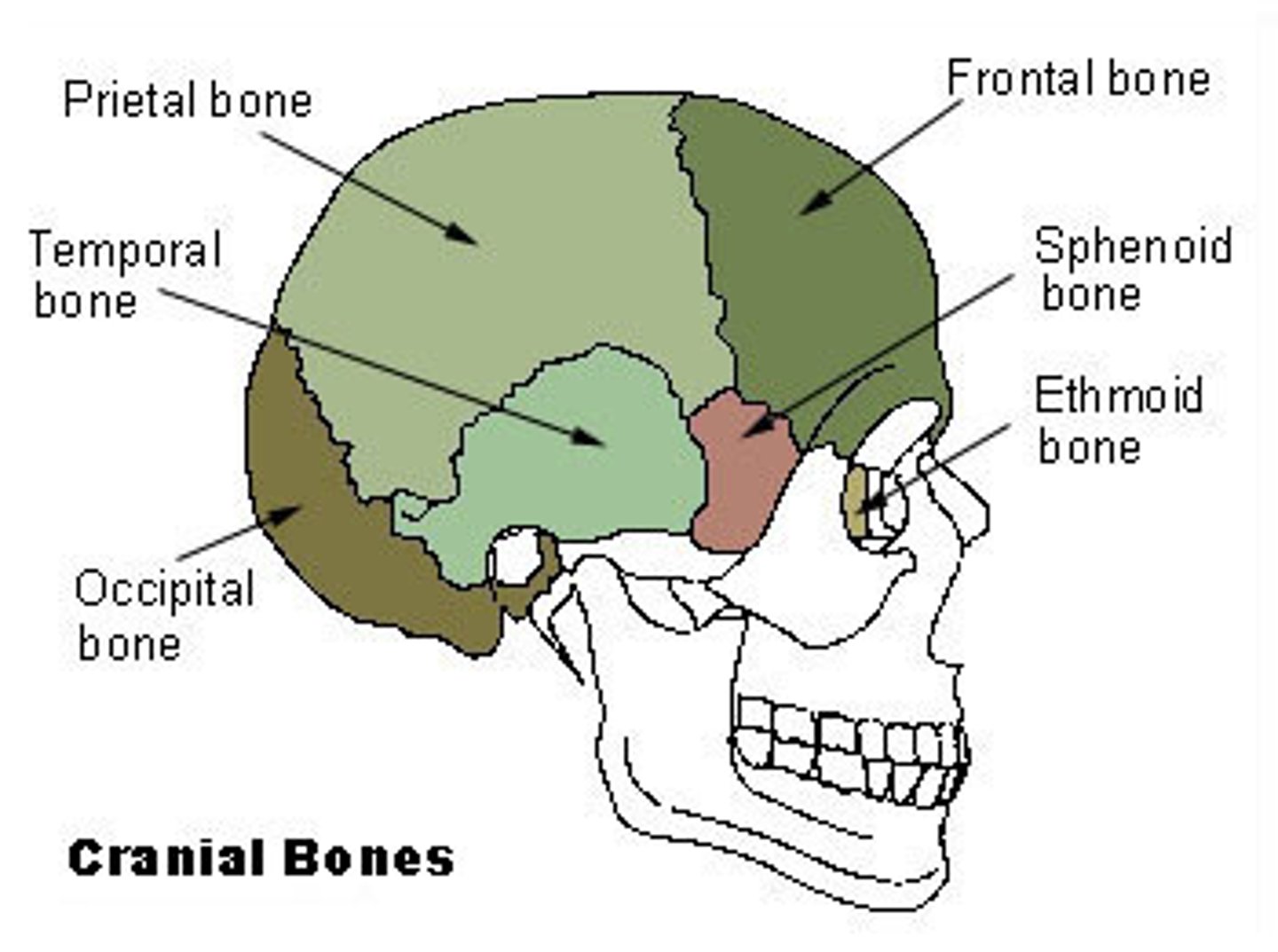
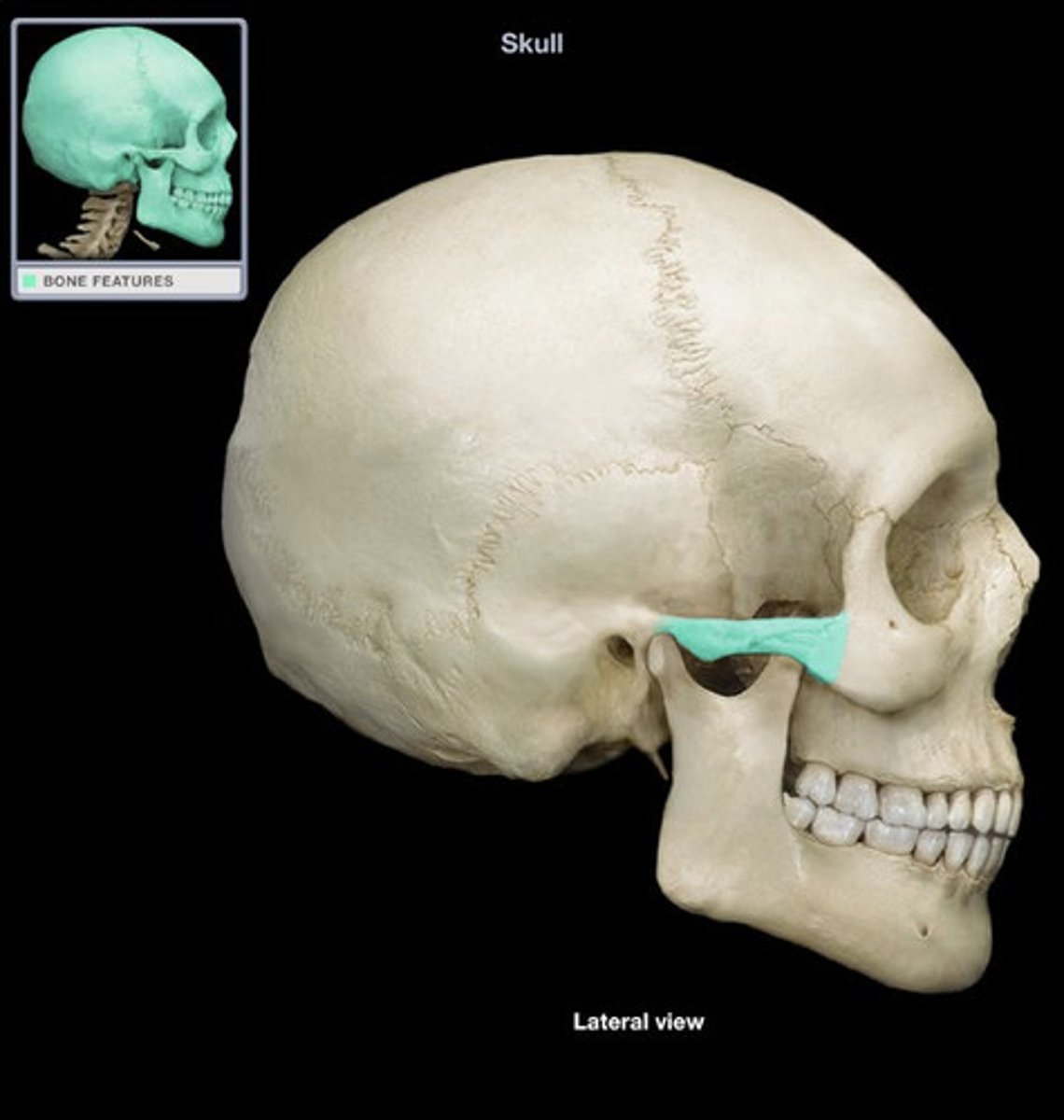
zygomatic process
Thin bridge of temporal bone that joins with the zygomatic bone anteriorly
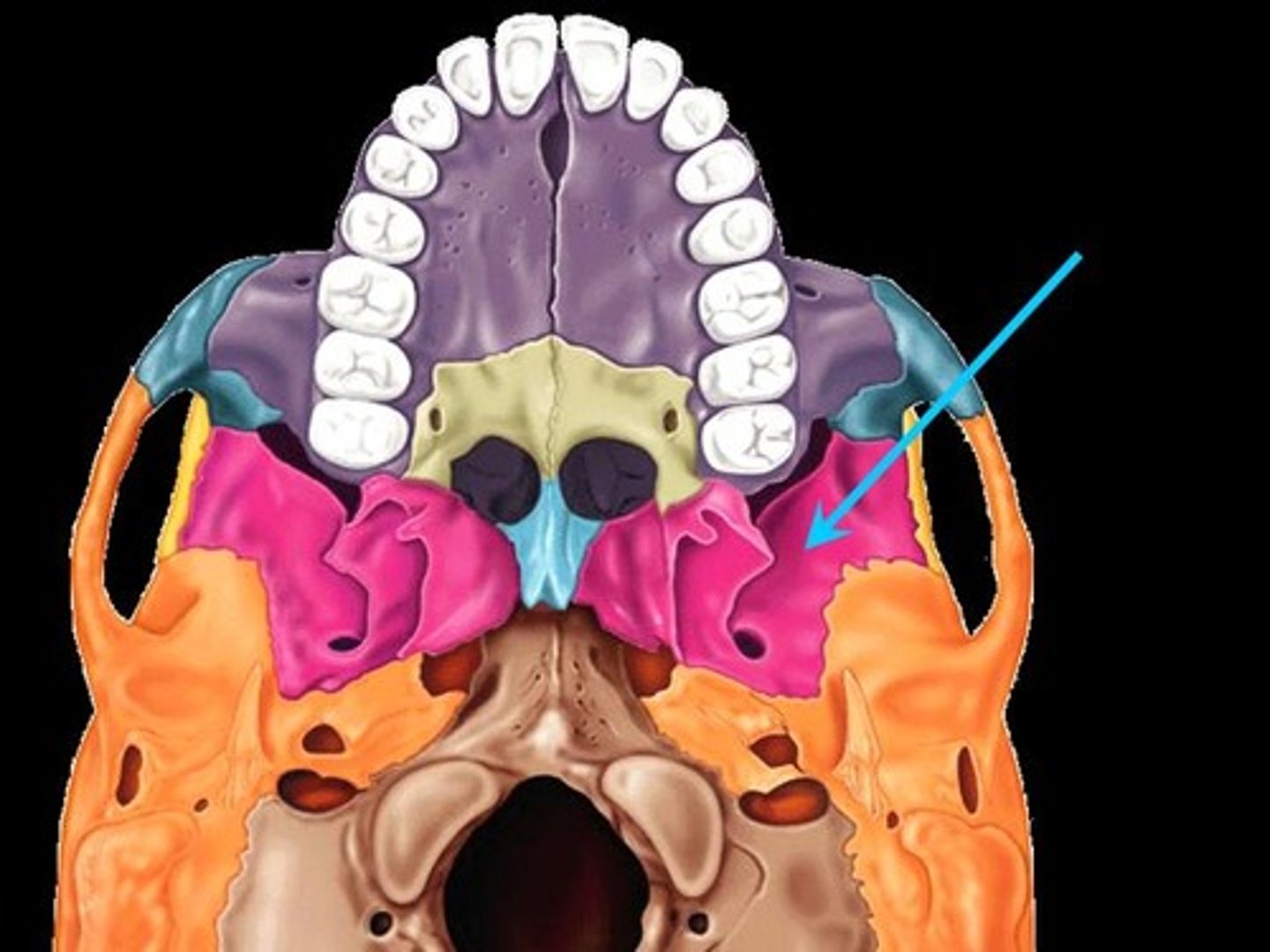
Sphenoid bone (inferior)
spans the skull (butterfly shaped)
 Note
Note  Flashcards (94)