Module 5: Social and Emotional Development in Adolescence & Early Adulthood
 Call Kai
 Learn
Learn Practice Test
 Spaced Repetition
 Match
Match Flashcards
 Knowt Play
1/17

There's no tags or description
Looks like no tags are added yet.
Name | Mastery | Learn | Test | Matching | Spaced | Call with Kai |
|---|
No analytics yet
Send a link to your students to track their progress
18 Terms
What are some roles people have in both their personal, professional or social life? Which roles do people actively chose for themselves and how do they alter their behavior in these roles?
-Relationship roles: Son/daughter, boyfriend/girlfriend, cousin, friend, client, etc.
-Legal roles: Citizen, voter, etc.
-Occupational roles: Student, employee, etc.
-Vocational roles: Reader, musician, woodworker, etc.
People can chose roles based on their interests, such as their occupation and vocational roles. However, some roes are inherited/ assigned such as being a legal citizen or a mother/daughter etc. Alter how you act based on the responsibility and expectations places upon you in that position. For ex: being more stern/formal at work and being more casual and silly with friends/family. More professional at work because that is expected of you.
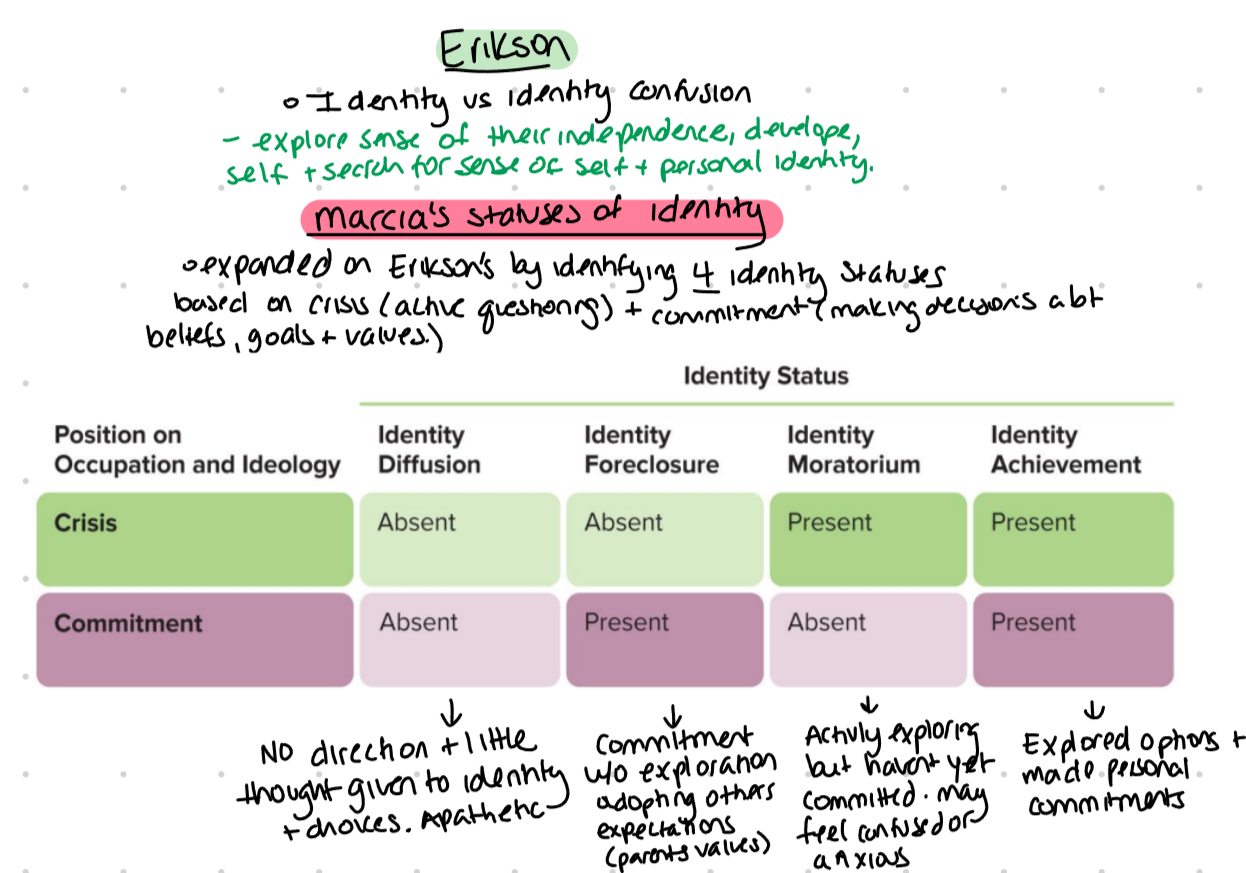
Explain the two theories of identity: Eriskson and Marcia’s Statuses of Identity.
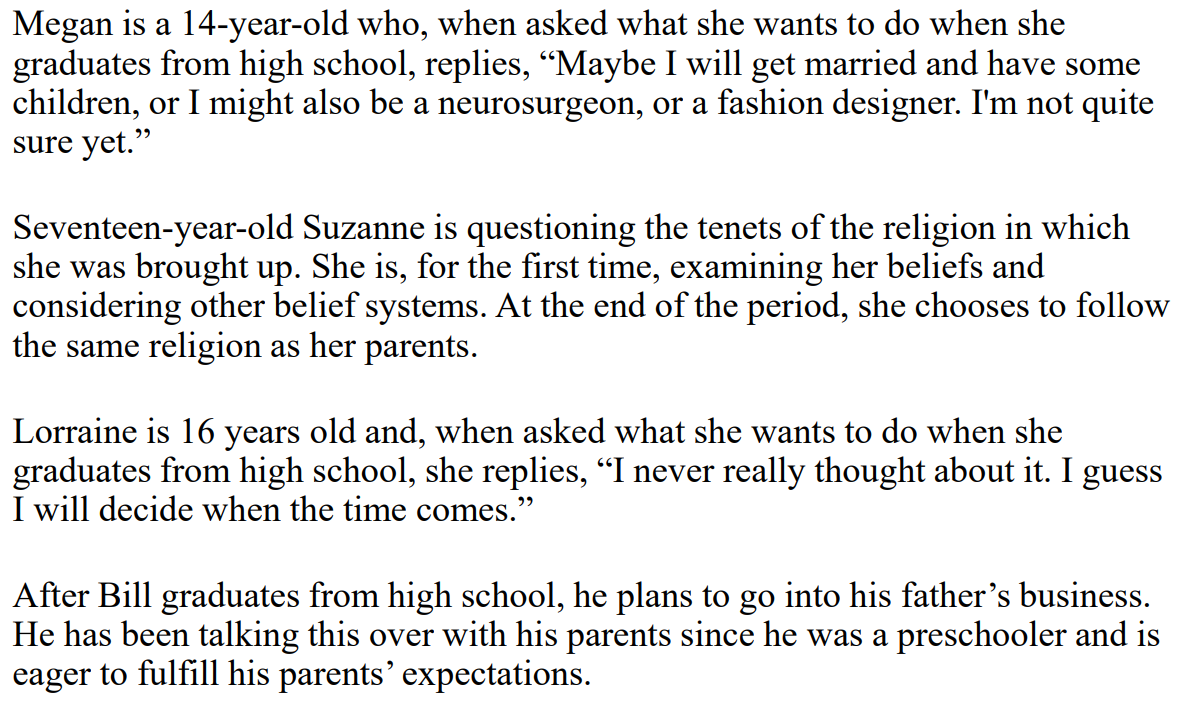
Based on Marcia’s statuses of identity, what stage is each person in?
Meghan: Moratorium
Why: She is exploring multiple options but hasn't made any commitment. This stage reflects active exploration and uncertainty.
Suzanne: Achievement
Why: She has gone through a period of exploration and made a committed decision based on personal reflection, not just inheritance
Lorraine:Diffusion
Why: She shows no exploration and no commitment, indicating a lack of direction or motivation in considering her identity.
Bill: Foreclosure
Why: He has made a commitment but without personal exploration—he’s adopting a path handed to him by others.
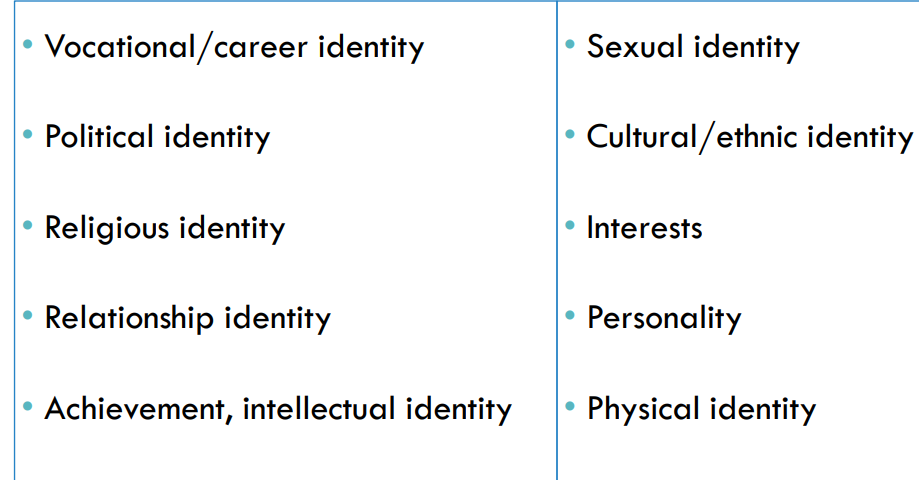
What are some different roles of identity and how do people chose why they are important to them?
Adolescents explore many of these roles to form a stable and integrated identity.
Struggles or conflicts in any one area (e.g., cultural or sexual identity) can affect overall self-esteem and development.
These identities are interconnected, but each may develop at its own pace.
People chose what roles are most important to them based on how central it is to who they are
What happens if a person were to lose one of their roles? Provide examples of instances where someone may lose or challenge their identity.
Losing or being disconnected from an important identity role can lead to a sense of identity crisis. The role could be lost temporarily (e.g., losing a job) or permanently (e.g., experiencing a shift in your health or family dynamics).
Potential effects:
Vocational/Career Identity: Losing a job or career path may challenge your self-worth or future plans.
Relationship Identity: Ending a significant relationship (family, romantic, or friendship) could lead to loneliness or confusion about who you are without them.
Religious or Cultural Identity: Losing or distancing oneself from religious or cultural practices can lead to feelings of alienation or disconnection from one's roots.
Physical Identity: Changes in physical appearance or health (e.g., injury, aging) could impact self-esteem or body image.
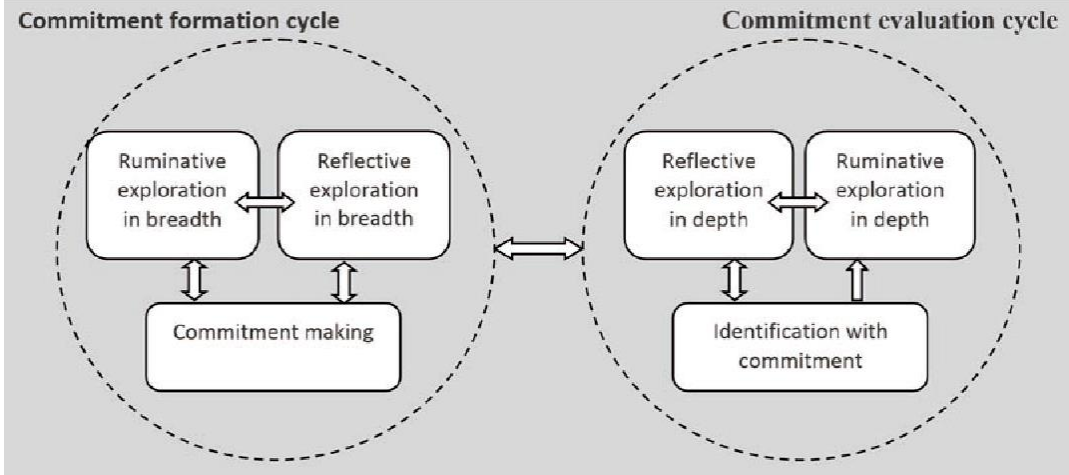
What is the dual cycle model of identity?
The Dual-Cycle Model of Identity explains how identity develops through two interconnected processes:
Exploration: Individuals try out different roles, beliefs, and experiences to discover who they are. This happens through personal reflection and active experimentation.
Commitment: After exploring, individuals commit to certain roles or beliefs, creating a stable sense of self.
This model shows that identity is dynamic—we continue to explore and re-define who we are throughout life. The two cycles work together, meaning that when a role is lost or challenged, it might spur renewed exploration to help re-establish or redefine the self.
What are the general developmental paths of identity statuses?

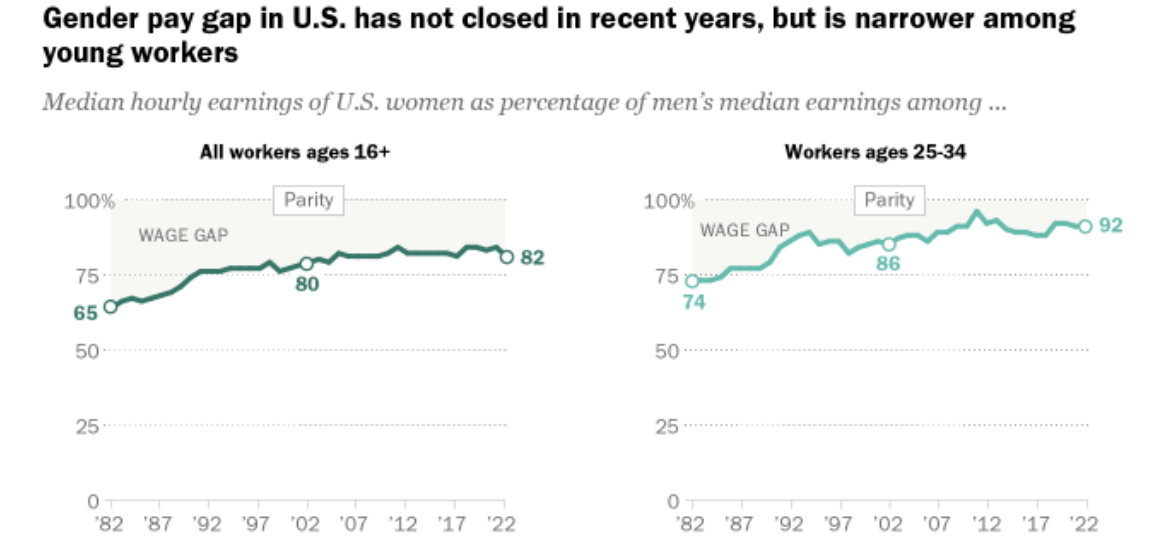
How is there a gender discrimination in the work place?
There is historical role differences in the U.S where women were kept out of the workplace and kept to work at home. Despite it being more common that women are working, there is still a wage gap between men and women who hold the same positions.
What are some reasons for why people work? / What is the Self-Determination Theory / Daniel Pink’s framework in relation to making work meaningful.
• Extrinsic and Intrinsic Motivation: People may be driven by external rewards such as a high salary/ wages or promotions. Or, could be driven by internal satisfaction or personal meaning. They may find enjoyment completing their tasks and take pride in their wok.
• Personal Identity and Social Life: Work becomes a core part of an individuals identity. Additionally, provide a sense of community and social life with clients and coworkers.
• Satisfaction: People seek job satisfaction such as see/making a difference and job recognition.
• Self-Determination Theory: These are three key psychological needs that make work feel meaningful:
Autonomy – Feeling in control of your tasks and decisions
Mastery – Opportunity to grow and get better at something important
Purpose – Believing your work serves a larger goal or value
What is some recommendations and advice for adolescents and early adults who are worried about keeping a job.
• Systematically evaluate a variety of choices
• Know yourself.
• Create a “balance sheet” listing the potential gains and losses that you will incur from a particular profession.
• “Try out” different careers through internships.
• Remember that you can change careers.
• It is reasonable to expect that shifting values, interests, abilities, and life circumstances might make a different career more appropriate later in life than one chosen in early adulthood.
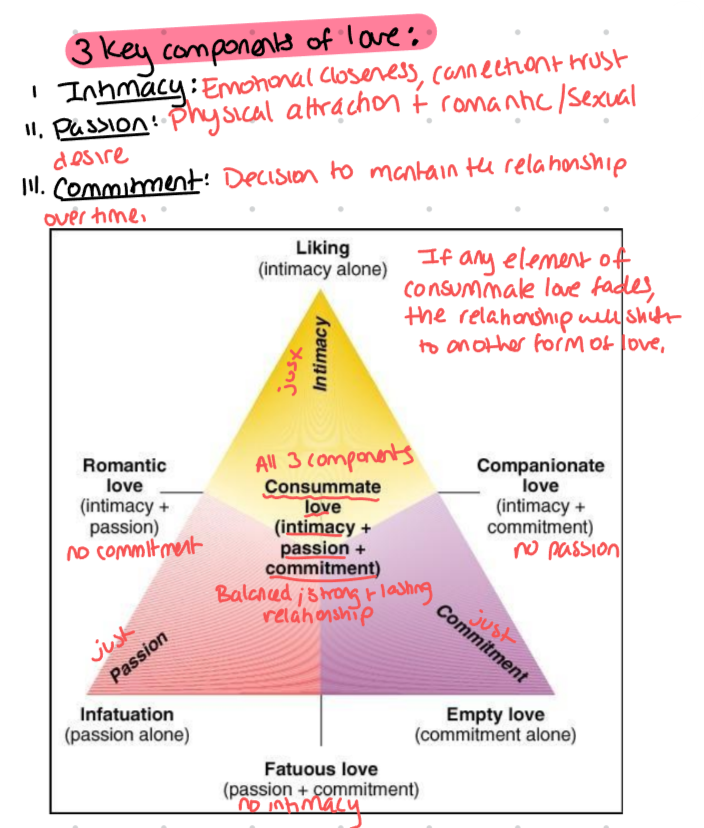
Explain Robert Sternberg’s Triangular Theory of Love
What are some marriage and nonmarriage trends?
Marriage:
Influenced by proximity, similarity, attraction, and values
Evolutionary theory suggests people are biologically driven to choose partners who:
Men: Often value youth and physical attractiveness (signs of fertility)
Women: Often value resources, stability, and status (to support offspring)
Nonmarriage:
Some people forgo marriage entirely. This includes chooseing to focus on careers, personal goals, or financial independence. Could also be disillusionment with traditional roles or fear of divorce
Other may be delaying marriage. Reasons could include education and career prioritization, economic uncertainty or personal development before commitment.
Age of marriage in the U.S is also increasing with both men and women marrying around 30 on average. Men are also typically older at their first marriage (30 M, 28 F)
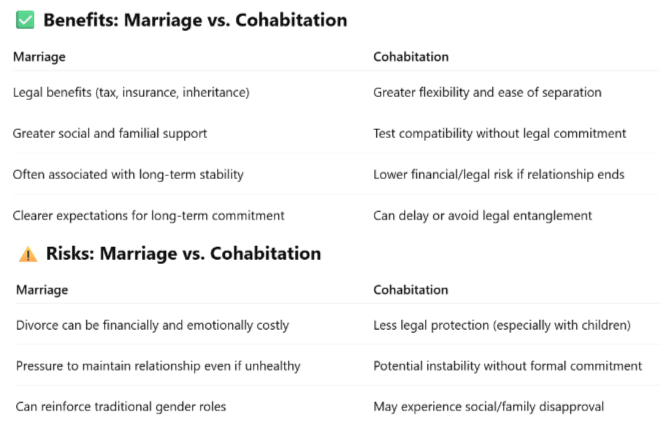
Has cohabitation increased or decreased in recent times? What are the benefits and risks of marriage vs cohabitation. How does marriage and cohabitation influence a person’s identity?
There has been an increase in unmarried adults living together.
Marriage often influences personal and social identity:
People may adopt new roles (e.g., spouse, in-law)
Seen as a marker of adulthood or stability
Cohabitation may feel more fluid:
Identity may remain more individual or less tied to formal roles
Can still include emotional commitment, but with fewer societal labels
How is becoming a parent life changing?/ Why do people chose to be parents and what are some common myths about becoming a parent?
There are three big impacts to becoming a parent: Psychological, Relational and Financial
Why: • Psychological drivers (deepening relationships, parental love, purpose). There is also social pressure to have kids. In society, it is expected for people to have families.
Myths about becoming a parent:
-The birth of a child will save a failing marriage
-The child will think, feel, behave as the parent did in his/her childhood
-Having a child will give the parent a ‘second chance’ at achievement
What are some recent trends in parenting?
Lower incidence of unplanned, unwanted pregnancies
Fewer adults choosing to become parents
Later childbirth
Family size, fewer children
Overall, less people are having kids compared to the 1900s
the percentage of births to unmarries women has increased, as well as the median age of a women’s firth marriage and first child.
What does it mean to be a parent and how do adults learn to parent?
Parents utilize different parenting styles, structures within the home/environment, modeling and discipline.
How they learn:
Observation: Based on how they were parented themselves
Experience: Trial and error, learning what works for their child
Education: Parenting classes, books, therapy, community support
Support systems: Advice from other parents, professionals, or cultural traditions
Adaptation: Learning to respond to a child’s changing developmental needs
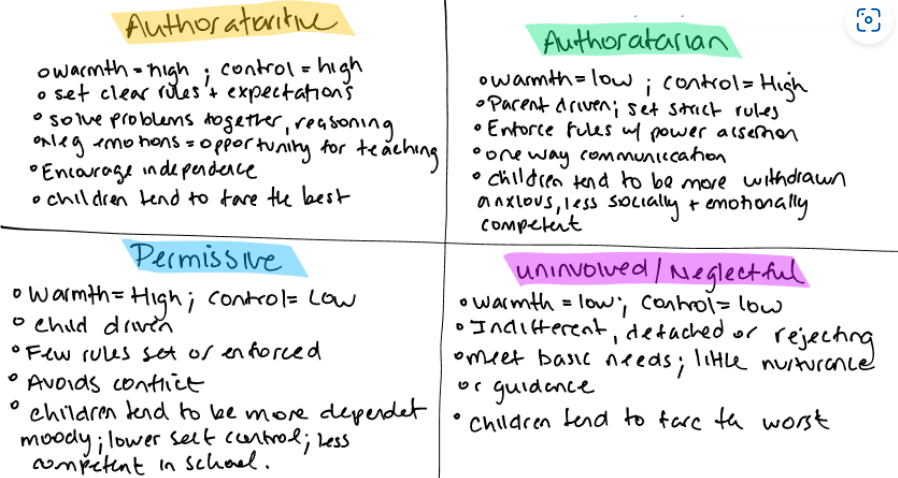
What are some influences that explain the recent parenting trends seen today?
Influences:
•Education: More women are getting higher levels of education
• Establishing careers
• More women in workforce
• Getting married later pushes starting families later
• Cost: Having kids is expensive
• Contraceptives
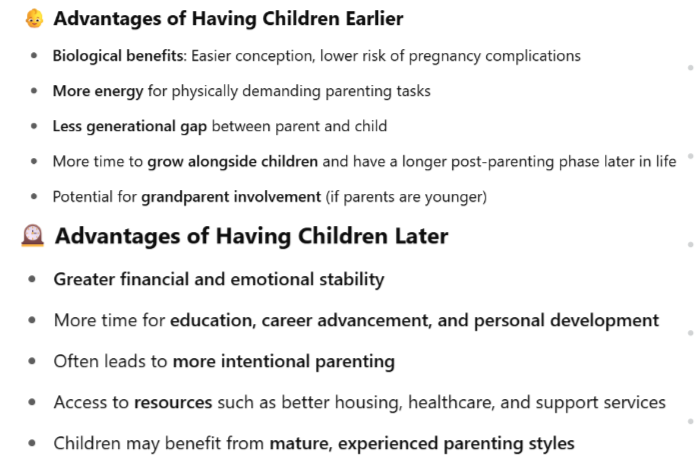
What are some advantages for having children later or earlier? / How has there been a societal shift in expectations of families?
A significant portion of women’s lives is now spent on education, work, and personal growth before or instead of parenting.
Men are increasingly involved in caregiving, with shifting cultural expectations promoting active fatherhood.
Parental care is supplemented by regulated childcare (e.g., preschools, daycare centers), allowing both parents to maintain careers and social balance.