HAN 312 chapter 15 - musculoskeletal system
 Call Kai
 Learn
Learn Practice Test
 Spaced Repetition
 Match
Match Flashcards
 Knowt Play
1/244

There's no tags or description
Looks like no tags are added yet.
Name | Mastery | Learn | Test | Matching | Spaced | Call with Kai |
|---|
No analytics yet
Send a link to your students to track their progress
245 Terms
musculoskeletal system
bones
mm
joints
bones
structural support n protect internal organs
either axial or appendicular skeleton
dense, hard CT of skeleton
axial skeleton
skull
spine
chest
appendicular skeleton
upper n lower limbs
shoulder
pelvis
bone inside n outside
inside
spongy cancellous/trabeculae bone
have blood vessels
outside
hard compact bone
how many bones in adult body
206
joints
where bones come tg (articulate)
use mm for movement
tendons
bind mm to bone
ligament
bind bone to bone
musculoskeletal system functions
give shape n structure to body
provide support for body
allow movement
protect internal organs (use ribcage or any body framework)
store calcium + other minerals in bone
produce specific blood cells in bone marrow
produce heat in mm (use ATP)
what regulates calcium
parathyroid hormone (PTH)
secrete hormone to release calcium from bone
parathyroid hormone
4 glands in body
absorb calcium
excrete phosphate
in back of thyroid gland
ossification
replacement of cartilage with bone
bone formation
osteoblast
make immature bony tissue that replaces cartilage
osteocyte
stem cells
nourish n maintain bones
osteoclast
reabsorb or digest bone
remodel bone
bone equilibrium
osteoblast n osteoclast balance
fractured bone fix
bone gets realigned
osteoblast make new bone 4-6 weeks
proper bone formation depend on
calcium
phosphorus
vit d
calcium phosphate enzyme make hard bone
calcium
mineral of bone
need for nerve transmittal to mm
includes heart mm
skeleton reservoir for
calcium storage
calcium level
maintained in blood by parathyroid gland
bone shapes
long
short
flat
sesamoid
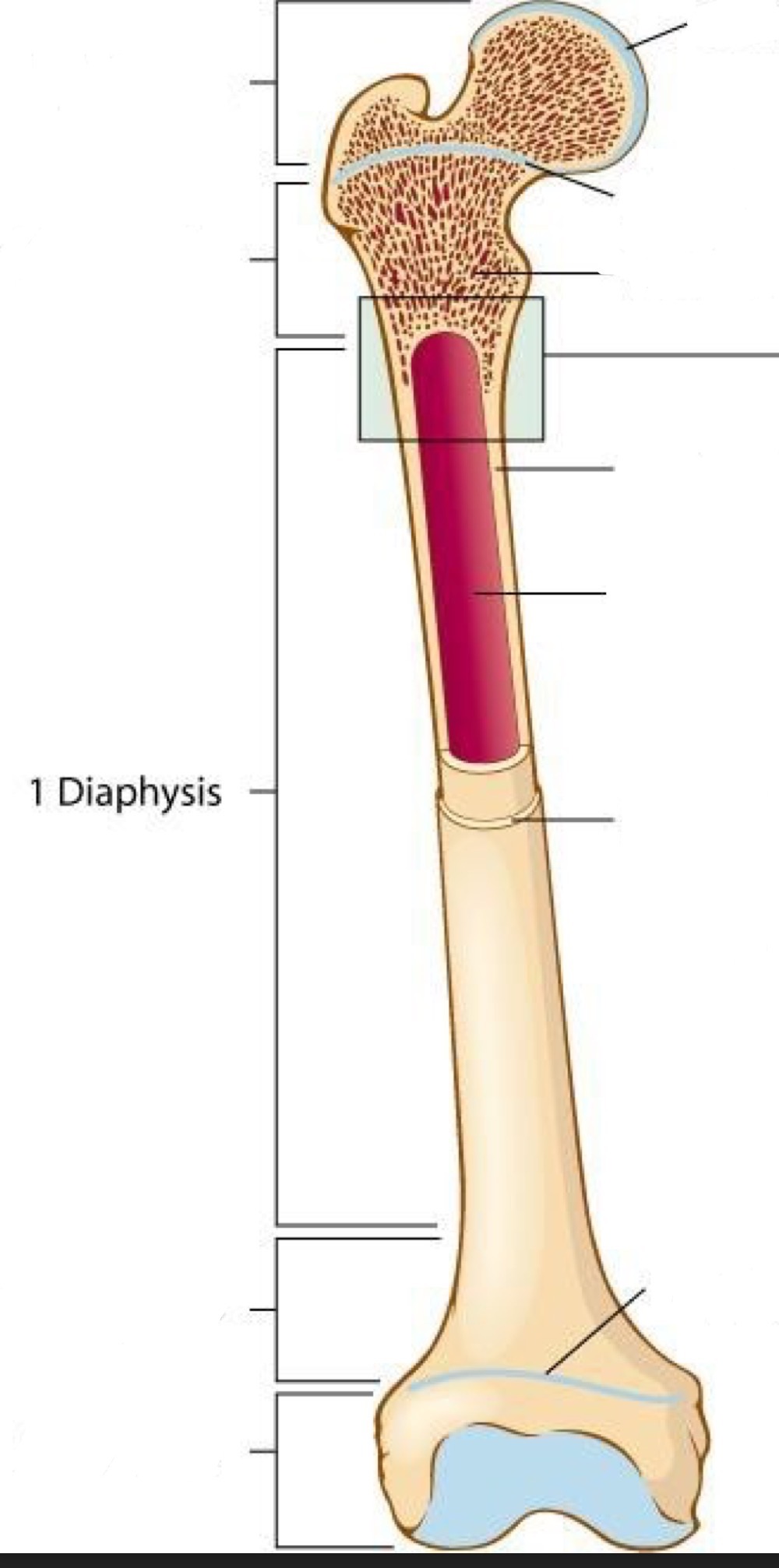
diaphysis
shaft of long bone
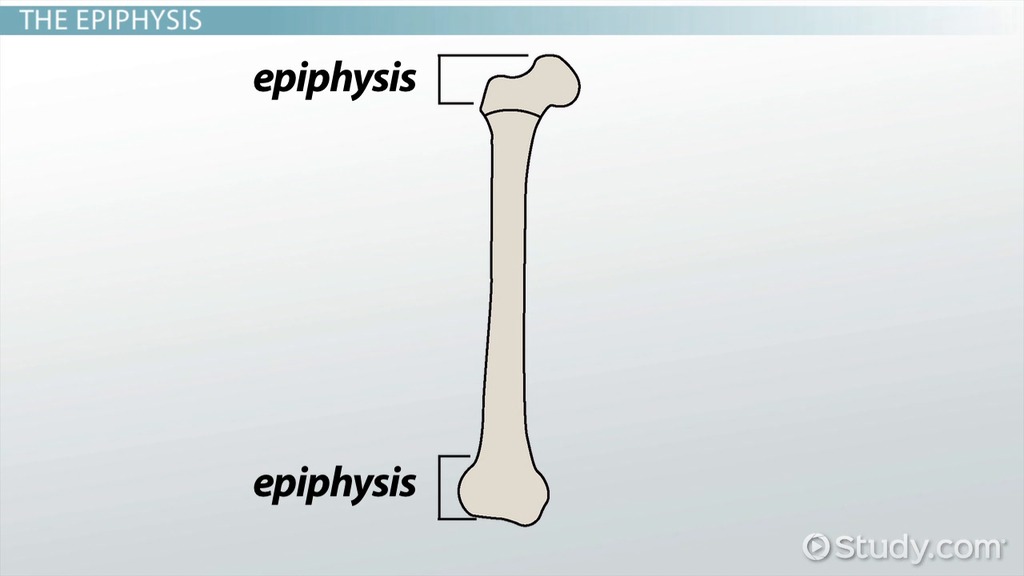
epiphysis
wider ends of long bone
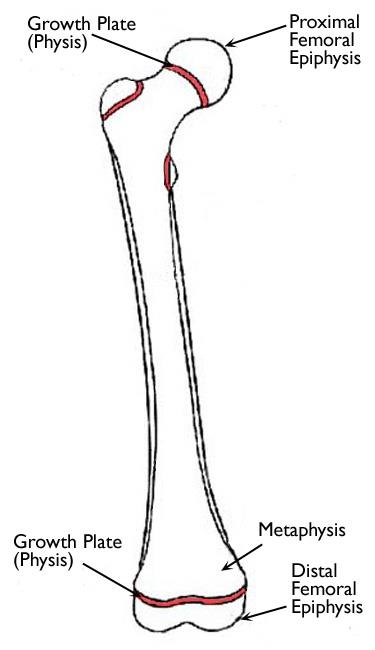
epiphyseal line / plate
growth plate
where cartilage is replaced by bone for length wise bone growth
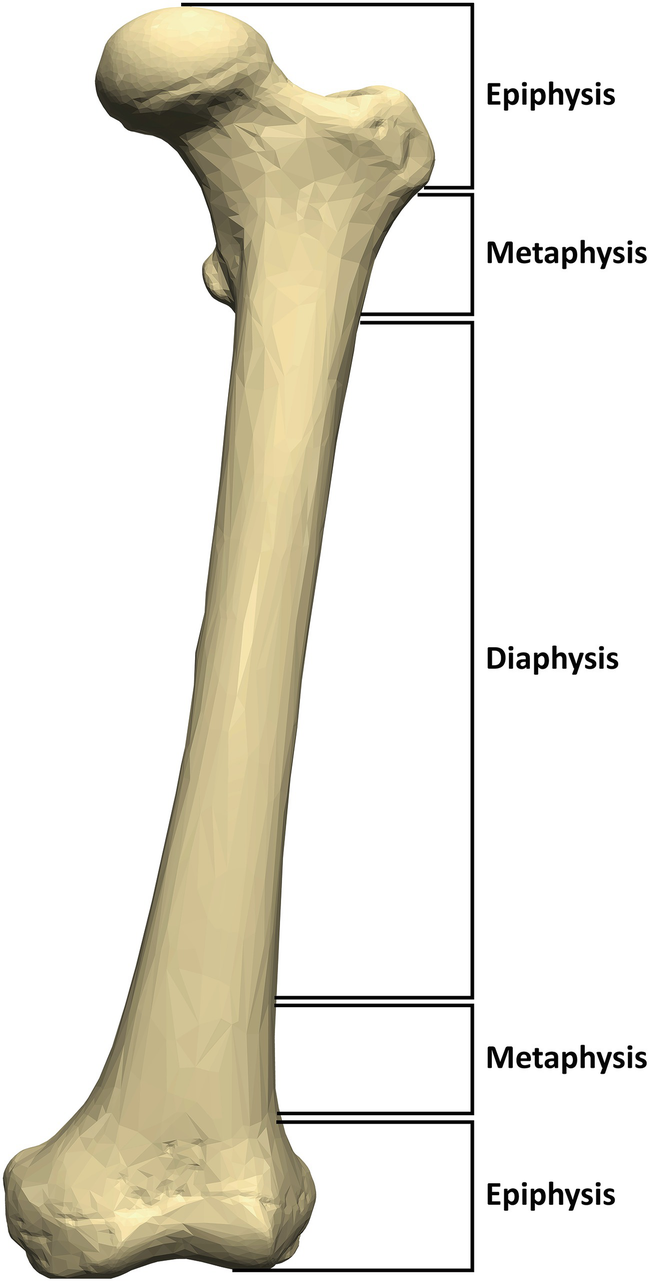
metaphysis
flared section of long bone
between diaphysis n epiphysis
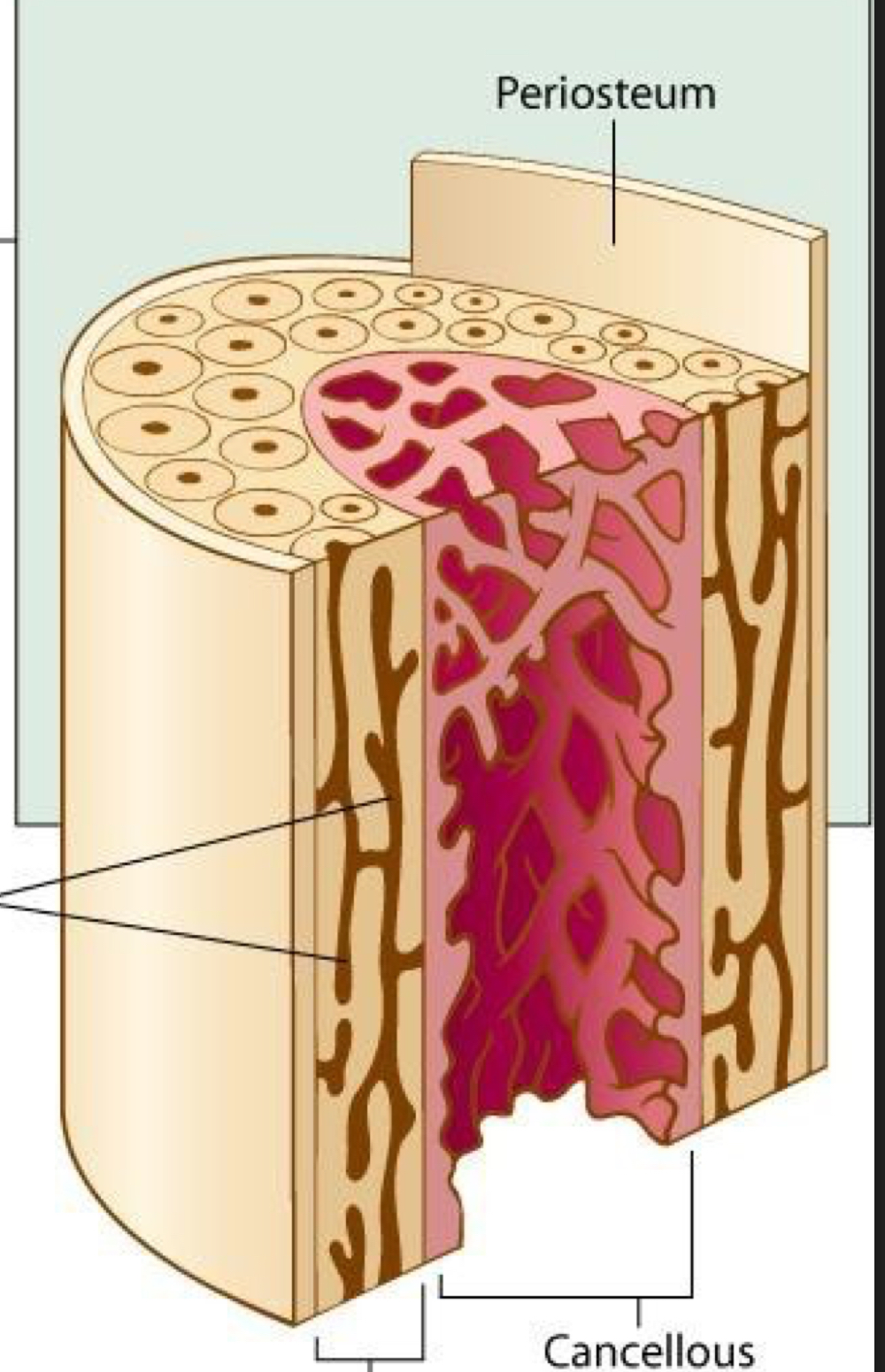
periosteum
surrounding membrane for bone
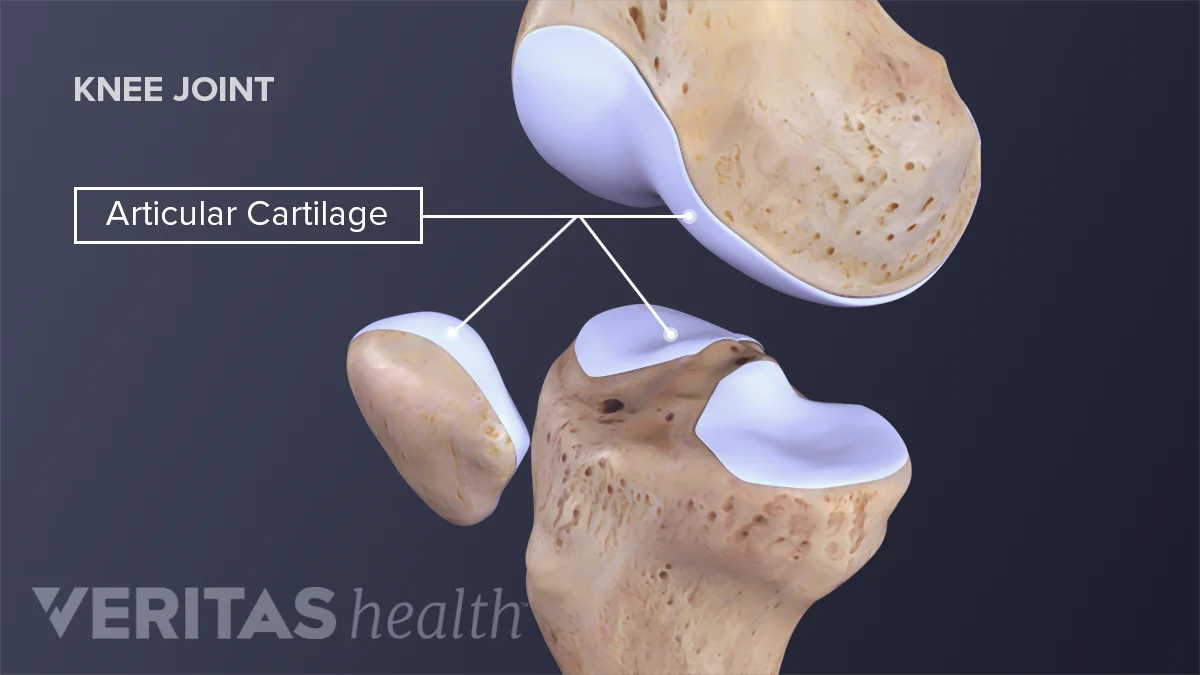
articular cartilage
cushions joints
compact (cortical) bone
harder, denser bone
have haversian canal
haversian canal have
vessels
nerves
yellow marrow
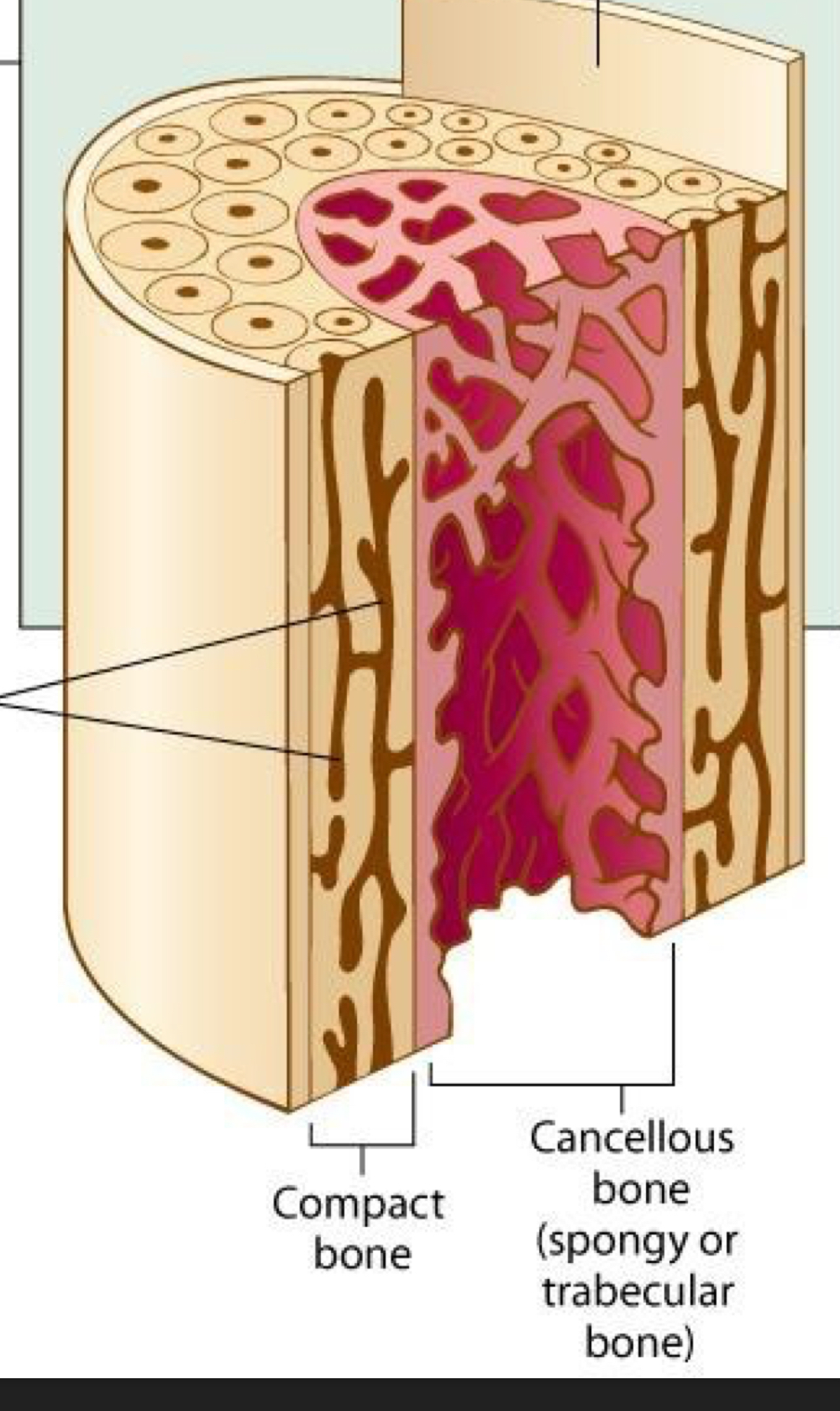
cancellous spongy trabecular bone
mesh like bone tissue (red marrow)
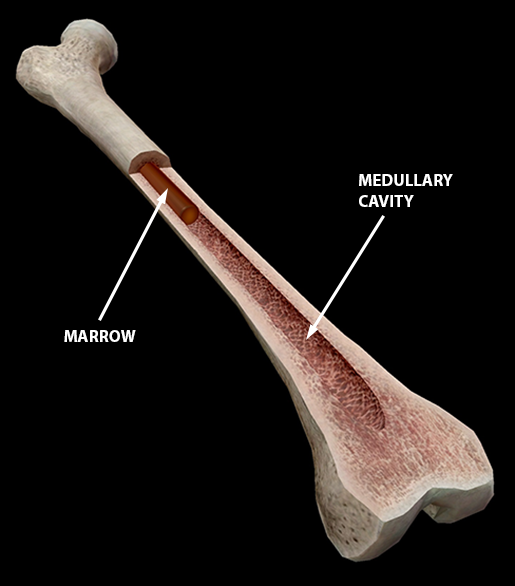
medullary cavity
central, hallowed-out area in shaft of long bone
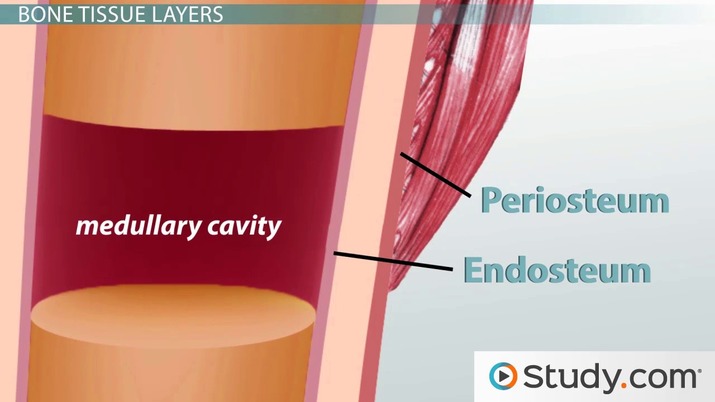
endosteum
membrane within medullary cavity
cranium
skull
composed of 8 bones
2 parietal
2 temporal
1 sphenoid (butterfly shape)
1 frontal
1 occipital
1 ethmoid
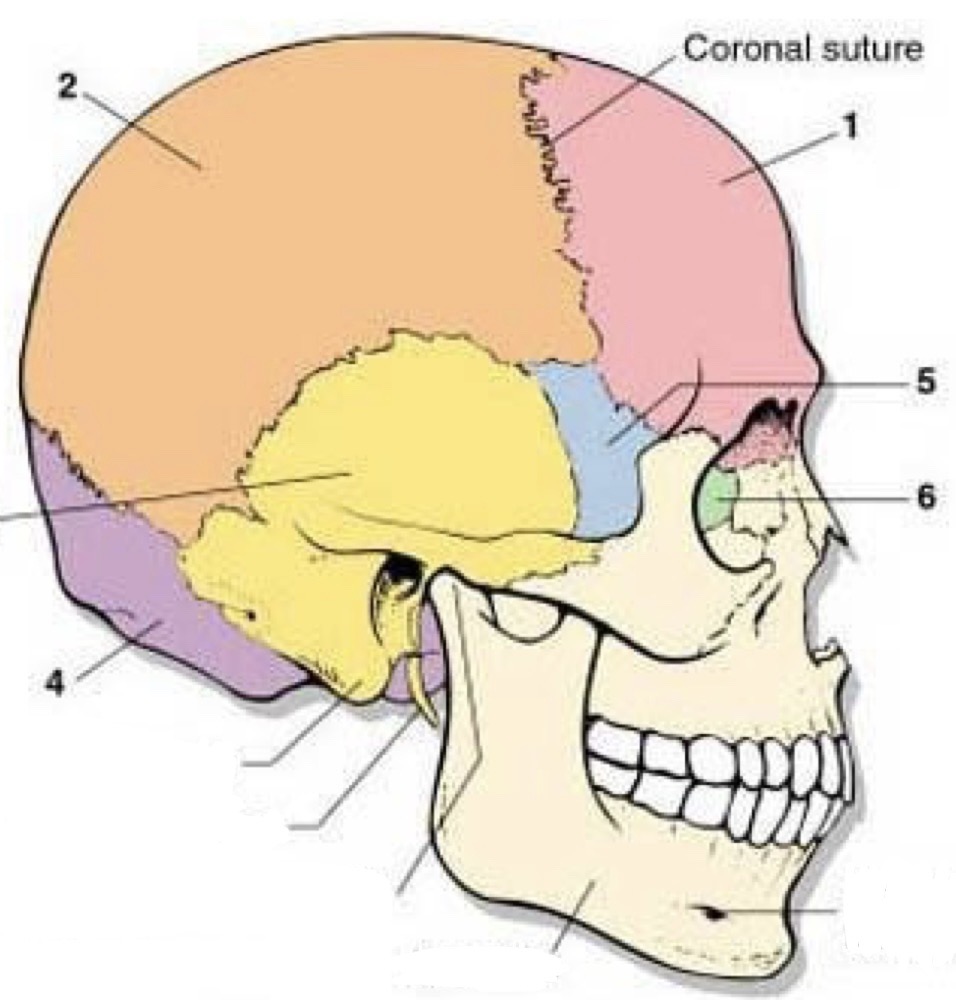
fill in
frontal
parietal
temporal
occipital
sphenoid
ethmoid
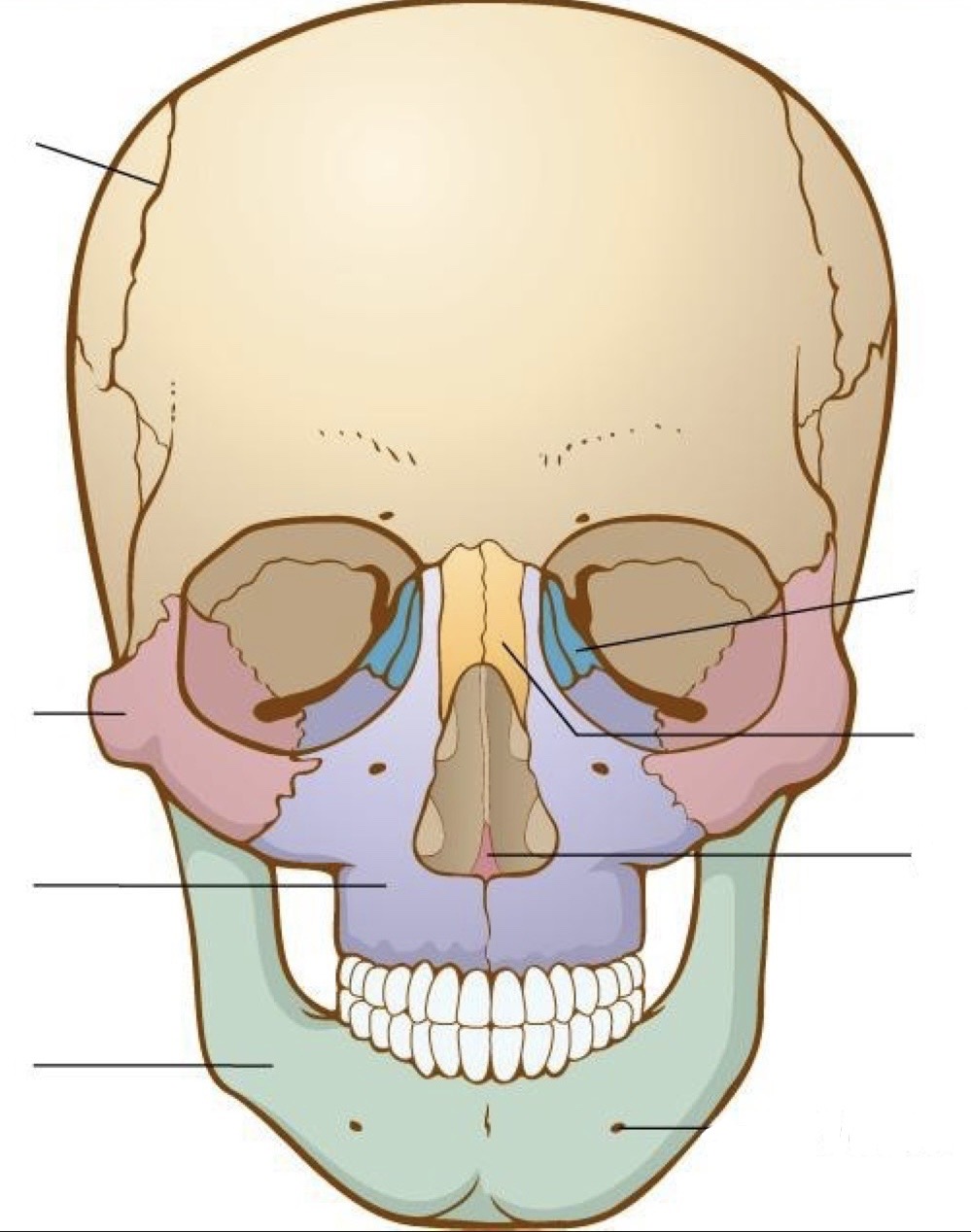
facial bones / fill in
2 maxillary
2 zygomatic
2 nasal
1 vomer
1 mandible
2 lacrimal
bones of the spinal column
24 vertebrae
separated by intervertebral discs (cartilage pads)
7 cervical (neck)
12 thoracic (chest)
5 lumbar (lower back)
sacrum (pelvis)
5 fused
coccyx / tailbone (lower spine)
4 fused
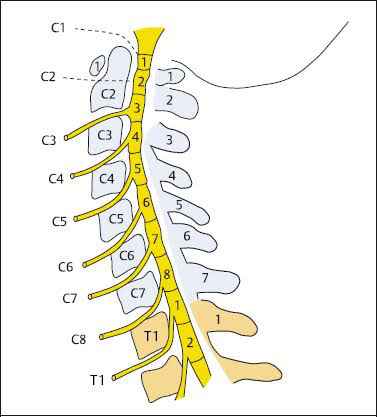
cervical vertebrae
have 8 spinal nerves
passes above from c1-7 then onward it passes below
sternum
flat sword shaped anterior bone of chest
attached to clavicles
breast bone
clavicles
collar bone
scapula
shoulder blades
ribs
flat curved bones attached to thoracic portion of spinal column (12 pairs)
costal refers to
ribs
true ribs
ribs 1-7
attached to sternum by costal cartilage
false ribs
ribs 8-10
not directly attached to sternum
floating ribs
ribs 11-12
not attached at all
humerus
upper arm bone
radius
outer of 2 bones of lower arm
ulna
inner of 2 bones of lower arm
carpal bones
8 bones of the wrist
metacarpal bones
5 bones of palm of hand
phalanges
bones of fingers n toes
14 in each hand or foot
femur
bone of upper leg
patella
kneecap
tibia
large inner bone of lower leg
fibula
smaller, outer bone of lower leg
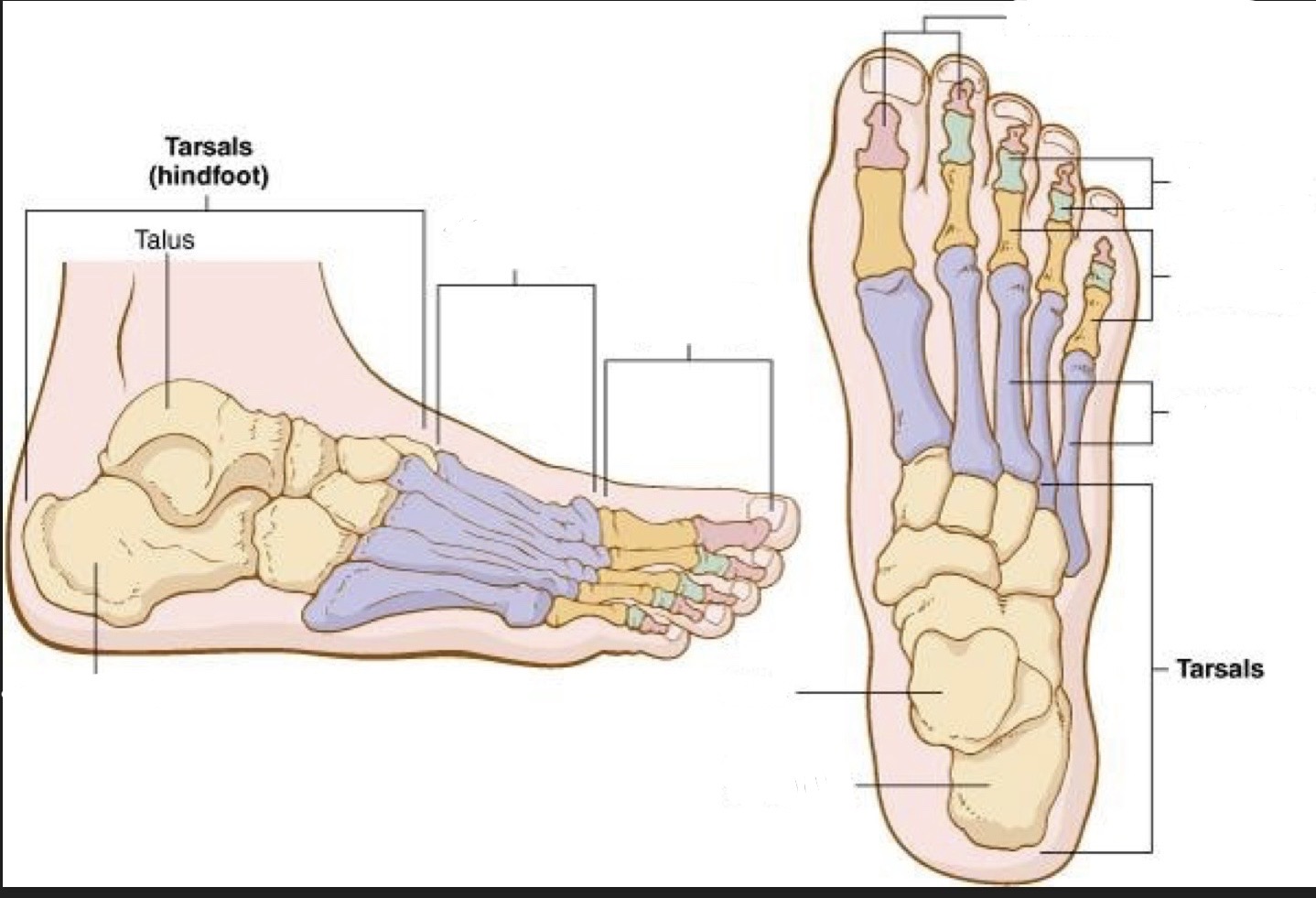
tarsal bone
7 bones of ankle
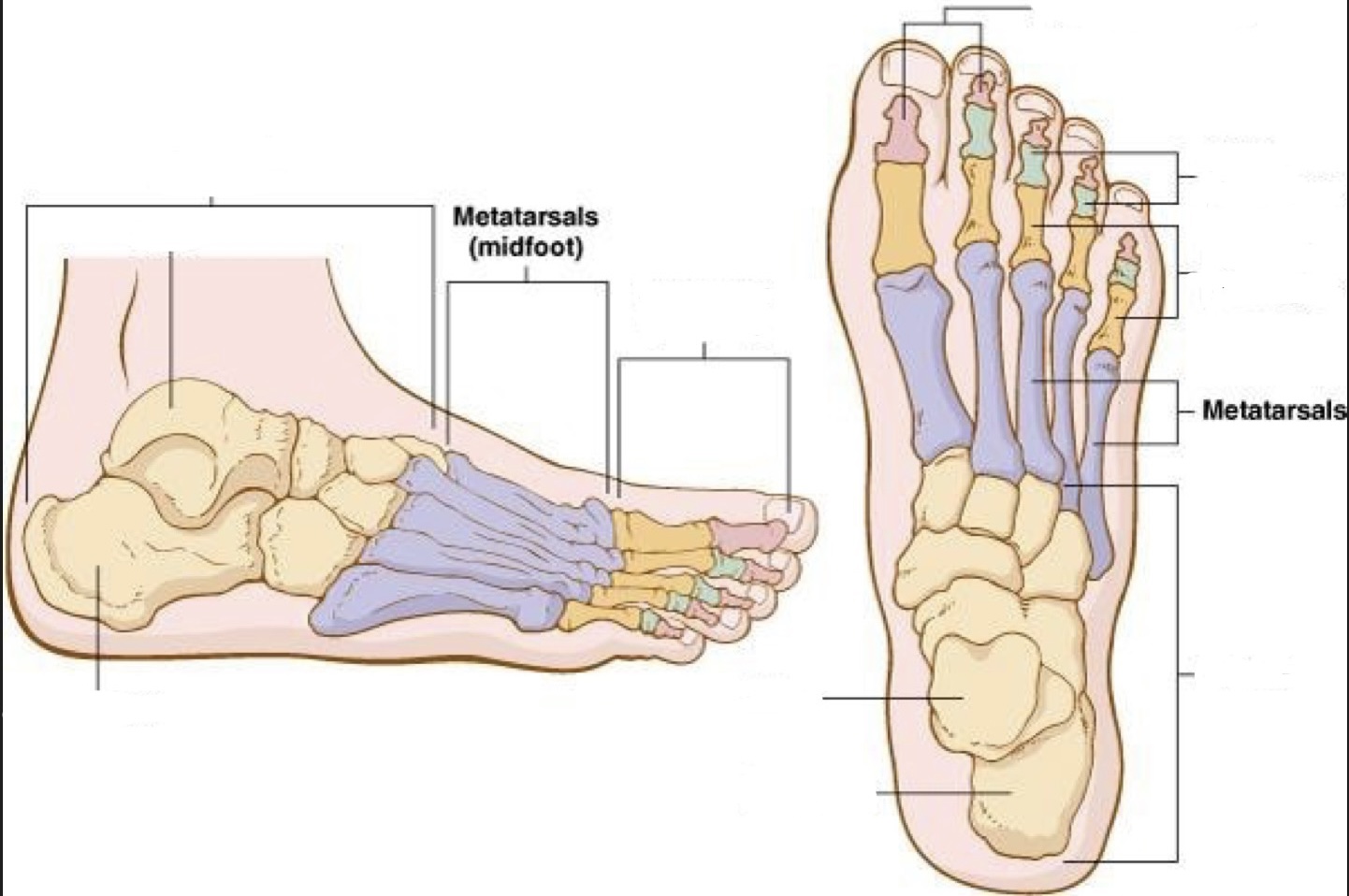
metatarsal bone
5 bones of foot
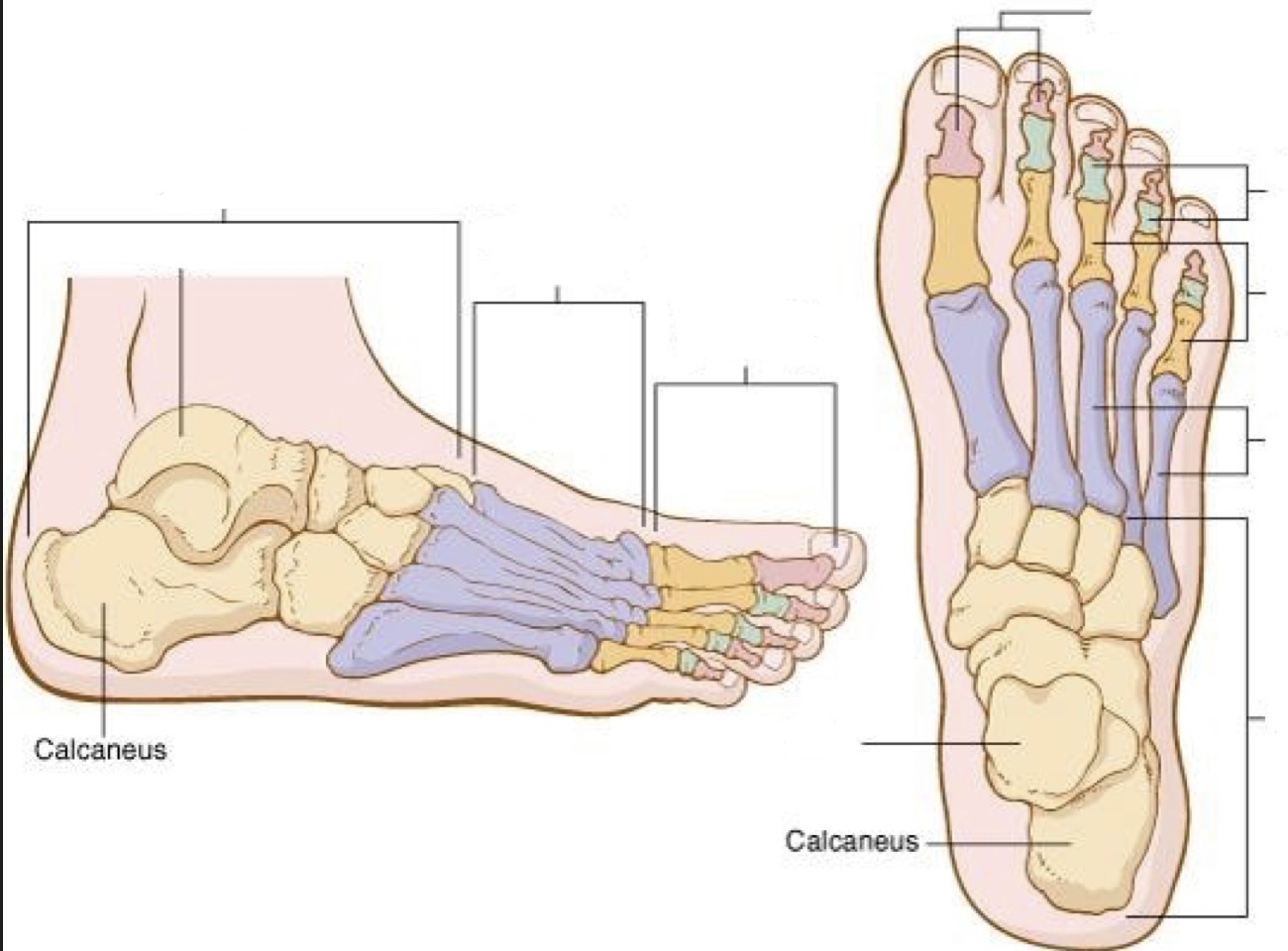
calcaneous
bone of heel
hip bone
made of 3 fused bones on each side
ischium (sitting bone) - posterior lower section of pelvic bone
ilium - upper section of pelvic bone
pubis - anterior lower section of pelvic bone; pubic bone
oste/o
bone
calc/o , calci/o
calcium
myel/o
bone marrow
orth/o
straight
crani/o
cranium
mandibul/o
mandible
maxill/o
maxilla
spondylo, vertebr/o
vertebra
rachi/o
spine
cervic/o
neck
lumb/o
lower back
lamin/o
lamina
disk/o, disc/o
disk or disc
lord/o
curve
kyph/o
posterior curve
scoli/o
crooked/twisted
thorac/o
thorax, chest
clavicula/o , clavic/o
clavicle
scapula/o
scapula
cost/o
ribs (combining form)
stern/o
sternum
humer/o
humerus
radi/o
radius
uln/o
ulna
carp/o
carpals
metacarp/o
metacarpals
phalang/o
phalanges
femor/o
femur
patell/o
patella
fibul/o , perone/o
fibula
tibi/o
tibia
tars/o
tarsals
metatars/o
metatarsals
pelv/i
pelvis
ili/o
ilium
ischi/o
ischium
pub/o
pubis
-blast
embryonic cell
-clasia , -clasis , -clast
to break
Explore top notes

Explore top flashcards
