Chapter 16 : Bacterial Genetics
 Call Kai
 Learn
Learn Practice Test
 Spaced Repetition
 Match
Match Flashcards
 Knowt Play
1/44

There's no tags or description
Looks like no tags are added yet.
Name | Mastery | Learn | Test | Matching | Spaced | Call with Kai |
|---|
No analytics yet
Send a link to your students to track their progress
45 Terms
Characteristics of Bacteria
Lacks nucleus and membrane bound organelles
have a single chromosome folded into a nucleoid body
come in a variety of shapes and sizes
some bacteria have capsules (to hide what they look like)
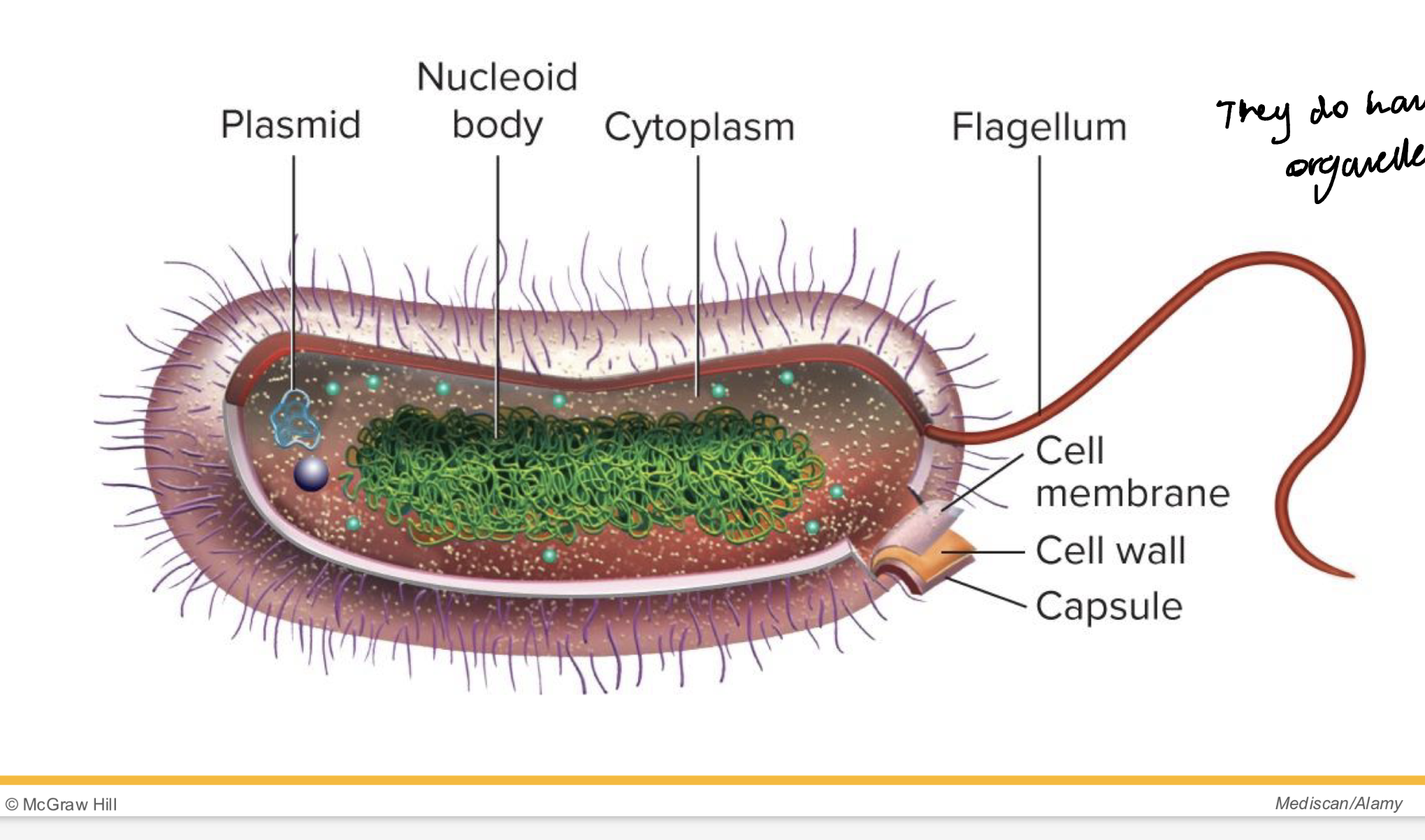
Bacteria have adapted to a range of habitats
different shapes, adaptations all driven by the genetics of bacteria
different habitats
land, water
metabolism must adapt to those enviorments
bacteria play an essential role of natural processes (ie. nitrogen cycle)
Small fraction of bacteria are pathogens
Pathogen: bacterial strain that causes disease
invades tissues
may produce toxins, proteins that interfere with cell function/destroy it
teatnus toxin → paralysis
Typical bacterial genome is composed of one circular chromsome
usually circular
DNA molecule condenses by supercoiling and looping
each bacterium replicates its chromosome and then divides by binary fission (analogous to cytokinesis in eukaryotes) into two daughter cells
tightly packed with genes
Bacterial genomes (focusing on E.coli)
90% of E.coli DNA encodes proteins, while 5% human DNA encodes protein
e coli genes have no introns
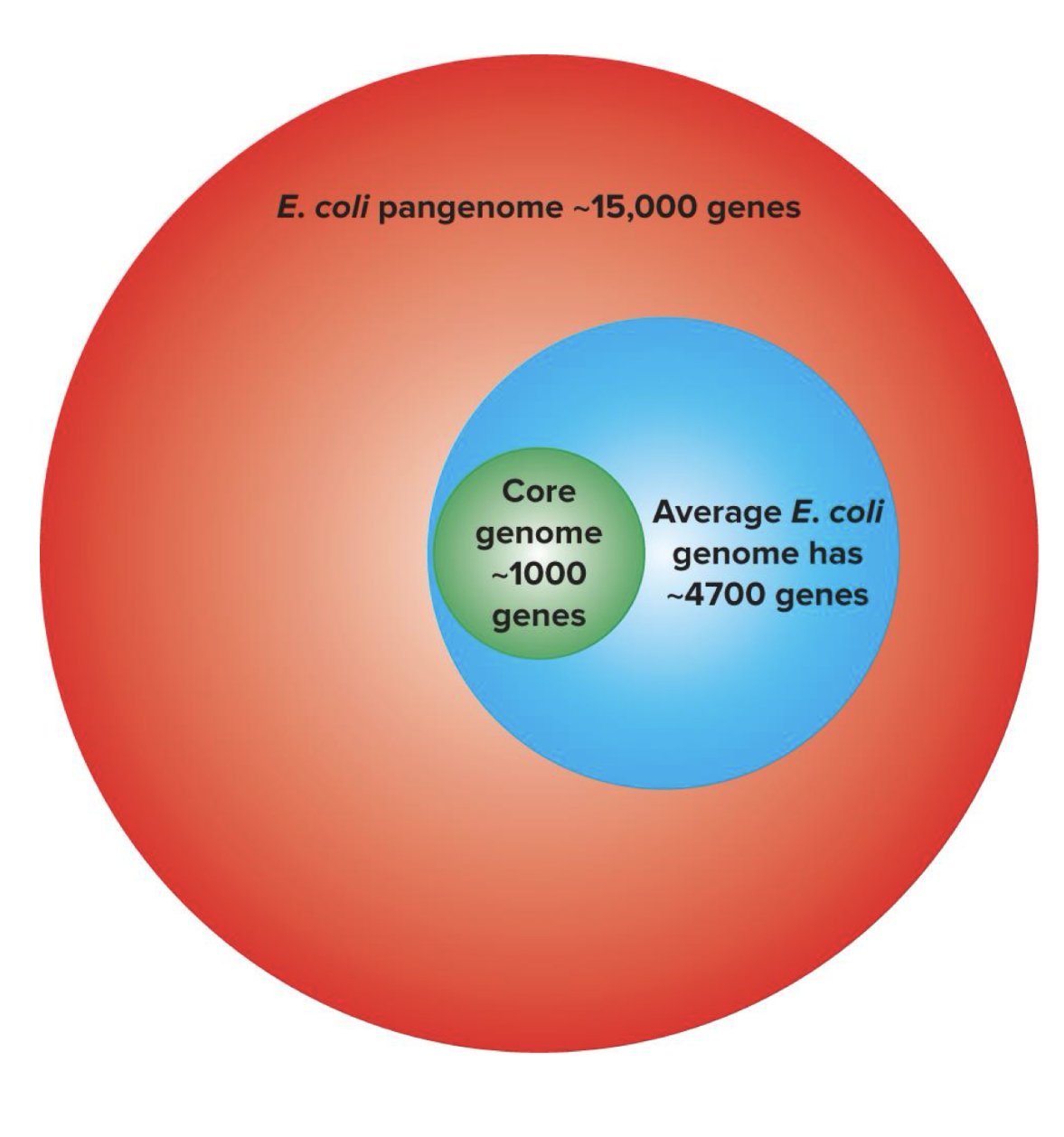
Individual E.coli strains contain a subset of the E. coli pangenome
core genome: abt 1000 genes that are found in all strains
pangenome- core genome plus all genes that are found in some other strains and not others
Bacterial genomes contain transposons
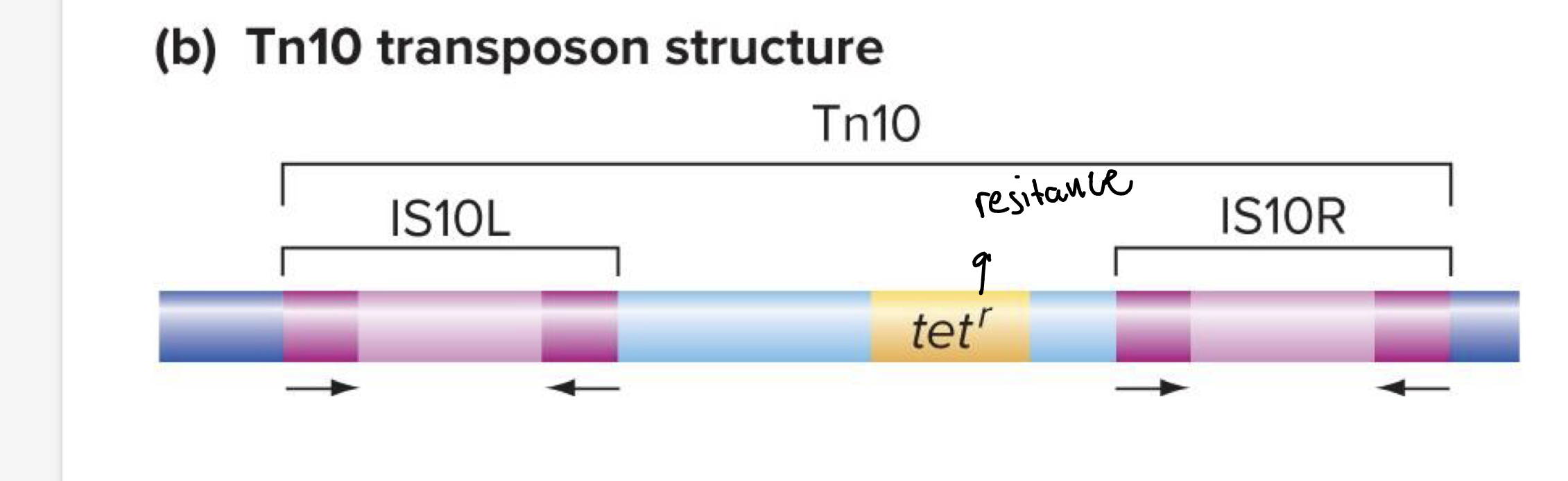
Insertion sequences (IS) are like eukaryote TEs
inverted repeats at the ends
encodes transposase
can disrupt gene funciton
can rearrange bacterial genomes by causing deletions or inversions

Tn elements
composite TEs
two nearby TEs
flank a gene for resistance to antibiotics
function to move between chromosomes and plasmids, often carrying cargo genes like antibiotic resistance or virulence factors.
Plasmids
small circles of double stranded DNA (carry additional DNA)
May contain genes that benefit host bacterium
Resistance plasmids
can also provide resistance to antibiotics
RPs
contain composite IS/Tn transposons
carry genes that confer resistance to multiple antibiotics
can be easily transferred from one bacterium to another in nature
Metagenomics
collective analysis of genomic DNA from an entire community of microbes
Metagenomes of extremophiles
Proteins that work under unusual conditions, such as Taq DNA polymerase
E coli is a versitale model organism
most studied and understood bacterial species
normally inhabits intestines of warm blooded animals
can grow in absence of O or air
cells divide every 20 min
phototrophic - can grow in minimal media
Bacteria are monoploid
All mutations express their phenotypes
Altered colony morphology
resistance to bactericides
Auxotrophs - unable to reproduce in minimal media
Selection
establish conditions in which only the desired mutant will grow
Genetic screen
examine each colony for a particular phenotype
Gene transfer in bacteria an overview
Vertical gene transfer in bacteria
occurs in sexually reproducing organisms - traits are transferred from parent to offspring
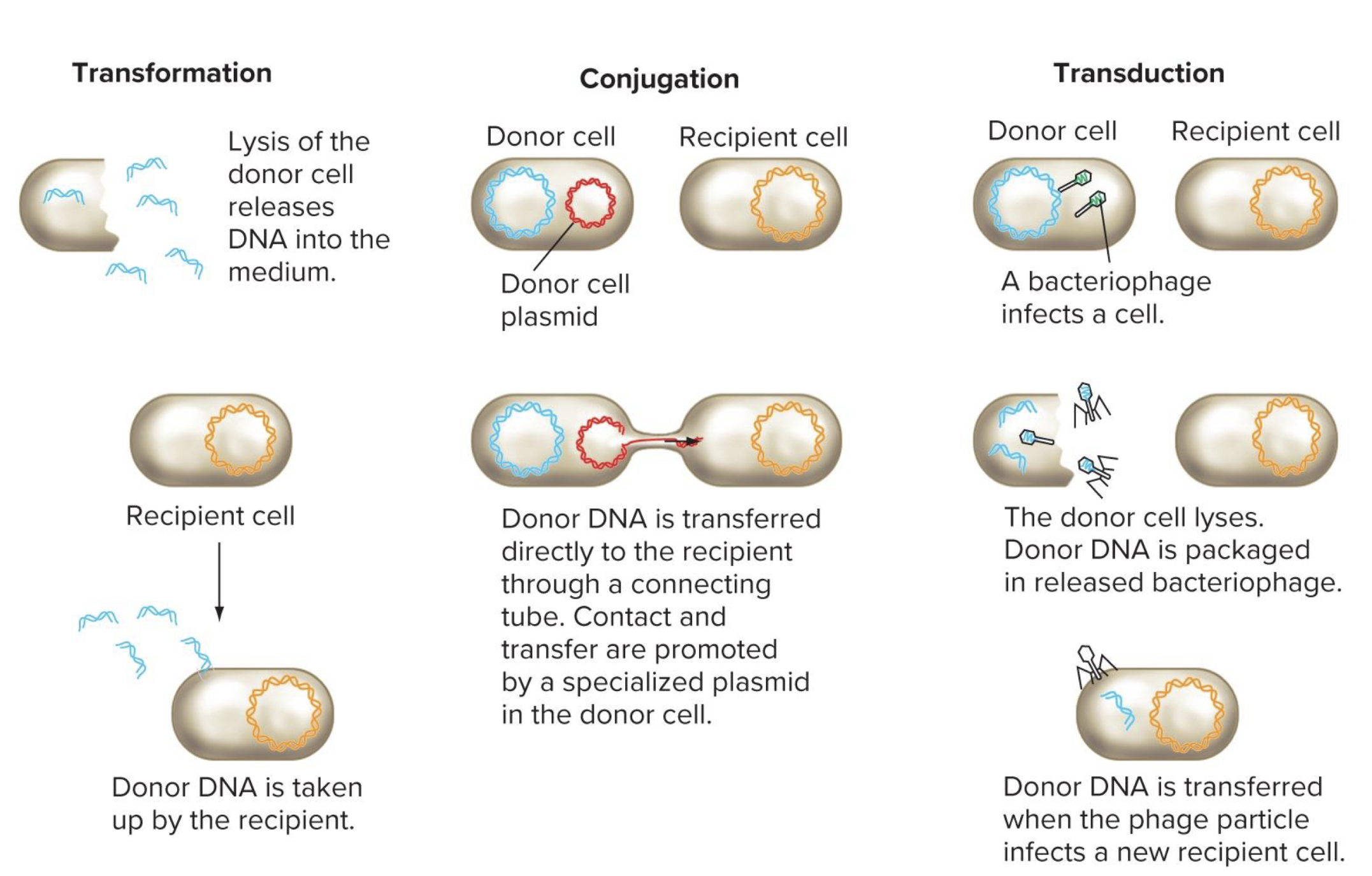
Horizontal gene transfer in bacteria
traits are introduced from (potentially) unrelated individuals or from diff species
Transformation
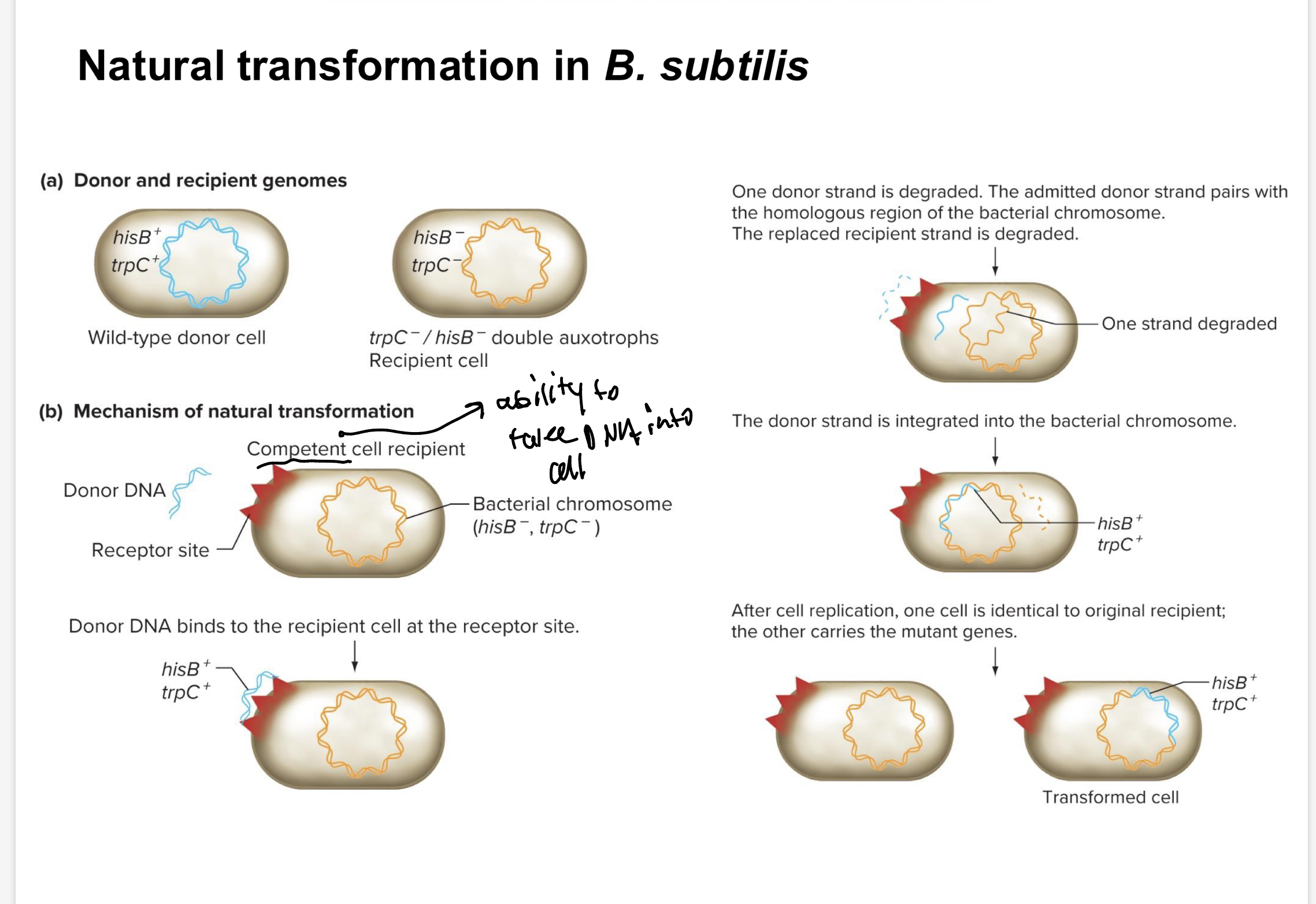
competent cells take up DNA from surrounding environment
Natural transformation: when bacteria take up DNA fragments spontaneously from their surroundings
Artificial transformation: accomplished in the lab by making the cells competent
Natural transformation of B.subtilis
Conjugation
mating of bacteria
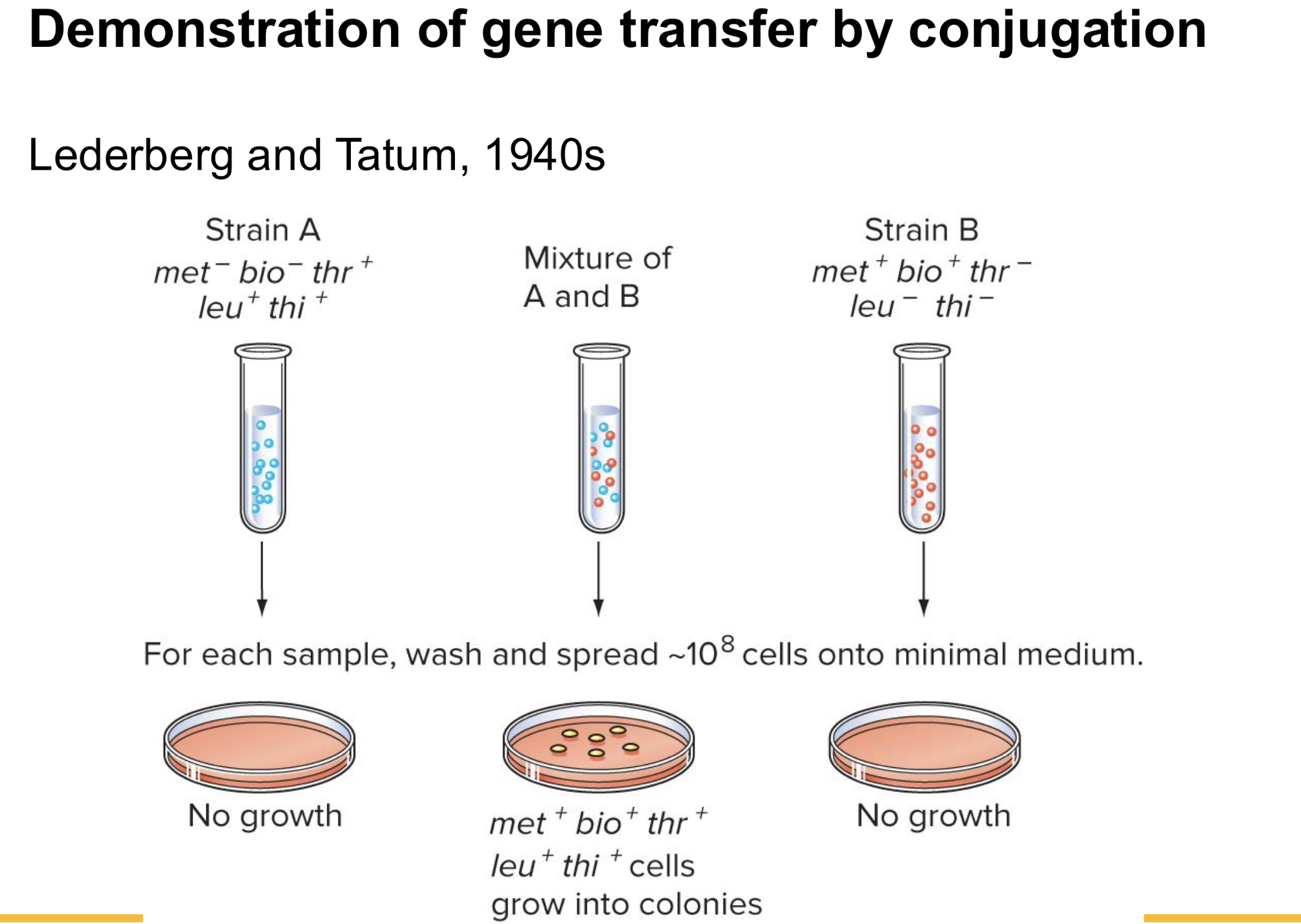
Demonstration of gene transfer by conjugation
Experiment found that if they mixed cells together that had different capabilities, could transfer capabilities btwn them
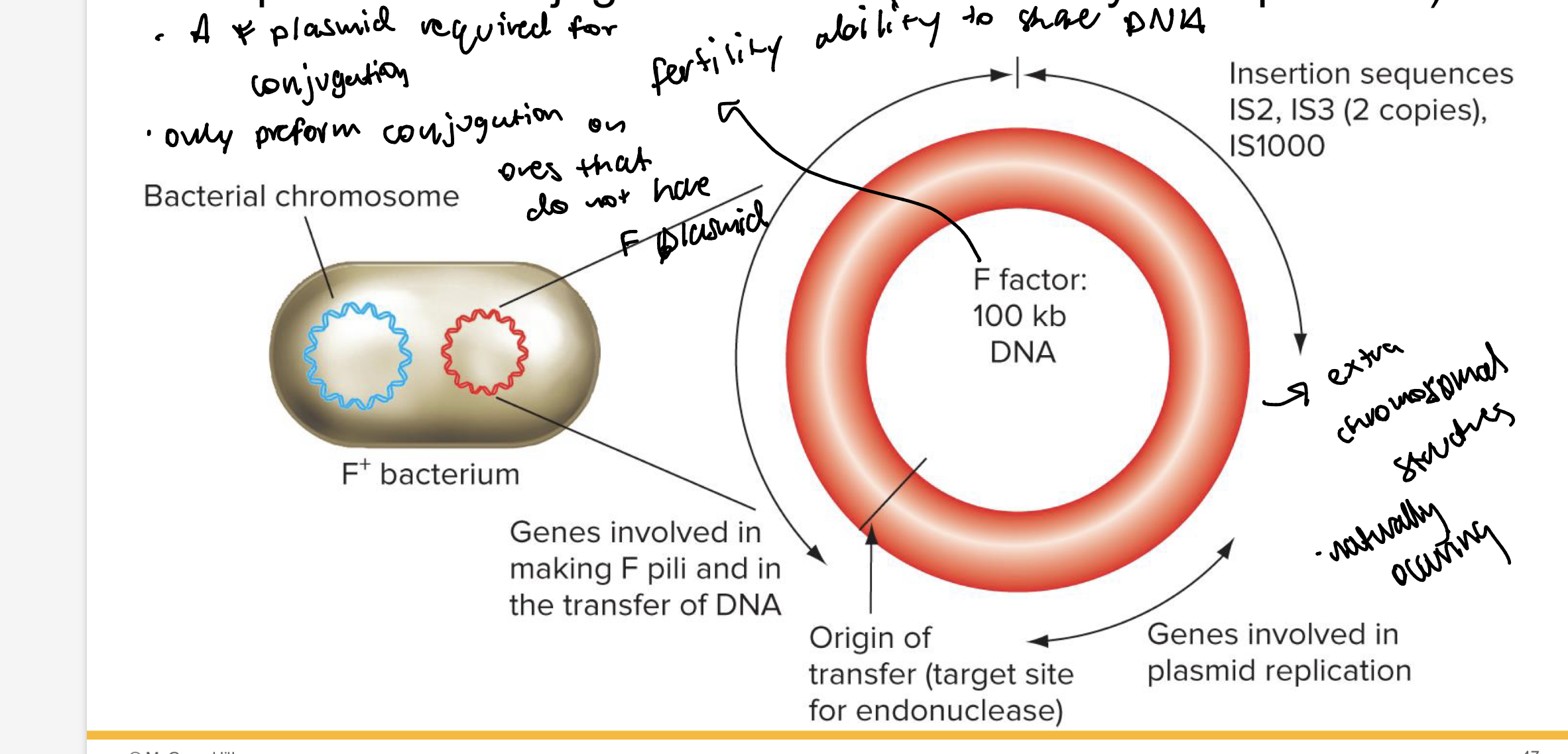
F plasmid contains genes required for the transfer of DNA
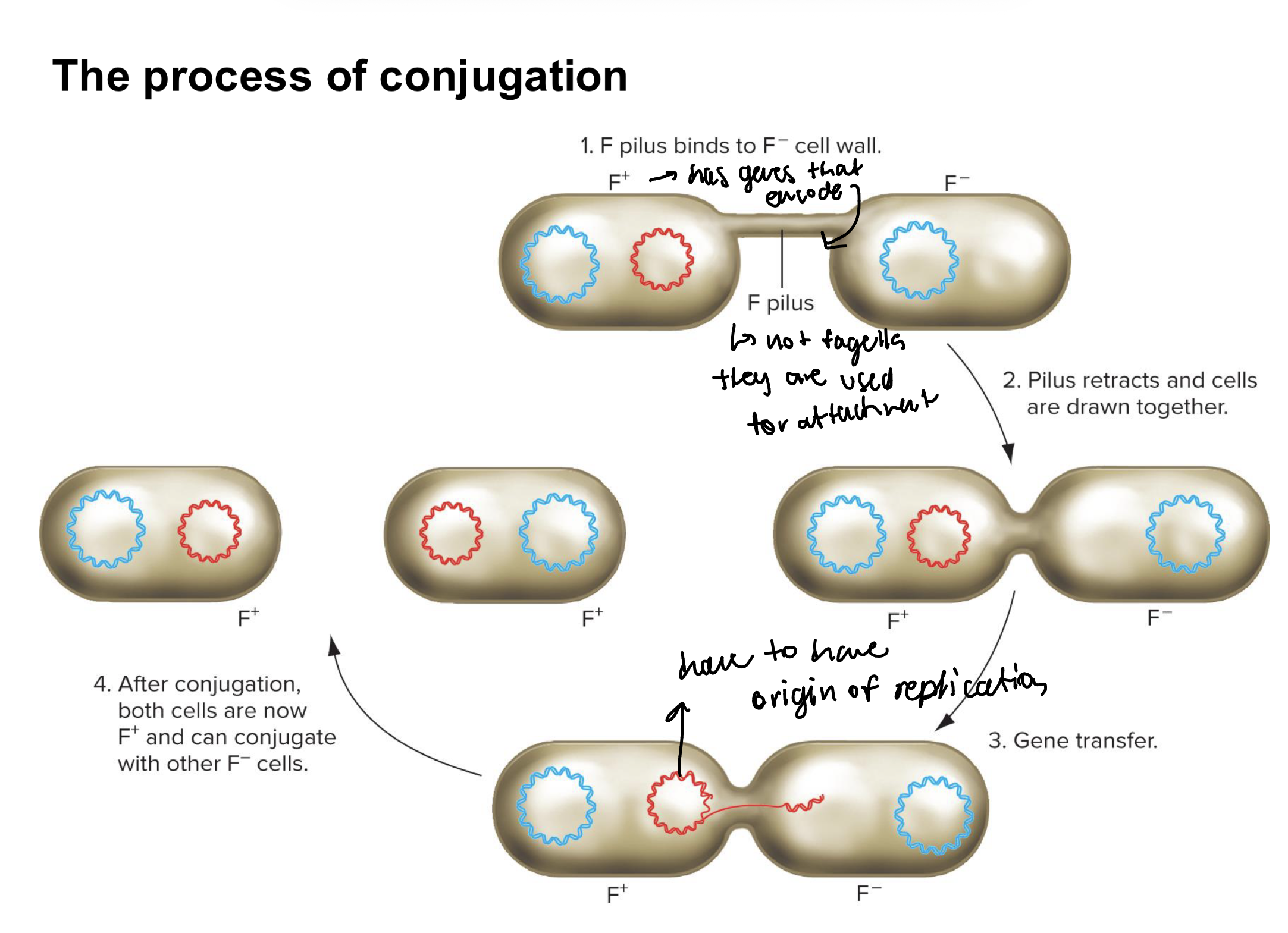
Donors for conjugation are F+ (carry an F plasmid)
recipients for conjugation are F- (don’t carry an F plasmid)
Process of conjugation
Formation of an Hfr chromosome (chromosome insertion)
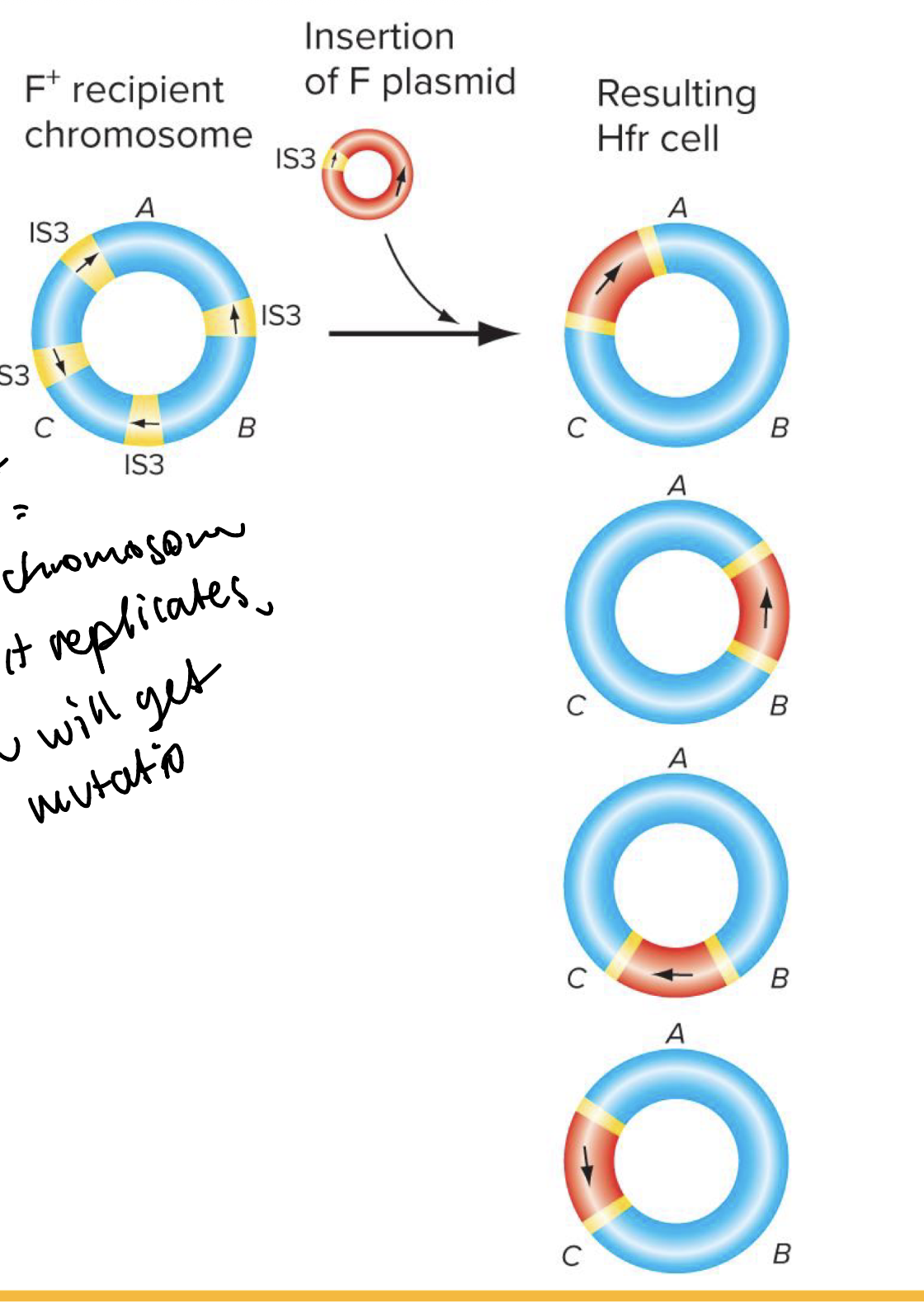
F plasmid have 3 IS elements, which are identical to IS elements found at various positions on the bacterial chromosome
High frequency recombinant (Hfr) cells are formed when an F plasmid integrates into the bacterial chromosome through recombination btwn IS elements
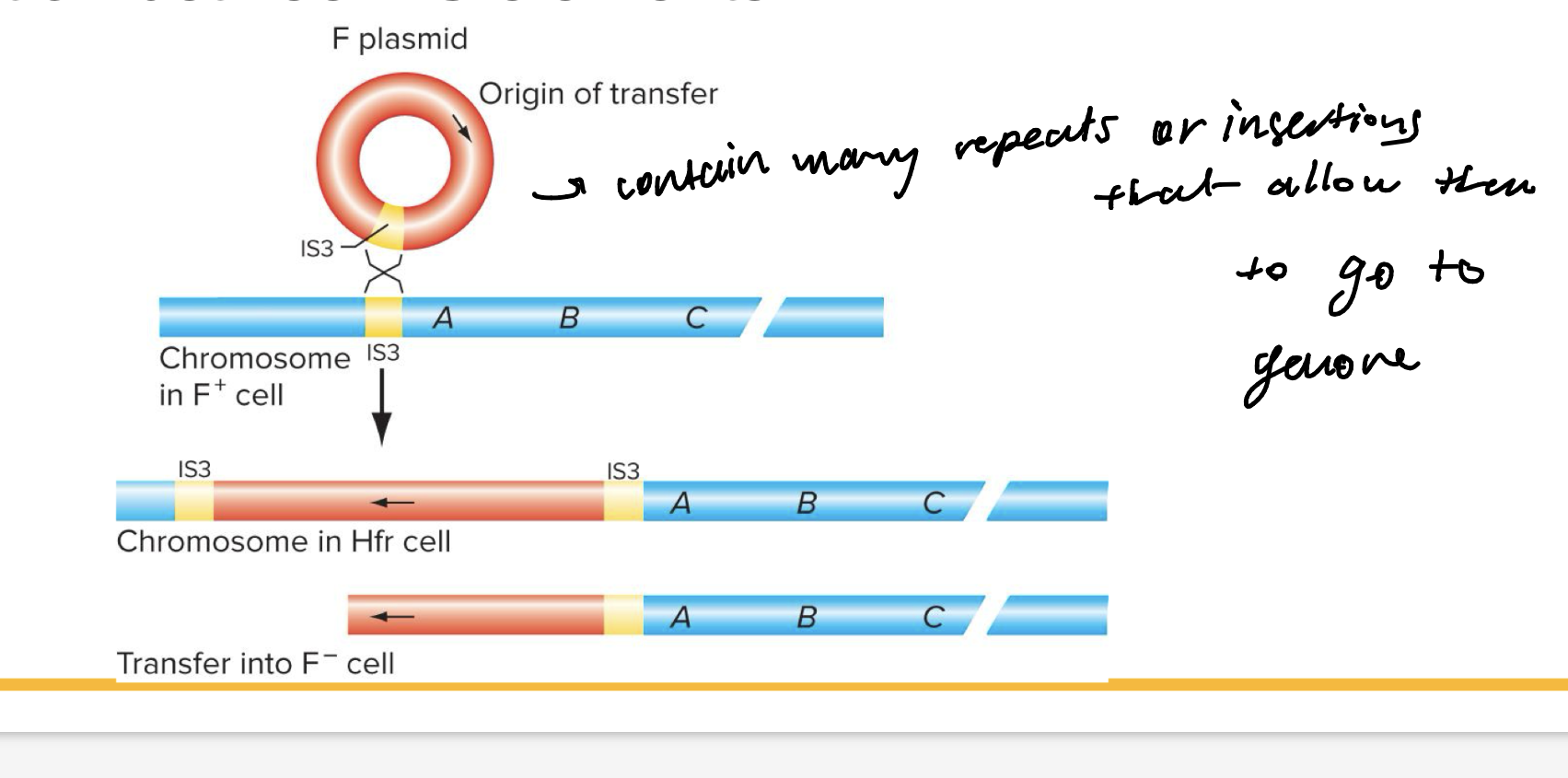
Different Hfr Chromsomes
when an f plasmid integrates into genome = episome
Hfr strains differ in the location and orientation of integrated episomes
Hfr strains retain all F plasmid functions and can be a donor for conjugation F- strain
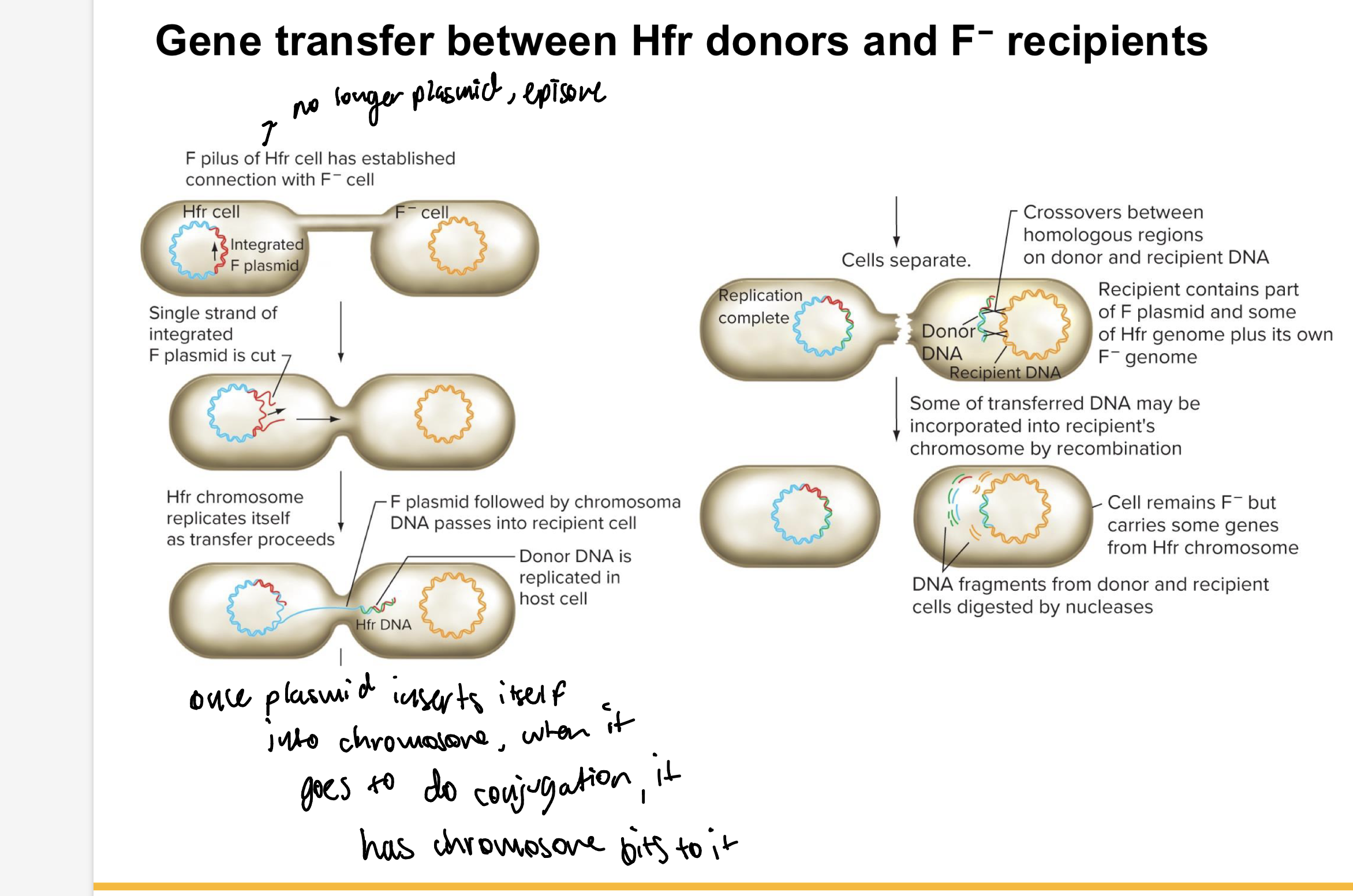
Gene transfer btwn Hfr donors and F- recipients
transfer of DNA starts in F plasmid at the origin of transfer
chromosomal genes located next to F plasmid sequences are transferred to the recipient
transferred chromosomal DNA recombines into homologous DNA recipient
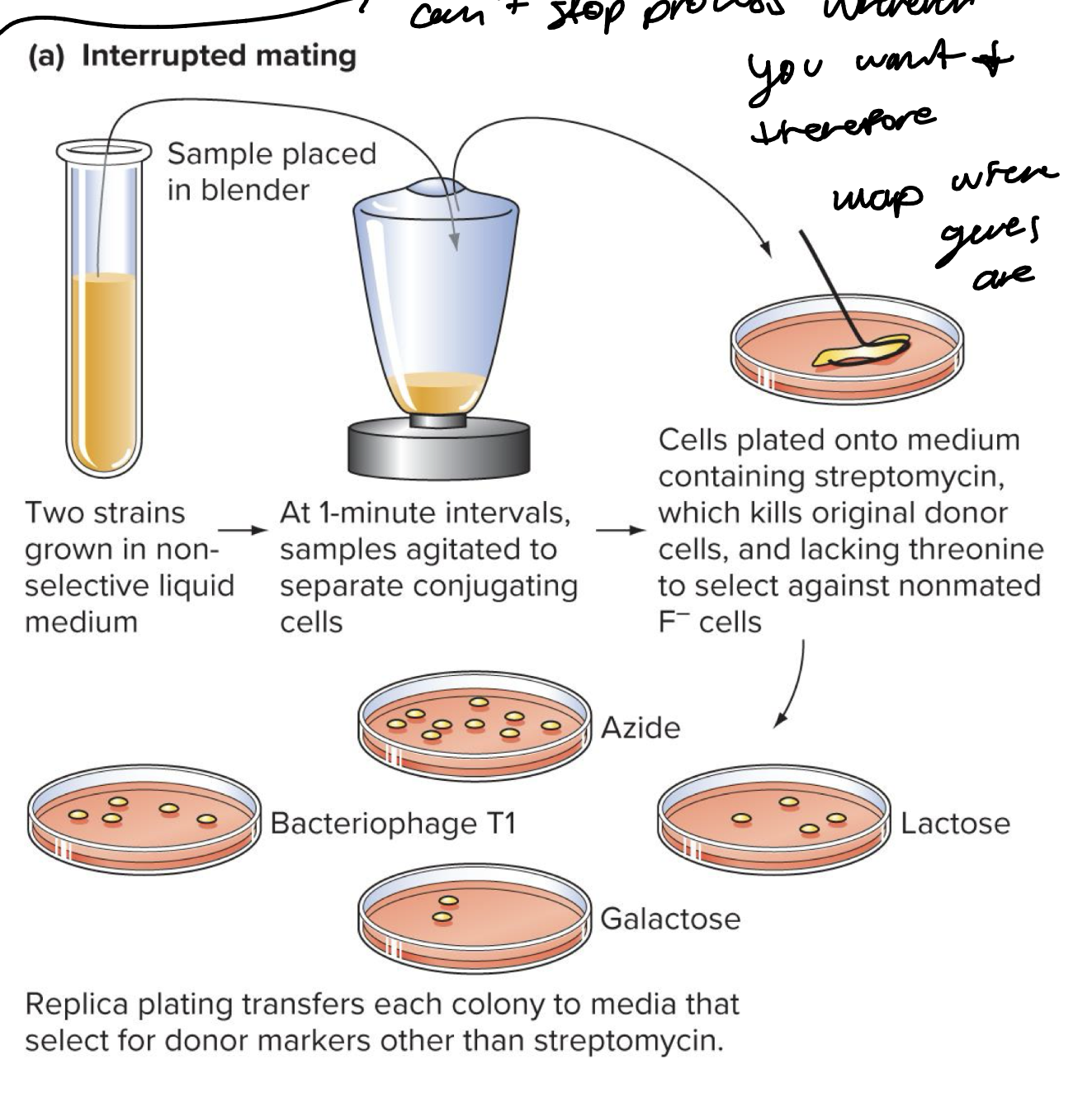
Mapping genes by gene transfer during conjugation
interrupted mating experiment - you can’t stop process wherever you want, therefore map where genes are
genes immediately follow origin of transfer in Hfr chromosome are transferred first
order of transfer reflects the gene order on chromosome
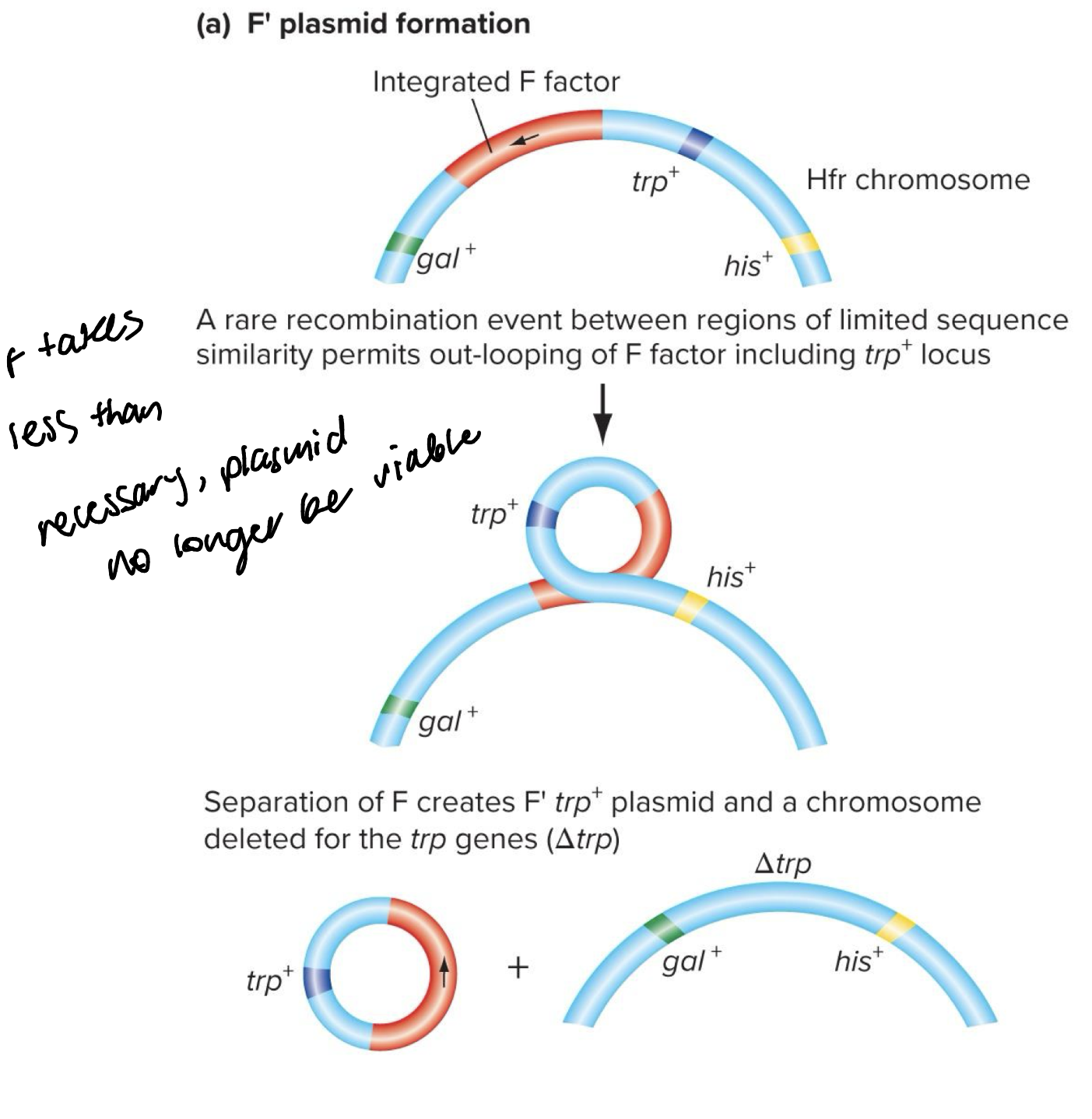
Formation of F’ plasmids by excision from an Hfr chromosome
F’ plasmids is formed by excision of F plasmid plus some adjacent bacterial chromosomal DNA
F’ plasmids replicate independently in bacterial cells
F’ plasmid transfer
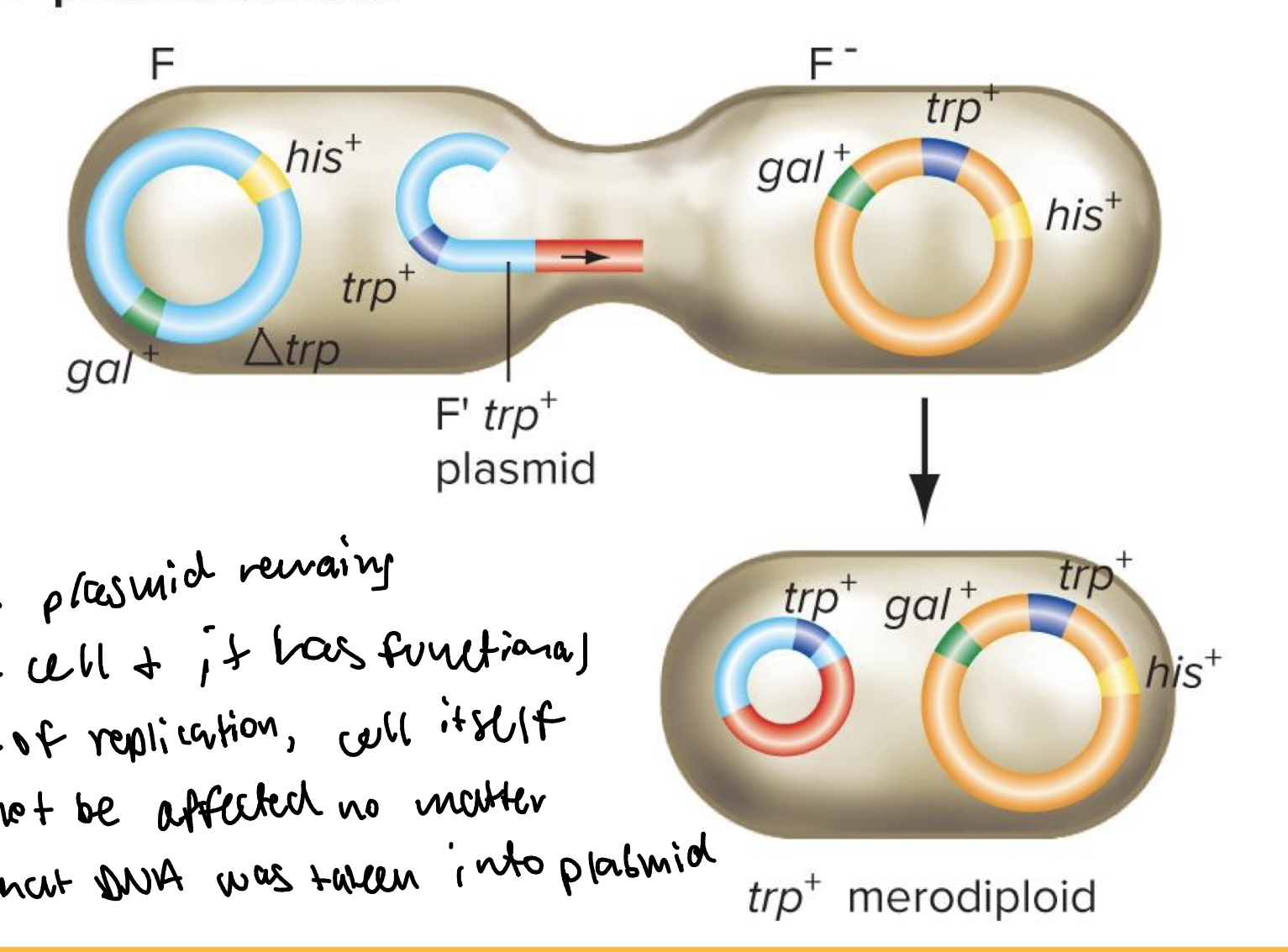
F’ plasmids can be transferred to F- cells by conjugation
as long as plasmid remains in cell, and it has functionals ORI cell itself will not be affected no matter what DNA was taken into plasmid
F’ plasmids for complementation studies
conjugation with F’ plasmids can make partial diploids called merodiploids
Bacterial conjugation
Refer to notes
What occurs during plasmid excision in Hfr cells?
1) removal of plasmid from bacterial chromosome
2) joining of the plasmid to the bacterial chromosome
3) breakdown of plasmid
4) entry of plasmid into bacterial cell
5) exit of plasmid from bacterial cell
In transduction, phage transfers DNA from a donor bacterium to a recipient bacterium
Bacteriophages (phages): viruses that infect, multiply, and kill various species of bacteria
Transduction: process by which phage transfers DNA from one host cell to another host cell
Virulent phages: always enter lytic cell after infecting cell, multiplying rapidly, and kill cell
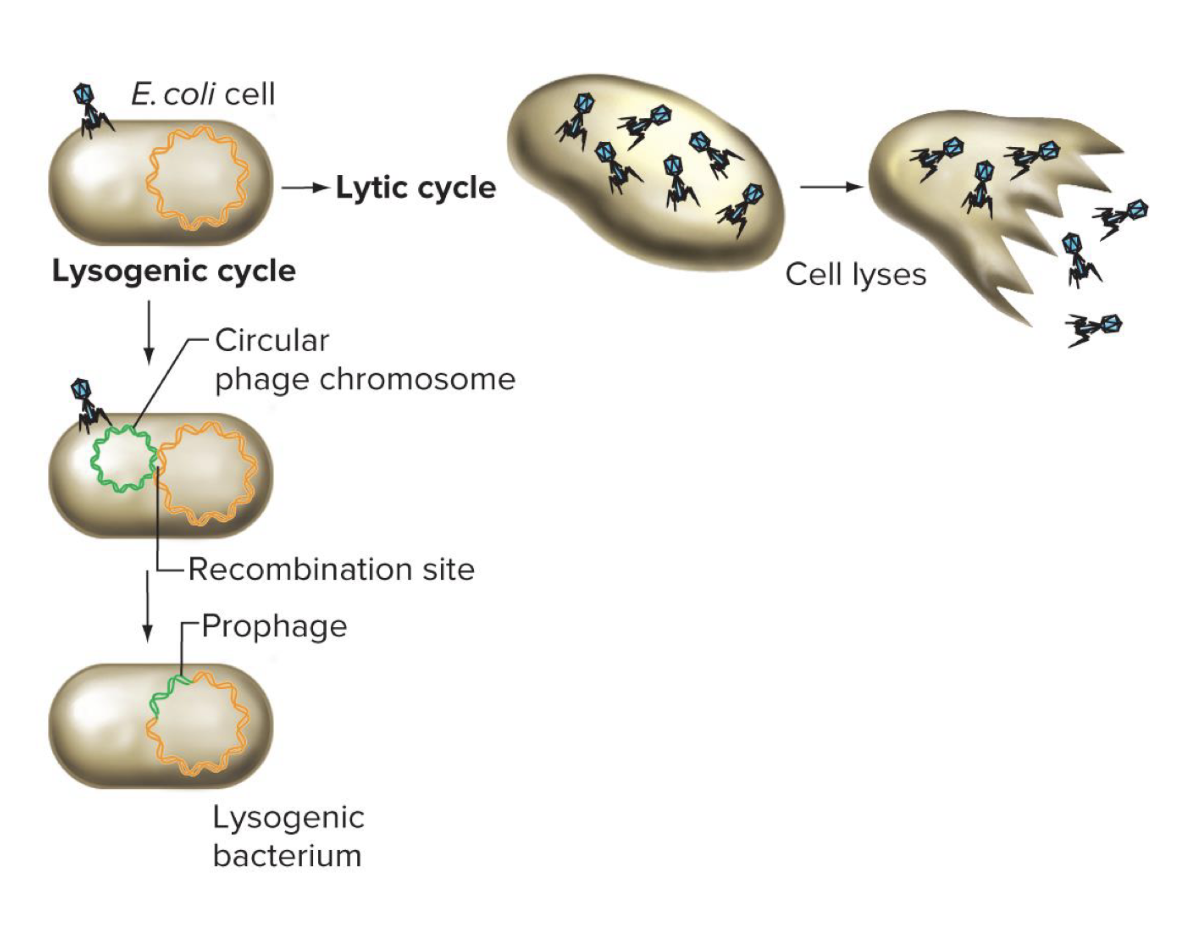
Temperate phages: can enter either lytic cycle or enter an alternative lysogenic cycle
Lytic cycle - where virulent phages go
results in cell lysis and release of progeny phages
phage injects its DNA into bacterial cell
phage proteins are expressed and take over protein synthesis and DNA replication machinery of infected cell
Phage DNA replication occurs
Phage particles are assembled with phage DNA and phage protein
infected cell bursts (lyses) → release new viral particles (lysate = pop of phage particles release)
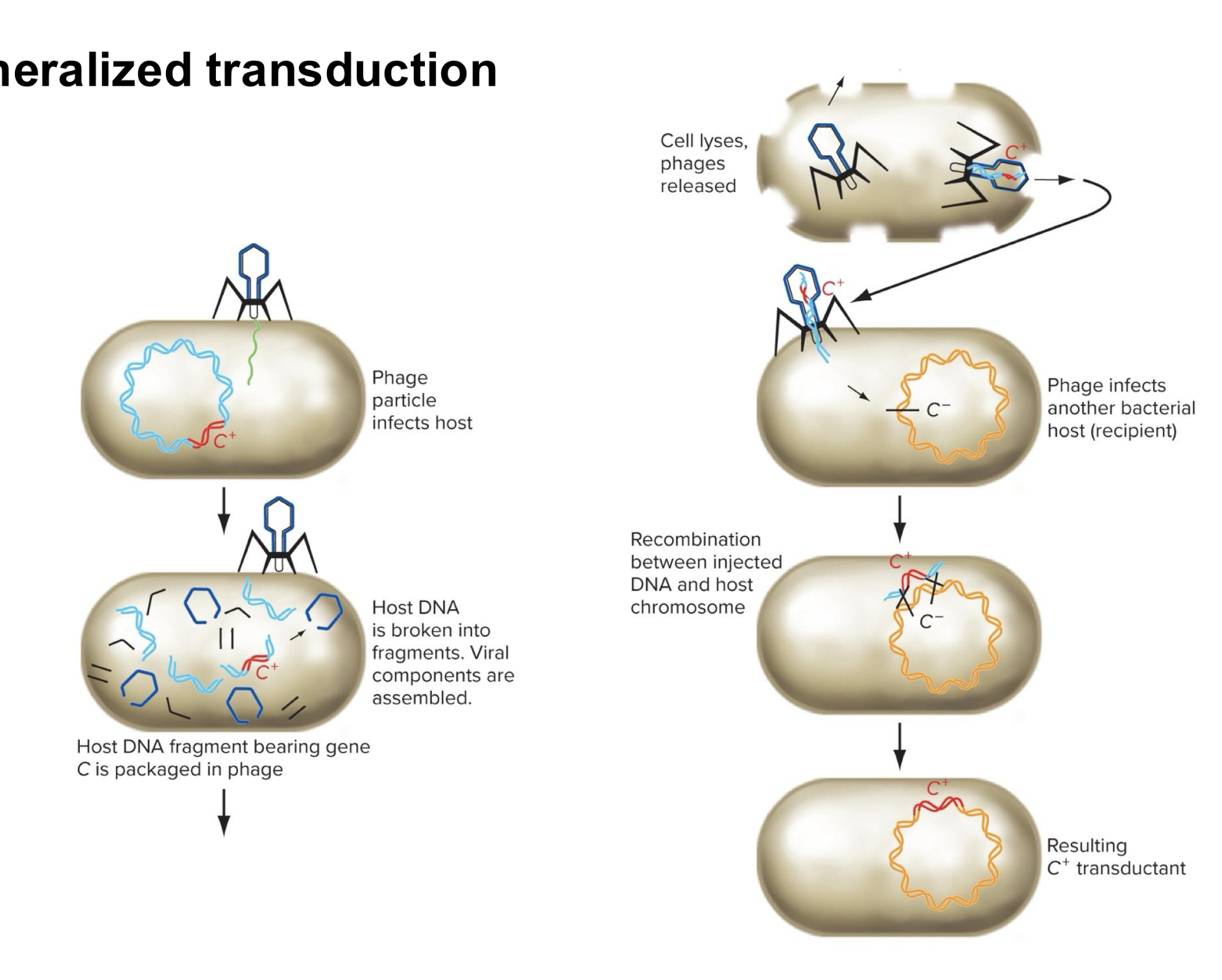
Generalized transduction
incorporation of random fragments of bacterial DNA form donor into bacteriophage particles
DNA from donor cell injected into infected recipient cell
Transduced chromosomal DNA recombines into homologous DNA recipient
Temperate phages
choice of lytic or lysogenic cell depends on many factors
lysogen - generates lysogen cell- bacteria that harbor integrated temperate phage
prophage- bacteria itself is harboring, lytic behavior of phage- temp phage that has integrated into host chormosome
Lytic and lysogenic modes of reproduction
Prophages:
do not reproduce the viral proteins needed for more virus particles
Lysogens can be induced to enter lytic cycle
prophage excises from chromosome, undergo replication, form new virus particles
Integration of the phage DNA initiates the lysogenic cycle
Recombination btwnn att sites on phage lambda and the bacterial chromsome allows integration of the prophage
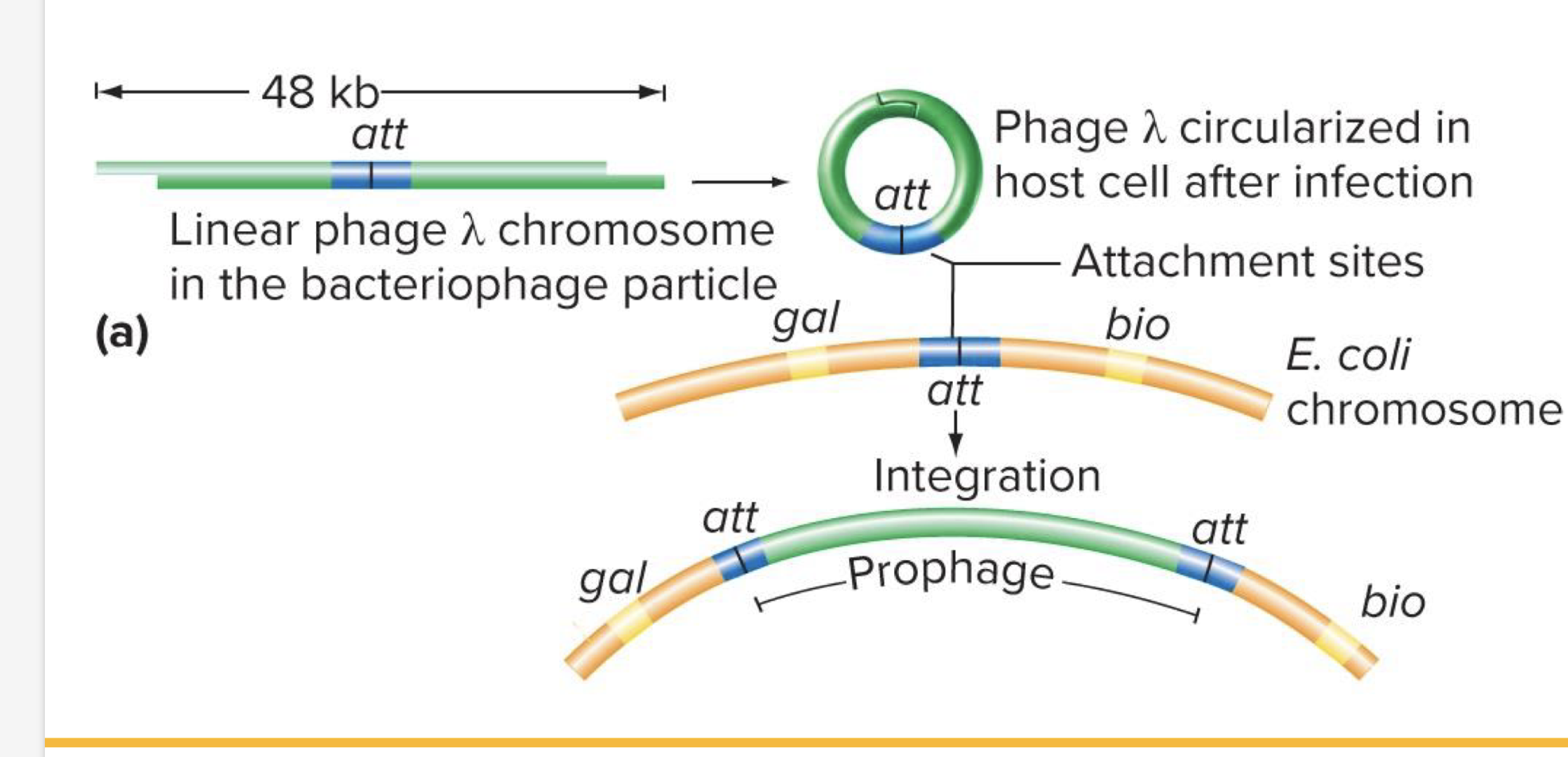
Excision of a prophage from a lysogen
Abnormal excision produces a specialized transducing phage
bacterial DNA adjacent to integration site can be packaged and then transferred to a recipient cell
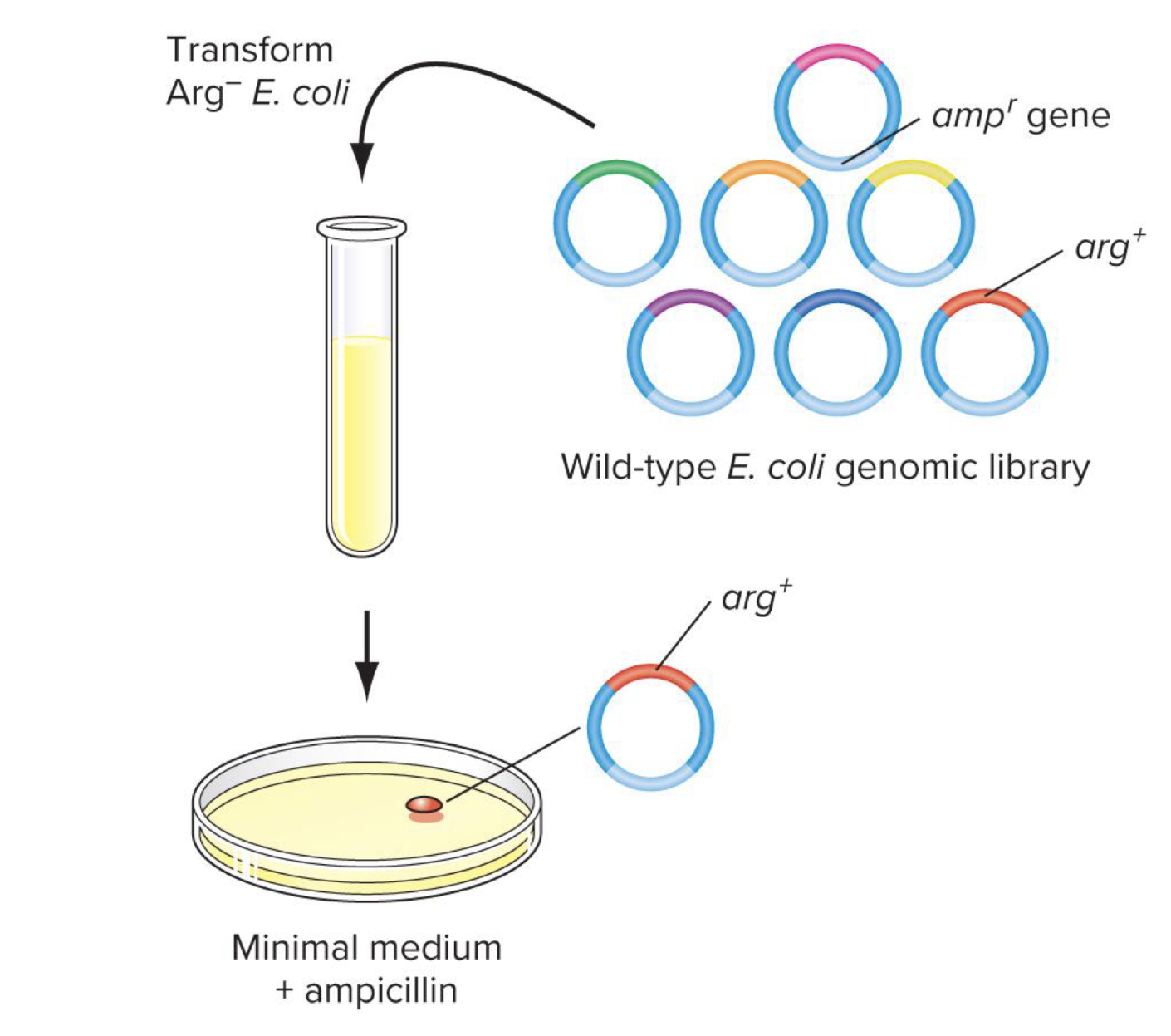
Identifying a mutant bacterial gene by plasmid library transformation
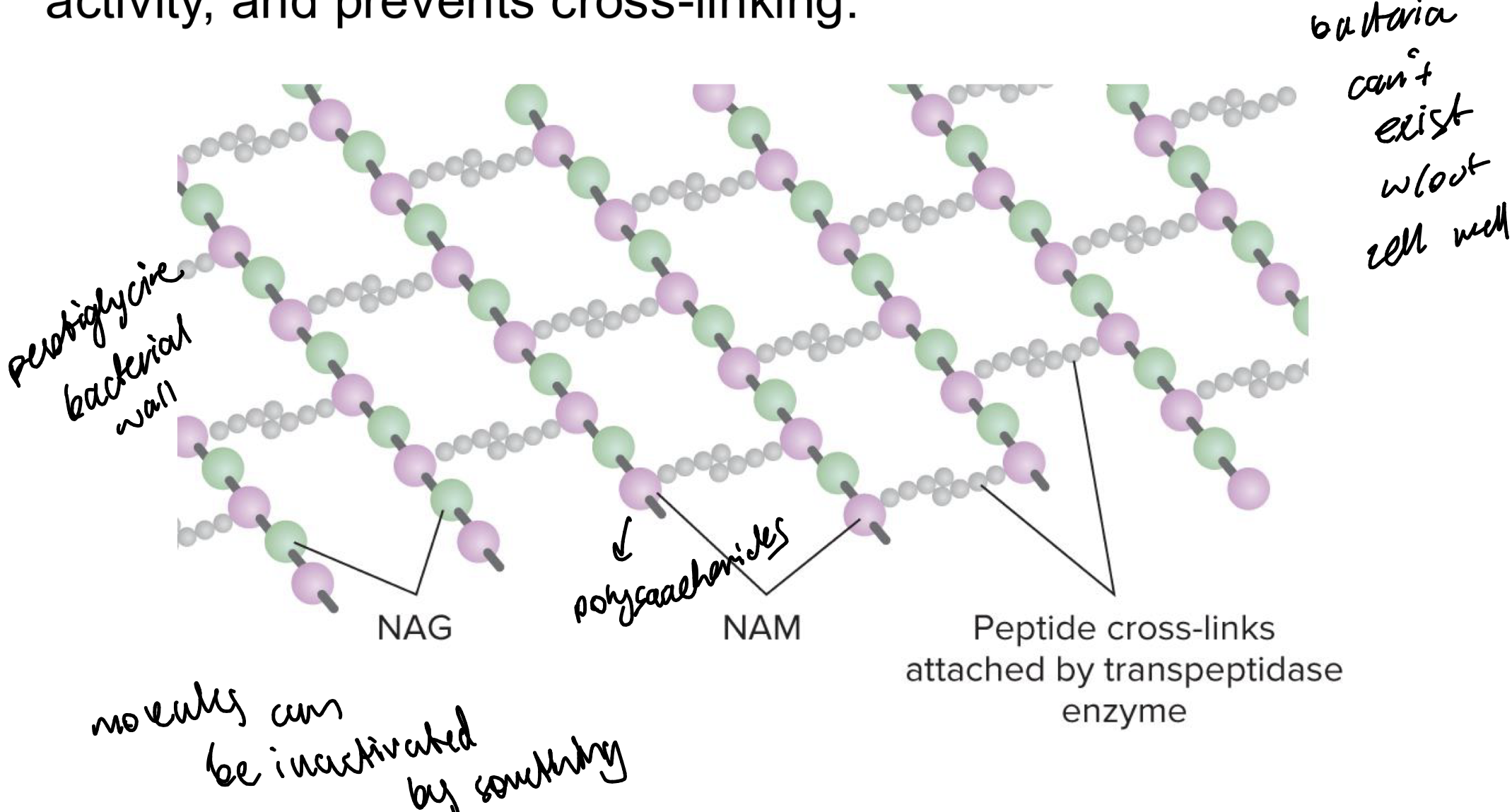
Penicillin interferes with synthesis of bacterial cell wall
penicillin binds to transpeptidates, inhibits its enzymatic activity and prevents cross linking to make the cell wall
The penicillin resistance gene
Pencillinase can degrade penicillin
Two main ways to create resistance
target mutates
something that removes inactivator

