Nursing Assistant Care - Chapter 11
 Studied by 0 people
 Call Kai
 Learn
Learn Practice Test
 Spaced Repetition
 Match
Match Flashcards
 Knowt Play
1/55

There's no tags or description
Looks like no tags are added yet.
Name | Mastery | Learn | Test | Matching | Spaced |
|---|
No study sessions yet.
56 Terms
What emotional adjustments might residents experience when entering a facility?
Residents may feel fear, uncertainty, anger, and a loss of health, mobility, independence, family, friends, pets, and plants.
What additional challenges might LGBTQ residents face when moving into a facility?
They may fear they will not be accepted or understood by staff or other residents.
What is the role of a nursing assistant (NA) in making LGBTQ residents feel welcomed?
An NA should create an inclusive environment and show acceptance, regardless of personal beliefs.
Why is it important for an NA to make every resident feel comfortable?
A long-term care facility (LTCF) is a resident's home, and comfort is essential for their well-being.
What should an NA do to prepare for a resident's admission?
Prepare the room, note the time and condition of the resident upon arrival, and introduce themselves formally.
What is a baseline in the context of resident admission?
An initial value that can be compared to future measurements.
What guidelines should an NA follow during the admission process?
Prepare the room, introduce yourself, explain daily operations, offer a tour, and handle personal items with care.
What should an NA do if they observe signs of confusion or depression in a new resident?
Report these signs to the nurse.
What rights do residents have regarding their personal belongings?
Residents have the right to bring belongings into the facility as space permits, and to privacy in written communications.
How might a resident feel about their personal items when moving into a facility?
They may find it difficult to part with their belongings, as homes are often seen as personal museums.
What should an NA do if a resident's personal item is broken by a family member?
The NA should provide support and understanding to the resident, acknowledging their feelings.
What is the importance of handling personal items with care during admission?
It shows respect for the resident's belongings and helps to build trust.
What is a common emotional response when deciding what to take to a new living situation?
Residents may feel angry, sad, or frustrated about leaving their belongings behind.
What should an NA do if a resident's mail is not being forwarded correctly?
The NA should assist the resident in addressing the issue and ensure they receive their mail.
What is the significance of a resident's right to privacy in communications?
It ensures residents can send and receive mail that is unopened, maintaining their personal privacy.
What should an NA do to make a new resident feel welcome?
Introduce them to staff and other residents, and provide a tour of the facility.
What should be done if a resident's preferences conflict with facility policies?
The NA should honor resident preferences as much as possible while adhering to facility policies.
What is the first step in the admission process for a nursing assistant?
Identify yourself by name and identify the resident according to facility policy.
What equipment might be needed during the admission process?
Admission paperwork, gloves, and vital signs equipment.
What is the first step in the admission process for a resident?
Identify yourself by name and identify the resident according to facility policy.
What should you do after identifying yourself and the resident?
Wash your hands.
How should you explain the procedure to the resident?
Speak clearly, slowly, and directly while maintaining face-to-face contact whenever possible.
What measures should be taken to ensure the resident's privacy during admission?
Provide privacy with a curtain, screen, or door, and ask family members to step outside if present.
What initial measurements are typically taken during the admission process?
Measure the resident's height and weight, and obtain baseline vital signs.
What should you do with the resident's personal items during admission?
Take an inventory of all personal items and help the resident put them away, labeling them according to facility policy.
What is an important step to prevent dehydration for the resident?
Provide fresh water (and ice if requested) every time you leave the resident's room, unless they are on a fluid restriction.
What should you show the resident after admission?
Show the resident the room, bathroom, bed controls, call light, telephone, lights, and television controls.
What should you do to ensure the resident's comfort after admission?
Make sure the resident is comfortable, remove privacy measures, and bring the family back inside if they were outside.
What is the procedure for weighing an ambulatory resident?
Ensure the resident is wearing nonskid shoes, help them step onto the center of the scale, and balance the scale before recording their weight.
What should you do if you cannot obtain a weight for the resident?
Notify the nurse.
What should you do immediately after weighing the resident?
Record the resident's weight in pounds or kilograms, depending on facility policy.
What is the procedure for measuring the height of an ambulatory resident?
Help the resident step onto the scale facing away, ensure they stand straight, and lower the measuring rod until it rests on their head.
What should you do after measuring the resident's height?
Help the resident safely step off the scale and immediately record their height.
What is the nursing assistant's role during a resident's in-house transfer?
Inform the resident of the transfer details and carefully pack their personal items.
What should be reported immediately regarding a resident's weight?
Any change in weight should be reported to the nurse.
What equipment may be needed when transferring a resident?
Equipment may include a wheelchair, cart for belongings, medical record, and personal care items.
What equipment is typically needed when transferring a resident?
A wheelchair, cart for belongings, medical record, personal care items, and packed personal items.
What is the first step in transferring a resident?
Identify yourself by name and identify the resident according to facility policy.
What should you do before explaining the transfer procedure to a resident?
Wash your hands.
How should you communicate the transfer procedure to the resident?
Speak clearly, slowly, and directly while maintaining face-to-face contact.
What should you do after helping a resident into a wheelchair?
Take the resident to the proper area and introduce them to new residents and staff.
What should be done to ensure the resident's comfort after transfer?
Make sure the resident is comfortable and place the call light within their reach.
What must be documented after transferring a resident?
Document the procedure using facility guidelines.
What information should be discussed with a resident being discharged?
Future appointments, home care, medications, ambulation instructions, medical equipment, transportation, activity restrictions, special exercises, dietary requirements, and community resources.
What is the role of a nursing assistant in the discharge process?
Assist with identifying the resident, washing hands, explaining the procedure, measuring vital signs, and ensuring all personal items are accounted for.
What should you do if a resident is being discharged?
Help them say goodbyes, assist them into the vehicle, and ensure they are safely in the car before closing the door.
What are the required elements to document during discharge?
Vital signs at discharge, time of discharge, method of transport, who was with the resident, and what items the resident took.
What is OBRA's requirement regarding resident transfers or discharges?
Residents must receive advance written notice about transfers or discharges in a language they understand.
What equipment might a nursing assistant gather for physical exams?
Sphygmomanometer, stethoscope, alcohol wipes, flashlight, thermometer, tongue depressor, eye chart, tuning fork, reflex hammer, otoscope, ophthalmoscope, specimen containers, lubricant, hemoccult card, vaginal speculum, gloves, and drape.
What is the dorsal recumbent position?
A body position where a person is flat on their back with knees flexed and feet flat on the bed.
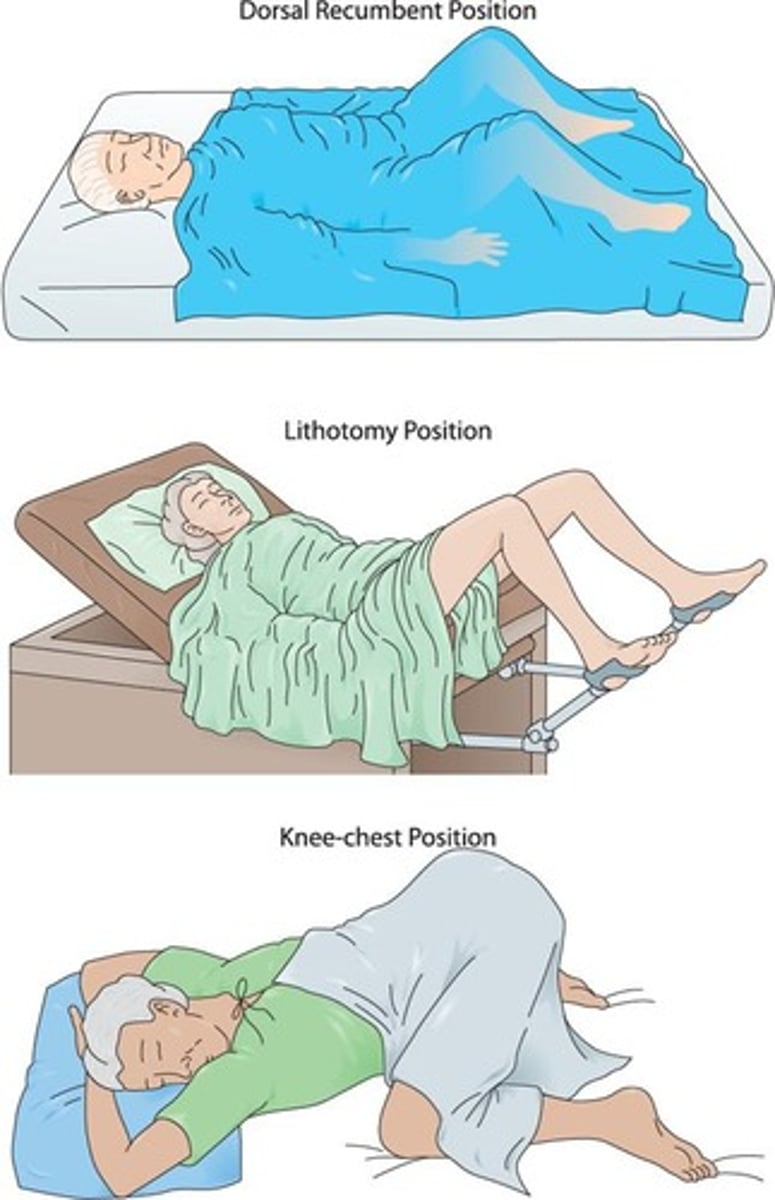
What is the lithotomy position?
A body position where a person lies on their back with hips at the edge of an exam table, legs flexed, and feet in padded stirrups.
What is the knee-chest position?
A body position where the person is lying on their abdomen with knees pulled towards the abdomen and legs separated.
What should nursing assistants remember to communicate to residents during exams?
Explain why exam positions are needed and how long the resident can expect to stay in each position.
What are some guidelines for nursing assistants during physical exams?
Wash hands, provide privacy, listen to the resident, help them into the proper position, and protect them from falling.
What should be done after a physical exam?
Help the resident clean up, get dressed, dispose of trash, clean and store equipment, and take labeled specimens to the proper place.
What rights should be honored during physical exams?
The right to be informed about the exam, choose the examiner, have a family member present, and refuse the exam.
 Note
Note  Flashcards (59)