2 star yield topics
 Studied by 7 people
 Call Kai
 Learn
Learn Practice Test
 Spaced Repetition
 Match
Match Flashcards
 Knowt Play
1/49

Earn XP
Description and Tags
Name | Mastery | Learn | Test | Matching | Spaced | Call with Kai |
|---|
No analytics yet
Send a link to your students to track their progress
50 Terms
NATIONAL FIRE PROTECTION ASSOCIATION (NFPA) 704-M HAZARD IDENTIFICATION SYSTEM
This symbol is used to inform firefighters of the hazards that they may encounter with fires in a particular area.
A diamond-shaped, color-coded symbol with 4 categories graded on a scale of 0 to 4 based on the extent of concern.
These symbols are placed on doors, cabinets, containers, and in boxes during transport or shipping.
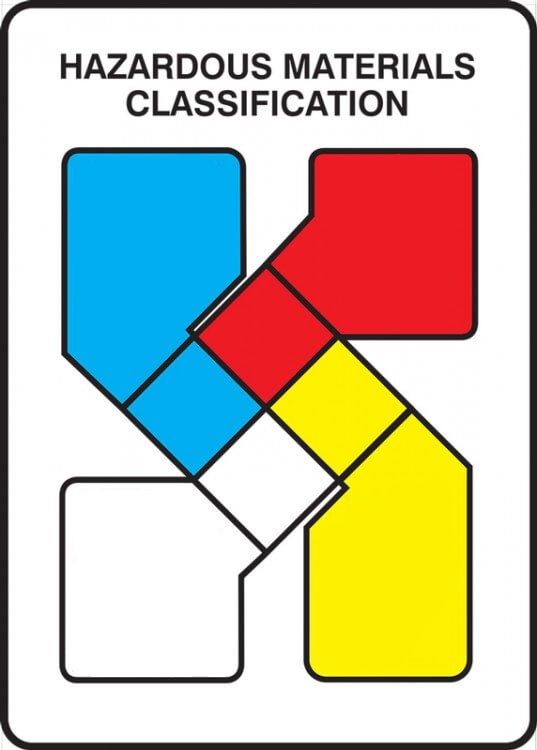
What does blue quadrant represent?
Health Hazard (3rd quadrant)
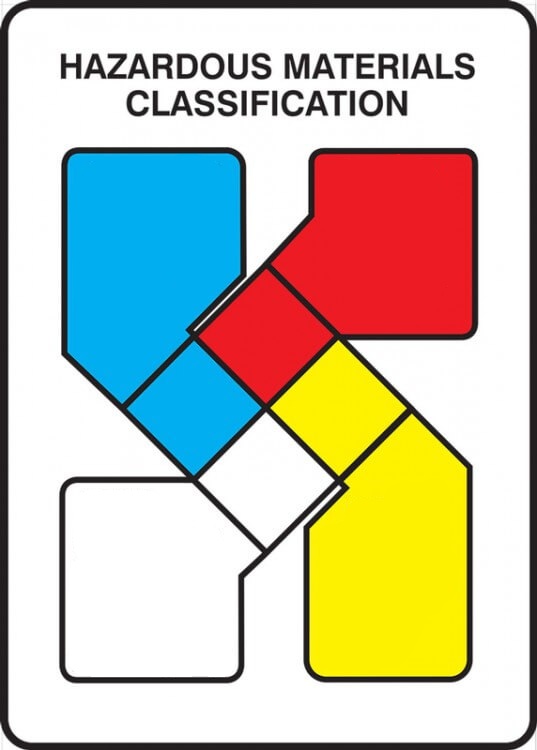
What does red quadrant represent?
Fire Hazard (2nd quadrant)
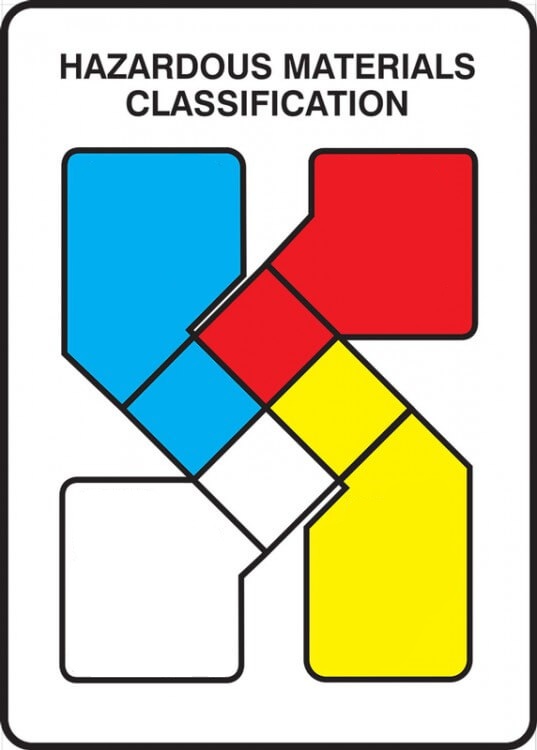
What does yellow quadrant represent?
Reactivity (1st quadrant)
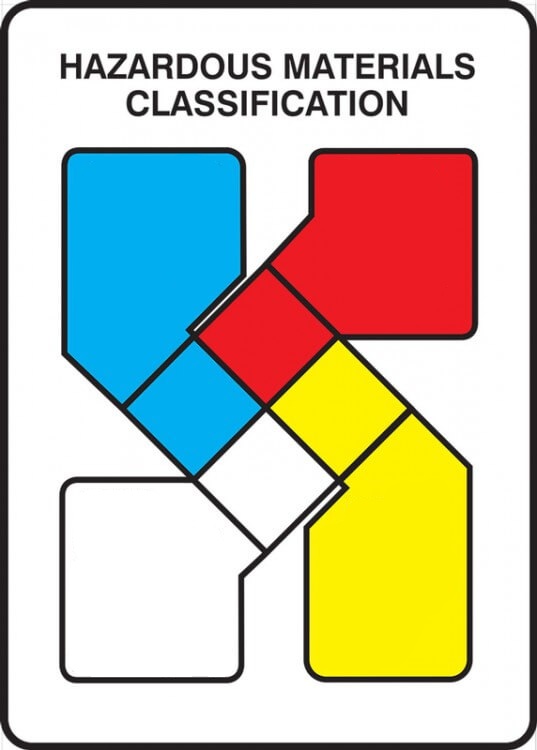
What does white quadrant represent?
Specific hazard
Health Hazard grade on a scale of 0 - 4
0 Normal Material
1 Slightly Hazardous
2 Hazardous
3 Extreme Danger
4 Deadly
Fire Hazard grade on a scale of 0 - 4
0 Will Not Burn
1 Above 200°F
2 Below 200°F
3 Below 100°F
4 Below 73°F
Reactivity grade on a scale of 0 - 4
0 Stable
1 Unstable if heated
2 Violent chemical change
3 Shock and heat may deteriorate
4 May deteriorate
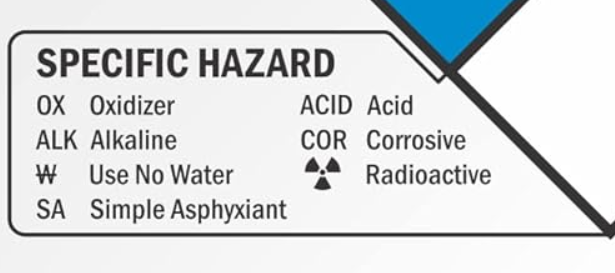
Specific hazard study these symbols
OXY - OXIDIZER
ACID - Acid
ALK - Alkali
COR - Corrosive
✪ - RadiationW - use no water
W - Water reactive

skull and Crossbones
• Acute Toxicity (fatal or toxic)
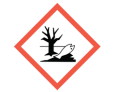
Environment (non-mandatory)
• Aquatic Toxicity

Flame Over Circle
• Oxidizers
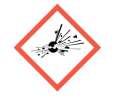
Exploding Bomb
• Explosives
• Self-Reactives
• Organic Peroxides
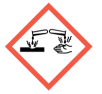
Corrosion
• Skin Corrosion/Burns
• Eye Damage
• Corrosive to Metals
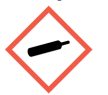
Gas Cylinder
• Gases Under Pressure
• Chemicals Under Pressure
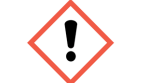
Exclamation Mark
• Irritant (skin and eye)
• Skin Sensitizer
• Acute Toxicity (harmful)
• Narcotic Effects
• Respiratory Tract Irritant
• Hazard Not Otherwise Classified (non-mandatory)
• Hazardous to Ozone Layer (non-mandatory)
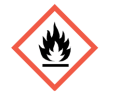
Flame
• Flammables
• Pyrophorics
• Self-Heating
• Emits Flammable Gas
• Self-Reactives
• Organic Peroxides
• Desensitized Explosives
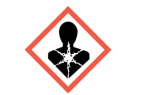
Health Hazard
• Carcinogen
• Mutagenicity
• Reproductive Toxicity
• Respiratory Sensitizer
• Target Organ Toxicity
• Aspiration Toxicity
When a fire is discovered one should follow:
RACE
When handlinga fire extinguisher one should follow:
PASS
What does Acronym RACE stands for?
R - Rescue
A - Alarm
C - Contain
E - Extinguish/Evacuate
What does Acronym PASS stands for?
P - Pull pinn
A - Aim at the base of the fire
S - Squeeze handles
S - Sweep nozzle side to side
Acids are incompatible with?
Bases
Acids (Acetic acid & Sulfuric Acid) are incompatible with?
Oxidizing agents (halogens, nitrate/nitric acid)
Alkali metals (sodium & potassium) are incompatible with?
Carbon dioxide, Chlorinated Hydrocarbons, water
Bromine and Chlorine are incompatible with?
Acetylene, Ammonia
Halogens are incompatible with?
Acetylene, Ammonia, Hydrocarbons
Flammable liquids are incompatible with?
Flammable solids
Mineral acids are incompatible with?
Organic acids
Caustics are incompatible with?
Oxidizers
Perchloric acid are incompatible with?
water-reactive substances
What type of hazard is Fire type A?
Ordinary combustibles: paper, cloth, rubbish, plastic, wood
What type of hazard is Fire type B?
Flammable liquids: grease, gasoline, paints, oils
What type of hazard is Fire type C?
Electrical equipment and motor switches
What type of hazard is Fire type D?
Flammable metals: mercury, magnesium, sodium, lithium
What type of hazard is Fire type E?
Detonation, Explosives (Arsenal Fire)
What type of hazard is Fire type K?
Cooking media: grease, oils, fats
What type of extinguisher is used for Fire type A?
Water, Dry Chemical, Loaded Steam
What type of extinguisher is used for Fire type B?
Dry Chemical, Carbon Dioxide, foam, or halon
What type of extinguisher is used for Fire type C?
Dry Chemical, Carbon Dioxide, halon
What type of extinguisher is used for Fire type D?
Metal X, Sand, Dry Powder, fought by fire fighters only
What type of extinguisher is used for Fire type E?
Allowed to burn out and nearby materials protected
What type of extinguisher is used for Fire type K?
Liquid designed to prevent splashing and cool the fire
accetapble tolerance (standard error) SG
=+/- 0.001
Distilled/Deionized Water
1.00
NaCl 3% SG
1.015
NaCl 5% SG
1.022
NaCl 7% SG
1.035
Sucrose 9% SG
1.034
 Note
Note  Flashcards (94)