17. The Colon, Rectum and Anal Canal
 Call Kai
 Learn
Learn Practice Test
 Spaced Repetition
 Match
Match Flashcards
 Knowt Play
1/18

There's no tags or description
Looks like no tags are added yet.
Name | Mastery | Learn | Test | Matching | Spaced | Call with Kai |
|---|
No analytics yet
Send a link to your students to track their progress
19 Terms
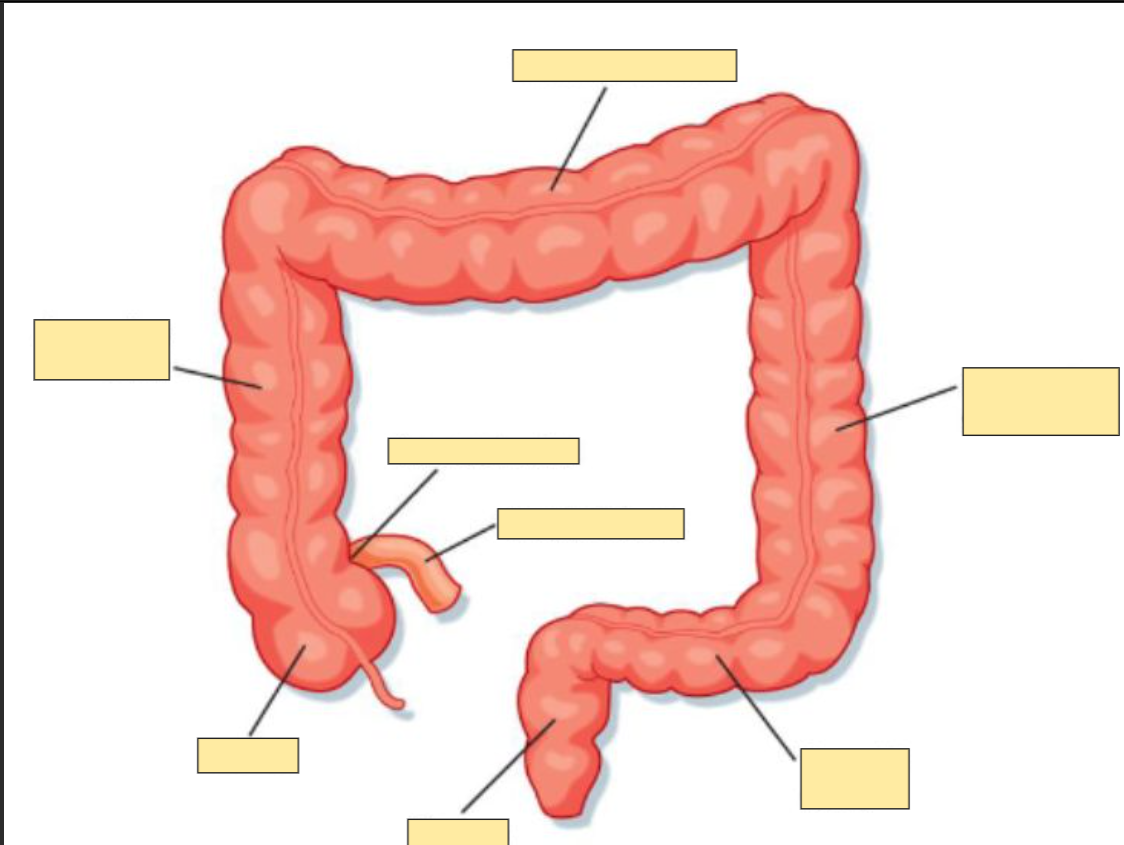
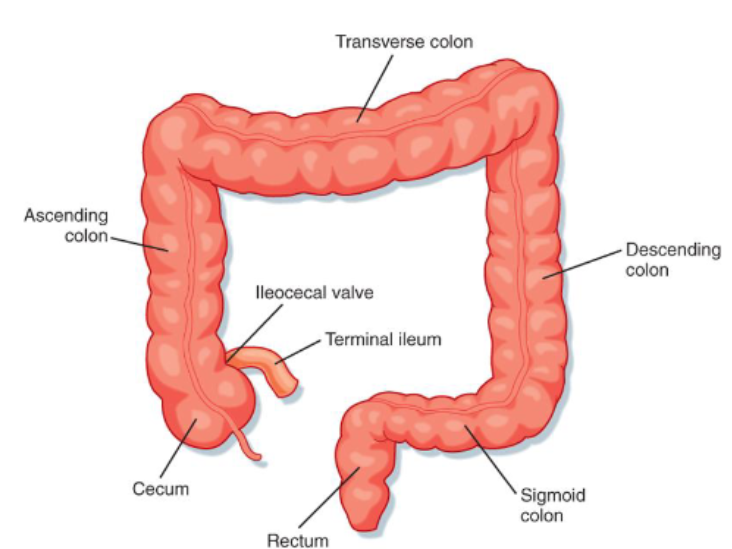
anatomy of the large intestine
several haustra→ segmented pouches
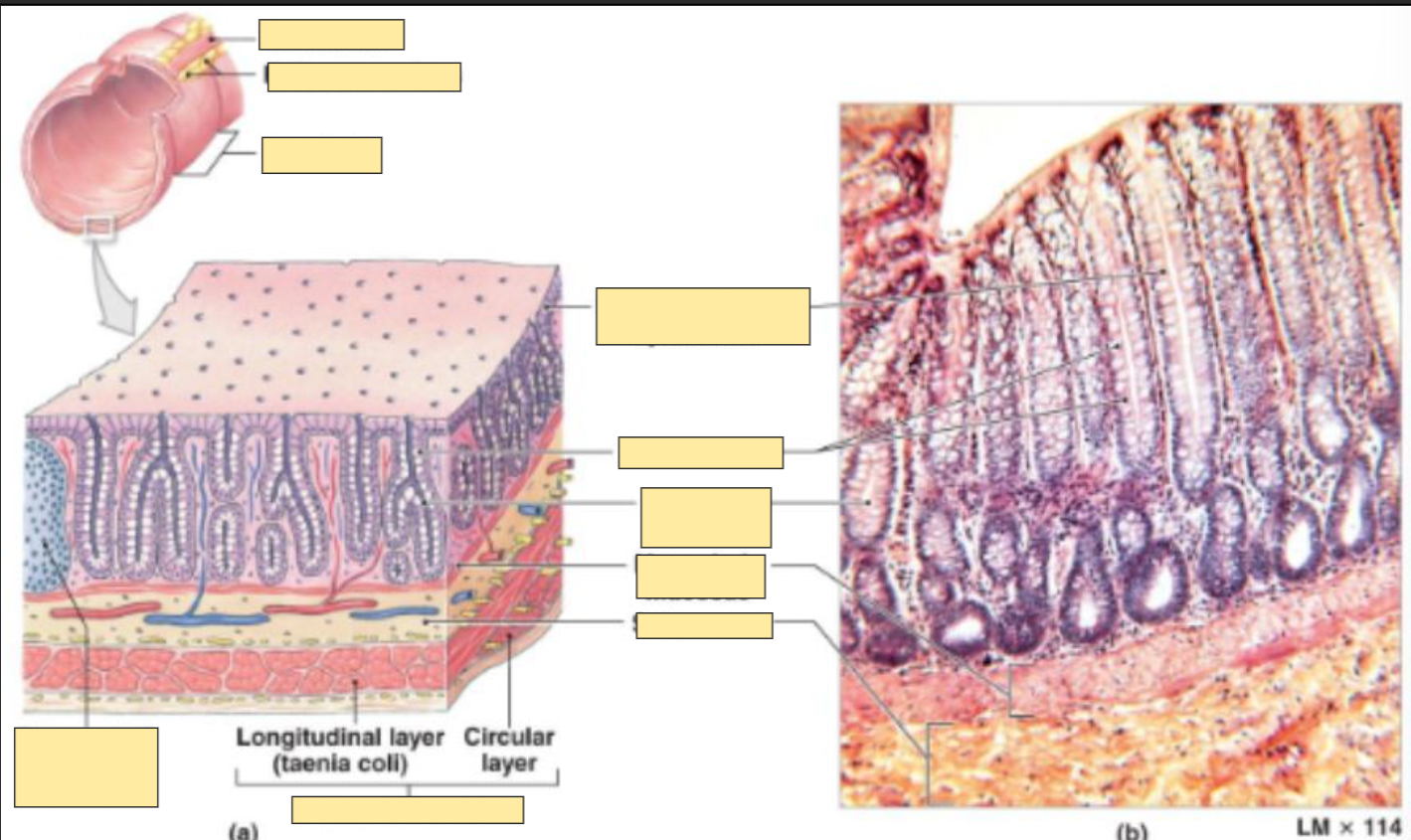
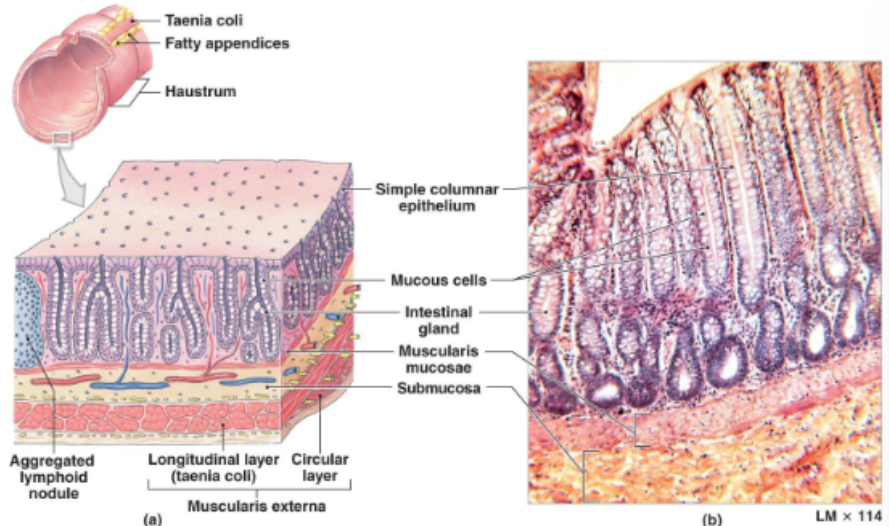
cells making up the large intestine
the ileocaecal valve
one way valve
periodic relaxation allows for flow
ileal distension→ open
caecal distension→ close
motility in the colon
designed NOT to move contents along
haustration→ slow contractions of circular muscles squeeze contents to and fro
mass movement
occasionally contractions become organised into a peristaltic wave
haustra briefly disappear as mass movement sweeps by then reform
coordination and regulation of motility in the colon
most intrinsic via enteric NS
some parasymp. control
enteroendocrine and neurocrine influences→ cells releasing 5-HT and peptide YY
gastrocolic orthocolic reflexes can trigger mass movements
ileal brake
presence of undigested lipid in distal ileum and proximal colon releases peptide YY
slows gastric emptying and small bowel peristalsis
digestion in the colon
done by bacteria not by human enzymes
substances digested in the colon that are reused
soluble fibre→ short chain fatty acids
primary bile acids→ secondary bile acids
conjugated bile acids→ unconjugated bile acids
substances digested in the colon that are excreted
urea and amino acids→ ammonia
bilirubin→ urobilinogen and stercobilins
cysteine methionine→ hydrogen sulphide
soluble fibre
this is fermented to release:
nitrogen
hydrogen
carbon dioxide
insoluble fibre
attracts fluid into the stool to improve bulking
salt absorption in the colon
ENaC channels allow transcellular sodium transport
stimulated by aldosterone
paracellular Cl- flux followed by water
short chain fatty acid absorption
secondary active transport via Na+ linked transporter
important source of energy for colonocytes
chloride secretion in the colon
stimulated by cAMP and Ca2+
cholera and E Coli toxins increase cAMP
C. Difficile toxin increases Ca2+
both lead to secretory diarrhoea
potassium secretion in the colon
can undergo secretion and absorption in the colon→ usually net secretion
passive secretion exceeds active
stimulated by cAMP and aldosterone
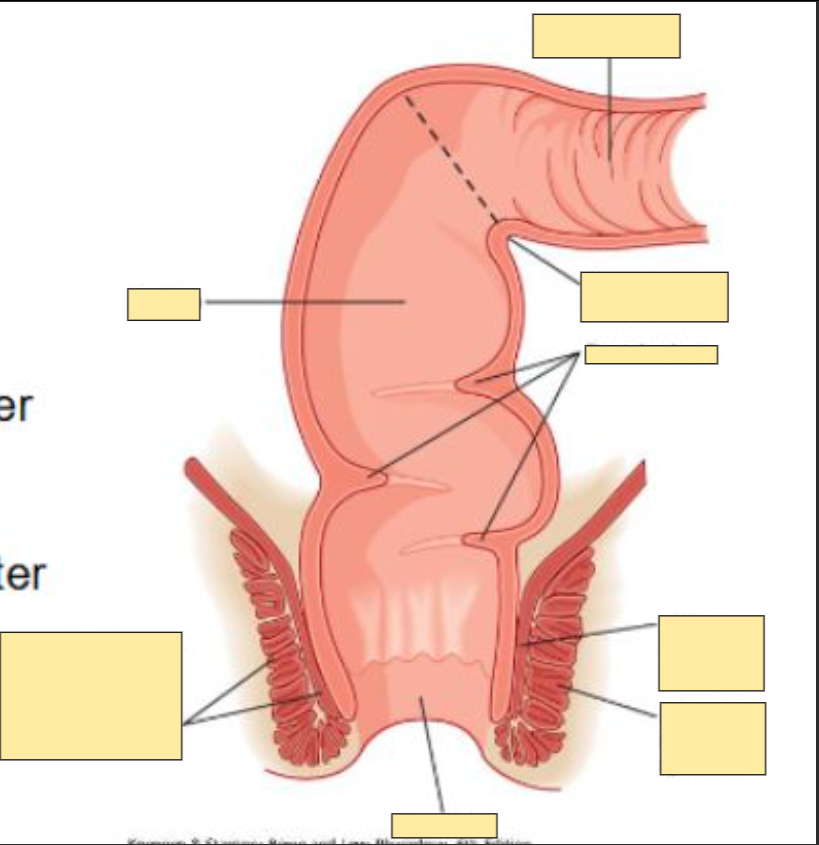
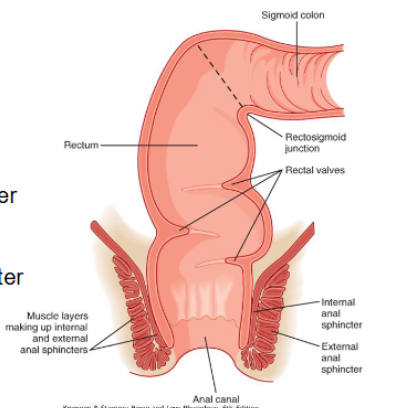
rectum and anus anatomy
sharp angle→ as sigmoid colon enters rectum
internal anal sphincter→ smooth muscle
external anal sphincter→ skeletal muscle
dentate line→ epithelium becomes stratified squamous epithelium
faeces in rectum and anus
as faeces enters rectum, pressure rises
triggers reflex relaxation of internal anal sphincter→ urge to defecate
small amount of material enters anus→ anal sampling
external anal sphincter contracts
defaecation
sitting/squatting increases rectosigmoidal angle→ facilitates passage of faeces
relaxation of puborectalis muscle also increases the angle
relaxation of external sphincter and pelvic floor muscles open the way
rectal peristalsis→ triggering colonic mass movement and raised intraabdominal pressure provides motive force

