Anatomy exam 2

0.0(0)
studied byStudied by 19 people
call kaiCall Kai
learnLearn
examPractice Test
spaced repetitionSpaced Repetition
heart puzzleMatch
flashcardsFlashcards
GameKnowt Play
Card Sorting

1/171

flashcard set

Earn XP

Description and Tags

Last updated 3:14 PM on 3/7/25
Name
Mastery
Learn
Test
Matching
Spaced
Call with Kai

No analytics yet

Send a link to your students to track their progress

172 Terms

1
New cards
Osteology
the study of bones
2
New cards
What are bones made of?
osseous tissue, blood, bone marrow, cartilage, adipose, nervous tissue, fibrous connective tissue
3
New cards
Ligaments
bone to bone
4
New cards
Tendons
muscle to bone
5
New cards
Five functions of the skeleton

1. Support

2. Protection

3. Movement

4. Electrolyte balance

5. Blood formation

6
New cards
Where is blood formed?
red bone marrow
7
New cards
What electrolytes are released from bone?
Ca +2, PO4 -2
8
New cards
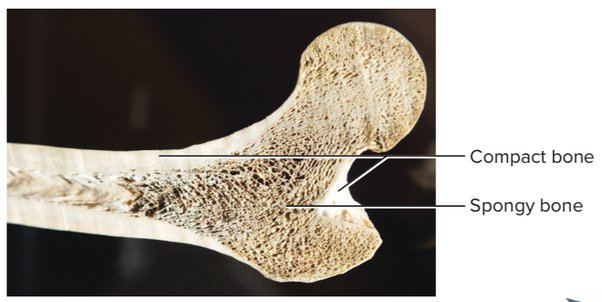
Two types of osseous tissue

1. Compact bone

2. Spongy bone

9
New cards
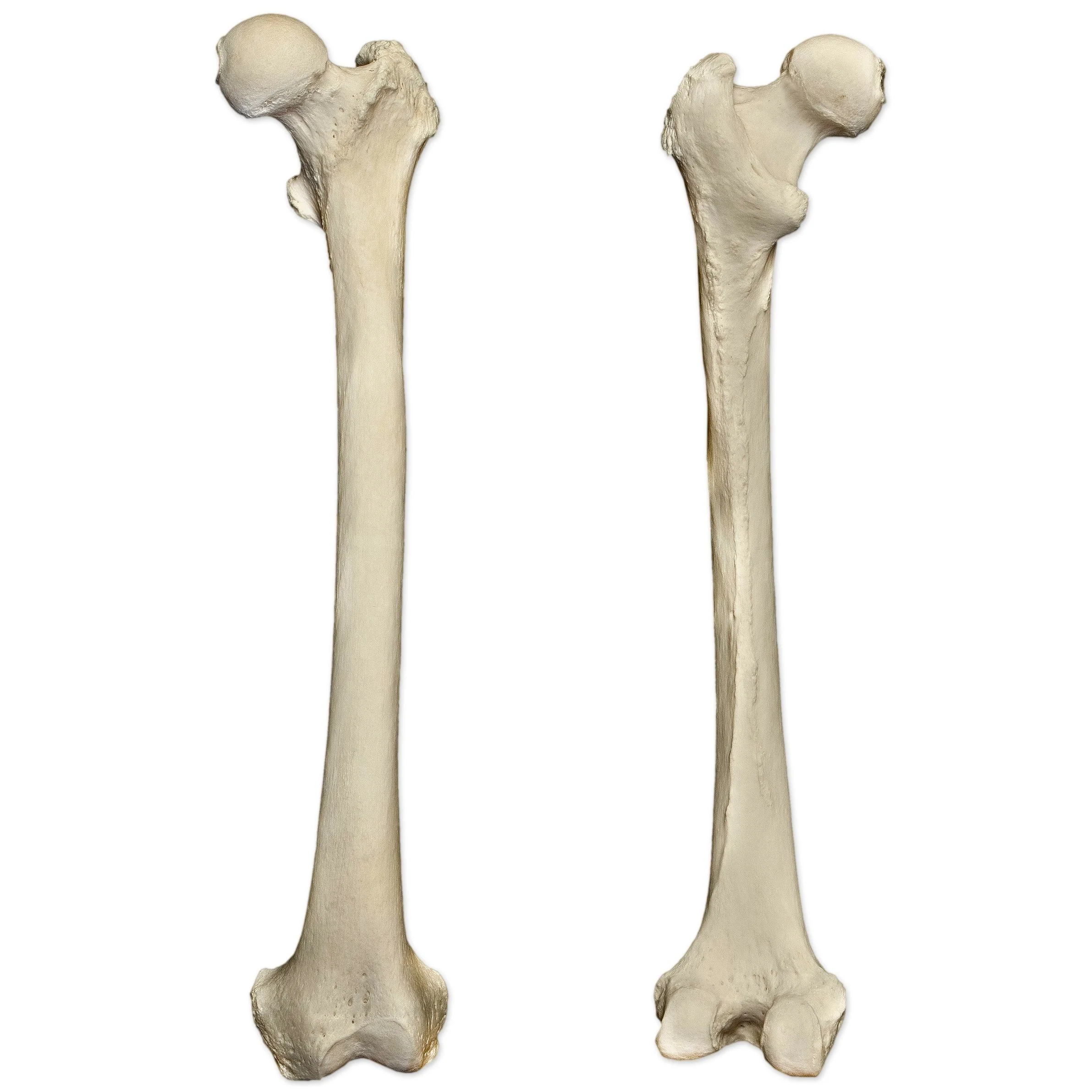
Long bones
longer than wide (ex. femur)
10
New cards
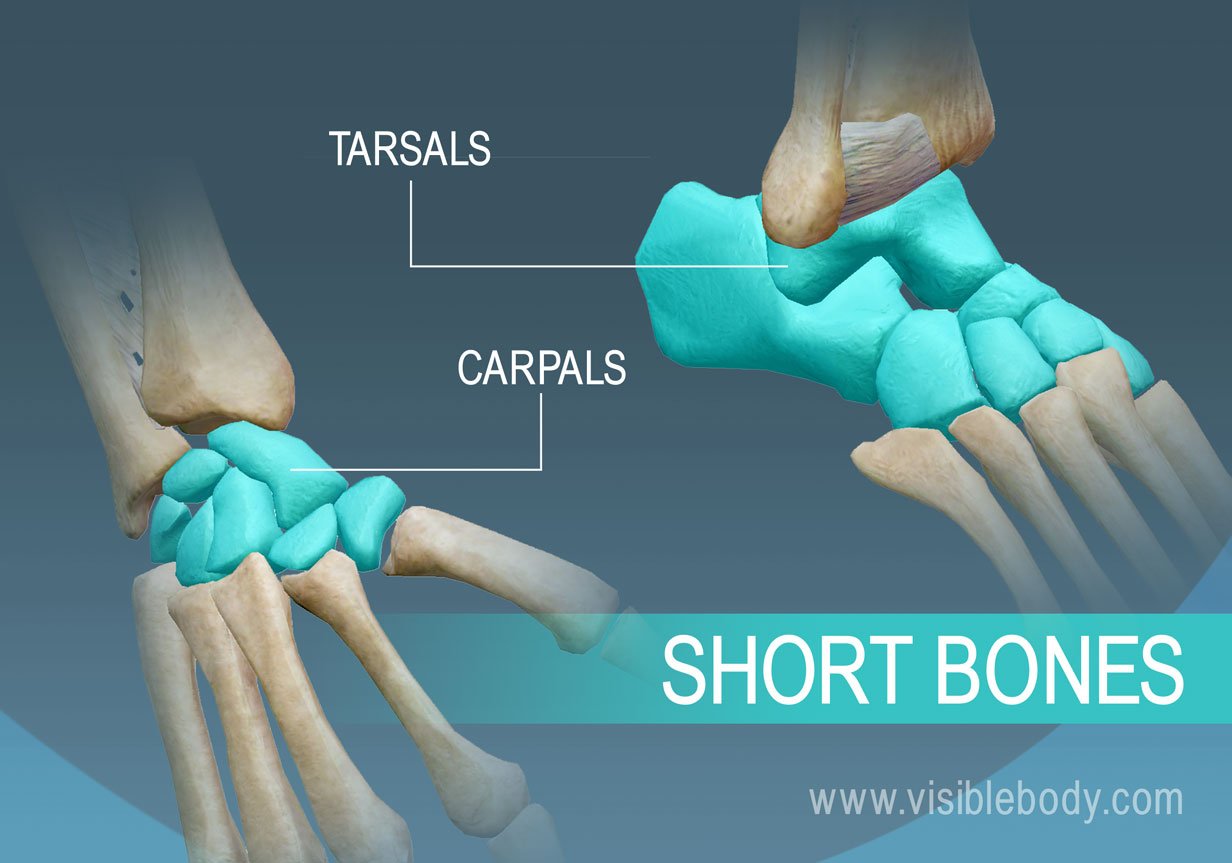
Short bones
cube shaped bones (ex. carpals)
11
New cards
Flat bones

thin and flat (ex. cranium)

- compact bone on outsides and spongy in middle (bone sandwich)
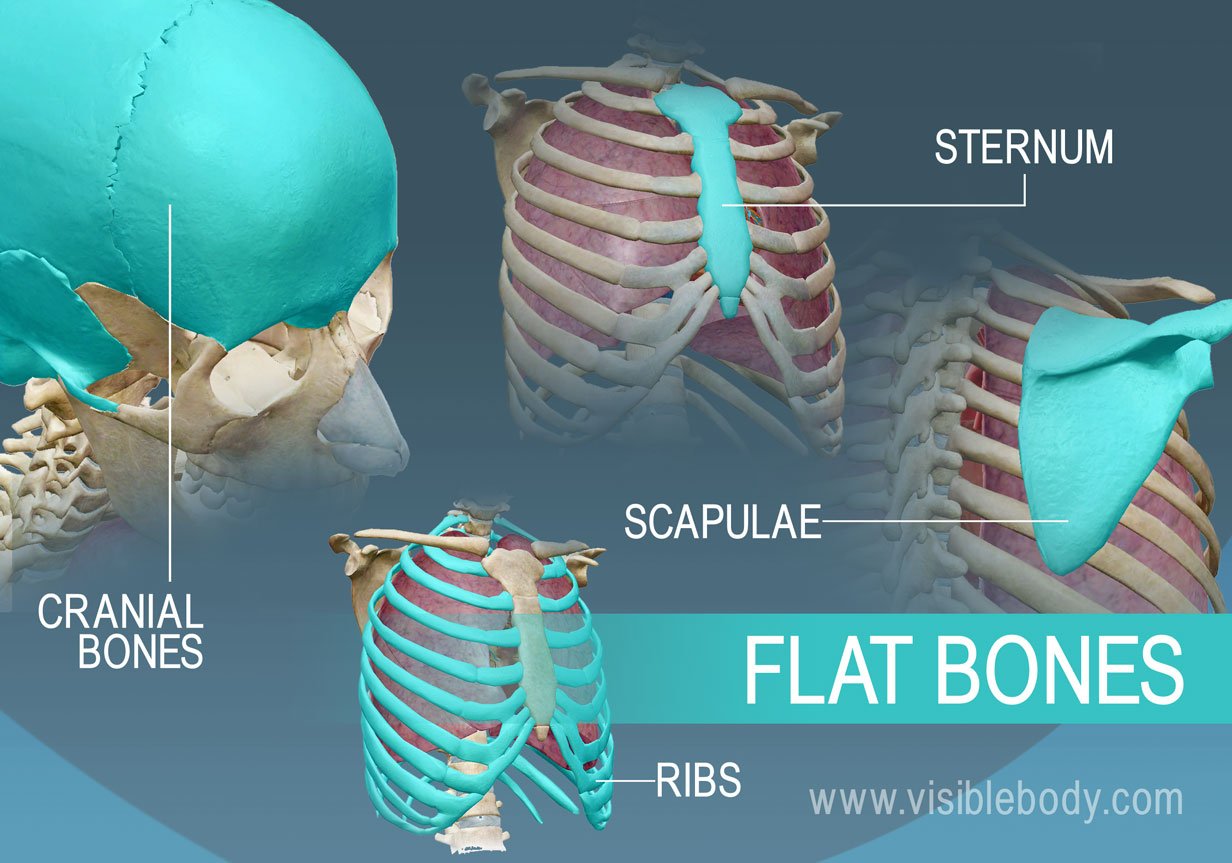
<p>thin and flat (ex. cranium)</p><p>- compact bone on outsides and spongy in middle (bone sandwich)</p>
12
New cards
Spongy bone
made of crossbars (trabeculae) with spaces filled of bone marrow
13
New cards
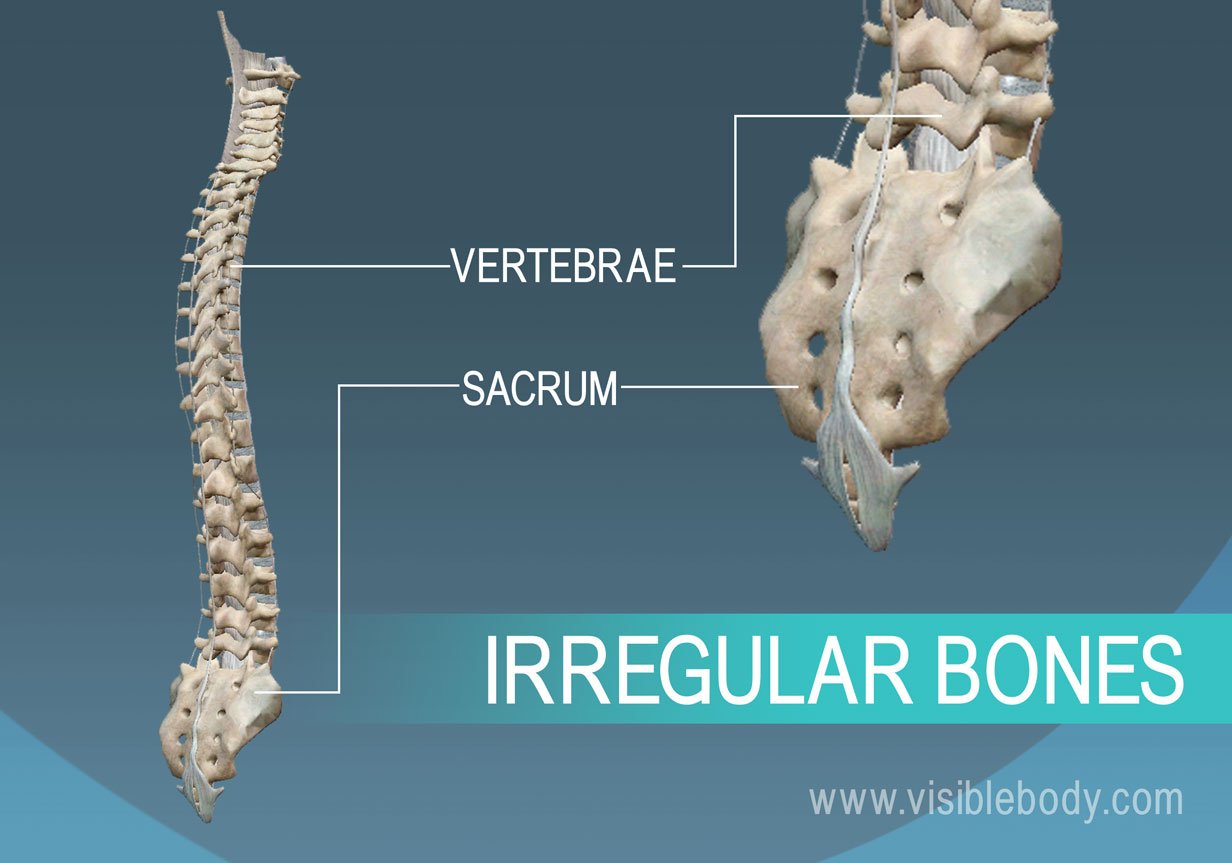
Irregular bones
Vertebrae, ear bones
14
New cards
Articular cartilage

- hyaline cartilage

- covers ends of long bones

15
New cards
Diaphysis

- shaft of long bones

- compact bone covering spongy bone

- only in long bones
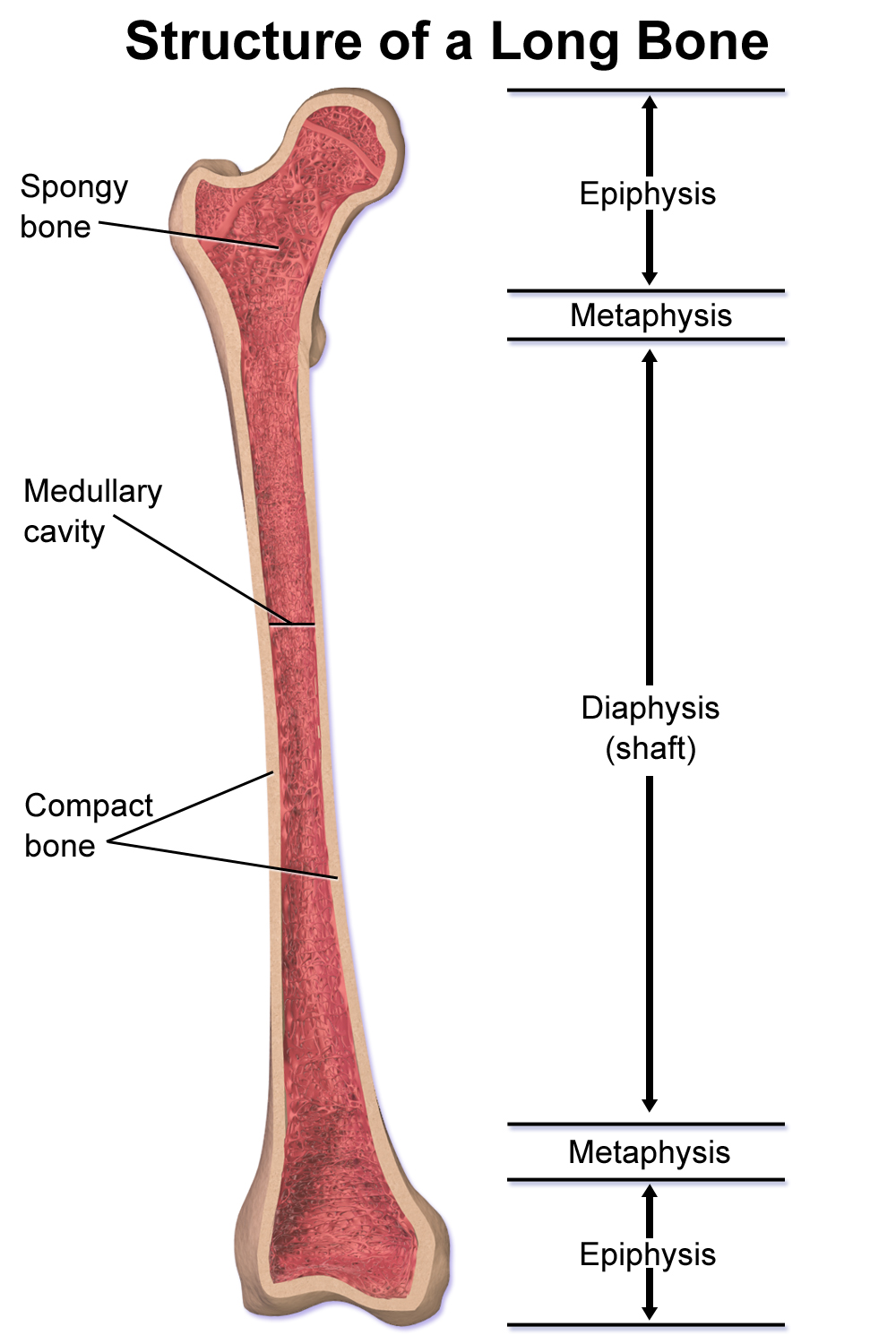
<p>- shaft of long bones</p><p>- compact bone covering spongy bone</p><p>- only in long bones</p>
16
New cards
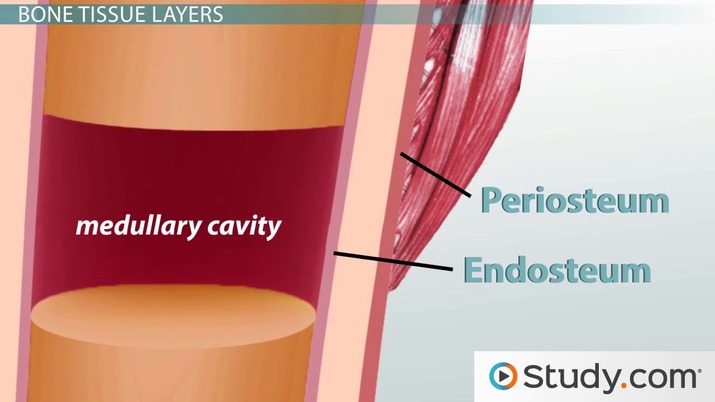
Medullary cavity

- marrow cavity

- in shaft of long bones
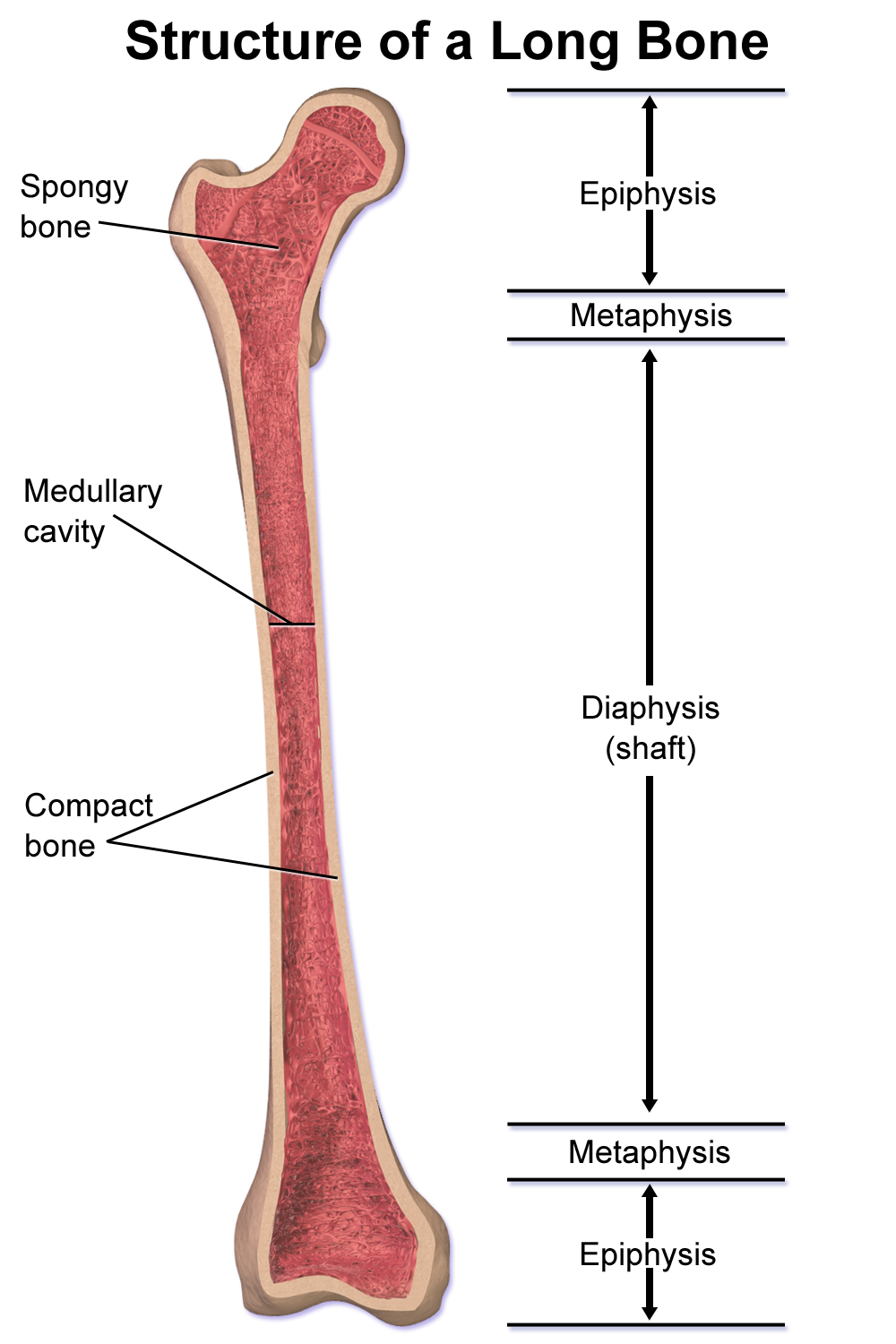
<p>- marrow cavity</p><p>- in shaft of long bones</p>
17
New cards
Epiphysis

- ends of long bones

- mostly spongy bone

- only in long bones
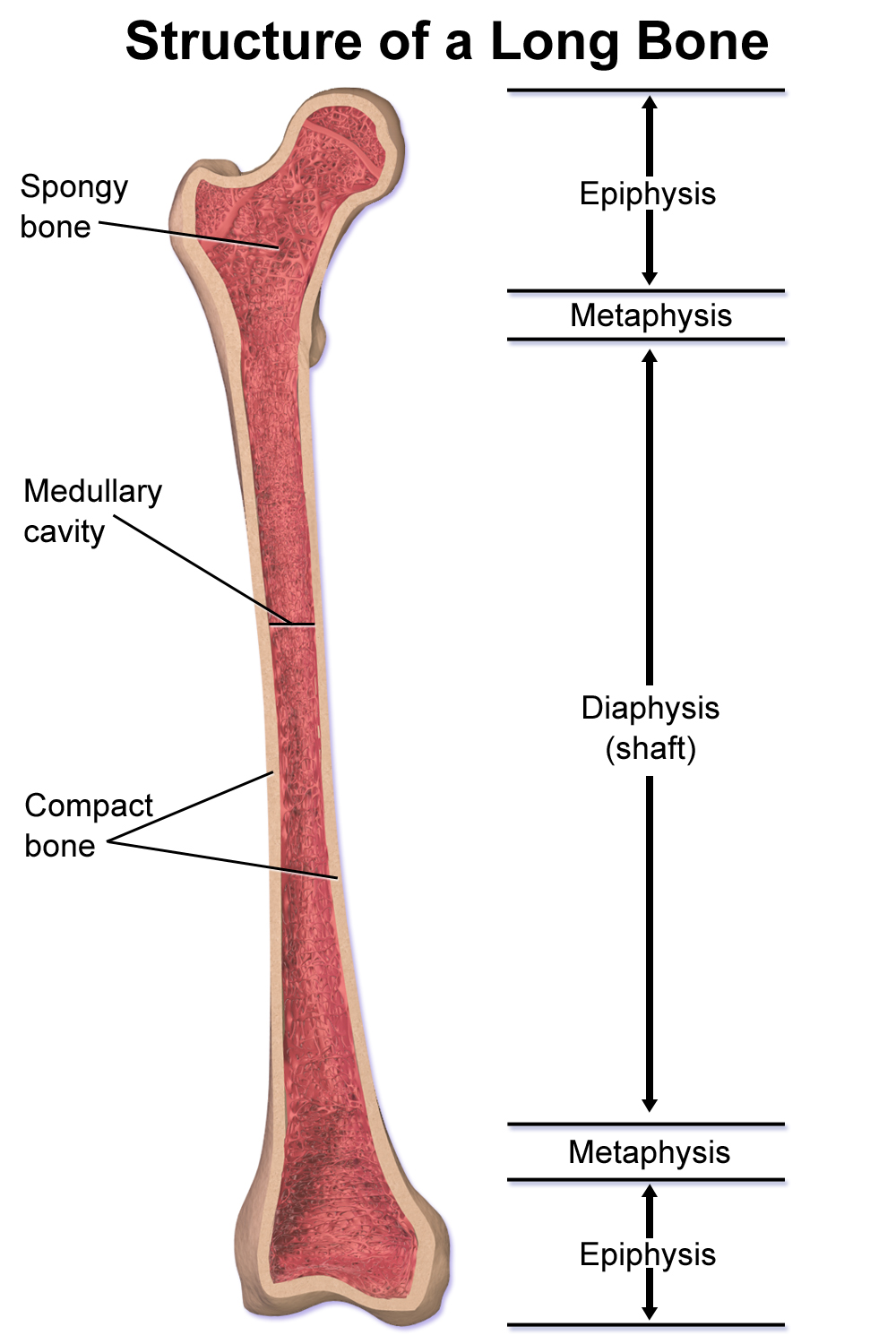
<p>- ends of long bones</p><p>- mostly spongy bone</p><p>- only in long bones</p>
18
New cards
Epiphyseal plate

- growth plate

- turns to epiphyseal line when fully formed
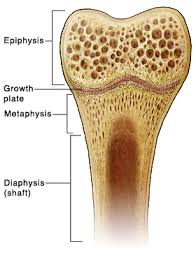
<p>- growth plate</p><p>- turns to epiphyseal line when fully formed</p>
19
New cards
Periosteum

- 2 layer membrane

- Provides attachment to tendons and ligaments

- rich supply of nerve fibers and blood vessels
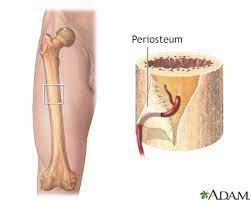
<p>- 2 layer membrane</p><p>- Provides attachment to tendons and ligaments</p><p>- rich supply of nerve fibers and blood vessels</p>
20
New cards
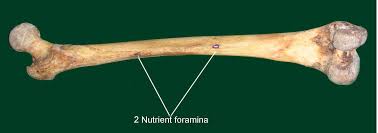
Nutrient foramina
minute holes in the bone surface that allows blood vessels to penetrate
21
New cards
Layers of periosteum

1. Fibrous layer

2. Osteogenic layer

22
New cards
Fibrous layer of periosteum

- dense irreg. CT

- outer layer

23
New cards
Osteogenic layer of periosteum

- osteogenic cells

- turns into bone

24
New cards
Endosteum
lines the medullary cavity
25
New cards
Sesamoid bones
short bones within tendons (ex. patella)
26
New cards
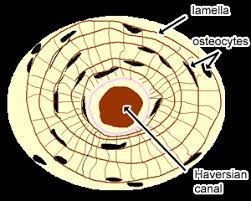
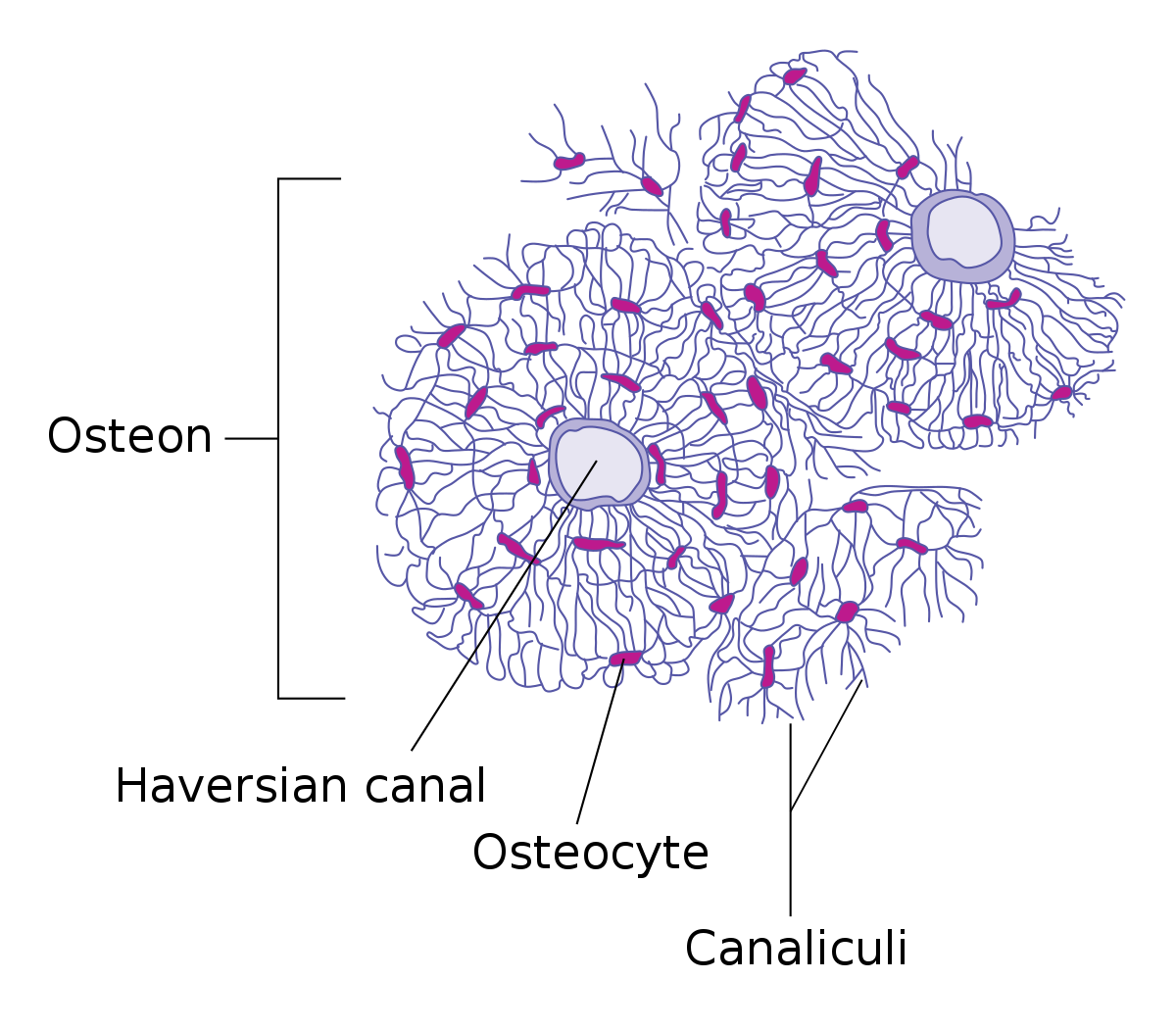
Osteon

- Haversian system

- fundamental unit
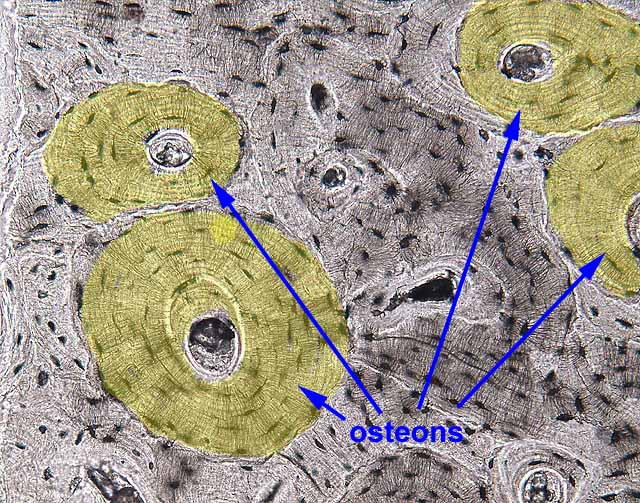
<p>- Haversian system</p><p>- fundamental unit</p>
27
New cards
Lamella
bone matrix around an osteon
28
New cards
Concentric lamella
around the osteon
29
New cards
Circumferential lamella
a bony lamella that encircles the outer or inner surface of a bone
30
New cards
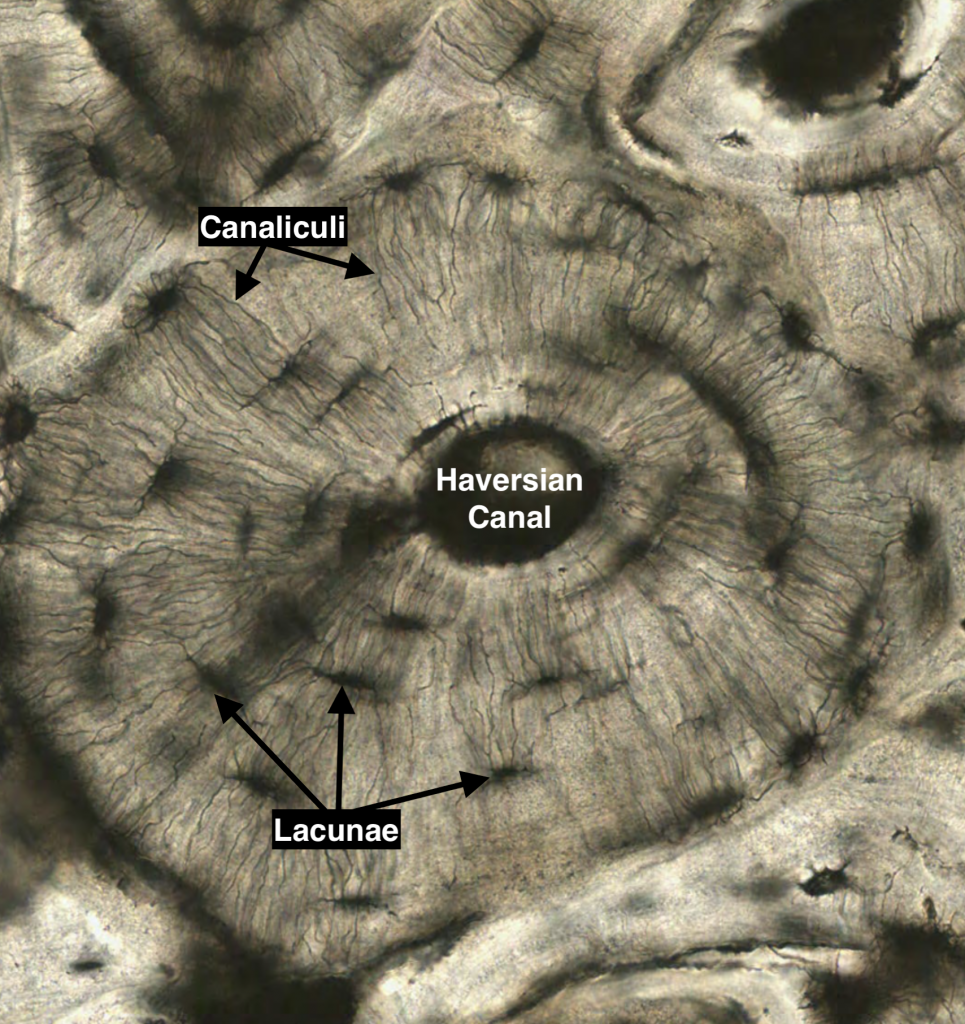
Lacuna
space containing the osteocyte
31
New cards
Central canal

- Haversian canal

- runs through each osteon

- nerves and blood vessels
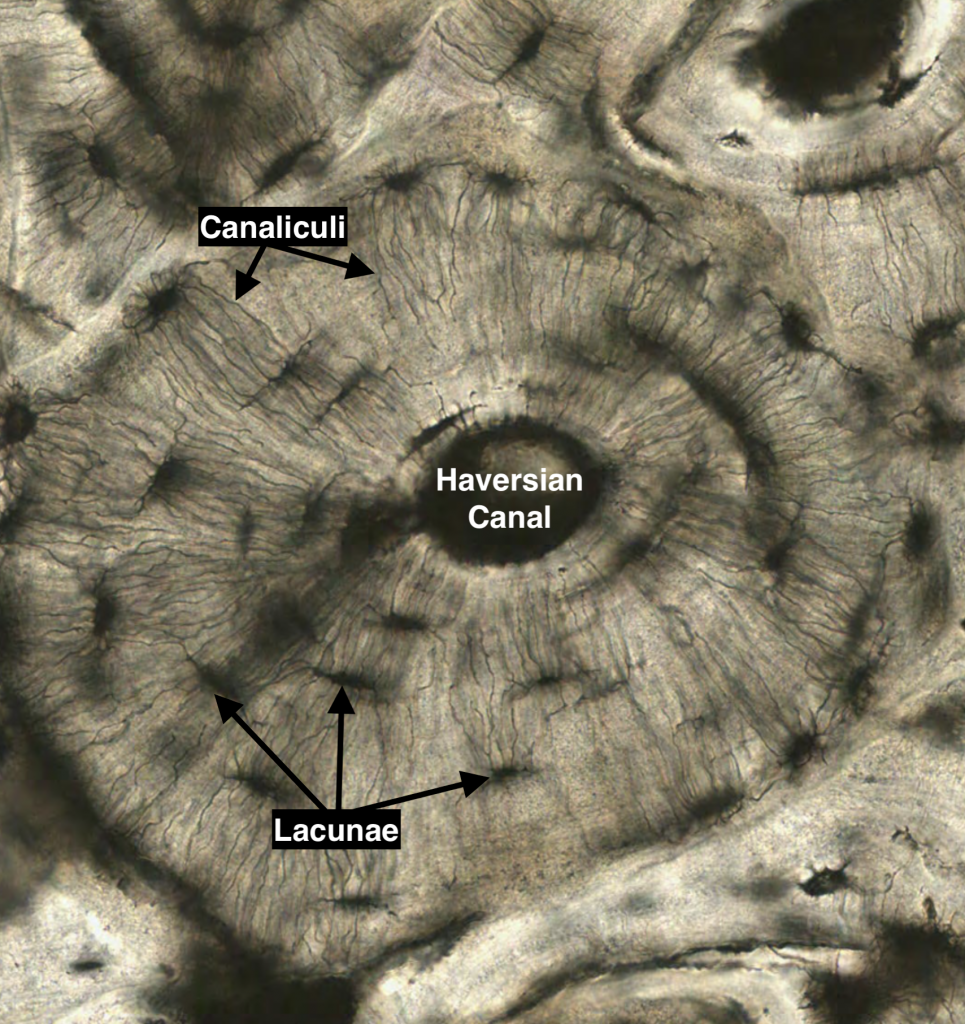
<p>- Haversian canal</p><p>- runs through each osteon</p><p>- nerves and blood vessels</p>
32
New cards
Perforating canals

- Volkmann's canal

- perpendicular to central canal to link together
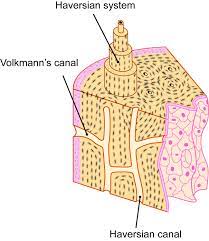
<p>- Volkmann's canal</p><p>- perpendicular to central canal to link together</p>
33
New cards
Canaliculi
microscopic canals between the lacunae of ossified bone
34
New cards
Red bone marrow

- myeloid tissue/hemopoietic tissue

- found in skull, vertebrae, ribs, sternum, and proximal heads of humerus/femur (in adults)

35
New cards
Yellow bone marrow

- fat storage

- can convert to red marrow in extreme cases of anemia

36
New cards
Four major types of bone cells

1. osteogenic cells

2. osteoblasts

3. osteocytes

4. osteoclasts

37
New cards
Osteogenic cells

- bone stem cells

- found in periosteum and endosteum

- multiply continually
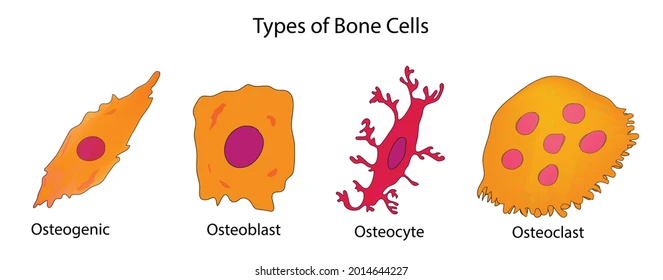
<p>- bone stem cells</p><p>- found in periosteum and endosteum</p><p>- multiply continually</p>
38
New cards
Osteoblasts

- bone forming cells

- secrete osteoid to form bony matrix

- nonmitotic
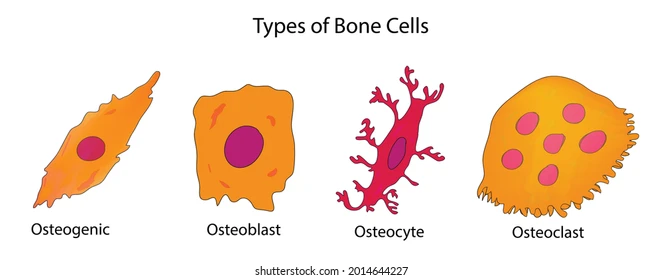
<p>- bone forming cells</p><p>- secrete osteoid to form bony matrix</p><p>- nonmitotic</p>
39
New cards
Osteocytes

- mature bone cells found in lacunae

- maintain bony matrix

- stress sensors and influence bone remodeling
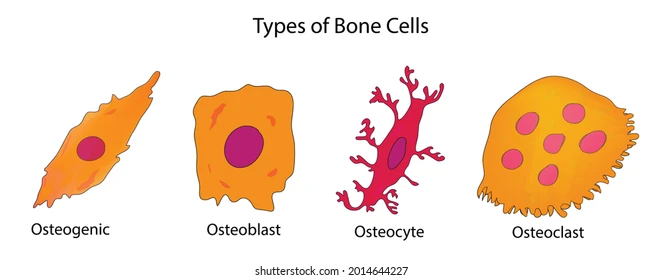
<p>- mature bone cells found in lacunae</p><p>- maintain bony matrix</p><p>- stress sensors and influence bone remodeling</p>
40
New cards
Osteoclasts

- bone dissolving cells (osteolysis)

- NOT from osteogenic cells, from stem cells
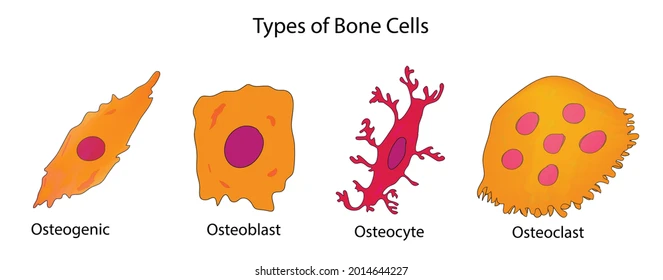
<p>- bone dissolving cells (osteolysis)</p><p>- NOT from osteogenic cells, from stem cells</p>
41
New cards
Osteoid
unmineralized bone matrix composed of proteoglycans, glycoproteins, and collagen
42
New cards
Inorganic materials in bone

1. 85% Hydroxyapatite (crystalized calcium phosphate salt)

2. 10% calcium carbonate

3. 5% Magnesium, sodium, potassium, fluoride, sulfates, carbonates, and hydroxide ions

43
New cards
Ossification (osteogenesis)
formation of bone
44
New cards
3 major processes of ossification

1. Bone formation (embryos - early childhood)

2. Bone growth (embryos - early 20's)

3. Bone remodeling (lifelong)

45
New cards
Endochondral ossification
replacing hyaline cartilage with bone
46
New cards
Intramembranous ossification

bone develops from fibrous membrane

47
New cards
Appositional growth

- widen

- same as intramembranous ossification

48
New cards
Bone remodeling

- deposition and resorption

- bone mass stays the same (if healthy)

49
New cards
Wolff's law
Bone remodel in response to stress on the bone
50
New cards
Ectopic ossification
abnormal calcification of tissues (bone where should be no bone)
51
New cards
Arteriosclerosis
calcification of the arteries
52
New cards
Normal calcium levels
9.2-10.4 mg/dL
53
New cards
Hypocalcemia

- deficient calcium in the blood

- causes excitable muscles and neurons

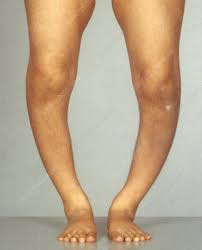
- can cause rickets

54
New cards
Tetany

- constant muscle contraction

- caused when calcium blood levels reach below 6mg/dL
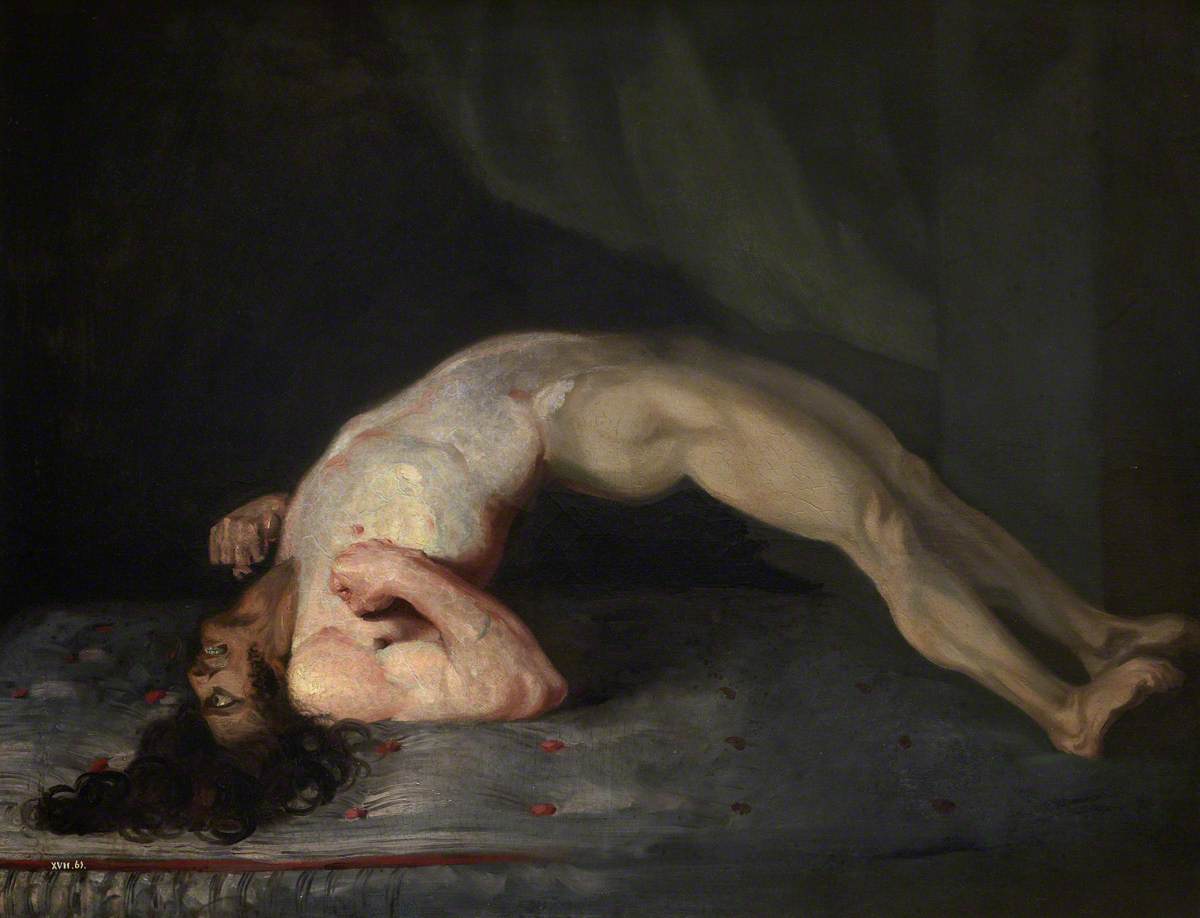
<p>- constant muscle contraction</p><p>- caused when calcium blood levels reach below 6mg/dL</p>
55
New cards
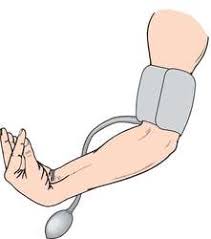
Trosseau's sign
hand spasm when bp cuff inflated
56
New cards
Hypercalcemia

- excessive calcium in the blood

- slow reflexes, depression of NS, cardiac arrest

57
New cards
Hormones that regulate calcium homeostasis

1. Calcirol

2. Calcitonin

3. Parathyroid hormone

58
New cards
Formation of calcitriol

1. UV causes keratinocytes to turn cholesterol to vit. D

2. Liver converts vit. D to calcidiol

3. Kidneys converts calcidiol to calcitriol

59
New cards
Calcitonin

- lowers blood calcium levels

- secreted by thyroid gland

60
New cards
Parathyroid hormone

- raises blood calcium levels

- increases osteoclast production to free calcium ions and send to blood stream

- increases kidney's ability to absorb calcium

61
New cards
Cortisol

- inhibits osteoclast activity

- can cause osteoporosis if too much is secreted

62
New cards
Estrogen

- stimulates osteoblasts

- prevents osteoporosis

- after menopause, it's created less causing higher chances of osteoporosis

63
New cards
Growth hormone
stimulates epiphyseal plate activity
64
New cards
Insulin
stimulates bone growth
65
New cards
Testosterone
stimulates osteoblasts
66
New cards
Thyroid hormone

- modulates activity of growth hormone, ensuring proper proportions

- in excess can cause hypercalcemia
67
New cards
Vit C
required for collagen synthesis
68
New cards
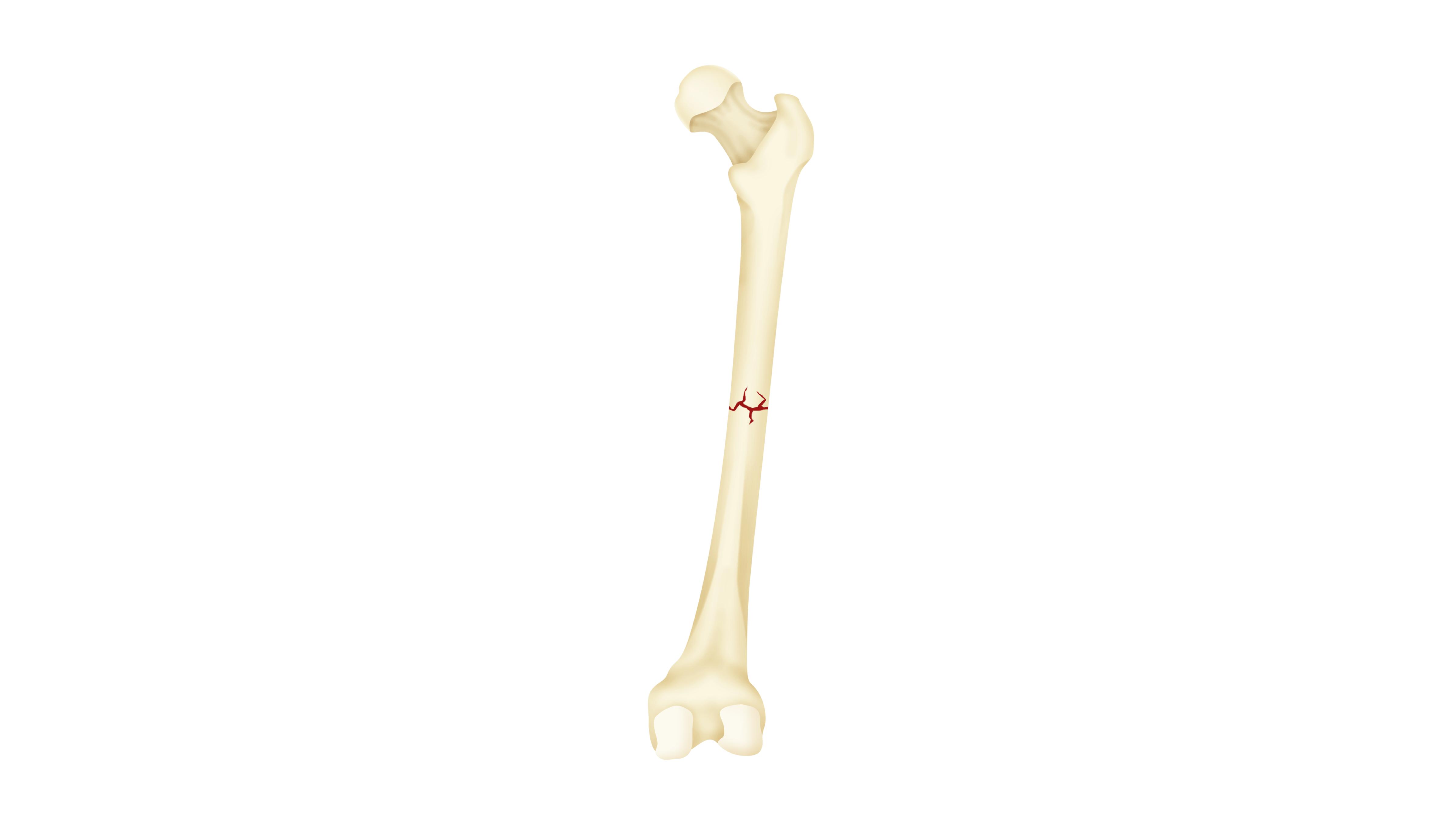
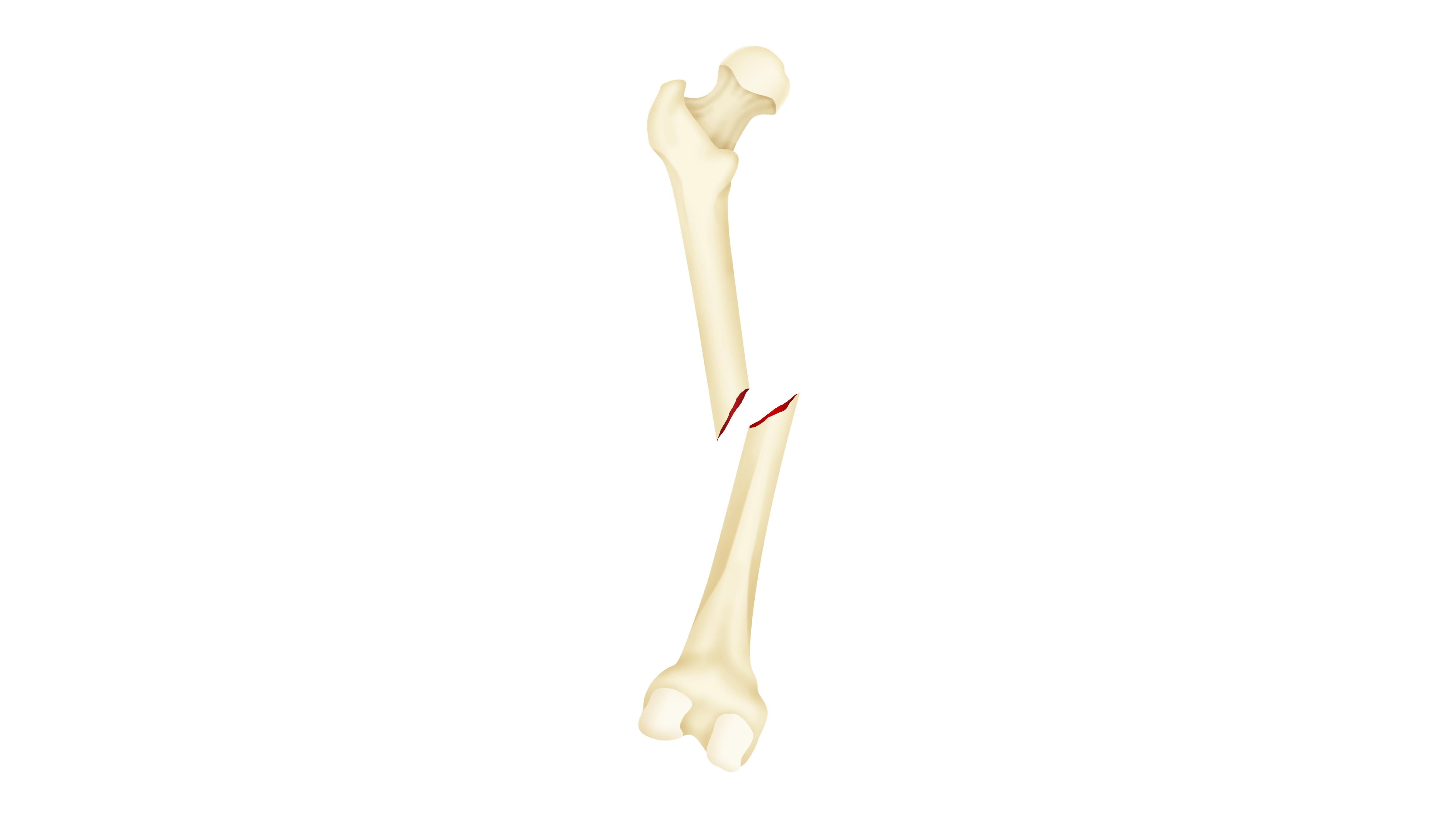
Fracture
broken bone
69
New cards
Stress fracture
purely mechanical damage
70
New cards
Pathological fracture
break in a bone weakened by some other disease
71
New cards
Displaced fracture
fractured ends are completely out of place
72
New cards
Nondisplaced fracture
bone ends retain their normal position
73
New cards
Complete fracture
bone is broken all the way through
74
New cards
Incomplete fracture

- greenstick

- Bone is still connected in someplace
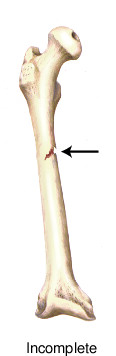
<p>- greenstick</p><p>- Bone is still connected in someplace</p>
75
New cards
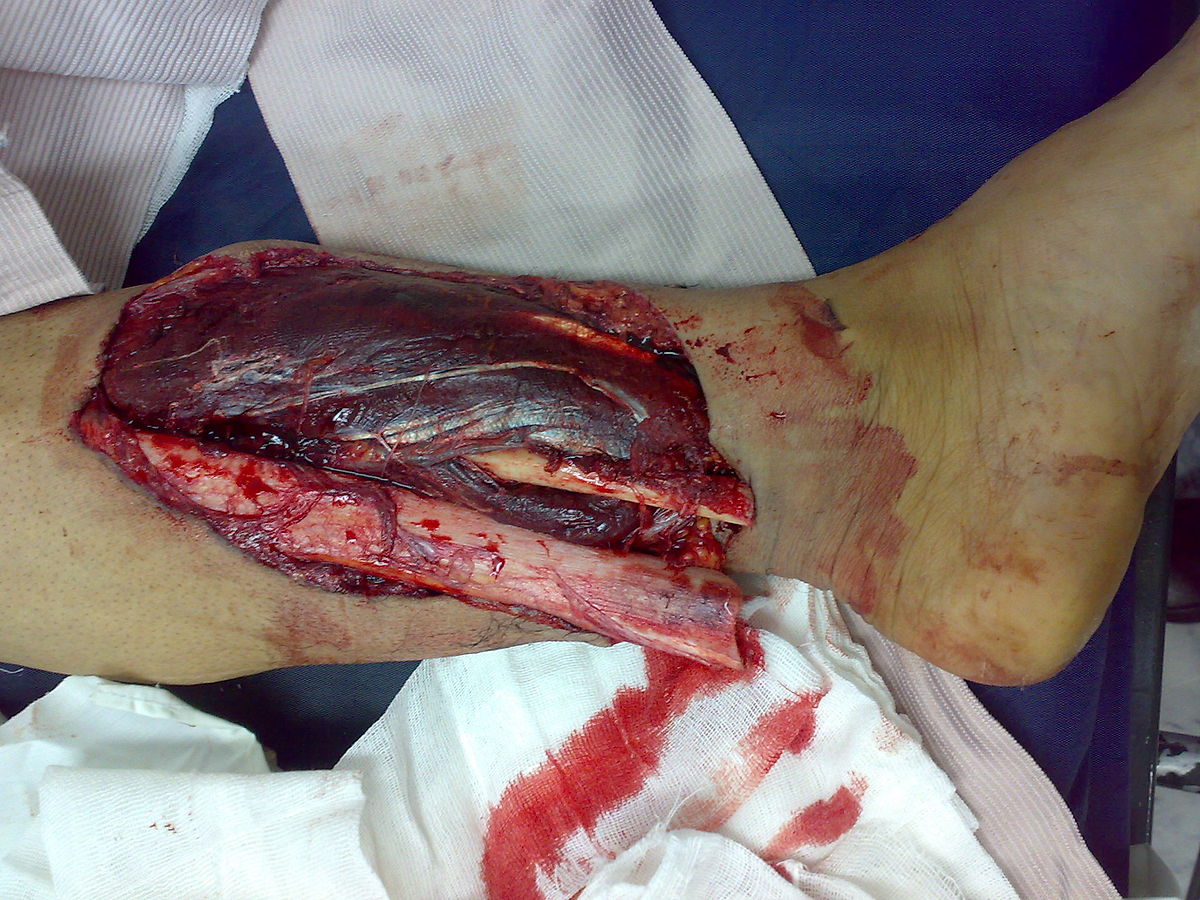
Compound fracture
bone breaks through skin (open)
76
New cards
Simple fracture
bone does not break through the skin (closed)
77
New cards
Reduction of bone
Manipulating the bone back to proper position
78
New cards
Closed reduction

- external reduction

- bones are in a cast

- no surgery

79
New cards
Open reduction

- internal fixation

- bones are secured with surgical pins and wires

80
New cards
Stages of bone healing

1. hematoma formation

2. fibrocartilage callus formation

3. bony callus formation

4. bone remodeling
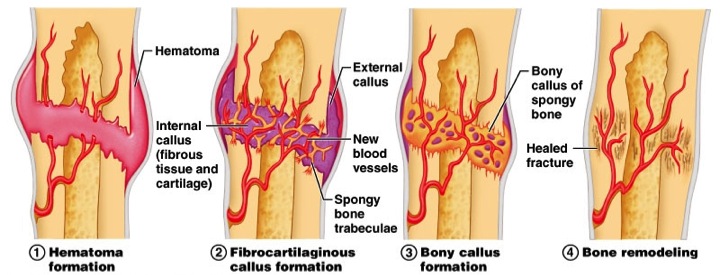
<p>1. hematoma formation</p><p>2. fibrocartilage callus formation</p><p>3. bony callus formation</p><p>4. bone remodeling</p>
81
New cards
Osteomalacia/rickets
bones become softer because of a vitamin D deficiency (can't become mineralized)
82
New cards
Osteoporosis

- bone resorption is much greater than deposition

- hollow and weakened bones

83
New cards
Step 1 of endochondral ossification

- mesenchyme develops into hyaline cartilage covered with perichondrium

- chondrocytes produce cartilage to increase thickness

84
New cards
Step 2 of endochondral ossification

- primary ossification center forms

- perichondrium starts to produce osteoblasts

- osteoblasts secrete bony layer around diaphysis

85
New cards
Step 3 of endochondral ossification

- blood vessels infiltrate the center of diaphysis

- osteoblasts deposit bone at the primary ossification center

- secondary ossification center is formed

86
New cards
Step 4 of endochondral ossification
- osteoclasts break down newly formed spongy bone and create the medullary cavity
87
New cards
Step 5 of endochondral ossification

- cartilage is only articular or in growth plate

- epiphysis fill with spongy bone
88
New cards
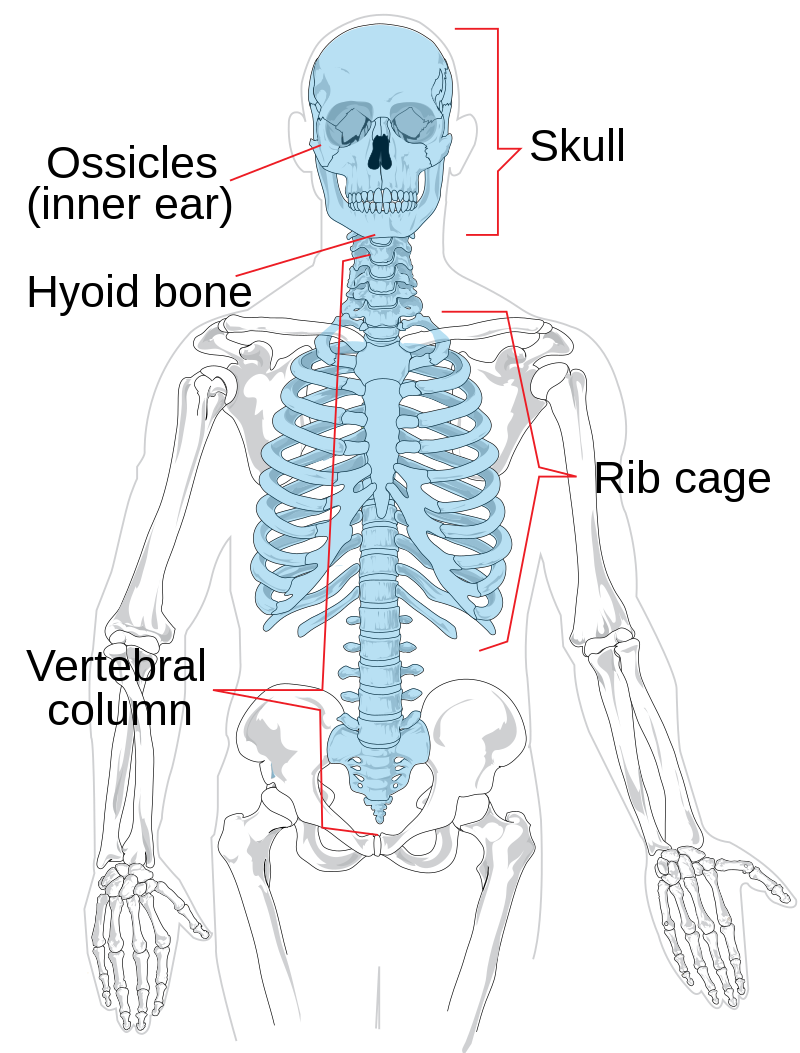
Number of bones in axial skeleton
80
89
New cards
Axial skeleton
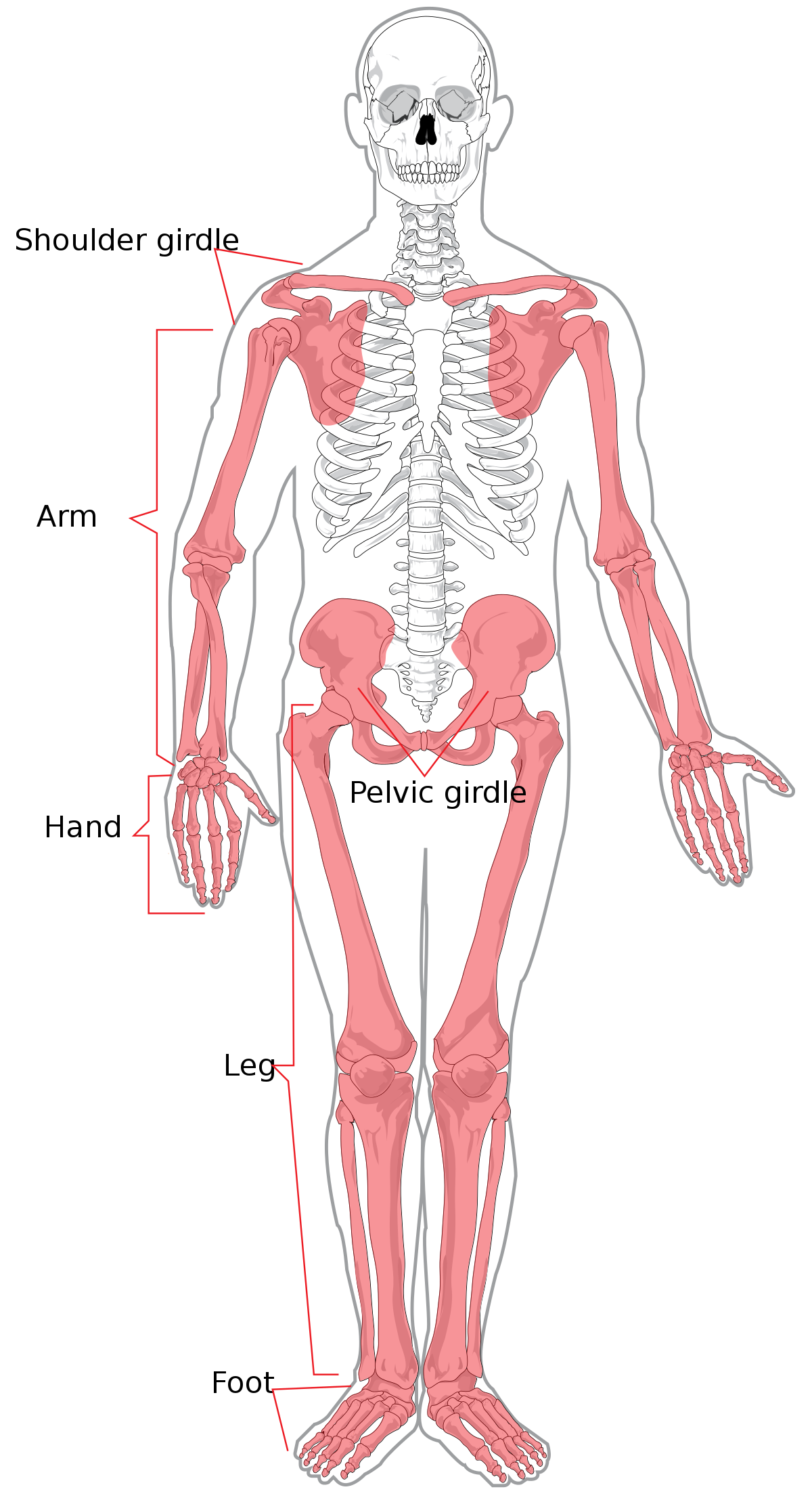
Portion of the skeletal system that consists of the skull, rib cage, and vertebral column
90
New cards
Appendicular skeleton
Bones of the limbs and limb girdles that are attached to the axial skeleton
91
New cards
Functions of axial skeleton

-supports and protects organs in body cavities

-attaches to muscles of: head, neck, trunk, respiration, and appendicular skeleton

92
New cards
Cranial bones

- 8

- protect brain and attachment for facial muscles

93
New cards
Facial bones

- 14

- secure teeth

- contain cavities for sense organs

94
New cards
Sinuses

- cavities in the skull that surround the nasal area

- warm and humidify air

- reduces weight of skull

- enhances resonance of the voice

95
New cards
Fontanelles
soft spots normally present on the skull of a newborn
96
New cards
Anterior fontanelle

- takes 2 years to fully ossify

- large soft spot on infant's head
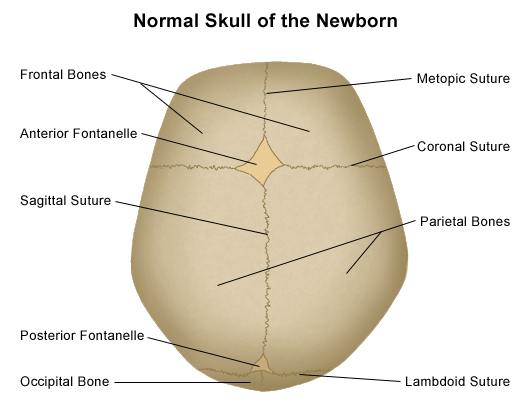
<p>- takes 2 years to fully ossify</p><p>- large soft spot on infant's head</p>
97
New cards
Malleus

- hammer

- first of the three auditory ossicles of the middle ear
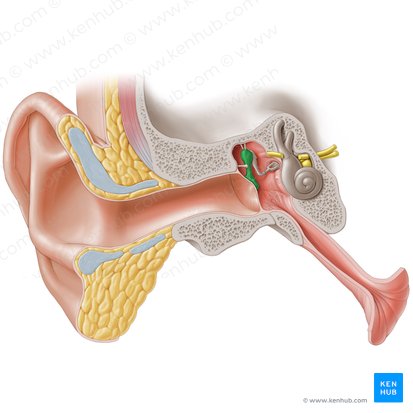
<p>- hammer</p><p>- first of the three auditory ossicles of the middle ear</p>
98
New cards
Incus

- anvil

- middle of the three auditory ossicles of the middle ear
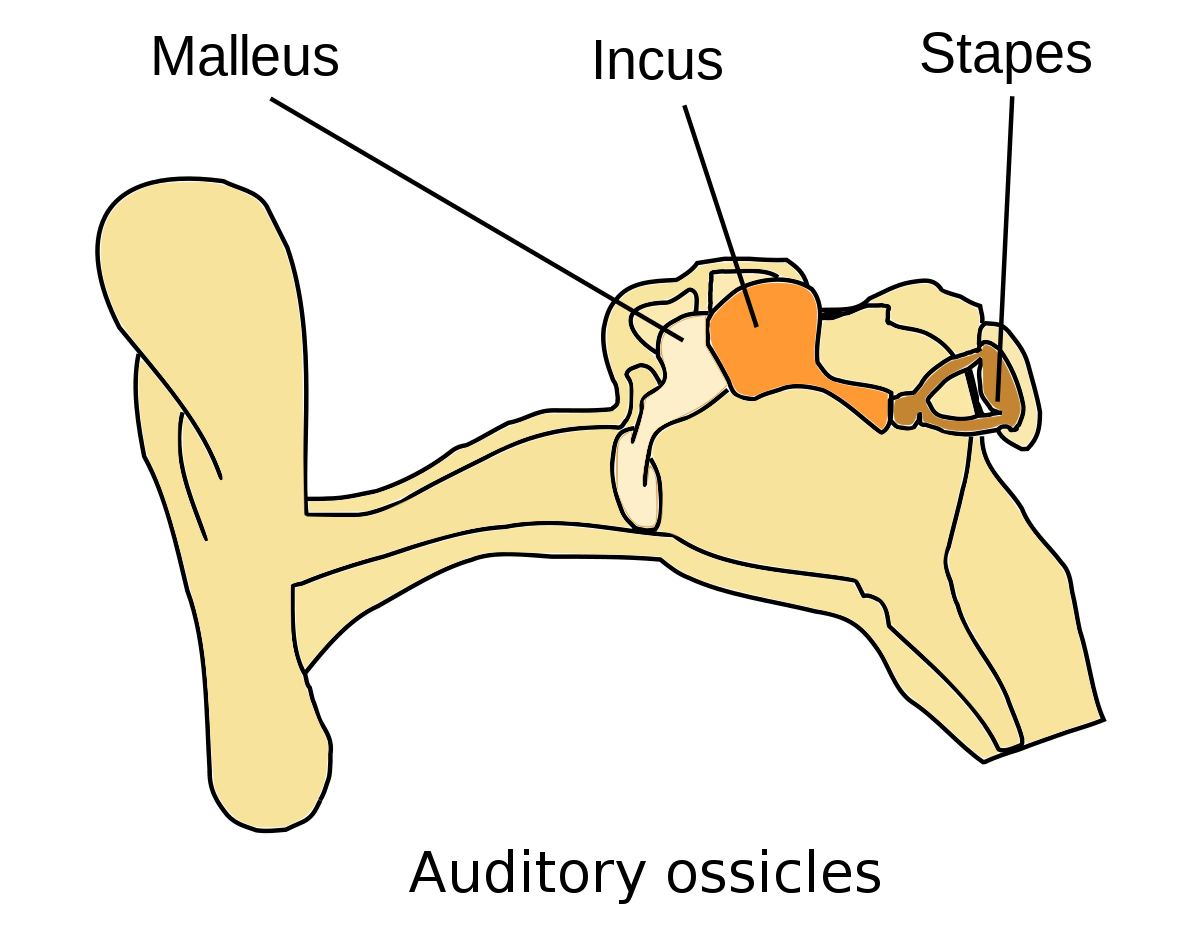
<p>- anvil</p><p>- middle of the three auditory ossicles of the middle ear</p>
99
New cards
Stapes

- stirrup

- last of the three auditory ossicles of the middle ear
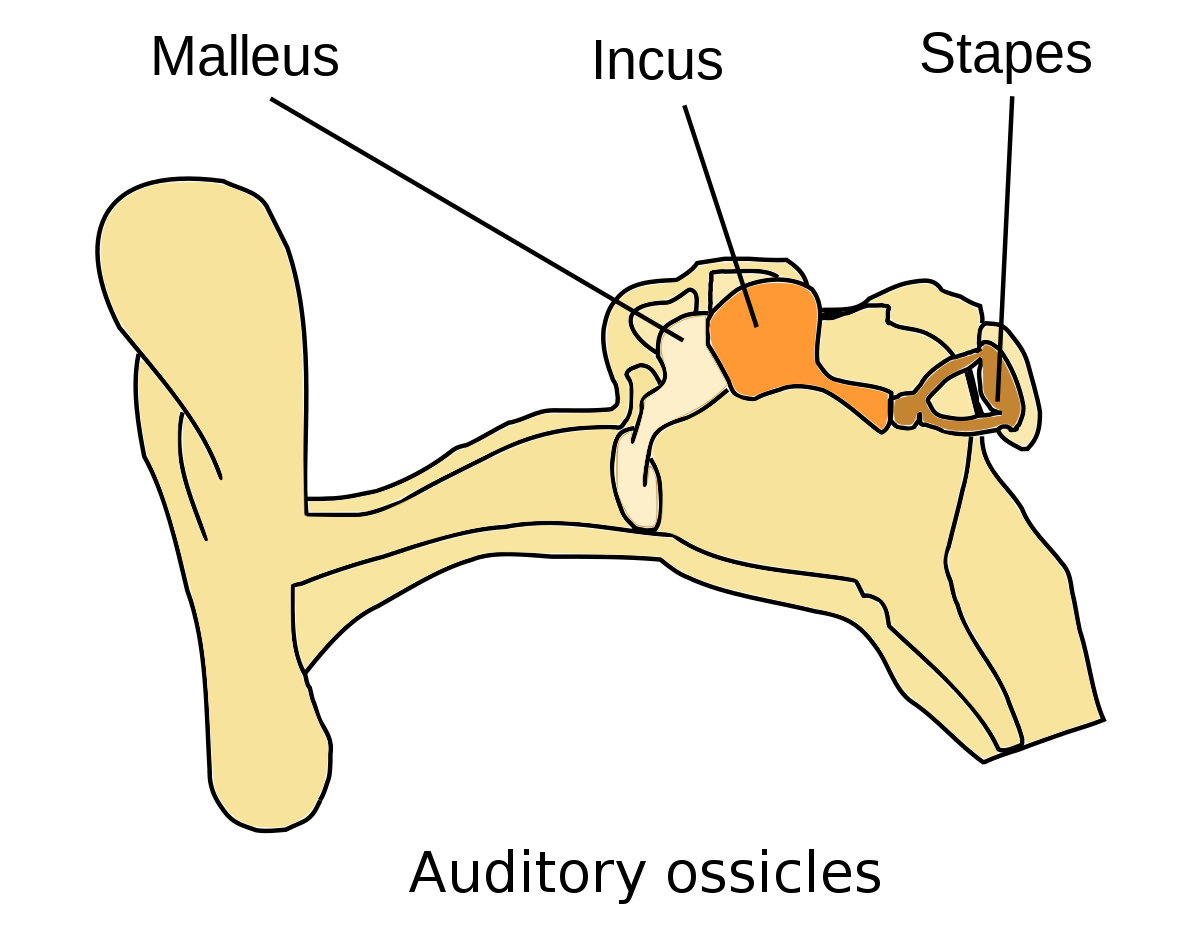
<p>- stirrup</p><p>- last of the three auditory ossicles of the middle ear</p>
100
New cards
intervertebral discs
fibrocartilage pads that separate and cushion the vertebrae