Chapter 21: DNA Technologies
 Studied by 0 people
 Call Kai
 Learn
Learn Practice Test
 Spaced Repetition
 Match
Match Flashcards
 Knowt Play
1/14

There's no tags or description
Looks like no tags are added yet.
Name | Mastery | Learn | Test | Matching | Spaced | Call with Kai |
|---|
No analytics yet
Send a link to your students to track their progress
15 Terms
Biotechnology
use or alteration of cells or biological molecules for specific applications
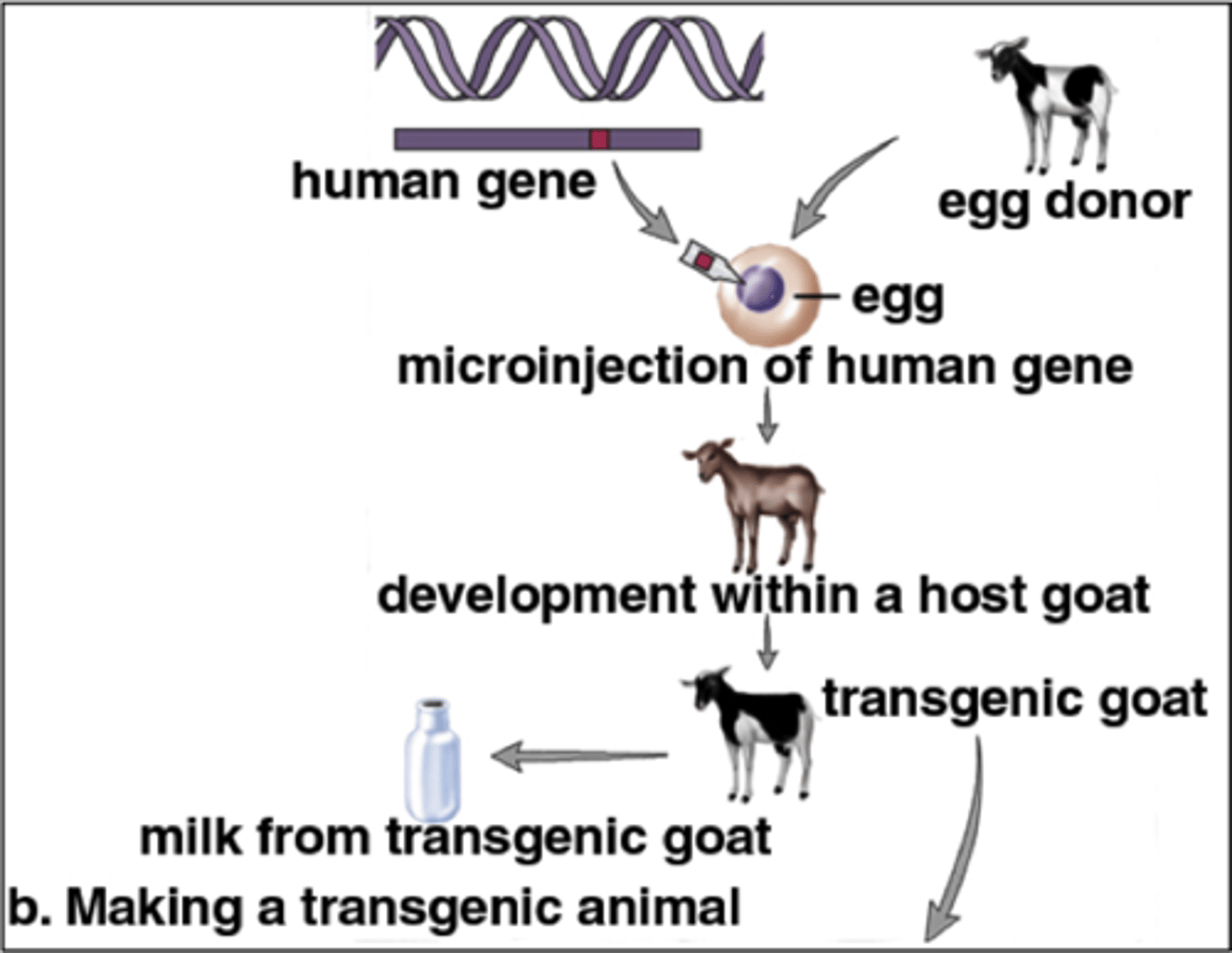
What are transgenic organisms
organisms that contain genes from different species
Why is a DNA sequence by itself not patentable, but a DNA sequence that is used to diagnose a disease in a medical test is patentable?
A DNA sequence alone is considered a naturally occurring "product of nature,"
DNA as part of a diagnostic kit, however, is part of a medical device. The parts other than the DNA sequence are necessary for the device to work, and the device is not a product of nature.
Do transgenic organisms occur in nature?
No, they occur through the process of biotechnology where the organism's cells or biological molecules are altered for specific applications
How are some transgenic animals better models of human disease than animal models whose DNA is unaltered?
Transgenic animals, such as mice, are better models of human disease since they have human DNA due to the universality of the gentic code AND they reproduce progeny rapidly
What are some of the limitations of transgenic animal models?
The human gene might not be expressed the same way in a mouse, for example, as a human, because of differences in development times.
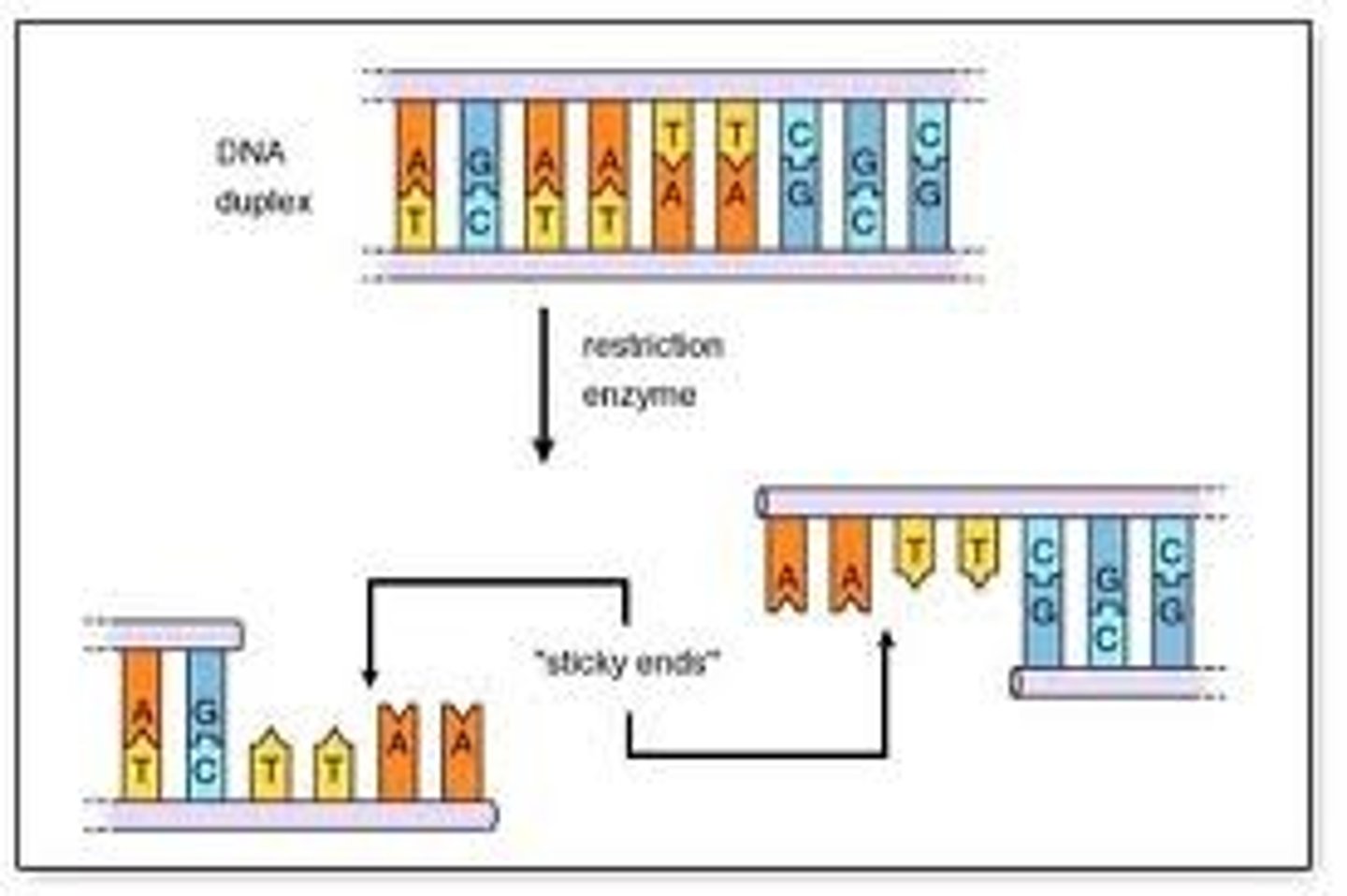
Describe the function of the following tool used in biotechnology: Restriction enzymes
cut donor & recipient DNA at specific palindromic sequences
Describe the function of the following tool used in biotechnology: Cloning vectors
pieces of DNA used to deliver specific DNA sequences from 1 cell to another
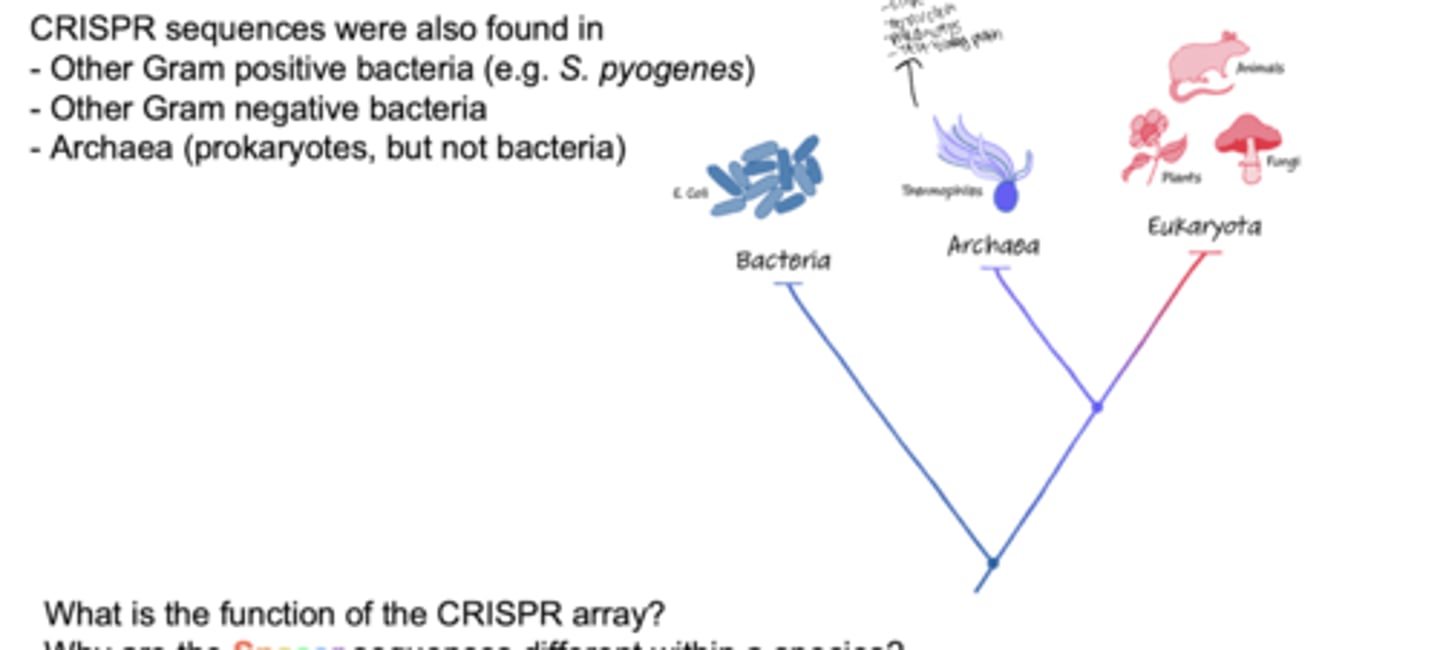
Describe the function of the following tool used in biotechnology: CRISPR sequences
short sequences of DNA that include several repeats; enable bacteria to deploy a Cas9 restriction enzyme
Describe the process involved in recombinant DNA technology.
1) DNA is isolated from donor cell (plant or animal)
2) A specific restriction enzyme fragments DNA
----
3) Same restriction enzyme fragments DNA from isolated plasmid from bacterium
4) Donor and plasmid DNA are mixed; sticky ends of donor DNA and plasmid DNA bind together
5) Recombinant molecule is sealed with ligase
6) Modified plasmids (recom. DNA) are introduced to bacteria
7) Bacteria divide and clone the gene spliced into the plasmids
8) Drug is purified and produced
What are some applications of recombinant DNA technology?
-Study biochemical properties or genetic pathways of the protein product of a target gene
-Mass-produce proteins (e.g. insulin)
-Produce vaccines (e.g. COVID-19 & malaria vaccines)
Why would recombinant DNA technology and creation of transgenic organisms be restricted or impossible if the genetic code were not universal?
Bacteria could not manufacture the products of human genes if the genetic code was not universal. The wrong amino acids would be incorporated into proteins.
What is an advantage of a drug produced using recombinant DNA technology compared to one extracted from natural resources?
-Does not contain contaminants found in proteins extracted from organisms
-Not allergenic, and it is the human version of the protein
What are some applications of genome editing? Why is genome editing controversial?
-Bringing back extinct species
-Limiting the spread of diseases
-Creating organ donors
Why is genome editing controversial?
-Raise ethical concerns and safety risk
 Note
Note  Flashcards (108)