BIO 2010- Module 15: "Additional Biochemical Tests To Identify Gram-Negative Bacteria"
 Studied by 0 people
 Call Kai
 Learn
Learn Practice Test
 Spaced Repetition
 Match
Match Flashcards
 Knowt Play
1/52

There's no tags or description
Looks like no tags are added yet.
Name | Mastery | Learn | Test | Matching | Spaced | Call with Kai |
|---|
No analytics yet
Send a link to your students to track their progress
53 Terms
what are the biochemical tests for identifying gram-negative bacteria?
IMViC series
Esculin hydrolysis
DNase detection
Oxidase test
Nitrate reduction test
What does it mean for gram negative bacteria to be "enteric microorganisms"?
This refers to bacteria that live in the intestinal tract of humans and animals.
What are the five common biochemical characteristics of the Enterobacteria family?
1. Gram (-) bacilli
2. Ferment glucose, produce acids
3. Reduce nitrate
4. Oxidase negative
5. Can be coliforms or non-coliforms
Name some gram-negative bacteria that produce coliforms
-Escherichia coli (E. coli)
-Enterobacter species (e.g., Enterobacter aerogenes / Enterobacter cloacae)
What are the two gram-negative bacteria that are the exception to the Enterobacteria family?
-Pseudomonas (non-fermenting and oxidase positive)
-Neisseria (oxidase positive)
What is the purpose of the IMViC series?
To differentiate members of enterobacteria from one another.
What do the letters I, M, V, and C stand for in the IMViC series?
Indole test
Methyl red test
Voges-Proskauer test
Citrate utilization test
What is the significance of the Indole test in the IMViC series?
The organism produces indole from tryptophan, shown by a red layer after adding Kovac's reagent.
Which media is used to grow organisms for the Indole test?
Trypticase Soy Broth (TSB)
Is the Indole test selective or differential?
Differential; it is used to differentiate organisms based on whether they can break down tryptophan → indole.
What is the technique for performing an Indole test?
Inoculation technique
What is the interpretation of a indole positive test?
The organism produces indole from tryptophan, shown by a red ring after adding Kovac's reagent.
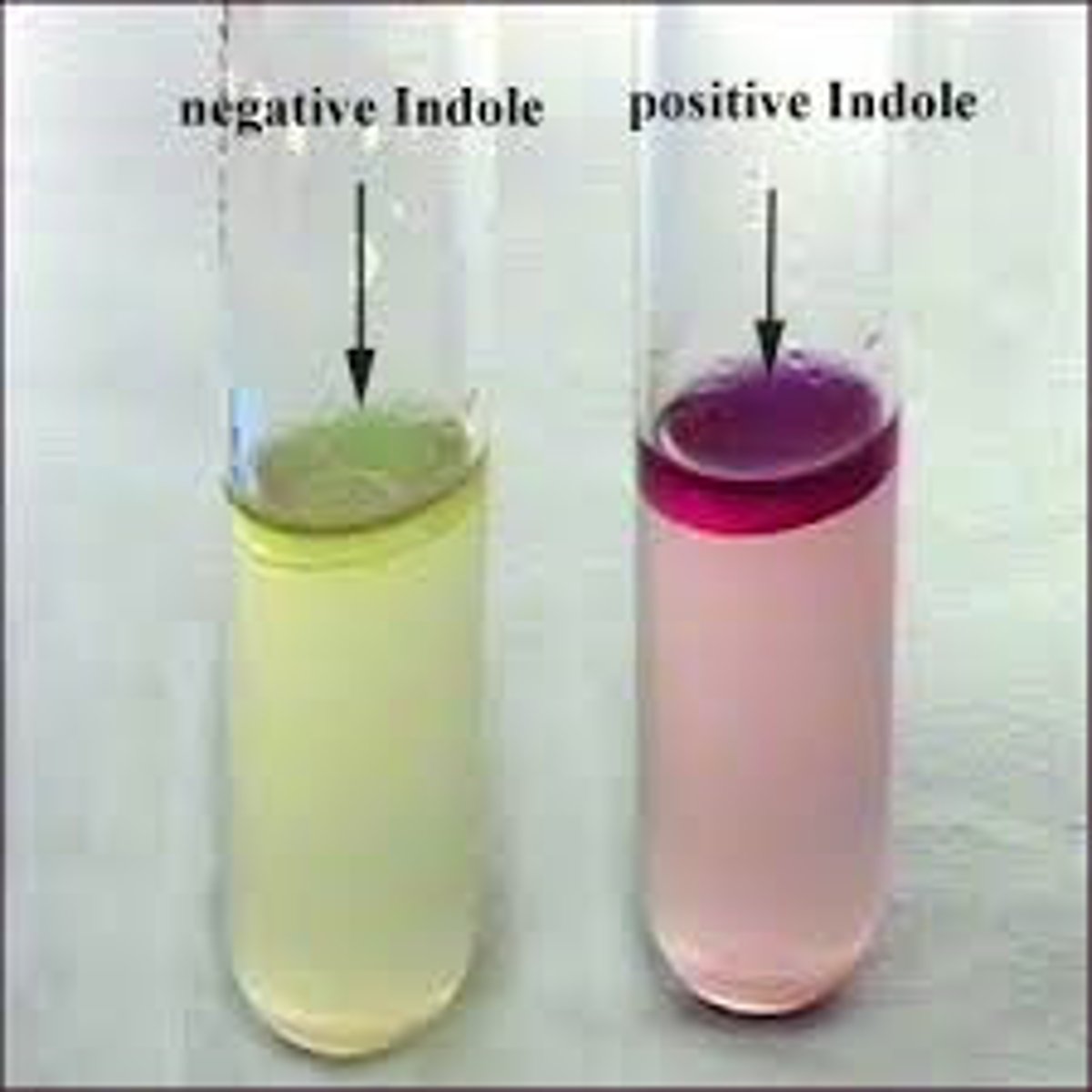
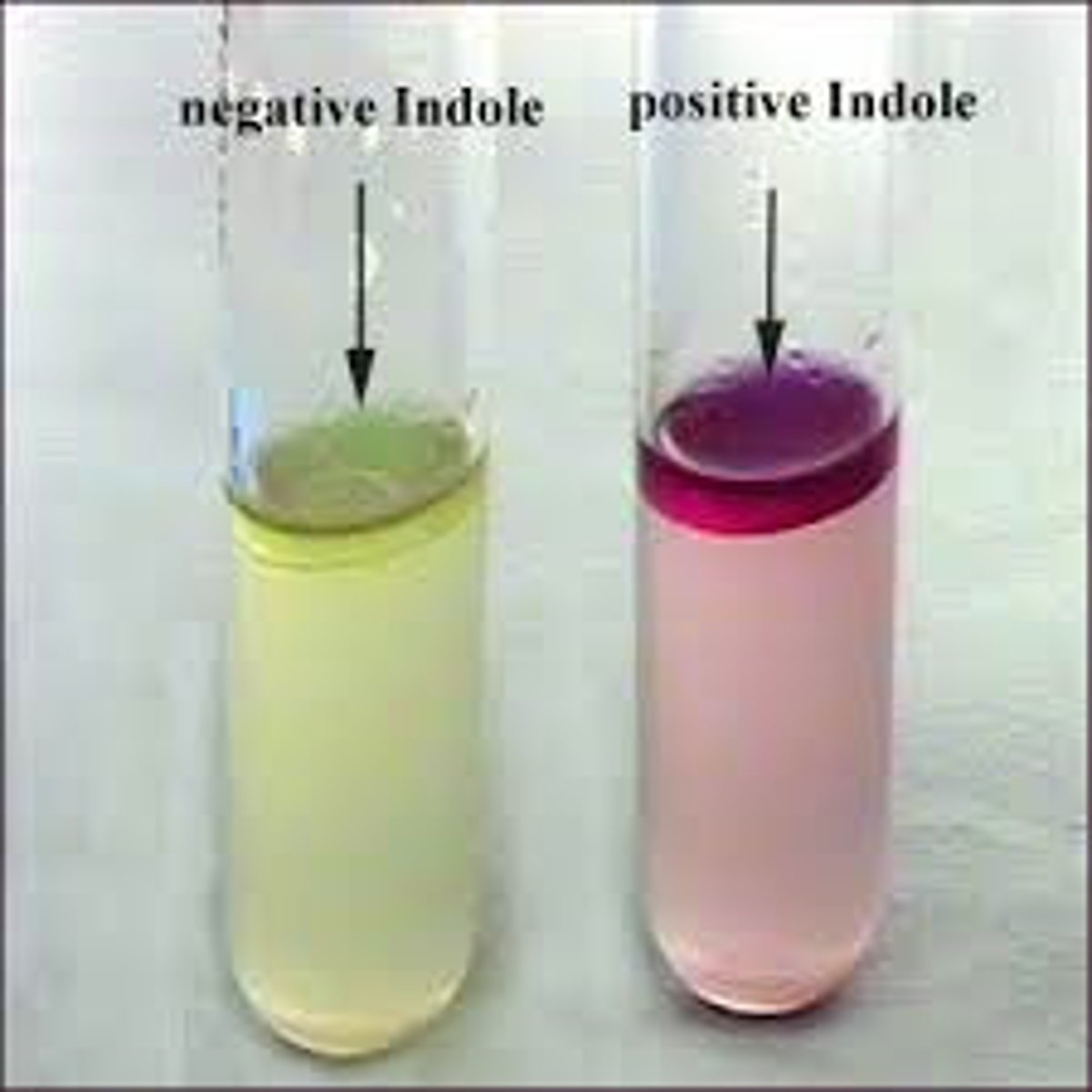
What is the interpretation of a indole negative test?
The organism does not produce indole from tryptophan; the broth remains its original color and forms a yellowish ring.
What is the significance of the Methyl Red test in the IMViC series?
It detects mixed acid fermentation of glucose, helping differentiate enterobacteria;
red=positive
yellow=negative.
Which media is used to grow organisms for the Methyl Red test?
MR-VP broth (glucose-containing).
Is the Methyl Red test selective or differential?
Differential; It differentiates bacteria based on their ability to perform mixed acid fermentation of glucose.
What is the technique for performing an Methyl Red test?
Inoculation technique
What is the interpretation of a Methyl Red positive test?
Red color → MR positive (mixed acid fermentation occurred)
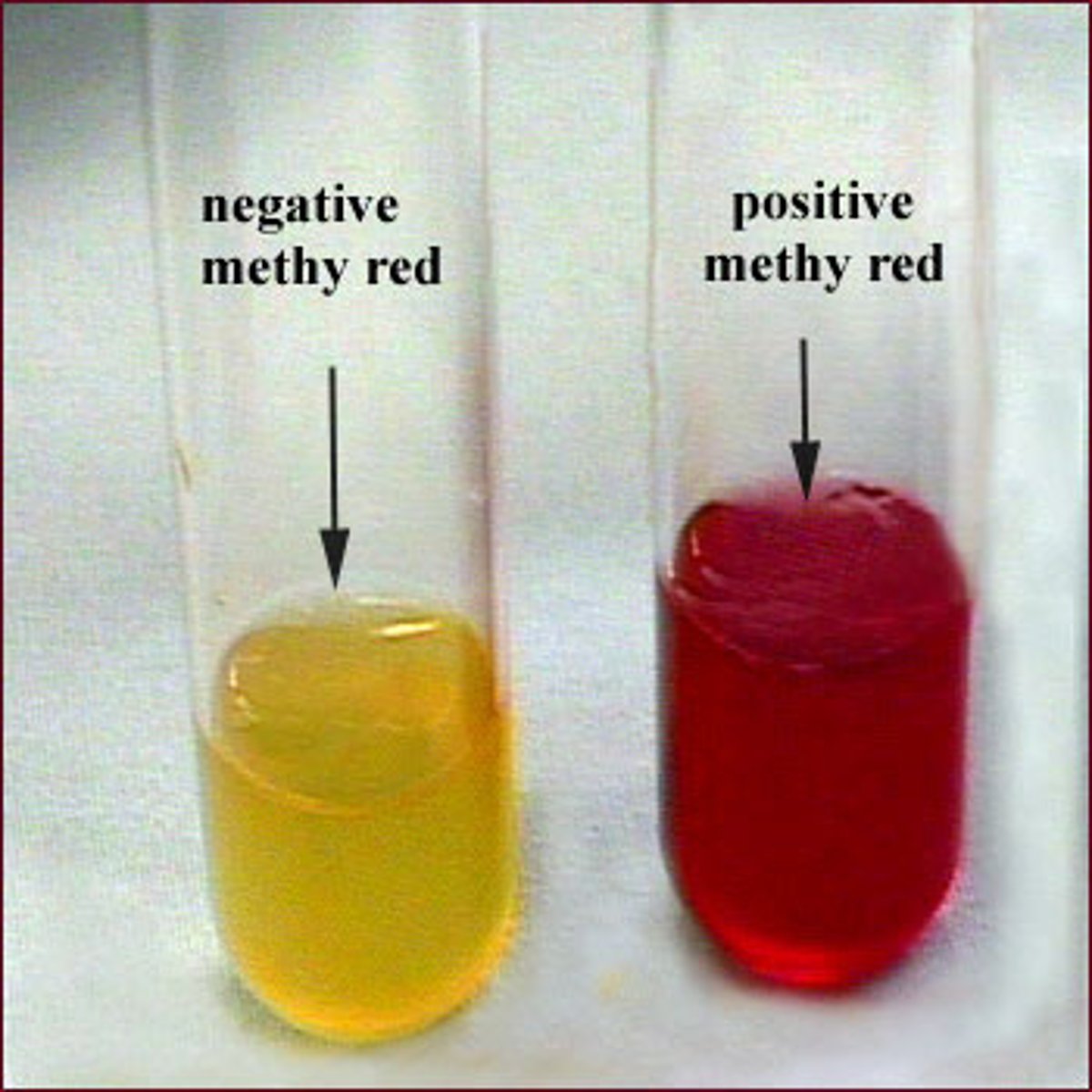
What is the interpretation of a Methyl Red negative test?
Yellow color → MR negative (no mixed acid fermentation)
What is the significance of the Voger Proskaver test in the IMViC series?
It detects acetoin production from glucose metabolism, helping differentiate enterobacteria.
What reagents are used in the Voges-Proskauer test?
Barritt's A (α-naphthol in alcohol) and Barritt's B (KOH with creatine).
Which media is used to grow organisms for the Voges-Proskauer test?
MR-VP broth (glucose-containing).
Is the test Voges-Proskauer selective or differential?
Differential; It differentiates bacteria based on their ability to produce acetoin from glucose metabolism.
What is the technique for performing an Voges-Proskauer test?
Inoculation technique
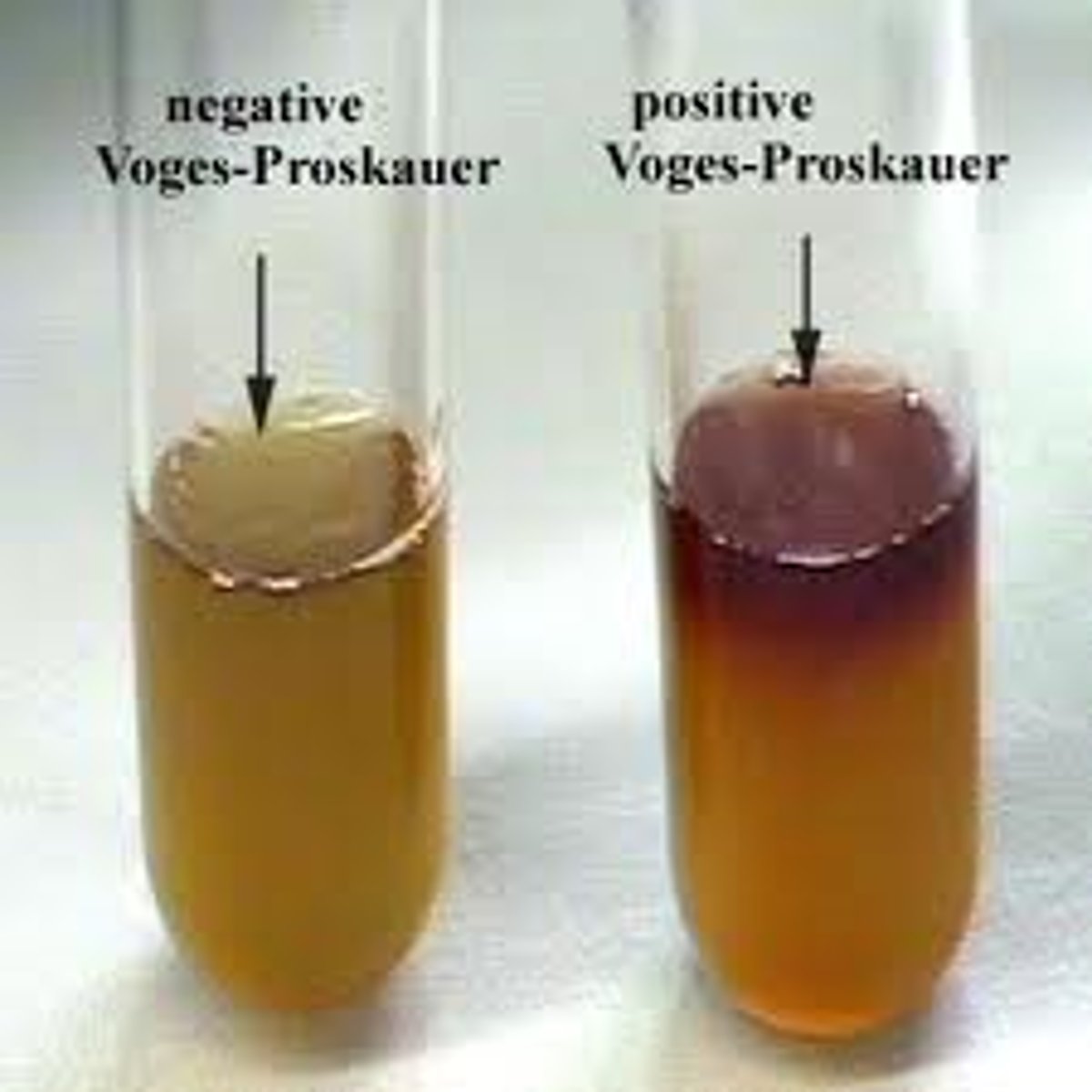
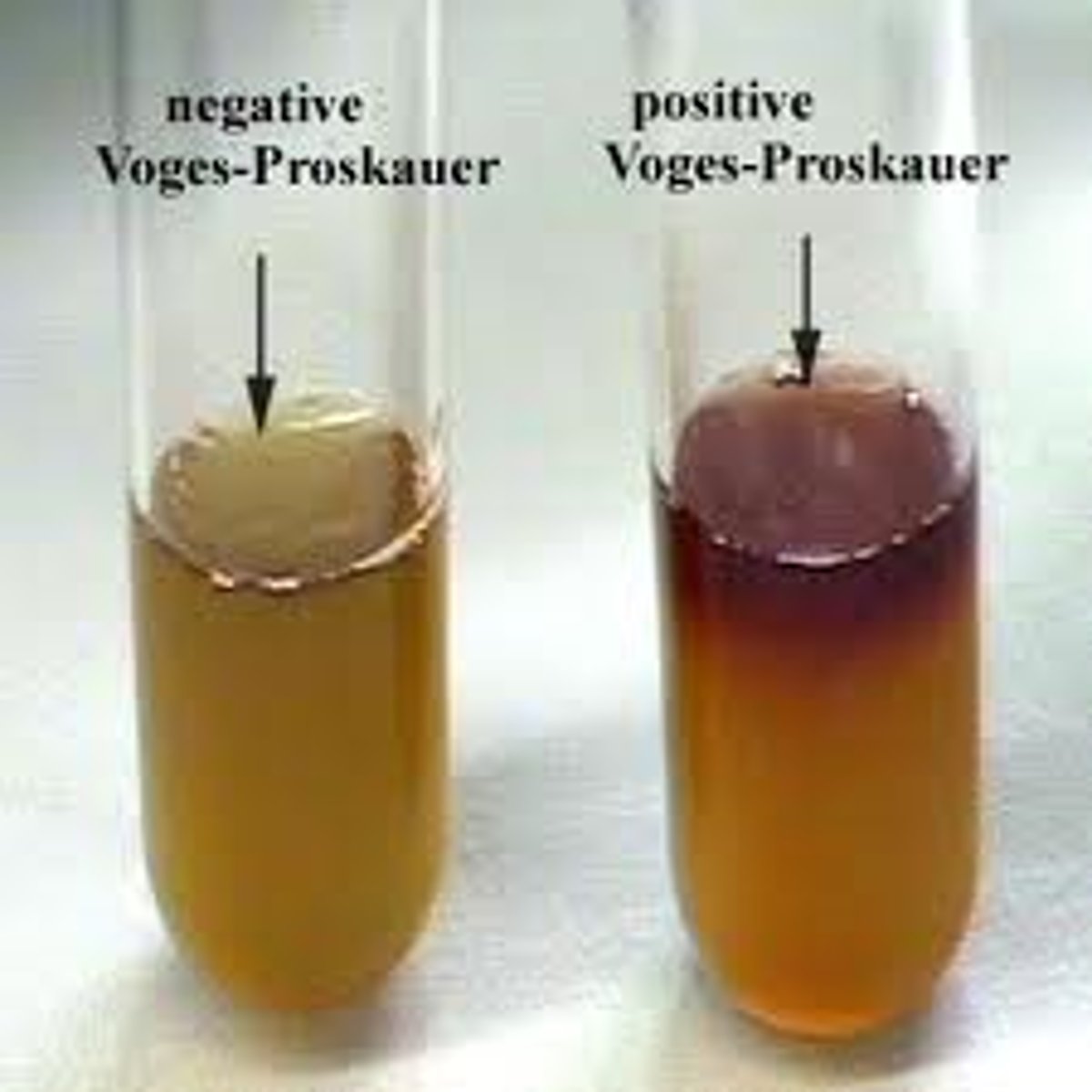
What is the interpretation of a Voges-Proskauer positive test?
The organism produces acetoin from glucose metabolism, shown by a red ring after adding Barritt's reagents.
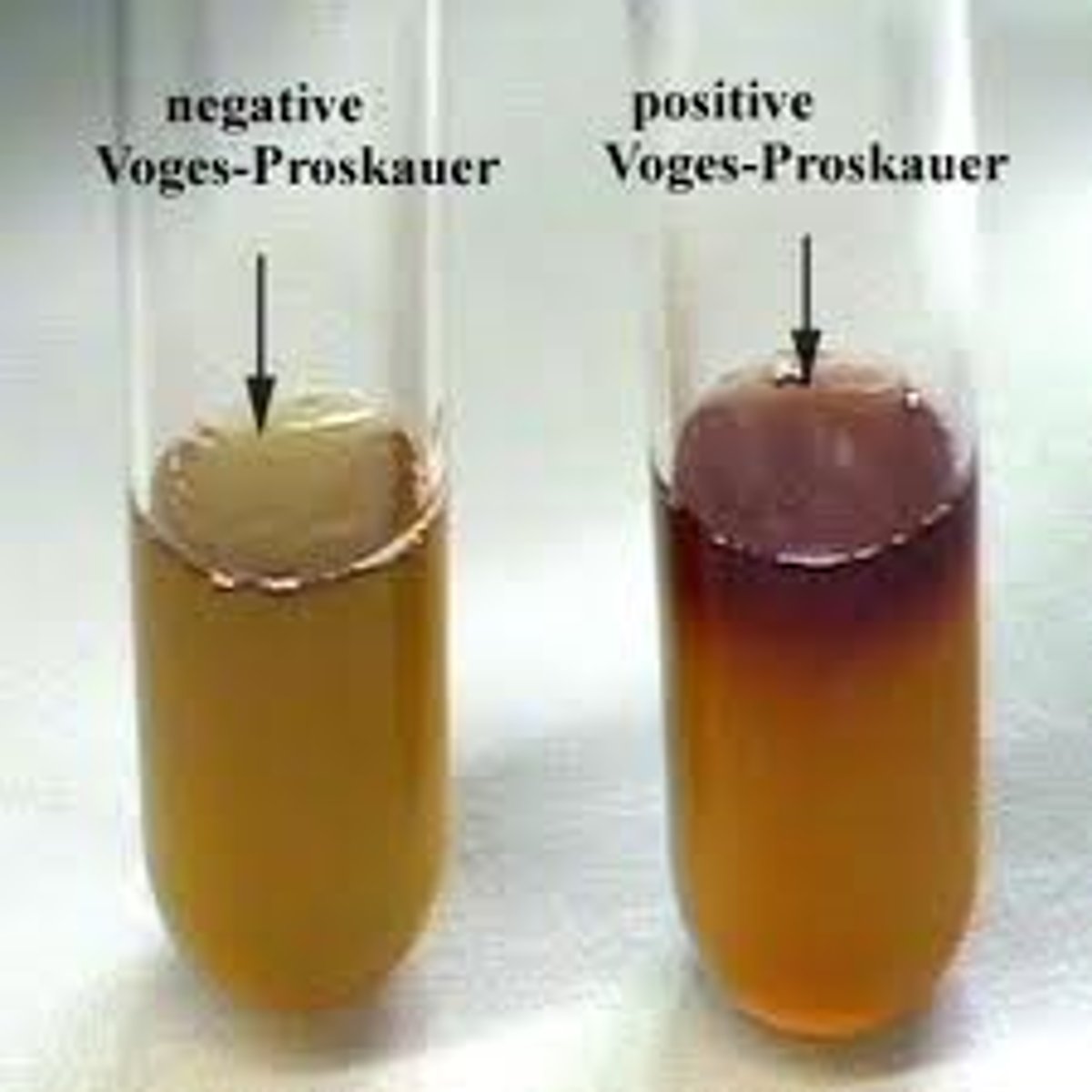
What is the interpretation of a Voges-Proskauer negative test?
The organism does not produce acetoin, so the broth shows no color change after adding reagents.
Why are MR and VP test performed together?
They both use the same glucose containing broth to detect different fermentation product.
What is the significance of the Citrate Utilization test in the IMViC series?
It detects whether the organism can use citrate as the only carbon source and ammonium ion as sole nitrogen source
Which media is used to grow organisms for the CU test?
Simmons Citrate Agar
Is the CU test selective or differential?
Both; selective for citrate users and differential based on color change (green → blue).
What is the technique for performing an CU test?
Inoculation technique
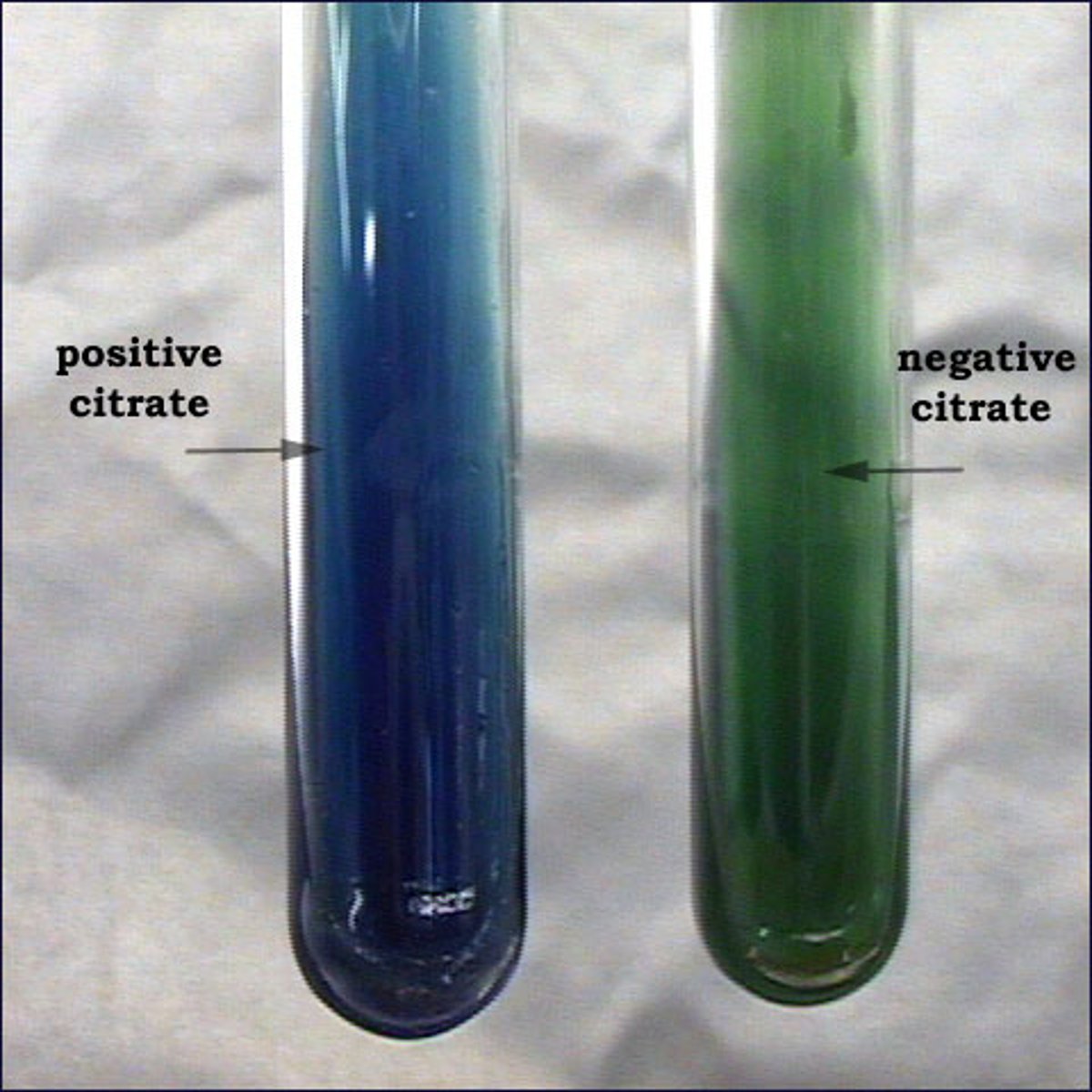
What is the interpretation of a CU positive test?
Growth with blue color = citrate positive, increase in PH
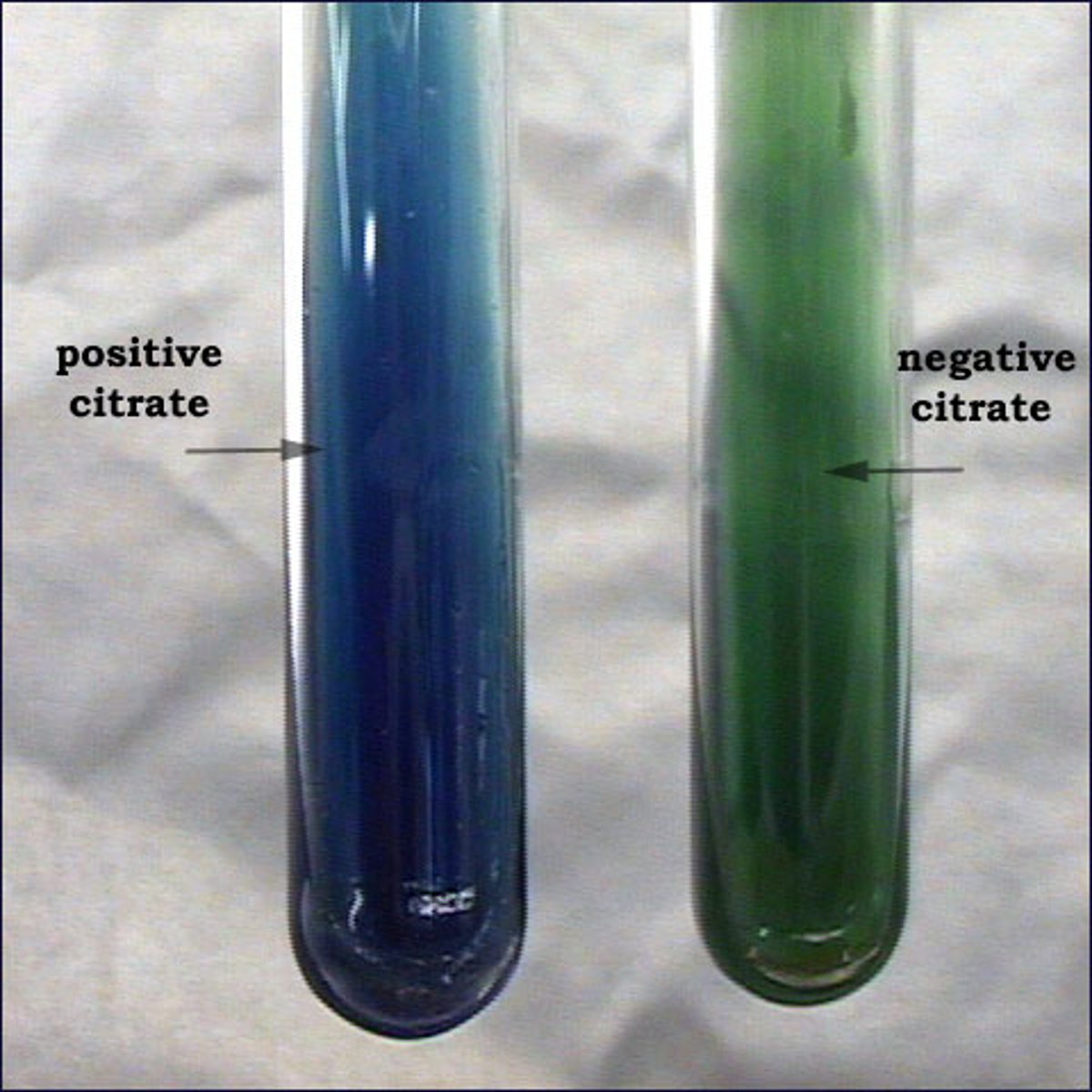
What is the interpretation of a CU negative test?
No growth, green color remains = citrate negative, neutral pH
How are all of the IMViC series test supposed to be performed?
All four test must be done at the same time
What is the significance of the Esculin hydrolysis test?
To determine if the organism can hydrolyze esculin, producing esculetin that reacts with ferric citrate to form black precipitate.
What type of medium is used for the Esculin hydrolysis test?
Bile esculin agar (BEA).
Is the Esculin hydrolysis test selective or differential?
Both; selective due to bile salts, and differential because only esculin-hydrolyzing bacteria turn the medium black.
What is the technique for performing an Esculin hydrolysis test?
Streak for Isolation Technique
What is the interpretation of a Esculin hydrolysis positive test?
The organism hydrolyzes esculin and produces blackening of the medium, showing it is bile-tolerant and esculinase positive.
What is the interpretation of a Esculin hydrolysis negative test?
The organism cannot hydrolyze esculin, so the medium does not turn black.
Which bacteria are typically esculinase positive?
Serratia, Enterobacter, Klebsiella, and Enterococcus.
What is the significance of the Oxidase test?
This test determines whether a bacterium produces the enzyme cytochrome c oxidase.
Which media is used to grow organisms for the Oxidase test?
TSA or any non-selective agar media
Is the Oxidase test selective or differential?
Differential; it differentiates organisms by detecting cytochrome c oxidase.
What is the technique for performing an Oxidase test?
drops of oxidase reagent
What is the interpretation of a Oxidase positive test?
A color change to dark purple = oxidase positive.
What is the interpretation of a Oxidase negative test?
No color change = oxidase negative.
What is the significance of the Nitrate Reduction test?
It determines the bacteria has the ability to reduce nitrate (NO3) to nitrite (NO2) using anaerobic respiration.
Which media is used to grow organisms for the Nitrate Reduction test?
Nitrate broth, which contains potassium nitrate.
Is the Nitrate Reduction test selective or differential?
Differential; it distinguishes bacteria by their ability to reduce nitrate.
What is the technique for performing an Nitrate Reduction test?
Inoculation Technique
What is the interpretation of a Nitrate Reduction positive test?
Red color → positive for nitrate reduction to nitrite
No color change after zinc → positive (organism reduced nitrate beyond nitrite to N₂ or NH₃)
What is the interpretation of a Nitrate Reduction negative test?
No color change → Add zinc dust (if no color change)
Red color after zinc → negative (zinc reduced nitrate to nitrite, showing the organism didn't)
 Note
Note  Flashcards (94)