unit 0 (psycholgical science practices)
 AP Practice
 Call Kai
1/60

Earn XP
Description and Tags
Includes: Non-Experimental Methods, the Experiment, Ethical Guidelines, and Statistical Interpretations
Name | Mastery | Learn | Test | Matching | Spaced | Call with Kai | Chat |
|---|
No analytics yet
Send a link to your students to track their progress
61 Terms
hindsight bias
the tendency to believe, after learning an outcome, that one would have forseen it
overconfidence
the belief that one knows more than one actually does (most factual questions are given more confident answers than correct)
perceiving order in random events
the ability to find patterns in random data to create predicability in our world
critical thinking
a way of thinking that doesn’t automatically accept arguments and conclusions
theory
explains behaviors and events by offering ideas that organize observations
hypothesis
a testable prediction produced by a theory
operational defintion
a precise statement of the exact procedures used in a research study
non-experimental methods
methods of psychology that utilize observations and descriptions, rather than a controlled/manipulated environment
case study
an indepth analysis of a certain individual or groups in hopes of revealing universal principles
strengths of a case study
allows the investigators to directly observe the subject in a natural setting (especially in animal case studies)
often useful in the first stages of a research program
limitations of a case study
allows researchers little to no control of the situation
observations may be biased
doesn’t allow for a firm conclusion of a cause and effect
naturalistic observation
the recording of the natural behavior of individuals without trying to manipulate and control the situation
observer effect
the tendency of people to behave different when they know they are being watched
hawthorne effect
the tendency of individuals to improve their performance or behavior because they are aware that they’re a part of an experiment or study
observer bias
also called, “research bias”
the tendency to unconciously see or interpret behaviors that align with their expectations, and possibly interpreting unclear or uncertain results in favor of the researcher
strengths of a naturalistic observation
allows the investigator to directly observe the subject in a natural setting
often useful in the first stages of a research program
weaknesses of a naturalistic observation
allows little to no control of the situation
observations may be biased
doesn’t allow firm conclusions
survey
a method of study that involves asking people questions and consequently reporting their behavior or opinion
sampling bias
a flawed sampling process, which produces an unrepresentative sample
random sample
a randomly selected sample of the population being studied, specifically used in surveys
meta-analysis
a statistical technique that combines the results of multilpe studies, addressing a common research question to produce an overall more reliable effect (a study on studies)
correlational study
a measurement of the relationship between two or more variables, and the strength of the relationship between the variables
positive correlation
when one variable increases so does the other (and vice versa), and when one variable decreases so does the other (and vice versa)
negative correlation
when one variable decreases the other increases (and vice versa)
correlation coefficient
defined as, “r”
the closer to -1 or 1 the coefficient is, the stronger the relationship is between the 2 variables
spurious correlation
when there’s a statistical corrleation between variables, but the correlation is a coincidence and there is no real relationship between the variables
directionality problem in correlational research
the lack of cause and effect information: researchers don’t know if [x] causes [y], or if [y] causes [x]
third-variable problem in correlational research
the possibility, which researchers cannot rule out, that a third variable causes either or both of the variables to increase/decrease
illusory correlation
the mistaken perceivance of a relationship between two variables or events that are unrelated, typically when two unrelated events occur together
regression toward the mean
the tendency for extreme or unusual scores or events to regress toward the average
experiment
a research method that involves the researcher to manipulate one or more variables in order to observe the effect on a behavior or mental process
independent variable
the factor that is manipulated, or the variable whose effect is being studied
dependent variable
the variable whose outcome is being measured in a specific manner, or the variable that is being observed to evaluate the effects of the independent variable
confounding variable
a factor that could influence a study’s results; researchers attempt to identify and control this variable to minimize its effect
experimental group
the group exposed to a changed independent variable (one specific version of it)
control group
the group not exposed to a changed independent variable, and serves as a comparison for the experimental group to evaluate the effects of the independent variable
random assignment
the assignment of participants to specific experimental and control groups by chance, and thus minimizing pre-existing differences between the groups
strengths of the experiment
allows for researchers to identify a cause-and-effect relationship between two correlated variables
if the experiment is reliable, researchers can develop a firm conclusion
limitations of the experiment
creates a contrived situation, and the more contrived a situation is the more artifical behaviors become
ethical concerns on how certain experiments should be carried out
perceived effects and biases that affect the actual results of the experiment
single-blind procedure
the participants are uninformed about what treatment they may be receiving, but the researchers do have knowledge as to who is in what group
double-blind procedure
a method in which neither the participants nor those who are administering the drug and collecting the data will know which group is receiving a treatment
placebo effect
an effect that greatly affects experimental results as it produces effects just by expectations alone; for example, thinking that you are getting a treatment can relieve your symptoms due to the placebo effect
American Psychological Association (APA) Guidlines
A set of ethical guidelines that state that researchers must provide “humane care and healthful conditions” and that testing should “minimize discomfort”
informed consent
an ethical standard for researchers which gives potential participants enough information about a study to enable them to choose whether they wish to participate
debrief
an post-experimental explanation of a study, including its purpose and any deceptions, to its participants
descriptive statistics
numerical data used to measure and describe characterics of groups; includes measures of central tendency and measure of variation
measures of central tendency
a single score that represents a whole set of scores
mode
the most frequently occuring score(s)
mean
the arithmetic average: the total sum of all the scores divided by the number of scores
median
the midpoint of a data distribution
percentile rank
the percentage of scores that are less than a given score
standard deviation
a computed measure of how much scores vary around the mean score
normal curve
a symmetrical, bell-shaped curve that describes the distribution of many types of data (most scores fall near the mean)
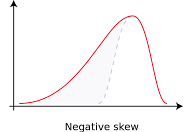
negative skew
a situation where the curve has a tail towards the lower values on the graph
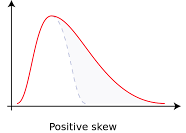
positive skew
a situation where the curve has a tail towards the high values on the graph
inferential statistics
the use of numerical data to generalize and infer the probability of something being true of a population similar to the sample data
null hypothesis
the assumption that no difference exists between the groups
alternative hypothesis
a hypothesis that supports the notion that there is a difference between the control and experimental groups
p-value
the probability of the result, if the null hypothesis were to be true
statistically significant
a term used to describe a result with a very low p value (p < 0.05), which leads to the rejection of the null hypothesis and the acceptance of the alternative hypothesis
effect size
the strength of the relationship between two variables; the larger the effect size, the more one variable can be explained by the other