AP Psychology: Topic 3.7 - Classical Conditioning

0.0(0)
studied byStudied by 0 people
0.0(0)
full-widthCall with Kai
learnLearn
examPractice Test
spaced repetitionSpaced Repetition
heart puzzleMatch
flashcardsFlashcards
GameKnowt Play
Card Sorting

1/19

encourage image

There's no tags or description

Looks like no tags are added yet.

Study Analytics
Name
Mastery
Learn
Test
Matching
Spaced
Call with Kai

No study sessions yet.

20 Terms

1
New cards

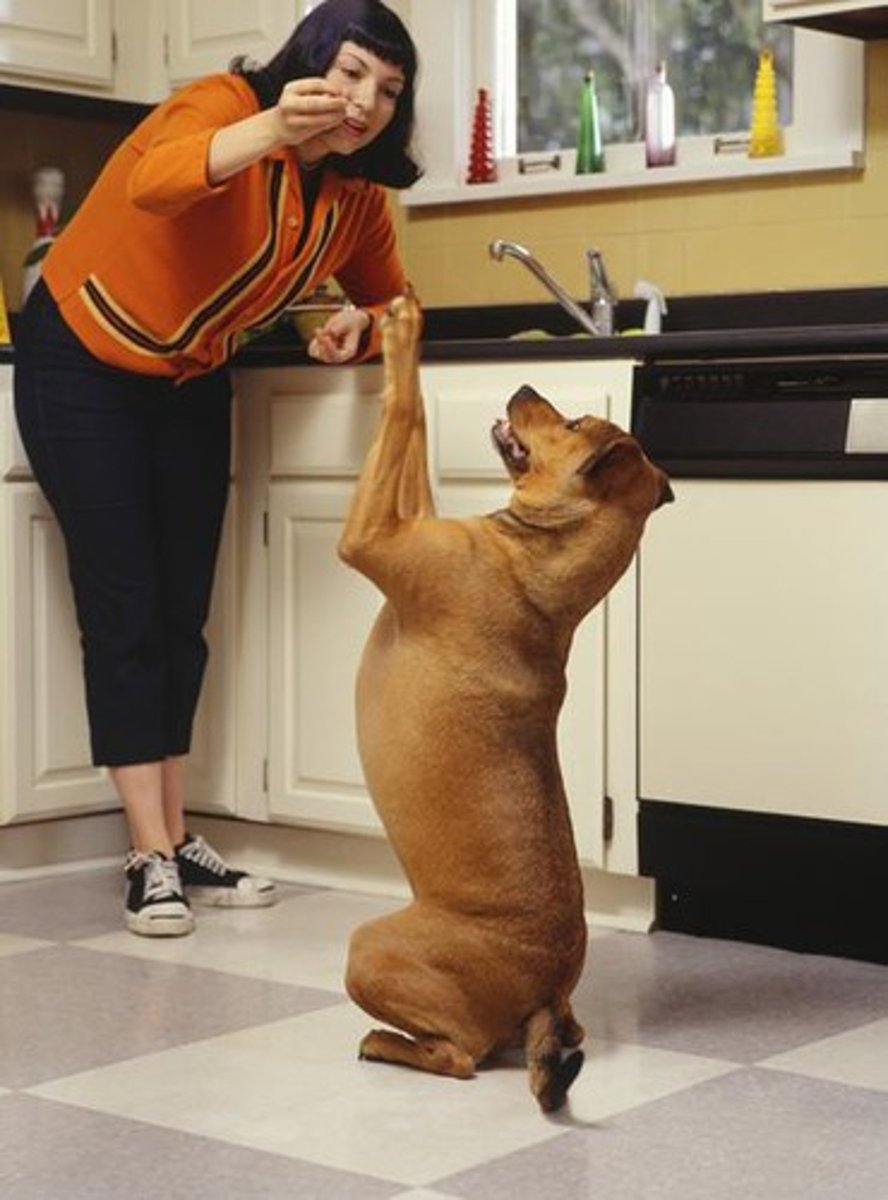
Behavioral perspective

a theory suggesting that behavior is learned and is shaped by observable, environmental factors
<p>a theory suggesting that behavior is learned and is shaped by observable, environmental factors</p>
2
New cards

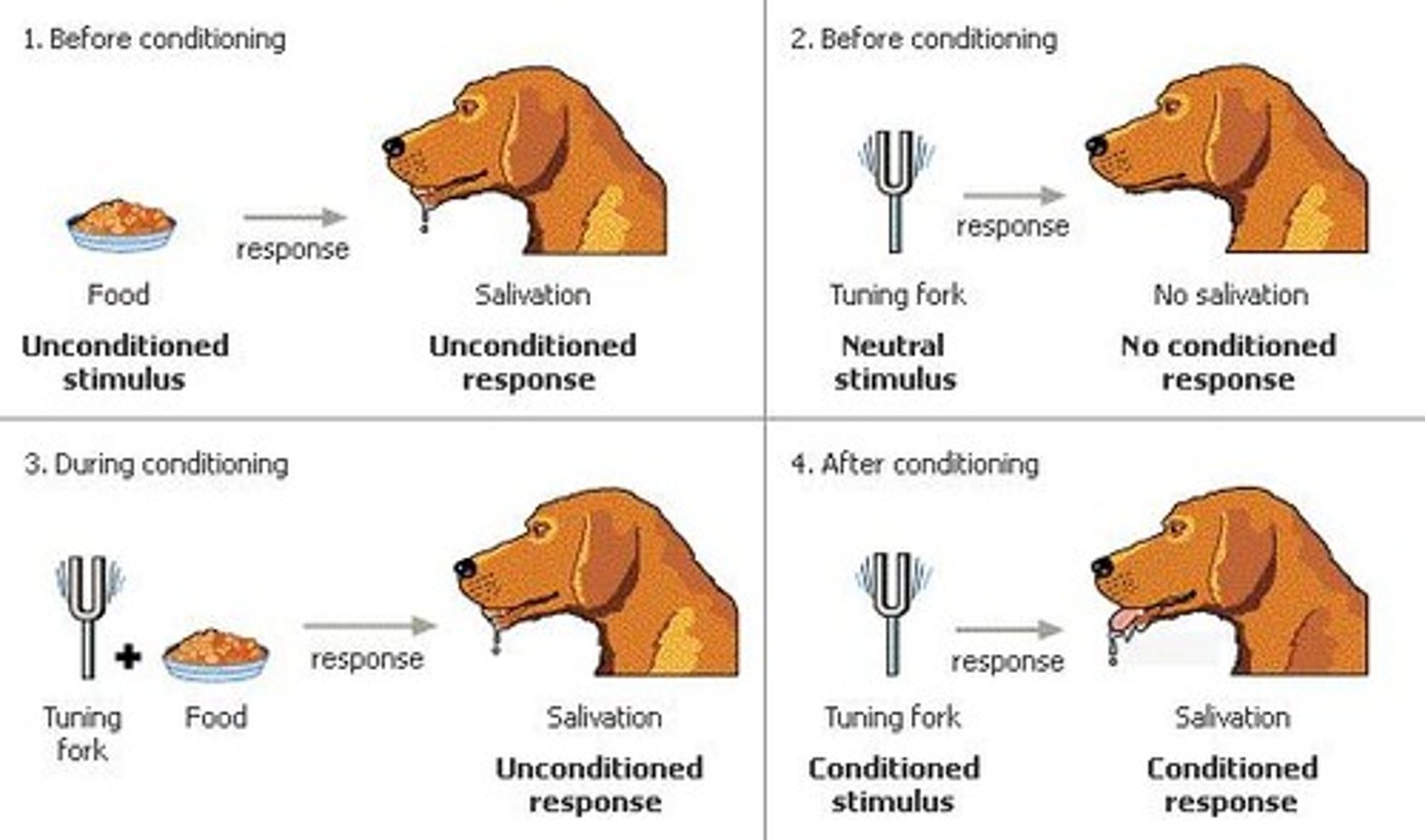
Classical conditioning

a learning process that occurs when a neutral stimulus (e.g., a tone) becomes associated with a stimulus (e.g., food) that naturally produces a behavior (e.g., salivation)
<p>a learning process that occurs when a neutral stimulus (e.g., a tone) becomes associated with a stimulus (e.g., food) that naturally produces a behavior (e.g., salivation)</p>
3
New cards

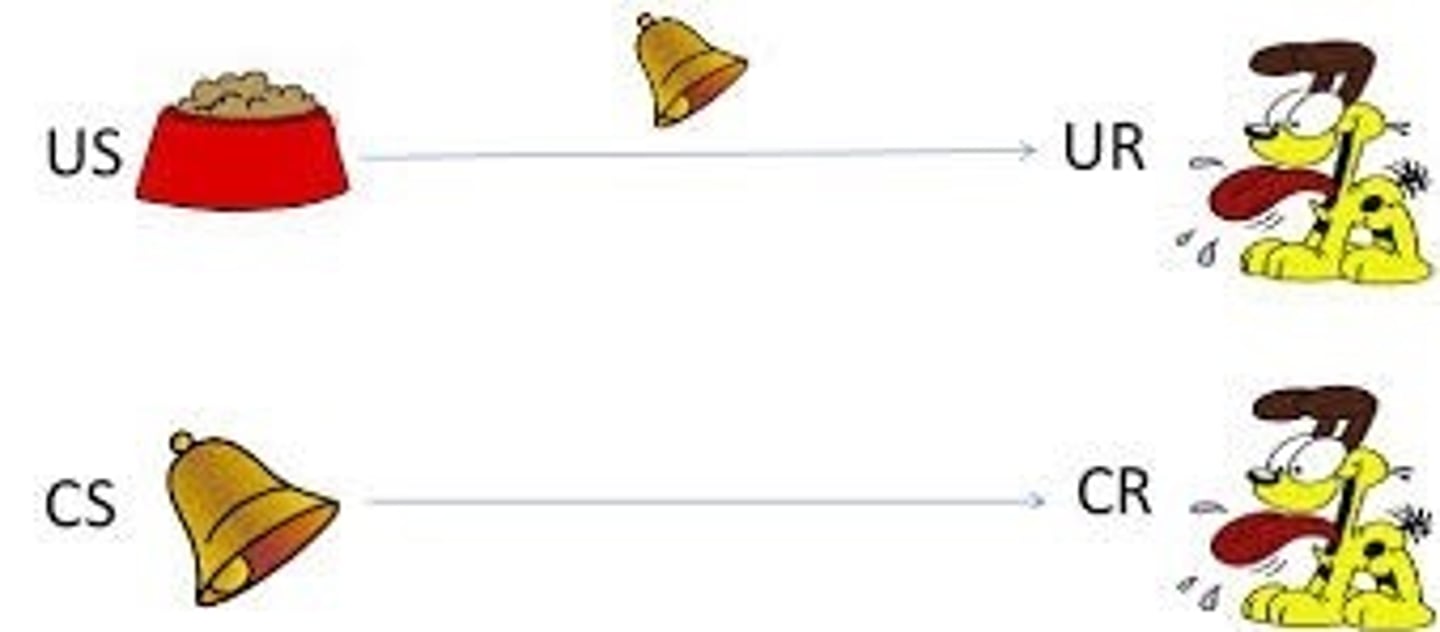
Association

when a subject is conditioned to connect a stimuli with another stimuli, and this results in a specific behavior
<p>when a subject is conditioned to connect a stimuli with another stimuli, and this results in a specific behavior</p>
4
New cards

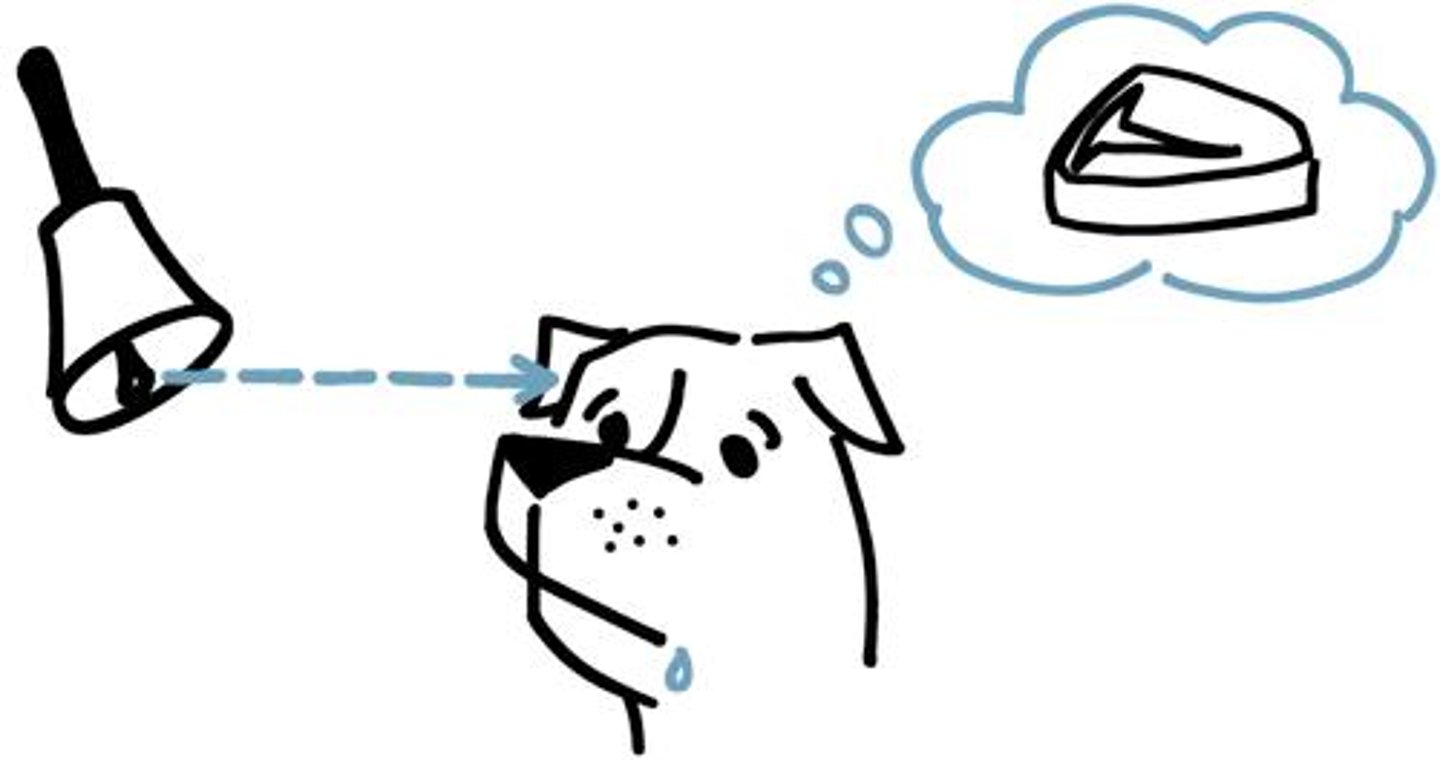
Acquisition

the period of initial learning in classical conditioning in which a human or an animal begins to connect a neutral stimulus and an unconditioned stimulus so that the neutral stimulus will begin to elicit the conditioned response
<p>the period of initial learning in classical conditioning in which a human or an animal begins to connect a neutral stimulus and an unconditioned stimulus so that the neutral stimulus will begin to elicit the conditioned response</p>
5
New cards

Associative learning

learning that two things occur together (e.g., a dog learns that it will get a treat when it obeys a command)
<p>learning that two things occur together (e.g., a dog learns that it will get a treat when it obeys a command)</p>
6
New cards

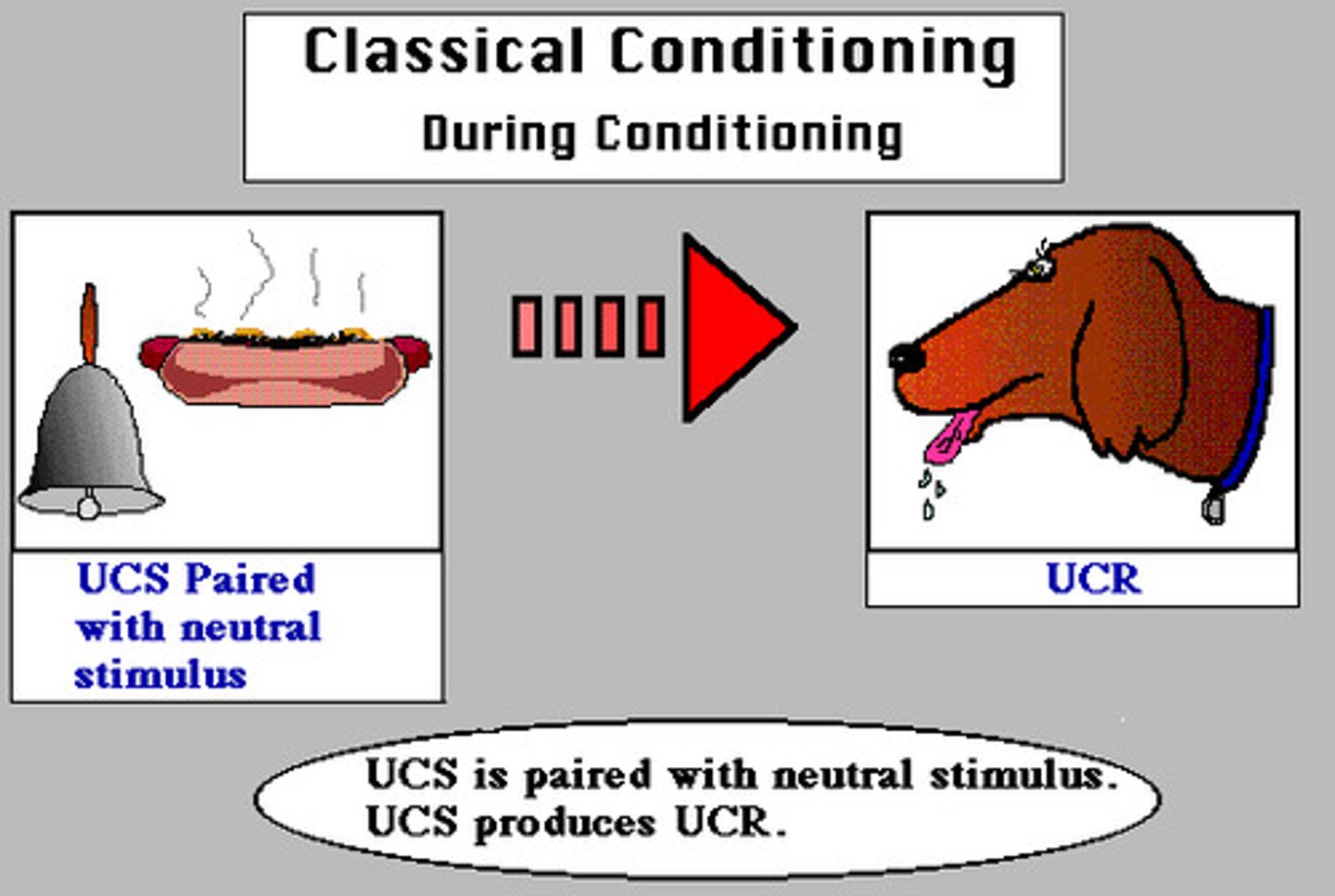
Unconditioned stimulus (UCS)

a stimulus that unconditionally—naturally and automatically—triggers a response
<p>a stimulus that unconditionally—naturally and automatically—triggers a response</p>
7
New cards

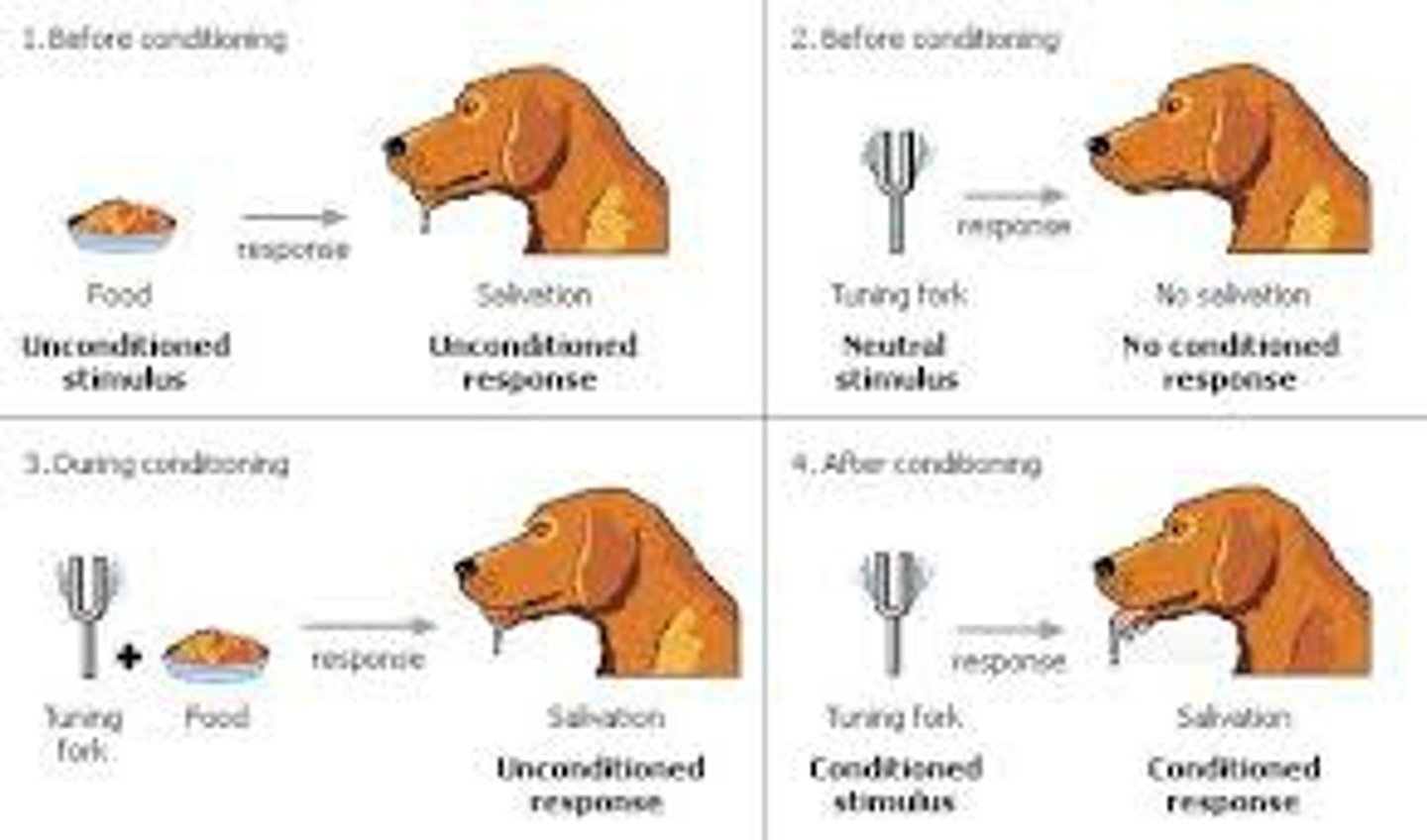
Unconditioned response (UCR)

an unlearned, naturally occurring response to an unconditioned stimulus
<p>an unlearned, naturally occurring response to an unconditioned stimulus</p>
8
New cards

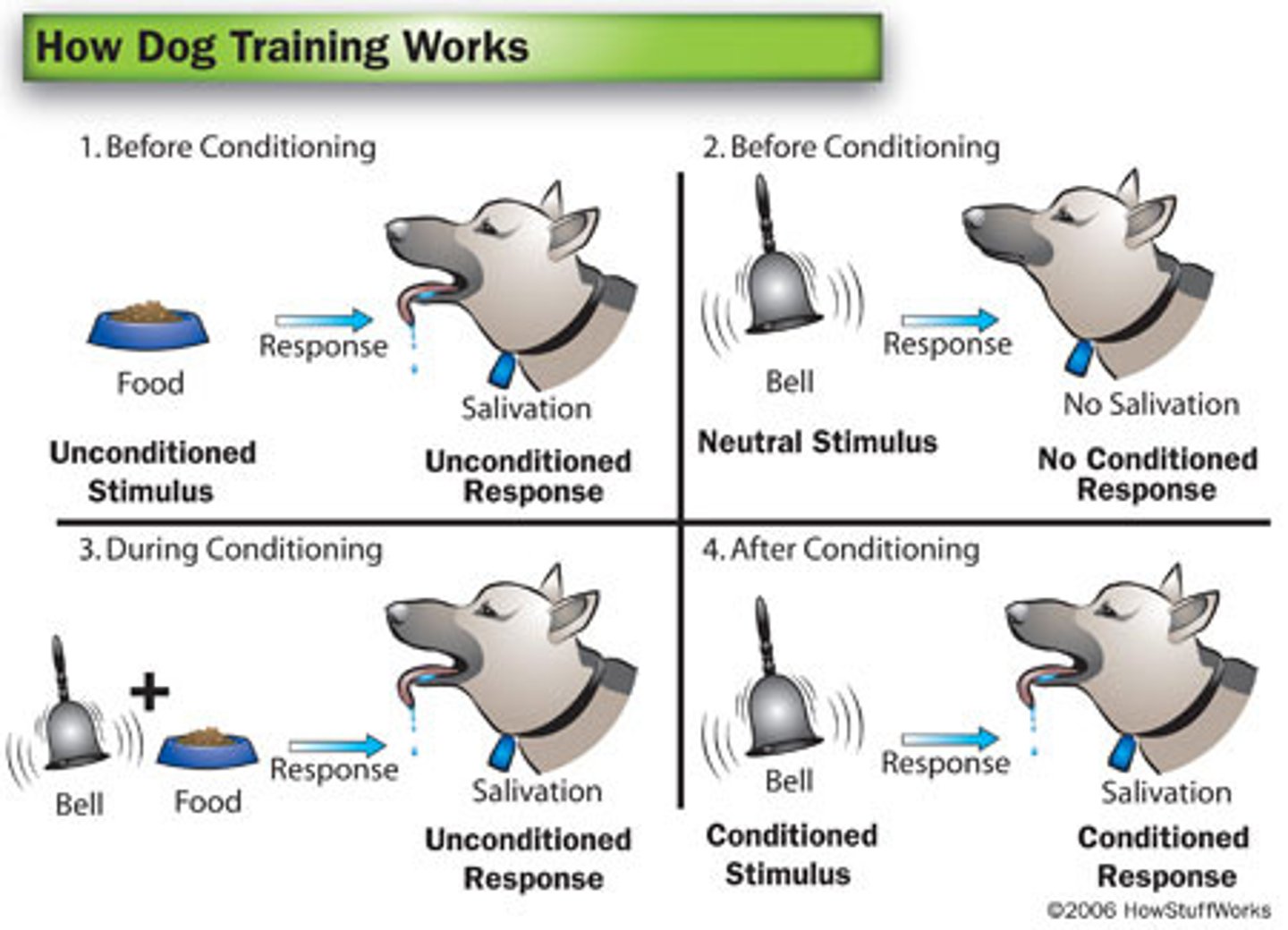
Conditioned stimulus (CS)

a neutral stimulus that, after association with an unconditioned stimulus, triggers a conditioned response
<p>a neutral stimulus that, after association with an unconditioned stimulus, triggers a conditioned response</p>
9
New cards

Conditioned response (CR)

the learned response to a previously neutral (but now conditioned) stimulus
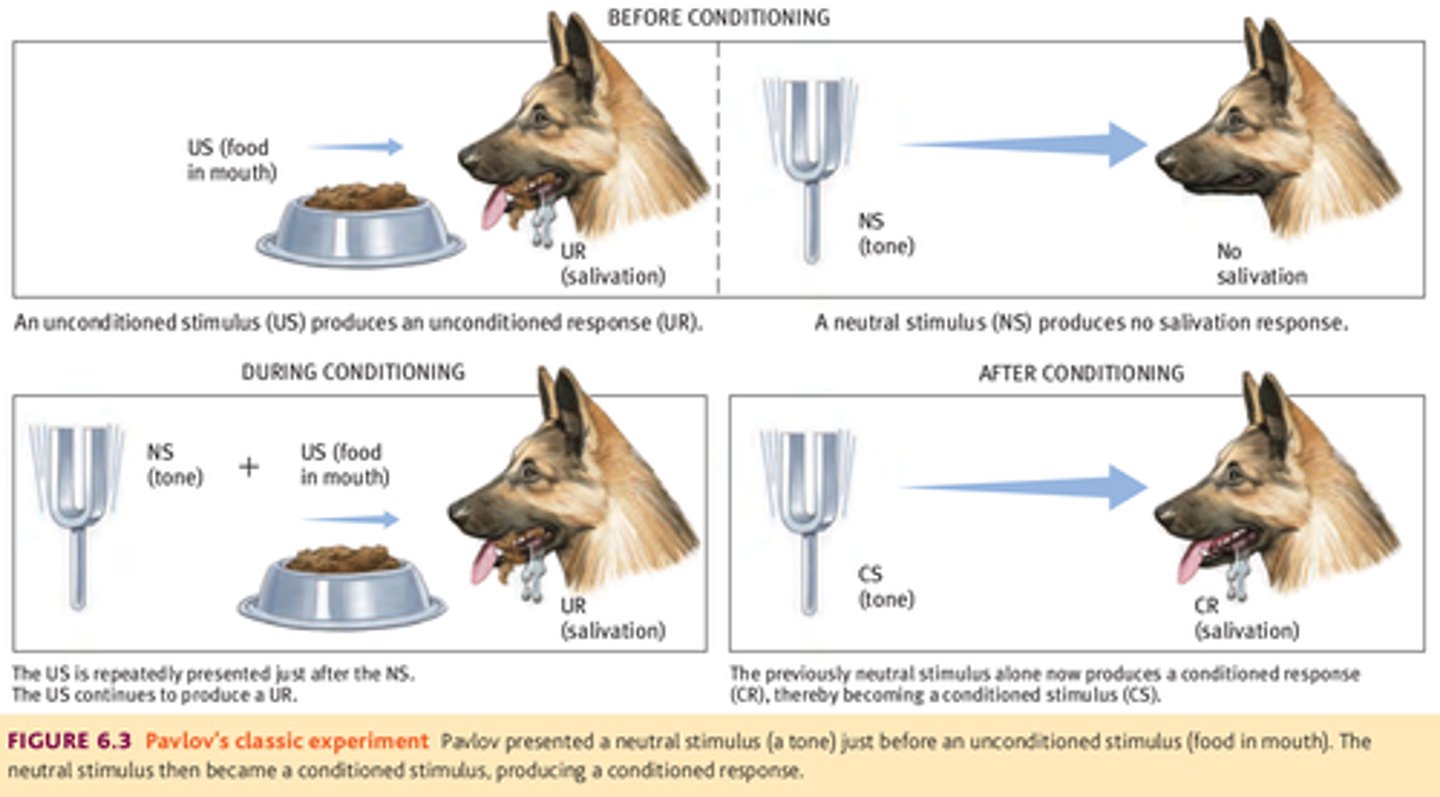
<p>the learned response to a previously neutral (but now conditioned) stimulus</p>
10
New cards

Extinction

the gradual weakening of a conditioned response that results in the behavior decreasing or disappearing
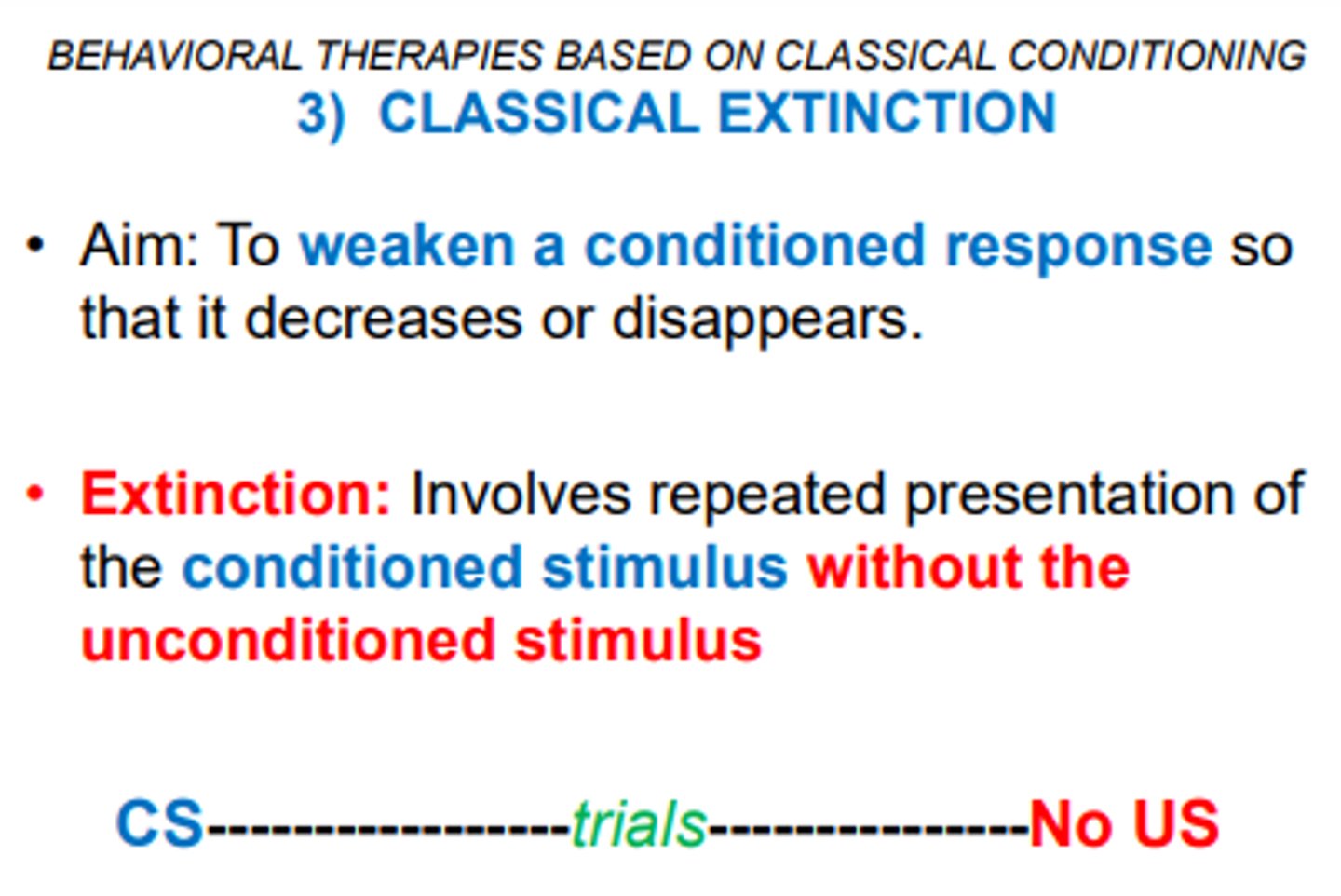
<p>the gradual weakening of a conditioned response that results in the behavior decreasing or disappearing</p>
11
New cards

Spontaneous recovery

when a learned behavior recovers from extinction after a rest period
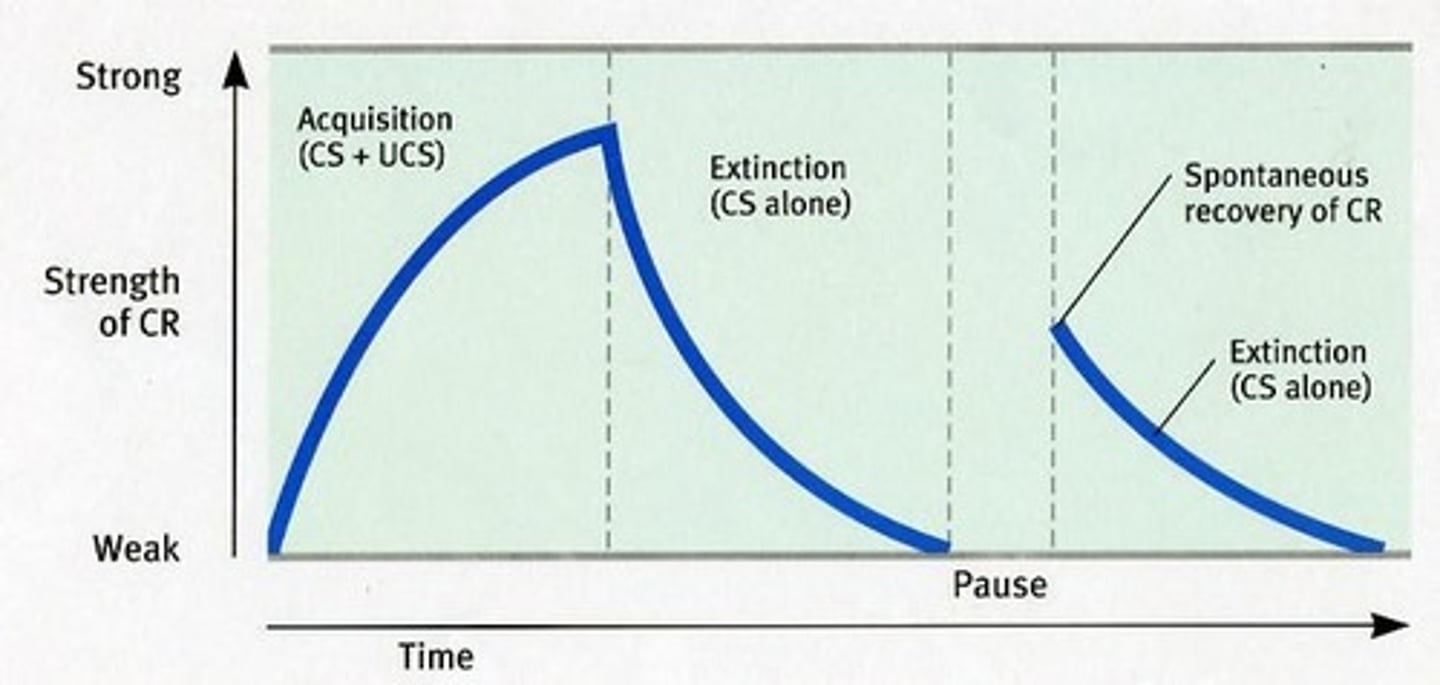
<p>when a learned behavior recovers from extinction after a rest period</p>
12
New cards

Stimulus discrimination

when a subject demonstrates the conditioned response only to the conditioned stimulus and not to stimuli that are similar to the CS
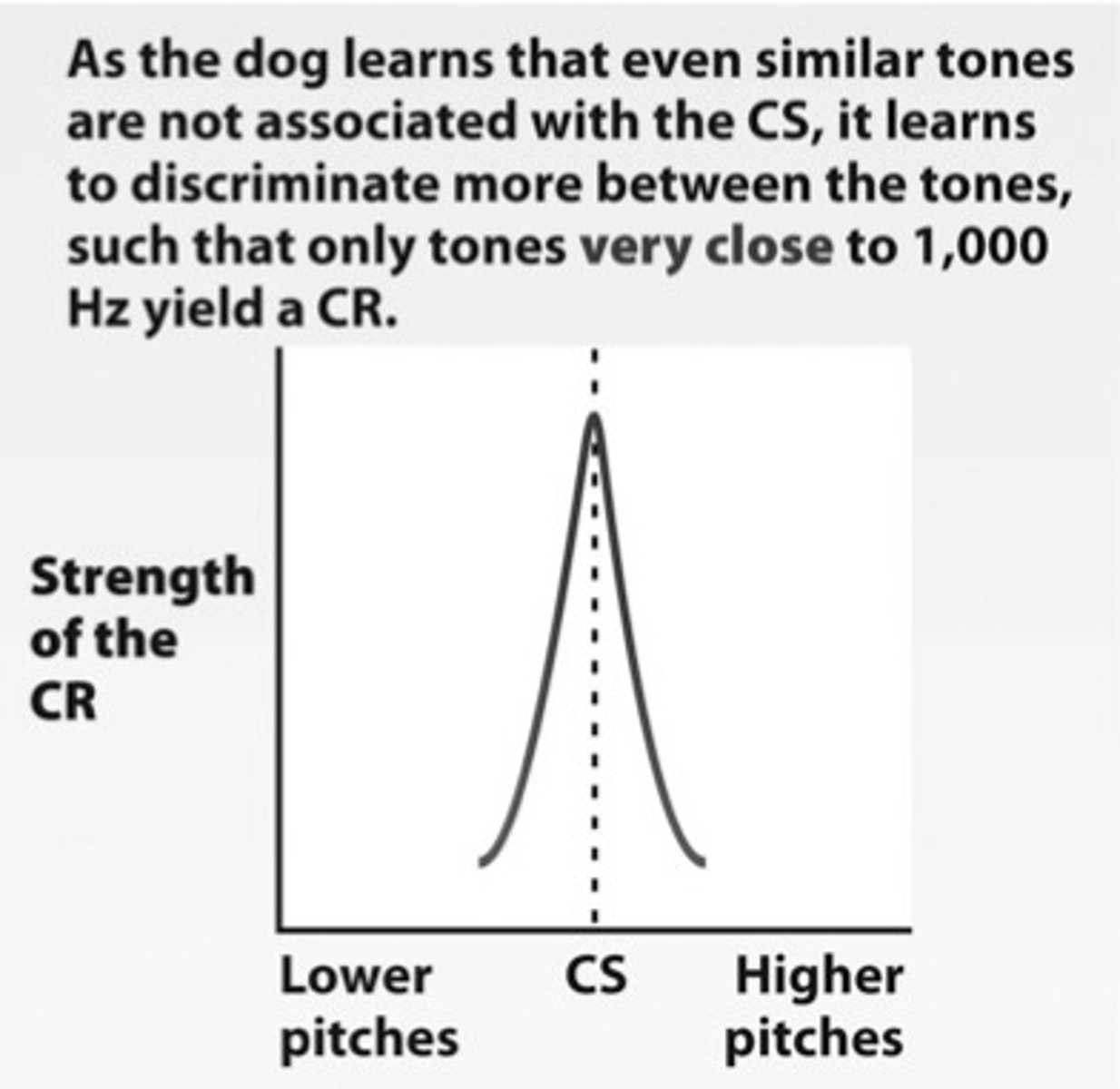
<p>when a subject demonstrates the conditioned response only to the conditioned stimulus and not to stimuli that are similar to the CS</p>
13
New cards

Stimulus generalization

when a subject demonstrates a conditioned response to stimuli that are similar to the original conditioned stimulus

<p>when a subject demonstrates a conditioned response to stimuli that are similar to the original conditioned stimulus</p>
14
New cards

Higher-order conditioning

when a conditioned stimulus becomes associated with a new unconditioned stimulus (e.g., an animal learns that a tone predicts food could then be taught that a light predicts the tone and begin responding to the light alone)
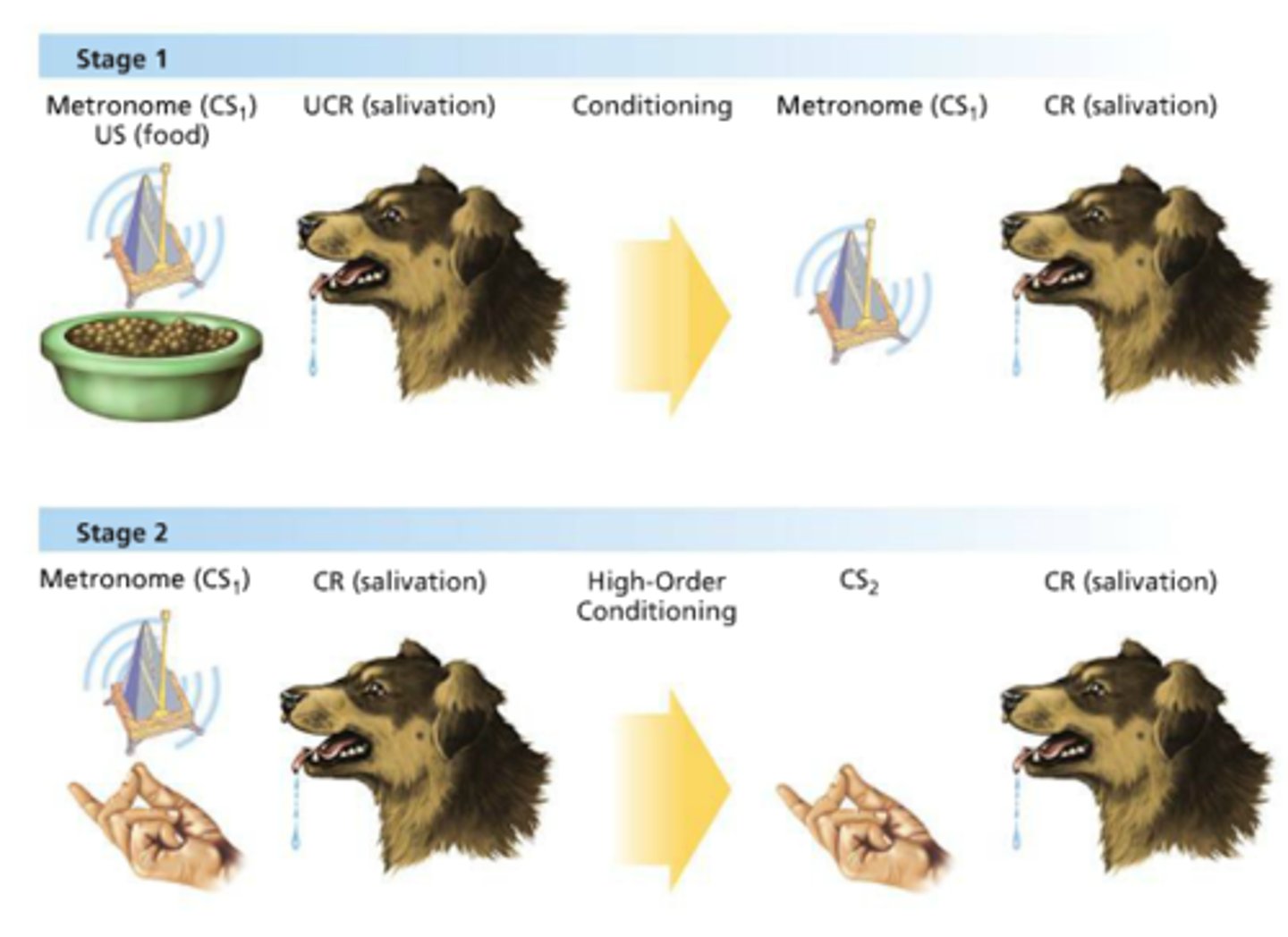
<p>when a conditioned stimulus becomes associated with a new unconditioned stimulus (e.g., an animal learns that a tone predicts food could then be taught that a light predicts the tone and begin responding to the light alone)</p>
15
New cards

Counterconditioning

a behavior modification technique in which a stimulus that creates a negative response is paired with something known to create a positive response
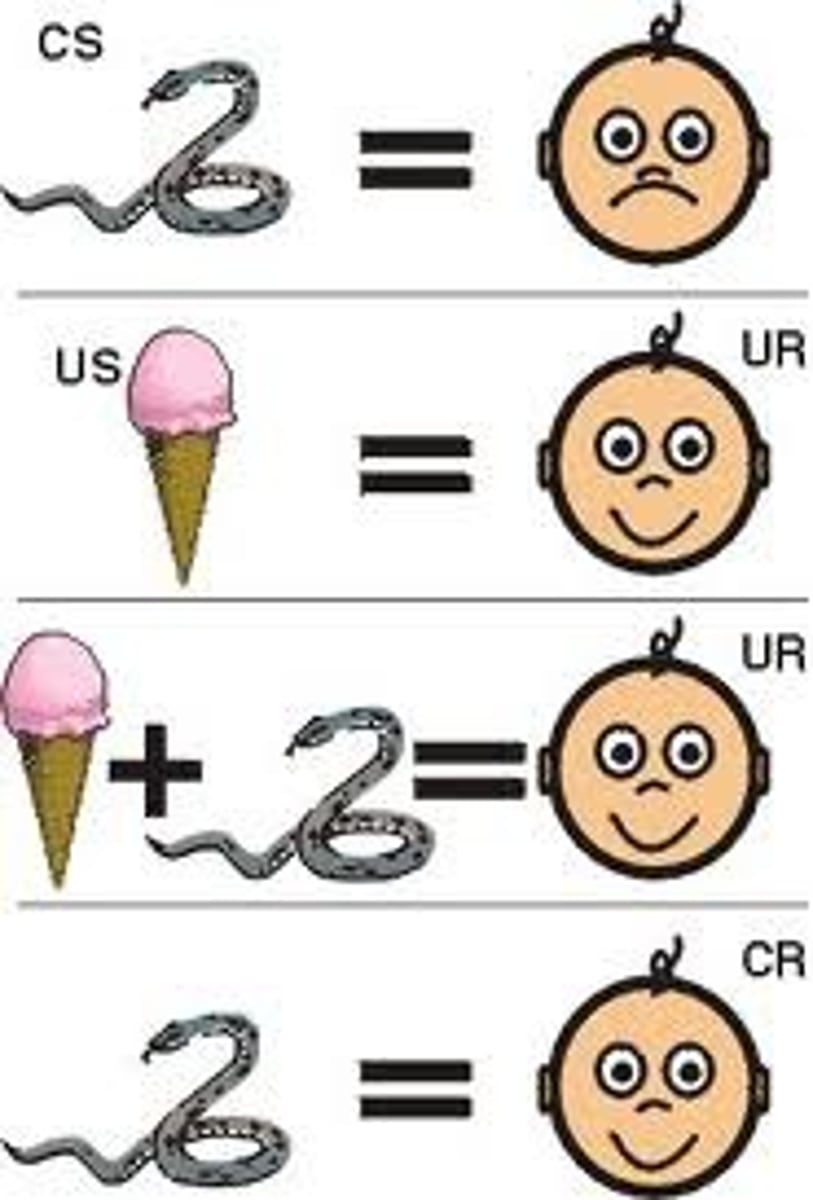
<p>a behavior modification technique in which a stimulus that creates a negative response is paired with something known to create a positive response</p>
16
New cards

Taste aversion

the avoidance of a certain food following a period of illness after consuming the food
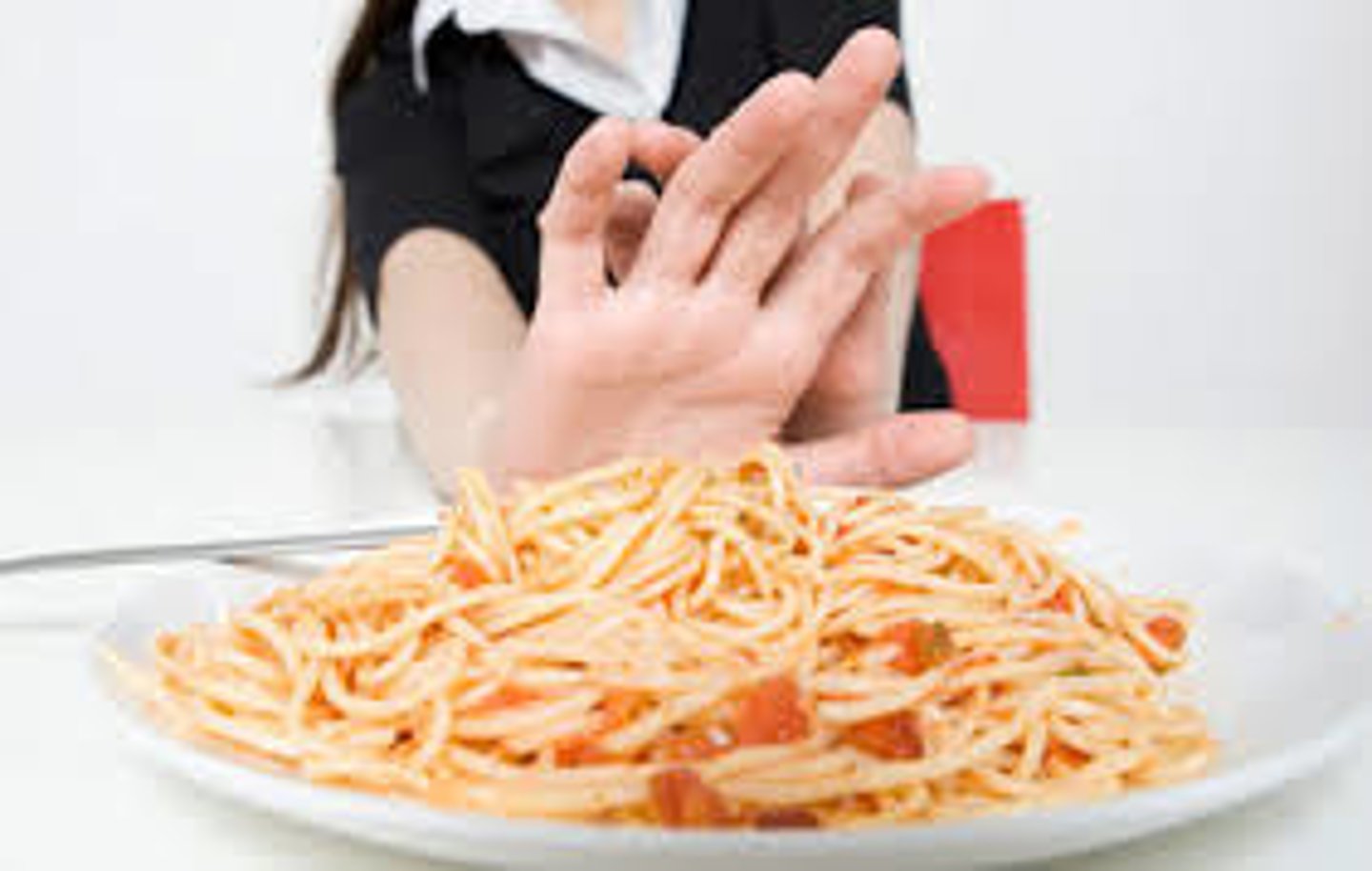
<p>the avoidance of a certain food following a period of illness after consuming the food</p>
17
New cards

One-trial conditioning

if a condition is powerful or extreme, something can be learned even if the individual is only exposed to the condition once (taste aversion is a common example of this)
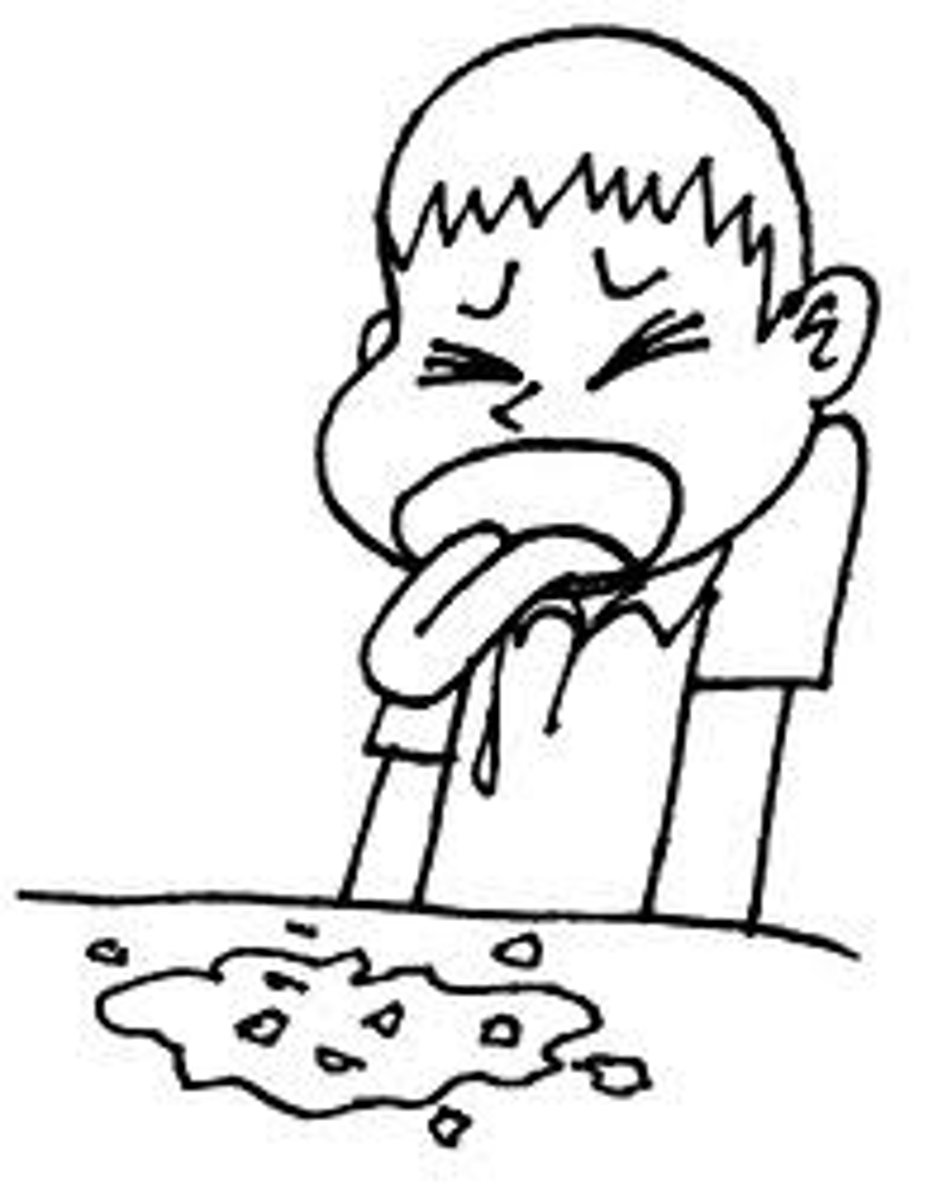
<p>if a condition is powerful or extreme, something can be learned even if the individual is only exposed to the condition once (taste aversion is a common example of this)</p>
18
New cards

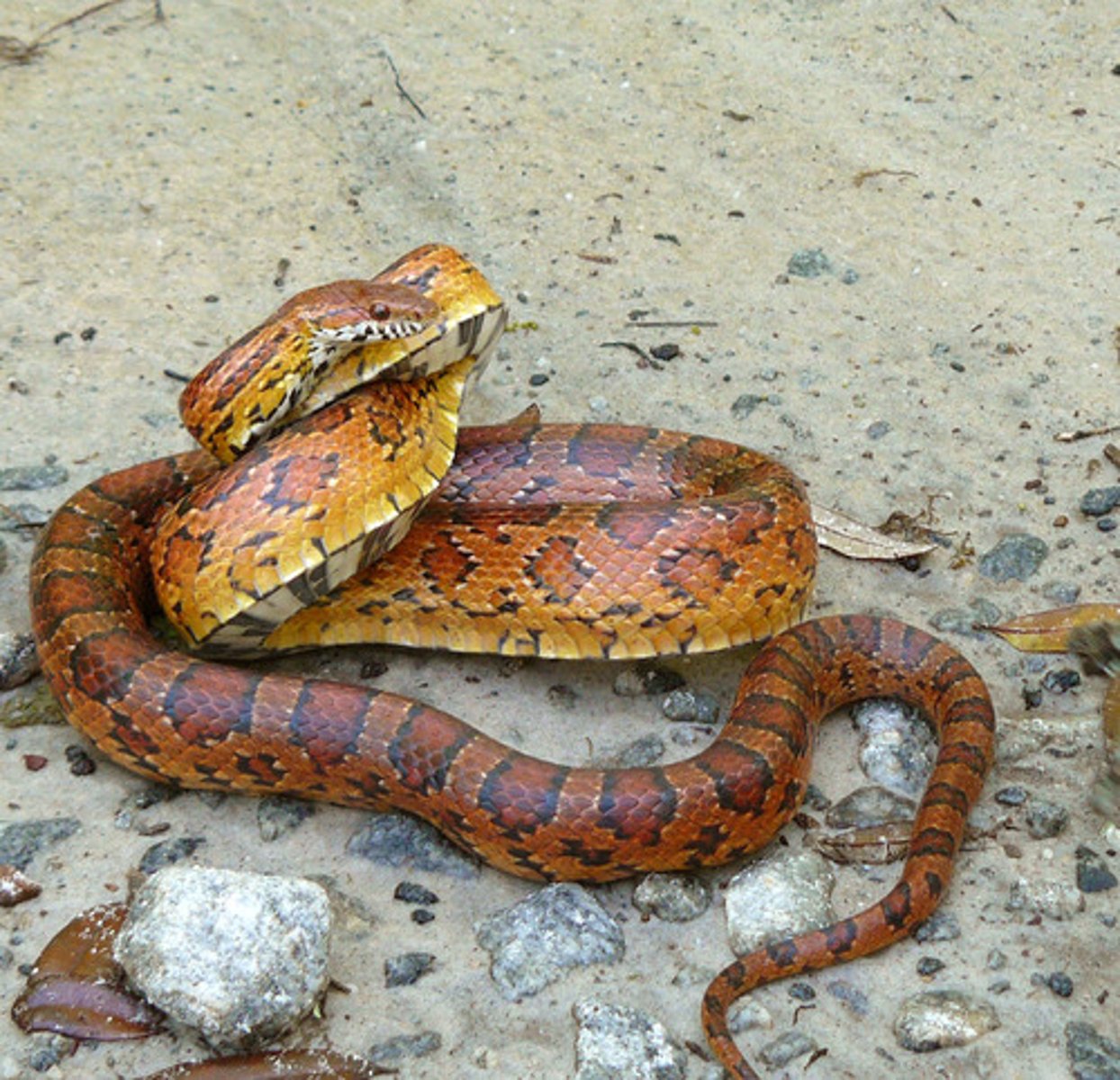
Biological preparedness

the natural tendency of animals to learn certain associations (e.g., nausea, fear) with only one or few pairings due to the survival value of the learning
<p>the natural tendency of animals to learn certain associations (e.g., nausea, fear) with only one or few pairings due to the survival value of the learning</p>
19
New cards

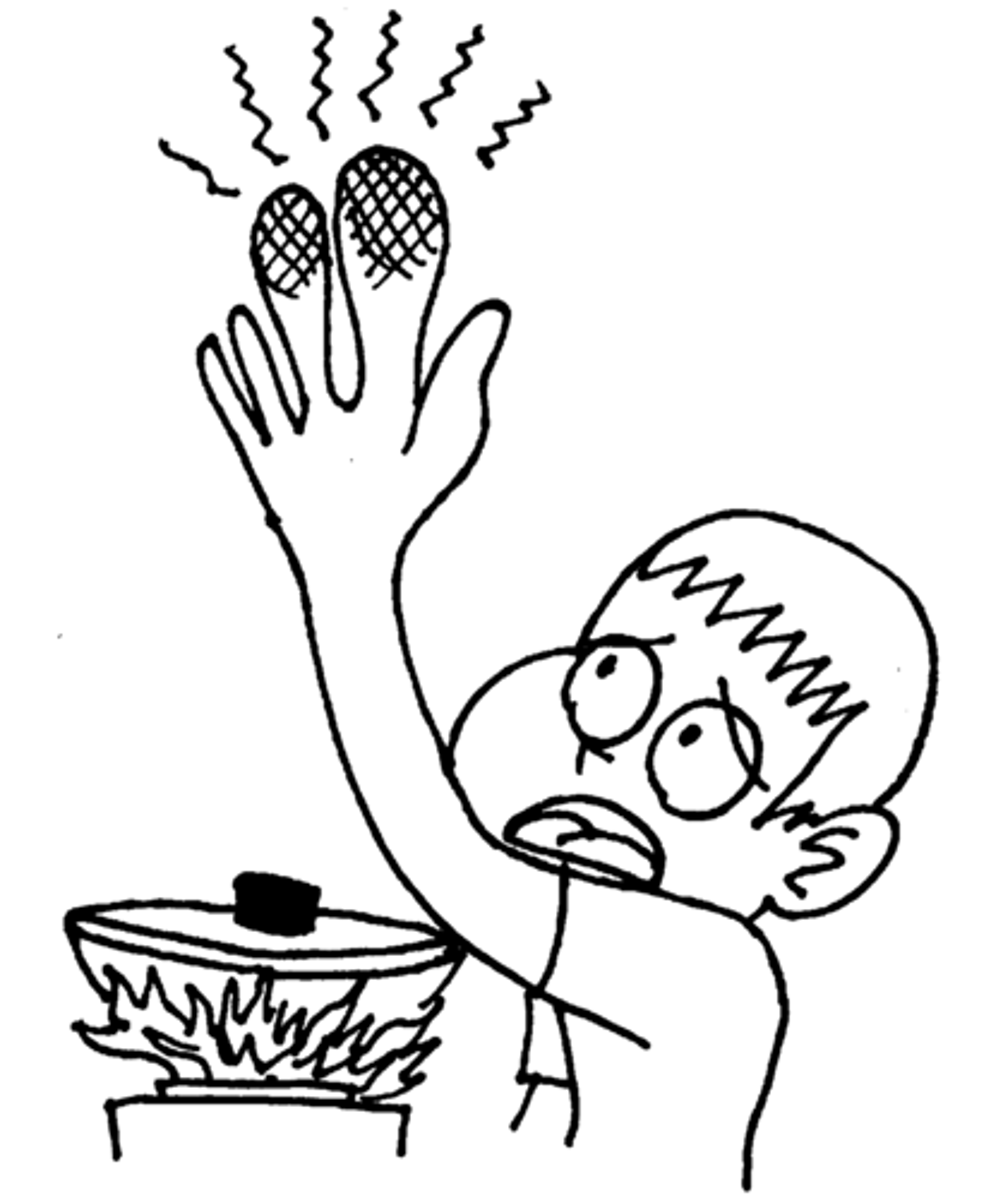
One-trial learning

when conditioning occurs after a single experience involving an intense stimulus (e.g., fear, pain, sickness)
<p>when conditioning occurs after a single experience involving an intense stimulus (e.g., fear, pain, sickness)</p>
20
New cards

Habituation

the diminished effectiveness of a stimulus in causing a response following repeated exposure to the stimulus

<p>the diminished effectiveness of a stimulus in causing a response following repeated exposure to the stimulus</p>

Explore top flashcards

SJSU Gov Final
Updated 30d ago
flashcards Flashcards (234)
APUSH Key Dates
Updated 996d ago
flashcards Flashcards (53)
Exam 2 2024 (KIM)
Updated 688d ago
flashcards Flashcards (66)
Unit 1 Vocab Words
Updated 820d ago
flashcards Flashcards (25)
Cardinal numbers
Updated 41d ago
flashcards Flashcards (40)
SJSU Gov Final
Updated 30d ago
flashcards Flashcards (234)
APUSH Key Dates
Updated 996d ago
flashcards Flashcards (53)
Exam 2 2024 (KIM)
Updated 688d ago
flashcards Flashcards (66)
Unit 1 Vocab Words
Updated 820d ago
flashcards Flashcards (25)
Cardinal numbers
Updated 41d ago
flashcards Flashcards (40)