Viruses, Prokaryotes, and Plant Evolution: Key Concepts and Structures
 Call Kai
 Learn
Learn Practice Test
 Spaced Repetition
 Match
Match Flashcards
 Knowt Play
1/276

There's no tags or description
Looks like no tags are added yet.
Name | Mastery | Learn | Test | Matching | Spaced | Call with Kai |
|---|
No analytics yet
Send a link to your students to track their progress
277 Terms
What are viruses?
Infectious particles consisting of a nucleic acid genome (DNA or RNA) enclosed in a protein coat (capsid), and some have a lipid envelope.
Why are viruses considered obligate intracellular parasites?
They can only reproduce within a host cell and are inert outside hosts.
What is a capsid?
A protein shell that encases the viral genome, built from subunits called capsomeres.
What are the shapes of capsids?
Capsids can be helical, polyhedral, or complex.
What is a viral envelope?
A lipid layer derived from the host cell membrane that helps the virus enter host cells.
What are bacteriophages?
Viruses that infect bacteria, characterized by complex structures with an elongated capsid head and a tail for attachment.
What are the steps of the viral replication cycle?
A virus attaches to a host cell, injects its genome, uses host machinery to produce viral components, assembles new virions, and exits the cell.
What is the lytic cycle?
A viral replication cycle where the phage reproduces rapidly, lyses the host cell, and releases new phages, culminating in host cell death.
What is the lysogenic cycle?
A viral replication cycle where the phage genome integrates into the host's chromosome as a prophage, replicating passively without killing the host.
What triggers a temperate phage to switch from lysogenic to lytic cycle?
Environmental triggers can cause the prophage to excise and switch to the lytic cycle.
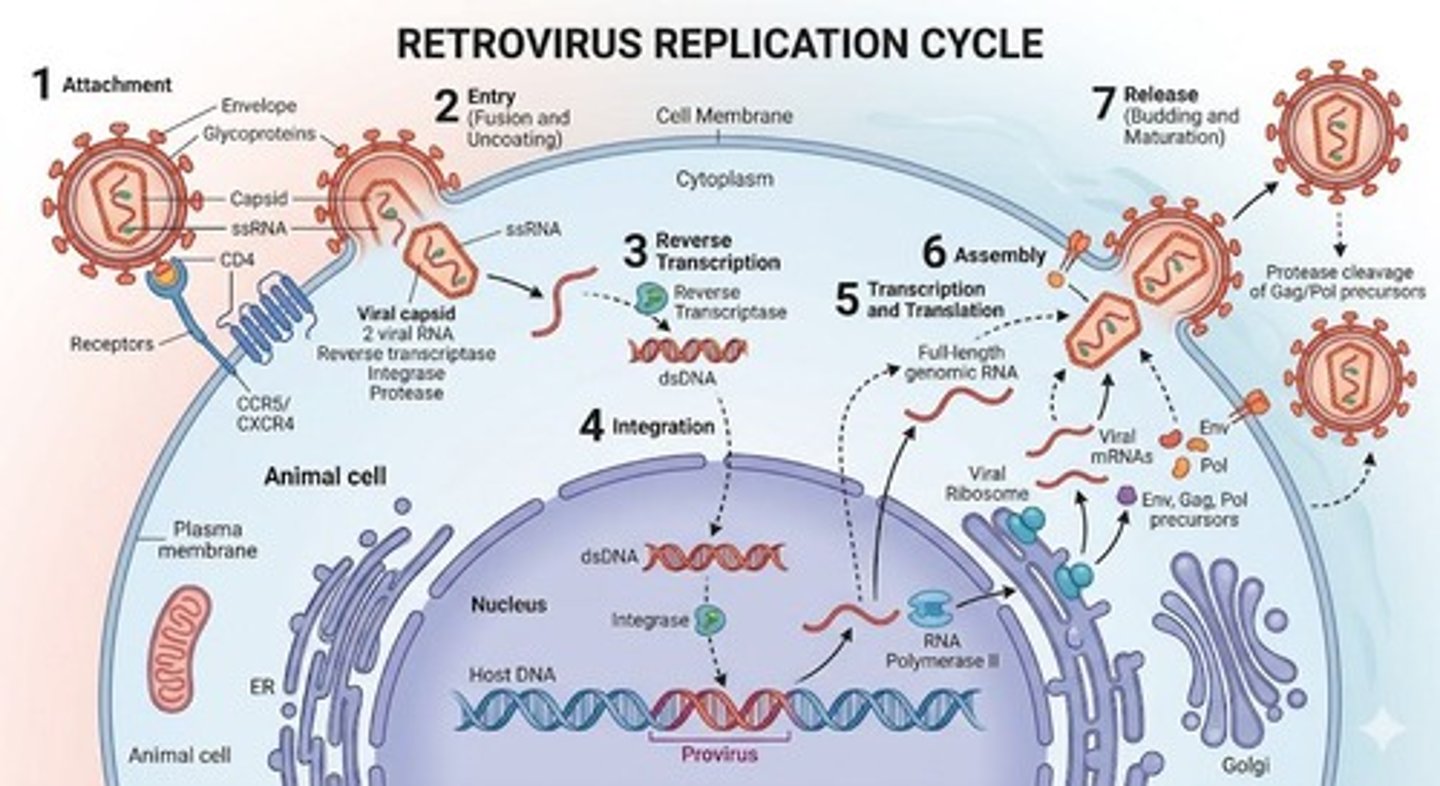
What is a retrovirus?
An RNA virus that reproduces by transcribing its RNA into DNA inside a host cell using reverse transcriptase.
What is reverse transcriptase?
An enzyme that synthesizes complementary DNA from an RNA template.
What is a provirus?
Viral DNA that is integrated into the host genome, becoming a permanent part of the host's DNA.
How do vaccines work?
Vaccines contain a harmless form or component of a pathogen that stimulates the immune system to mount defenses without causing disease.
What are viroids?
Circular RNA molecules that infect plants, lacking a protein coat and causing disease by disrupting gene expression.
What are prions?
Infectious proteins that cause neurodegenerative diseases by inducing normal proteins to misfold.
What diseases are caused by prions?
Mad cow disease, Creutzfeldt-Jakob disease, and chronic wasting disease.
What are the defenses hosts have against viruses?
Hosts have restriction enzymes, CRISPR-Cas systems, RNA interference, immune responses, and produce interferons.
How do antibodies function in viral defense?
Antibodies specifically bind viruses, neutralizing them and preventing infection.
What is the difference between vaccines and antibiotics?
Vaccines prevent infections, while antibiotics have no effect on viruses.
What is the significance of high mutation rates in RNA viruses?
High mutation rates can expand their host range or enable them to jump to new species.
What is the host range of a virus?
The limited species or cell types that a virus can infect.
How can cross-species transmission affect human health?
It can lead to new diseases in humans.
What is the role of the adaptive immune system in vertebrates?
It produces antibodies that specifically target and neutralize viruses.
What is the smallest infectious pathogen known?
Viroids.
What is the main function of a vaccine?
To prepare the immune system to recognize and fight a pathogen.
What is the lytic cycle in viral replication?
The phage attaches to the bacterial cell, injects its genetic material, takes over the host's machinery to produce new phage components, assembles them into new virions, and causes the host cell to burst, releasing new phages.
What is the lysogenic cycle in viral replication?
The phage injects its DNA into the host cell, integrates into the bacterial chromosome as a prophage, and replicates with the host's DNA until environmental stress triggers it to enter the lytic cycle.
What is retroviral replication?
The life cycle of a retrovirus like HIV involves binding, fusion, reverse transcription, integration, replication, assembly, and budding.
What role does reverse transcriptase play in retroviral replication?
Reverse transcriptase converts viral RNA into DNA.
How does HIV integrate its viral DNA into the host cell?
HIV uses the enzyme integrase to integrate its viral DNA (provirus) into the host cell DNA.
What is the function of vaccines?
Vaccines introduce weakened or inactivated pathogens to trigger an immune response, producing antibodies and memory cells.
Why don't antibiotics work on viruses?
Antibiotics target specific structures in bacteria, which viruses lack.
How do prions propagate within a host?
Infectious prion proteins bind to normal prion proteins, forcing them to change shape and form stable chains that break into infectious pieces.
What is an example of a prion disease?
Bovine Spongiform Encephalopathy (BSE), also known as 'Mad Cow Disease,' which affects cattle and creates sponge-like holes in the brain.
What is a property of life shared by all cells but not viruses?
The ability to process energy through metabolic reactions.
Which molecules could be found in a virus?
DNA, RNA, proteins, and lipids.
Why are viruses referred to as obligate parasites?
They use a host cell to reproduce.
What feature of prokaryotes enables them to adapt quickly?
Short generation time and genetic diversity.
What is true of CRISPR-Cas9?
It is used for bacterial defense against phages and is a tool for altering genes in virtually any organism.
Is there more than one hypothesis about how and when viruses originated on Earth?
True.
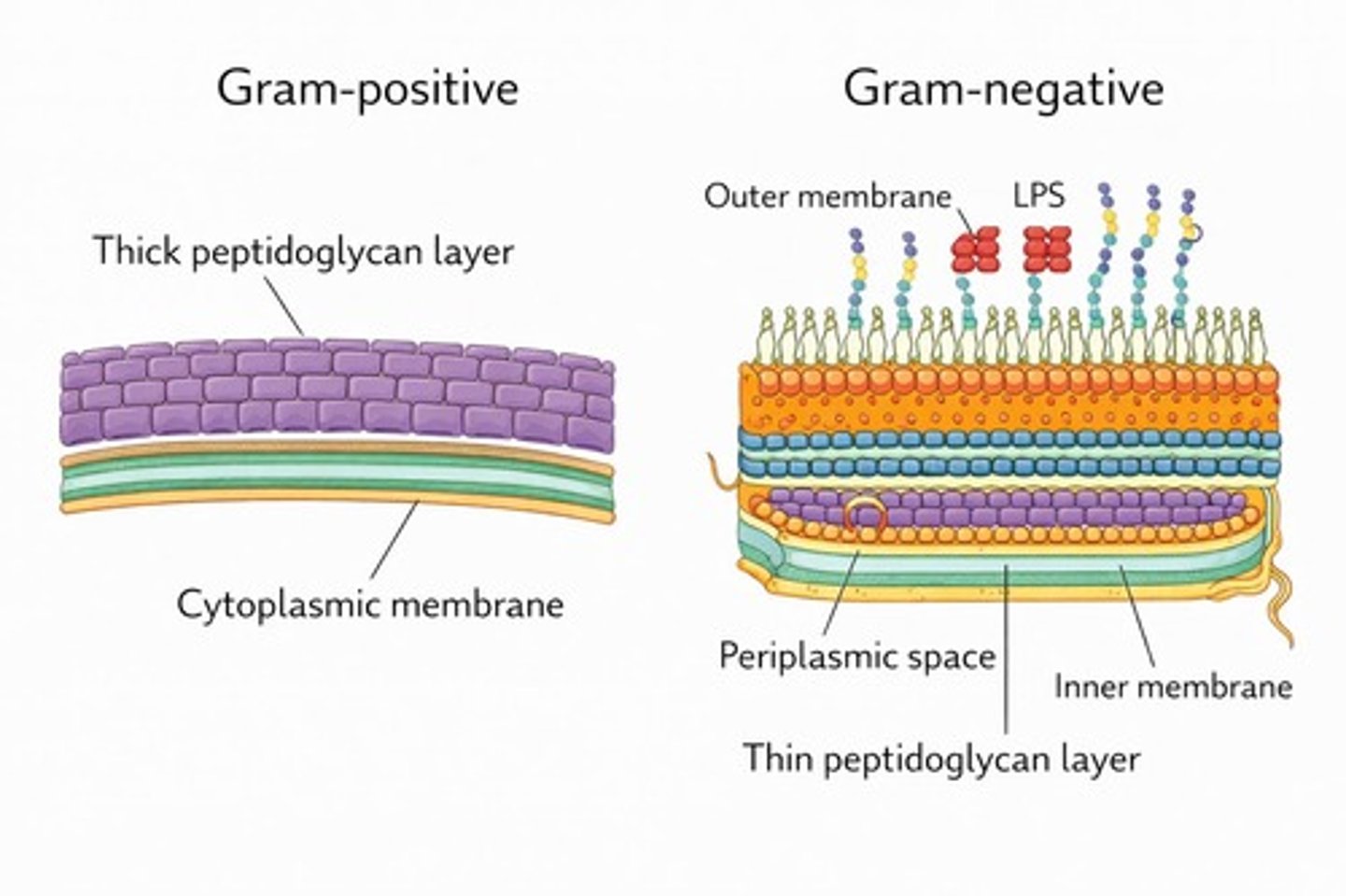
What are the two major categories of bacteria distinguished by Gram staining?
Gram-positive and Gram-negative bacteria.
What is the structure of prokaryotic cells?
Prokaryotic cells are smaller than eukaryotic cells, lack a nucleus, and have a cell wall.
What is the role of the capsule in prokaryotes?
The capsule aids in adhesion and protects against desiccation or immune attack.
What is the function of flagella in prokaryotes?
Flagella enable motility and allow prokaryotes to move toward or away from stimuli.
What are plasmids?
Plasmids are small circular DNA molecules separate from the chromosome that often carry genes for special traits.
How do prokaryotes exhibit metabolic and genetic diversity?
Prokaryotes can inhabit diverse environments and have various metabolic pathways.
What are prokaryotic cells?
Single-celled organisms without a nucleus, divided into two domains: Bacteria and Archaea.
How do prokaryotes reproduce?
They reproduce asexually by binary fission.
What is binary fission?
A process in which one cell divides into two identical daughter cells.
What key features enable rapid reproduction in prokaryotes?
Small cell size, simple division, and short generation times.
What are endospores?
Tough, dormant cells formed by some bacteria that can survive extreme conditions.
What is horizontal gene transfer?
The exchange of genetic material between prokaryotes, increasing genetic diversity.
What are the three main mechanisms of horizontal gene transfer?
Transformation, transduction, and conjugation.
What is transformation in bacteria?
The uptake of free DNA from the environment.
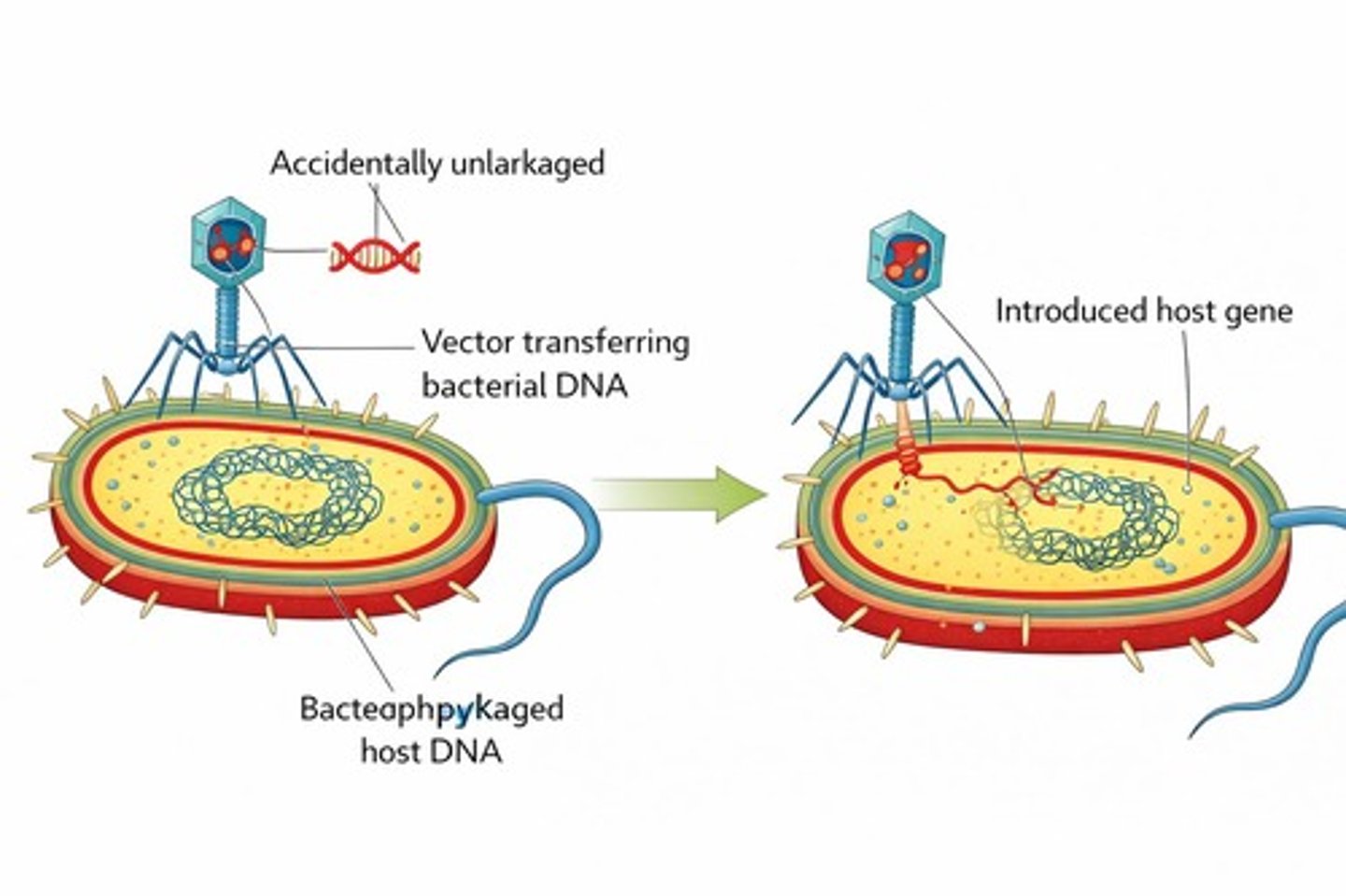
What is transduction?
The transfer of DNA from one bacterium to another via bacteriophages.
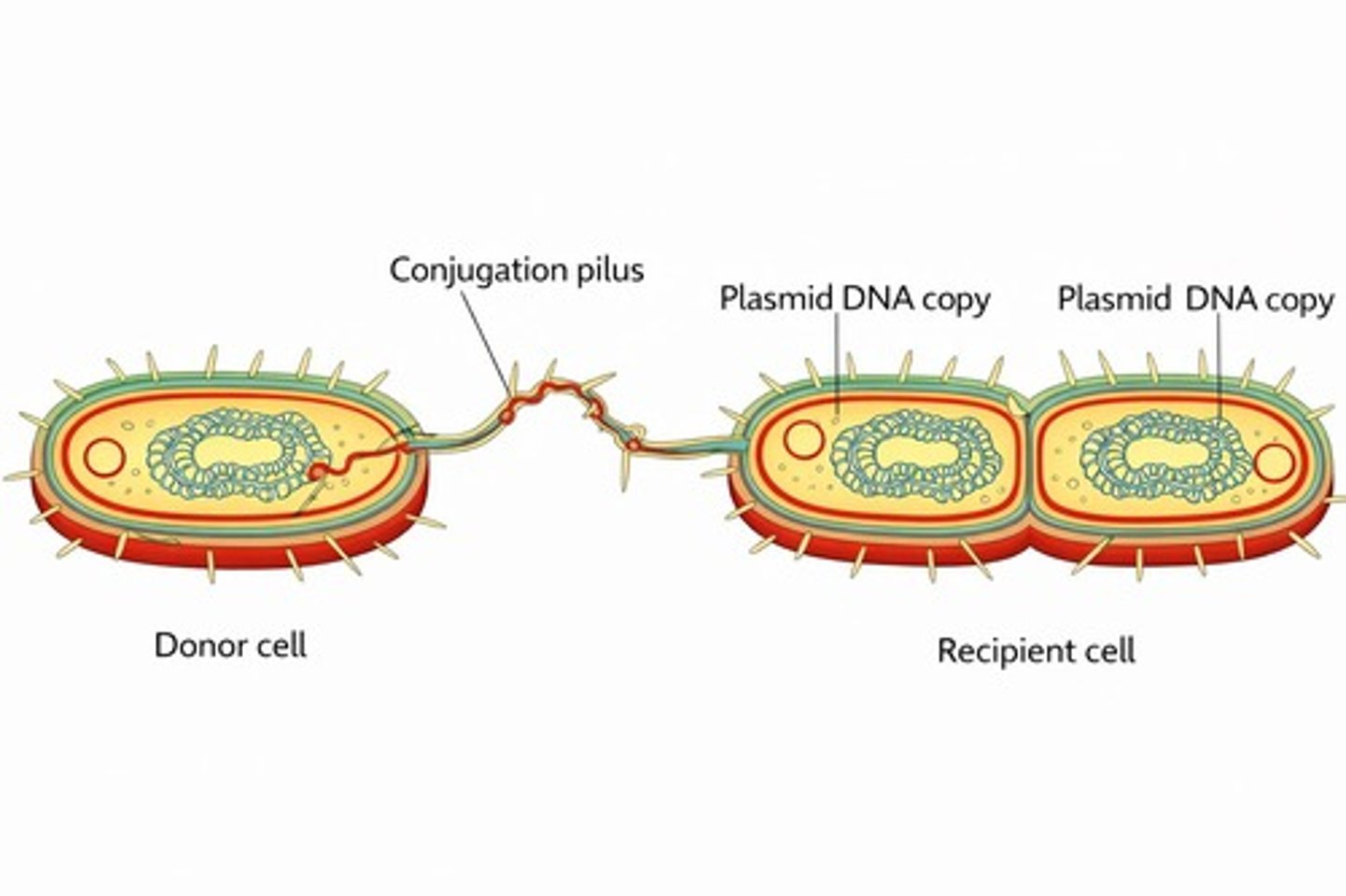
What is conjugation?
The direct transfer of DNA between two bacterial cells that are temporarily joined.
What are phototrophs?
Prokaryotes that capture energy from sunlight.
What are chemotrophs?
Prokaryotes that obtain energy from chemical compounds.
What is a photoautotroph?
An organism that uses light for energy and CO₂ for carbon.
What is a chemoheterotroph?
An organism that obtains energy and carbon from organic molecules.
What are obligate aerobes?
Prokaryotes that require O₂ for cellular respiration.
What are obligate anaerobes?
Prokaryotes that are poisoned by oxygen and survive via fermentation.
What are facultative anaerobes?
Prokaryotes that can switch between aerobic and anaerobic respiration.
What role do prokaryotes play in the nitrogen cycle?
Some perform nitrogen fixation, converting N₂ gas into ammonia.
What is bioremediation?
The use of bacteria to metabolize pollutants and clean up the environment.
What is mutualism in symbiosis?
A relationship where both partners benefit.
What is commensalism?
A relationship where one partner benefits and the other is not significantly affected.
What is parasitism?
A relationship where one organism benefits at the expense of the host.
What are some beneficial roles of prokaryotes for humans?
They aid digestion, synthesize vitamins, and are used in food production and biotechnology.
What are pathogenic prokaryotes?
Bacteria that cause diseases in hosts.
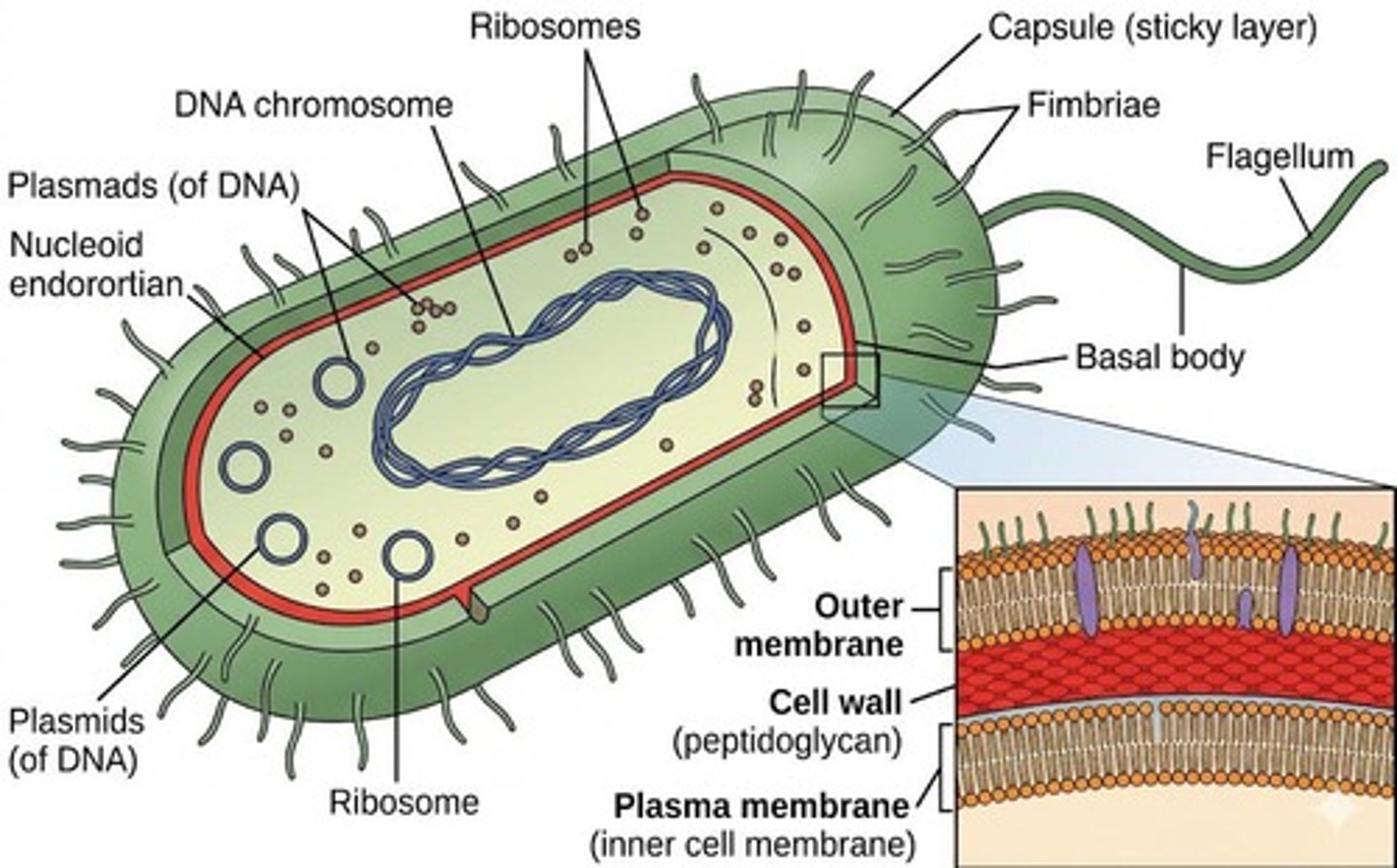
What is peptidoglycan?
A rigid network of modified-sugar polymers cross-linked by peptides.
What characterizes Gram-positive bacteria?
They have a thick peptidoglycan layer and stain purple.
What characterizes Gram-negative bacteria?
They have a thinner peptidoglycan layer and an outer membrane, staining pink.
What is a capsule in bacteria?
A sticky layer outside the cell wall that aids in adhesion and protection.
What are fimbriae?
Hairlike appendages that help cells adhere to surfaces or each other.
What are flagella?
Long appendages that act as primary organelles for locomotion in many cells.
What is a nucleoid?
A non-membrane-bound region in prokaryotic cells that houses genetic material.
What is a plasmid?
Small circular DNA molecules that can carry genes for traits like antibiotic resistance.
How do antibiotic resistance genes spread?
Through conjugation, when plasmids carrying such genes transfer between species.
What is nitrogen fixation?
Converting atmospheric N₂ gas into ammonia (NH₃), which can be incorporated into amino acids and nucleotides.
What are extremophiles?
Organisms that can live in extremely harsh conditions, such as high heat or salty environments.
What are the key differences between Bacteria and Archaea?
Bacteria have peptidoglycan cell walls, while Archaea have pseudo-peptidoglycan or protein cell walls.
Why are Archaea considered more closely related to Eukarya?
Due to shared complex DNA replication/transcription machinery and histone proteins.
What are the three mechanisms of horizontal gene transfer in prokaryotes?
Transformation, transduction, and conjugation.
What is transformation in prokaryotes?
The uptake of naked DNA from the environment.
What is transduction in prokaryotes?
Virus-mediated transfer of genetic material.
What is metabolic diversity in prokaryotes?
Prokaryotes vary in energy source, carbon source, and response to oxygen.
What roles do beneficial prokaryotes play in human health?
They act as microbiome symbionts and food producers.
Name a pathogenic bacterium and a disease it causes.
Staphylococcus aureus causes infections.
What are the basic structural features of a prokaryotic cell?
Nucleoid, ribosomes, cell wall, plasma membrane, and sometimes flagella or capsule.
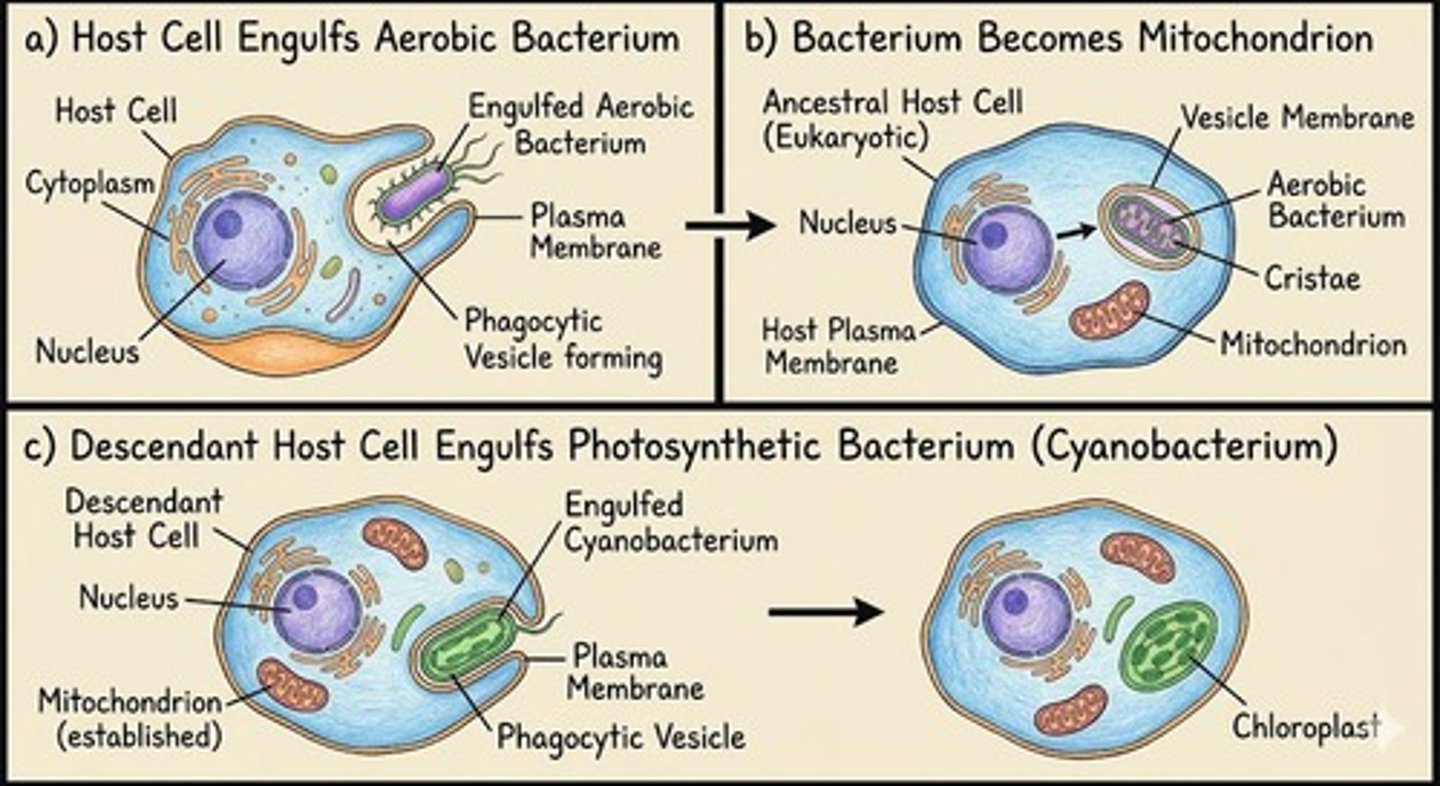
What is the endosymbiotic theory?
Eukaryotes arose from prokaryotic ancestors through endosymbiosis.
What evidence supports the endosymbiotic theory?
Mitochondria and chloroplasts have their own circular DNA and replicate by binary fission.
What are the four supergroups of eukaryotes?
Excavata, SAR Clade, Archaeplastida, and Unikonta.
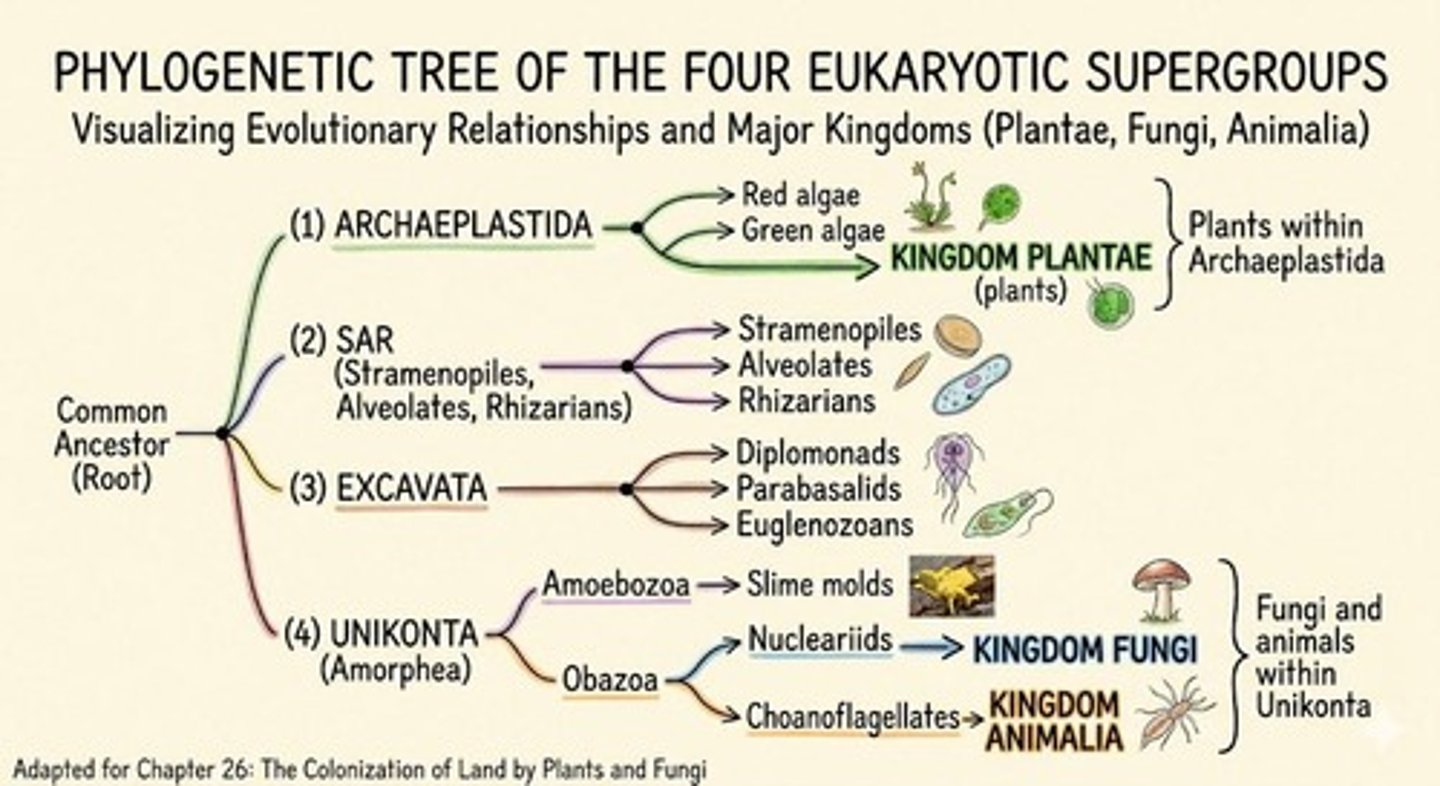
What are protists?
Eukaryotes that are not plants, animals, or fungi, exhibiting diverse structures and functions.
What ecological roles do protists play?
They act as primary producers and decomposers in aquatic environments.
What is the significance of algal blooms?
They can produce toxins that impact ecosystems and human health.
What is endosymbiosis?
A mutually beneficial relationship where one organism lives inside the body or cells of another.
What is serial endosymbiosis?
A process where a eukaryotic cell engulfs a cell that has already undergone primary endosymbiosis.
What is multicellularity?
The condition of being composed of many cells that are specialized for specific functions.

