Lecture 7a: Soil Texture and Surface Tension
 Call Kai
 Learn
Learn Practice Test
 Spaced Repetition
 Match
Match Flashcards
 Knowt Play
1/56

There's no tags or description
Looks like no tags are added yet.
Name | Mastery | Learn | Test | Matching | Spaced | Call with Kai |
|---|
No analytics yet
Send a link to your students to track their progress
57 Terms
3 basic soil particle sizes (in order from smallest to largest)
Clay
Silt
Sand
4 course soil particle sizes (in order from smallest to largest)
Gravels
Cobbles
Stones
Boulders
What is the most important property for determining suitability of soil for various uses?
Texture
Texture is considered a basic property because it doesn’t ______
change
Which soil particle is 0.05 to 2 mm?
Sand
True or false. You can see individual sand particles.
True
How does sand feel when it is wet? How does it feel when it’s dry?
Very gritty
How much plant nutrition does sand hold?
Very little
True or false. Sand usually contains more than one mineral.
False. Sand typically contains one mineral - Quartz (SiO2)
What size pore spaces does sand have?
Very large
Does sand have low, medium, or high surface area?
Low
True or false. Sand cannot hold water against the force of gravity.
True
True or false. Sand has very little capacity to hold plant nutrients.
True
Which soil particle is 0.002 to 0.05 mm?
Silt
How does silt feel?
Silky smooth (like flour)
True or false. Silt has a high mineral makeup.
True. And weathering releases plant nutrients.
True or false. Silt is sticky.
False
Silt is susceptible to ________ and piping
erosion
True or false. Silt can’t retain water.
False. Silt CAN retain water.
True or false. Silt can hold nutrients.
True. Silt can hold nutrients.
Which soil particle is less than 0.002 mm?
Clay
Can you see clay with the naked eye?
No, you cannot see a clay particle with the naked eye
Describe clay’s surface area
Very large surface area
Can clay hold water and nutrients?
Yes, clay has a high capacity to hold water and nutrients
Clay particles _____ to each other and other particles
stick
How does clay feel when it is wet? How does it feel when it’s dry?
Clay feels sticky when wet and hard when dry
As particle size decrease, surface area _________
increases
As particle size ________, surface area increases
decreases
As particle size _________, surface area _________
decreases
increases
Clay has about # times as much surface area as sand
10,000 times
About 6 grams of smectite clay has about as much surface area as what?
A football field
List 5 things that soil surface area (and texture) influence in soil.
Water holding capacity
Chemical reactions
Soil cohesion
Cation exchange capacity
Ability to support microorganisms
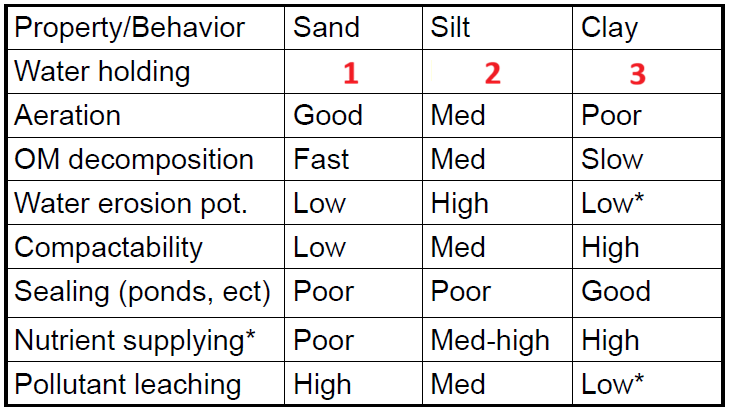
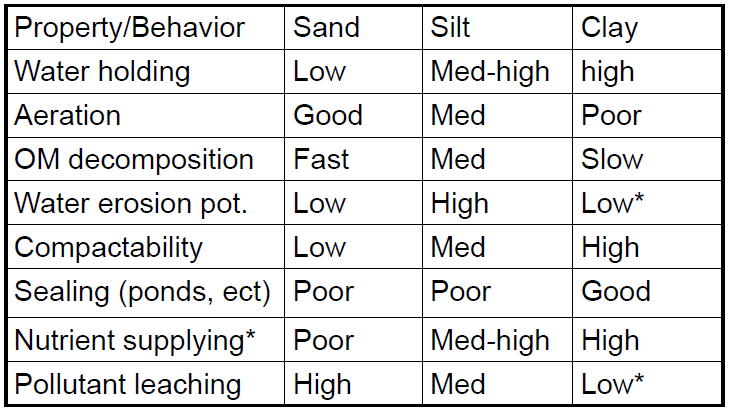
Identify the water holding capacity
Low
Medium
High
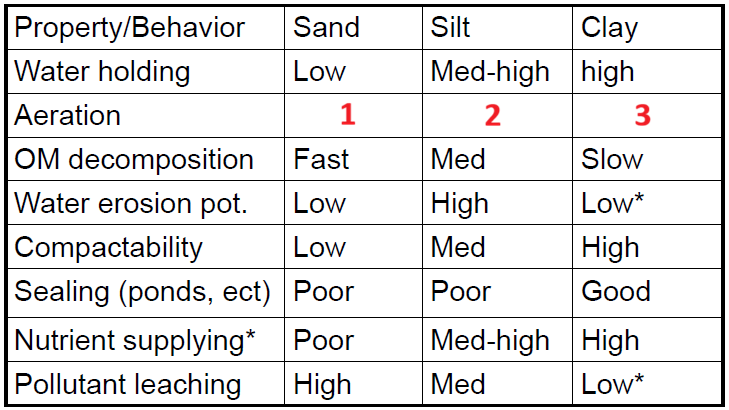
Identify the aeration
Good
Medium
Poor
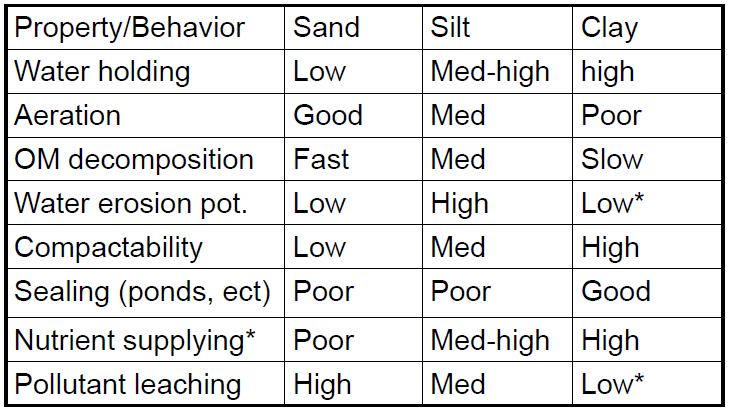
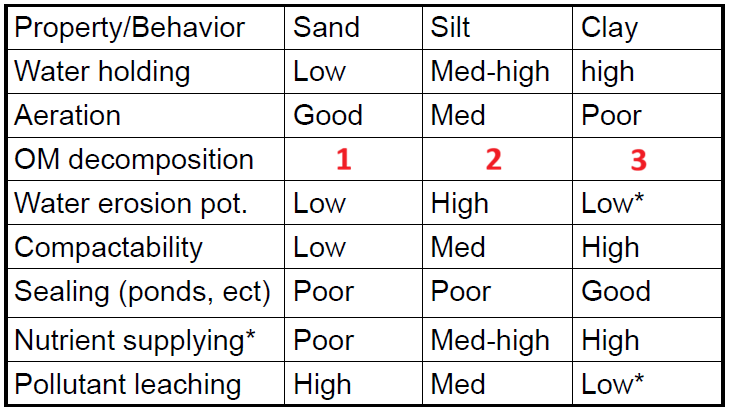
Identify OM (organic matter) decomposition
Fast
Medium
Slow
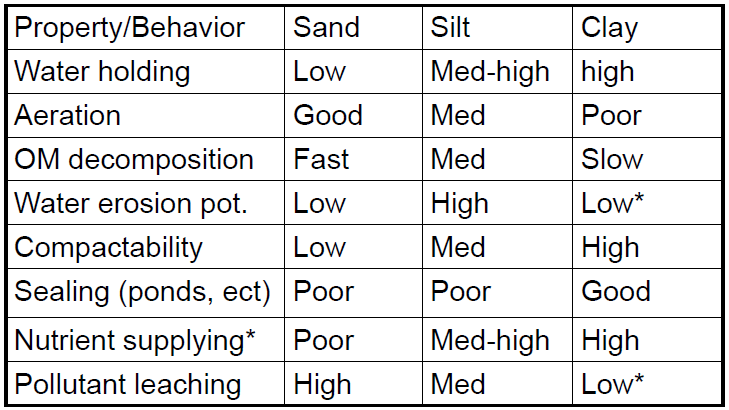
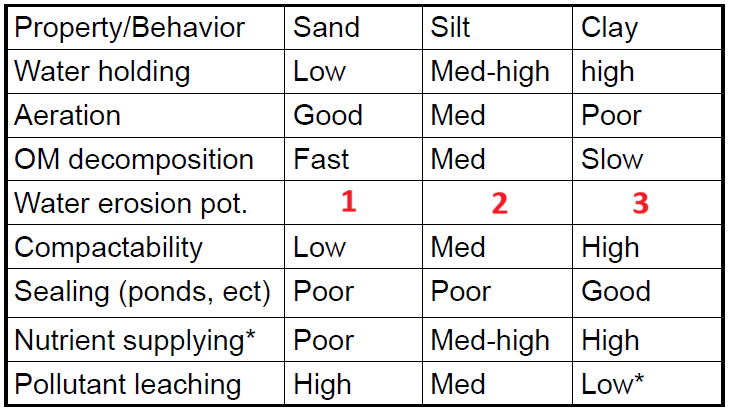
Identify the water erosion potential
High
Medium
Low* - depends on type of clay
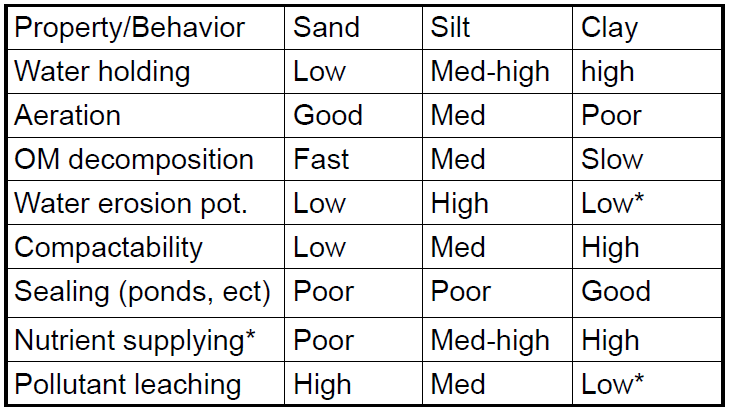
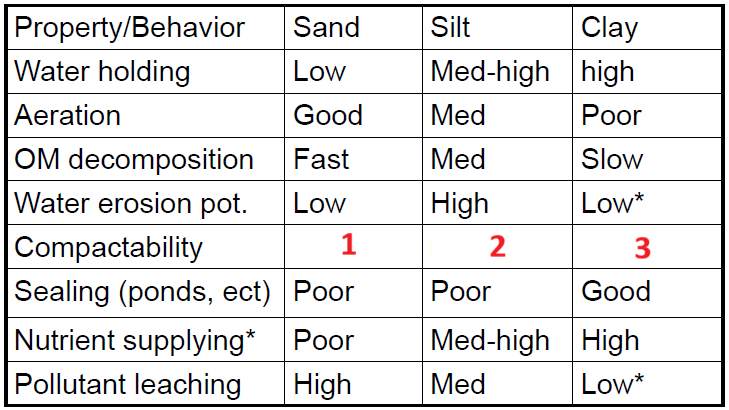
Identify compactibility
Low
Medium
High
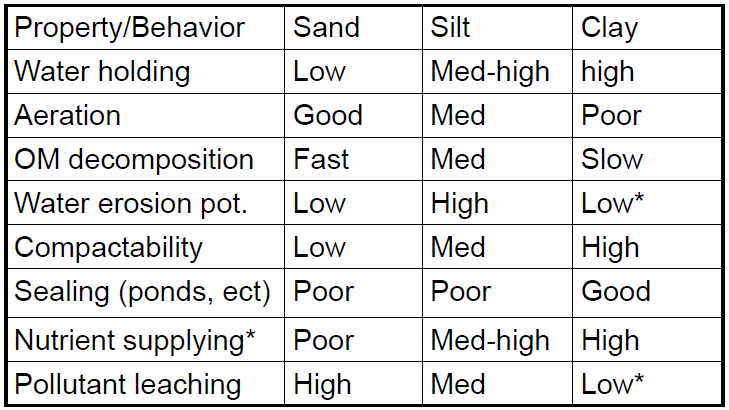
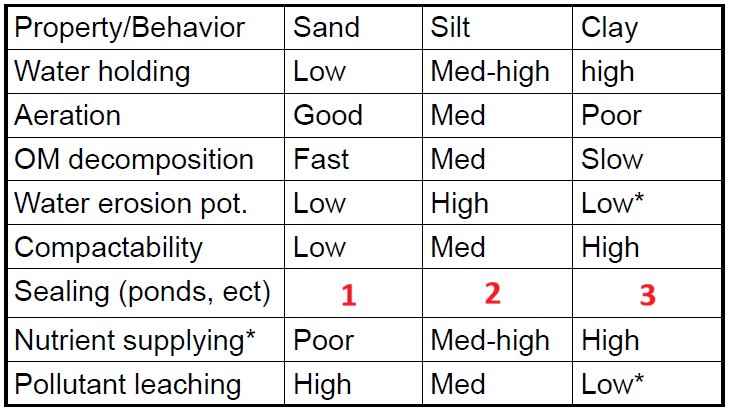
Identify sealing ability
Poor
Poor
Good
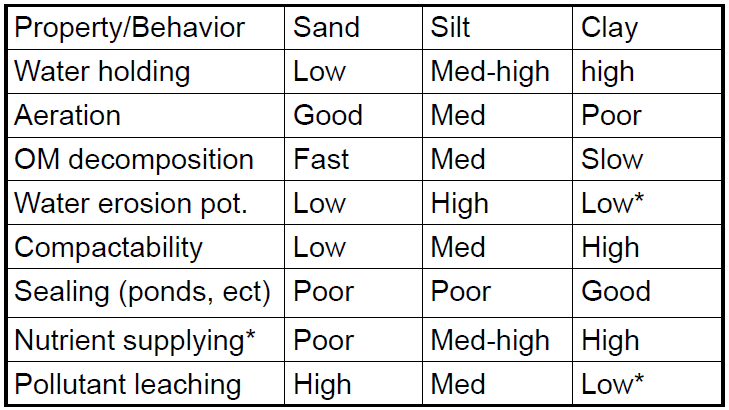
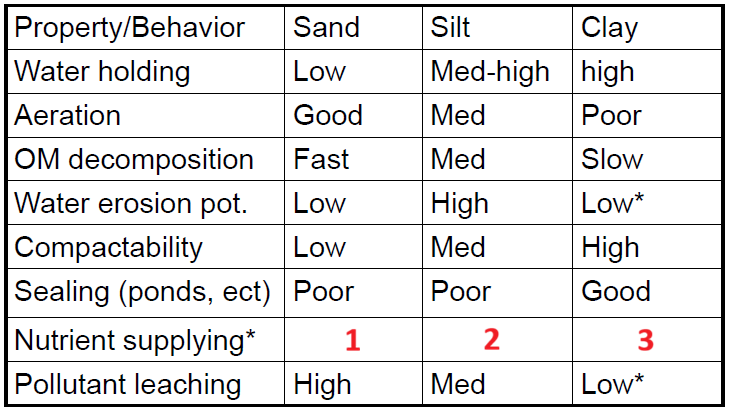
Identify nutrient supplying ability
Poor
Medium-high
High
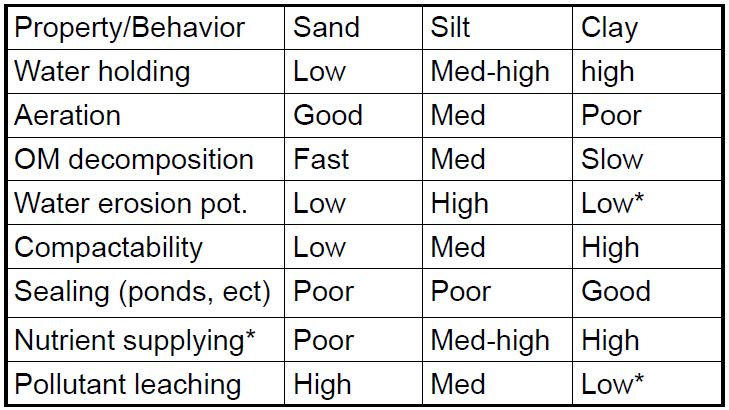
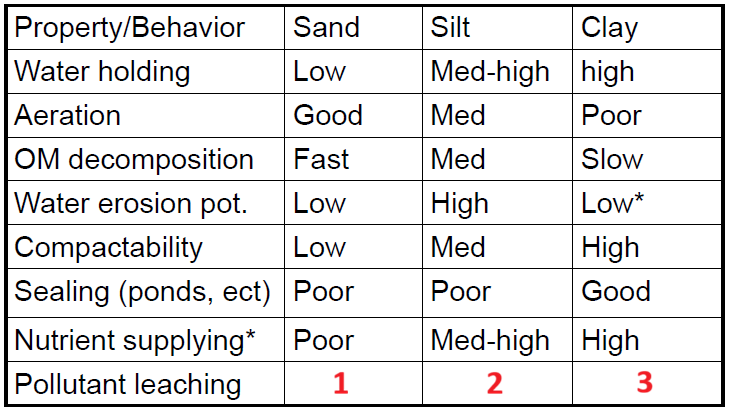
Identify pollutant leaching
High
Medium
Low* - depends on type of clay
What are the 2 types of clay?
2:1
1:1
2:1 clay has # layers of silica bound to # layers of octahedron
2:1
1:1 clay has # layers of silica bound to # layers of octahedron
1:1
Which type of clay is the shirnk/swell clay? 2:1 or 1:1?
2:1
Which type of clay is good @ providing nutrients? 2:1 or 1:1?
2:1
Which type of clay is good for sealing / pond liners? 2:1 or 1:1?
1:1
What is most common 1:1 clay in the area?
Kaolinite
What are the 4 most common 2:1 clays in the area?
Illite
Chlorite
Vermiculite
Smectite
Which kind of clay is broken down too far so you don’t know if it was 2:1 or 1:1?
Allophane
What is the cation exchange capacity (meq/100g) of kaolinite?
3-15
What is the cation exchange capacity (meq/100g) of illite?
10-40
What is the cation exchange capacity (meq/100g) of chlorite?
10-40
What is the cation exchange capacity (meq/100g) of vermiculite?
100-150
What is the cation exchange capacity (meq/100g) of smectite?
80-120
What is the cation exchange capacity (meq/100g) of allophane?
30-135
Which type of clay is best cause it hold more nutrients?
a. kaolinite
b. illite
c. chlorite
d. vermiculite
e. smectite
f. allophane
d. vermiculite (it has the highest cation exchange capacity)
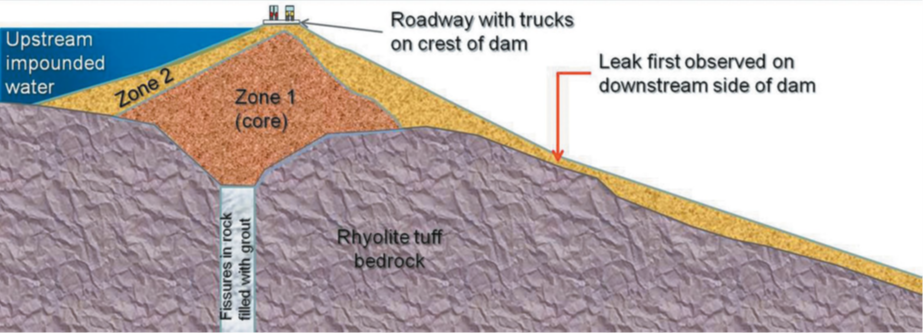
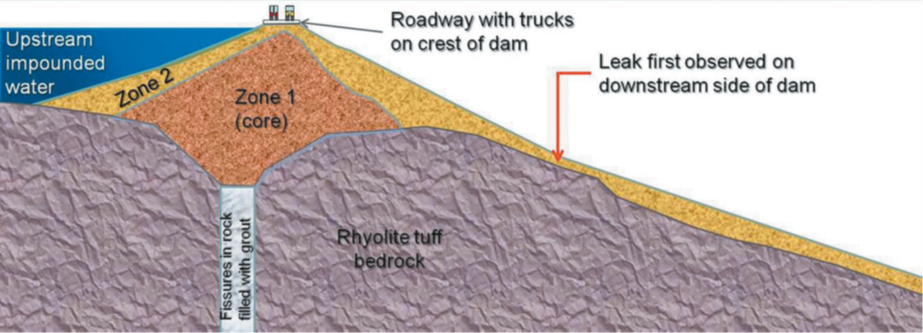
Why did the Teton Dam in Idaho fail?
Because they made Zone 1 (the core) out of 2:1 clay instead of 1:1 clay (1:1 has a stronger bond that is better for lining and holding water)