Unit 0-Classical States & Empires (600 BCE-600 CE)
 Studied by 1 person
 Call Kai
 Learn
Learn Practice Test
 Spaced Repetition
 Match
Match Flashcards
 Knowt Play
1/41

There's no tags or description
Looks like no tags are added yet.
Name | Mastery | Learn | Test | Matching | Spaced | Call with Kai |
|---|
No analytics yet
Send a link to your students to track their progress
42 Terms
empire
a large, unified political unit, with different territories and peoples under a single ruler or authority
bureaucracy
system of organizing and managing government, through departments and agencies run by appointed officials
Zoroastrianism
system of religion (arguably monotheistic), founded in Persia in the 6th century BC by the prophet Zoroaster
filial piety (xiao)
Confucian concept of respect for one's elders, specifically parents and ancestors
conscription
compulsory enlistment for state service, typically into the armed forces (ex: a military draft).
eunuchs
castrated males used within the palace of Chinese emperors, usually to guard concubines and serve as administrators

civil service system (China)
the practice of hiring government workers on the basis of open, competitive examinations and demonstration of merits
tribute
Money paid by one group of people to another in return for protection (and in acknowledgement of submission)
missionaries
messengers or travelers commissioned by a religious institution to spread its faith or carry on humanitarian work
Jainism
a religion founded by Mahavira in India in the 6th century BCE; members believe that everything in the universe has a soul and shouldn't be harmed.
Buddhism
Belief system founded by Siddhartha Gautama in India in the 6th c BCE. Happiness can be achieved through removal of one's desires. Believers seek enlightenment (nirvana) and the release from suffering.
Bodhisattva
A follower of Mahayana Buddhism who has attained enlightenment, but who has postponed nirvana in order to help others achieve their own enlightenment
Karma
(Hinduism and Buddhism) the force generated by the sum of a person's actions and deeds
Dharma
(Hinduism and Buddhism) principles of existence, or divine law; the adherence to one's religious and moral duties as outlined by divine law
Samsara
(Hinduism and Buddhism) the cycle of rebirth
stupa
Buddhist shrine that is shaped like a dome or mound
Varnas
each of the four Aryan castes--Brahmin, Kshatriya, Vaishya, and Shudra.
Jati
sub-castes within the Hindu caste system; were groups of people within each caste that worked together for one economic function
polis
A city-state in ancient Greece.
aristocracy
A government in which power is in the hands of the wealthy or the nobility (rule by the rich)
oligarchy
A government ruled by a small group of powerful people (rule by the few)
democracy
A government ruled by the people, either directly or indirectly

tyrants
in ancient Greece, rulers who seized power by force, but who ruled with the people's support (often popular)

helots
a class of serfs (conquered servants) who were required to work the land to grow grain in ancient Sparta
philosophy
Greek for "love of wisdom"; refers to a system of beliefs, values, and understandings
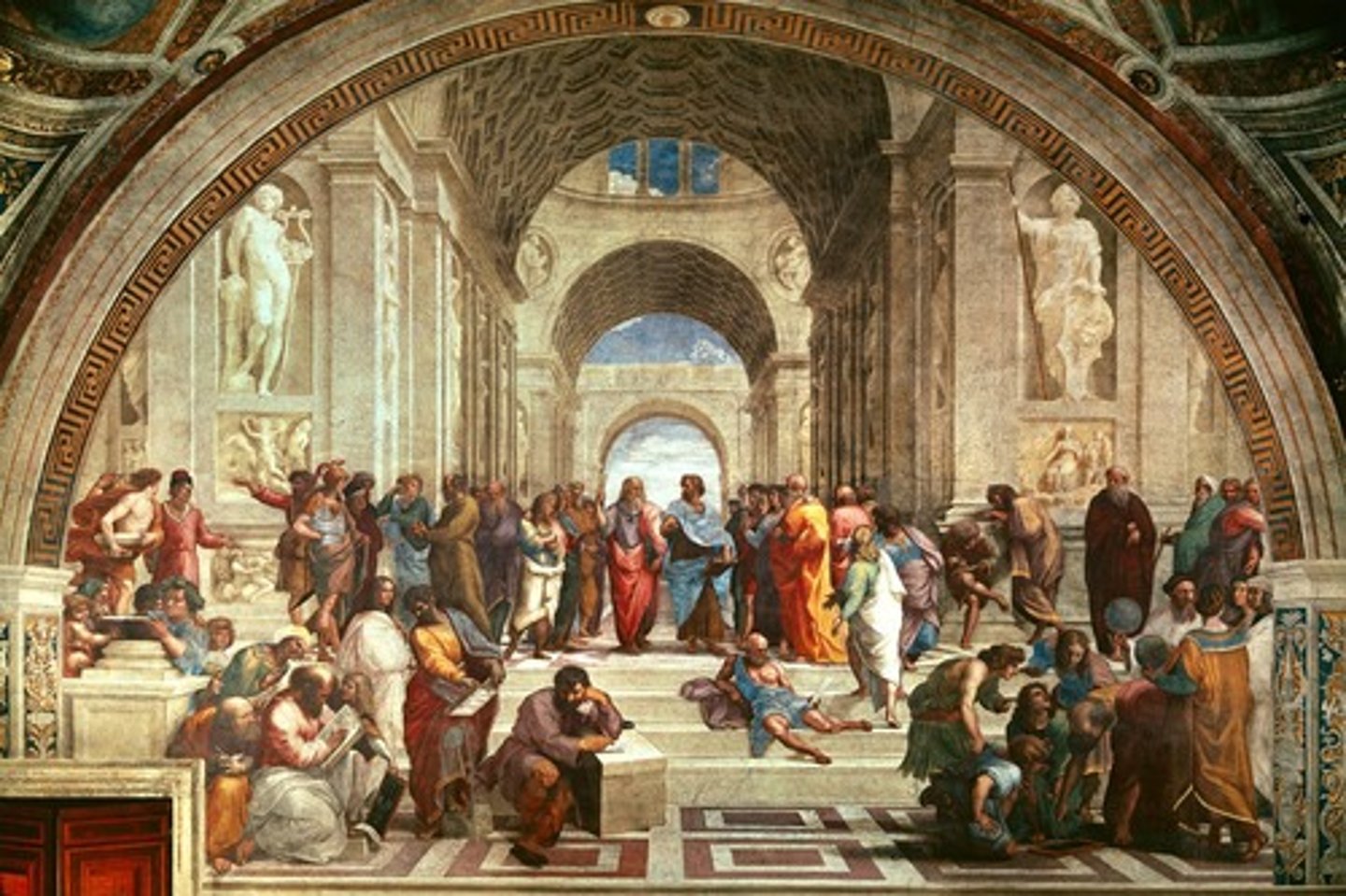
Socratic Method
philosophical method of questioning to gain deeper understanding of truth (used by Socrates in teaching his students)
Stoicism
Ancient Greek philosophy that became popular amongst many notable Romans. Emphasis on ethics and the belief that emotions are destructive to good judgment.

Greco-Roman culture
an ancient culture that developed from a blending of Greek, Hellenistic, and Roman cultures.
republic
A form of democratic government in which citizens choose their leaders by electing representatives.
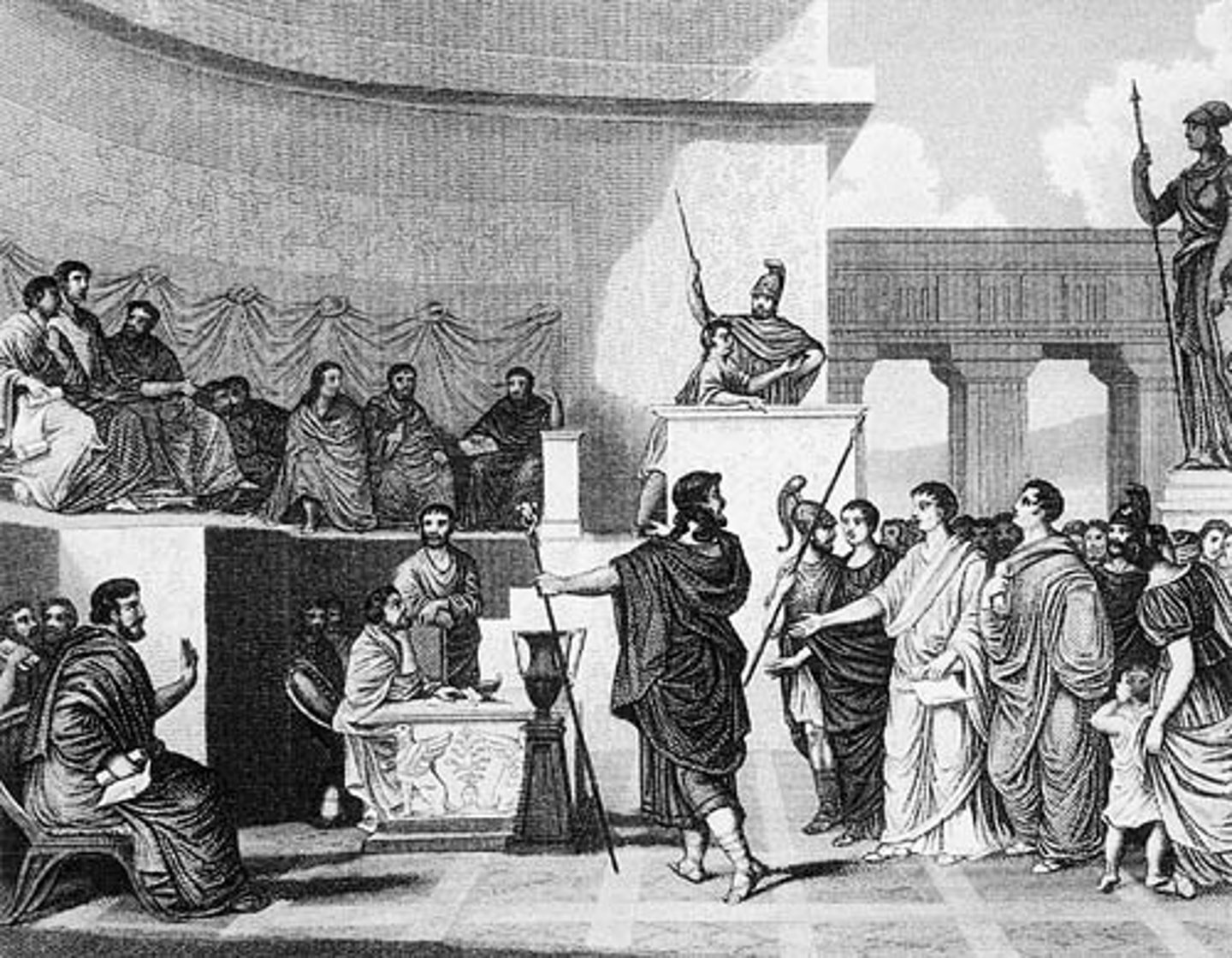
Senate
In ancient Rome, the supreme governing body, originally made up only of patricians.
patricians
the aristocratic landowners, or upper class, in ancient Rome
plebeians
All commoners and landless peasants in Ancient Rome
tribunes
Roman government officials whose function was to protect the rights of the plebeians (commoners)
consuls
Two officials from the patrician class appointed each year by the Roman Senate to supervise the government and command the military
latifundia
large estates of land (plantations) bought up by wealthy Roman citizens; served as commercial farms growing mass quantities of grain
pater familias
Roman term for "father of the family," a theoretical implication that gave the male head of the family almost unlimited authority.
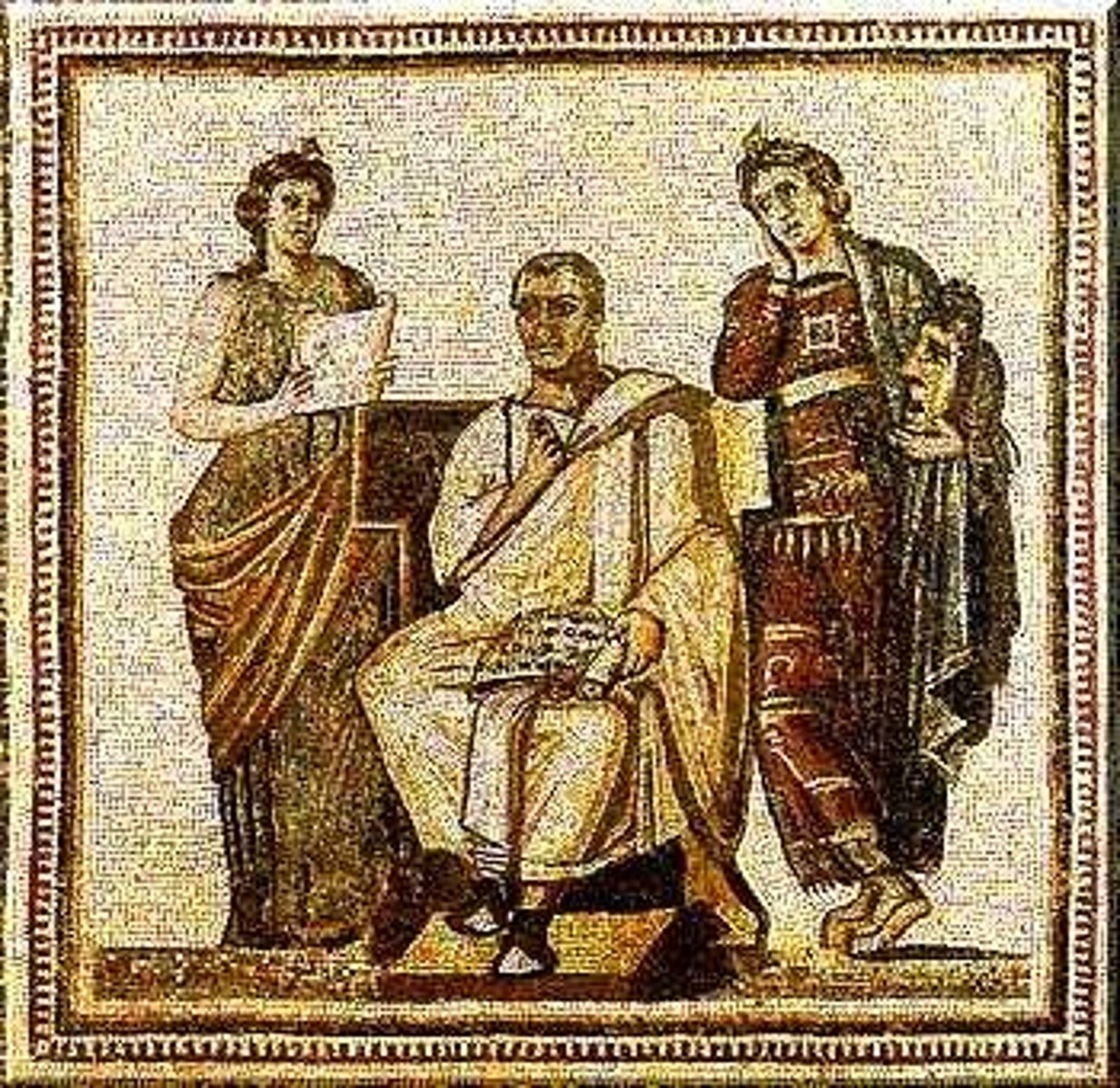
Pax Romana
A period of peace and prosperity during the Roman Empire, lasting from 27 BCE (Rise of Augustus) to 180 CE (death of Marcus Aurelius).

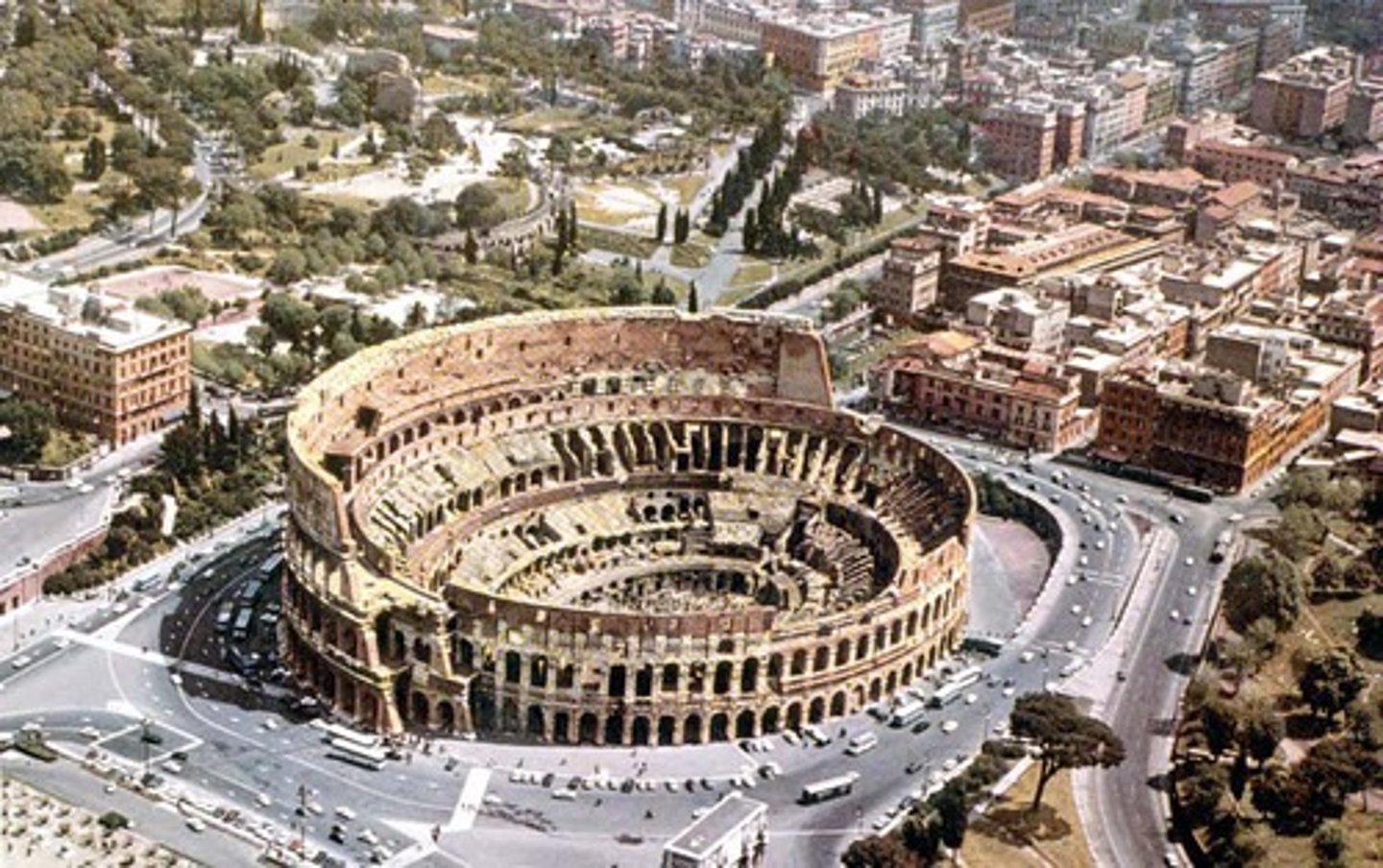
"Bread & Circuses"
Public entertainment & spectacles (ex: gladiator games) that Roman elites used to keep the plebeians happy and distracted from problems in the empire.
Silk Routes
Caravan trade routes connecting Han China and the Mediterranean Sea, spanning across Central Asia and the Persian Empire.

syncretism
a blending of different forms of beliefs or religious practices (as a result of cultural diffusion)
epidemic
A widespread outbreak of an infectious disease.
meritocracy
government or the holding of power by people selected on the basis of their merits (ability and skills)
 Note
Note  Flashcards (50)