Ch. 48 Disorders of Musculoskeletal Function Trauma, Infection, Neoplasms-1-1
 Call Kai
 Learn
Learn Practice Test
 Spaced Repetition
 Match
Match Flashcards
 Knowt Play
1/66

There's no tags or description
Looks like no tags are added yet.
Name | Mastery | Learn | Test | Matching | Spaced | Call with Kai |
|---|
No analytics yet
Send a link to your students to track their progress
67 Terms
What are common athletic injury sites?
Knee (Osgood-Schlatter lesion), heel (Sever's lesion), and elbow.
Note: These places get hurt a lot when kids play.
Common Pediatric Athletic Lesions
Osgood-Schlatter lesion (knee) and Sever's lesion (heel).
Note: Kids often get these from sports.
Pediatric Injury Risks
Children have unique risks due to growth plate injuries, nonlinearity of growth, apophysitis, and limited thermoregulatory capacity.
Note: injury to growth plates, uneven growth spurts, muscle-bone attachment soreness (apophysitis), and difficulty controlling their body temperature.
What is a contusion?
An injury to muscle or tissue from direct trauma resulting in immediate pain and swelling.
Note: A bruise that hurts right away.
Contusion Grades
Grade 1: Tissue is tight, no swelling;
Grade 2: Occasional twinges of pain and possible swelling;
Grade 3: Severe pain and immediate significant swelling.
Note: Pain ranges from mild tightness to big swelling right away.
What is a hematoma?
A pool of blood trapped outside a blood vessel, often causing skin discoloration.
Note: A blood lump under your skin.
Laceration & Tetanus
Deep puncture wounds require a tetanus vaccine if the patient has not had a booster in >5 years.
Note: Deep cuts may need a shot if it’s been a while.
What is a strain?
Stretching or tearing of the muscle or musculotendinous junction; common in back and hamstrings.
Note: Ouchy muscle stretch.
What is a sprain?
A stretching or tearing of a ligament; common in ankles and wrists.
Note: Ouchy rope that holds joints together.
What is a dislocation?
Joint injury forcing bone ends out of position; symptoms include visible deformity and loss of mobility.
Note: Bone pops out where it shouldn’t be.
What is a subluxation?
A partial dislocation of a joint.
Note: Halfway popped out.
Dislocation vs. Subluxation
Dislocation: Full displacement of bone ends from position; Subluxation: Partial dislocation of a joint.
Note: Bone out completely vs. halfway out.
Why is hip dislocation urgent?
A time-sensitive medical emergency requiring prompt treatment to prevent permanent complications.
Note: Must fix fast or the hip gets damaged.
How do you reduce a posterior hip dislocation?
Reduced by placing longitudinal traction with internal rotation on the hip (most common type).
Note: Pull the leg and twist in.
How do you reduce an anterior hip dislocation?
Reduced by inline traction and external rotation.
Note: Pull the leg and twist out.
What are loose bodies?
Small pieces of bone or cartilage floating in joint space causing locking/catching; treated via operative arthroscopy.
Note: Tiny bone chips that make your joint stick.
What causes rotator cuff tears?
Acute (trauma) or Degenerative (wear and tear, aging >40).
Note: Shoulder breaks suddenly or from old use.
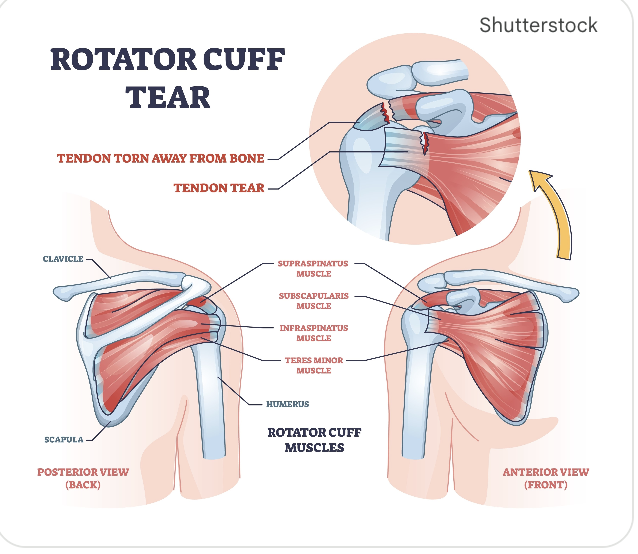
What are rotator cuff tear symptoms?
A dull shoulder ache, pain when lifting the hand, and pain disturbing sleep when lying on the affected side.
Note: Shoulder hurts lifting and sleeping.
What are meniscal tear symptoms?
Locking, clicking, catching, or intermittent inability to fully extend the knee.
Note: Knee sticks or clicks.
What is patellar instability?
Includes patellar dislocation/subluxation; most common in females aged 10−16 .
Note: Kneecap moves around too much.
What is chondromalacia of the patella (CMP)?
"Runner's knee" or patellofemoral syndrome; softening/erosion of hyaline cartilage causing anterior knee pain.
Note: The knee cap’s cushion gets soft.
What triggers CMP pain?
Stair ascending/descending, squatting, kneeling, running, or prolonged sitting.
Note: Hurts when bending or sitting long.
Why are hip fractures risky?
Most common reason for urgent surgery in the elderly; high mortality rate without surgical repair due to infectious, thrombotic, and cardiopulmonary complications related to immobility.
Note: Older people can get very sick if they can’t move.
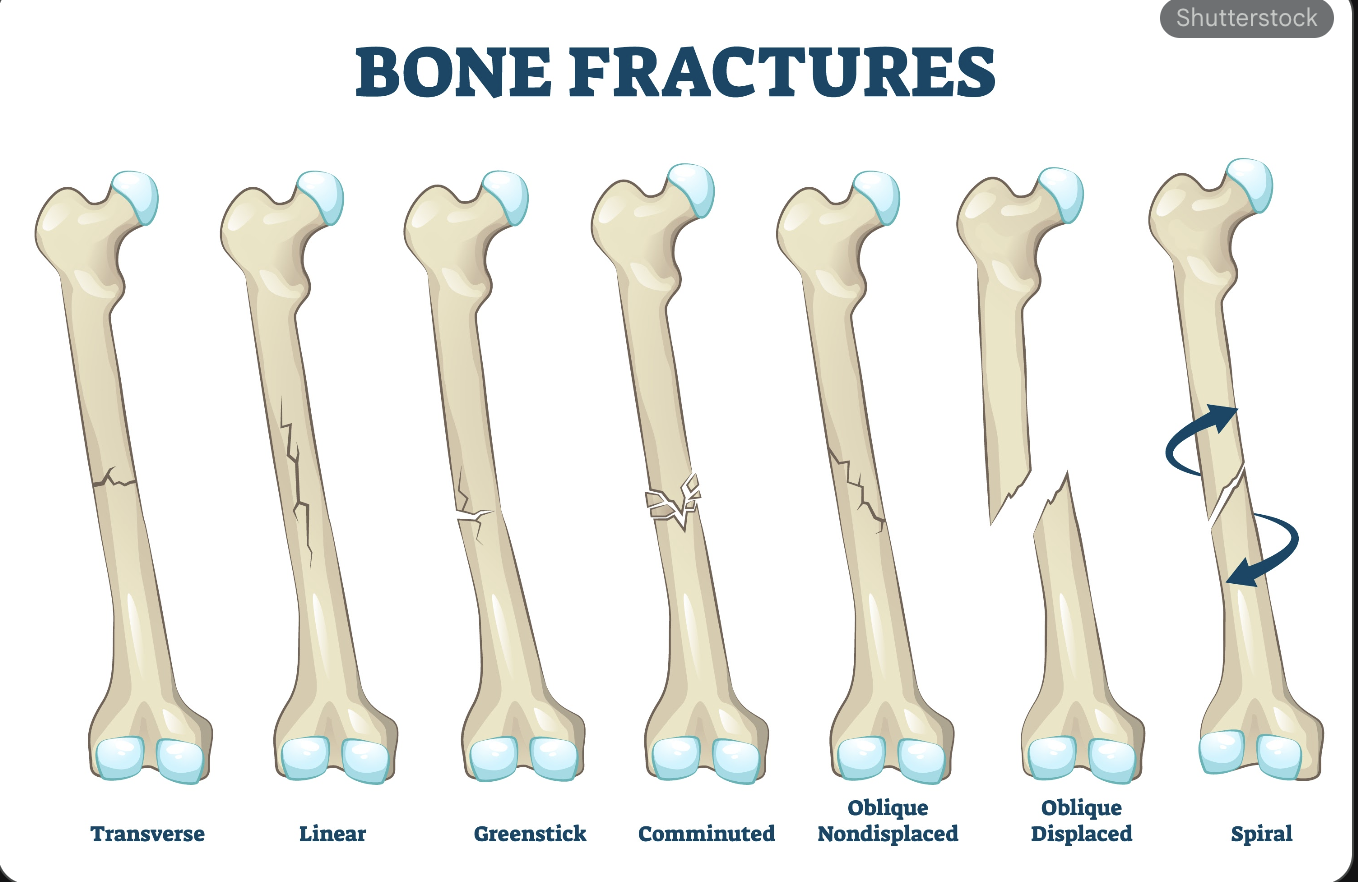
What is a transverse fracture?
A complete fracture with a perpendicular break line.
Note: Bone breaks straight across.
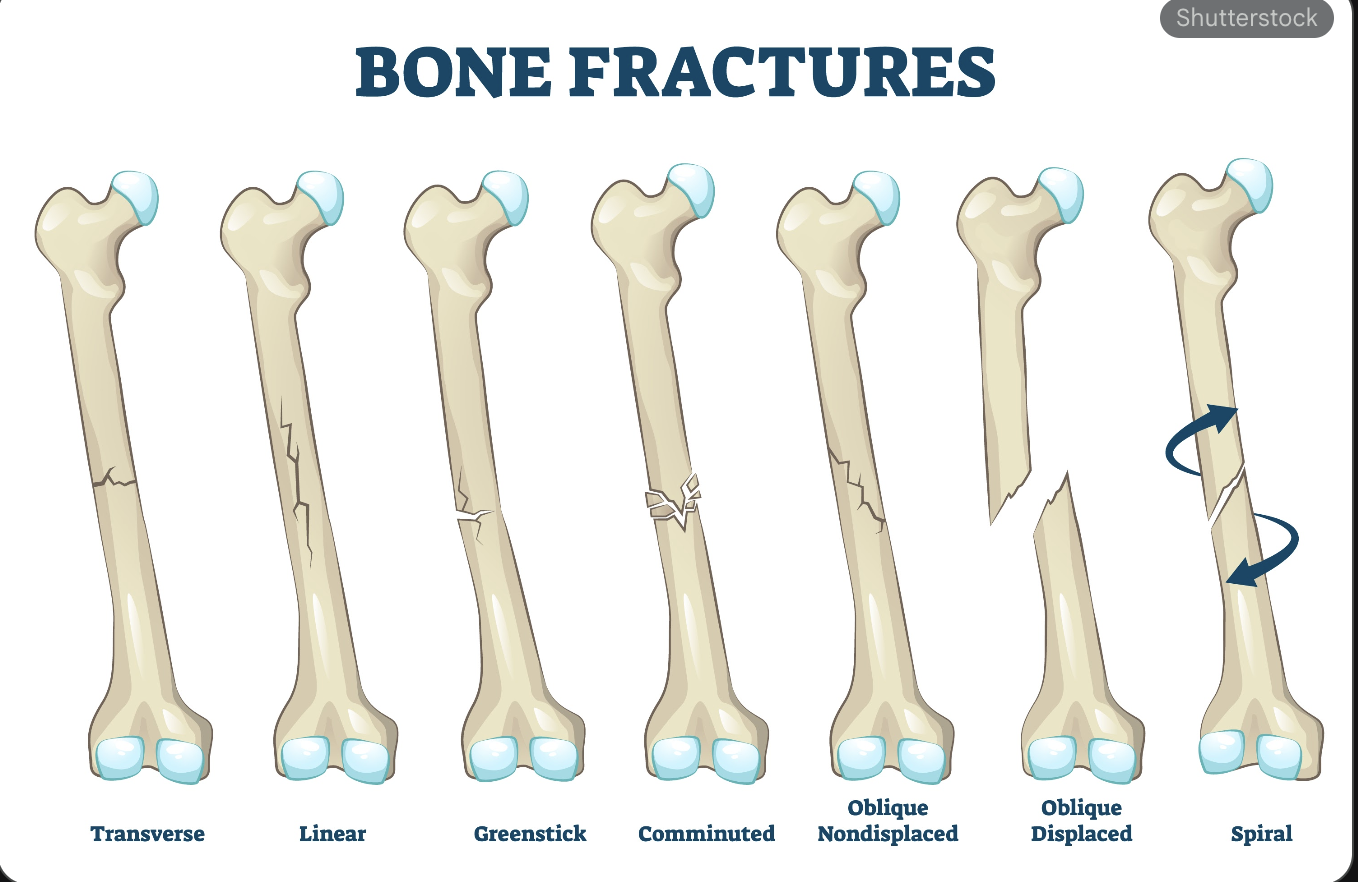
What is an oblique fracture?
A complete fracture with a diagonal orientation.
Note: Bone breaks sideways-slanted.
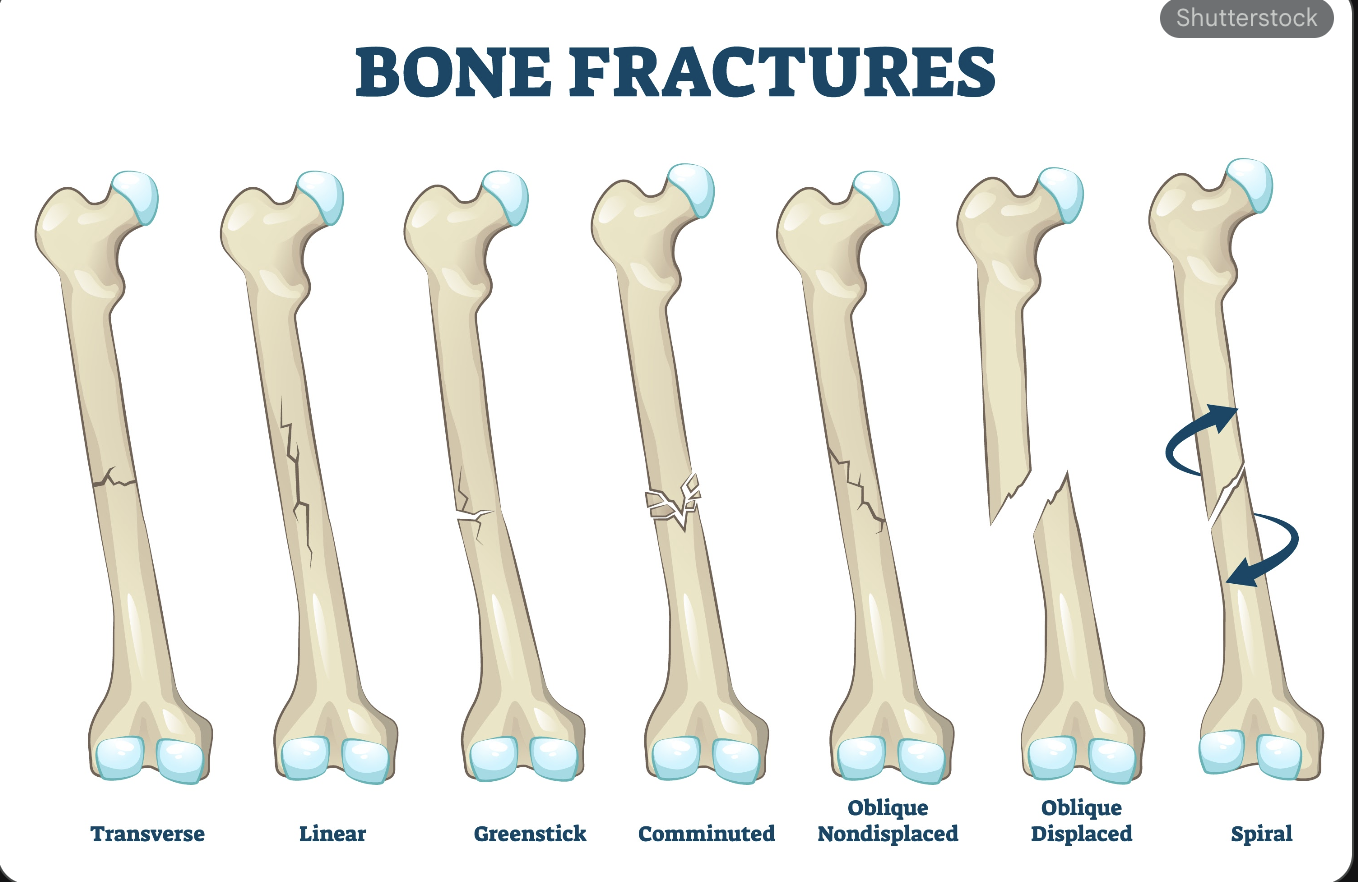
What is a spiral fracture?
Created by a torsional force, presenting with a rotated appearance.
Note: Bone twists and cracks like a candy cane.
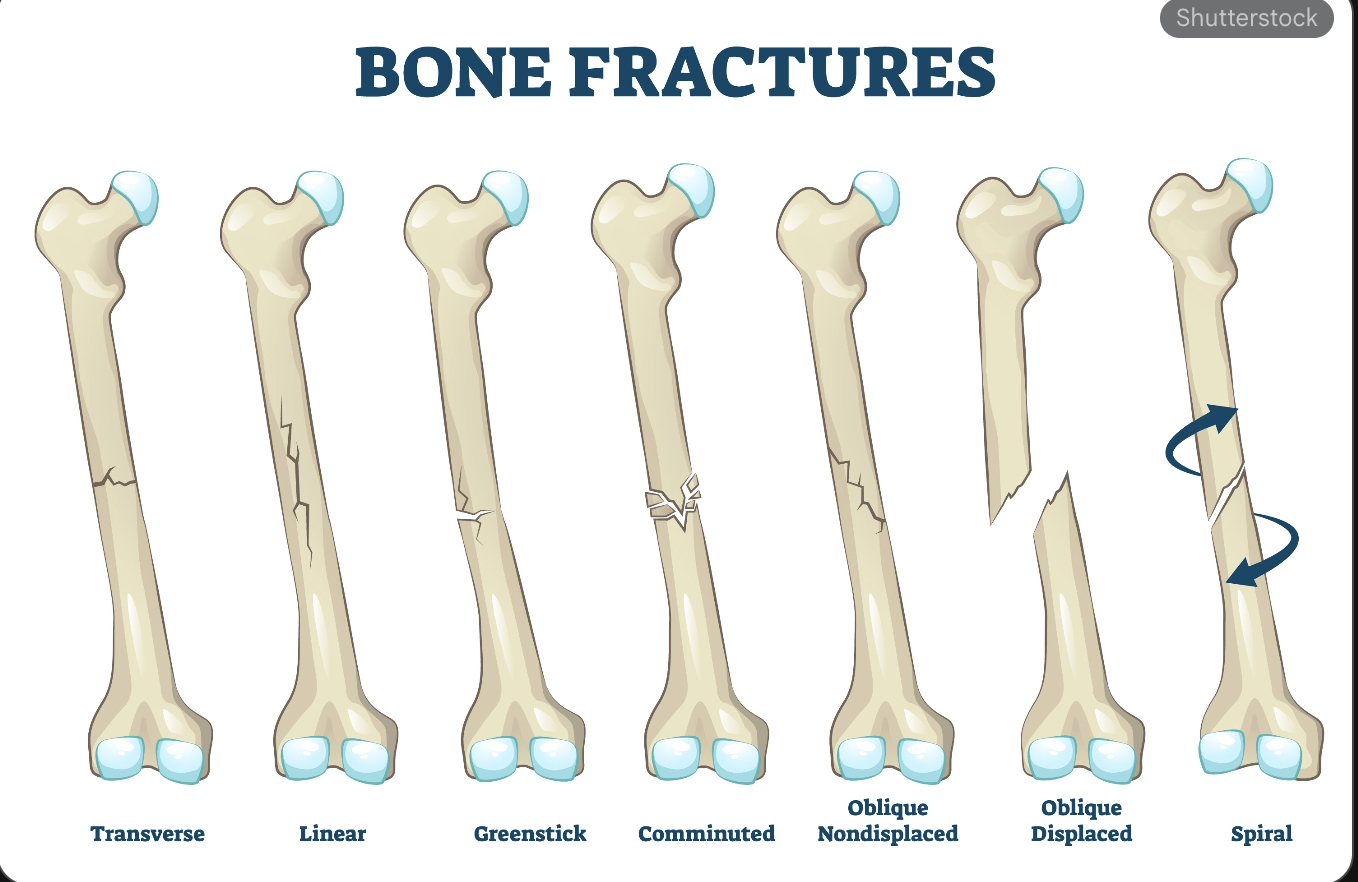
What is a comminuted fracture?
Bone is divided into more than two segments (multifragmental).
Note: Bone breaks into lots of pieces.
Fracture Direction Patterns
Transverse: Perpendicular line; Oblique: Diagonal line; Spiral: Rotated appearance caused by torsional force.
Note: Bones can break straight, slanted, or twisted.
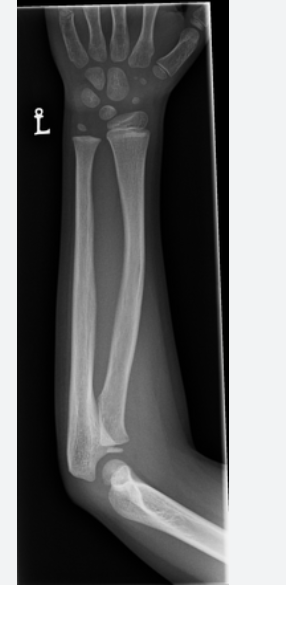
What is a bowing fracture?
An incomplete fracture in children; microfractures create a bend/plastic deformity of the bone.
Note: Kid bone bends but doesn’t snap.
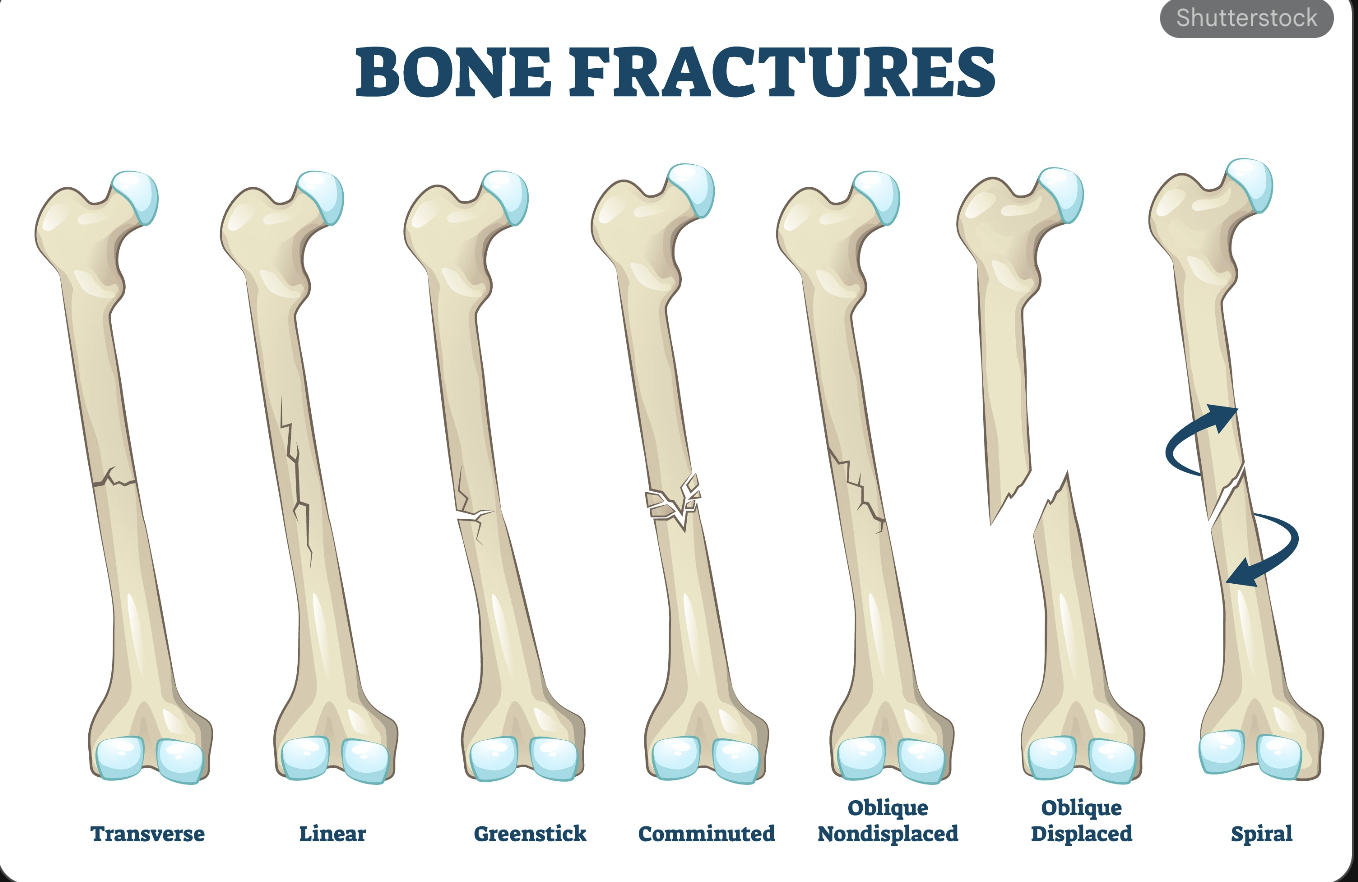
What is a greenstick fracture?
An incomplete fracture where a portion of the cortex and periosteum remains intact.
Note: Bone bends and cracks like a green twig.
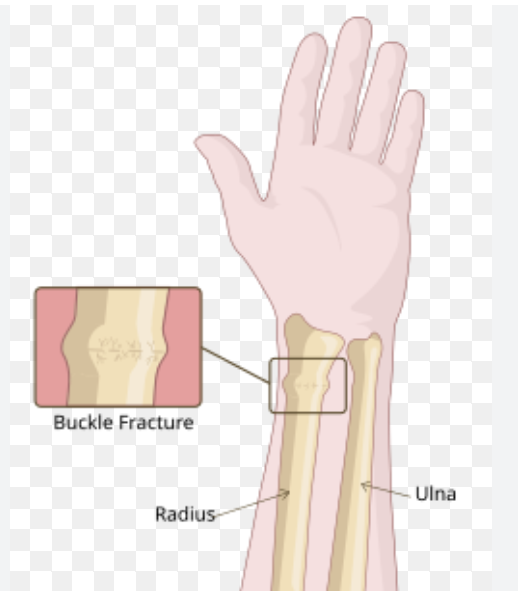
What is a torus fracture?
An impaction injury causing buckling of the cortex.
Note: Bone crunches in like a dent.
Pediatric Incomplete Fractures
Bowing: Plastic deformity/bend; Greenstick: Cortex/periosteum remains partially intact; Torus: Buckling of the cortex due to impaction.
Note: Kid bones bend and buckle differently than adult bones.
What is an open (compound) fracture?
A break in the skin near the fracture; high risk for infection and impaired healing.
Note: Bone break + skin break = germs can get in.
What is a pathologic fracture?
Caused by conditions weakening the bone (most commonly osteoporosis, also tumors).
Note: Bone breaks because it was weak before.
What is fracture healing stage 1?
Hematoma formation (occurs immediately after the injury and ends about 1 week after injury).
Note: Blood clot forms first.
What is fracture healing stage 2?
Fibrocartilaginous callus formation (calluses form at the broken ends and tissue grows until the two ends meet, stabilizing the fracture).
Note: Soft glue holds bone together.
What is fracture healing stage 3?
Bony callus formation (replaces tissue calluses).
Note: Hard bone starts growing.
What is fracture healing stage 4?
Bone remodeling (solid bone replaces spongy bone, completing the healing process).
Note: Bone becomes strong and normal again.
Four Stages of Healing
1. Hematoma formation; 2. Fibrocartilaginous callus formation; 3. Bony callus formation; 4. Bone remodeling.
Note: Bone healing goes from clot to soft glue to hard bone to strong bone.
What systemic factors impair healing?
Advanced age, obesity, anemia, endocrine conditions (diabetes mellitus, etc.), steroid administration, malnutrition, and smoking.
Note: Old age and unhealthy habits slow healing.
Open vs. Closed Reduction
Open: Surgical incision to align bone, often used with internal fixation (plates/screws).
Closed: Realigning bone without incision (cast/splint);
Note: Bones fixed with or without surgery.
Fixation Methods
Internal: Plates, screws, or metal rods inside the body;
External: Pins through skin held by an external scaffold.
Note: Hardware can be inside or outside the body.
Limb Lengthening
Corrects irregular growth or fracture damage; involves an osteotomy (cutting bone) followed by gradual distraction using an external fixator.
Note: Bone slowly stretched to fix length issues.
Casts: Traditional vs. Functional
Traditional: Immobilizes fractured bone with plaster/fiberglass;
Functional: A brace that allows limited, controlled movement of nearby joints after initial cast removal.
Note: Some casts let you move a little, some don’t.
What is malunion?
A fracture that heals abnormally (bent, twisted, or both).
Note: Bone heals crooked.
What is nonunion?
Fractures that fail to heal despite treatment due to low blood supply or infection.
Note: Bone doesn’t grow back together.
Fracture Blisters
Fluid-filled blisters near severe fractures; Serous: Clear fluid, tense skin; Hemorrhagic: Blood-colored fluid, loose skin.
Note: Blisters can form near bad breaks.
What is acute compartment syndrome?
A medical emergency, usually caused by trauma, where pressure rises in muscle fascia, limiting blood flow and leading to serious damage.
Note: Big pressure squeezes the muscles too tight.
What is the hallmark of compartment syndrome?
Muscle pain that is stronger than expected from the injury (hallmark of acute type).
Note: Pain that’s WAY too bad for the injury.
How is compartment syndrome treated?
Fasciotomy (an incision to relieve pressure).
Note: Doctors cut the covering of muscles to let pressure out.
What is complex regional pain syndrome (CRPS)?
Excess/prolonged pain and inflammation, often following an injury to an arm or leg, particularly wrist fractures.
Note: Pain sticks around way too long.
Thromboembolism (PE)
A clot breaks loose and obstructs the veins of the lungs (Pulmonary Embolism [PE]); risks include spinal cord injury and pelvic or lower extremity fractures.
Note: Dangerous clot can travel to the lungs.
What is fat embolism syndrome (FES)?
Intravascular fat lodging in a blood vessel, commonly occurring after fractures to long bones of the lower body (femur, tibia, and pelvis).
Note: Fat blobs get stuck in blood after big bone breaks.
What are FES signs?
Rapid breathing, mental confusion, lethargy, coma, and petechial rash (chest, head, and neck area) appearing within 12−72 hours.
Note: Fast breathing, confused brain, and tiny red dots.
What is osteomyelitis?
Inflammatory condition of bone secondary to infection, most commonly caused by Staphylococcus aureus.
Note: Germs infect the bone.
What is a sign of chronic osteomyelitis?
Presence of fistulous tracts from skin to bone.
Note: Little tunnels from skin to bone.
What is Pott disease?
Tuberculosis of the spine (TB spondylitis), a form of extrapulmonary tuberculosis.
Note: TB that attacks the spine.
What is osteonecrosis (ON)?
Death of bone tissue (osteocytes/mesenchymal cells) due to lack of blood supply, causing demineralization and fractures; causes include glucocorticoids, alcohol, and sickle cell anemia.
Note: Bone dies when blood can’t reach it.
What is osteosarcoma?
Most common bone cancer; aggressive, fast-growing tumor; primarily affects children (median age 12); found in metaphyses of long bones.
Note: Bad bone cancer in kids.
What is Ewing Sarcoma?
Second most common type of bone cancer; primarily affects children/adolescents (median age 15); metastasizes to the lungs and other bones.
Note: Another kid bone cancer that spreads.
What is chondrosarcoma?
A malignant, cartilage-producing tumor; typically affects adults aged 40−75; slow-growing in the central skeleton.
Note: Adult bone tumor from cartilage.
What is metastatic bone disease?
Bone is the third most common organ for metastatic cancer; major symptom is pain that is more severe at night.
Note: Cancer from elsewhere spreads to bone.
What is an osteochondroma?
The most common benign bone tumor (a cartilaginous tumor).
Note: Harmless bone bump.
What is a giant cell tumor?
A benign tumor mostly appearing between the ages of 20−40, predominantly in the area of the knee; may have a malignant transformation.
Note: Knee tumor that might turn dangerous.
What is an osteoid osteoma?
A common benign tumor in the cortex of long bones (fibula or tibia); the most common symptom is pain.
Note: Tiny bone tumor that hurts.
What is Osteoma
Benign outgrowth on skull/sinuses; incidence is increased in swimmers and divers.
Note: Harmless bone bump; more common in swimmers/divers
What is Osteoblastoma
Rare benign tumor in the axial skeleton (spine/skull/face/ribs); can mimic malignant tumors on imaging.
Note: Can look like a malignant tumor on scans